Hettie’s Reflections – Blog Posts

Fighting The Food Deserts

Friday was our company day at the Austin Harvest. On Tuesday, our HR sent out the driving/parking directions and asked to “let her know if anybody does not have transportation.” I messaged her that I would take the Green line (even if I had a car, why I would drive South-West at 4 PM on Friday?!). She replied – OK, but later when I passed her desk she asked me: so, you are going to take CTA?… Oh, I was sure she would ask! I laughed and said: I was waiting for that question! No worries, I know how to ride CTA! I know how to ride the Green line! I know exactly why you asked, but let me assure you, I know how to be in Austin! And I reminded her what I told her previously about Igor and Austin weekly. She asked hopefully: is he going to be with you? I told her: maybe just to help me carry the produce, but with him or without, I know. 

I had mixed feelings about this conversation: it was w=very sweet of her to ask, but it is so sad that there was a reason to ask. Actually, there were two reasons, and both are the sad ones: about the situation in Austin in general, and about “people who do not ride the Green Line.” 

In any case, on Friday, we met up with Igor and went to the Austin Harvest, and we were the first ones there. And I bought $30 worth of produce (partially for Igor), exceeding the required $20 minimum purchase. Two gigantic bags of produce! I was very happy to support the initiative, but I wonder why they even need that kind of fundraising – it’s not like their prices are high, and it’s not like there is much competition around. In fact, there is no competition, which is why they opened the market in the first place. 

Here is an article about how and why Austin Harvest started. Now, they are planning to build a permanent space for the market, which will allow them to operate indoors in colder weather. Until then, the market is outdoor only and will be open until Thanksgiving. 

On the way back, Igor and I talked about the ways of reviving the neighborhoods. Austin is one of those that have a potential, and I am wondering what could become a turning point.

Egalia’s Daughters – A Book Review

I do not remember where I first saw this book (Egalia’s Daughters) mentioned, but I remember that a short description intrigued me, and I went to look for it. I found out that this book is not available neither as an audiobook nor as any type of e-book. After some hesitation, I decided to read a paper book ( the thing I didn’t do for a while). Although now my vision is much better than at the time when I stopped reading paper books and technically speaking, I can read them now, it was still a challenge. I excluded paper books from my life several years ago and could not find a place for them:). I purchased this book in July, and I thought I would make it a beach reading. But as I mentioned before, the beach time appeared so tranquilizing that I didn’t want to do anything at the beach, including the book reading. ‘s

Time passed, and I still could not go beyond the first hundred pages until I decided to take it to read on a plane. I read most of it on the flight to Helsinki and back, and after that, I used every spare minute to finish :). 

This book is brilliant. Just brilliant. I had never read anything like this before! If you try to describe this book in one sentence, it will be trivial like “gender-reversed,” but it’s so much more than that! Man wear skirts and obey their wives, and wives wear pants, drink, smoke, and swear – that is trivial, and it won’t be so interesting. What makes this book incredible is that it demonstrates how ridiculous all references to the “natural order” are when somebody tries to justify the subdued role of women in society, appealing to “nature,” “biology,” and “things always were that way.” It turns out that one can perfectly well justify that men, not women, should care for children and that they are “biologically more suited” to that role. That man “won’t benefit from additional education.” That “a man on a boat is a trouble.” That “men should not exercise.” Oh, and by the way, they are not “men” anymore. Because there are “wim” (wom singular) and there are “manwin” (manwom singular). And a lot of words that are derived from “man” are modified in a similar way. 

Well, you just have to read it. Nothing will prove the absurdity of assigning gender roles that the book assigns them backward. Or that IS indeed the right way:)? 

Joffrey Ballet Opening Of The Season

Joffrey Ballet has also returned to live performances! They opened their season on Wednesday with the show called “Home: A Celebration.” Now, they perform in the Lyric Opera House, I move that they’ve been looking forward. Now, we have Opera and Ballet at the same place, as it should be:)

There were fewer people in the audience than for the opening of the Lyric season. I am not sure why – do people care less about ballet? I mean, for the Lyric season-opening, the theater was packed, and on Wednesday, there were some gaps in the audience :)/ I enjoyed the performance from the first to the very last moment. It was brilliant!

I took mom to this performance. At first, I thought that she might start going on her usual “that’s not Kirov ballet.” Fortunately, she didn’t declare the superiority of the Russian/Soviet ballet and genuinely enjoyed the performance.
It was brilliant! The performance started from the revived Birthday variations on Verdi’s music. This piece was choreographed by one of Joffrey’s co-founders, Gerald Arpino, presenting classical ballet. The other three pieces are contemporary, and they are soul and mind-blowing! I do not have words to describe them!
I was hoping that there would be some videos on Joffrey’s website, but unfortunately, I found only one very short video. Hopefully, more videos will be awailable later!

I am copying the descriptions from the digital program notes:

BIRTHDAY VARIATIONS
Birthday Variations, choreographed
by Joffrey co-founder Gerald Arpino
with music by Giuseppe Verdi, was
commissioned in 1986 by Becky D’Angelo
as a birthday present to her husband Dino,
who owned Chicago’s Civic Opera House
(now the Lyric Opera House) and loved
Verdi’s music. This lively and melodic
ballet is considered one of Arpino’s most popular creations.

SWING LOW
Swing Low, Sweet Chariot
Coming for to carry me home
Swing Low, Sweet Chariot
Coming for to carry me home
I looked over Jordan and what did I see
Coming for to carry me home
A band of angels coming after me
Coming for to carry me home
Inspired by the powerful American
spiritual Swing Low, Sweet Chariot,
Chanel DaSilva creates a visceral narrative
work for five men that investigates the
supernatural majesty of angels and the
many complexities of what it means to be
human. Set to the music of avant-garde cellist Zoë Keating.

.

UNDER
THE
TREES’
VOICES

Under the Trees’
Voices features
15 dancers
performing to
Symphony No. 2
by Italian
composer
Ezio Bosso.
The performance
channels the
power of
community in
the age of social
distancing as well
as paying tribute
to an endangered
nature. In four
distinct sections,
Nicolas Blanc
imagines a future
of hope and unity.

BOLÉRO
Yoshihisa Arai envisions the lead role
in Boléro as a type of muse, evoking a
humanistic quality to the overall feeling
of the piece, leading their “disciples”
through a serene world of light and
shadows. The primary inspiration for
Boléro is the Spanish-flavored, orchestral
work of the same name by Maurice
Ravel. The famous one-movement score
is known for beginning softly and ending,
according to the composer’s instructions,
as loudly as possible. “To me, the most
fascinating quality of the music is that the
rhythm remains the same throughout the
piece and yet, as the instruments change
from snare drum to flute, trombone
to woodwinds, and so on, an array of
emotions are unleashed,” says Arial, This inspires me most of all”

Can You Choose Your House Buyer?

Some time ago, I had a conversation with one of my Instagram friends. She lives in Germany, and she was talking about people buying and selling houses there. She posted about the application process and how prospective buyers write essays just like you do when applying for college. They try to convince the seller why they are the best candidates for this acquisition.

I told my friend that in the US, things are different and that most of the time, the seller and the buyer do not know each other. She asked me whether, in my case, the association had a word in who would be the next owner, and I told her – no, I didn’t know anything about the association; it was all an extra bonus.

Then I thought about that difference, and I think it comes to the fact that we want to avoid unfair treatment. We all know that Black people are being approved for a mortgage at a lower rate than White, and you remember what I learned about my old house sale. Not knowing your buyer provides at least some assurance of objectivity.

Another aspect is a clear distinction between neighborhoods, which is especially pronounced in Chicago. I knew nothing about this association, but I knew that I was moving to Rogers Park, and this fact set the scene. For many people, it’s a desirable destination, but not for everybody.

Neighborhoods and not gated communities either. This year, there were a lot of changes in my condominium, and the veterans are excitedly saying that “now we have diversity.” Not that much, but at least there are people of different races and people speaking different languages. We shall see how things will turn, but I do not think we will ever get to the point of buyers’ essays 🙂

CTA

You know what? They really wait for people! I first noticed it when Boris and I were walking with Nadia to the Jarvis station. I was sure that we would miss the train, but it was still waiting for us when we got up on the platform. I attributed it to the fact that we had a small child with us, and it was Saturday when the trains run less frequently, but I was wrong.

On multiple occasions, the train waited for me when I was close enough to the station so that the train operator could see me from above.. Each time it surprises me and makes me feel very grateful :). Today, there was a train running in the opposite direction, standing at our stop and blocking the view of the street. Granted, the folks on the train could not see me, and they took off just when I was almost on the platform!

1967: Daycare In The Soviet Union

I briefly mentioned the situation with preschool and daycare in the Soviet Union when describing the daycare my own children attended. Although it was during the post-Soviet times, the daycare being on the more conservative side of the society in general, preserved most of the Soviet-time features.

However, the daycare – Detskiy Sad – which I attended was a classic example of how it looked during the Soviet period of history, so I am writing about it from both historical and personal perspectives.

In the Soviet Union, there was no private daycare. All the daycare, including the infant care, was supervised by the Ministry of Education. In the early days of the Soviet Union (and even before the Soviet Union, in Soviet Russia), working women were given a relatively short parental leave. Yasli – daycare for infants and toddlers – was expected to take children as young as six weeks old. I am not sure whether any groups for the children that young survived by my time, but I know some people close to my age who started to attend yasli when they were eight or nine months old. Children from three and up to seven years old attended detskiy sad (the words mean Kindergarten in Russian). Children were divided into groups according to their age and would start school when they were seven.

The group for children six years and up was called a “preparatory group,” and it was essentially the K grade in the US nowadays.

I do not have statistical data on what percentage of children stayed at home with nannies until what age, but I started to attend detskiy sad relatively late: it was October 1967, so I was four and a half.

My detskiy sad was named “Druzhnie rebiata” – “Friendly Children.” It was located in one of the old buildings in Kolomna – an old historic district of Saint-Petersburg (Leningrad at that time). It was pretty close to the house we lived in, and we walked there. Now thinking about it, it should not have taken more than 10 minutes to walk there, but it probably took longer since I didn’t walk very fast.

The building was somebodies’ private residence before the Revolution, and I still remember the floor plan. Each group occupied its separate room. I think that initially, each room was a bedroom.

I vividly remember my first day in detskiy sad. I wore a sailor suit (a skirt and a top with the sailor’s collar), traditionally a festive outfit for children even before the Revolution. It was made of fine light grey woolen fabric, and the stripes on the skirt and on the collar were red and blue. I had to wear an apron over it – that was a requirement in detskiy sad, and I was very upset that my pretty outfit was not showing.

The first thing I was when entering the room was a large toy chariot. It was secured on the floor, and there was a seat with attached pedals, and in front of this chariot was a toy half-house with two moving legs. You pedal, and the horse legs are moving. I never saw anything like this, and I was fascinated.

Another thing that was new for me a caught my attention right away was a “mosaic.” It was a round piece of plastic with tiny holes and a set of multicolored hexagon-shaped pegs, which you could tuck into these wholes and make beautiful patterns. I didn’t have anything like this at home, and I loved it. I think I had very few (if any) of the board games at home, and I enjoyed them a lot in my detskiy sad.

Another funny thing from my first day at detskiy sad. After the afternoon nap, we were asked to sit at the desks. In front of each child, there was a small wooden board with a piece of colored clay on it. Since many new foods were introduced to me on that day, I thought that a piece of clay was also something eatable:).

It turned out that we were going to learn how to make a cup out of clay. Back then, doing arts for your own pleasure and enjoyment and learning certain techniques were very clearly separated even in preschool education. We were learning how to make a cup. I still remember all the steps! We knead the clay; then you separate it into two pieces, one for a cup and another for a saucer. You roll the first part into a ball. Then you make a deepening and keep pressing until it will start to look like a cup. Then you roll a ball from the other part of the clay and then flatten it until it resembles a saucer.

All was new and exciting, and I liked my first day at detskiy sad a lot!

My historical posts are being published in random order. Please refer to the page Hettie’s timeline to find where exactly each post belongs and what was before and after.


Phone Upgrade

The annual joys of my FlexLease – upgrading to iPhone 13, only this time, with simultaneous switch to T-Mobile (from Sprint). As usual, fun times when none of the phones work. Plus, this time around I am wondering how I will get on CTA tomorrow morning – the Apple Wallet does not work either. On both phones 🙂

Estonian Maritime Museum

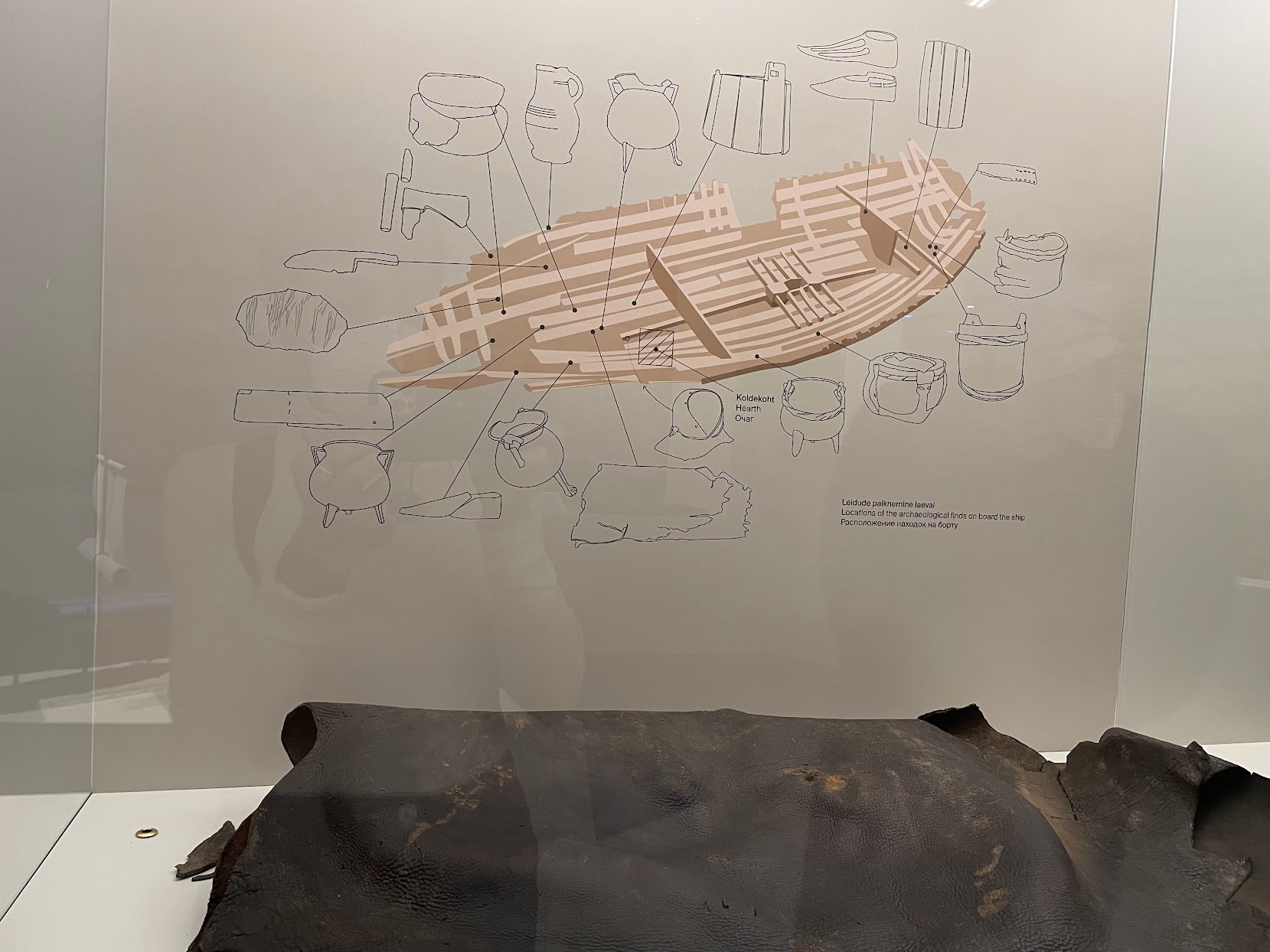
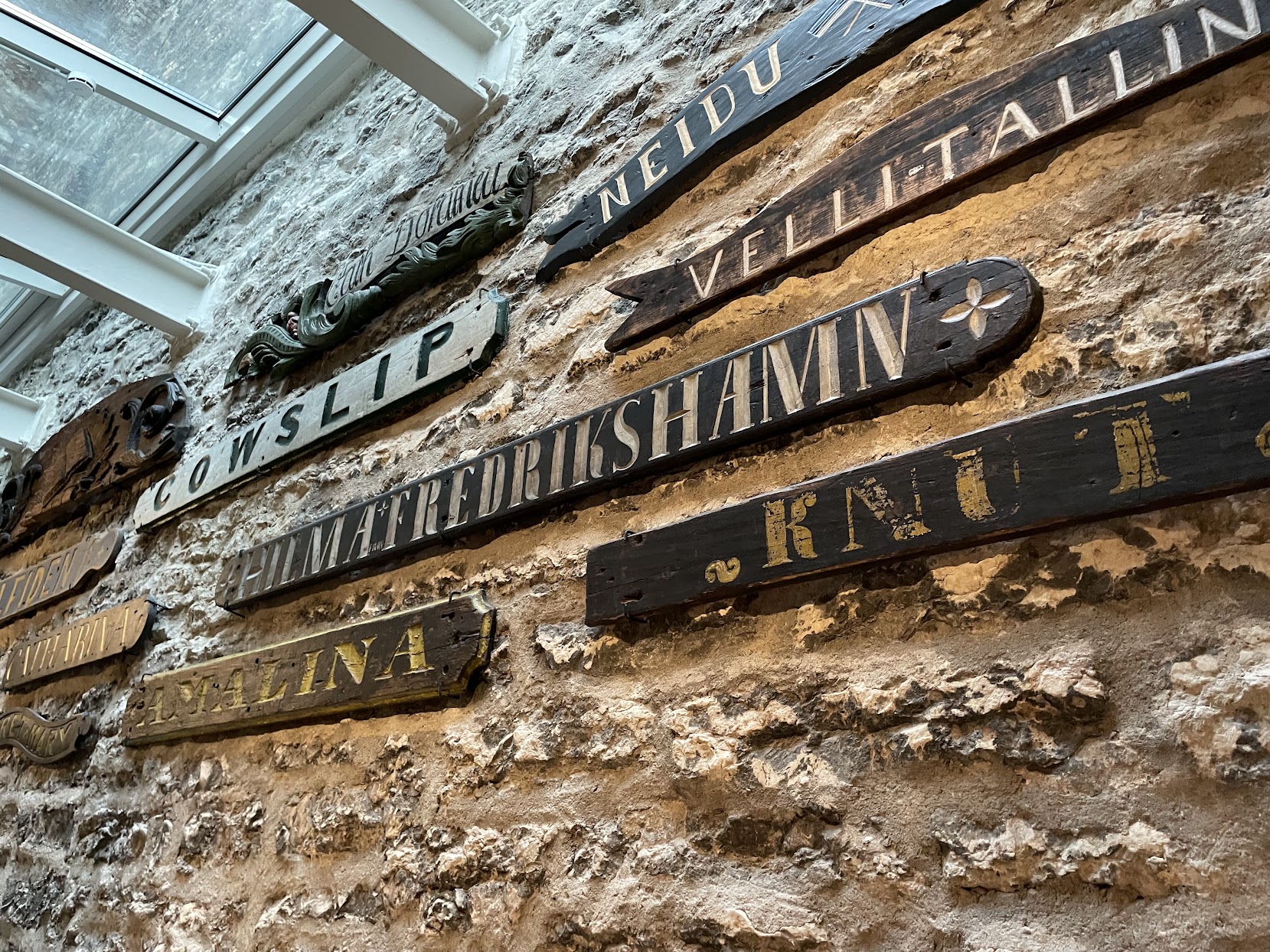
I just realized that I forgot to blog about one more museum in Tallinn – the Estonian Maritime Museum. The museum is relatively new, and its centerpiece is an old cog – a Medieval merchant ship. 

It was built at the end of the 13th century, and it sailed for quite a long time until it sank in the mid-14th century. The ship was discovered and lifted from the sea in 2015. Now, the cog, along with hundreds of artifacts discovered on the wreck, occupy the museum’s first floor.

Continue reading “Estonian Maritime Museum” →

Pullman Open House

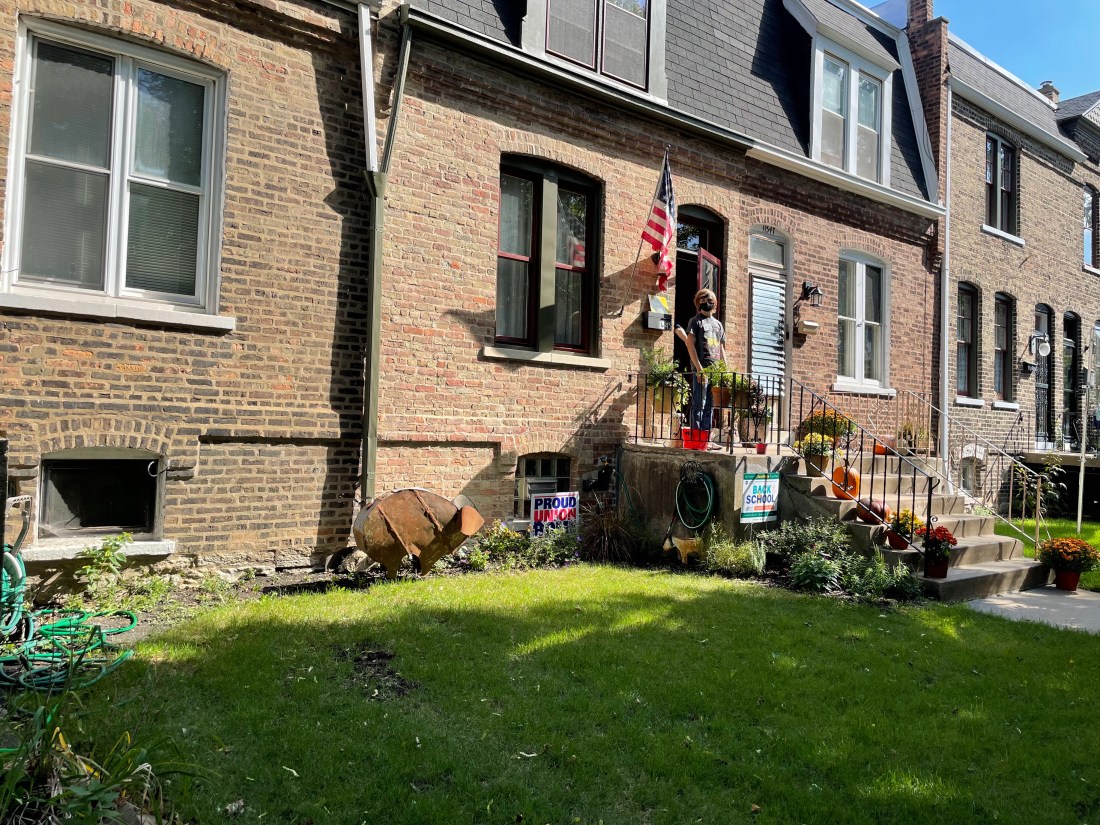
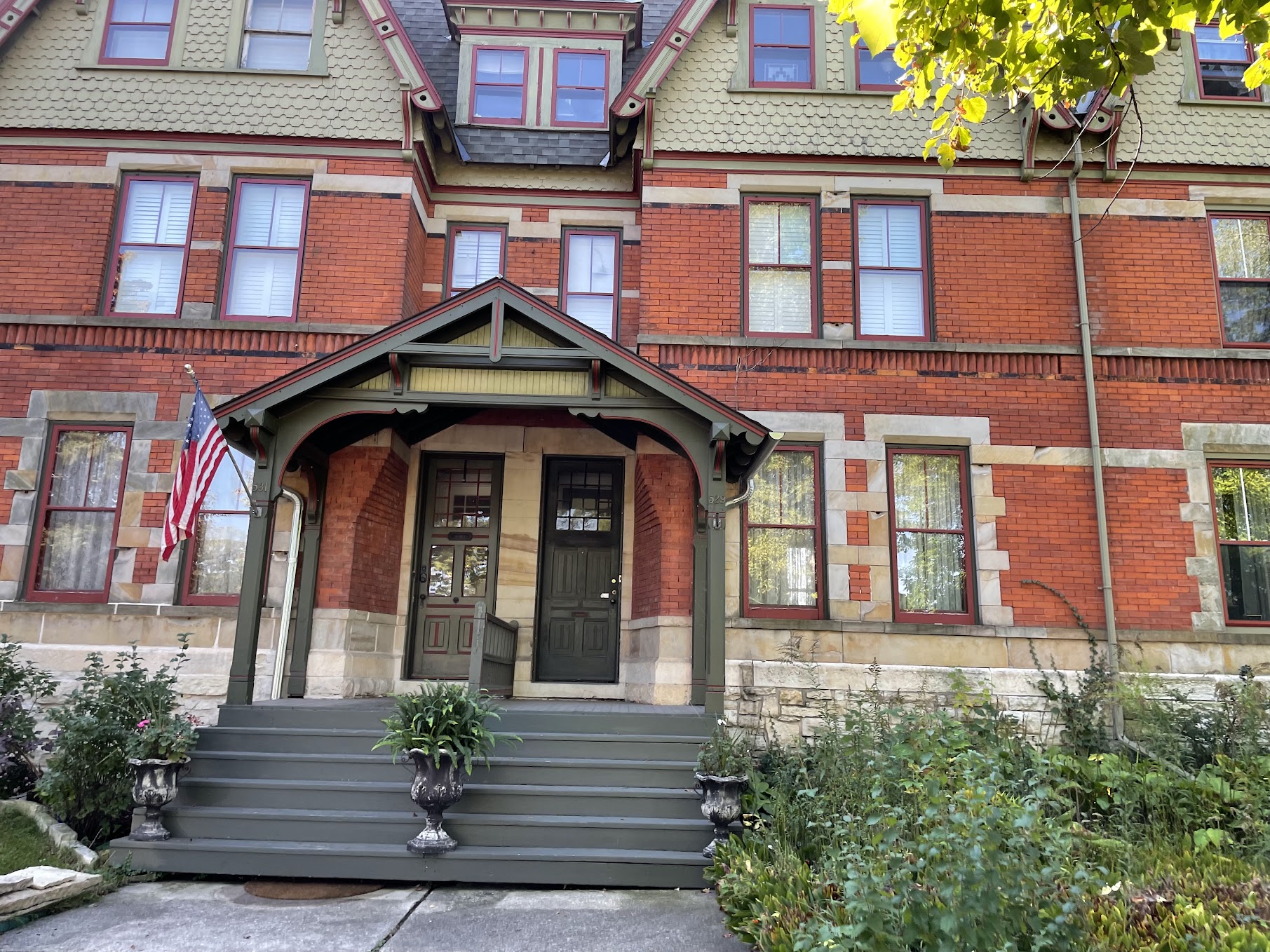
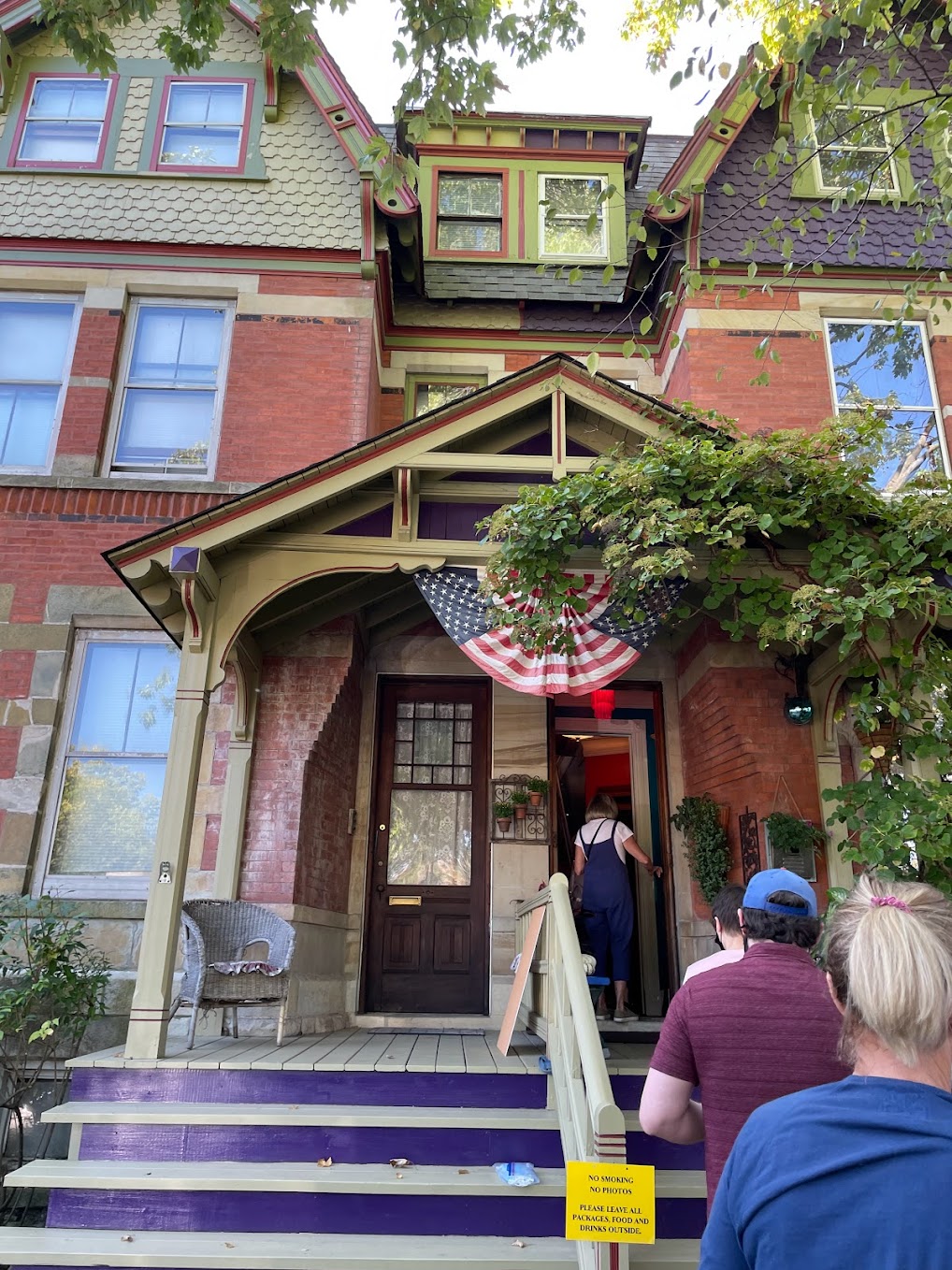
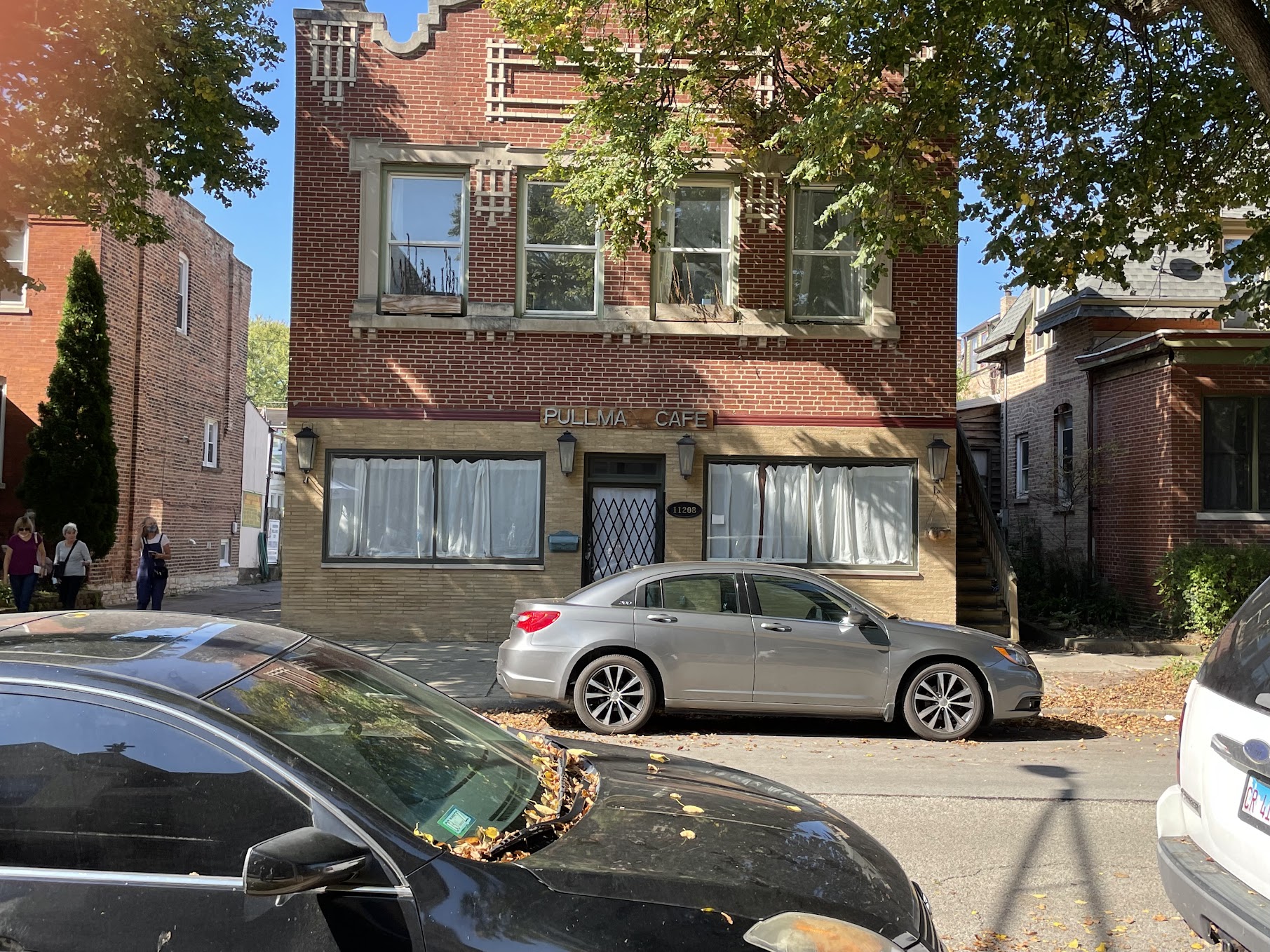
On Saturday, Igor, mom, and I went to the Pullman Open House to tour the homes. The weather was gorgeous; I do not remember ever being on that tour on such a perfect day. Also, that was the best open house we’ve attended from the organizational point of view; the route was planned perfectly, the sights were clearly marked.

Most of the houses which were this year were the new ones. And this time, no pictures were allowed inside, except for two places that contained exhibits.

Mom got tired of climbing the stairs in most houses, but overall, she liked this whole experience, and I am glad we took her out. Like one of the older volunteers commented: keep her moving!

Continue reading “Pullman Open House” →

Tallinn: Getting Inside

The rain started shortly after 11 AM, as forecasted. At first, we could ignore the random drops, but later, the rain became more substantial, and we switched to numerous museums and cafes.

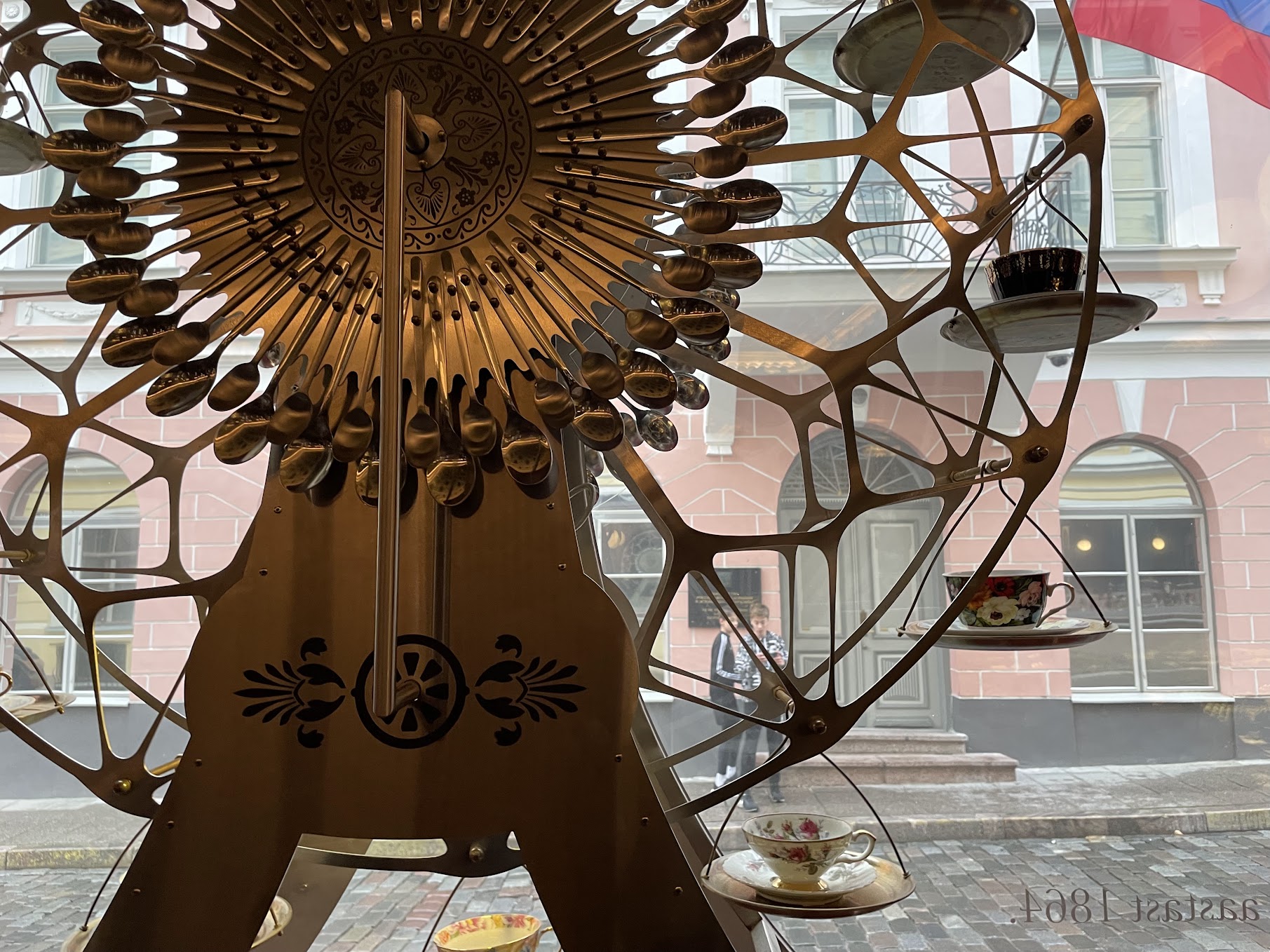
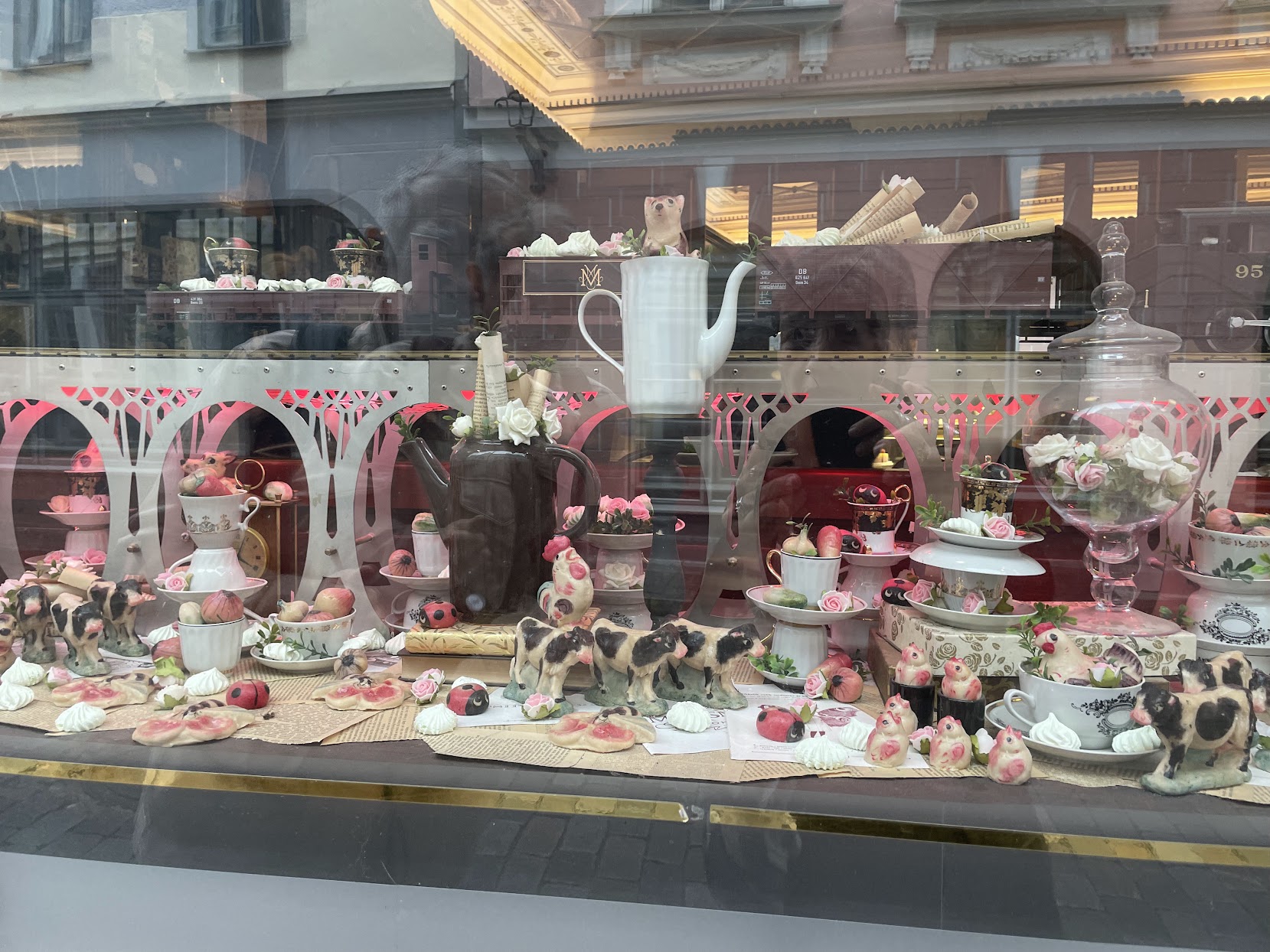
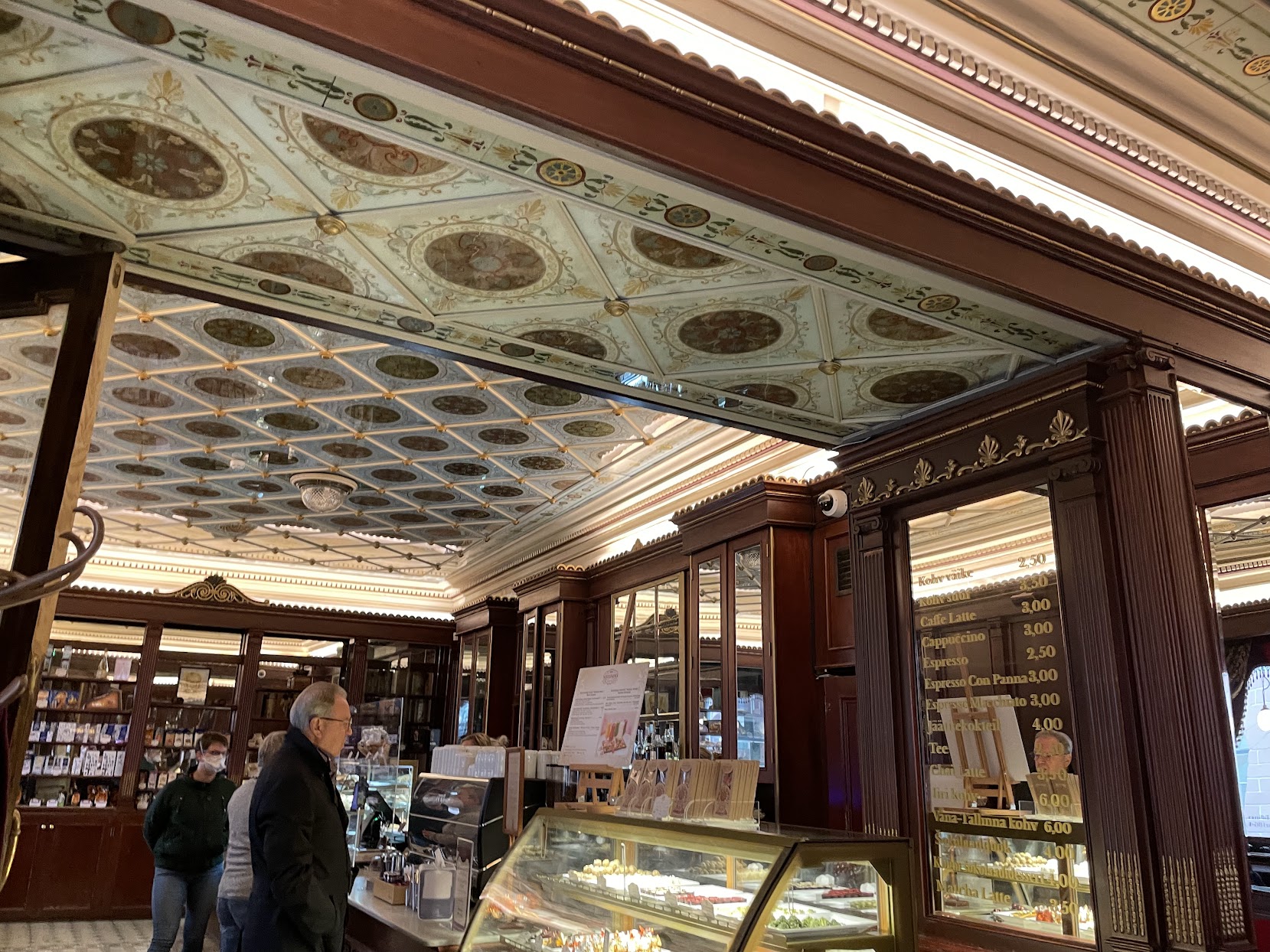
The first cafe we landed in was Maiasmokk, the oldest in Tallinn (in business from 1864). That was the first public space we entered in Tallinn, and there we learned that by city ordinance, proof of COVD vaccination is required to enter any place. Masks are still required.  

Tallinn depends heavily on tourism, and I was very happy to observe that this requirement didn’t impact tourism negatively and that the business owners were happy to comply with the city ordinance. 

This round pastry with cinnamon was heavenly good!!!
Continue reading “Tallinn: Getting Inside” →