It Feels Warm

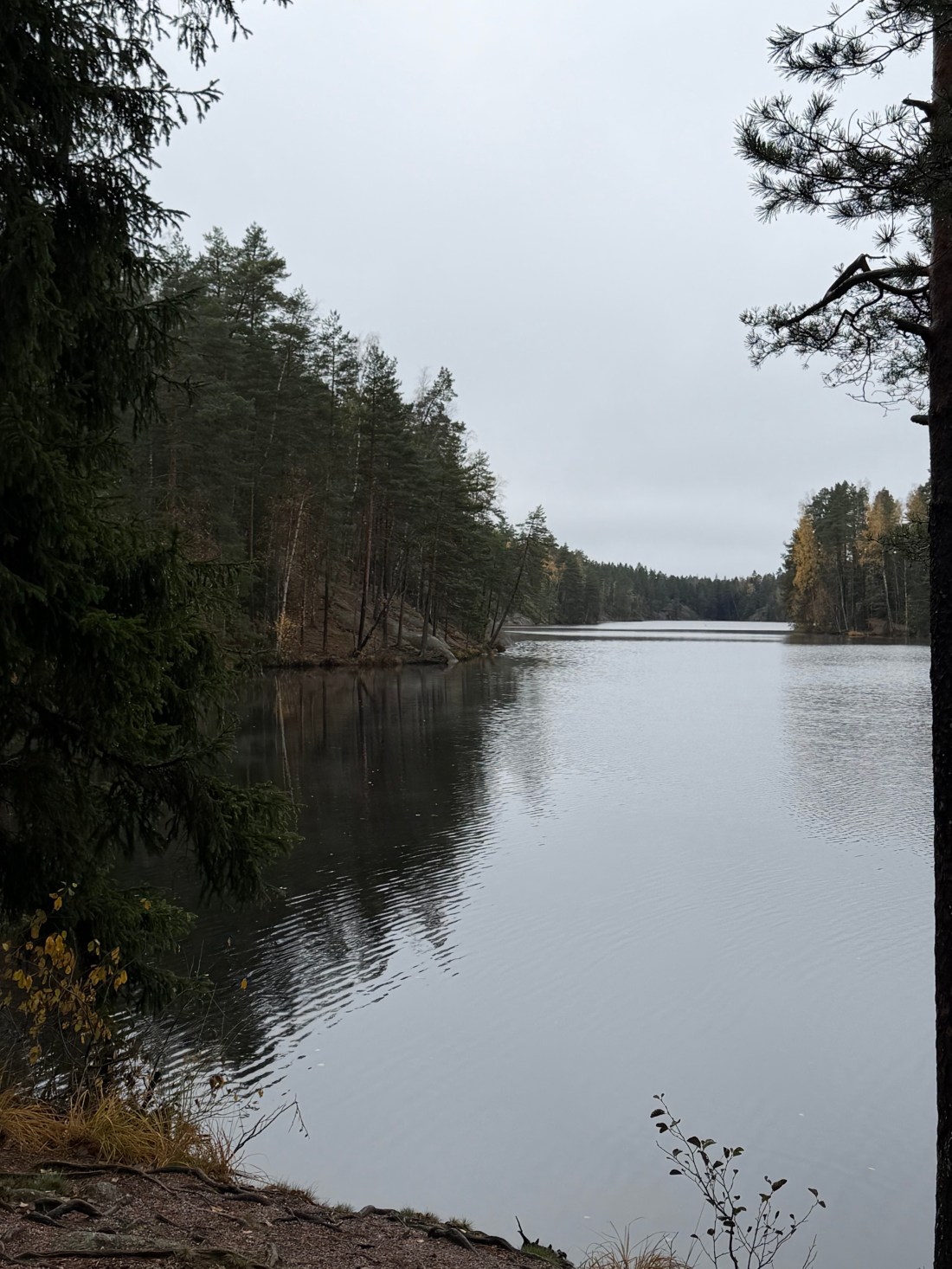
Many years ago, when Boris first moved to Finland, he told me he liked nothing more than feeling the warmth the moment he stepped through the building’s front door. In Russia, the hallways were never heated; it used to be still cold until you entered your apartment (I do not know whether it changed later, or whether it became the norm for newer constructions/remodeling).

It is not always the case in the US either, and I agree with Boris that that’s a distinct Finnish thing. But it’s more than that. Somehow, any public space, whether it’s a shopping mall, a library, or a train station, feels incredibly warm and welcoming, especially in the cold weather. I don’t know any other place in the world where I would feel this good, even when it’s cold, dark, and rainy. Just step inside any place, and you feel it.

Are You Doing SQL?

The weirdest and funniest thing happened to me in Chicago last week.

I was waiting for a Red Line train at Roosevelt when I saw, out of the corner of my eye, a very queer person coming down. Queerness isn’t unusual, of course, but this particular outfit was not exactly for the weather (I would question a bare chest at 67 F outside, but whatever). He sat down on a bench to wait for a train, and suddenly, he addressed me: “Excuse me, are you doing SQL?”

I am used to people noticing my laptop on the CTA, and even recognizing me, but my laptop was inside my backpack. I nervously looked down at my clothes, but I didn’t even wear a Postgres hoodie or anything with Blue Elephant on it. Finally, I replied, “What exactly do you mean?”

— You are running this SQL thing on Wednesdays, don’t you?

— Yes, I am! But how do you know? I do not have anything that says “Postgres” on me.

— I’ve been to your events a couple of times. I remember you; it just took me some time to place you.

We talked a little bit about my meetup and others. I am so embarrassed that I do not remember people (and yes, he didn’t come to our meetups in a pink tutu, but still). As it turns out, I don’t even remember many people I briefly communicated with at my former firm. When they reach out on LinkedIn and say we talked, I often can’t recall either the conversation or the person, and I feel horrible about it. And no, that’s not the “I am way too popular” thing; it’s just something I need to work on.

Specialized High School In The Soviet Union

It’s hard for me to say how “typical” School Number 30 was in comparison with other specialized schools. At the time I am writing, Leningrad had three specialized math schools: School Number 30, School Number 239, and the Specialized Boarding School Number 45 affiliated with Leningrad State University (the one Boris graduated from thirteen years before I graduated).

Obviously, we would kill anyone who suggested our school was second best. I didn’t challenge the quality of my education until fairly recently, and as I spoke at length about my University experience, I am going to describe my life and studies at School Number 30.

I won’t say everyone was highly motivated, but more students were motivated than at an average school. One thing is for sure: most of us felt elite and were very proud of it. We were also “a little bit dissident” and felt equally proud of that. Now I know that segregating more gifted students into separate classrooms immediately triggers the separation between “better” and “worse” within it, but back then, everyone was sure that it was the only way to give the best to the best students. Most of our teachers, not only in STEM but also in literature and social studies, were “above average” and demanded a lot from us.

Recently, I read a book titled “At Freedom” by Anatoliy Kuznetsov. This book is brilliant in so many ways that I can speak about it for hours. I don’t see any indication that it was ever translated into English, but I think this book is most valuable to those who lived in the Soviet Union or have close ties to it. It’s hard to single out the most important essay in this book; still, I want to call out the “Misinformation Secret.” This essay addresses a crucial topic that is almost forgotten thirty-five years after the Soviet Union’s collapse. These days, most people think Soviet political propaganda was on a “dummy” level, and that “nobody believed it.” In reality, many high-level specialists worked to perfect the propaganda, operating on multiple levels, exactly as Anatoly Kuznetsov describes.

Looking back, I realize we were all subjected to this “Level III propaganda,” and we all thought we were better than those common folks who believe in Level I or Level II, and that we knew “the actual real truth.” We admired our history and literature teachers, and once again, looking back, I am sure that some of them were cynical enough to continuously feed us with this “Level III”, and some were, like us, victims of the previous round of indoctrination, and truly believed in what they taught us. For example, I remember visiting my former Russian literature teacher during one of my trips to Saint Petersburg, who asked how well my children knew Russian. After I replied that they knew very little, she declared, as if it were the greatest tragedy that could happen to someone: They will never know Great Russian Literature! Never! Even though at that time I was still not completely free of all of the imperial nonsense we were taught, I was wondering why their ability to read and fully understand great English and American literature was less important, not even mentioning great French, German, or Spanish literature, which none of us could fully appreciate.

I think that a significant part of Russians who now declare that they always were “against all bad” and that their parents and teachers taught them good values, and that they are not responsible for anything, came from these specialized schools, where we were brought up to believe that we were so special, and so progressive, and so much better than others… And I was one of them, and it took me years and years just to start to understand that. I have no excuse, because I actually had brains but didn’t use them in some cases. Now it’s too late to undo what was already done, and the only thing we can do is stop Trump from repeating the same thing in the US.

My historical posts are being published in random order. Please refer to the page Hettie’s timeline to find where exactly each post belongs and what was before and after.

Foraging

I arrived in Helsinki on Saturday and planned to meet with my friend Natasha on Sunday. Just a day before my arrival she asked me whether I would be interested in a mushroom-picking. to which I replied with an enthusiastic “yes” – it was my first opportunity in thirty years!

The kind of mushrooms we were going to forage presented a little challenge, because they were trumpet chanterelles, which I never picked in my life, and you need a eye for each mushroom specie to be an efficient forager, but eventually I figured it out.

I saw a surprising number of butter mushrooms around (they should have been gone by that time of the year), but since those were the maushrooms I used to go for as a child, I could spot them right away. Unfortunately, all except for one I picked were too old and I ended up throwing them away after they got home, but we cooked what was left :).

There were also some russulas, some too old, but some still healthy and perfectly eatable, and some other mushrooms I was unsure about, possibly white and black milk-caps, but since I was not sure, we prefereed not to experiment. And there were lingonberries – all over the place! I already bought a box in a grocery store, but the ones staight from the stems – they were bigger and sweeter than the ones from the store, and I couldn’t stop munching on them!

Over two hours in the forest. Almost severn pounds of trumpet chanterelles. Breath-taking views. Slightly wet feet. Priceless :).

Continue reading “Foraging” →

Last Week: Things Are Moving Fast

How can I be so busy when I do not even have a full-time job? It’s a mystery, but that’s what is happening!

A quick week’s recap.

Monday – the Neighbor Night at the Chicago Architectural Center:

Tuesday:

Morning biking, intense conference prep, and PG DATA org committee meeting:

Wednesday:

Checking out a second Amorino location (it’s in the Rookery Building, beautiful, cozy, no lines! Loved it!) Joint meetup with the Chicago Ruby User Group, went great!

Thursday:

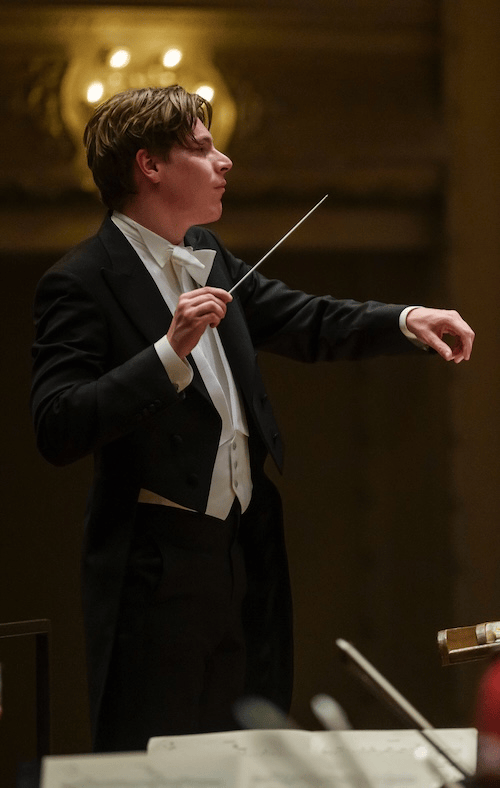
Clinic escort in the morning and CSO concert in the evening (Klaus Makela one more time).

Friday:

Multiple meetings on different topics, frantic packing until the time I had to leave for the airport, and a cherry on top: I forgot my passport and had to return home from Belmont! At that point, I had no choice but to get an Uber, which I try to avoid unless there is absolutely no other option, but there was no other option. And I spent more time in the security line than getting to the airport!

Completely random photos from my neighborhood:

Jarvis Square is ready for Halloween
Seeing on the Red Line

Any Time Of Year, Chicago Is The Best!

My former colleague was visiting my former firm this week, and since we have always been not just colleagues, but rather friends and collaborators, we met on Sunday and spent several hours walking and talking. Chicago was at its best, and I used this opportunity to show more hidden treasures :).

When we first discussed our plans for that day, he suggested biking, but I knew that what we wanted/needed most was talking, and it’s better to talk when you are walking 🙂

From Lea cafe where we had lunch, we walked to the Millennium park and crossed over the BP Bridge to the Maggie Daley Park, and then to the Lake Front Trail, and then we walked to the start of the Riveewalk, and headed West. We stopped for a Fannie May gelato at the cornder of E. Wacker Drive and Michigan Avenue, and then continued to the Bridges Museum, one of my favorite hidden treasures of the city. Then I showed the Vietnam War Memorial, the Eastlander Disaster site, and then we crossed the river and headed to the Magnificent Mile, and ended the day at the Starbucks Reserve Roastery. Talking non-stop for five-and-a-half hours. I was surprised to realize I barely took any pictures 🙂

Christina Wyman: The views of tradwife influencers are evolving. It’s a complicated victory.

After a discussion on my friend’s blog about the “Yesteryear” book, I thought this Tribune article was worth sharing.


By Christina Wyman | Special to the Tribune

PUBLISHED: October 1, 2026 at 5:00 AM CDT

“My daughter wants to be a tradwife.” My friend sat across from me at dinner not too long ago and described how her daughter, a high school senior at the time, had zero college ambitions. Social media had taken care of that — her daughter had become an avid follower of the tradwife aesthetic, and my friend was not happy about it.

Lately, tradwife influencers are distancing themselves from the conservative label. (For those  unfamiliar, “tradwife” is short for “traditional wife.”) First, influencer Nara Smith rebuked the label this past summer, arguing on the popular “Call Her Daddy” podcast that it was a “bizarre” projection. More recently, influencer Bernadine Bluntly began chronicling her divorce, from both the brand and her husband, to whom she now owes child support. As high-profile, impossibly young tradwife influencers revise the conversations they started, I can’t help but to hope that it’s not too late for their devout Gen Z followers.

I have long believed that my friends who are raising teenage daughters are right to be concerned about this movement, which glorifies and glamorizes traditional family roles. If only tradwifery were just a social media aesthetic — and not an actual choice with profound implications for most women.

I know firsthand how quickly life can fall off the rails. I was a child who watched it happen to my mother.

When my mother had me at 17 years old, she was a traditional wife in every sense of the word. She didn’t have one penny to her name and depended entirely on my father, only 20 at the time. I was born in 1980, a few weeks after my mother graduated from high school. They had a shotgun wedding — the type of arrangement thrown together in haste because a baby is on the way.

Teen pregnancy was exceptionally common in the ’80s and ’90s, and shotgun weddings were not unusual at the time, either. These were choices people commonly made nearly half a century ago.

What I wish for the young tradwife followers on the brink of making decisions that cannot easily be undone is what I would have wanted for my own mother: a crystal ball or at least a front-row seat at an IMAX movie featuring the next 30 years of her life. She chose to marry and bear children before taking the time to decide what her own life could be on her own terms.

I had that front-row seat when I was a kid. I wish Gen Z women could see a fraction of what I saw growing up, what time did to my parents’ young marriage.

Twelve years after saying, “I do,” they were done with each other. Dad got a new apartment, and Mom kept the one I grew up in. Money was impossibly tight. I was a preteen when I watched my mother, a very young woman without an education or well-paying job, crumble under the weight of her new reality.

When my parents separated, Mom had to figure out her new role, and she had to figure it out fast.

In my family, the devastating effects of giving up your power to marriage and child-rearing, without a plan in place or skills to rely on, was multigenerational. It was the same story for my grandmothers — one of whom stayed with a husband she couldn’t stomach, just because she had no other options — and many other women in my family. And in each case, their tradwife-dom went straight to hell in a handbasket. Some of them have died penniless. The rest are tied to marriages or partnerships they don’t want to be in.

My mother, having gotten lucky with finding work and a new love, is the lone exception in my family.

Still, I’ll never forget Mom’s first, and last, stable job — as an employee for the United States Postal Service. She passed the test with flying colors. But a few days into the job, she came home crying. The hours were long, the work was back-breaking and management was condescending. While she spoke to a friend on the phone about her day, tears streaming down her cheeks, I took a walk to our local McDonald’s and bought her a burger and fries with my babysitting money. I felt powerless to help her.

Landing that job was hard-won. I know Mom was terrified about her lack of options. She eventually found her footing, but she retired after 15 or so years. The physical demands became too much.

My mother, like all women in her position, did the best she could with what she had. But I remember the choice she faced between gas and groceries. I remember the credit card debt she accrued so that she could buy clothes for her children. I remember her anxiety and fear over each unexpected bill that came in. I remember, more than anything, the endless fights she had with my father over money. Those fights did not relent until after I graduated college and became my own problem.

The fact that some popular tradwife influencers are no longer able to ignore the serious consequences in giving up personal power and independence is a complicated victory. It’s a terrifying thing to have to shift gears when there are bills to pay and mouths to feed, and I would not wish this reality on anyone. But if there’s anything to be gained from this evolving moment, it’s the hope that Gen Z continues to pay attention.

Christina Wyman is a teacher living in Michigan and a USA Today-bestselling author. Her upcoming novel, “Mean,” is a middle grade story about what happens when a mean girl takes a prank too far.
How It All Started…

There are multiple days that can be considered “when it all started” between Boris and me, and “by default,” we agree on March 20, 1983, the day we met for the first time. However, there are several other days, including the Day When Our Hands Touched for the First Time, which was September 30, 1988.

It was Friday, and we were flying back from a technical conference in Rostov-on-Don, the first conference I ever attended. Four conference days, when I could barely understand anything presented. Where Boris had a talk on the third day. Where we spent hours walking the city streets in the evening and talking. Where we sat in my hotel room, eating fresh fruit and fresh bread in place of dinner (and those who were not born and raised in the Soviet Union won’t understand that having an abundance of fresh fruit was a luxury available only “in the South”). Both of us were married, and both of us happily pretended that nothing was happening.

It was much warmer in Rostov-on-Don than in Leningrad, and the farmers market was overpouring with yellow pears and blue grapes. In fact, when the subject of the conference came up, I was hesitant to attend because Igor’s third birthday was in the middle of that week, but Boris told me: you will bring him fresh fruit. I did, and also lots of clothes: somehow, the private enterprise was rolling out faster in Rostov than in Leninigrad, and I bought several nice-looking outfits for Igor, still “a deficit” in Leningrad.

It was only on Firday evening at the airport, that Boris took my luggage from me to place it on the luggage belt, and our hands touched, and he didn’t move his hands away for a couple of seconds.

***

We talked about it on Saturday, because September 30 was in the middle of the week and busy, and we both admitted that in our wildest dreams we couldn’t imagine the future outcome of that day 🙂

My historical posts are being published in random order. Please refer to the page Hettie’s timeline to find where exactly each post belongs and what was before and after.

The Last Time I Did Something Normal…

Last Monday, when Igor and I sat down at the Siskel Center after the Tarkovsky documentary with tea and my apple cake, I confessed that I felt hopelessly unprepared for retirement. That was the first day I was on call at my part-time job, and an incident happened, and I had to investigate. And here it was. Except for a couple of tech interviews, I haven’t had a chance to solve any puzzles in four weeks. And although it all happened at a very inconvenient time, I was so grateful for this opportunity to use my brain :). That was possibly the first time after my last day at my last job that I heard it loud and clear: I am not ready to retire yet. And not even ready for part-time only yet.

Igor replied that it was expected, and I asked a rhetorical question: why can’t I be like normal people? We both agreed that if I were a normal person, all our lives would be completely different, and it’s unlikely Vlad and Anna would have been born. As for Igor (it was his birthday, after all!), he definitely wouldn’t come to the US. And then, reflecting on these past forty-one years, I said: the last normal thing I did was give birth to you.

Thinking it over for the past week, I still maintain it is true. I often think about this whole process of me transforming from “one of many” to my present-day self. Yes, I was almost a straight-A student for years, although there was a period of lower grades in the middle of my college life, but there were many others, more talented, brighter. I was an active young pioneer and an active comsomol member, and at the same time, “just a little bit dissident-minded”, “for all good against all bad.” Just like almost everyone around me. And like “everyone,” I got married during my senior year in college and gave birth to my first child shortly after graduation. It was expected. Almost all girls timed it that way.

Everything else was a deviation :).

Mindfulness In Nature

I just realized I haven’t posted in several days. These days were packed with events, and I wrote at least ten blog posts in my mind :), so now I will try to bring them to life.

On Saturday, I participated in the outdoor meditation session “Mindfulness in Nature.” I’ve done it several times before, and I enjoy this activity. When I was going down the stairs on the way to our meeting place, I saw the most beautiful spider web with a perfect spider in the center:

It was an absolutely perfect autumn day, but it was also surprisingly “not yet an autumn day,” not only because it was warm, but also because all the trees were still green, and it didn’t smell like fall at all. On the way there, I thought that the best things in my life happened in fall, and that I always anticipated good things happening during this season. At the beginning of the session, when we were asked about our word for nature, I said: the gift.

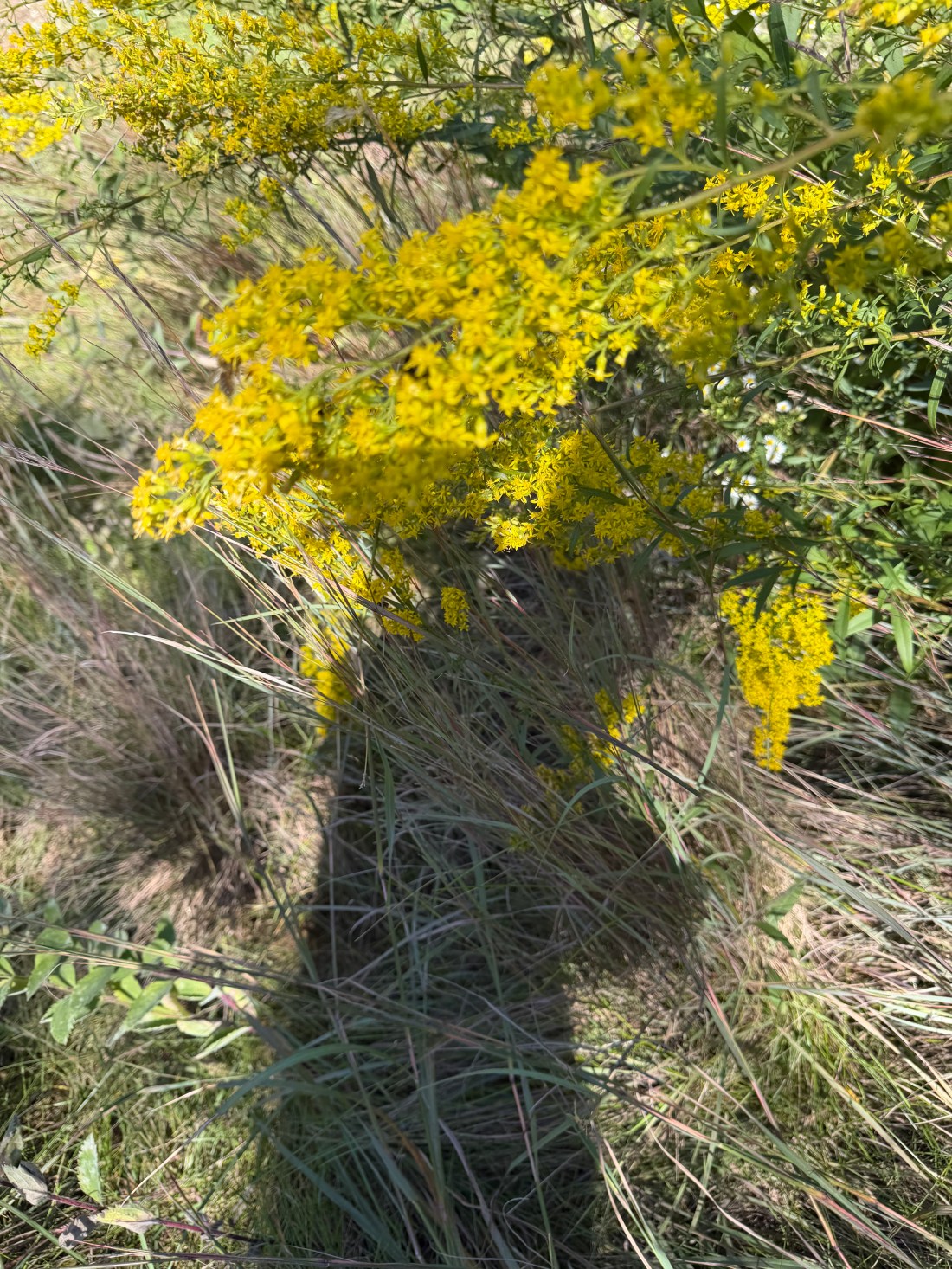
We typically go on the same nature walk at each session, and I was surprised by how much our small nature area didn’t look like fall this time. All late summer flowers were still blooming, and there were tons of bees everywhere! It didn’t look like the world was ready to hybernate!

As always, I am sad that I am leaving an a couple of days and will miss the rest of it!