Pullman Open House

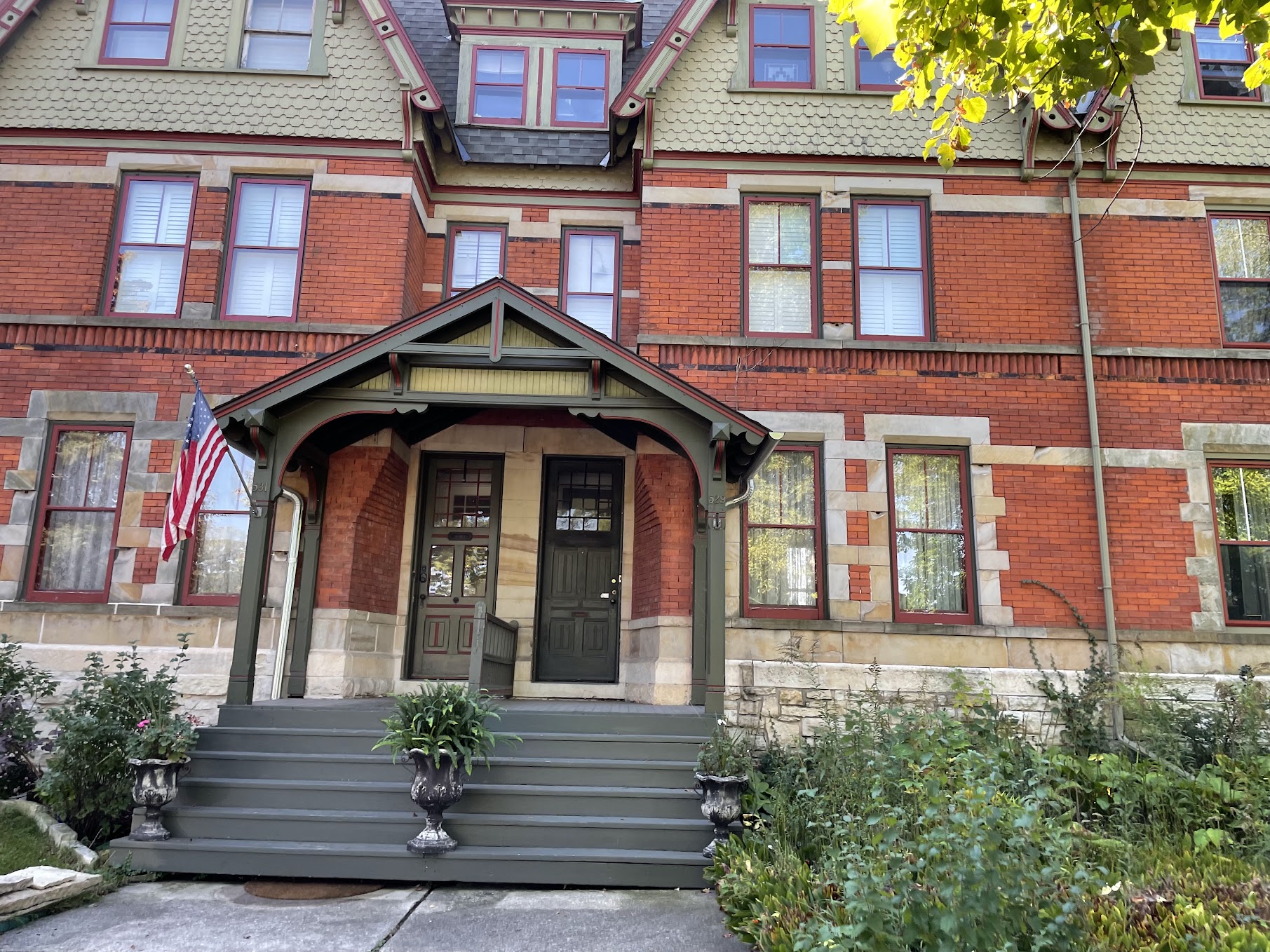
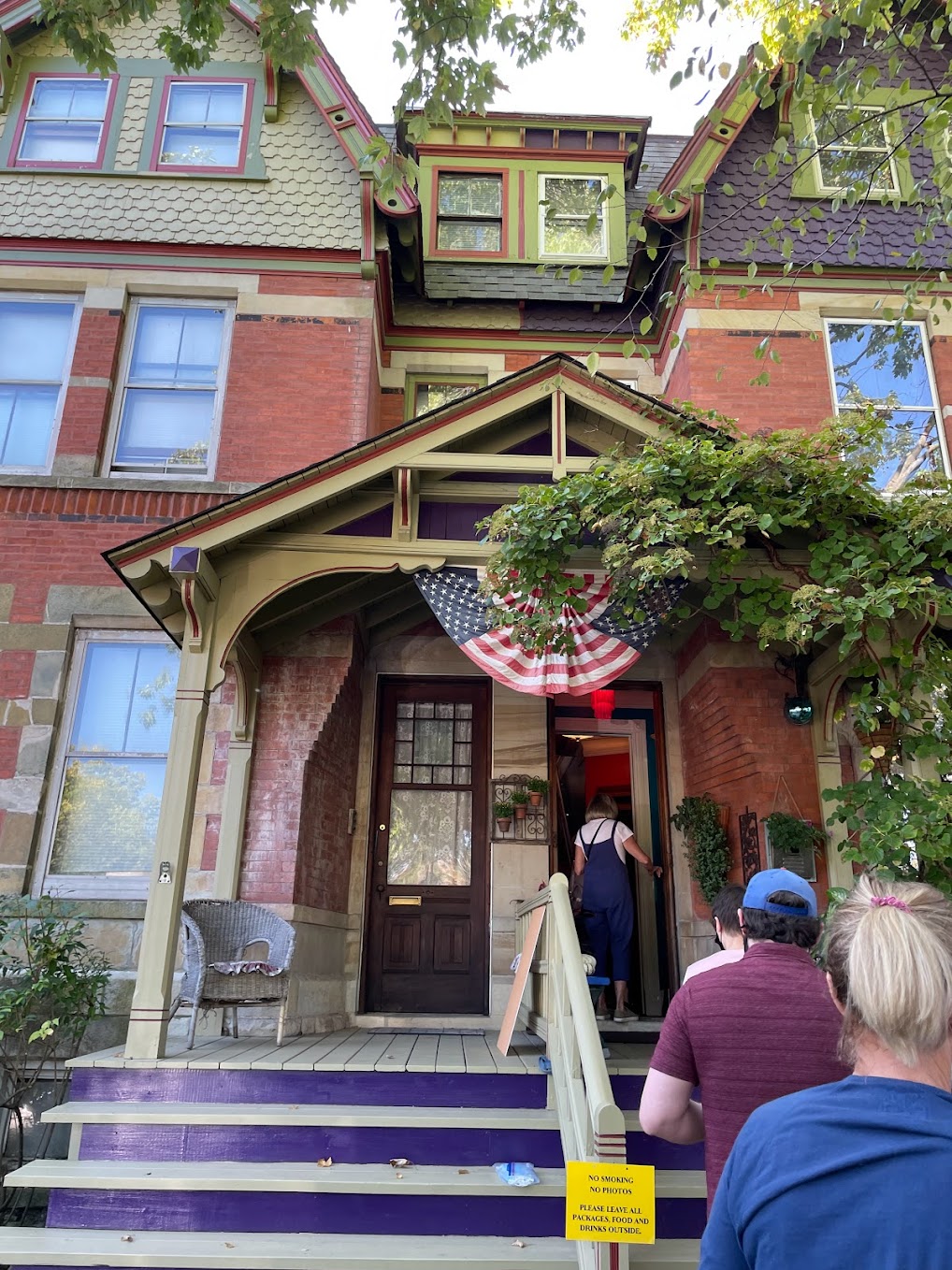
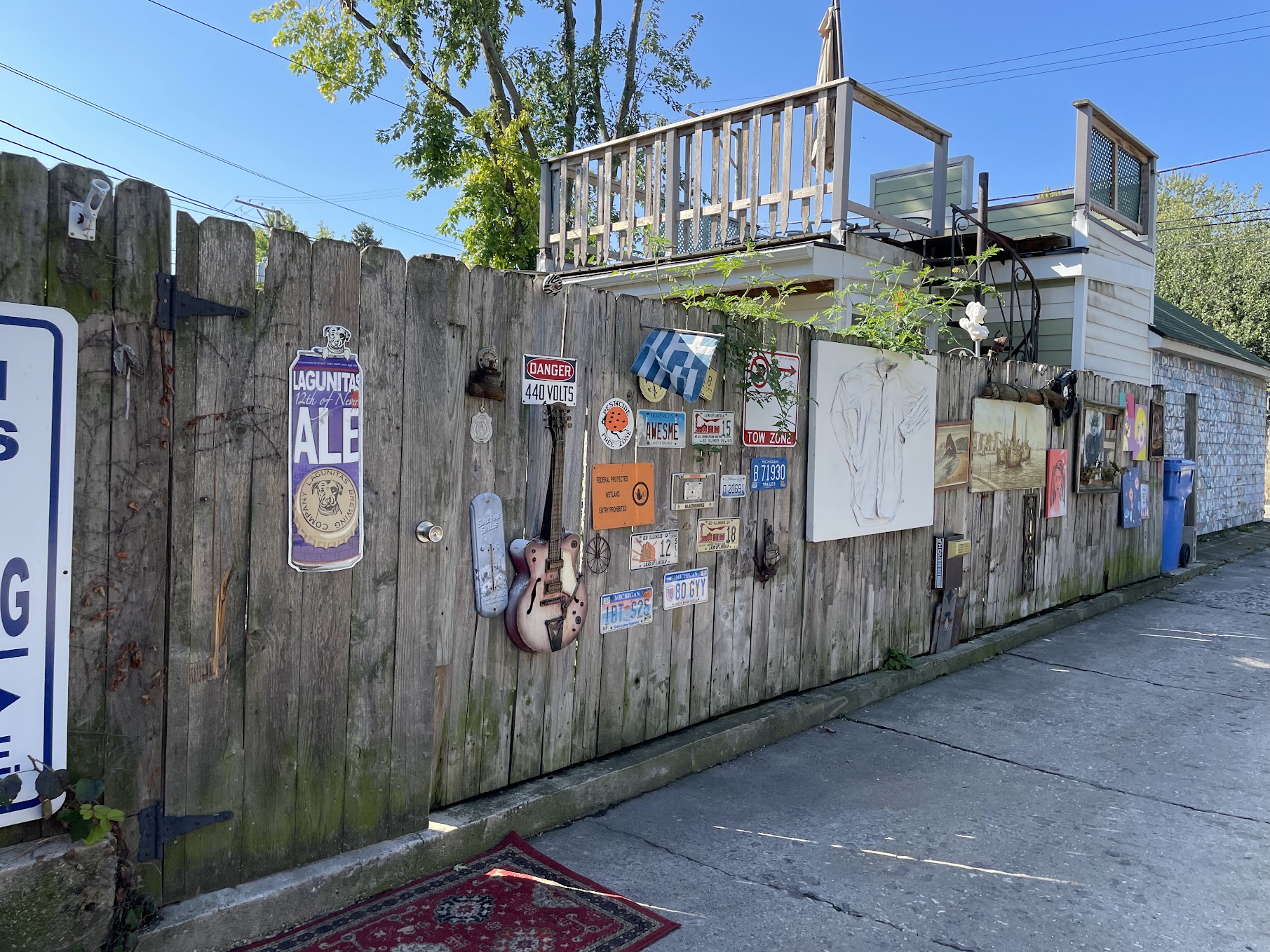
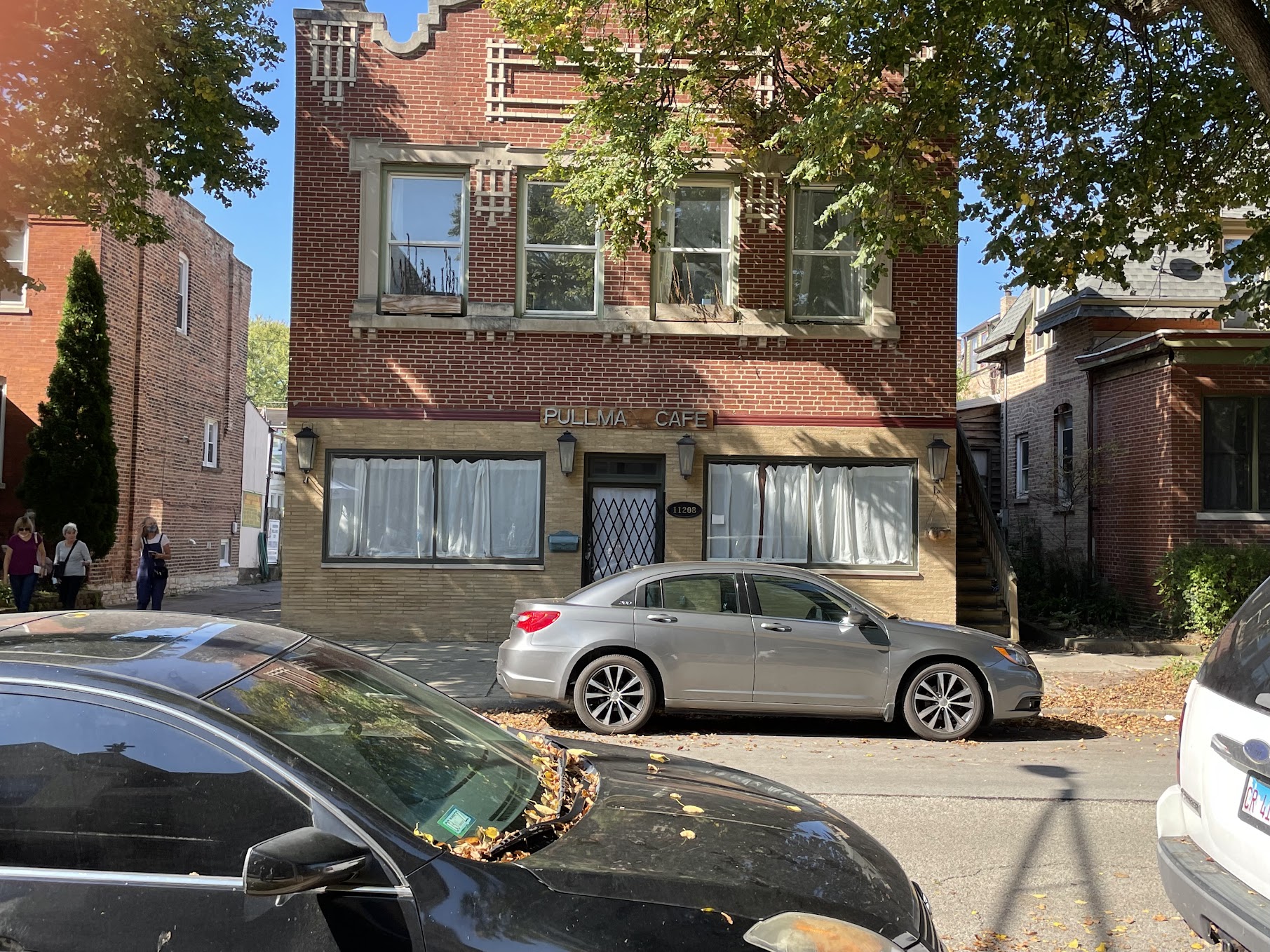
On Saturday, Igor, mom, and I went to the Pullman Open House to tour the homes. The weather was gorgeous; I do not remember ever being on that tour on such a perfect day. Also, that was the best open house we’ve attended from the organizational point of view; the route was planned perfectly, the sights were clearly marked.

Most of the houses which were this year were the new ones. And this time, no pictures were allowed inside, except for two places that contained exhibits.

Mom got tired of climbing the stairs in most houses, but overall, she liked this whole experience, and I am glad we took her out. Like one of the older volunteers commented: keep her moving!

Continue reading “Pullman Open House”

“Obama Portraits” Exhibit With ODS

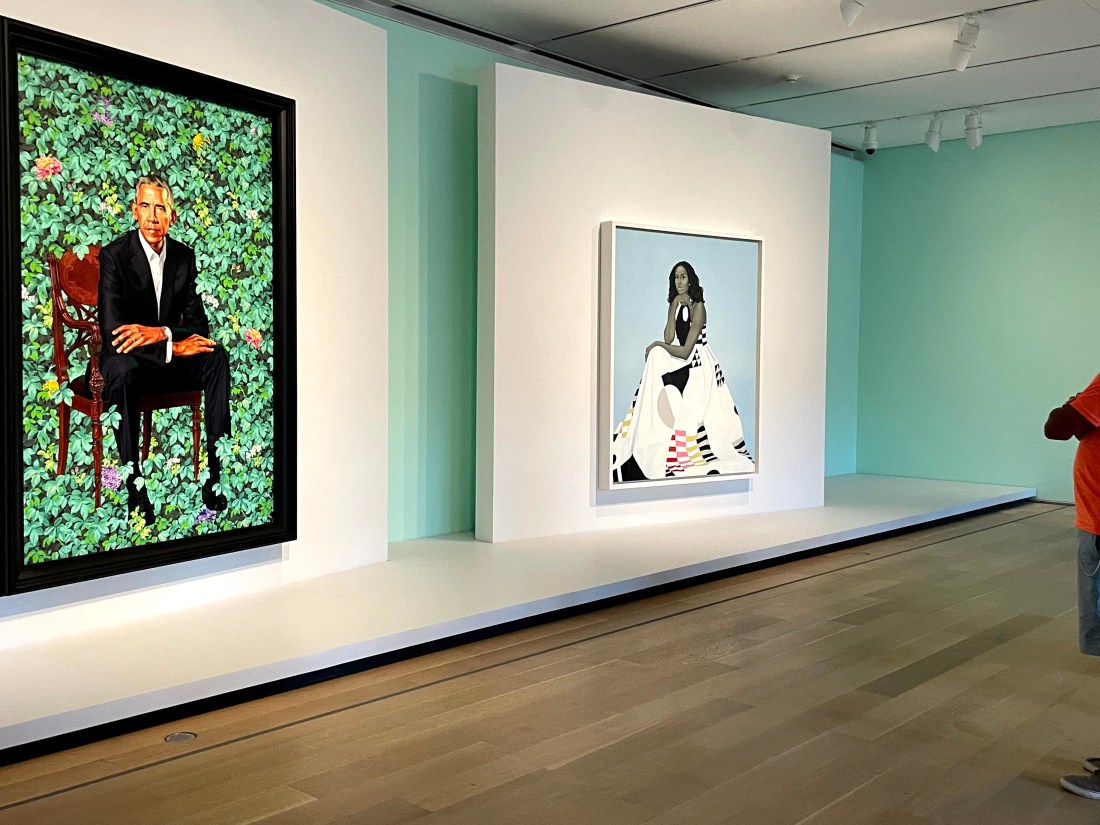
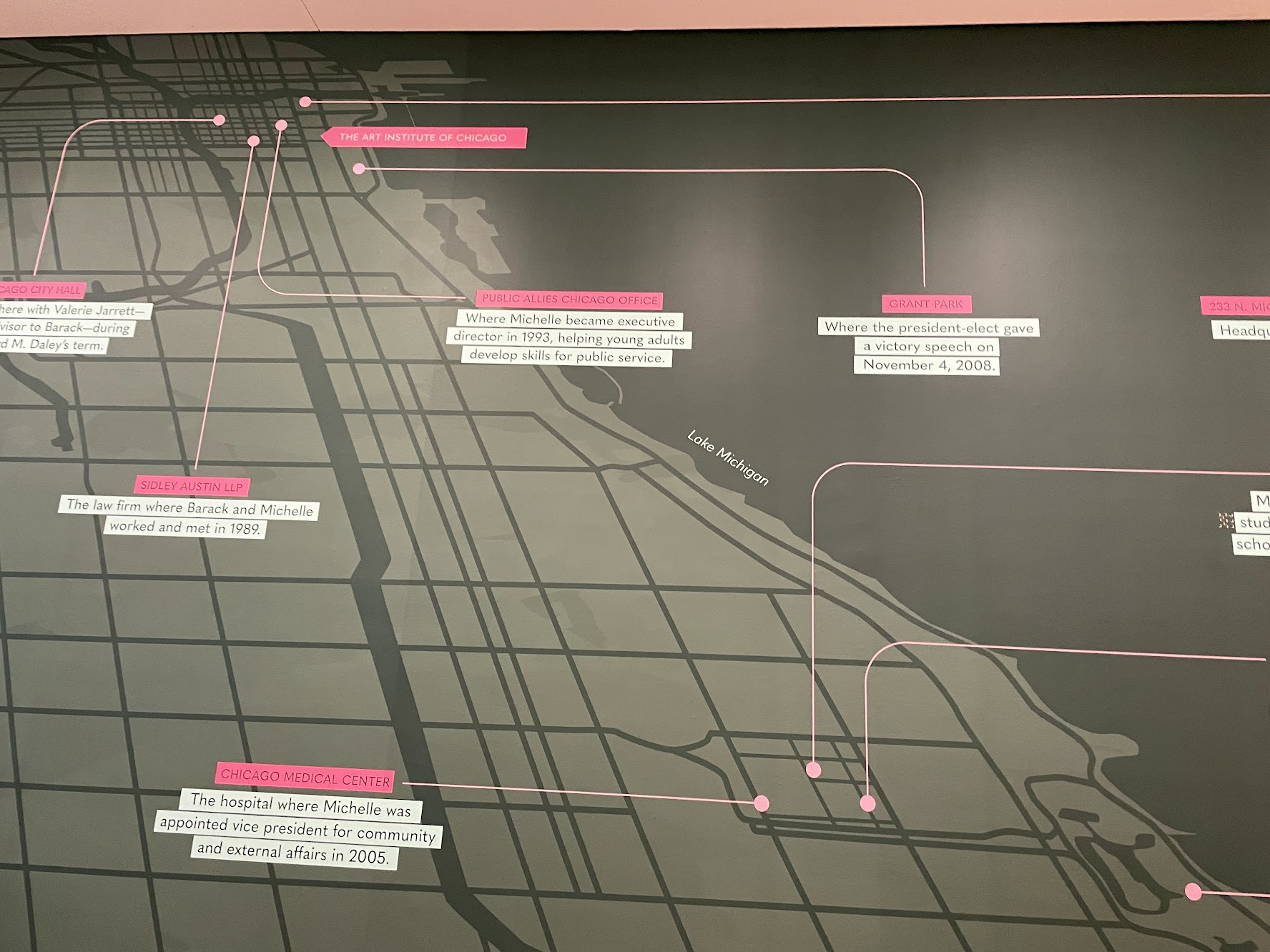
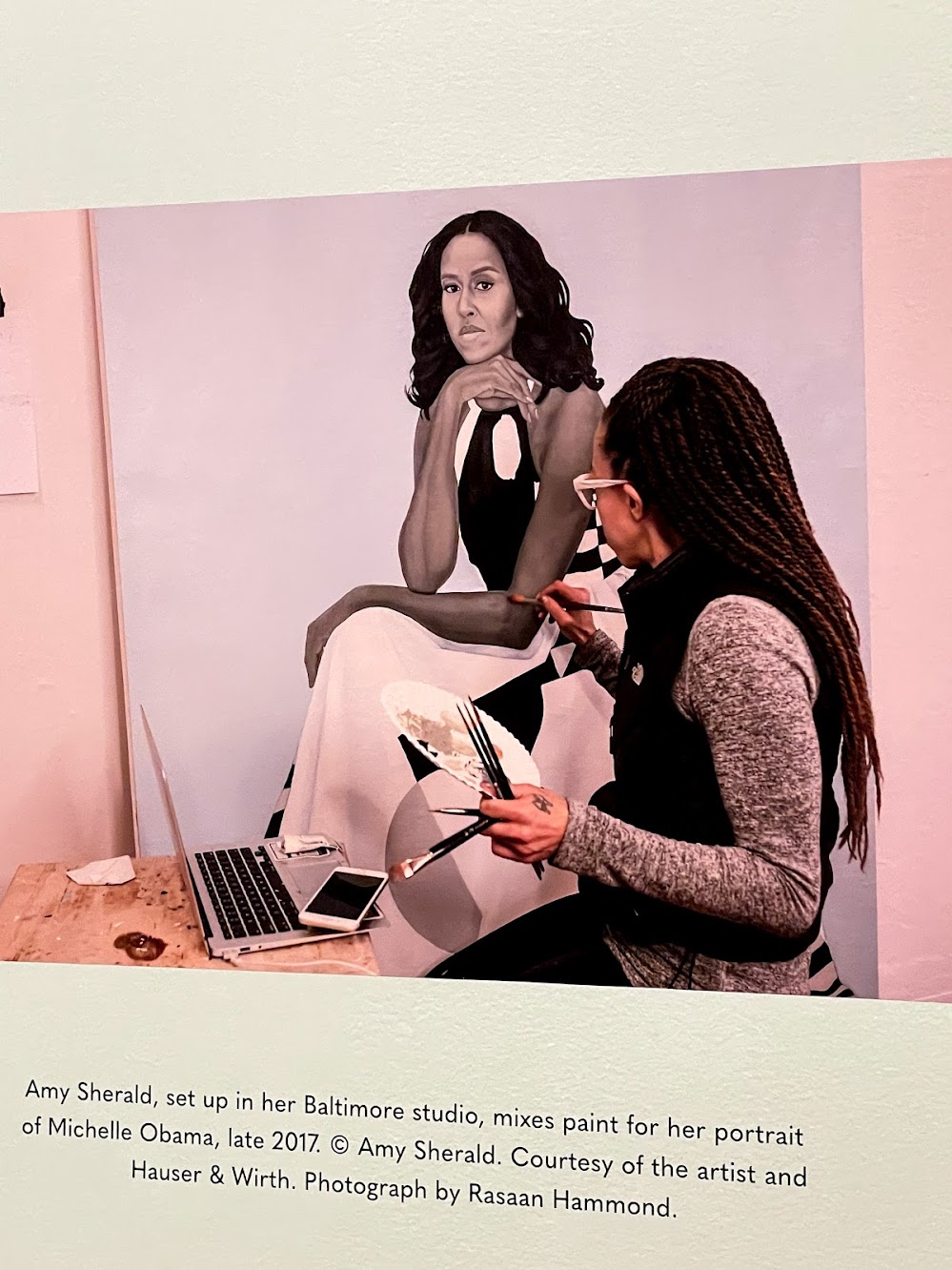
On Thursday, I went to the Art Institute with the youth from the ODS for the first time since last summer. I was hoping that waiting for this to happen. Now, several things happened simultaneously: the Art Institute returned the evening hours (Thursdays and Fridays till August 15), the Obama portrait exhibit opened, and the Art Institute Council for public relations gave the Night Ministry two dozen tickets for this exhibit, which includes the full Art Institute admission.

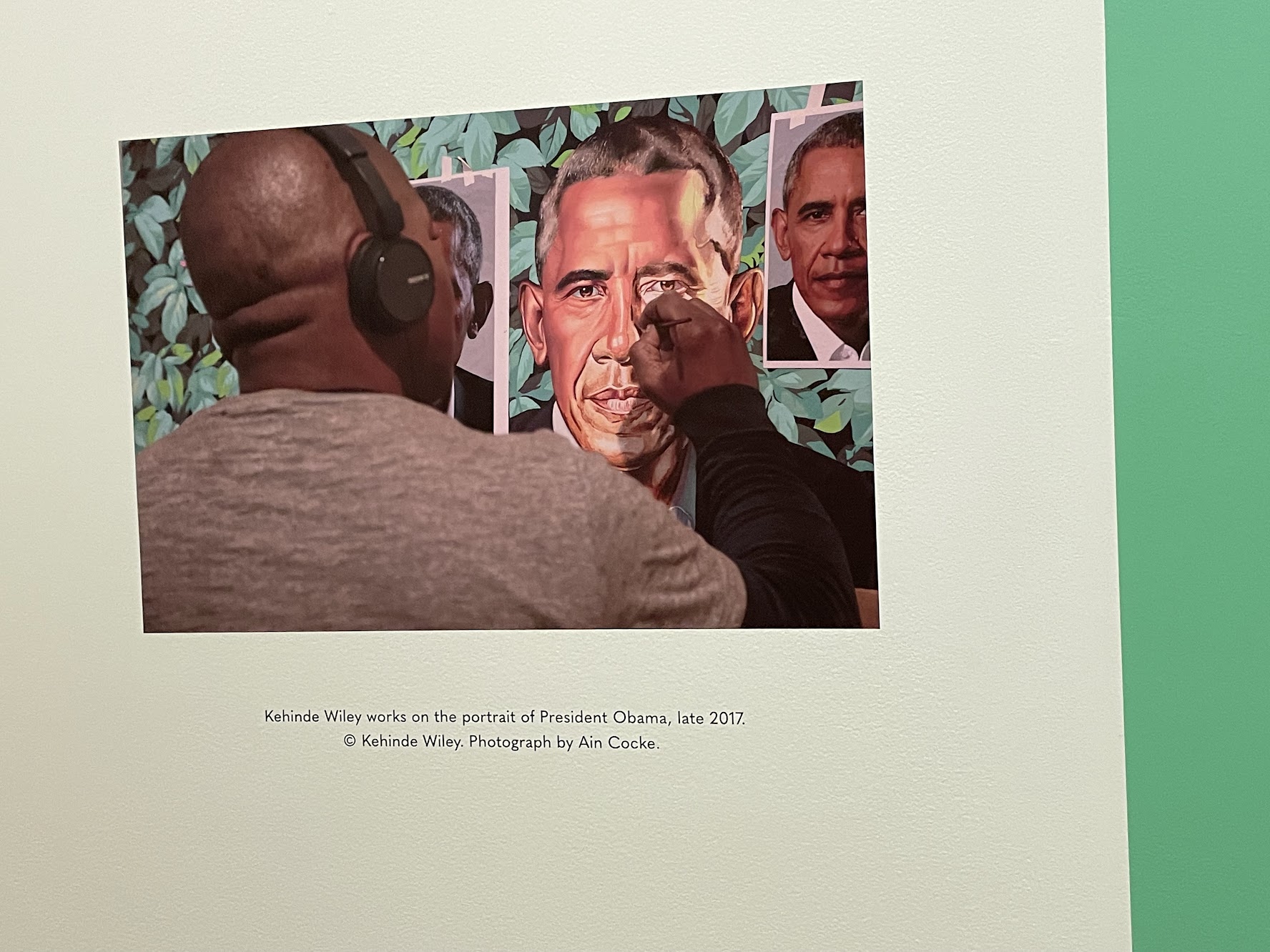
The exhibit is very small: the portraits of Barak and Michelle, several related artworks, and how these portraits were painted.

Continue reading ““Obama Portraits” Exhibit With ODS”

Half-pandemic May

Today, Chicago and the state of Illinois lifted most remaining COVID-19 mitigation-related masking and social distancing requirements and capacity limits. It isn’t quite the end of an era, but it is a step forward.

But when I wrote a decent chunk of this post (on June 7), many of those limits were still in place, and Chicagoland region was caught in an interesting half-way state that had as much to do with people’s attitudes as anything that was formally required.

I’ve been Chicagoland specifically because the United States, for better or for worse, continues to be a patchwork of restrictions, regulations and approaches. For the past 12 months, I’ve been able to sit down in coffee shops in Kenosha (Wisconsin) and Michigan City (Indiana), but not in Chicago and most suburbs. Masking has also varied – as I mentioned before, Kenoshans really didn’t mask much until the fall 2020 surge in cases.

In the past two months, we saw two major developments.

In late April, CDC issued a recommendation stating that people don’t have to wear masks outdoors – though it still recommended that unvaccinated people wear masks in crowded outdoor settings. Then, on May 13, it recommended allowing vaccinated people to go maskless indoors, except in public transit, government buildings, hospitals and some other congregate settings. Illinois and Chicago specifically adjusted their respective regulations accordingly – which meant, in practice, that businesses and public institutions such as libraries could continue requiring everybody to wear masks, if they so chose.

Continue reading “Half-pandemic May”

Is It Really Too Extreme?

Some time ago, a friend of mine emailed me one story about one prominent journalist being fired from the job he holds for many years based on the accusations of insensitive conversations and offensive remarks. My friend asked me whether I feel that “cancel culture” goes overboard. I told her that I would read this story more closely and tell her my opinion. 

This conversation happened a while ago, and first, I wanted to go over the details of the story she sent to me. But then I thought that the problem I want to address is not in the specific story of a specific person but rather this whole attitude of “well, I can agree with some of that, but that is way too overboard!”

Years ago, I thought the same. I thought it is OK that I have to be twice brighter as any man applying for the same job because I have to balance out the fact that I might have to take time off for a sick child. Years ago, I felt OK when men would hold the door for me or take heavy bags from me because they can carry them:). I even liked the hand-kissing thing.  

Years ago, I didn’t see anything wrong in presenting the Africans in the children’s books virtually naked and carrying spears.

The awakening moment for me was realizing that I belong to one of the “stereotyped” groups of people in the US. I know that some people are OK with that, but I never was. At my first job, when I didn’t have a car yet and could not drive, people were taking turns to drive me to work and helping me to pick up Vlad and Anna from the daycare. I realized that I hate the question, “who is picking up Russian kids today?” Why it’s important that they are Russian? Why are they not just Hettie’s kids? I hated the joke “Russians are coming!” when Yuri and I would enter the office. You might say that I was over-sensitive. Probably, but it was very difficult not to be annoyed with the “Anastasia” cartoon and to know that people indeed believe that’s who you are. 

There are tons of good books about racial and gender discrimination. Many people said it way better than I can. Still, I know that my friends want to know my very personal opinion: it’s all fine, Hettie, but what do you think?

First, I think that whatever “general population” considers “overboard, too much, too extreme” is just right. For many years, it never occurred to me to imagine how people on the receiving end feel. I never thought about whether “little black people” would like their images in my children’s books. The thought never crossed my mind. I was guilty across the board of stereotyping people by national origin, race, and gender. I think that people feel “too much” just because this way of thinking breaks their default patterns. “it’s not a big deal,” because it’s not a big deal for them.

And second, I think that people have a right to be “too sensitive.” because it is not “too sensitive,” it’s defending their dignity. I remember my Jewish friends in the Soviet Union reacting with pain on any display of antisemitism. Some people could also say: what’s a big deal? Nobody means anything bad, really! That’s just a joke! Back then, I would say the same thing: they had a right to be over-sensitive. Jews in the Soviet Union were indeed discriminated against, and their reaction at each and single case was justified. 

It is wrong to mock “too much of political correctness..” SImply wrong. Try to imagine yourself on the other side of the equation. 
My City

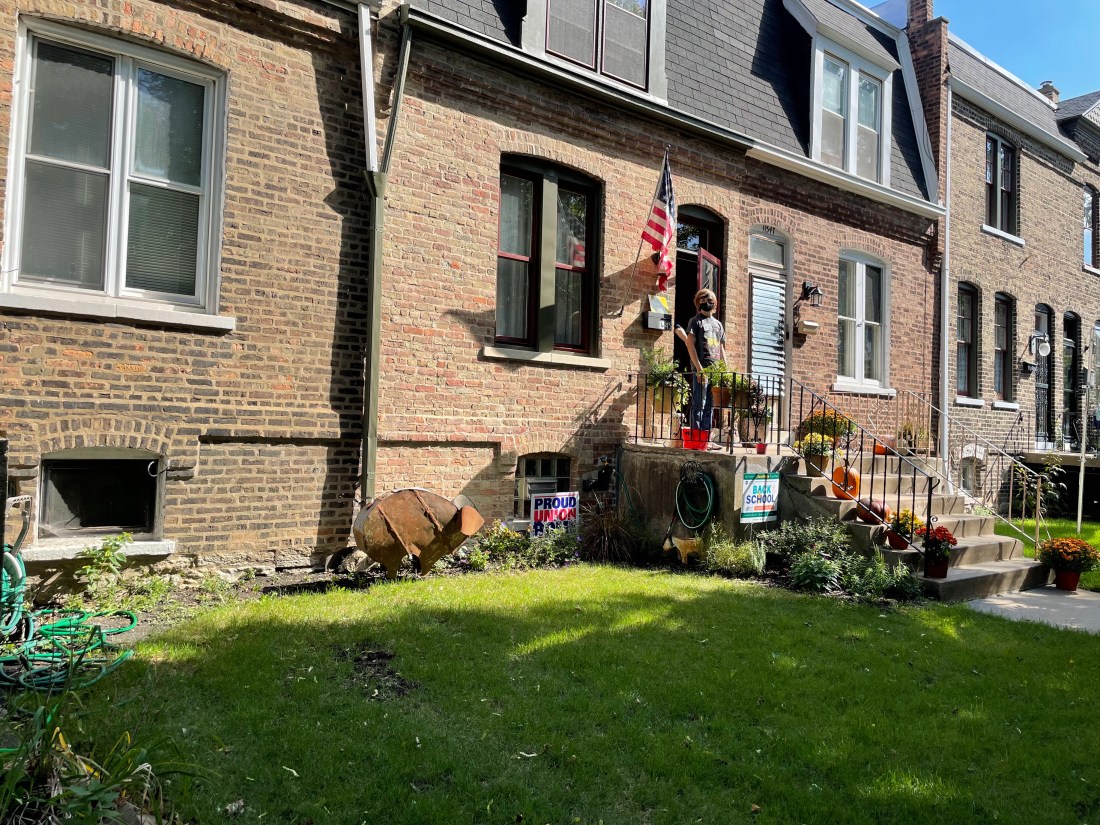
The city is alive. Not exactly as pre-pandemic, but so much more than a year ago! My city is alive, and it will live, and it will rebound because this city is meant to live. 

Two pieces of news today almost made me cry. The first one was the Navy Pier reopening with the fireworks each Saturday till Memorial Day – and now I will be able to see them! The first firework will happen on May 1, and it will be dedicated to the health care workers. 

The second one is about the Arts 77 grant – $60 mln to support the local artists. That is unprecedented, and it is such a right thing to do and at the right time.

And one more thing. Do you know what I hate? I hate when people who do not live in the city, do not go to the city, and do not know what’s going on there are trying to give me pieces of advice. Out of the blue, when I mentioned that I am going to meet somebody in the city before heading home, a very well-intended co-worker said: you’d better hurry up and leave the city before it starts. I was: what starts? They are going to announce a verdict for Derek Chauvin, and if he will not be convicted… I was like: firstly, he will be most likely convicted. Second, it’s not like “something” will happen instantaneously. And this “something” is not necessarily going to be violent. 

There was a helicopter in the sky when I was walking towards the train station, that’s true. But boy, I can’t even describe how I feel about people who are still entering the city as if it is a war zone … 

Chicago’s Austin community and the complexities of COVID-19 vaccine equity

For the most part, Illinois is till currently in Phase 1B of the vaccination program. In order to get inoculated, you have to be 65 or older, or (with a few exceptions) an essential worker, or a teacher, or (in most parts of the state) be an adult with some kind of a long-term health issue. This means that most adults and none of the kids still can’t get it.

For the most part.

In the end of February, the City of Chicago quietly launched the Protect Chicago Plus initiative, where the city is offering vaccinations to everybody age 18 or older who live in certain community areas and set up temporary vaccination sites. The idea is that the majority-black and majority-Hispanic neighborhoods have seen higher-than-average number of COVID-19 cases, hospitalizations and deaths, but also have fewer opportunities to get the vaccines. For example, the Lakeview neighborhood up on the North Side has a number of doctors’ offices, clinics and pharmacies. In North Lawndale, you can count those on two hands and still have fingers left over.

The city decided to set eligibility based on community areas, which makes sense. Neighborhoods come and go, their borders shift, and there isn’t always consensus on what they’re called and borders even are, while Chicago community areas have endured, with very few changes, for almost 100 years.

But it does create some interesting wrinkles.

Continue reading “Chicago’s Austin community and the complexities of COVID-19 vaccine equity”

Are They Really Afraid Of Black People?

Last week, during my zoom birthday lunch, I mentioned that there are way too many coyotes wandering around Palatine these days, and how I saw a full-grown coyote on the bike path, and he was not afraid of people. I mentioned that people are concerned that coyotes attack dogs and that I agree there are too many of them around.

Vlad suddenly said very sharply: good! If people are afraid of coyotes, they might decide that coyotes are more dangerous than black people and decide to move to the city.

I was like: Vlad, what are you talking about?! People are not afraid of blacks! Vlad: they do! They just do not say it! Look, people are saying they are afraid to get on the CTA, and if you ask them why they would be: I am afraid of people on the CTA. And if you keep pressing, it would be – they are afraid of blacks. I tried to protest, but then all of them (my kids, I mean) told me that I am an exception, and all other people who live in the burbs think differently.

I told them that I do not think I am an exception and that more of my co-workers live in the city than in the burbs. But in the next several days following this conversation, I had several encounters that proved Vlad’s point.

One of my younger co-workers reacted at the Sanders on the CTA mem on Slack and said that “he has not been on CTA since March, and is not looking forward to it”. And I chose not to ask why. Which I probably should. Then, when I talked with my neighbor, she told me about her granddaughter who will teach in the city and is going to live in the city, and she (my neighbor) thinks it’s not safe. I shook my head, and she asked: you disagree? But it’s not safe! Give it some time for things to settle down.

And the next day, there was a conversation with my other younger co-worker about renting in Chicago, with the same question: is this neighborhood safe?

I tried to answer in detail, explaining that “safe” is a rather relative term, and you should know how to operate in each neighborhood, and giving lots of examples. And do not take me wrong, I agree that young people moving to the city should do their homework and research the neighborhoods’ specifics, safety, and everything. But … I do not even know how to describe it, but sometimes I can hear that these young people were instructed by adults who know nothing about the city except that it is “unsafe.” And I hate when people come to Chicago (not now but in normal times) “just for work,” and do not know anything except for the way to their office, and never try to explore anything else. Because everything outside the Loop is “unsafe.”

Not like I can do anything with this situation. But I feel very sad and annoyed with it…

While America Aged: a Book Review

While America Aged: How Pension Debts Ruined General Motors, Stopped the NYC Subways, Bankrupted San Diego, and Loom as the Next Financial Crisis is a relatively short book with a long title. At first, it felt boring, and I wondered why I am reading it in the world, but it ended up being very enlightening. 

One thing that puzzles me is the difference in the pension systems between the US and the rest of the first world. I knew that many big American corporations had pensions in the past, but by the time I entered the US workforce, they were eliminated everywhere except the governments. I learned how pensions in big corporations, like GM, were first established and how they played their role in attracting workers in the absence of Social Security. Later, the pension design flaws led to the financial crisis. 

When the US car manufacturers were in a severe crisis ten years ago, people would say that American cars cost more than Japanese cars because American workers “cost more.” What never occurred to me was a notion that it’s not that American workers were paid more, but that American car manufacturers had to invest huge sums of money in the workers’ pensions. At the same time, Japanese companies do not need to do so because they have government retirement programs. 

Some parts of the book made me think about the Russian pension system. In Russia, the retirement age for women is fifty-five, and for men – sixty, which is so early that I can’t even wrap my head around it. 

When a couple of years ago, the Russian government announced that they would increase the retirement age, everybody started screaming. What is worth noting, though, is the fact that in Russia, people file for retirement when they reach the age of fifty-five or sixty respectively, and they continue working, receiving both the salary and the retirement benefits. And when I try to explain that that’s wrong, they say that “pensions are so small, you can’t survive on a pension alone, you need to work. I do not understand how it does not occur to anybody that pensions can’t be bigger if people only work for half of their lives. 

When I express my opinion that pensions are designed to provide income for those who can’t work any longer, that it is something like insurance, people are telling me: no, we are entitled to receive a pension after we reached a certain age. 

I just gave up on understanding :). But the funny thing is that in this book, when some municipal employees were receiving both their salaries and pensions, it is described as something outrageous, like the lowest possible morale :). When the workers were given extra shifts or better positions during their last year before retirement, the schemas were described as fraudulent, but that precisely what everybody was doing back in the USSR. 

Very interesting reading, I am telling you 🙂

What Finland Has To Offer

My daughter sent me this link yesterday. She commented that one of her friends considered it as a backup plan if Trump would win. As for that statement, both she and I agree, that fleeing the country in difficult times is not right, and if Trump would win, we would stay here to fight.

But I also agree with her, that is is an example of excellent marketing, and moreover, both she and I know that it’s all true.

I am not saying I will never ever move to some other country; after all life proved I can’t ever make the “never” promises, but one thing I am sure about: I will never ever move somewhere for pure economic reasons. I like a lot of things in Finland, and I want many of them to happen in the United States, and I will work on making them happen here. At least now, there is ahope that some of thet will be possible:)

Scenes from Kenosha, two months after the shooting of Jacob Blake

As I’ve commented before, we journalists have a tendency to swoop in when there’s a crisis/controversy, and then forget about it once the heat dies down. And that is something I’ve personally been trying to avoid, even when I don’t get paid for it.

Kenosha has been on my radar long before the shooting of Jacob Blake. I visited it several times – the first time back in college, in one of my “how far can the [then $5] Metra weekend pass get me” day trips. I wanted to see the only midwestern town within communing distance that had some form of tramway (a heritage-style streetcar loop that, as I quickly realized, was little more than a tourist attraction for the HarborPark development in downtown Kenosha). I visited it a few times since, because it’s the only way to go to another state on a Metra weekend pass, and while I don’t have as much inexplicable fondness for it as I do for Michigan City, it has its charms. I even visited Kenosha twice during the pandemic – once in May (when, by a strange coincidence, the Wisconsin Supreme Court struck down the state’s stay-at-home order) and once in June.

So, when the shooting happened, I already had some context. I already knew that it was a manufacturing town those existence once revolved around several major auto plants (the aforementioned HarborPark development was built on the site of large American Motors Corporation lakefront plant). I knew that the city was home to more African-Americans than many people might assume, with some living there since the days of the Underground Railroad. When protesters marched on Kenosha County Courthouse, and when riots swept through downtown and Uptown areas, I had a pretty good idea where several of those streets were.

I originally planned to try to get to Kenosha on August 24, what ended up being the second day of riots (and the day before Kyle Rittenhouse killed two protesters and wounded another), but I missed the mid-day train. Because Union Pacific North Metra Line is running on a limited schedule in these pandemic times, it meant that there was no point catching the following train, since I would basically only have time to walk around for a few minutes before I had to catch the last train back to Chicago. Paying work kept me from making another attempt until Friday, August 28. By that point, the protests continued, but they were mostly peaceful, and National Guard was brought in

Continue reading “Scenes from Kenosha, two months after the shooting of Jacob Blake”