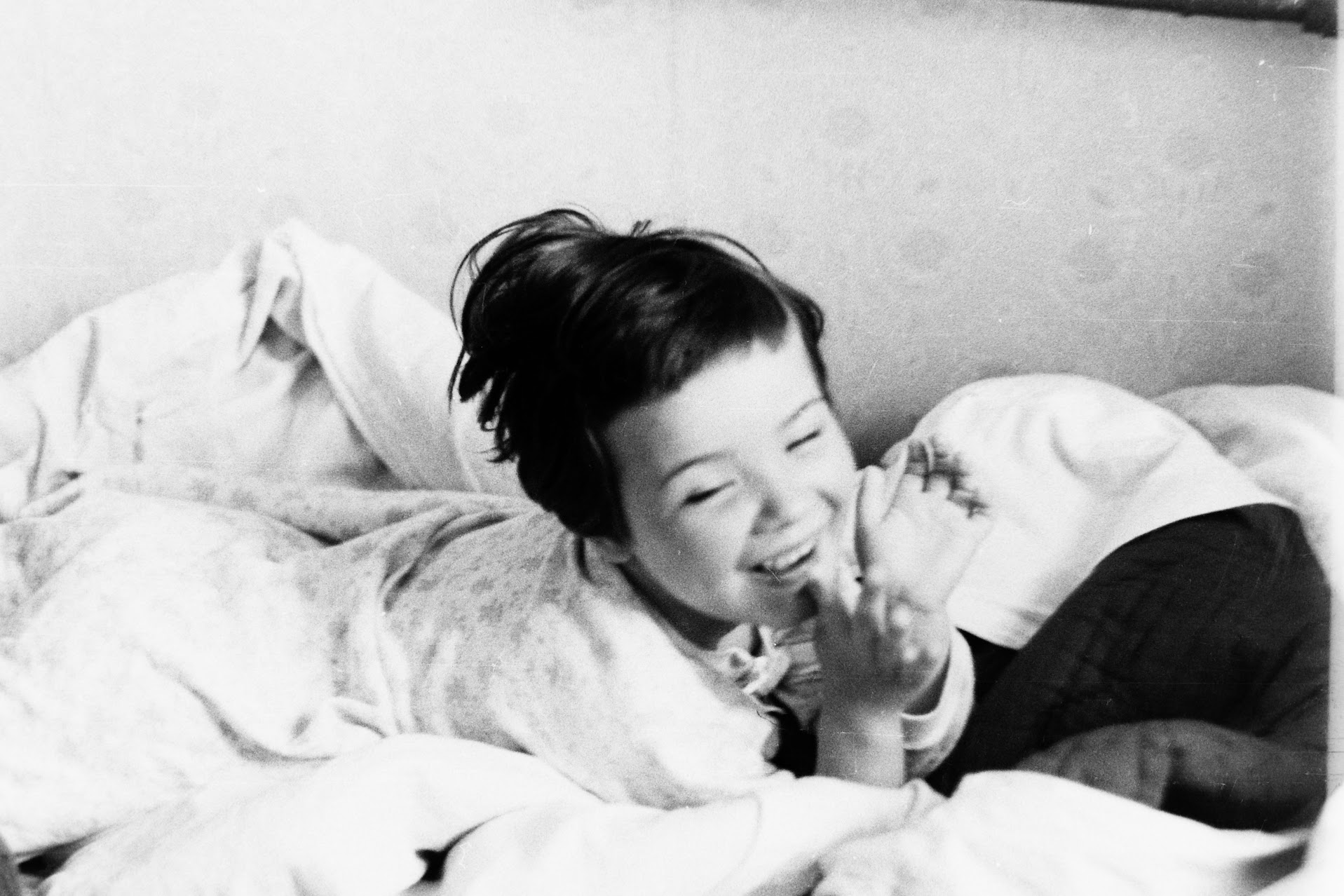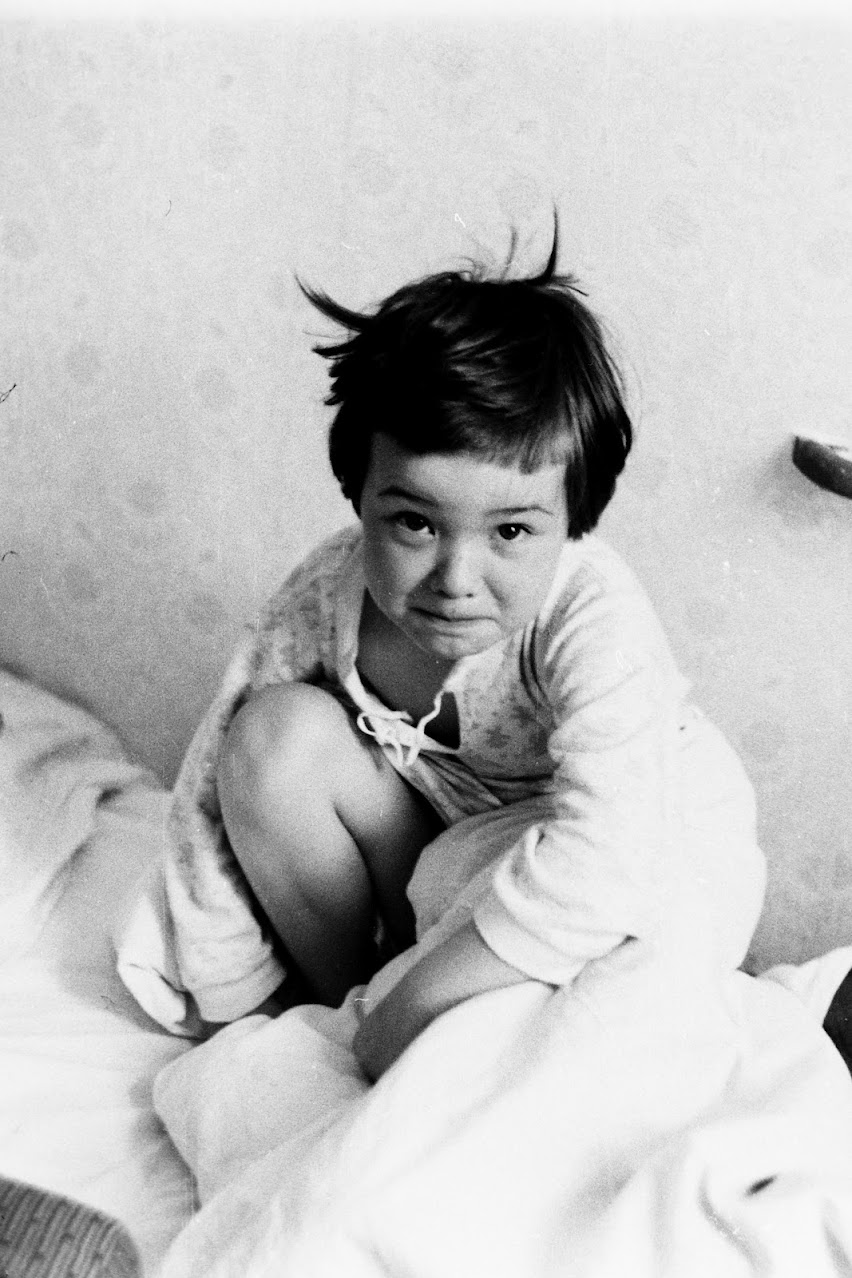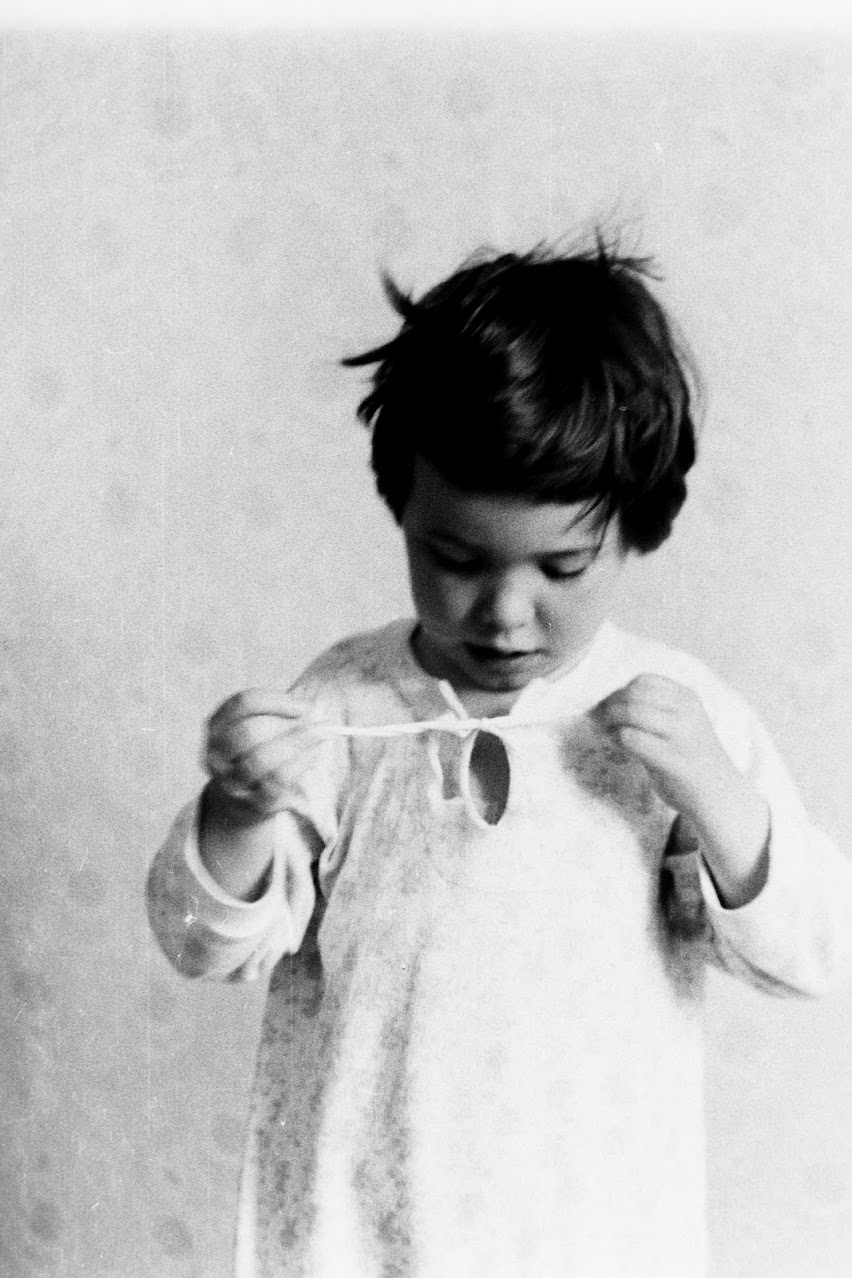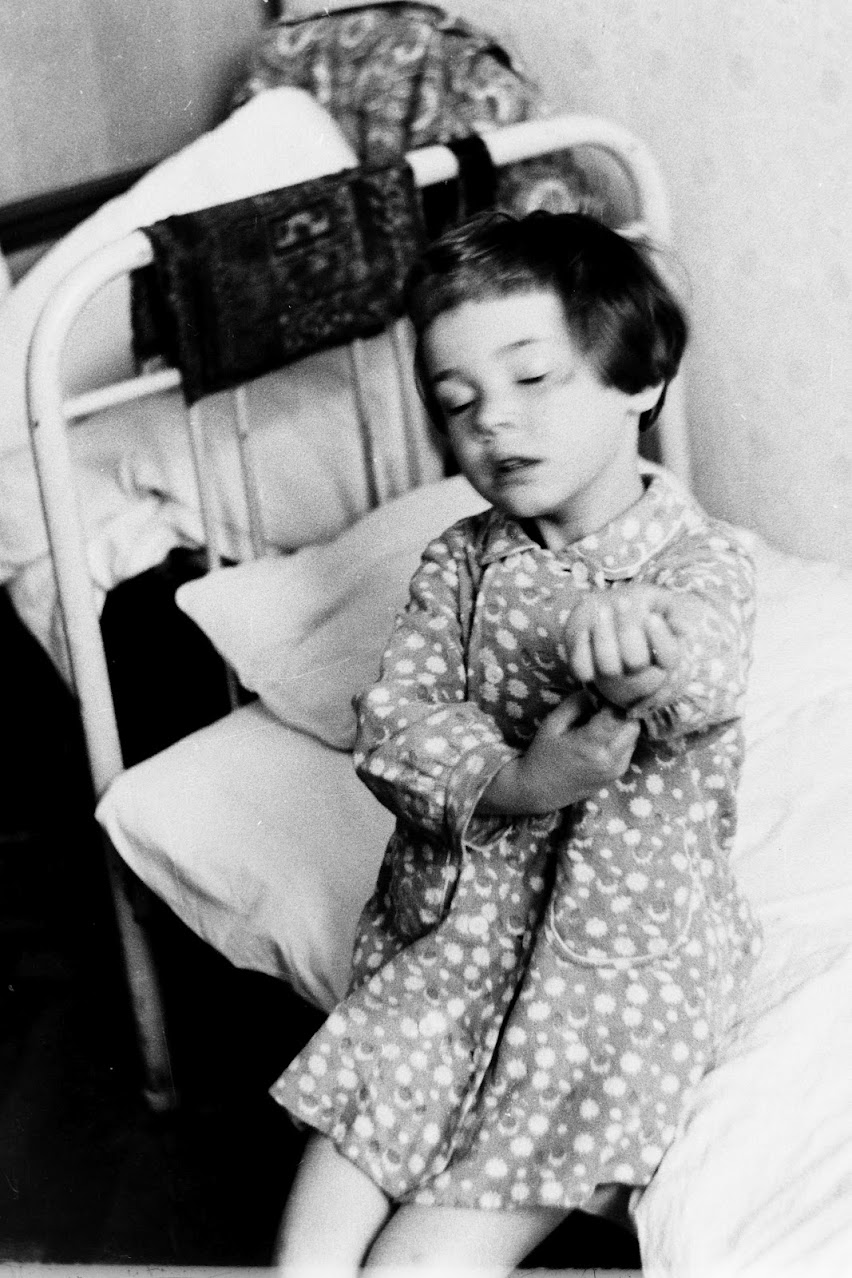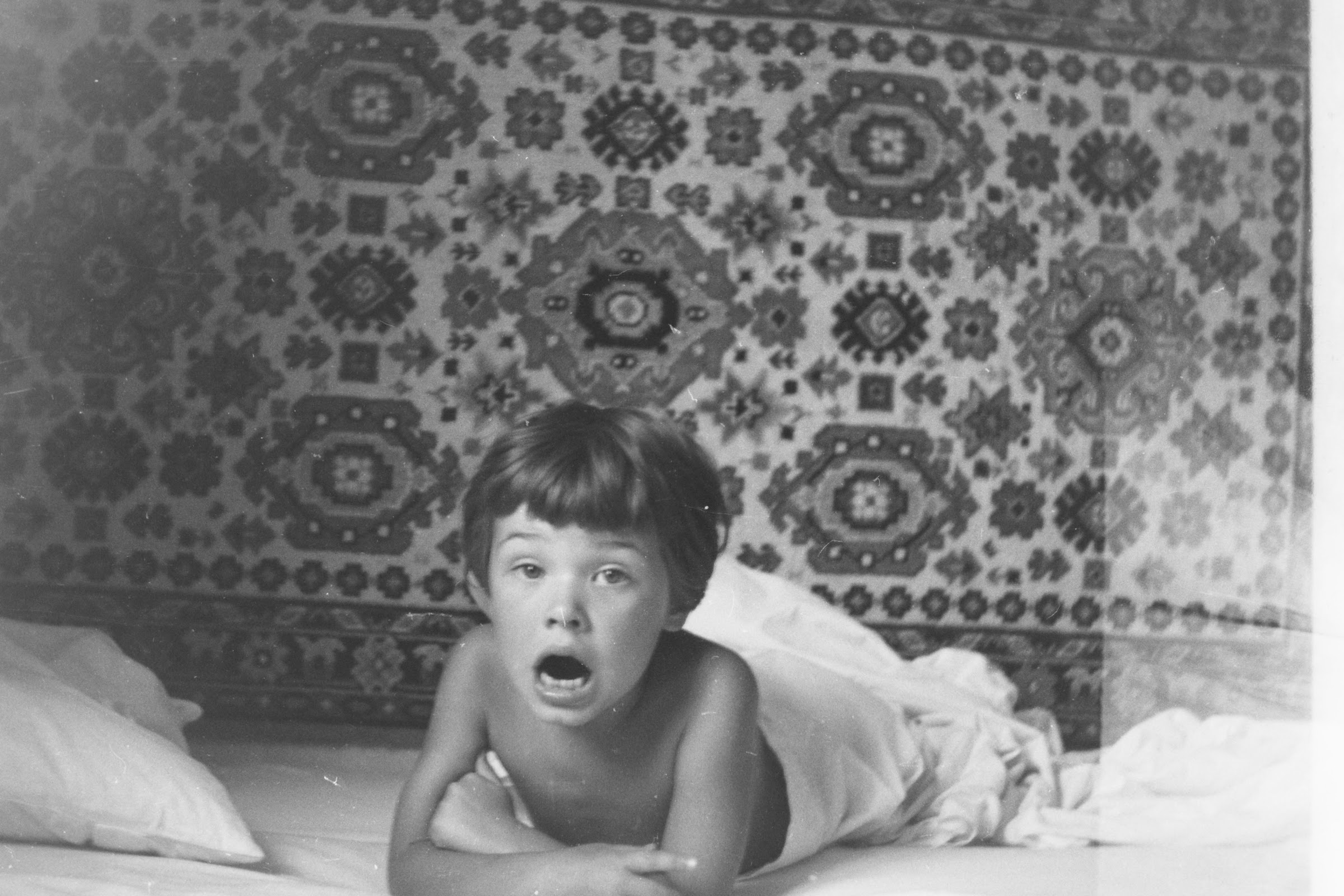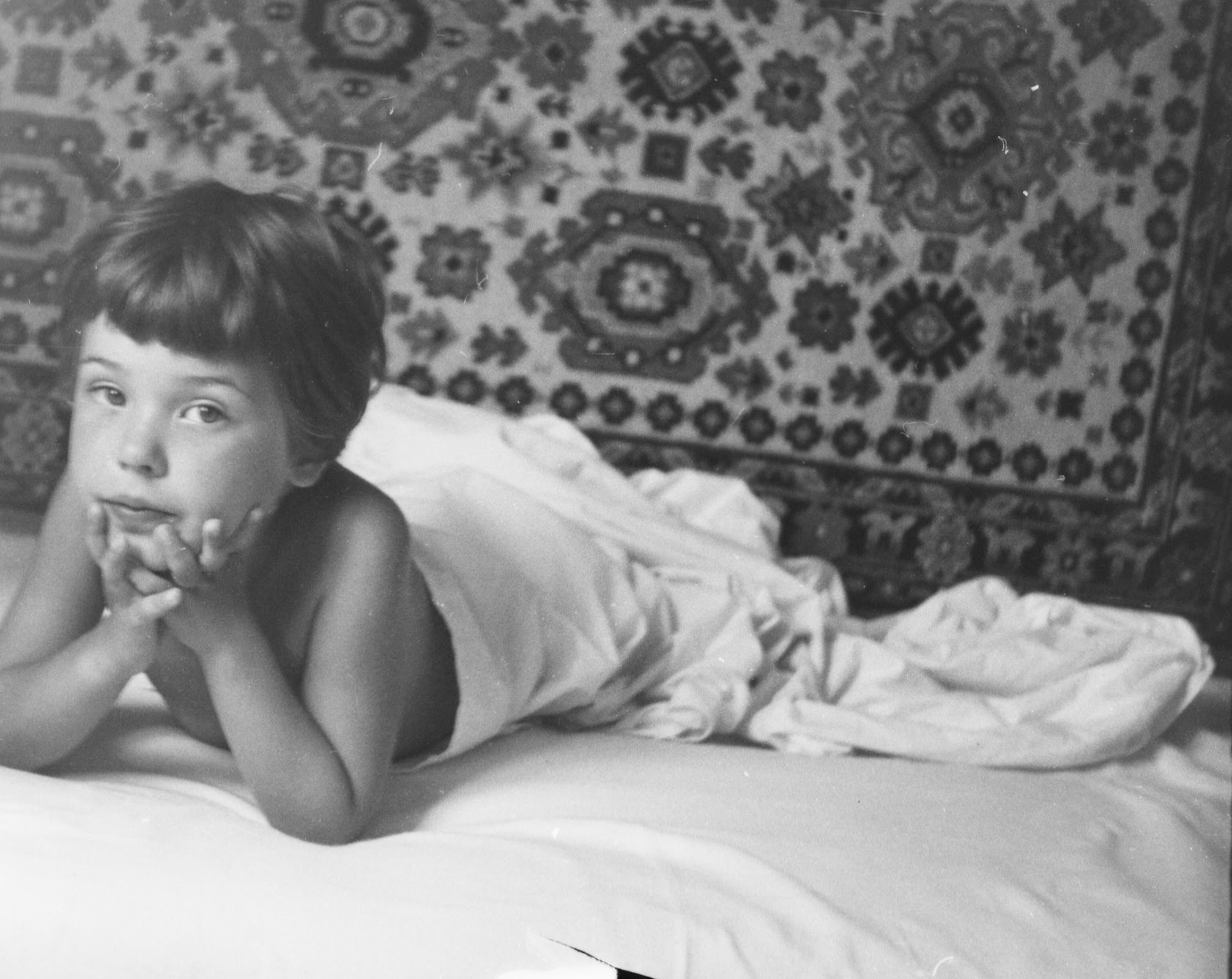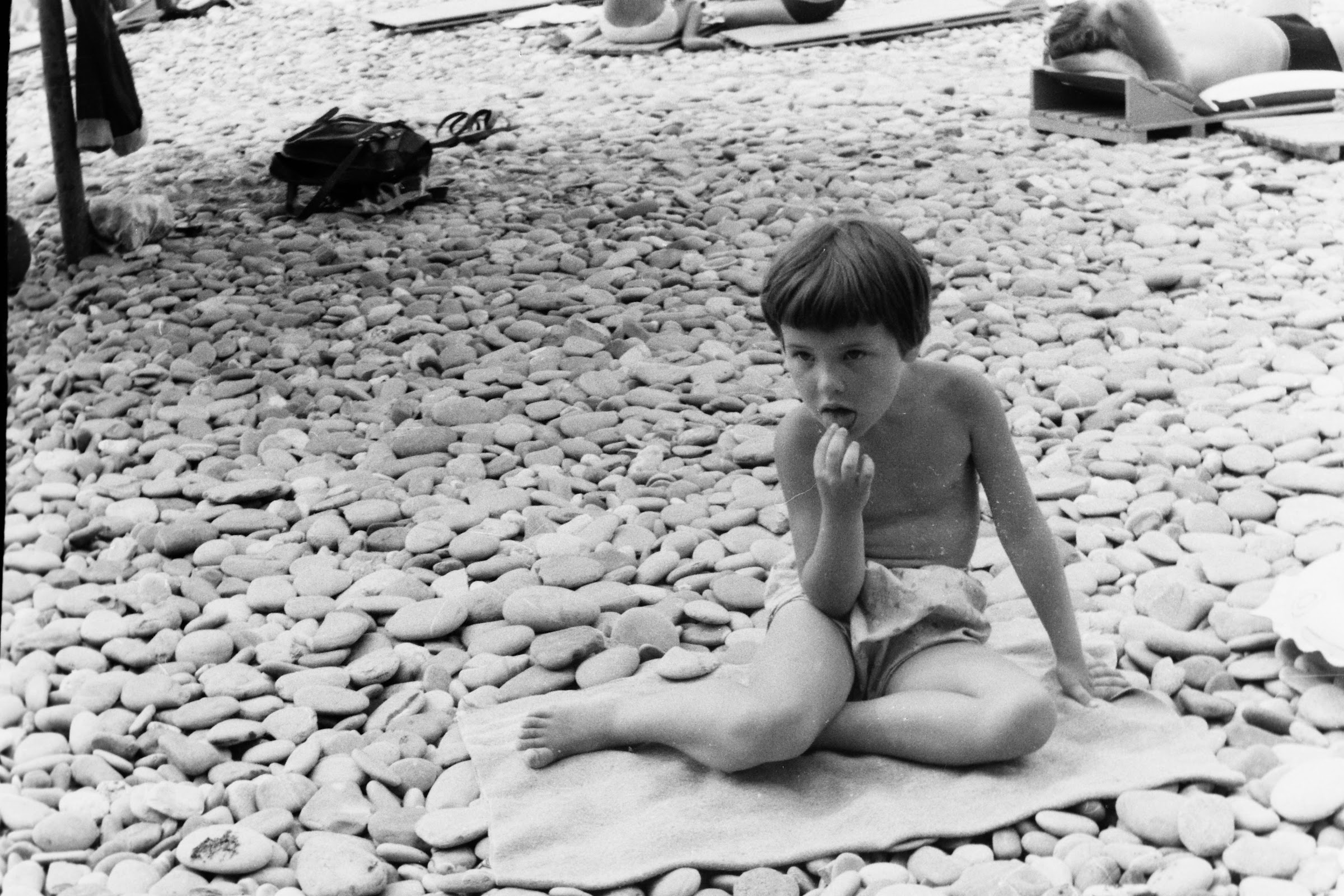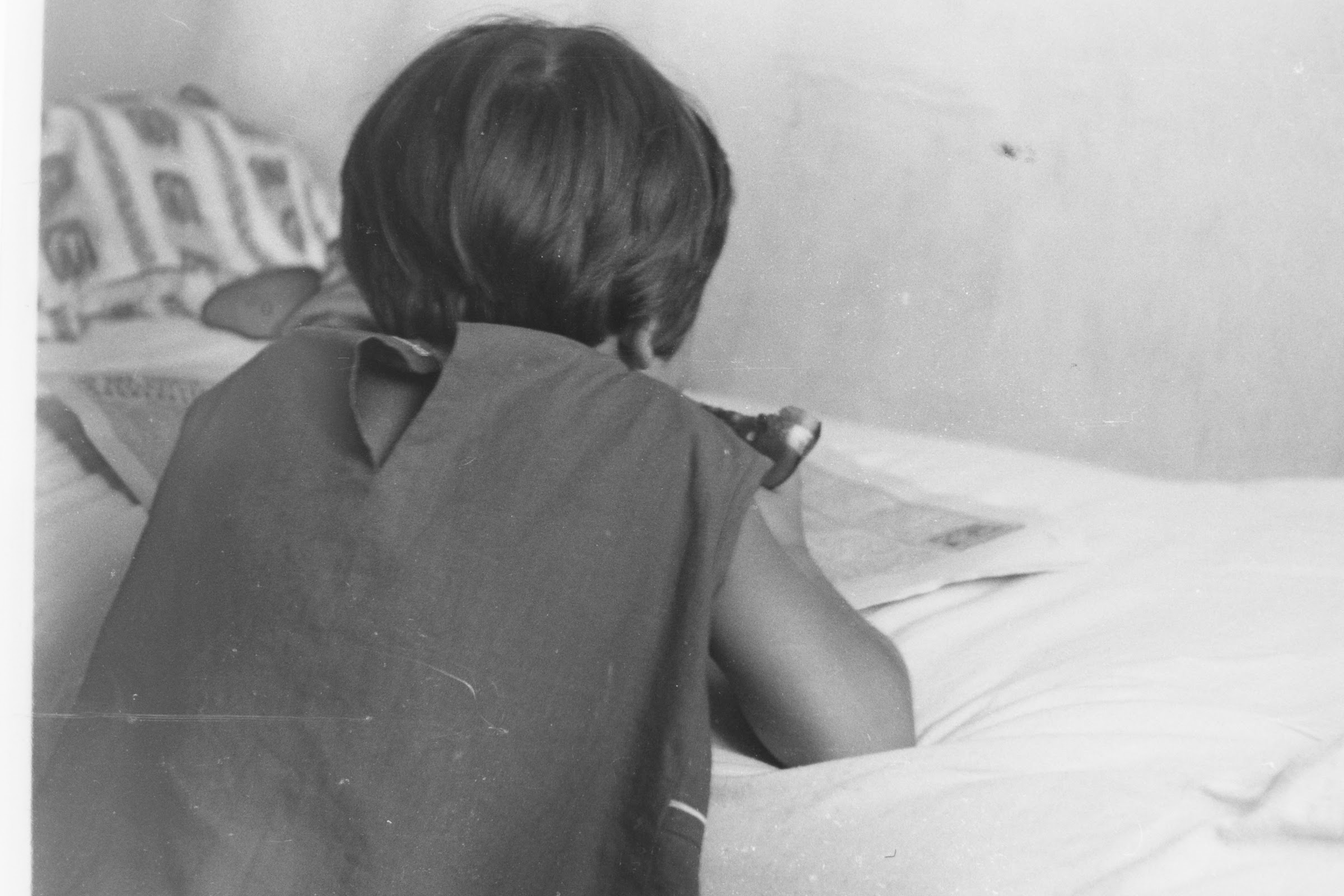
Loo, September 1968

I asked mom whether she remembers why we chose Loo, did she know anybody there, and how she found these landlords who rented a room for us. She does not remember, so there is no way to find out. neither how the arrangements were made, nor how much it cost.

I remember walking to the house, which will become our temporary home for a month. It must have been a five-story building, and I think we lived on the third floor. The owners rented all the rooms they had during the season. I remember that the owners slept on the couch in the living room. They had three children – two older boys and a girl around my age named Ania. Most likely, they got their apartment from the government because they had three children, but I can’t recall where all these children slept when they rented all the rooms except for the living room. Since the people were moving in and out, mom and I spent the first two nights on the huge balcony and then moved into a small room with two twin beds and a desk.

We had breakfast at home in the morning; then, we would go to the beach and stay there till noon (no sunscreen in existence). I saw these beaches from the train window; I had never seen anything like that before – they were covered with flat pebble stones instead of sand. We stayed inside for the hottest hours, and then we would go to the beach again until dinner time. Usually, we had dinner in a cafeteria by the beach and then often returned to watch a sunset.

Afternoon nap
At the beach

I was not tired of that repetitiveness – everything was new to me!. The Black sea, the beach, the mountains which started right behind a narrow strip of houses, the abundance of fruits at the market, the corn on the cob sold right at the beach from large buckets – ten kopecks an ear.
I am skeptical about the medical benefits of this trip, but it made great memories.

My historical posts are being published in random order. Please refer to the page Hettie’s timeline to find where exactly each post belongs and what was before and after.

And More To The Previous Post

Two things I forgot to mention in the previous post. 

One is about the resemblance between the Long COVID and the long-term effects of the Spanish flu on people’s ability to think and concentrate. John Barry even analyzes the behavior of President Wilson during the peace negotiations in Europe. He goes as far as speculating that his inadequate after-flu decisions affected the resulting treaty in such a way that it late made it easier for Hitler to come to power. 

And once again, about an extremely important balance between panic and informed decisions. As John Barry states, people should know the truth. When the government officials are honest in their communications, they help to maintain trust in society. Also, he cites Lincoln about the importance of identifying the thread – only when the thread is identified can you fight it. I would add to this what I’ve already said many times: whenever there is a need to change the course, it is important to explain why these changes are made, what prompted these changes, and why it was not the case before. We all know what would be the reaction otherwise 🙂

“The Great Influenza” book

I have so many things to say about this book! I started reading it because, like many others, the current COVID pandemic prompted my interest in the 1918-1920 flu pandemic. I wanted to know more about it, how people handled a pandemic a century ago, what was the effect on society and the economy, and most importantly – why we know so little about it?! 

The book gave all these answers and even more. It is more “medical” than I thought it would be; sometimes, I felt like there were too many medical details, but that’s what makes this book so convincing. 

 It starts with a survey of medicine and medical science history in America. I could not imagine that there was such a lack of science until the beginning of the 20th century! And then, the book proceeds with documenting the development of the flu pandemic, covering all medical, social, and political aspects. You can’t stop making parallels with the COVID pandemic, even though the book was written more than ten years ago. (The last version of the afterword was written when the COVID pandemic had already begun, so some similarities are discussed)

The big question I had from the very beginning of the current pandemic was the following: why do we know so little about the Spanish flu pandemic? Historical textbooks mention briefly that “one hundred million people got sick,” but that’s pretty much it. When you read anything related to the 1918 – 1920 period, the flu is never mentioned as a background of events. 

The most important reason why it all but disappeared from world history is that it was forbidden to write about it! The world was at war, and none of the participating countries wanted to spread panic or “hurt the morale.” That statement explained much of what was going on. It’s unbelievable: people were getting sick and dying. In some cities, like Philadelphia, dead bodies were piling in the houses because there was nobody to carry them away and nobody to bury them. And newspapers said nothing!

It was primarily because of the wartime censorship, but also because there was (and there is) nothing heroic in dying from a disease. 

The government kept saying, “it’s nothing but the common cold.” Same as know there were people in denial. A quote from the book:

The government’s very efforts to preserve “morale” fostered the fear, for since the war began, morale—defined in the narrowest, most shortsighted fashion—had taken precedence in every public utterance. As California senator Hiram Johnson said in 1917, “The first casualty when war comes is truth.”

Barry, John M.. The Great Influenza (pp. 333-334). Penguin Publishing Group. Kindle Edition. 

And one more – especially pronounced because it was written way before the pandemic:

So the first two items on the list are the lessons from 1918, which COVID has confirmed: 

Number one, tell the truth. 

Number two, NPIs work.

Barry, John M.. The Great Influenza (p. 467). Penguin Publishing Group. Kindle Edition. 

The author notes that not only the newspapers were silent, but also almost no works of literature mention the Spanish flu pandemic (that prompted me to start actively looking for such books, found some). You can’t stop thinking that our COVID memories might vanish in less than a hundred years! And you can’t stop thinking that the Spanish flu lessons were not learned!

In Tartu First Time After 39 Years

I disappeared from everywhere except for Instagram because first I was en route to Helsinki, and then we left for a two-day trip to Estonia, and I didn’t take my laptop with me (since I only have my work laptop in Finland). Now I have no idea when I will have enough time to blog about this trip.

The trip was amazing, and every tiny detail of it was just incredible. But in addition, it was a very meaningful trip in a way I didn’t think it would become. Only when we were on the way to Estonia, I realized that the last time I was in Tartu was approximately the same time of the year, 39 years ago, during my winter break at the University. I realized that it was sort of closing the circle because Tartu nearly became my hometown. I was going to transfer to the University of Tartu; I already talked to the Dean, and he had nothing against my transfer, except that I had to catch up with classes in Estonian, but my friend Anna Mints was saying it was not so difficult. There were reasons I wanted it, and there were reasons I didn’t. Recalling it now, I think I was just not adventurous enough, but it was just a couple of months before I met Boris for the first time. And if I would transfer, I would never meet him. I would probably “become Estonian” because I had a reason to become. And I can’t even imagine how different my life would be…
I didn’t find a thing of what I remembered from Tartu of 39 years ago. I was trying to find the old building of the Department of Mathematics. I remember how it looked, and I thought I remembered where approximately it was situated, but I didn’t find it.

There is a new building called Delta, in a different place. And Tartu does not look a bit of how I remembered it. Which is actually good 🙂

The First Trip I Remember: September 1968

In the Soviet Union, virtually everybody had a month of vacation time a year, no matter how long you worked in a particular place. Taking vacations in parts was rarely an option. Under these circumstances, everybody wanted to take vacations during summer, but if everybody took a month of vacation in summer, it would not be easy to keep operations running. Most workplaces had a vacation schedule for a year, and there was a lot of drama around who should have a preference for summer months vacations. Priority was always given to parents because if you recall, a good parent had to do everything possible and impossible to provide an opportunity for a child to spend summer in the countryside or resort.

Granted, childless people would get summer vacation time, too, and sometimes even parents of small children had to compromise. Thus, in 1968, mom had her vacation in September. After spending summer at the dacha with my detskiy sad, I got one more month of summer – we were going to the South. That’s how people used to say these days: not to Georgia, not to Crimea, not to Krasnodarskiy region – just to the South. I recently asked mom why she chose Loo – a suburb of Sochi in the Krasnodarskiy region as our final destination. Did she know somebody there? Did somebody give her the address of our future landlords? She says she does not remember. It was not uncommon that people would come to small resort places that lived off the tourists and rent a room or just a bed on the spot.

I have more pictures from our second trip t the same place a year later and just a few from September 1968, so I will try to write down what I remember.

The train from Leningrad took three nights and two full days to reach the destination, and most of the time, we were going through Ukraine. At five, I was fascinated with a country that looked different from what I had ever seen in my life. Mom told me that the white-walled houses I saw along the railroad were called haty. Sunflowers were growing by each of these cheerful houses – I never have seen them before, and the combination of white and bright yellow instantly made me happy. I stood by the window and couldn’t have enough of the sunny sights.
We shared a sleeper compartment with another family heading South: mother, father, and daughter of approximately my age. Strangely, but I remember how this girl looked, and I remember that we were playing with dolls, and I even remember how her mom was explaining the bandaid on the girl’s chin ” That’s not us who put it in such an odd way, its a medical worker.”

We never went to the dining car, the conductor always had tea with sugar cubes, and we ate whatever rations we took from home, mostly boiled eggs and cold potatoes. The locals would come to the train at some stops and offer some homemade meals and produce, and I remember us buying hot, freshly boiled potatoes, buttery and mixed with dill, and sour cherries.

And then, on the third day, we arrived at Loo and disembarked, and the first thing I remember seeing was a giant cypress tree. I never saw anything like this before, and for the rest of my life, cypress meant warmth, resort, vacation – it meant South.

Old Photos – Summer 1995

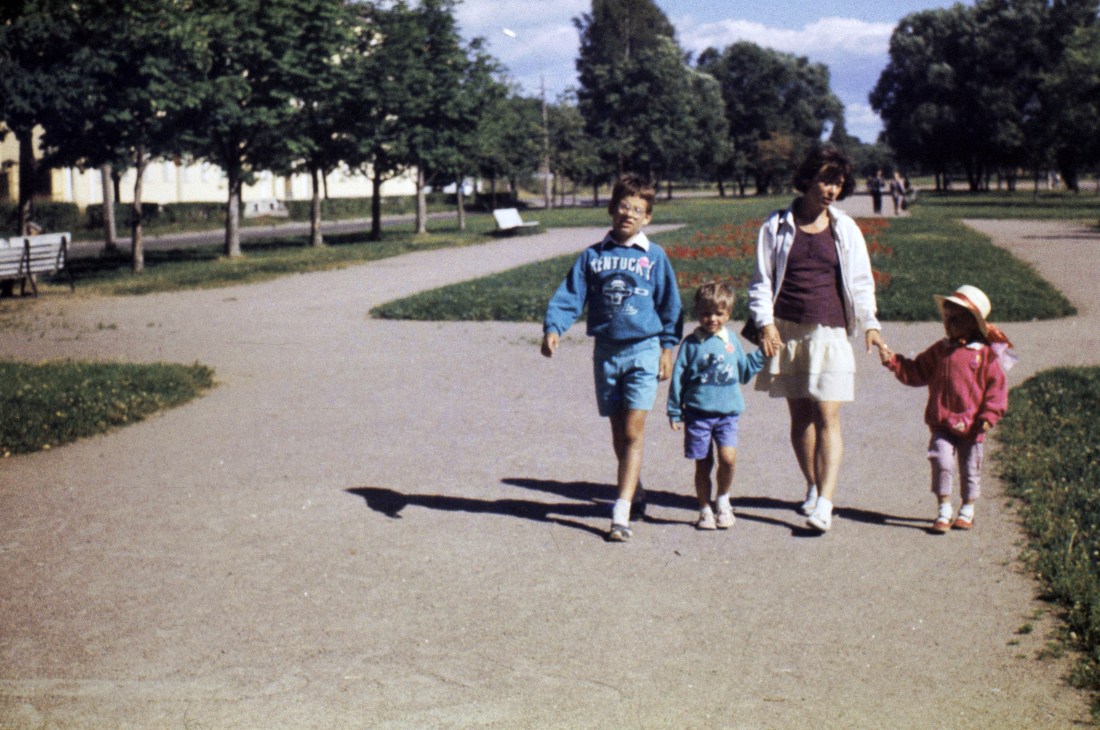
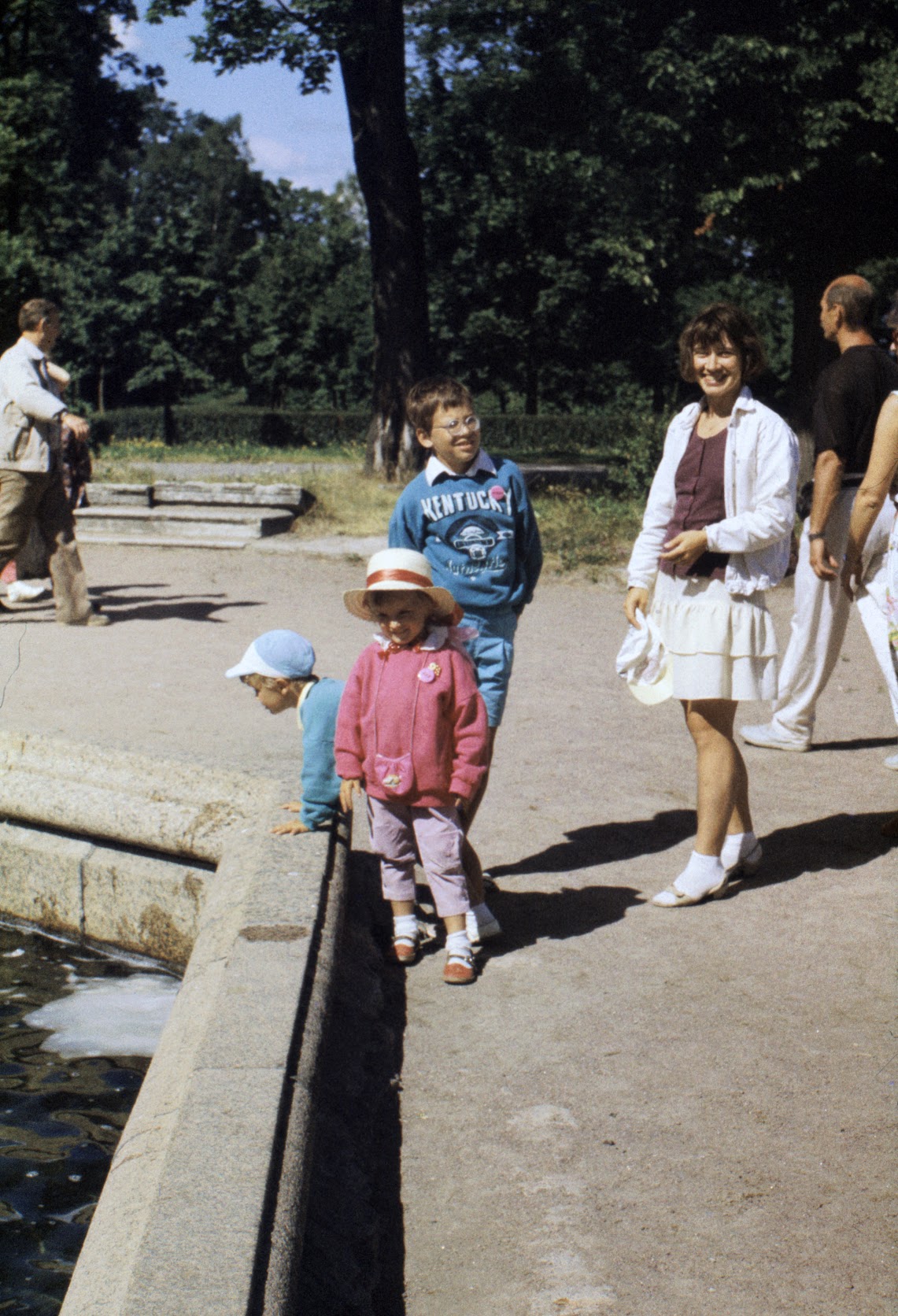
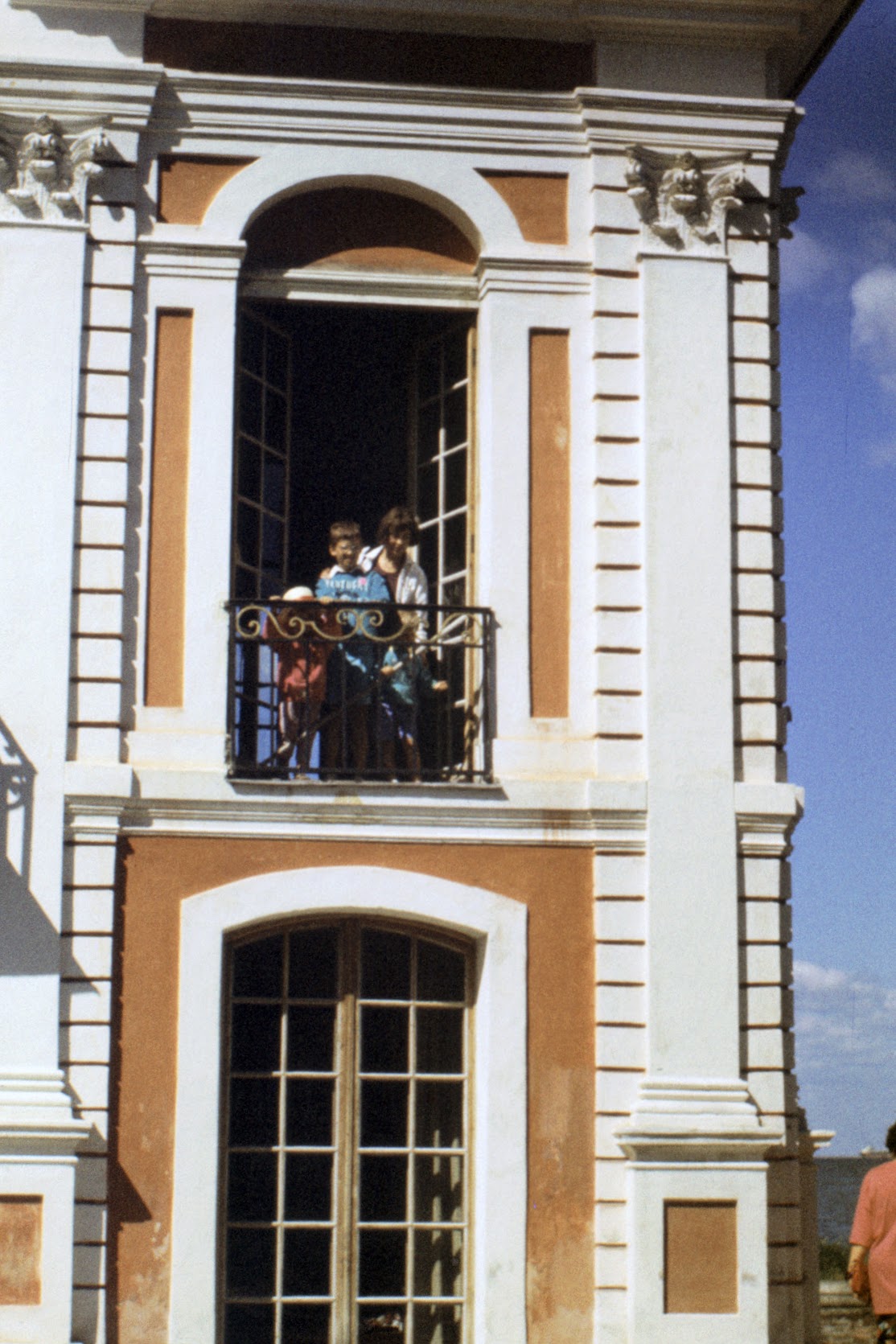
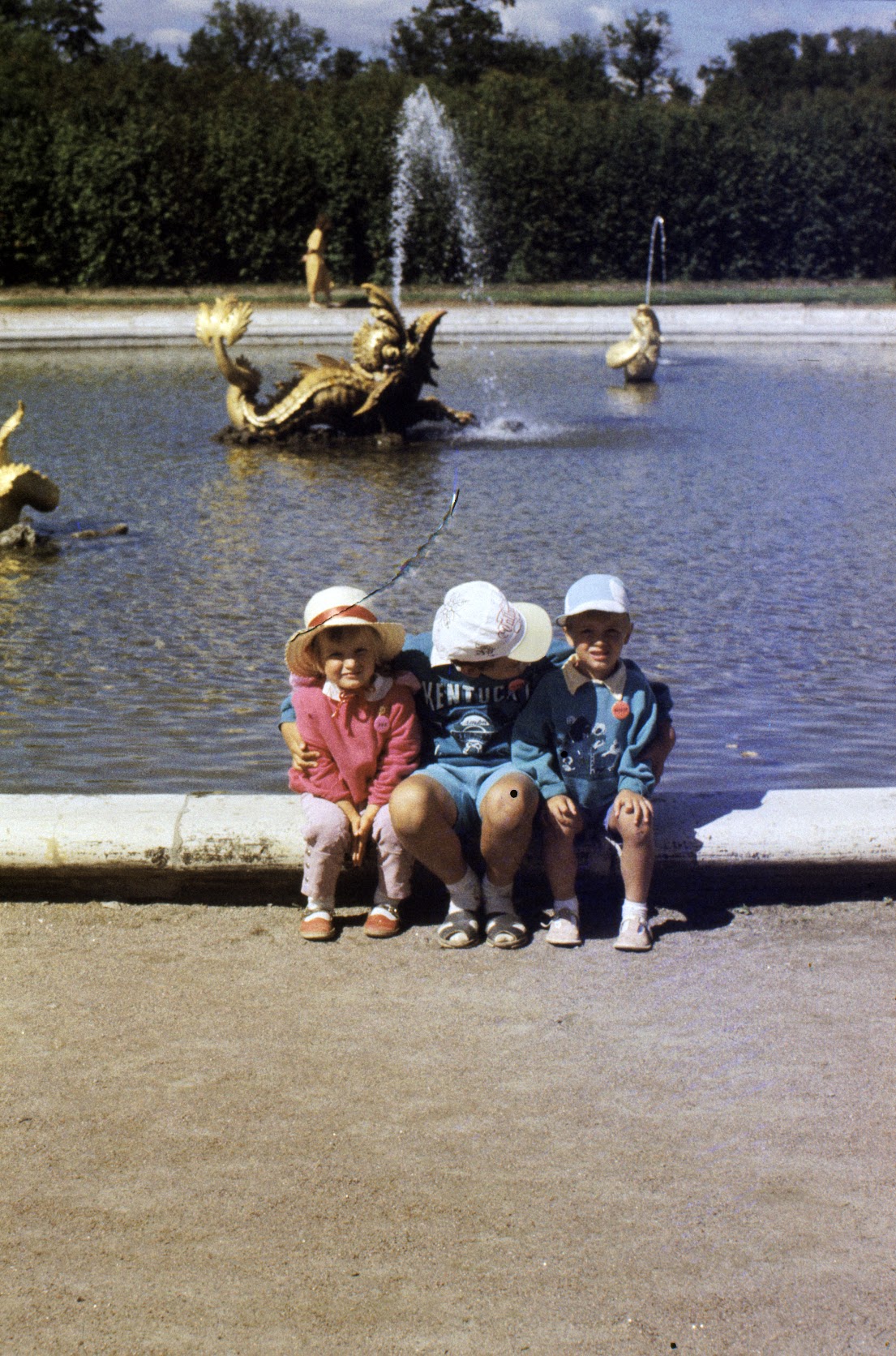
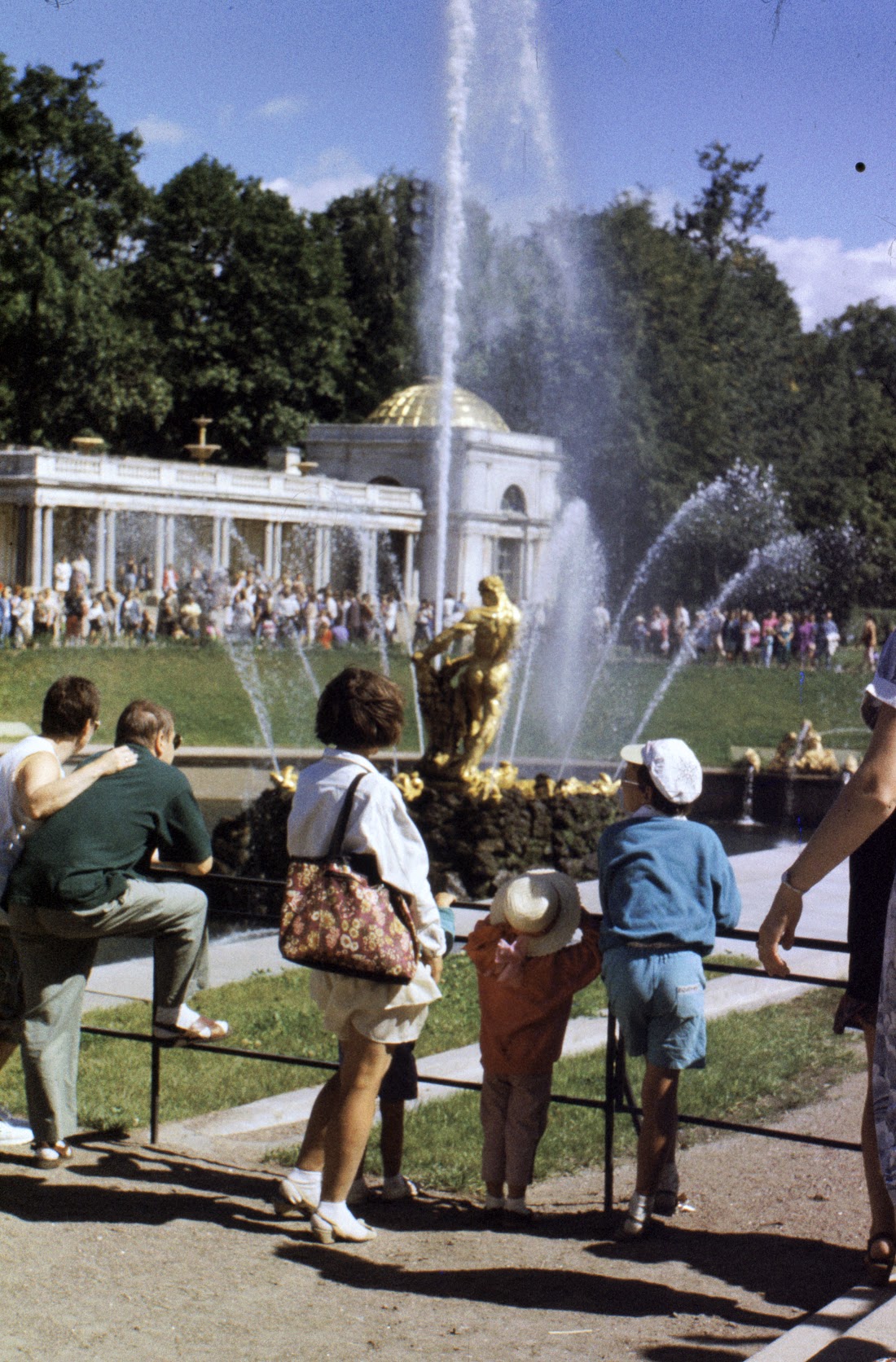
In early December (a Christmas promotion) I sent several random old items to be professionally digitized. I already showed two home moves from that batch. The other two were one mom’s old black-and-white film and a stack of my colored slides from different times and places.

I almost forgot that at some point, Boris took these pictures of us at the Peterhoff Fountain Park.

Continue reading “Old Photos – Summer 1995”

Detskiy Sad At The Dacha Part 2.

It has been two months since I posted my last historical blog. These blogs require more time and thoughts, and my life in November and December didn’t exactly have any room for extra thoughts. 

Following my New Year resolution, I will continue from where I left. My last post was about summer 1968 when I stayed at the dacha with the other kids from my detskiy sad. Although it was summer, fresh fruits were perennial “deficit.” Parents took turns to buy cherries or strawberries at the farmer’s markets and deliver them to the dacha. I asked mom recently, but she does not remember any details. It was definitely not every day, and the fruits would arrive after a nap. I remember slaying in bed and seeing somebody’s mom serving strawberries in the saucers. 

I am trying to recall how often we had “parent’s days.” Later, when I was at pioneer camps, we had parent’s days only once per three-week session. But I do not remember how it was with detskiy sad. I think mom was coming once a week. Sometimes, my father would come, too, and we would go for a walk in the woods. They always brought me some fruits and other treats. Once, my father brought me mango – they were non-existent, mango juice would come along sometimes as a rare treat. 

However, I do not remember missing my mom that much.

Sometimes, the teachers were cruel and punished us for no good reason. Sometimes, the night shift counselor would wake us up to pee into the bucket and not wet the beds (even though almost nobody did). But is was never like, “I want to go home!”

I do not think I had any unhealthy separation issues when I was a young child. As I mentioned, I had no problem adjusting to detskiy sad from the beginning. My completely unhealthy attachment to mom developed later, under her direct influence. 

I am not sure why she wanted me to be so dependent and miss her so much. Perhaps, she needed it for her self-esteem – to know that she is “in demand.” Perhaps, she does not know that there could be other relationships. Now, I feel sad when I observe that she developed the same emotional dependency on me. I try very hard not to abuse it. To my New Year resolution – I should be more emotionally invested when I interact with her. Simply to give her more. 

More Home Movies

I just received the digitized versions of two more home movies. I will need to write in more detail about their contents, but I short: they were filmed by my mom in summer 1975 when we went on a railway cruise through Ukraine.

I will need to spend some time identifying all the places. The trip started in Kyiv, continued in Lviv, then there is should be some footage from different places in the Carpathian mountains, Chernovcy, and Odessa.

The quality of the footage is really bad, there was something stuck to the camera lense, but it is what it is.

My historical posts are being published in random order. Please refer to the page Hettie’s timeline to find where exactly each post belongs and what was before and after.

Detskiy Sad At The Dacha, Part 1

After Baba Ania passed away, mom had to figure out where I would spend the summer. Remember that all good parents had to find a way for their children to spend the summer in the countryside because nothing can be worse than a child left in the city’s polluted air for summer.

The only option she had was to send me to a dacha with my detskiy sad. That decision would make you somewhat a horrible parent because a poor child would be separated from her parent(s) for a long time, but you would make this sacrifice for your child’s health.

Unfortunately, I have exactly zero pictures from that summer. However, I have a lot of memories, so I will try to write down everything I still remember before these memories fade away.

The dacha was located in a village called Vyritsa, with a population of about 13,00 people at that time. There were lots of old dachas built at the beginning of the 20th century. I tried Yandex Vyritsa, and it comes back with many old dachas pictures, but I can’t identify ours. I would recognize it if I saw it unless it underwent a major reconstruction. In any case, the Yandex search brings me back a lot of dachas that look very much like ours; here is one as an example.

Not all the children from our detskiy sad would go to the dacha, and not all of them would go for the whole summer. I remember that about half of the kids there were the ones I knew, and others were from some different detskiy sad.

There were several entries into the building. We had a big room to play in and several bedrooms. There were no bathrooms inside, and we had to go to the outhouse. We were not allowed to go solo, and it had to be a group of us heading towards the wooden shed. There was a bucket placed in each bedroom at night, and if you needed to go to the bathroom at night, that’s what you would use. A custodian would take it out in the morning.

I do not recall whether there was running water in the house. I remember that we washed our hands and faces in the morning using a rather primitive washstand, and we had a place outside to wash the dirt off our feet before heading to bed at the end of the day. Once a week, all of us would go to the village bathhouse, and our teaches and custodians helped us wash.

The dacha was situated in a relatively big lot, where we had a playground which included the swing, a small wooden hut, a sandbox, and a seesaw. There was also a flower garden and some shrubs.

The woods surrounded the dacha, and our teaches would take us there almost daily. We would walk until we found a clearing in the woods, and then we would play there, gather the flowers and make the wreaths, and collect sticks and build tiny huts. We also like collecting the pieces of bark from the pines. We would bring them back to the dacha and polish them on the concrete to take the shapes of boats. Then you could let these boats sail in the creeks. Sometimes, we would go mushroom picking or berry picking.

There were lots of gypsies living close by, and our teachers always warned us (or rather, they would tell scary stories about gypsies). Then we would retell these stories to each other with more horrifying details. As I already mentioned, using the children’s fears was an acceptable practice of disciplining there says, so “and the gypsies will take you away” was used quite often. I remember at least once when a gypsy girl came relatively close to us when we played in the clearing in the woods, and we started to woo at her and point thingers, and we might even start to throw something in her direction. Her clothes were dirty, and we yelled at her, “dirty pants!” And another time, I remember two gypsy horseback riders passing us in the woods. We were scared: the horses looked giant for small children, and the gypsy men seemed to be so high above! They wore loose white shirts and black pants, and their hair was black and longer than we would usually see on men.

You would think that the horror stories about gypsies stealing children belong to the Middle ages or the 18th century. But those stories were told when I was growing up. Once, when my mom and I were taking a local train, we were sitting close to a gypsy family, and one girl about eight years old was almost blond. And I thought: that’s a child who was stolen from her parents!

To be continued.

My historical posts are being published in random order. Please refer to the page Hettie’s timeline to find where exactly each post belongs and what was before and after.

Black Cinema – It All Started In Chicago

I listened to this show on WBEZ when it was first aired (about ten days ago), and meant to go back and find the link on the WBEZ site. Then, Igor emailed me about the same show several days later, and I thought – I have to post it – and then life happened…

So, before I forget about it again – here is it! Like many other things, Black Cinema started in Chicago Southside. Like it happened to most of the silent movies – almost none survived. Still, we know something about the first producers and actors, and what these movies were about, and how they were received.

When you visit that link, please make sure not only to read the story but also listen to the recording of the episode – it has more interesting facts!