Two things I forgot to mention in the previous post.
One is about the resemblance between the Long COVID and the long-term effects of the Spanish flu on people’s ability to think and concentrate. John Barry even analyzes the behavior of President Wilson during the peace negotiations in Europe. He goes as far as speculating that his inadequate after-flu decisions affected the resulting treaty in such a way that it late made it easier for Hitler to come to power.
And once again, about an extremely important balance between panic and informed decisions. As John Barry states, people should know the truth. When the government officials are honest in their communications, they help to maintain trust in society. Also, he cites Lincoln about the importance of identifying the thread – only when the thread is identified can you fight it. I would add to this what I’ve already said many times: whenever there is a need to change the course, it is important to explain why these changes are made, what prompted these changes, and why it was not the case before. We all know what would be the reaction otherwise 🙂
I have so many things to say about this book! I started reading it because, like many others, the current COVID pandemic prompted my interest in the 1918-1920 flu pandemic. I wanted to know more about it, how people handled a pandemic a century ago, what was the effect on society and the economy, and most importantly – why we know so little about it?!
The book gave all these answers and even more. It is more “medical” than I thought it would be; sometimes, I felt like there were too many medical details, but that’s what makes this book so convincing.
It starts with a survey of medicine and medical science history in America. I could not imagine that there was such a lack of science until the beginning of the 20th century! And then, the book proceeds with documenting the development of the flu pandemic, covering all medical, social, and political aspects. You can’t stop making parallels with the COVID pandemic, even though the book was written more than ten years ago. (The last version of the afterword was written when the COVID pandemic had already begun, so some similarities are discussed)
The big question I had from the very beginning of the current pandemic was the following: why do we know so little about the Spanish flu pandemic? Historical textbooks mention briefly that “one hundred million people got sick,” but that’s pretty much it. When you read anything related to the 1918 – 1920 period, the flu is never mentioned as a background of events.
The most important reason why it all but disappeared from world history is that it was forbidden to write about it! The world was at war, and none of the participating countries wanted to spread panic or “hurt the morale.” That statement explained much of what was going on. It’s unbelievable: people were getting sick and dying. In some cities, like Philadelphia, dead bodies were piling in the houses because there was nobody to carry them away and nobody to bury them. And newspapers said nothing!
It was primarily because of the wartime censorship, but also because there was (and there is) nothing heroic in dying from a disease.
The government kept saying, “it’s nothing but the common cold.” Same as know there were people in denial. A quote from the book:
The government’s very efforts to preserve “morale” fostered the fear, for since the war began, morale—defined in the narrowest, most shortsighted fashion—had taken precedence in every public utterance. As California senator Hiram Johnson said in 1917, “The first casualty when war comes is truth.”
Barry, John M.. The Great Influenza (pp. 333-334). Penguin Publishing Group. Kindle Edition.
And one more – especially pronounced because it was written way before the pandemic:
So the first two items on the list are the lessons from 1918, which COVID has confirmed:
Number one, tell the truth.
Number two, NPIs work.
Barry, John M.. The Great Influenza (p. 467). Penguin Publishing Group. Kindle Edition.
The author notes that not only the newspapers were silent, but also almost no works of literature mention the Spanish flu pandemic (that prompted me to start actively looking for such books, found some). You can’t stop thinking that our COVID memories might vanish in less than a hundred years! And you can’t stop thinking that the Spanish flu lessons were not learned!
I listened to this show on WBEZ when it was first aired (about ten days ago), and meant to go back and find the link on the WBEZ site. Then, Igor emailed me about the same show several days later, and I thought – I have to post it – and then life happened…
So, before I forget about it again – here is it! Like many other things, Black Cinema started in Chicago Southside. Like it happened to most of the silent movies – almost none survived. Still, we know something about the first producers and actors, and what these movies were about, and how they were received.
When you visit that link, please make sure not only to read the story but also listen to the recording of the episode – it has more interesting facts!
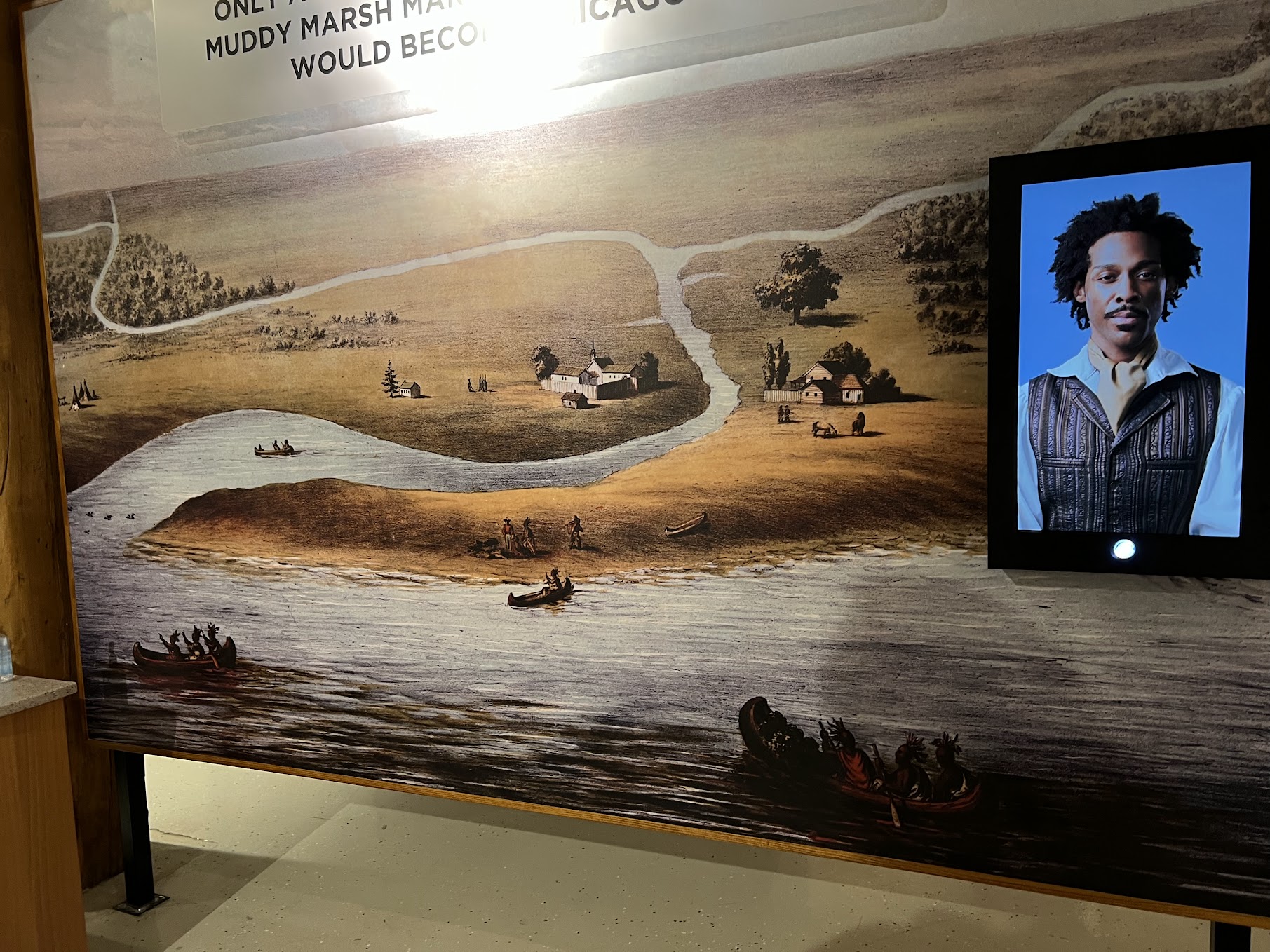
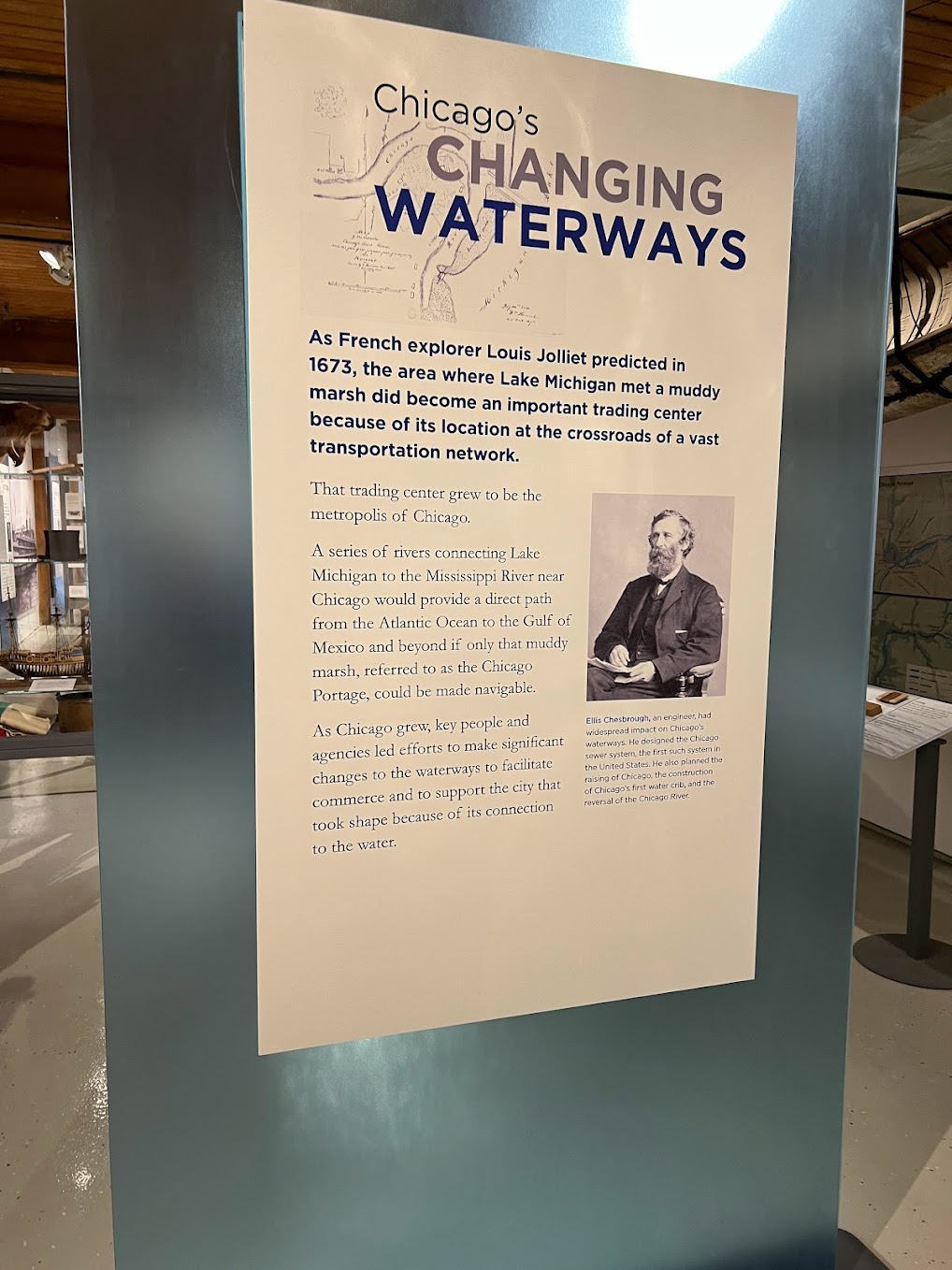
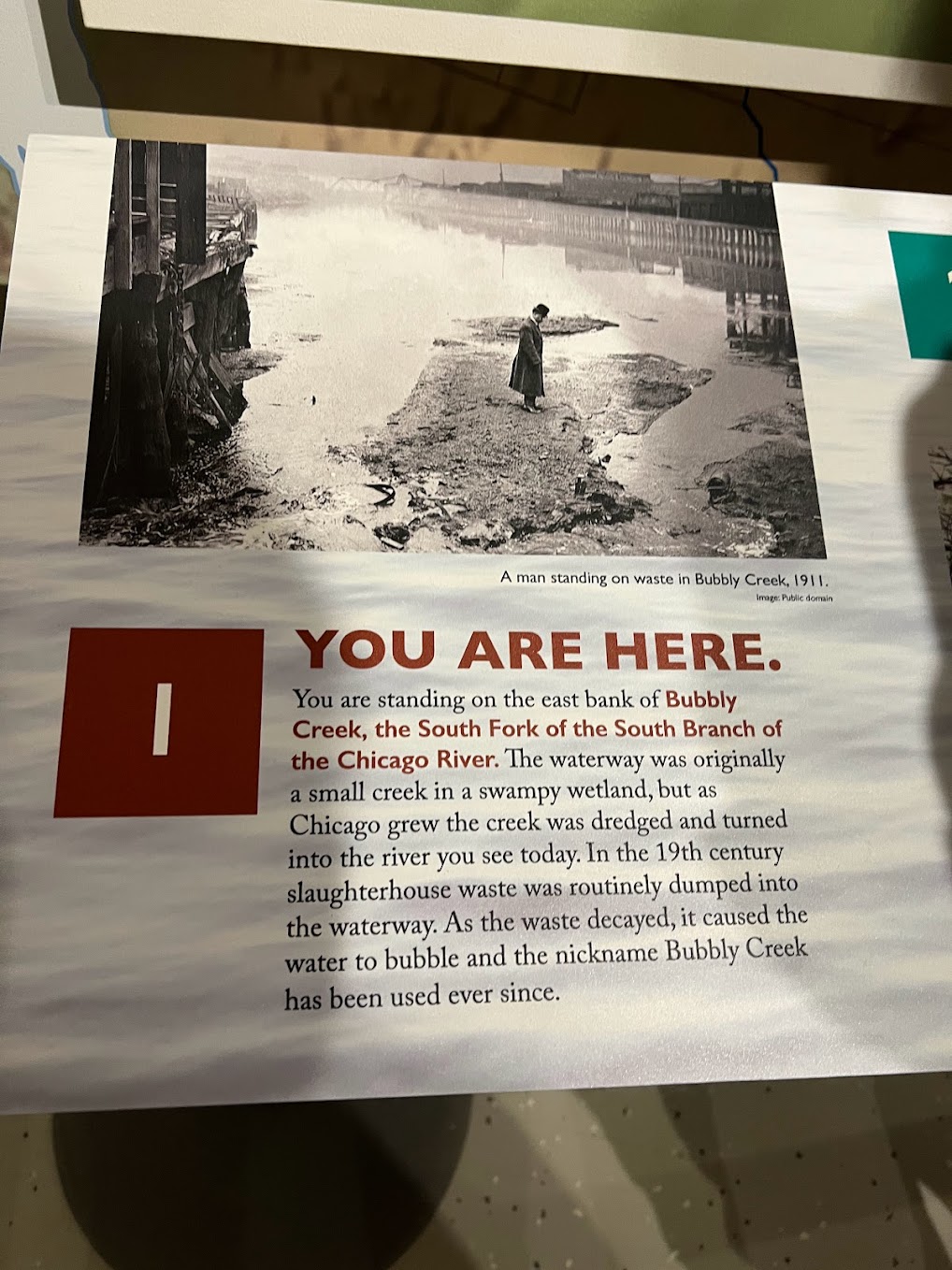
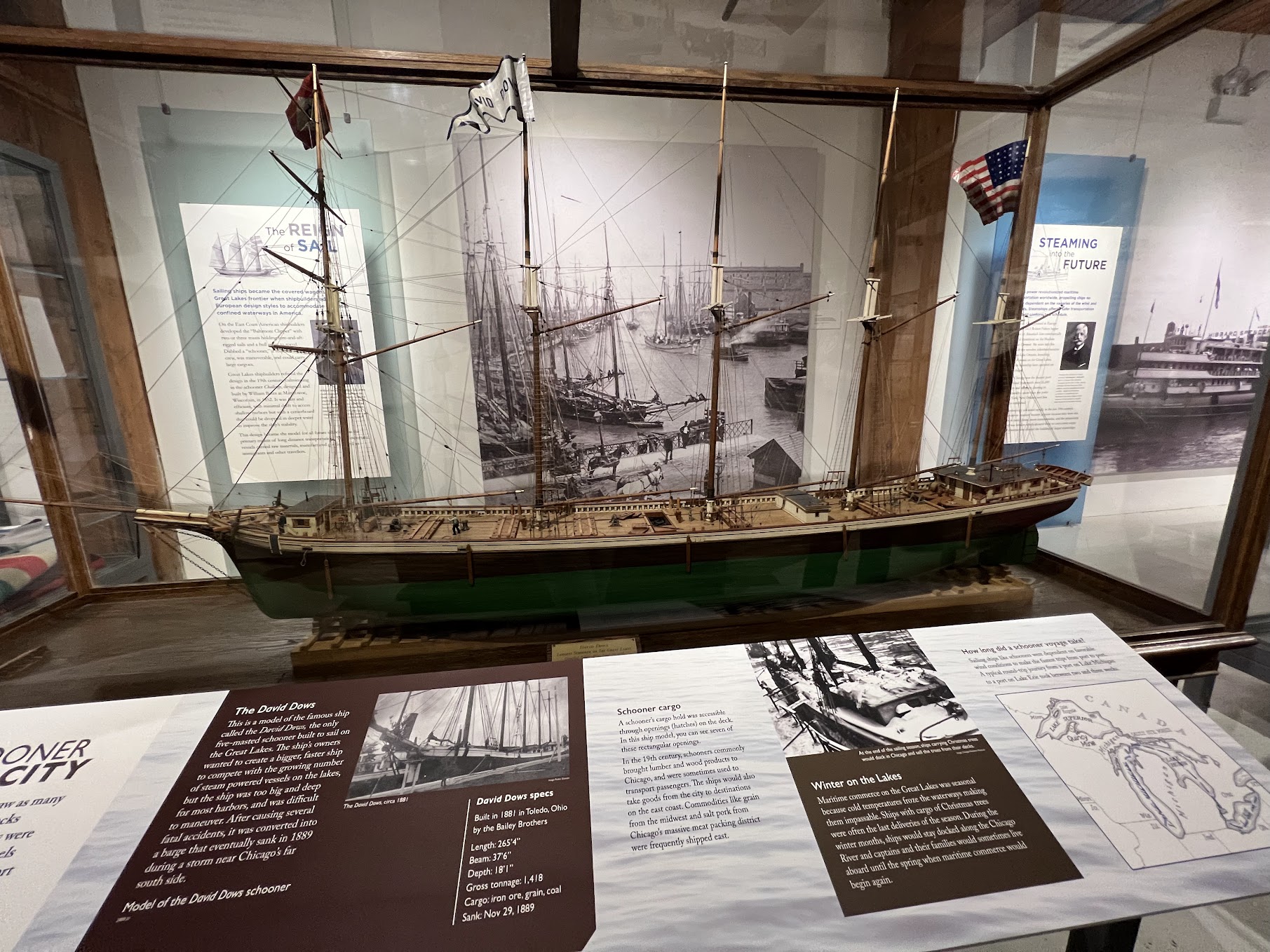
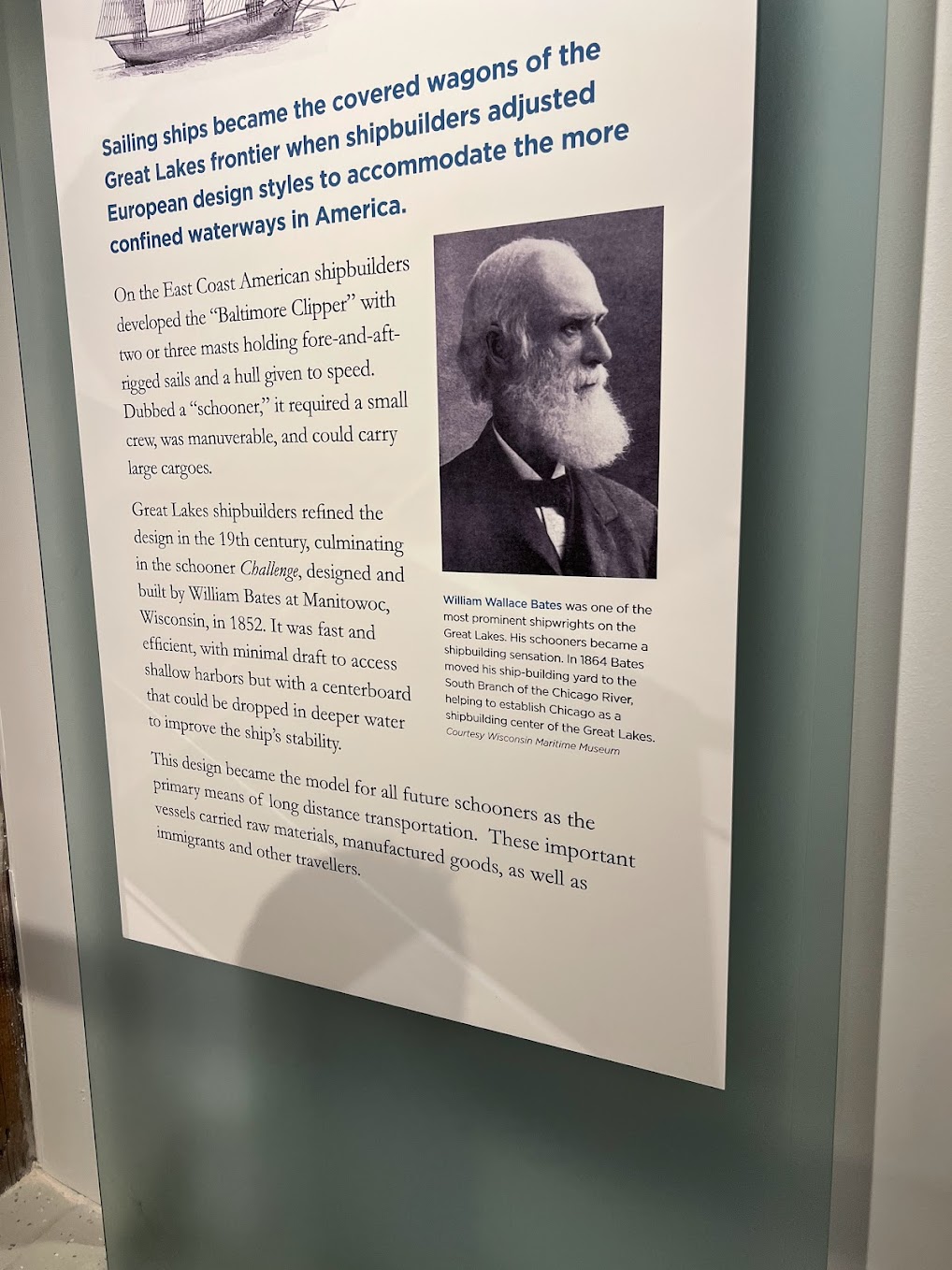
The next neighborhood we visited was Bridgeport. I never knew Chicago had a maritime museum, but there it was! The building where the Chicago Maritime Museum is located is a former Spiegel Catalogue Warehouse, on the banks of Bubbly Creek (Now, it’s a Bridgeport Art Center, and the Maritime Museum is in the basement).
The museum is wonderful; honestly, it’s a pity it is so far from the Loop! If it were closer, I would take more people there :).
OHC is an event I try not to miss. Although some years I was in Helsinki that very weekend, and some years, the weather was really horrible, I would make it more often than not. Each time we go together, Igor comes up with a route we never did before, and each time we explore new places (at least, new to me :))
Last year, there was no OHC due to COVID, and this year, there were way fewer sites than in pre-COVD years, which Igor declared to be a positive thing: planning became easier.
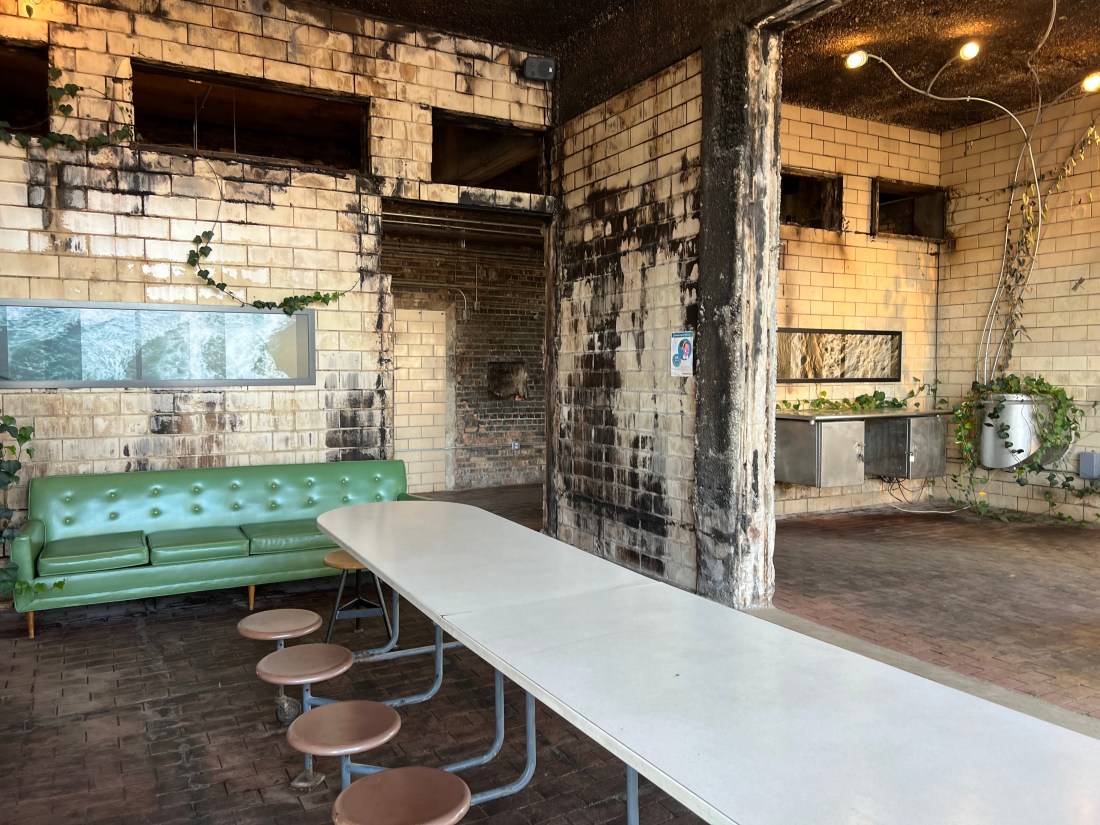
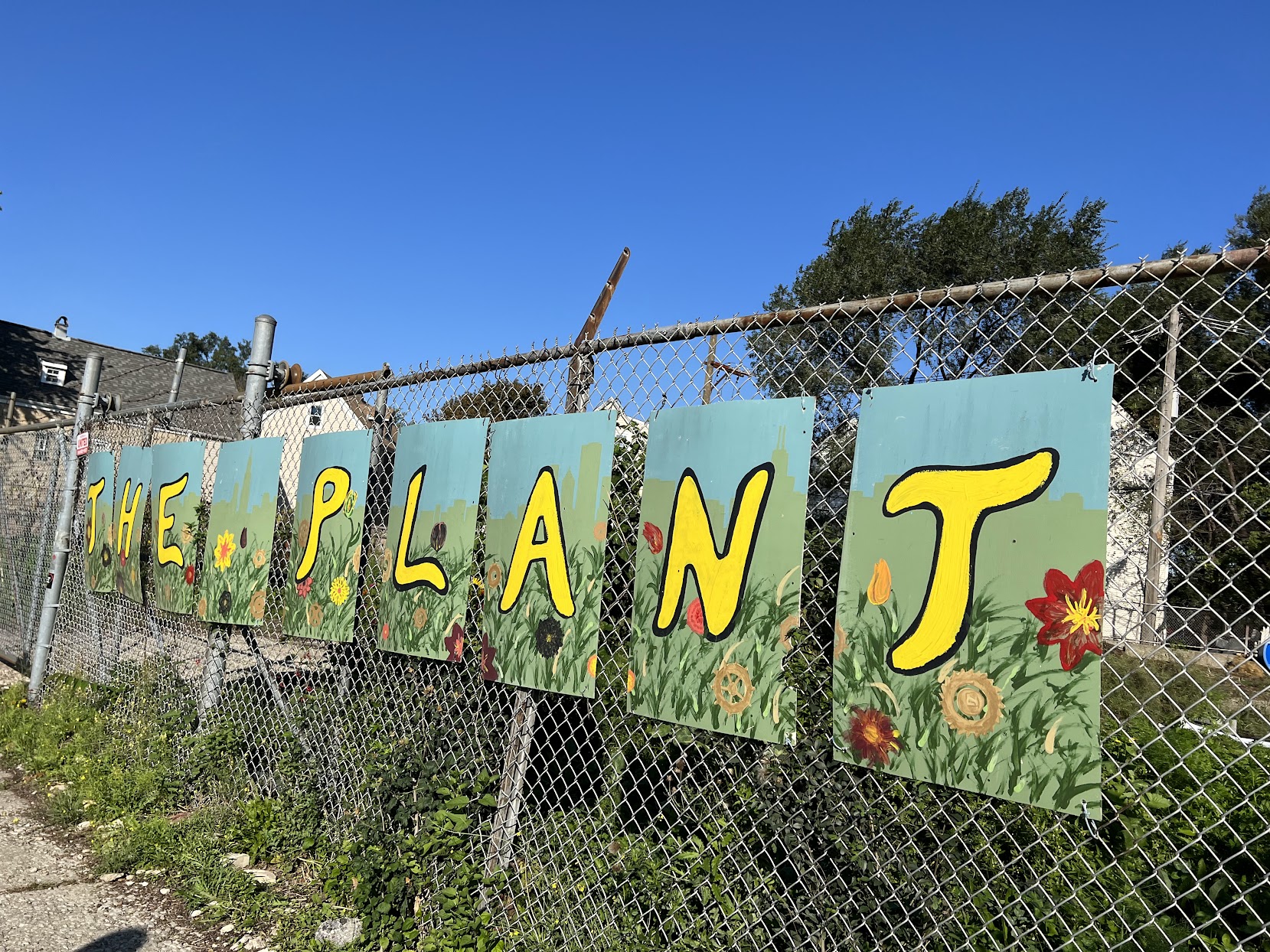
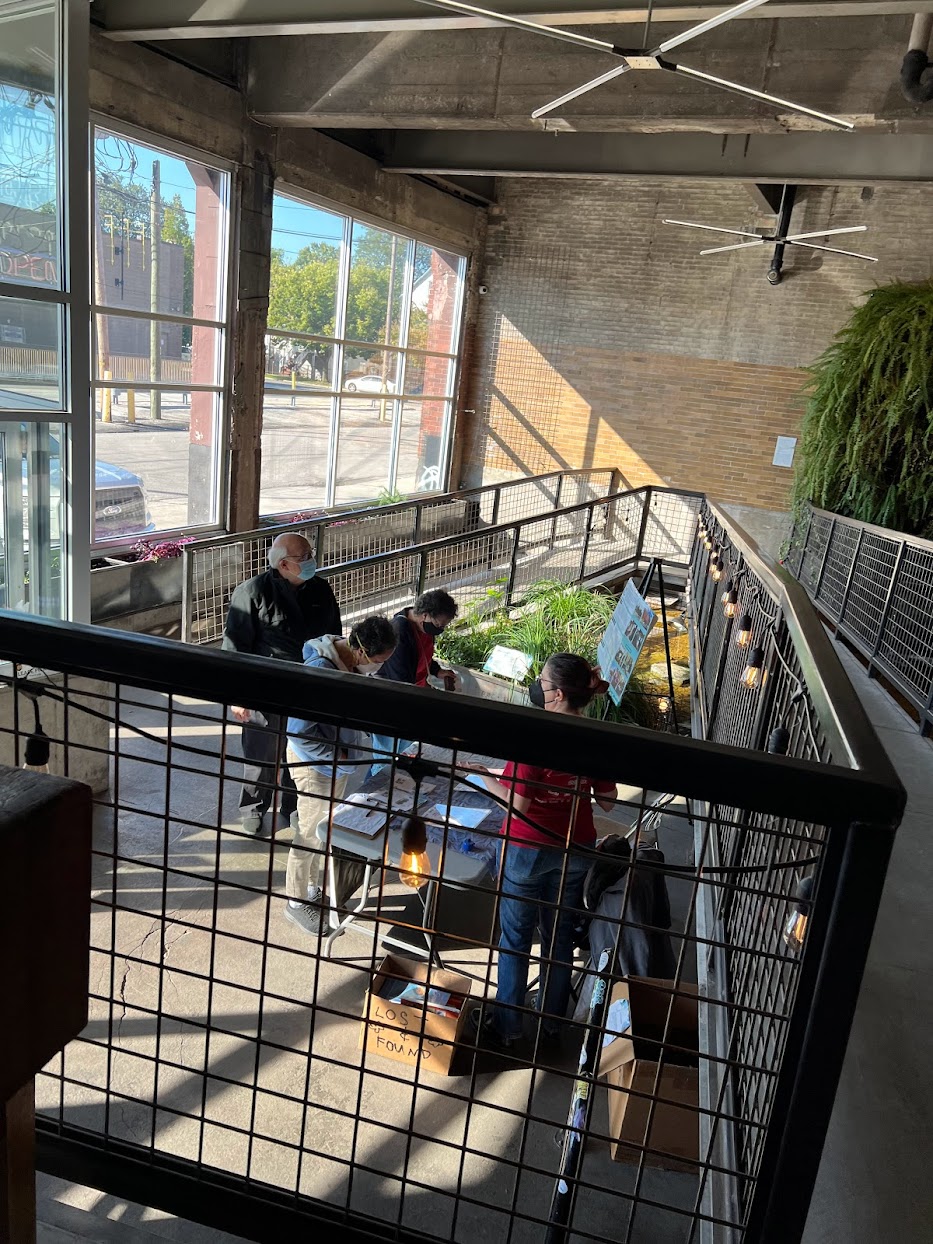
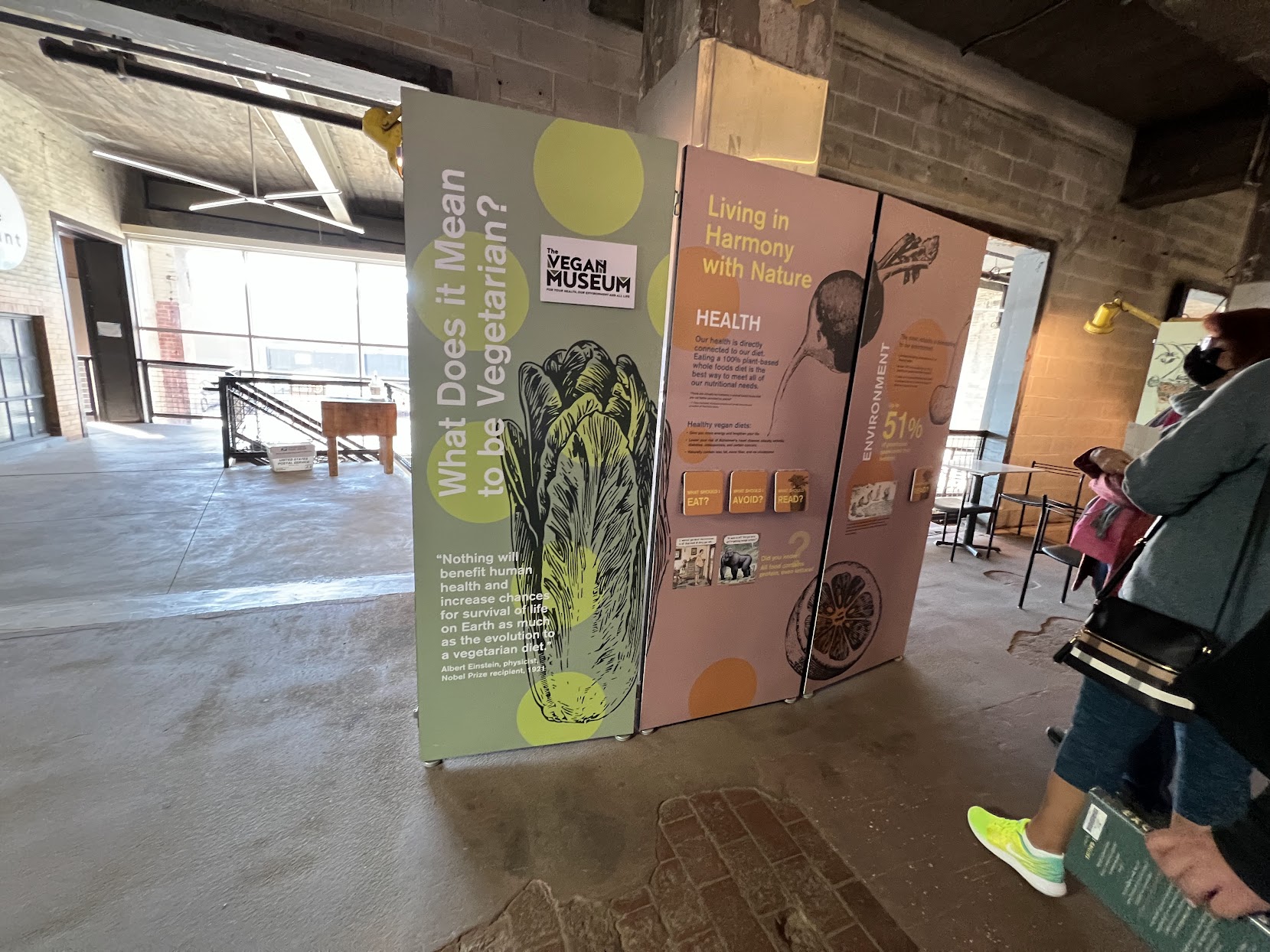
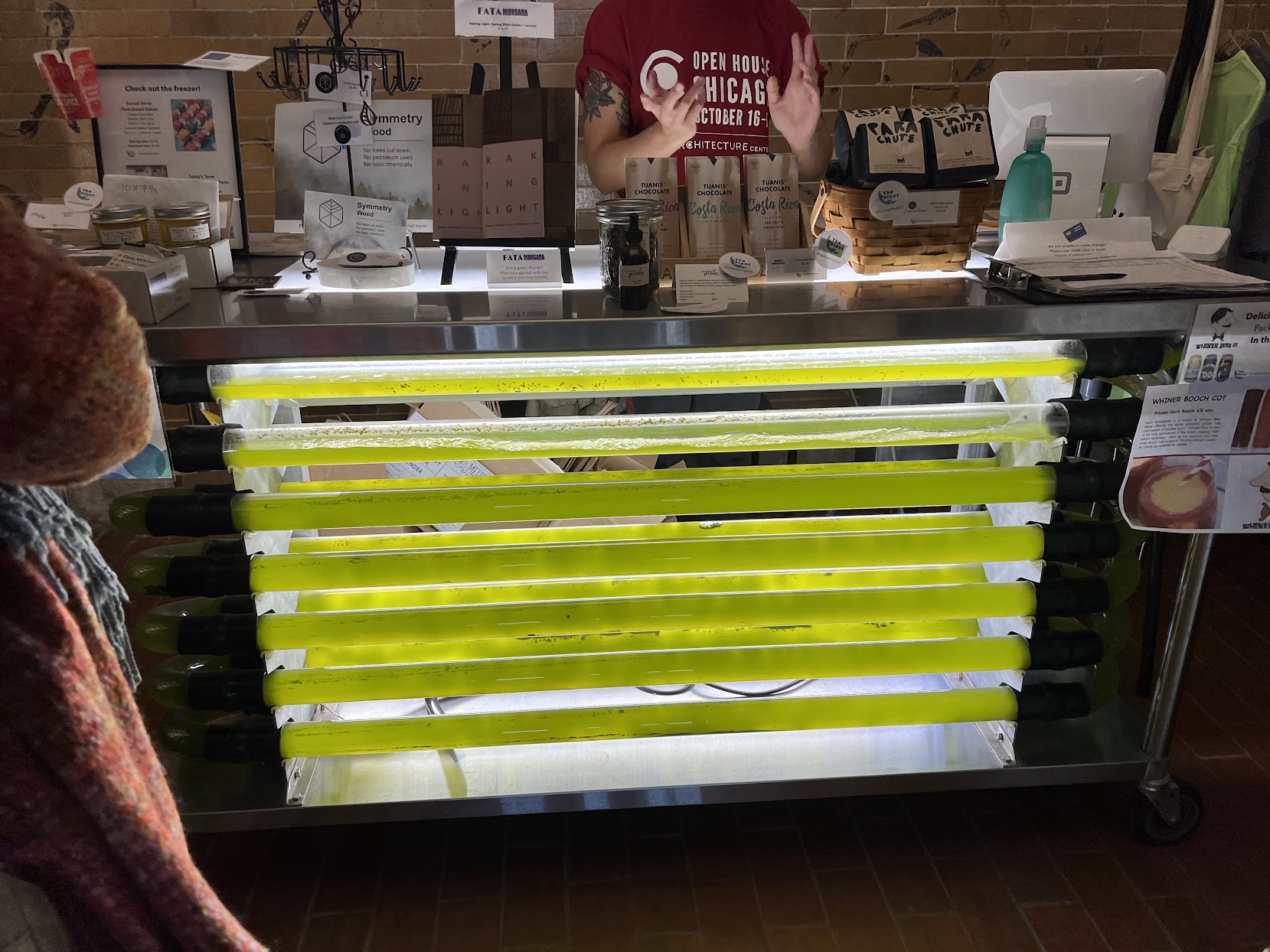
On the first part of our OHC tour, we went to the Back of the Yards neighborhood. The first stop was The Plant – a former slaughterhouse and meat-packing facility converted into a green technology site, housing 20 businesses, including indoor and outdoor farms, beer and kombucha breweries, a bread bakery, and other emerging food producers and distributors. Bubbly Dynamics, who owns the facility, tried to preserve the features of the original building. You can see the signs on the walls identifying different stages of meat processing. Also, the toilets are located in the former walk-in refrigerators. That might sound funny, but I felt very uncomfortable closing a heavy door behind me and putting the latch down. It almost felt like the temperature was about to start dropping right away.
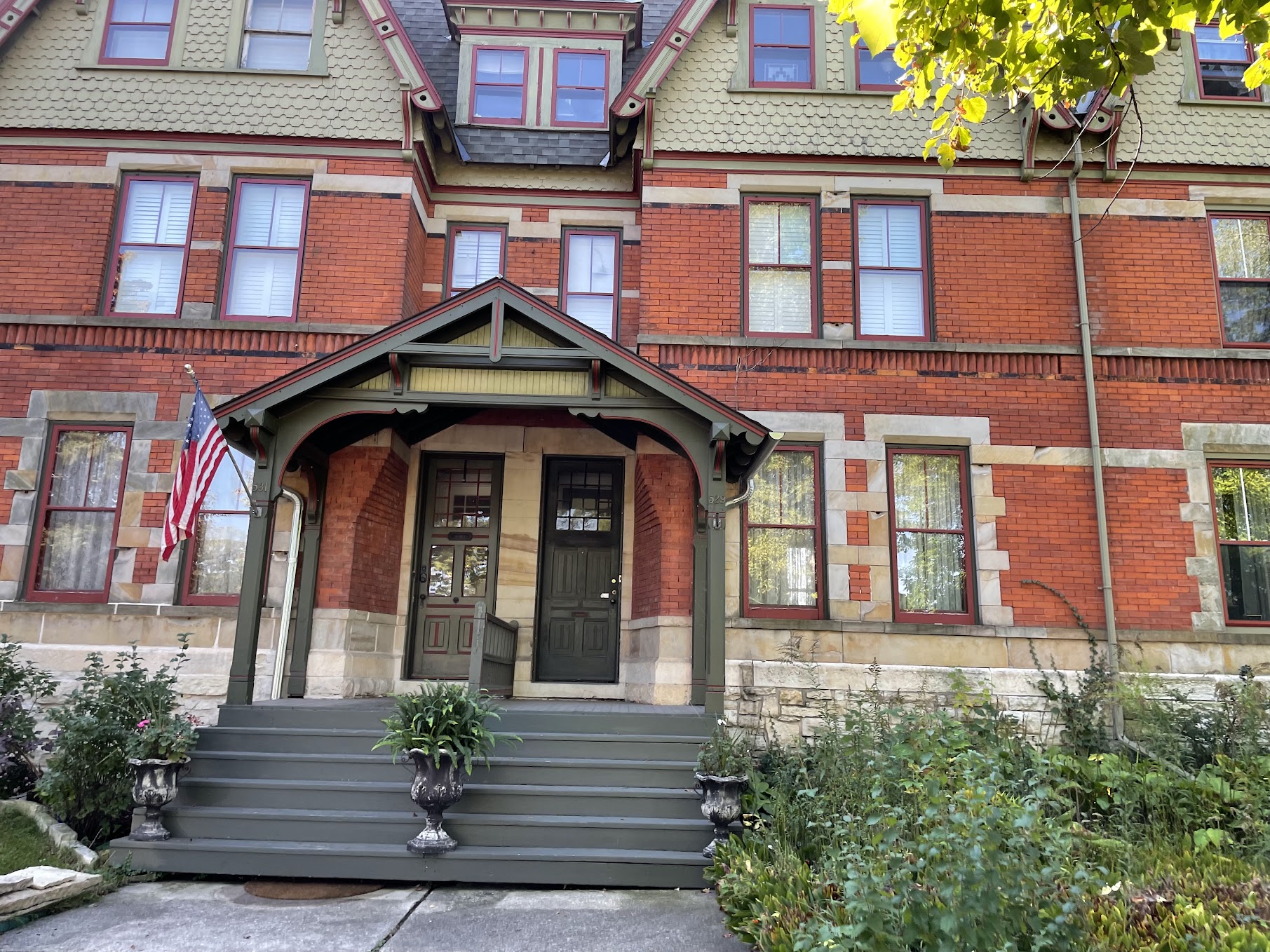
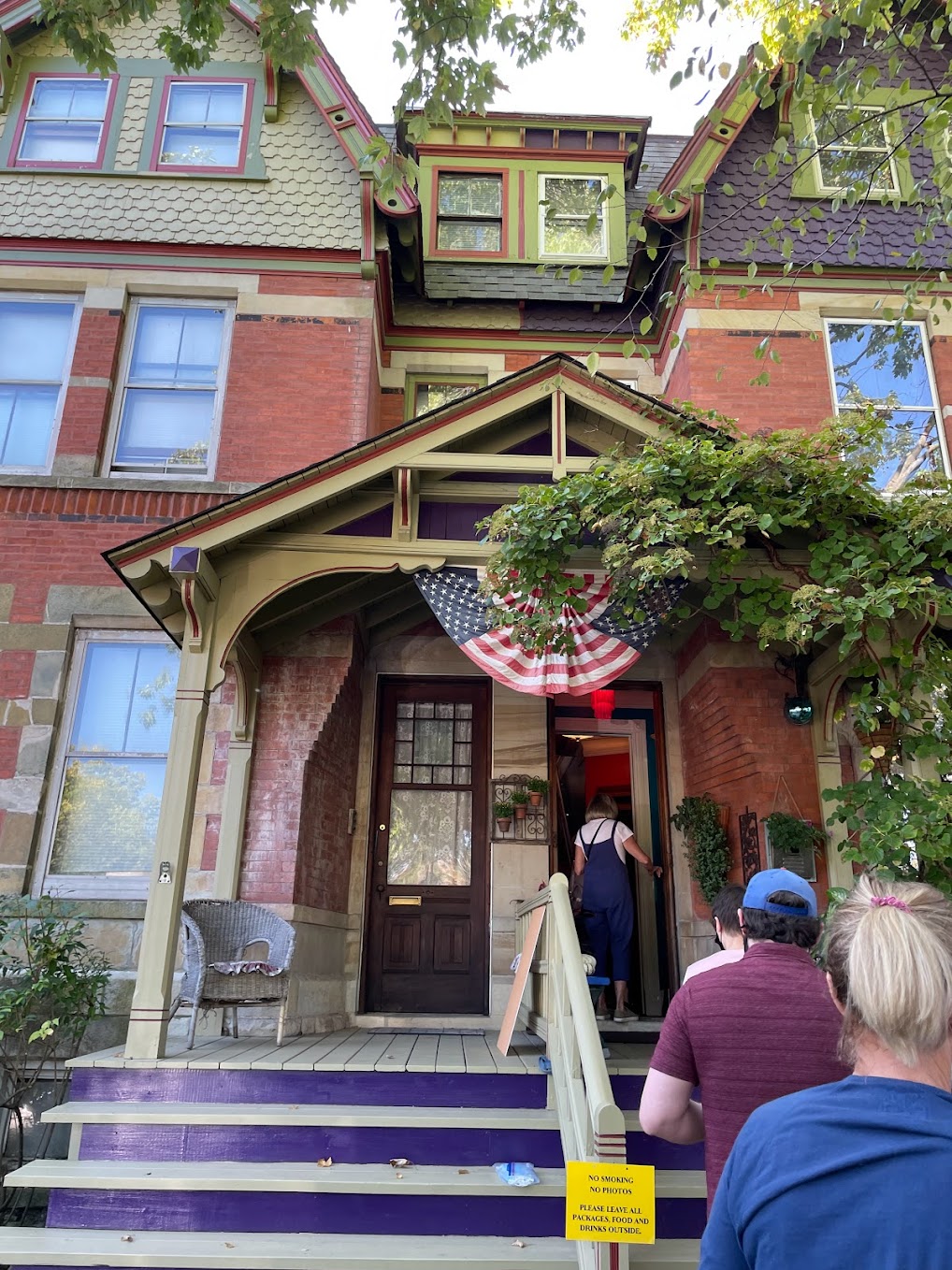
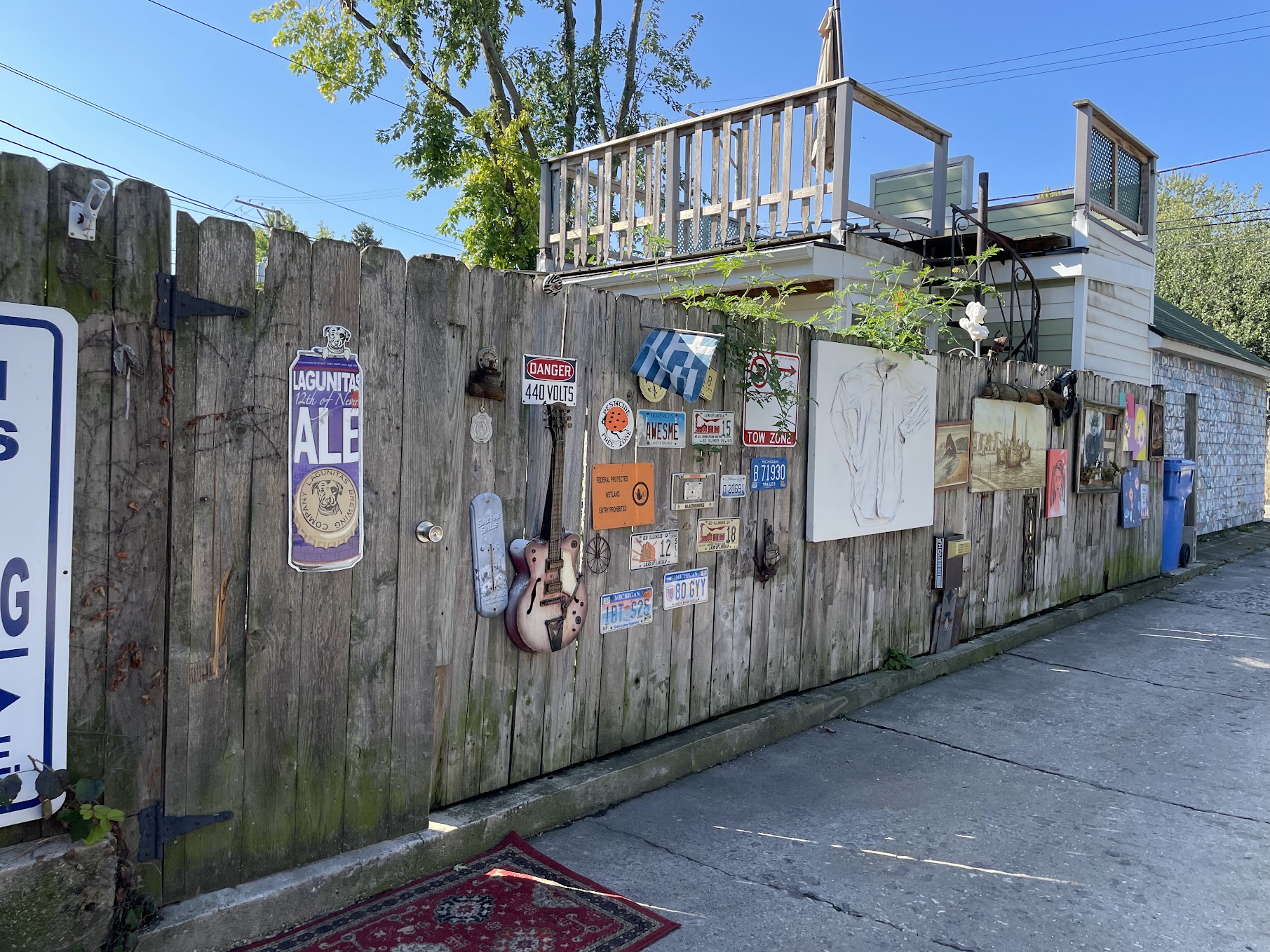
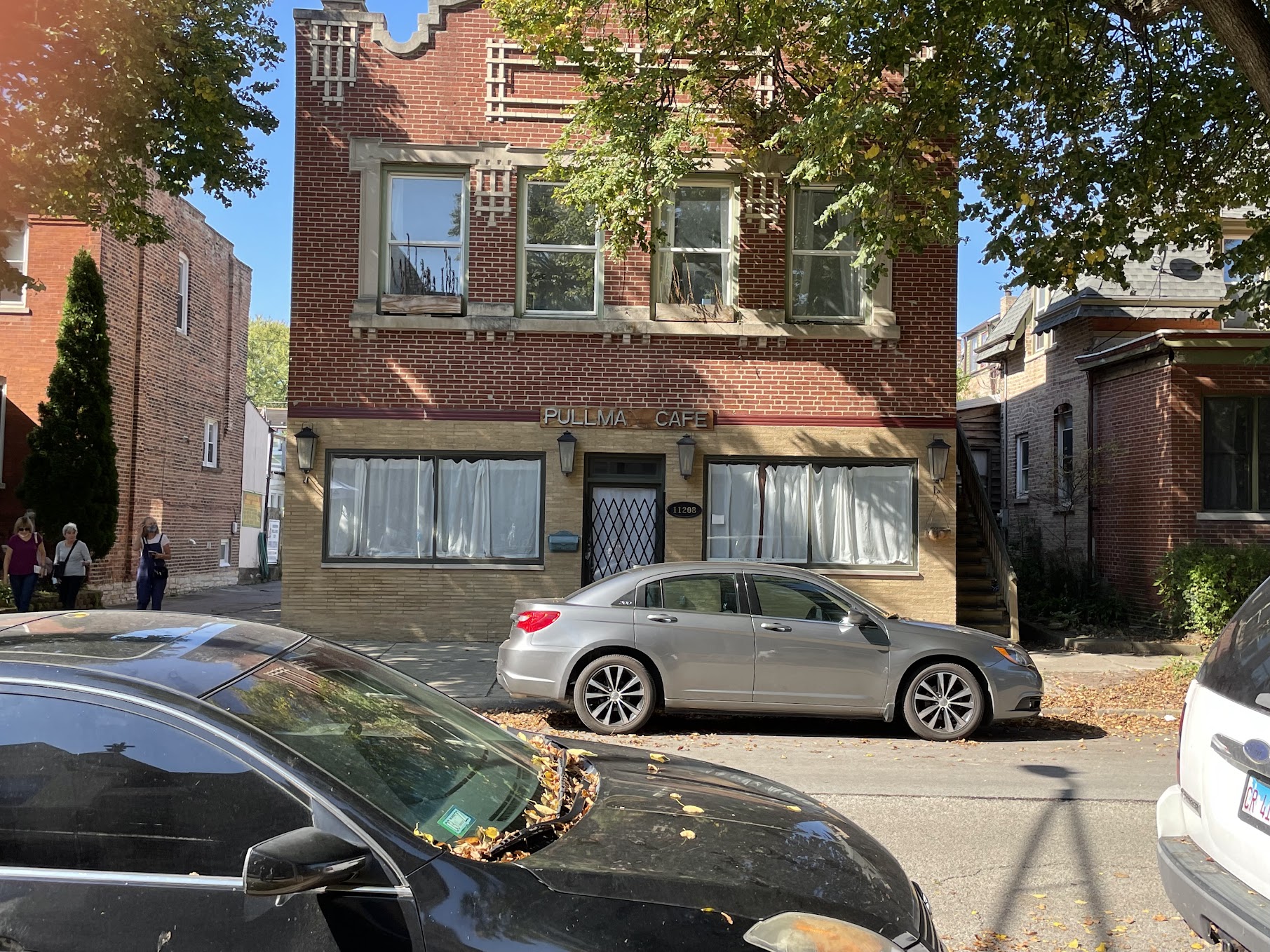
On Saturday, Igor, mom, and I went to the Pullman Open House to tour the homes. The weather was gorgeous; I do not remember ever being on that tour on such a perfect day. Also, that was the best open house we’ve attended from the organizational point of view; the route was planned perfectly, the sights were clearly marked.
Most of the houses which were this year were the new ones. And this time, no pictures were allowed inside, except for two places that contained exhibits.
Mom got tired of climbing the stairs in most houses, but overall, she liked this whole experience, and I am glad we took her out. Like one of the older volunteers commented: keep her moving!
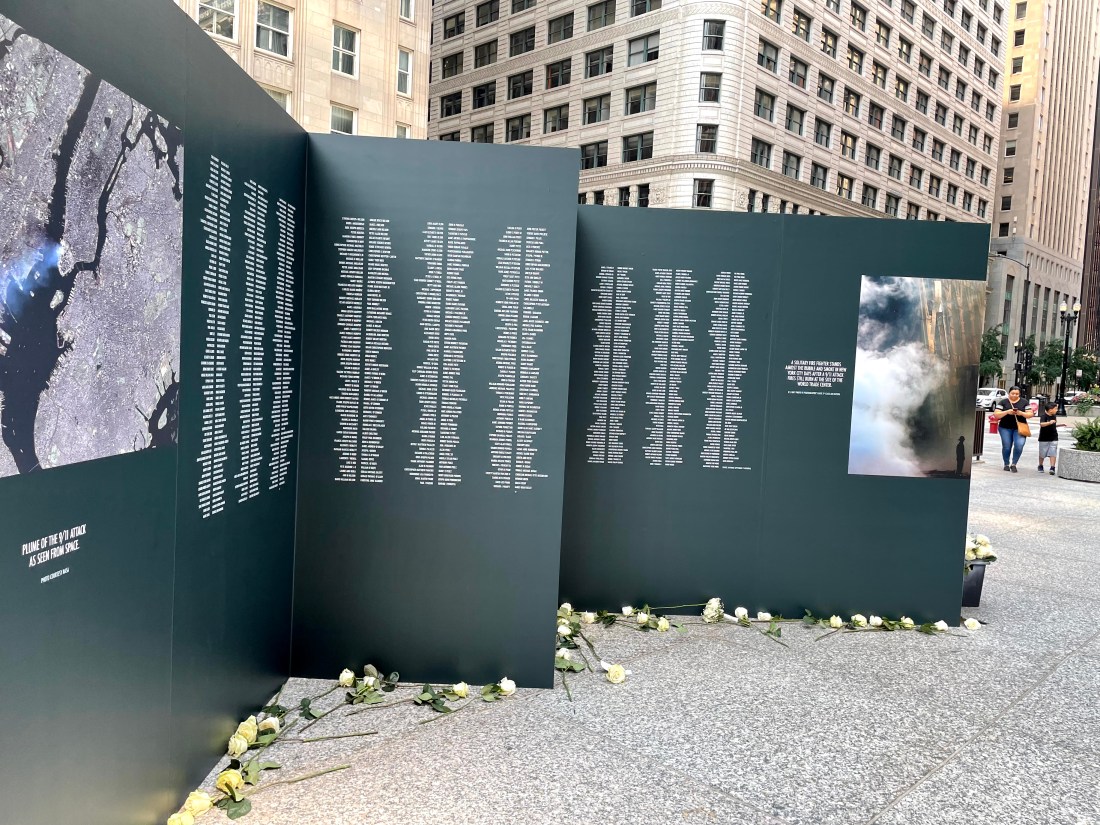
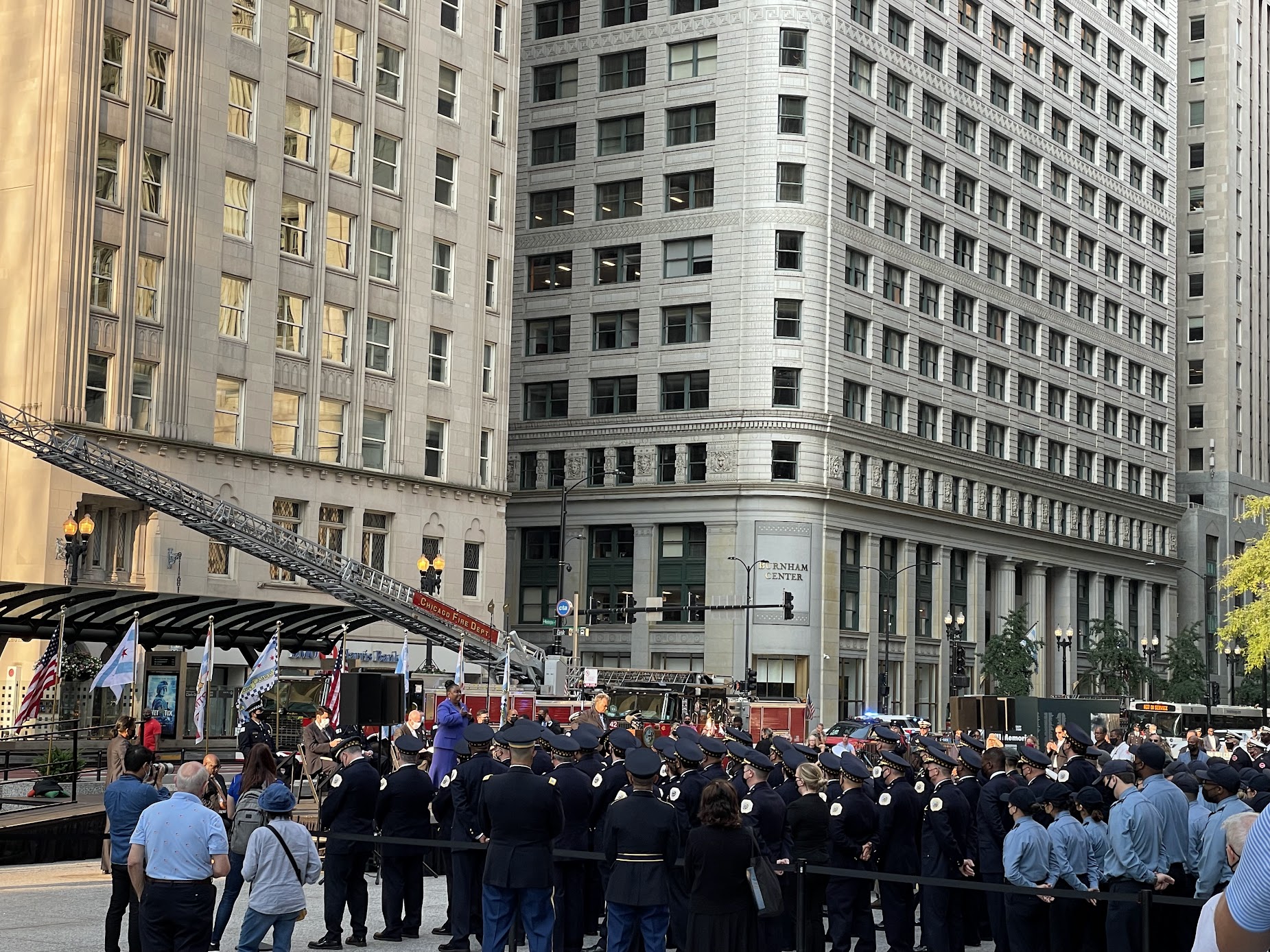
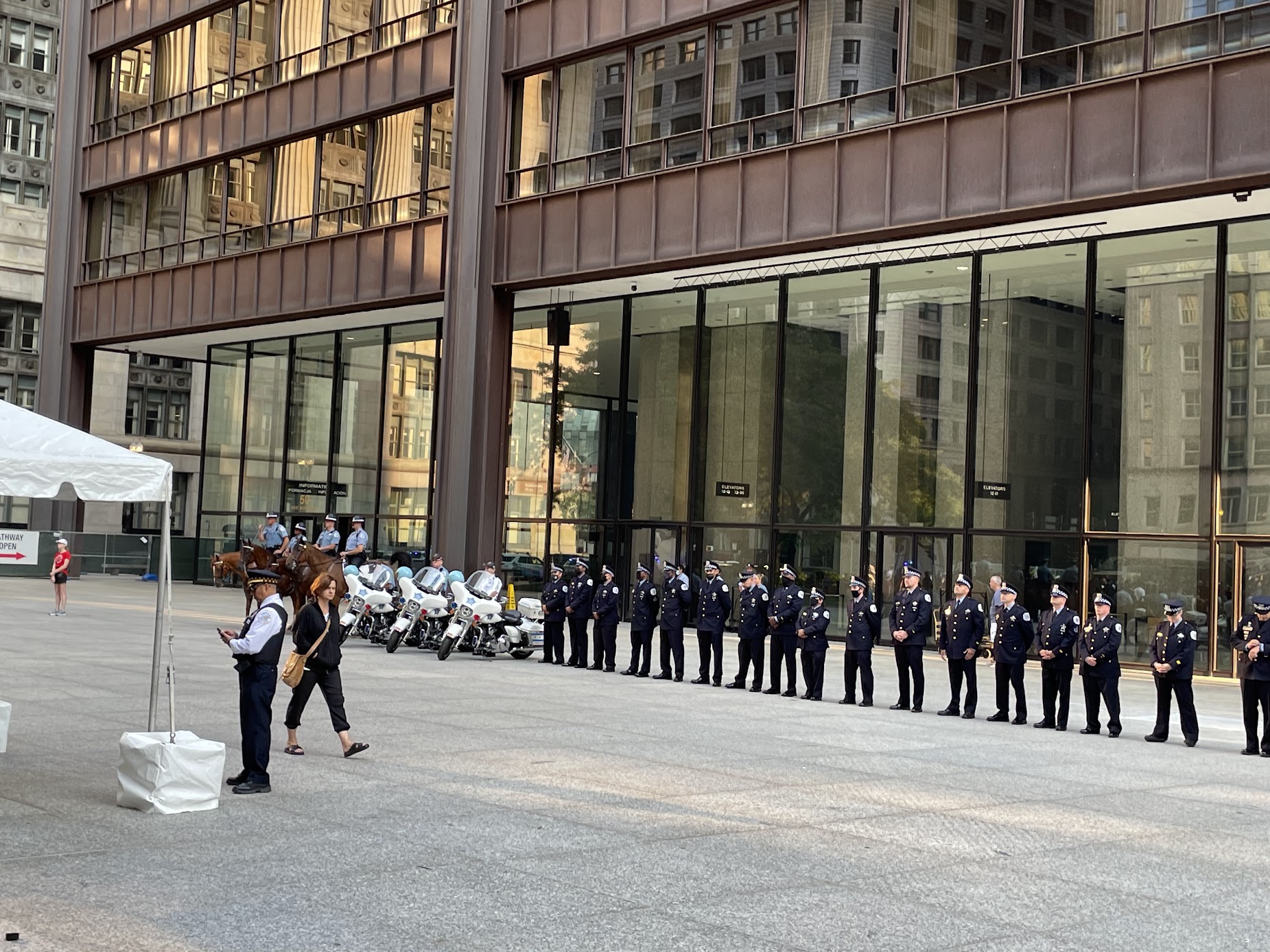
I was a consultant, and in September 2001, I was assigned to a project in the Daley Center. One of my fellow consultants, Chuck, used to come very early and leave early. On September 11, when I walked in and sat at my desk, he turned to me and pointed to his screen: look, a plane crashed into a building!
From the picture, it was impossible to figure out the size of the airplane and the size of the building, and also, there was zero smoke. So I reacted like weird … I wonder why… and turned my computer on. At 9-15 AM, Cindy, a City employee who was our main point of contact, rushed into the room we sat. Her face was grey. She said: we want you guys to be out of the building immediately! We looked at her: what about our billable hours?! She said: we want you out! We do not know what it going to happen!
We all were commuting, and we looked at our watches and shrugged: we just missed the last morning train back; there will be no trains for another hour and a half. Nevertheless, we walked back to the station. The whole city was moving in the same direction, but we were still far from grasping the magnitude of events. Only when we came to the station, we realize how problematic our departure was going to be.
People were standing on all platforms. One of the newsrooms in the station had a giant screen on the wall; they were broadcasting one of the news programs. There, around 10-30 AM Chicago time, we saw the second tower collapsed. Everybody gasped; many started crying.
The trains started to arrive at the platforms. Later, one of the conductors told me that they all headed home after the last morning train pulled up to the city, but their management called them back, and they showed up again. There was no schedule. A train would pull in; people would get on board, and when the train was full, it would head out, and the next train would pull into the station.
Inside the train, people were standing, but nobody tried to squeeze in; there was no panic. I walked into the full train and leaned on the wall. The train started moving shortly after that. It stopped at each station, but most passengers were going to the suburbs. At one of the stations, a person asked from the platform: what’s going on? Aren’t there any trains to Chicago? You do not want to go to Chicago now! – somebody shouted.
The was one man with a prosthetic leg; I saw him in Palatine most of the mornings. He was telling something and pointing at me; I could not figure out what it was. I thought he was asking me to move and let him through to look for a seat, but he waved me off: no, I was just telling him to move! I told him I couldn’t see a pretty woman! I still think about this dialog as the best compliment I ever received :).
Somebody in our car had a transistor radio, and we listened to the news and learned about another plain – the one who didn’t reach the Pentagon. Nobody knew how many plains could still be in the air, and what could be other targets. We worked on the 27 floor of the Daley Center; that’s why we were ordered to go home.
I managed to call Boris. It was not easy back then; I had to key in a long sequence on my cell phone to connect to a discounted service.
In the evening, our director called all consultants and told us to stay home. He told us we would be paid for that day. The kids had school. I stayed at home, lying on the couch in front of the TV and crying. I could not bring myself to doing anything productive. I was staring at the debris, listening to the commentators, and lying there paralyzed with greave. For many days after, the most distinct feeling was this absence of joy in life. You tried so hard to be cheerful, go shopping, get ready for Halloween – and you could not. That part of your existence was missing.
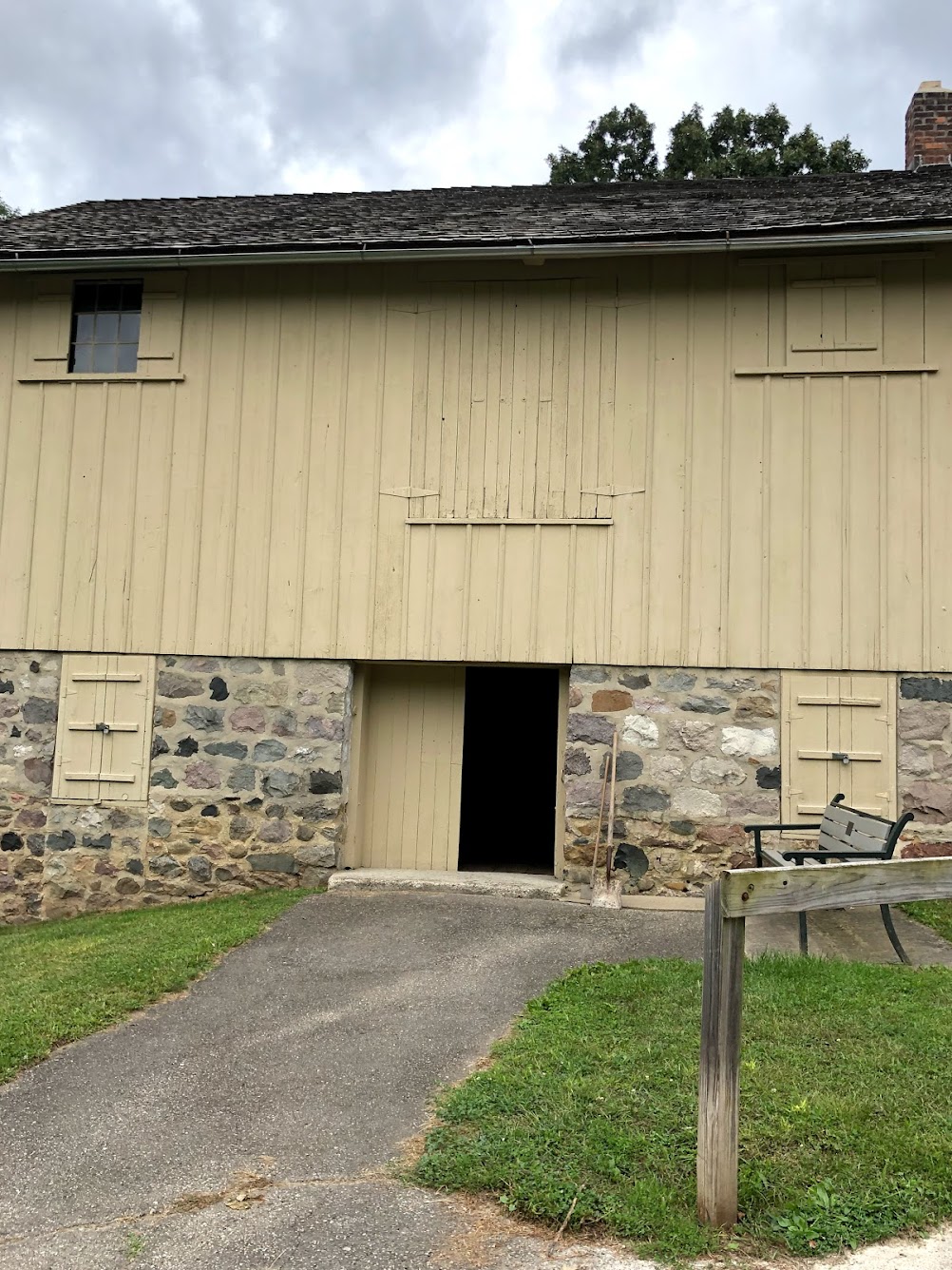
After lunch, we went to Parker Mill Park. Lena has found information in their local newspaper about the tour which was supposedly starting at 1 PM, so she planned our day accordingly. When we arrived, there was no information about any tours neither in the parking lot nor by the visitors center which was closed. We saw the sign pointing to the mill and headed in that direction.
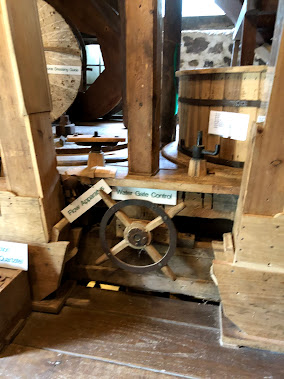
We entered the mill (although there was no sign on the door), and there was nobody around. We observed lots of tools and mechanisms, all labeled and being in perfect order.



 Hettie's Reflections