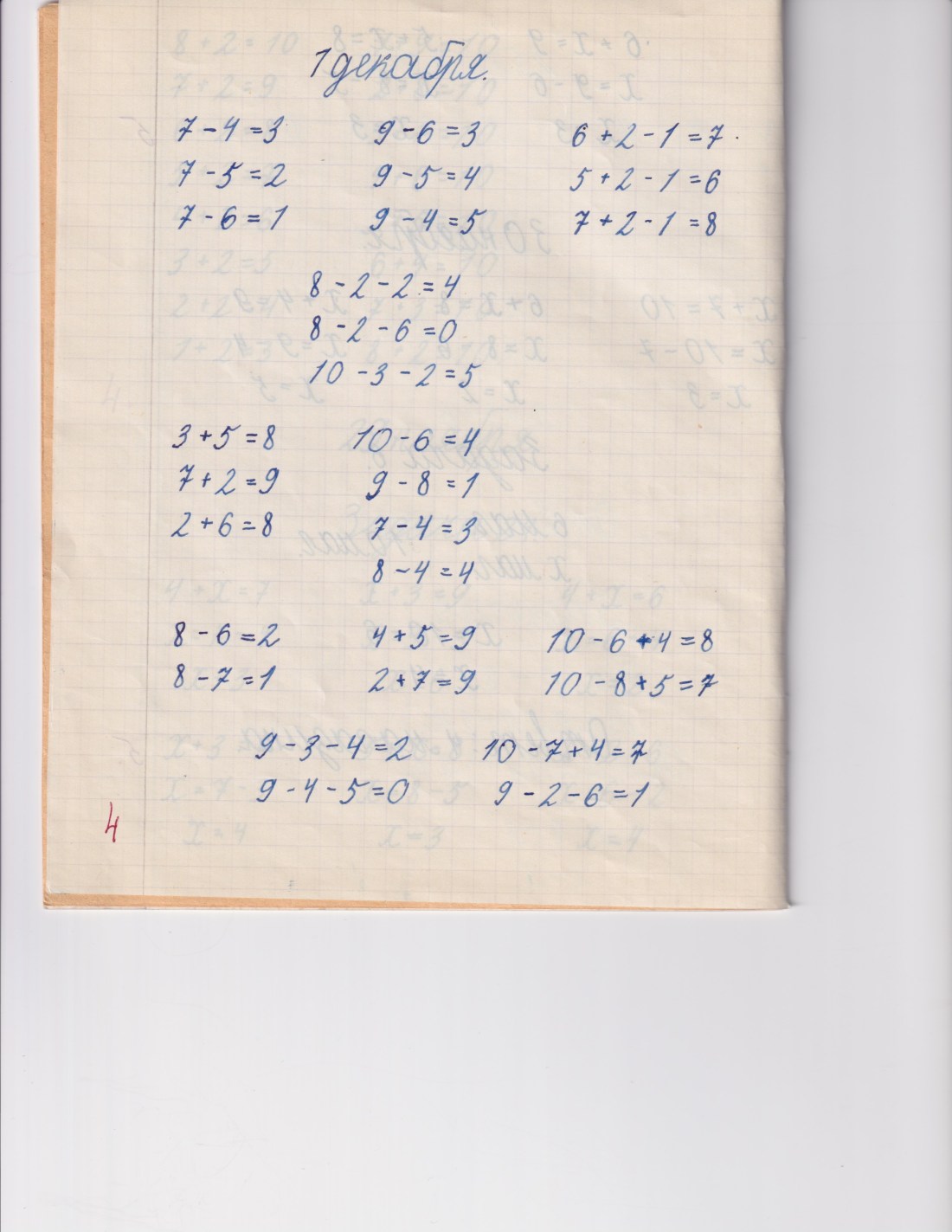
Elementary School In The Soviet Union, 1

With this post, I am starting a series of “what were the schools like” in the Soviet Union, mostly for my grandchildren’s benefit.

***

Schools in the Soviet Union used to be way more uniform than in the United States. That’s why, although I describe the schools I attended, most things were the same no matter where in the Soviet Union the school was. The situation started to change rapidly during Perestroika, but until then, things remained remarkably unchanged.

Though the title of this post says “Elementary,” the concept of “elementary” was rather abstract. Except for rural areas and some specialized schools, a school would host all grades from first to tenth, and unless somebody moved (which didn’t often happen in the Soviet Union), you would be together with the same thirty classmates for five to six hours a day six days a week for ten years!

The majority of schools were what is called “zoned” schools in the US, meaning that you have to live within certain boundaries from the school to be able to attend it, and most times, there was no choice.
My situation was slightly different because the school nearest to me was a “specialized school with in-depth learning of English.”

This fact created an interesting disposition because the school had to take all the kids who lived nearby, but also, somehow, the kids who lived further away could get in through an interview. After Perestroika, the entrance exams to elementary school became common, but in the Soviet Union, these were uncommon and, if I get it right, sort of “unofficial.”

Unfortunately, my mom is not a source of reliable information anymore, and she can’t tell how exactly it worked. I remember she took me to an interview several months before school started, and I know she was anxious that they might not take me because I could not pronounce the “r” sound.

I do not remember the questions the interviewing commission asked me, but it was an easy conversation. Once again, I can’t tell why I had to go through the interview. There were several kids from “troubled families” in my class and some from “working-class families” whose parents were unlikely to care about what school their kids were attending.

In the first grade, our curriculum was identical to that of all the first grades n the Soviet Union. We attended school six days a week, and we had four periods each day. Three periods were always the same, reading, writing, and math. And for the fourth period, we had PE twice a week, “labor” (that weird subject included anything done “by hands” mostly crafts; do not ask me why “labor”), art (drawing) once a week, and music (singing) once a week. The order of periods differed each day: all three core subjects were taught by our room teacher, and different teachers taught the other three, so we had to fit into their schedules.

The classes started at 9 AM. Each period was 45 minutes, and the breaks were either ten or twenty minutes (“long breaks”). One of the long breaks was a lunch break. For the first graders, it was from 10-40 to 11 AM. While in elementary school, we didn’t have the option to choose what to have for lunch, and as far as I remember, we didn’t have an option NOT to have lunch. At the same time, lunches were not free. Each of us had to bring one ruble on Monday that covered that week’s lunches. Our teacher would call each of us to her desk in the morning, and each of us had to come up and give her that one ruble, and she would make a note in her list. I remember that once, a student gave her a ruble torn into two pieces, and I remember her yelling at him.

It was always a hot lunch, but the quality of it was relatively poor, as with almost all of the “public catering” in the Soviet Union. Surprisingly to Americans, milk was not a part of that lunch. Middle-schoolers had an option of buying their snack, which included milk and pastry, and we all could not wait for this option to become available. We barely ate this lunch; we would all go home at 1 PM and eat lunch there, so it’s not like it was so necessary.

The school was less than ten minute’s walk from my house, but I had to cross the street (not at the intersection), so my mom was very anxious about it. I even remember how she taught me to ask “an adult” to help me to cross. The short way to get to my school was through the passage yard, and the entrance was almost in front of our building; that’s why I was crossing not at the intersection. To be honest, there was no significant difference since the rules of the road were loosely obeyed by all parties.

My historical posts are being published in random order. Please refer to the page Hettie’s timeline to find where exactly each post belongs and what was before and after.

The Great Dictator

A note from the Siskel Center said:

After a remarkable twenty-year tenure, Gene Siskel Film Center Executive Director Jean de St. Aubin will resign in February. Join us in celebrating Jean’s impact and leadership, as we toast to her next chapter and celebrate her love of the movies with one of her favorite films, THE GREAT DICTATOR (this title, by the way, is in no way a reflection on Jean’s own leadership style!). Film followed by a post-screening reception with champagne, pretzels (her fave), and more. All ticket proceeds benefit the Film Center.

To be completely honest, I was more interested in the movie than in the reception :). I never saw the whole movie, not to mention on a big screen! Amazing! I knew about this movie, the plot, and when it was filmed, but even the excerpts I saw do not give enough impression of how awesome it is! It is hard to believe that it was filmed in 1940 when the US was’t even at was with Germany.

A Book I Am Excited About

I am finishing the Berlin Dairy by Willian Shirer. What an amazing book! I can’t believe I knew nothing about it until I saw a recommendation from a friend. William Shirer was a CBS broadcaster who worked in Nazi Germany from 1934 to 1941. He wrote several books about the history of WWII and the history of Nazism, and now I want to read them all! 
I think that it is a combination of two factors that make this book so amazing: first, he was an outstanding journalist with an extraordinary analytical mind who knew both how to get access to information and how to interpret it. And second – that it is an actual diary, so the readers follow events in “real-time.” When he wrote something in his journal, he did not know what would happen next or the implications of the events he had just recorded. It’s something like: I can’t believe Molotov and Ribbentrop are meeting! How can they negotiate when Russia is the most fierce critic of Nazism. How is it possible that they could reach any agreement?! They did?! 

It turned out there were lots of historical facts I didn’t know. Take the Winter War – I thought I knew everything as much as I could, visiting Finland several times a year. Still, I had no idea that it started with the air raid shelling Helsinki – I thought that all the war events happened at the frontline. 

This book has way too many parallels with the current war in Ukraine, like when the author explains how Germans have “no morals.” A German is lamenting about “bad Finns who fight against Russians, and why they are doing such a horrible thing as resisting? When Shirer says that Finns are fighting for their independence and asks won’t the Germans do the same if they were invaded, the response it: but that’s different! Russians are our friends!

Or when he cites a conversation with a German waitress about the British air raids: why are they bombarding us? – Well, because you are bombarding London! – But we only shell military objects, and they through bombs on our civilian objects? – Why do you think that Germans only bombard military objects? – That’s what our newspapers say!

Sounds familiar, right?! Way too familiar!

I almost finished this book, and I have three other books in queue, but I am urged to drop them all and read all the rest of the books by Willian Shirer(which will definitely take a while!)

All I Want For Christmas…

I am getting more and more disappointed in Russian society. I can’t believe I am saying this. I always used to say that the country has potential and healthy forces. Whenever others told me that nothing good would ever come out of Russia, I would always argue and remind others how much society has changed in 1991/92. I still have a lot of newspaper clippings from that time. I remember how we were hungry but hopeful and open to new ideas. I remember how in 1996, none of us, recent arrivals to the US, planned to stay here forever. We talked about going back and bringing back with us all the knowledge, all the new ways of doing things that we learned. I thought … well, does it matter what I thought back then?! 

I am shocked to find an imperial mindset in many people I thought were completely normal, intelligent, and understanding. The most frustrating thing is that these people do not understand that they have this problem. The level of entitlement is skyrocketing. I am horrified that I never paid enough attention to that and never noticed the level of this ignorance in the people surrounding me. 

Last weekend, Anna and I talked a lot about that. (This recording of Chervona Kalina I posted a couple of days ago was made during our conversation – there was a lot of singing). For many years, I told Anna that most of the Russian political opposition is not that much better than Putin and that being against Putin is not enough to be a decent person. Now she said she realized that. The opposition is continuous frustration and disappointment. Why do they feel OK behaving like a Big Brother when they come to other countries? Why do they believe that opposing Putin entitles them to some special treatment? Anna told me that at the beginning of the war, she thought that although Ukrainians are wholly entitled to say as harsh words about Russians as they want, they are indeed too harsh. But now, she says, she has concluded that the Ukrainians were right from the beginning. And that’s how I feel, as well. 

I can’t believe that even now, many people who once again seemed to be completely normal complain about the inability to travel to Europe as if it’s the worst thing in the world. There are a few of my very long-time friends who are not like this, but so few!

As for us, we feel the weight of collective guilt, and it’s more than just a word for me. There were many facts that I chose to ignore, not pay attention to, and not analyze. I have already said multiple times that I am not sure where I would be if I didn’t immigrate. I was thinking about myself thirty years ago, and I can’t be certain I would be on the right side of history. That’s why the blame is on me, and I can’t imagine people going around with their holiday activities without Ukraine in the background. 

I know that all I want for Christmas is a victory for Ukraine. Not peace, but victory. 

Gotheborg: the Swedish Ship

Gotheborg, a replica of the 18th-century ship, stayed in the Helsinki Southen Harbor for Midsummer. Will almost missed the opportunity to visit it because I didn’t check the schedule in advance, but we still made it – just two hours before her departure to Stockholm.

Continue reading “Gotheborg: the Swedish Ship”

The Military Museum and The Prison Museum

There are two more museums in Hameenlinna, which are situated on the Hame Castle grounds: the Military museum, which is dedicated to the history of everything war-related in Finland, and the Prison museum, which is located in the building that served as a prison until 1993. Both of these museums are very educational, and I want to come there one more time, to learn more about Finnish history. When we were there, it was a sort of information overflow. I know that I can look up most of the topics which are covered by the museum exhibits, but it’s different.

Below are just some photos, to give an idea of the museums’ collections (and the Military museum has a huge outdoor exhibit, which was close to impossible to attend in the midday with +86 F.

The view of the Hame Castle from the Military museum
I was shocked to learn that using artillery against people was considered a sin!
The Prison museum
Solitary confinement
Force-feeding chair
Continue reading “The Military Museum and The Prison Museum”

Hameelinna – part 3

The last several pictures form the castle – I know they make almost no sense to those who never saw the castle, and I know they are “the same,” but still I wanted to show a couple more pieces of Medieval architecture.

Try-on armor
Continue reading “Hameelinna – part 3”

Hameelinna – Part 2

They say that the castle has been built for 700 years and it is still in process since the current restoration work is considered to be a continuation of the building of the castle. We spent a lot of time, exploring different rooms; unfortunately, there were no English tours offered the day we were there, so we often could not map the rooms to their website descriptions.

Continue reading “Hameelinna – Part 2”

Vilnius Museum of Occupation

We had a list of museums we thought we wanted to visit on Saturday (our flight out was at 6-30 PM, so we had most of the day). The Museum of Occupation was something new on the list of Vilnius museums, and I saw that it was very popular. Since this museum was the furthest from our hotel, we decided to start there and see how much time we had left for other museums. 

But that museum impressed us so much that after spending 2.5 hours there, we realized we could not go anywhere else, so we spent the rest of that day walking along the streets of Old Town and talking about what we saw. 

There is no other museum like this in any of the former Soviet Republics, and I think that if such museums were open in all the Russian cities, maybe, maybe… maybe things would look differently today.

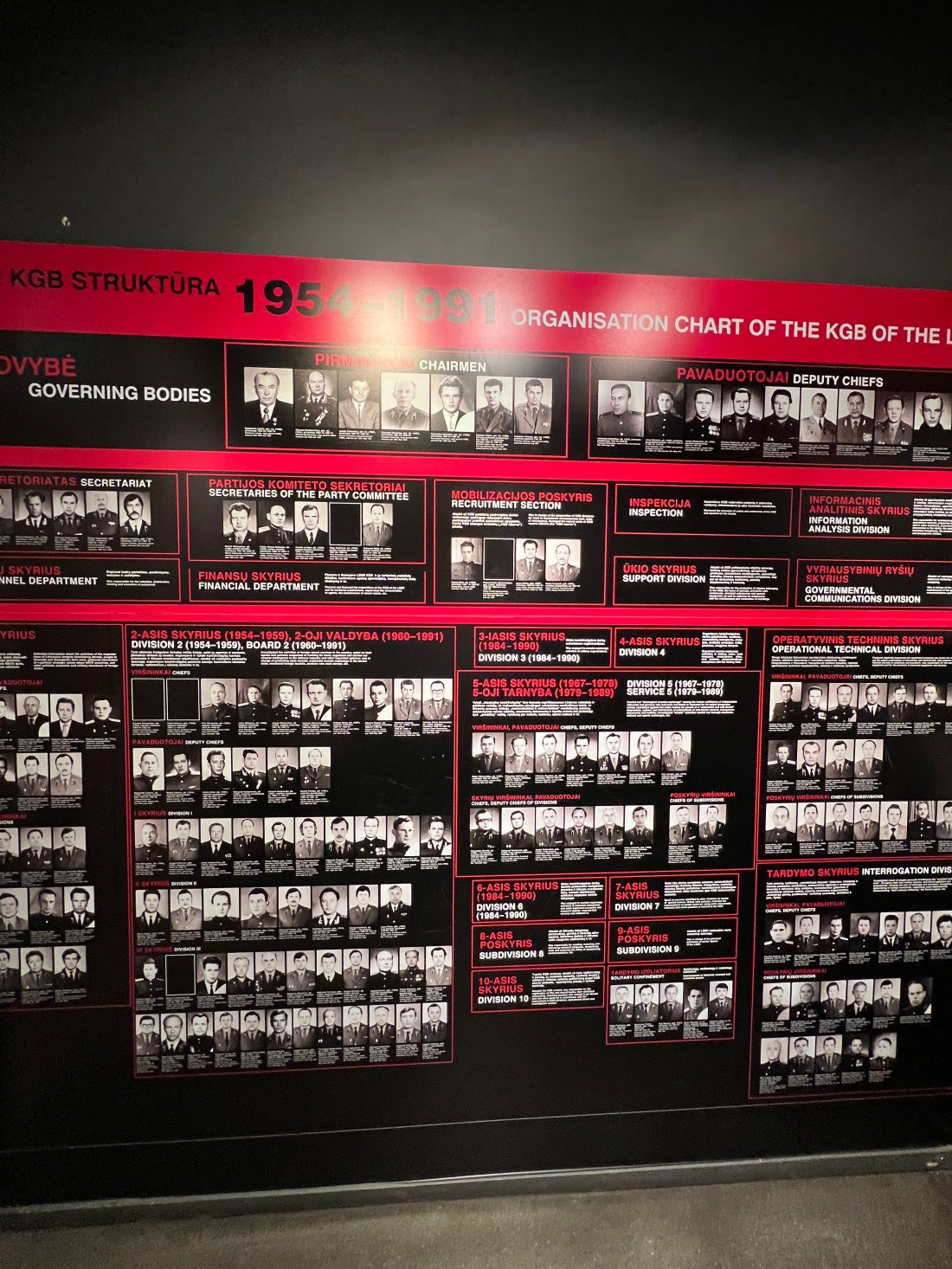
The museum is located in a former Lithuanian KGB building, and the KGB internal prison is still preserved in the basement. Exhibits on the first and second floors present the history of Lithuania’s fight for freedom from 1940 to 1991. 

After leaving the museum, Boris said: I am trying to figure out which parts we didn’t know. We knew most of the facts, but in some cases, we were not aware of the magnitude of the events, and in some, we simply never gave it enough thought, which I am now ashamed of. 

I knew about deportations in 1941, right before the start of the war, but I didn’t know that there were multiple waves of deportations after the war. The number of displaced people might not look so big until you think about the total population of Lithuania and realize that it was more than 10% of the total population.

We knew about the Forest Brothers, but I had no idea that they kept fighting until 1953! I didn’t know how well they were organized, how much support did they have in the country, and I didn’t know about their multiple unsuccessful attempts to get some support from the West. 

Knowing these facts, there is no wonder to see such overwhelming support for Ukraine everywhere in Lithuania! 

The exhibit explains how “a quiet resistance” rolled out after the Forest Brothers were defeated. And once again, it made me think about the time I visited Lithuania when I was a teen and a young adult. I am ashamed of myself now that I think about how we were coming there, the occupants, and how we were oblivious that we were seen as occupants. Also, I know many Russians who moved to Lithuania after the war and after the mass deportations, and they were completely ignorant about their role in the occupation. 

The part of the museum that talks about the labor camps was somewhat less impressive because I knew a lot about them. But the KGB prison left a completely grave impression, even though, theoretically, we knew how the suspects and the prisoners were treated. 

And one of the most impressive parts of the exhibit was the room where they presented the complete organizational chart of the Lithuanian KGB organization, with names and photographs! That’s where I thought – we should have had this for each KGB organization on the territory of the former Soviet Union! Then, maybe… 

I am not sure whether the pictures can add much, but I tried to make them informative. As for the prison, the most horrifying thing is that it is real, and not only real but also very recent.

Continue reading “Vilnius Museum of Occupation”

Vilnius Toy Museum

OMG, what a wonderful museum! It was just a block away from our hotel, but we didn’t notice it first because the entrance is hidden behind the heavy gates, and you need to press a buzzer, and they actually ask who are you and whether you really want to enter!

One museum with hand sanitizer everywhere :). Some old toys are behind the glass, but there are copies available for play, and you can touch and try pretty much everything. There were so many families, and kids were having the time of their lives!

And I want to mention, that Boris liked playing with lots of these toys 🙂

Continue reading “Vilnius Toy Museum”