How Math Became My Favorite Subject, But Not Right Away

I was a good student from the very beginning of school: my mom, Aunt Kima, and Baba Fania would never allow me to be less than that. However, I didn’t have a favorite subject for a while. I loved books and reciting poetry, so I was always the kid who opened the shows, but other than that, I didn’t have any special talents.

We didn’t have science or social studies lessons until the fifth grade, although I read many popular science books. We started to study Russian history in the fourth grade and botany and geography in the fifth. I immediately fell in love with biology, especially because by then, I had read many books about the wonders of nature, the mysteries of cells, endangered species, and so on.

In the fifth grade, I started to attend academic competitions, which were called olympiads. We had school olympiads, and the winners attended district olympiads, and the winners of district olympiads were sent to the city-wide competitions. All of them took place on the weekends, and having that we had school on Saturdays meant no weekends at all.

My first competitions were in biology, and I easily made it to the city-wide olympiad and easily got a second-degree diploma, finishing the fifth person in my grade level. I remember that I did great in microbiology and almost failed zoology (we didn’t have zoology at school yet, and I didn’t read enough by myself). I could not tell the difference between the black grouse and the wood grouse, could not identify the birds by skeletons, and so on. In the end, the examiner asked me what I wanted to talk about, and I told them what I knew about birds’ migration, and somehow got a passing grade in biology. The last subject was ecology and wildlife protection, and I spoke my heart out and got a top grade. I remember that I was very nervous about not remembering the names of the national parks and the dates they were founded, but my examiner said: please, spare me from the dates and name; tell me what you think about protecting endangered species. And I rocked!

My mom became very nervous about my fascination with biology because all of the craziness with genetics and Lysenko was fairly recent, and she didn’t want me to be in trouble. She started to steer me towards math. I liked math, but not even close to how much I loved biology. Besides, there was a new thread on the horizon – I started to be very interested in history.

How we were taught history in school will be a topic for a separate post, and in any case, we didn’t have any history olympiads – I guess it was dangerous to know too much about history. However, we had olympiads in math, physics, chemistry, and literature, and I participated in all of them.

My mom wanted me to focus on math because it was the only safe subject from her perspective. I was not against math, but I didn’t feel strongly about it. In the sixth grade, I started attending a Youth Math School, an after-school activity hosted at the Department of Mathematics and Mechanics of Leningrad State University. Back then, the Department had yet to move to the out-of-the-city campus, and the classes took place in the old building on the 10th linia of Vasilevsky Island, about 15 15-minute tram ride from my home. Most times, I was the only girl in the class, and I always felt stupid. Our teachers were first- or second-year university students, and they rarely had enough pedagogical skills. The boys pretended they understood all that was said, and sometimes, they could solve complicated problems, and I was barely able to keep up with them. Still, I thought it was cool to come to the University once or twice a week, so I kept coming. In the sixth grade, I participated in the district math olympiad but didn’t make it to the city-wide.

I kept attending the Youth Math School in the seventh grade and still didn’t get any diploma at the olympiad, but I quite unexpectedly made it to the city-wide essay competition, got a second-degree diploma, and was interviewed for a radio show. I suspect that made my mom even more alarmed :), especially because my award-winning essay was about Euguene Schwarts’ plays. It’s not like Schwarts was a forbidden writer, but he never praised the Soviet State and the Communist Party, many of his friends and peers were imprisoned, and the officials silently ignored him.

Fortunately for my mom, things changed when I started the eighth grade.
To be continued.

My historical posts are being published in random order. Please refer to the page Hettie’s timeline to find where exactly each post belongs and what was before and after.

The Pawnbroker

In between the two operas, I watched The Pawnbroker, a 1964 film directed by Sidney Lumet. I learned about this movie from one of the kino-websites advertisements related to Lumet’s 100 anniversary. Then it was my usual movie story: I need to find time; the movie is so captivating that I can’t watch it as a background to anything, etc. Actually, after the first ten minutes of watching, I realized that I won’t be able to hit the stop button….

How many Holocaust movies did I watch? Many! How many books? How many photos? A lot, but still, this movie was unbearable to watch even though it shows very little of actual Nazi atrocities. We do not even know the whole story of Sol Nazerman. We only see flashbacks of past events triggered by something happening in the present. Still, it’s striking evidence of unmendable damage done to a human. When I was watching the movie, I physically felt Mr. Naserman’s suffering. I just do not have the right words to describe how I felt. A naked truth. Immense sorrow.

Back To Tallinn

We returned to Tallinn at 8 PM and had a very late dinner at Pepper Sack:

I took the outside photo the next day, at daylight
Moose meatballs
Apple and raisin cinnamon crepes
Sorbet boat
The Holland-style Townhall photo
Continue reading “Back To Tallinn”

The Last Green Valley by Mark Sullivan

If you wonder when I have time to read with everything going on in my life, the answer is that about 70% is listening to audiobooks, and most times, I listen while doing something, whether it is exercising, cooking, folding the laundry, you name it.

The Last Green Valley took me a long time to read, and that was one of the rare occasions when I did a synced reading/listening. I finished it a couple of days ago, and I am still under a very deep impression.

This book is just brilliant! It’s really impressive that somebody who does not have ethnic roots in Ukraine could present this story of struggle and survival with such compassion and understanding. Not a single false note!

The book was one more eye-opener for me – I never viewed these historical events from the perspective of ethnic Germans trying to escape the advancement of the Red Army. Lots of details were completely unknown to me, yet I can see how they fold into the big picture. The whole story sounds completely unbelievable, and it comes as a surprise at the end when you learn that it was based on a true story of a real family. When I hear stories like this, I feel that my own life is completely dull and uneventful. I know I will be thinking about this story for a long time, and possibly I will write more about that book.

Historic House Walk

I only briefly mentioned the Historic House Walk in which I participated on Sunday, and I wanted to show more pictures and tell more about it.

When I moved to Rogers Park, I saw that the Historical Society was just across the street from my house, but at that time, it seemed to be still “closed for the pandemic.” Then, there were so many things going on in my life that although I was still curious about the Rogers Park history, it was just “yet another thing” that I would get to “at some point.”

Then I visited the Historical Society website and realized that they are already doing many interesting things, and I am missing out. I subscribed to their newsletter and finally started to learn about tours and presentations. Most times, it would turn out that the timing does not work for me, but for the Historic House Walk, it worked! I joined the society and paid the fee for the Walk, and on Sunday at noon, I was there!

This year’s House Walk featured several houses in the Peterson Woods (I forgot to mention that the Historical Society covers both Rogers Park and West Ridge).

All the houses were very interesting and worth seeing, but I liked less the houses where the new owners made a lot of renovations, no matter how awesome these renovations looked. I liked it way more when the owners preserved the old windows and trim, opened the covered stained glass, and restored the original tiles.

Continue reading “Historic House Walk”

Helsinki Day 4

On Thursday, we went to the museum island Seurasaari. I thought we would spend just a couple of hours there, but the weather was nice, and there were plenty of kids’ activities, so we ended up staying there almost until closing (or rather until it started to rain).

I just realized after checking my June blog entries that I didn’t even had time to post about Sauresaari in June, when I visited the museum with Natasha’s family. In comparison with the June visit, there were more open houses, more activities for children, and more food available in the cafe, so the whole visit was even more fun than I expected. I will add some of my June pictures to that post.

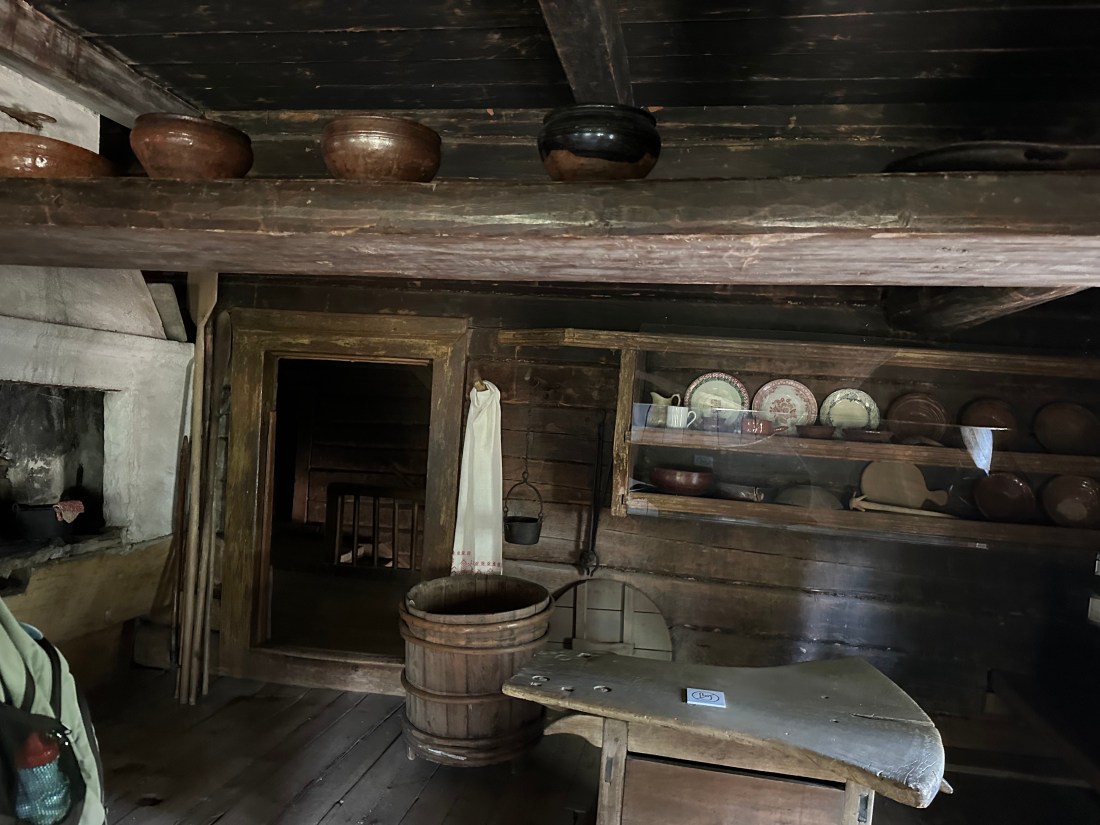
The Museum was opened in 1909, and it hosts old buildings from different parts of FInland which are being carefully moved to the island and rebuilt/restored there. In addition, each house contant s gigantic collection on different household objects from the correspnding region/historical period. Also, I love it when you can climb the rocks and smell the pines.

The boat shed
A farmstand
Continue reading “Helsinki Day 4”

Helsinki Day 3

We were so scared of the rain the day before that we ended up spending most of the day indoors visiting different museums.

The first one was a Burger House showing how well-off people in Helsinki lived in the second half of the 19th century.

With Anna at the Senat Square

Then we visited Aethenium Museum and then – The Helsinki City Museum.

Both of them had activities for kids, which made everybody happy. In fact, Nadia was so fascinated with the “classroom” exhibit in the Helsinki City Museum, she didn’t want to go anywhere else and stayed there almost until the museum closed 🙂

Anna at the classroom piano

All these exhibits plus more ice cream made the day, and we were glad we didn’t plan anything else!

Elementary School In The Soviet Union, p.2

For the first three years of school, all the classes were held in the same room, except for PE and singing. Even in the first grade, the desks in the classroom were arranged the same way as in high school, three columns with six desks in each, with two students sitting at one desk. I know it is hard to believe now, but at seven, I was relatively tall for my age, so my place was in the fifth (out of six) row in the right column. My neighbor was a girl named Sonia Skorpileva. She was taller than me, clumsy, with messy hair and a leaking fountain pen. We all were as cruel as seven-year-olds could be and made fun of her. Unfortunately, the teachers often supported such behavior, publicly shaming the students for even minor mishaps. For example, on the days when we wore white aprons, we were also supposed to have white ribbons in our braids (and black or brown ribbons on regular days). One girl (and I even remember her name, Natasha Ponasenkova) had purple ribbons. Although it was our first First Day of School, our teacher called her out, put her in front of the class, and allowed everybody to laugh at her for these purple ribbons. And then she told her to tell her mom that the ribbons had to be white. She was a very pretty girl, but we never acknowledged that since she was from a “troubled family.”

Since the very first day of school, it was expected that we sit still for all forty-five minutes of each period. We were almost never allowed outside during the break, even though the school had a courtyard.

After a month or two, the teacher started grading both our classwork and homework. The grading scale was from 1 to 5, but 1 (“very bad”) was almost never used, 2 was already “bad” or “unsatisfactory.” Starting from the second quarter, we had “quarterly report cards,” which mostly presented the mean of all the grades one would receive in class through the quarter. At the end of the first quarter, all of us became Young Octobrists, the communist organization for kids aged from seven to nine. All Young Octobrists wore a pin on the left side of the chest: a small plastic or metallic start with the portrait of Lenin at the age of five in the middle. The name “Octobrists” (Oktiabriata in Russian) referred to the “October Revolution.” Since in 1917, the official calendar used in the Russian Empie was the Julian Calendar, all the dates were two weeks behind the rest of the world, thereby the Revolution happened on October 25, not on November 7. Although Russia switched to the Gregorian calendar in February 1918, by that time, the Revolution was already called “the October Revolution,” or “The Great October Socialist Revolution,” or simply “The Great October.” It was too late to change the trademark, so it continued this way. So, we all were “Young Octobrists” and wore these “Octobrists’ pins” on the left.

I know that all I am describing sounds pretty dull, but I didn’t think my life was boring or uninteresting at the time. My old post with the home movies covers the second half of the first grade, and there are lots of fun activities!

My historical posts are being published in random order. Please refer to the page Hettie’s timeline to find where exactly each post belongs and what was before and after.

On The Same Topic, Again

On Sunday, I talked with my second cousin, who lives in Russia. We lived in the same apartment for the first twenty-two years of my life, so we had our share of hate and love, and I respect him both personally and professionally.

Unlike most of my family, he is not a technical person. He is a historian, and not like an amateur historian, and not like “the history of the USSR” historian. He specialized in the history of Russia in the 19th century, so one can only imagine how far from easy it was to stick with this topic for over forty years of research. In short, he knows it. Seriously.

So, I was talking to him, and we were about to say our goodbyes. Then he said he hoped the time would come when we saw each other again. He immediately corrected himself. He said that he did not see any of the future for Russia at all, and “if we exclude the complete collapse of the state,” the only non-catastrophic outcome he saw was the strengthening of dictatorship. He reiterated that the complete collapse would be the worst and that “he hoped we would never come to that.”

I told him that I saw our only hope in this complete collapse, and I did not see any possibility of rebuilding the nation without destroying everything that exists now. I added that I was thinking about Germany in 1947. He replied: yes, but there is one slight difference: in Gernamy in 1947, they had an external government. I said: yes, that’s what I mean, and then I realized that with all these positive things about him I mentioned at the beginning of the post, he still thinks that 1) nothing can be done, 2) anything is better than a potential collapse of the state.

And it’s extremely unfortunate.

First Kings Of Europe

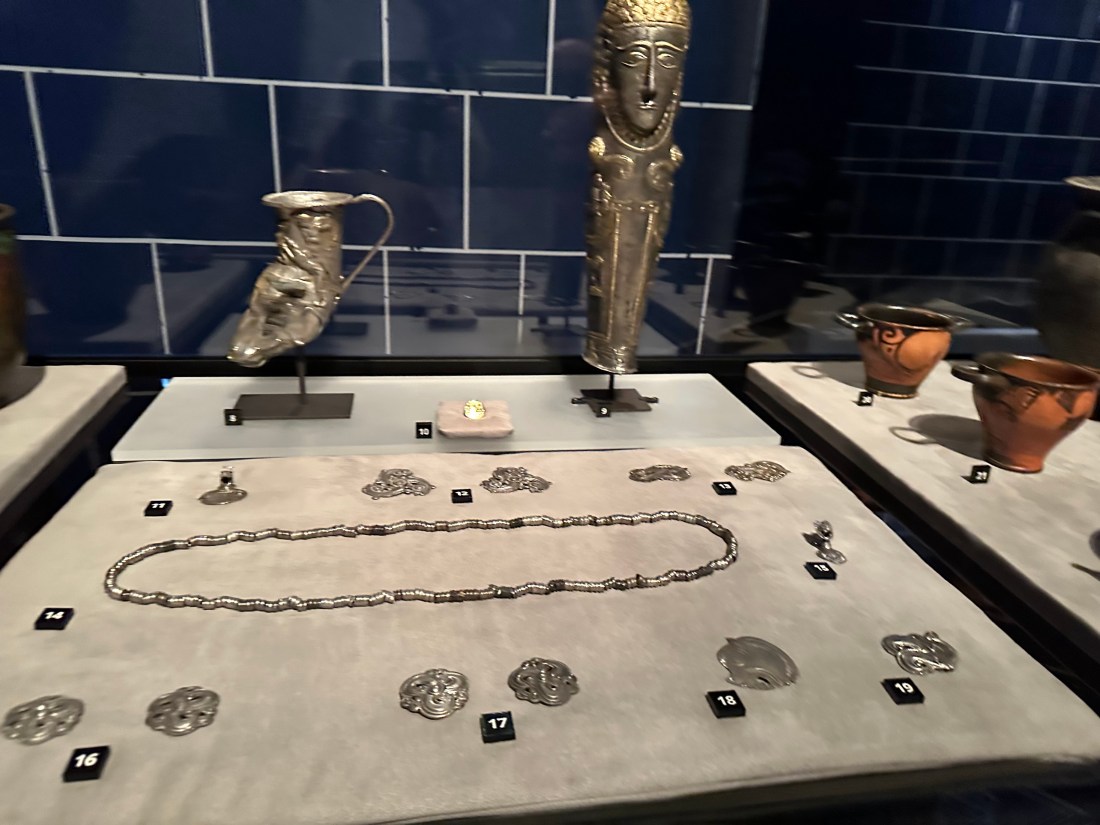
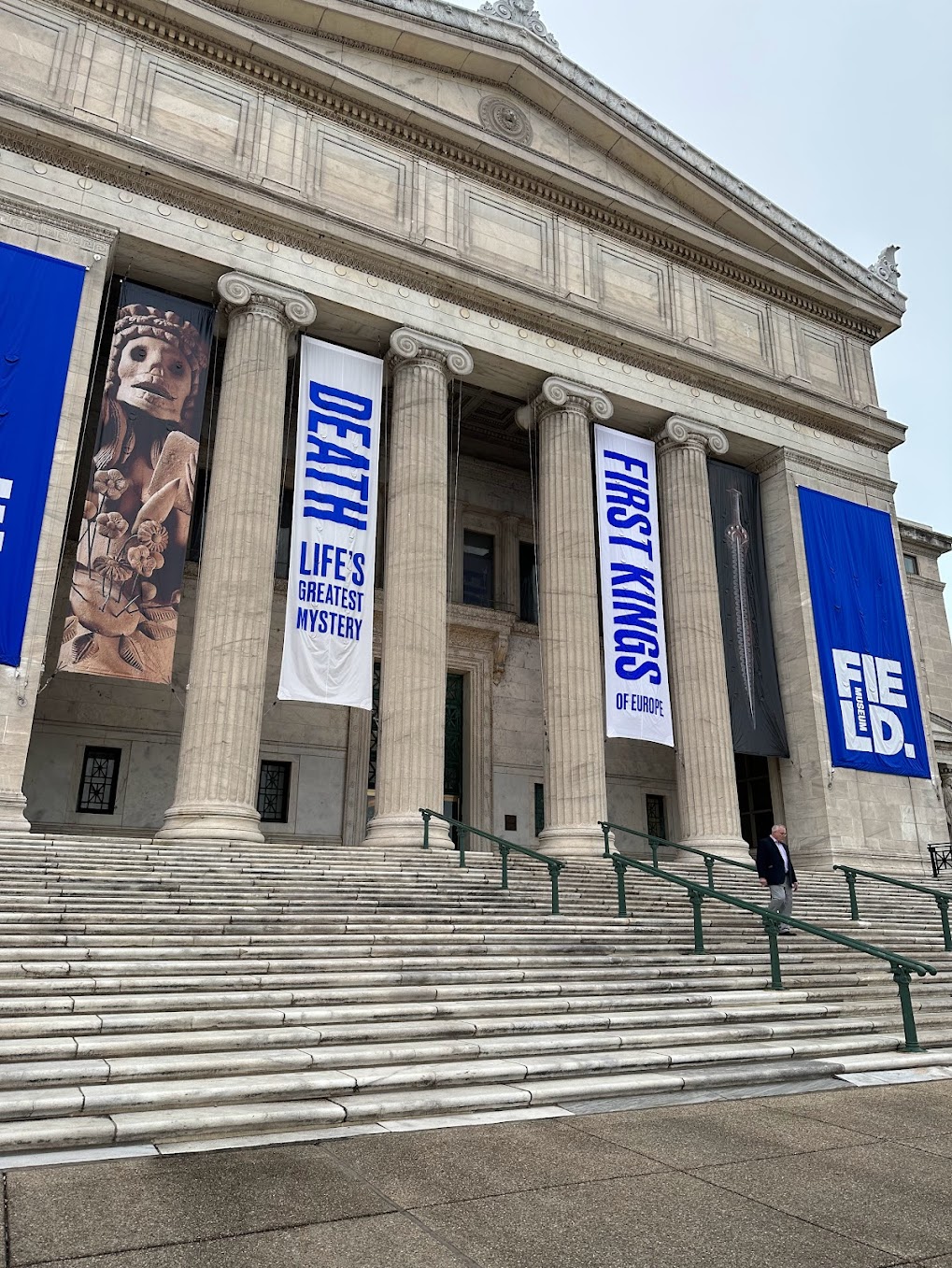
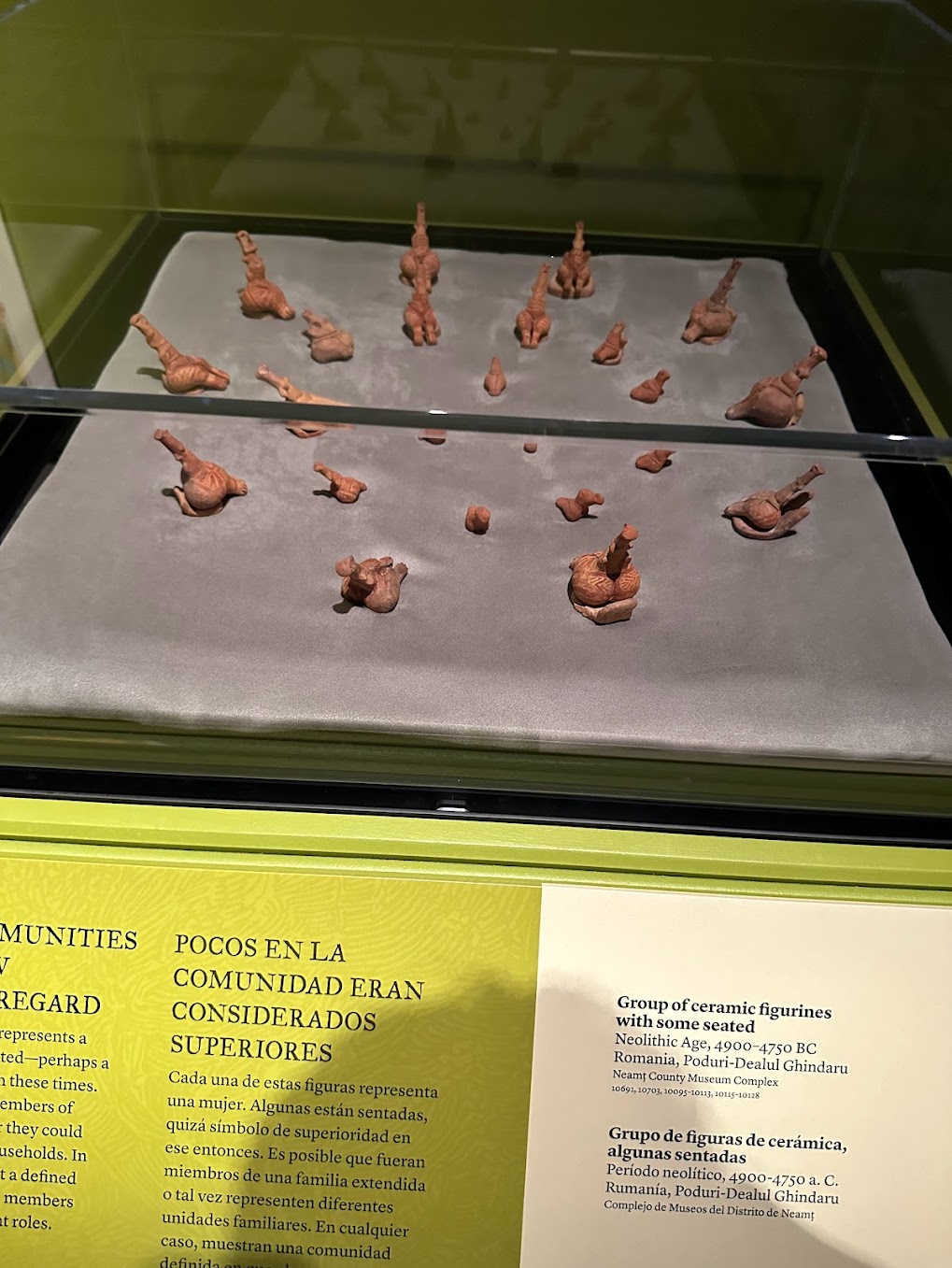
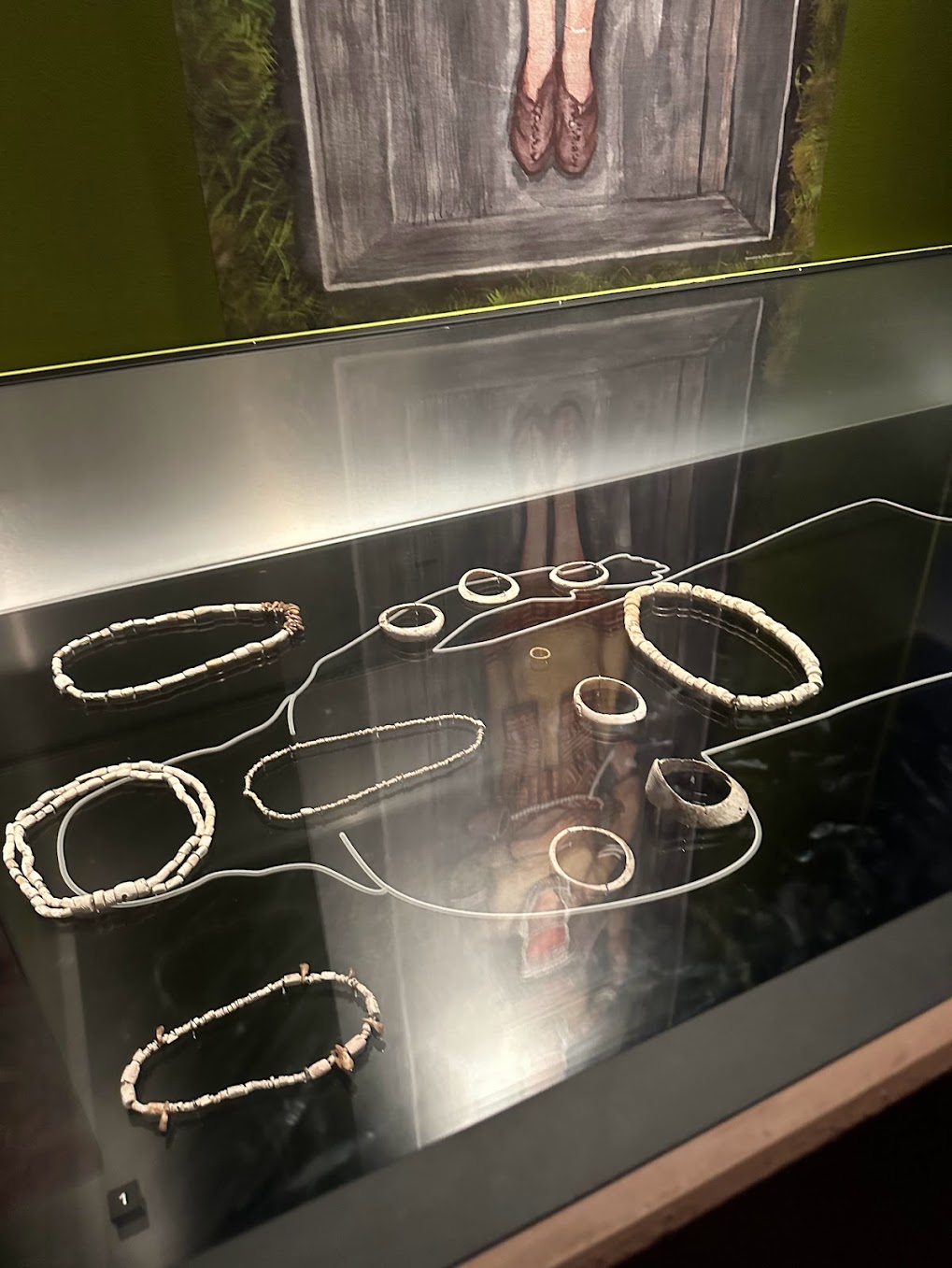
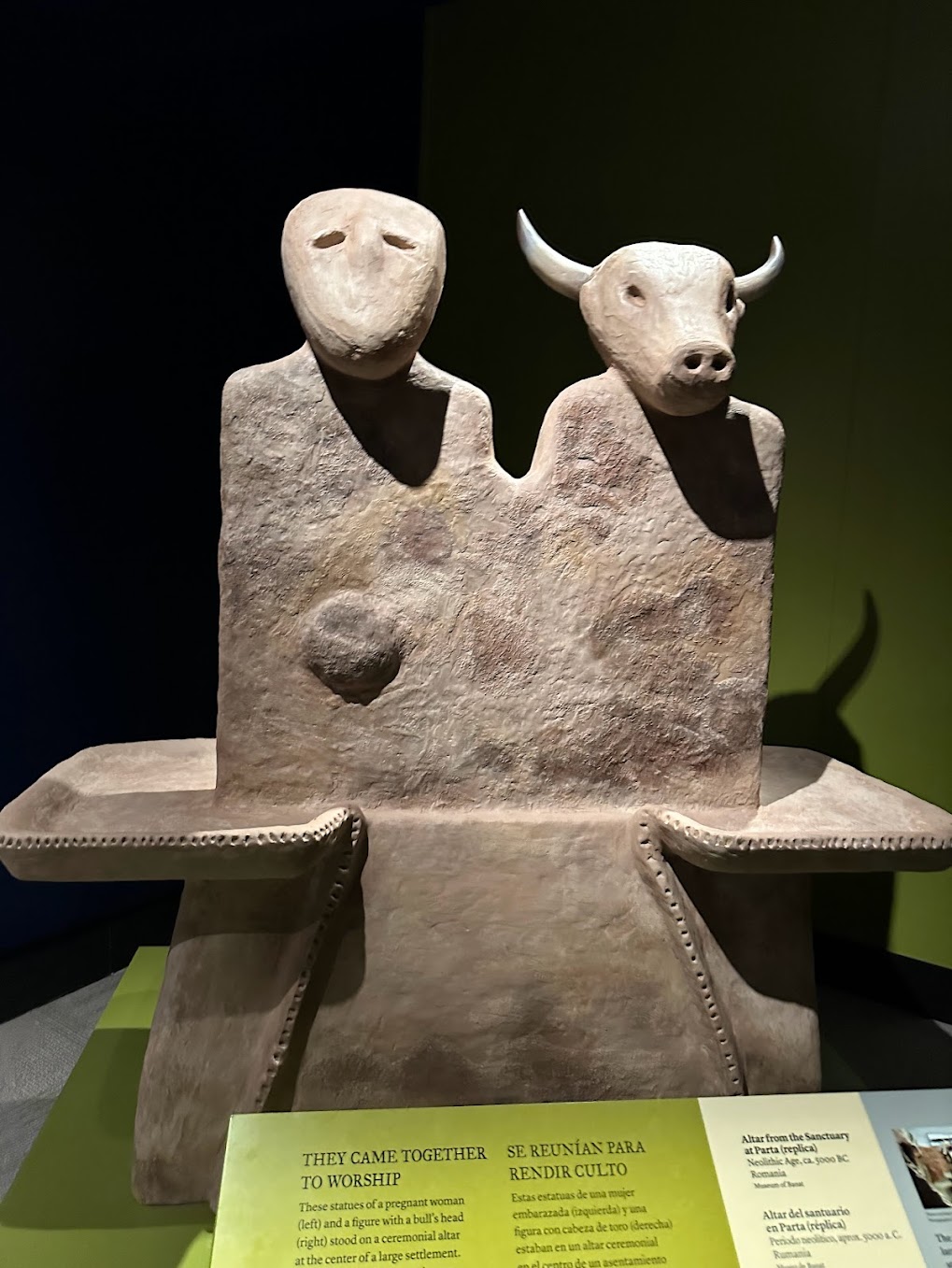
This Field Museums exhibit tells the story of the first kingdoms on the Balkan peninsular.

The international group of museum curators and historians started to work on putting it together back in 2015. Everybody knows what happened next, but this exhibit faced more challenges than any other, including expiring grants. Now, the exhibit is finally here, at the Field Museum, showing the historical objects from ten different museums in different countries, 700 objects which were never displayed together,

The whole exhibit is set up like a giant book, so that you walk through and turn the pages.

Continue reading “First Kings Of Europe”