On Sunday, I was trying to talk to mom about that summer. She confirmed that she was returning to Sosnovaya Polyana every day after work, and thereby her commute was three hours every day. She said that my father “rarely” was there and that “she needs to tell me everything.”
Actually, she already gave me her letters to my father and his letters to her from that period, and she gave me her diary to read, so I know how it all looked like both from her and his perspective. I do not doubt that I need to write about it, but I am still unsure whether to include their story in my or tell it separately.
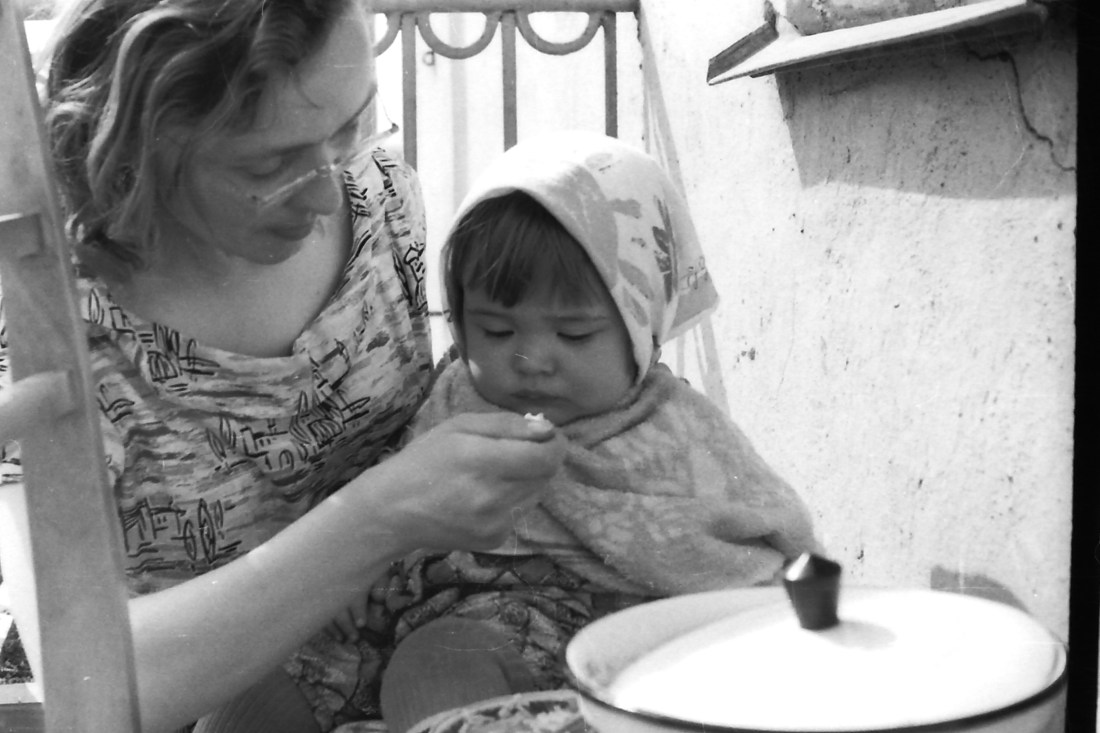
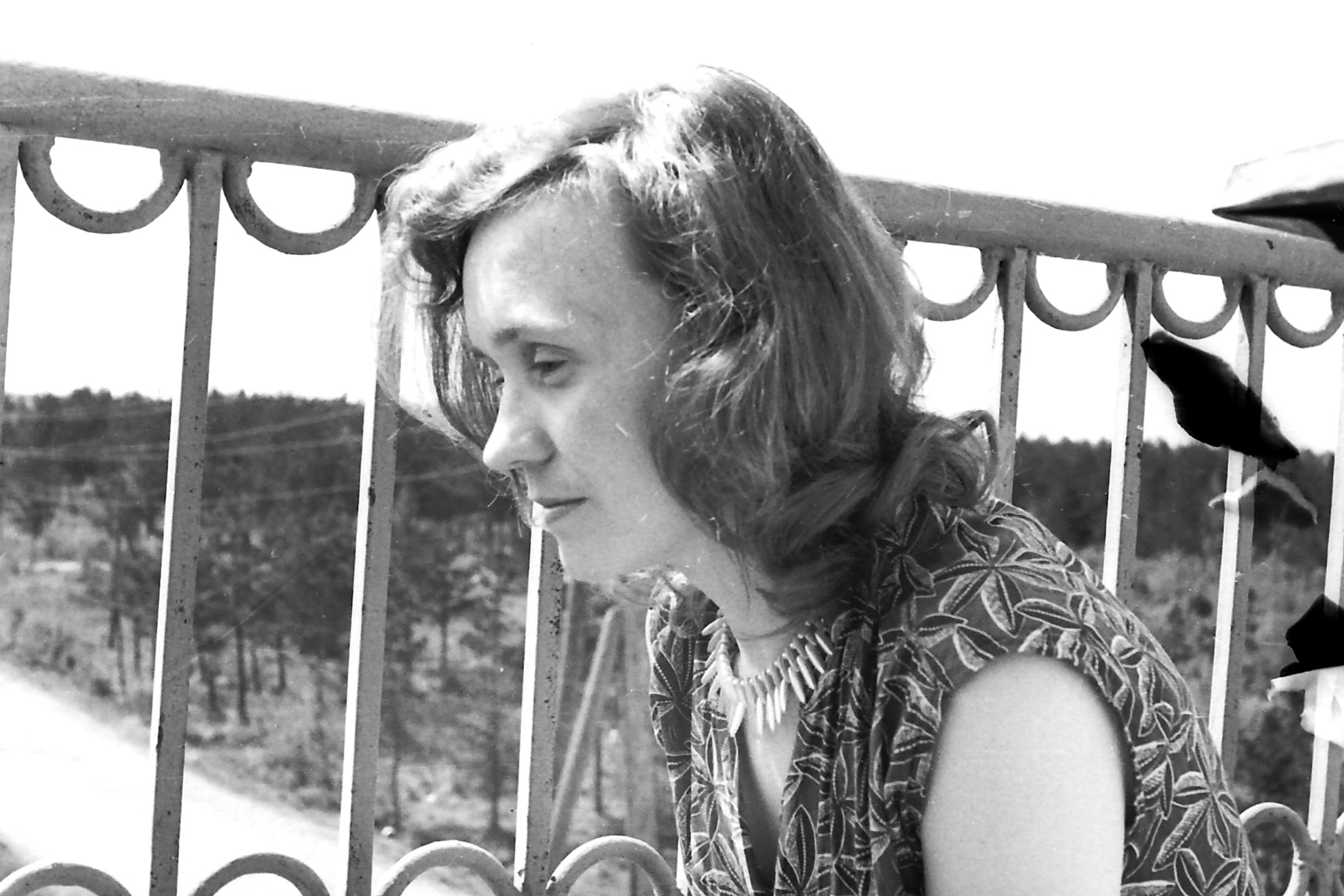
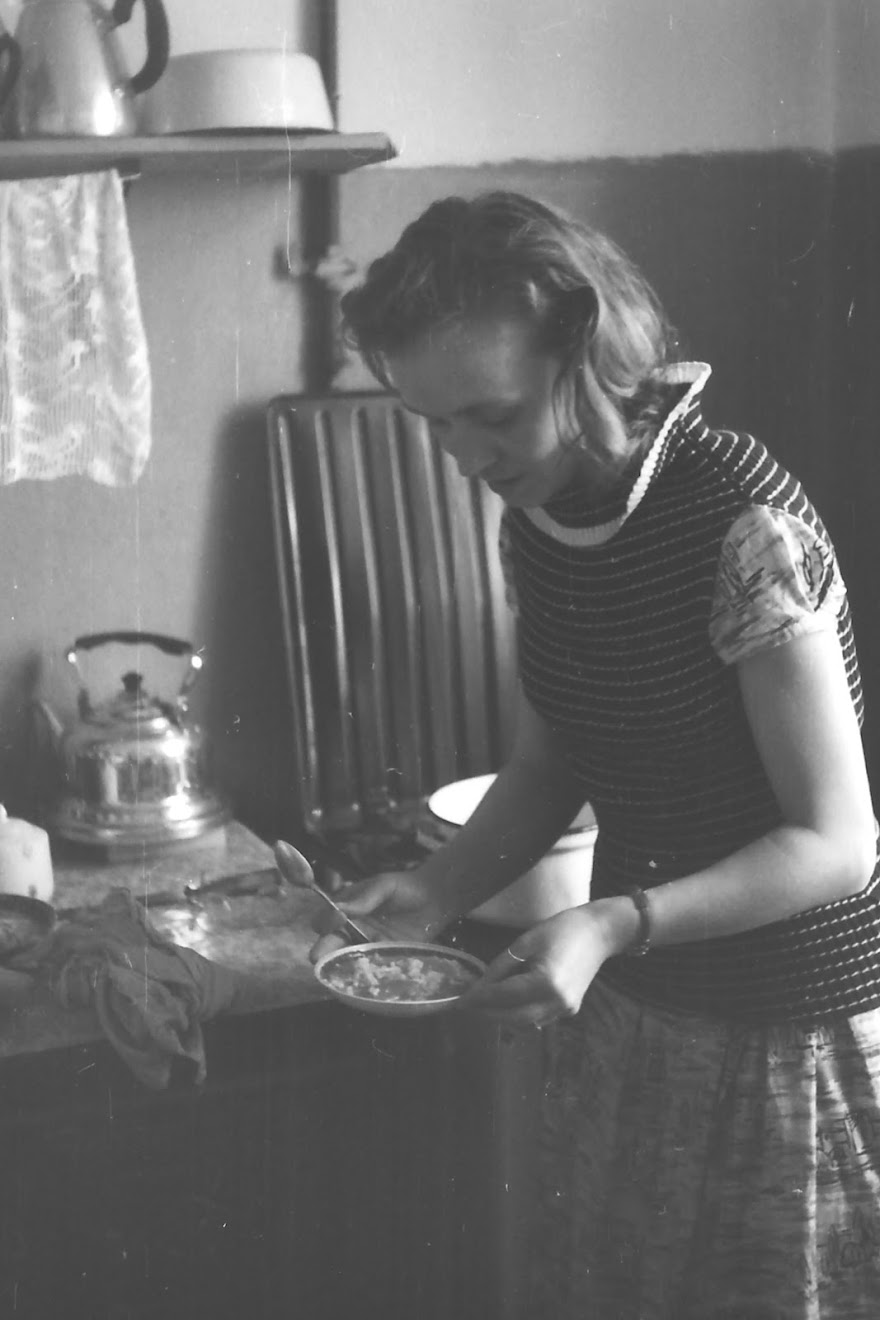
For now, let’s say that my father came to Sosnovaya Polyana from time to time and that he took lots of pictures. I like the photos which are not focused on me because I can see the interior of this tiny apartment, and I can see Baba Ania, even if only in the background. Also, when I look at these pictures, it is very visible to me that my father loved my mom, even if it was in the wrong way. I mean, even though he a completely messed up person, he loved her the way he could love.
More pictures from the same summer. I poster the picture below in the previous post.
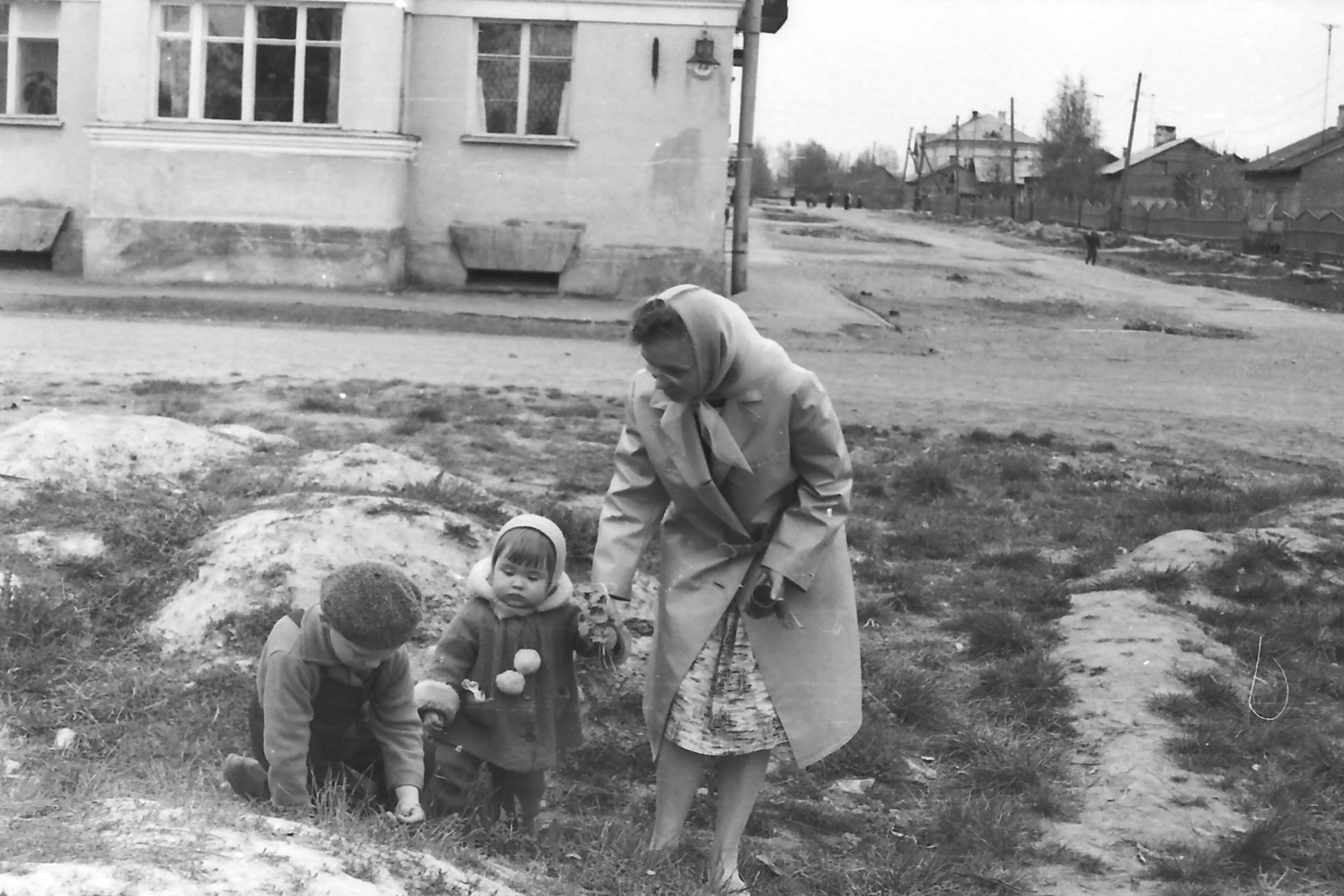
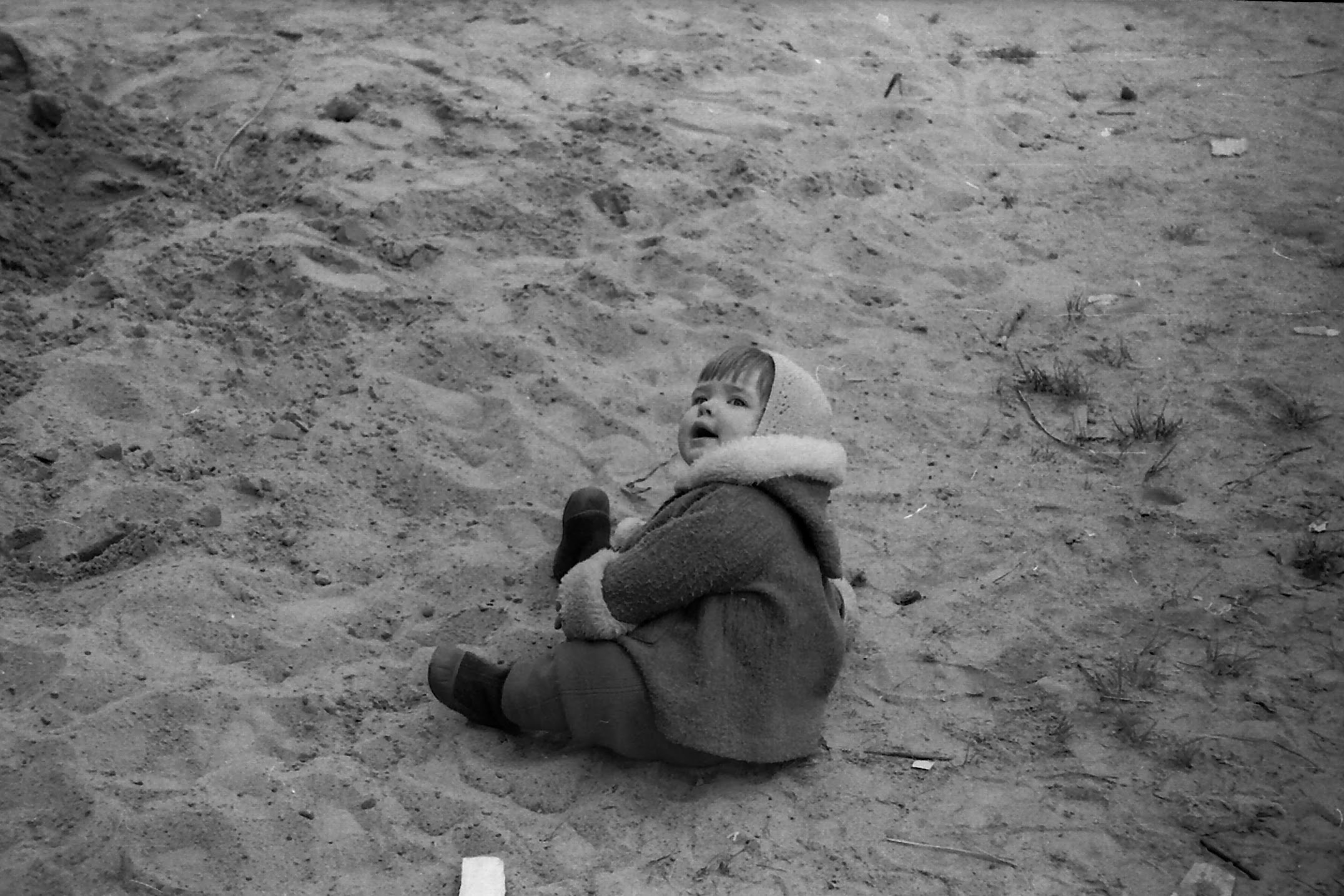
The building behind us is this three-story building where Baba Ania and Deda Fedia lived. Their studio apartment was on the third floor, one window was facing his scene, and the balcony and the kitchen window faced right (where the wooden huts are). If you look at the ground under the balcony (on the right of this picture), you will see some sand. You can’t tell that this is sand, but if I tell you that it is there, you can figure out where exactly it is.
Now, look at the next picture.
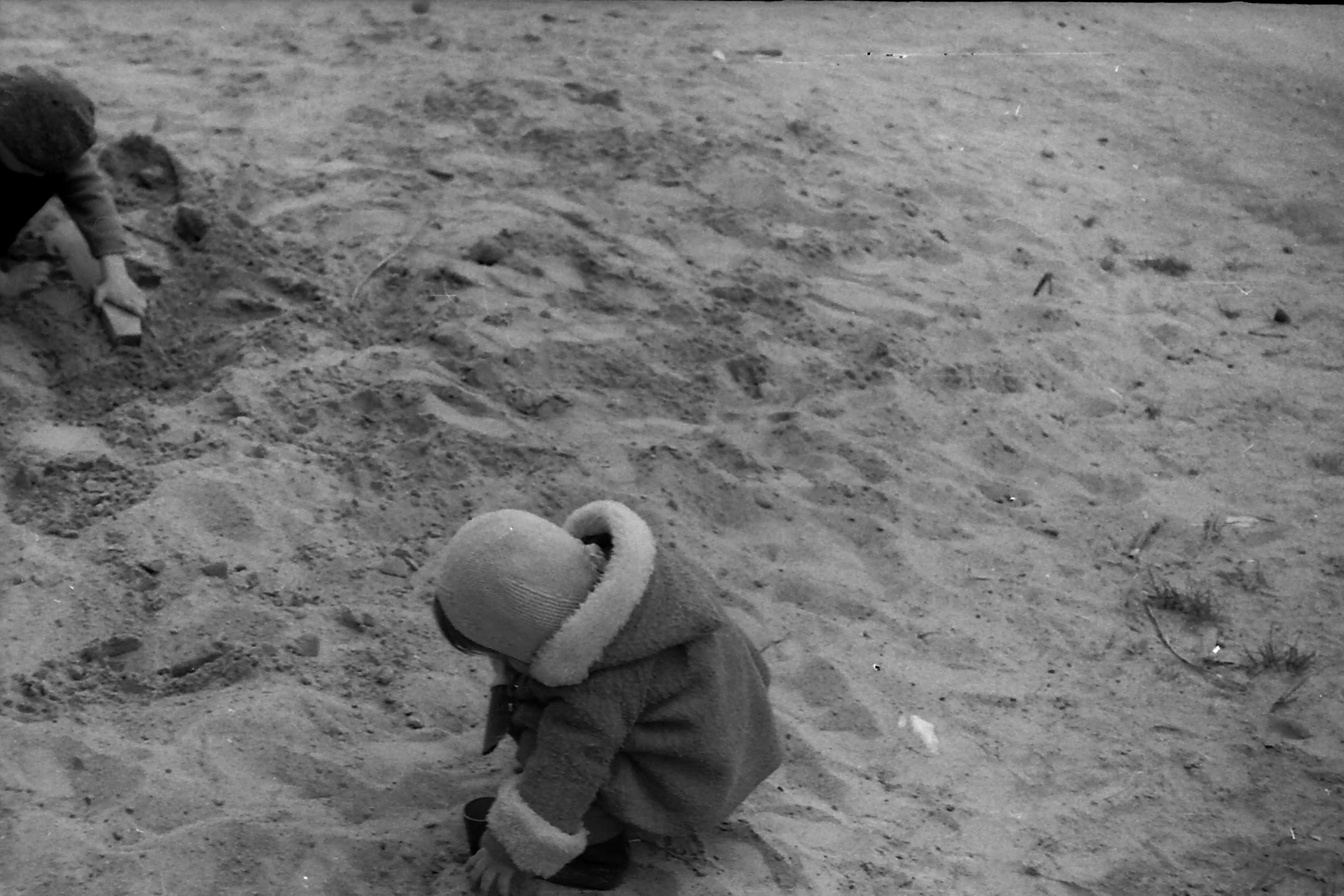
We are playing in this dirty grey sand and trying to build something:). And on the next picture, I turn my head up and yell towards the balcony for Baba Ania to drop my little shovel to me.
The complete gallery is here, so that my children and grandchildren will know where to look for photos; I am not going to post all sixty :).
In the summer of 1964, I was one-and-a-half years old, and I spent the summer with my maternal grandparents.
Deda Fedya (grandpa Fedya) “received” this one-room apartment from the Leningrad Commercial Port, where he worked after returning from his army service.
They lived in one of the houses built in the 1950s’, in Sosnovaya Polyana, the part of Leningrad only from an administrative perspective. I remember that in 1964, the peasant’s houses that surrounded it were freshly demolished. The wooded houses were gone, but the stone chimneys and the fireplaces stayed. Now that I recall this picture, it seems creepy, but I found it extremely funny back then. My grandfather would take me with him on expeditions to checked whether there was something worthy left in the abandoned gardens. He dug out some strawberries and planted them on his balcony,
I was there for the summer because of the firm belief, which I mentioned earlier, that children should have some “fresh air” during summer, and adults have to make sacrifices to make it happen.
It was a one-room apartment, with only one normal bed for my grandparents. Mom slept on the camp bed in the tiny hallway. I slept on the small day bed. Mom walked to the train station every morning (almost 3 miles), and took a train and then a tram from the railway station to her work. My father was there only on the weekends, and I am not even sure whether their issues already started at that time.
In any case, all these pictures were taken by my father during one of his visits. The most precious thing about these photos is that I can see parts of that apartment, and I can see Baba Ania passing by on some of them.
The house was originally built with the woodstove only; the gas stove (on the right) was installed later)
I am moving back to the beginning of my timeline – to the first four months of 1964.
In the previous post, I showed the pictures from my first New Year, when I was just nineteen days short of my first birthday. As I already said, I remember some parts of that day, and I remember that I was learning to walk, and the walls were not exactly straight and reliable – sometimes they would suddenly start slipping, and I would end up on the floor :).
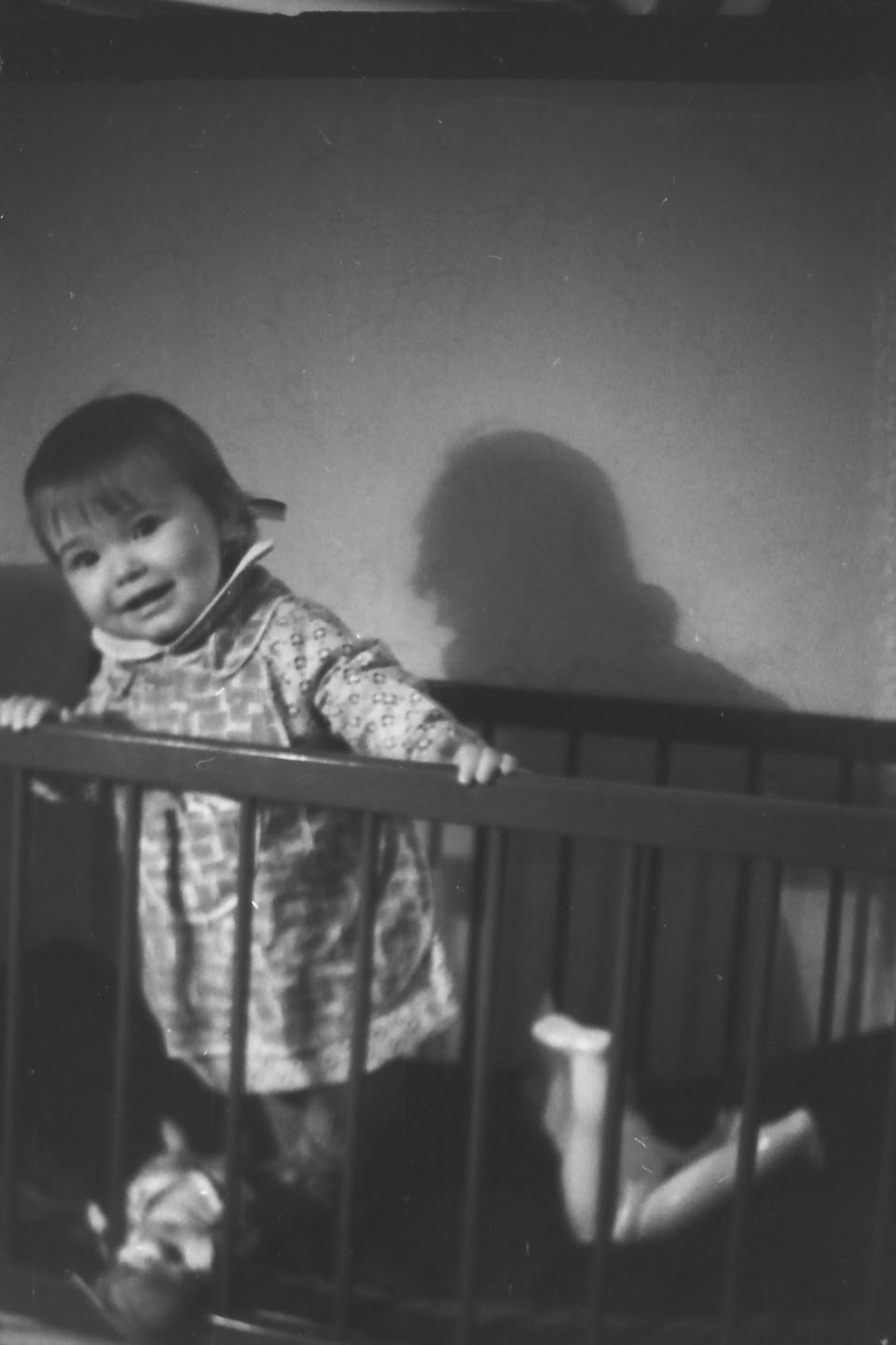
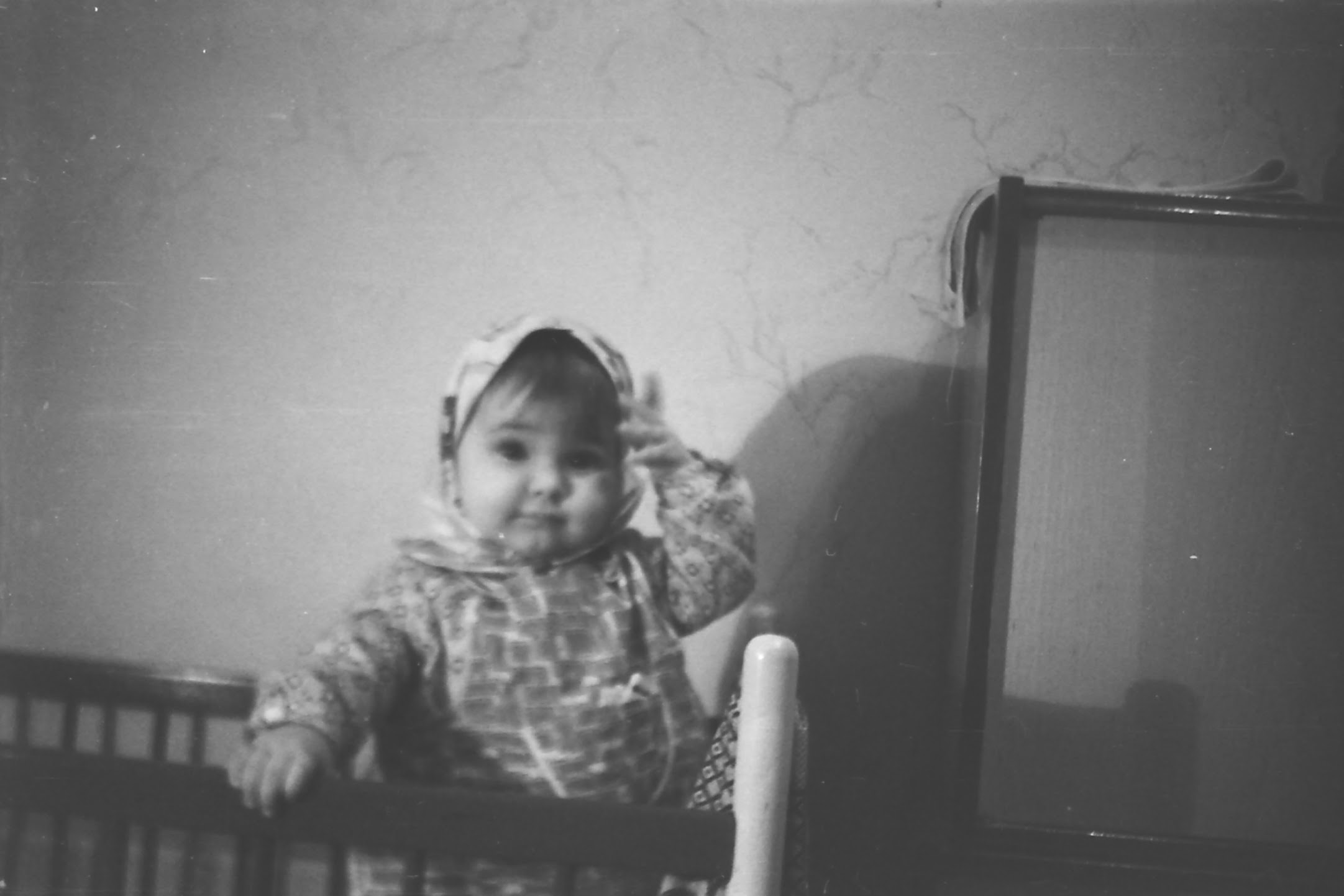
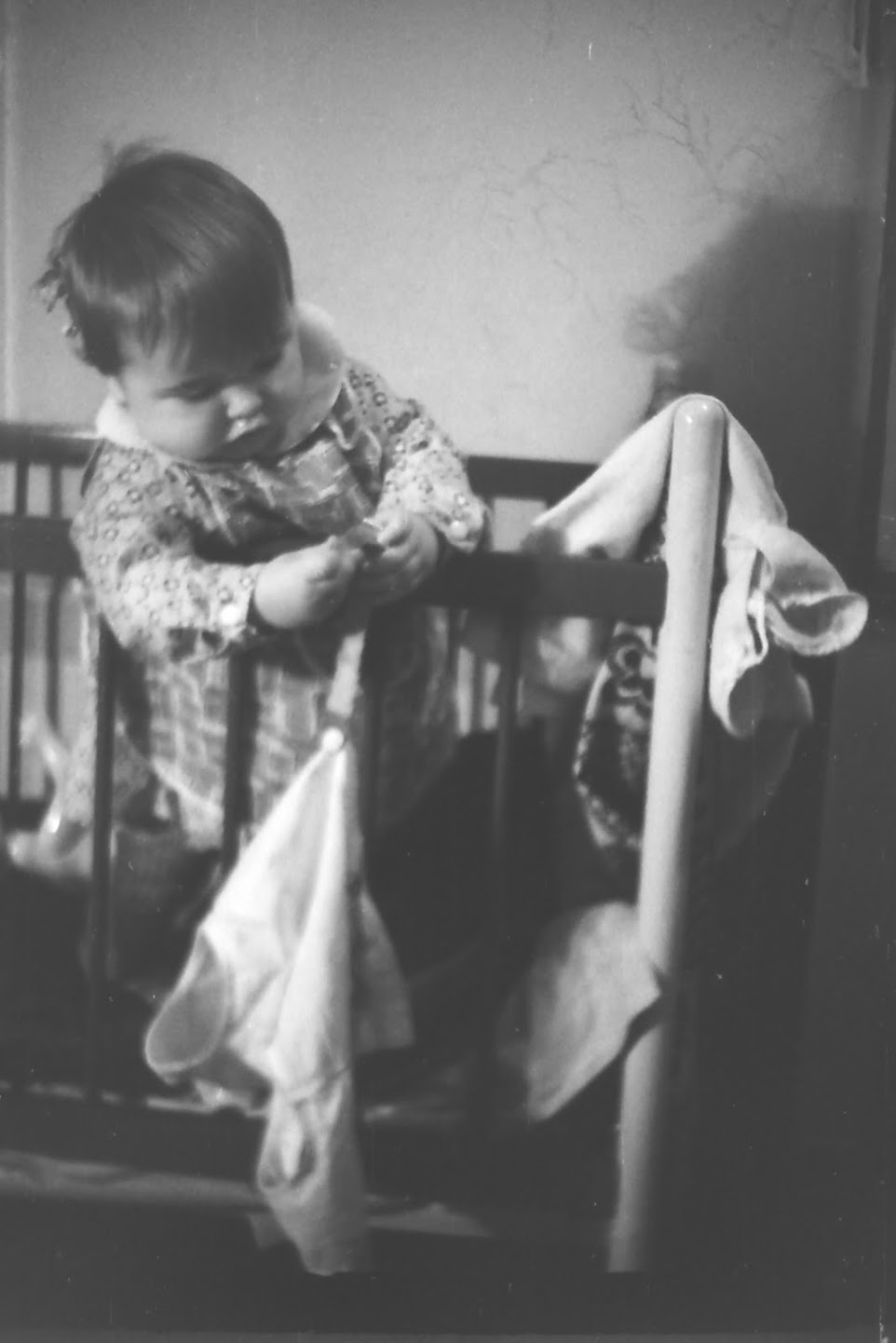
The first five pictures were taken in January. On the first three of them, I am in my crib, where I was placed so that adults could do something without me constantly falling on the floor. I have a couple of my toys there, but apparently, I am not interested in them.
Since Christmas was forbidden in the Soviet Union and later partially rehabilitated in the form of New Year’s celebration, I can’t tell, “it was my first Christmas. ” Instead, it was “my first New Year,” December 31, 1963. The New Year was especially a big deal in our family because Aunt Kima’s birthday was on January 1.
I cherish these pictures because they are atypically live for that period, and none of them are staged photos. I believe my Mom never printed the pictures from that roll, which did not include me, so until we scanned the film, I didn’t know what a treasure I have in my possession.
I have some memories from that day, in part because Mom showed me these pictures often.
I found more pictures form summer 1963, the same summer, the same place, the same people. Just wanted to keep all these old photos at one place. When I was a child, I didn’t think of them more than just “these are my baby pictures, ” but now I view them as historical documents, since they’ve captured so many signs of the epoch 🙂
The first summer of my life. Since I remember myself from a very early age, and since I liked looking at my pictures even when I was a very small child (and that’s why, perhaps, I still remember it so well!), I could not believe I didn’t remember that summer! It felt unfair that I was in Estonia, looking at these beautiful flowers, and all of it was gone from my memories!
As a child, I had an outstanding memory. I remember some episodes of my life even before my first birthday. And since shortly after my first birthday, I remember more or less “everything,” meaning I remember my life as a stream of events. That was in part because my parents made lots of pictures, and I was often looking at them.
That been said, that fact that I did not remember the earlier portion of my life, used to frustrate me a lot! I did not remember being in Estonia for the first summer of my life, and the pictures looked so lovely!
I was born on January 19, 1963, and at that time, mothers in the Soviet Union didn’t yet have the option of staying at home with their babies for the first year of their lives. There was only the so-called “decree.” The name goes back to the early years of the Soviet state when the laws were called “decrees.” The decree which proclaimed the right of the woman to take eight weeks off work before the expected date of birth and eight weeks after went into effect in December 1917. For this whole period, women were paid 100% of their salaries. Later, women were allowed to take four more weeks off, but with no pay. What will happen if they won’t return to work? They would have to quit the job, which in turn will result in “interruption of work history” on their record, and that will negatively affect their state pension in the future.
Eventually, I will tell here all the stories of the previous generations of our family, which I can remember. But in this post, I wanted to show some pictures from the very beginning of my own life.
I already wrote about my university years and a little bit about what happened after. Now that I look at all I’ve written, I feel like I can’t continue without writing about some personal things. And I am not ready for that yet. So I decided to go back to my beginnings.
These are the first pictures of me, or rather my mom with me. The films were dated March 1963; although I find it hard to believe, there could be so sunny and dry in March in Leningrad. But – I have to believe it. At least, I look pretty much like a two to three months old should look:))
babies were kept swaddled tight… all the time 🙂
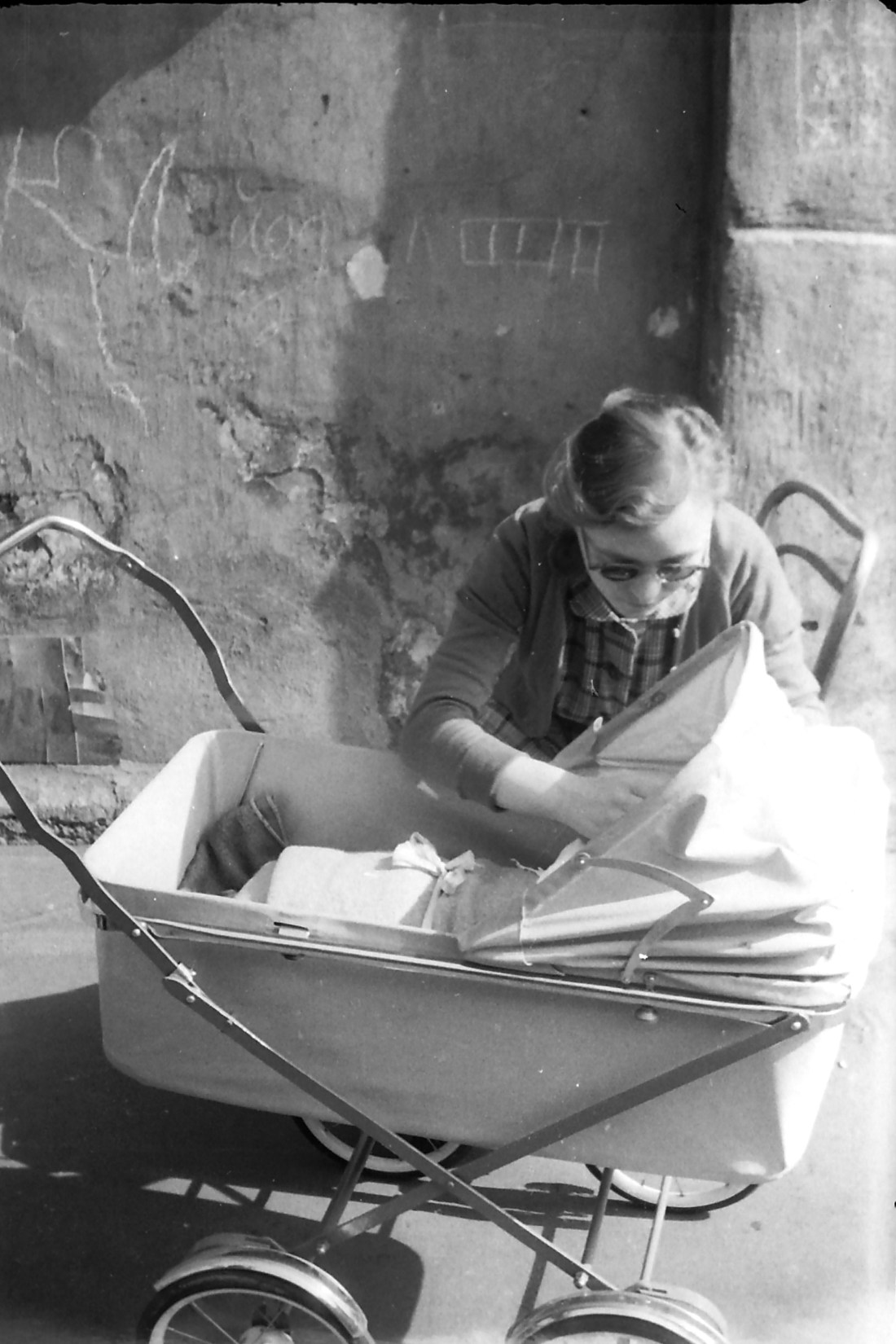
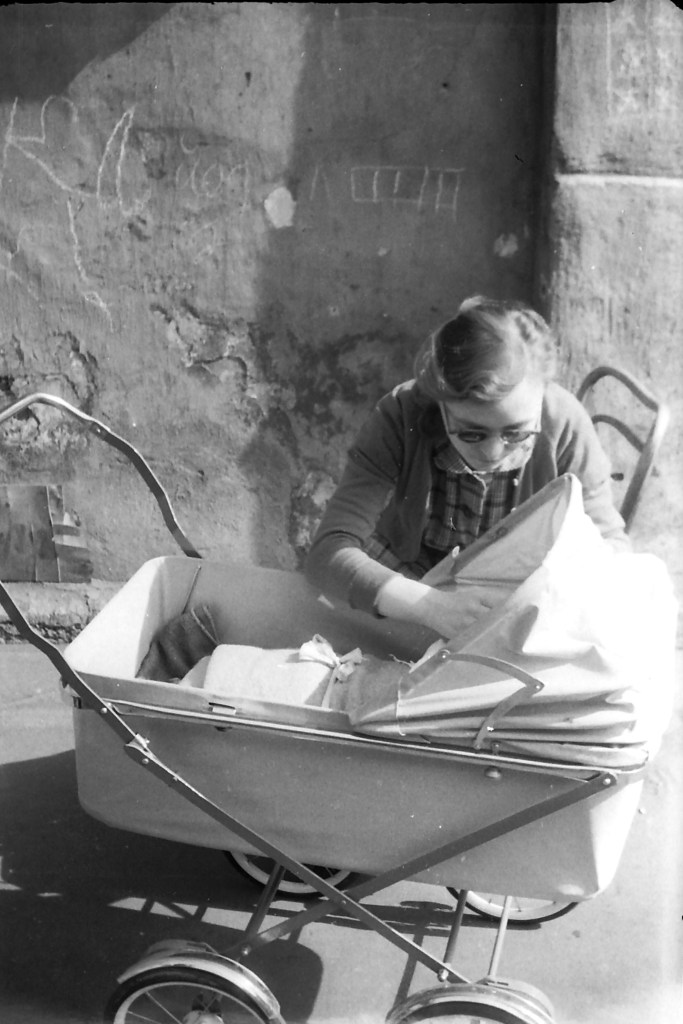
In the courtyard of our apartment building – I am wondering how much of “fresh air” this could get
The building was located in a very central part of Leningrad, but nevertheless, the courtyard looked lie you can see on these pictures above. My father’s family occupied one of the apartments of this building since the late 20s (will try to check the details). The state owned the building, and the family was “assigned” to this apartment.
As I said, that is the first picture of me. At that time, there was still a belief that newborns and small babies should be kept away from the crowd and not be photographed until two or three months old. Also, visitations were limited to close family members. Not everybody owned cameras, and not everybody would take pictures of everyday life, so I am fortunate to have all these films in my possession.
My historical posts are being published in random order. Please refer to the page Hettie’s timeline to find where exactly each post belongs and what was before and after.
Yesterday, I had an interesting conversation. A young woman asked me what people wore in Russia in the 50s and 60s. She was asking whether the fashions were the same as in the US at the same time, or not. She started to google the images and asked me whether they represented reality.
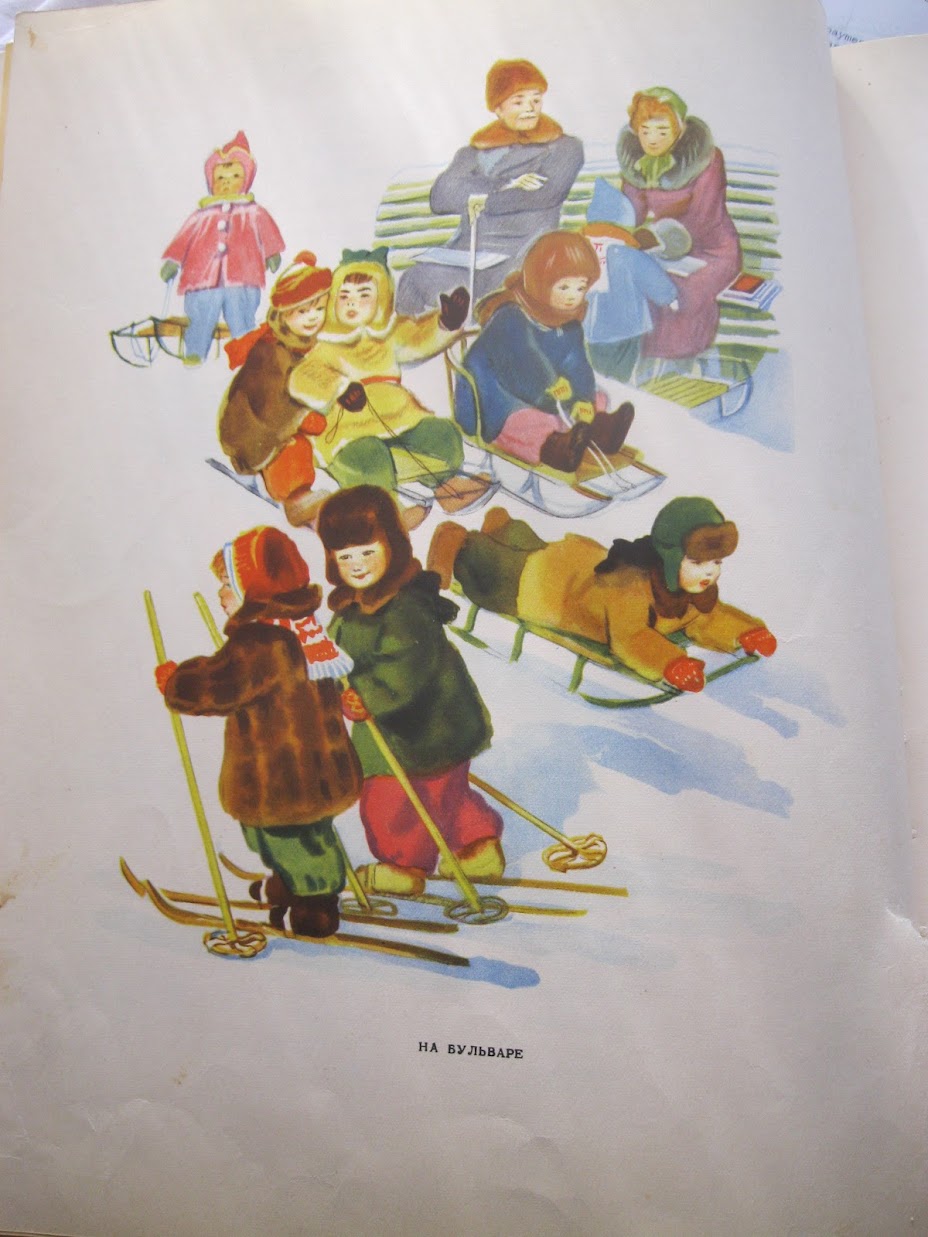
And I remembered that several years ago, I wrote a blog post about the children’s clothing in the 1960s when I was a child myself. It was so different from the modern kid’s clothes that nowadays, parents will find it hard to believe.
What a preschool girl in the 1960s would wear indoors:
cotton undies which would be up to the waist
a waist with elastic garters for stockings
cotton stockings
drawers
a dress
an apron with a pocket
slippers
Long hair was supposed to be braided neatly, for shorter hair pigtails would be fine, but only if they were really short, not touching the shoulders. Short haircuts were quite common as well.
Boys also wore waists with elastics and stockings; the only difference was that they wouldn’t wear dresses and drawers but instead shirts and short trousers. By my time, boys didn’t wear aprons, although it was not uncommon just ten years before. I am going to consider it gender discrimination 🙂
I hated aprons, because they would cover any pretty dress I would wear. I hated waists, because they had buttons on the back. You can imagine how long it would take to dress and undress even for a five-year-old (and you were supposed to change into your pajamas for a nap). But for the outdoors, it was even worse!
In winter you had to put on:
Woolen pants
Woolen socks
Valenki with galoshes over them
A fur, of a faux-fur hat, tired under the chin, which you would expect. What you won’t expect that there HAD to be a cotton kerchief (for boys and girls alike). The ends would cross under the chin and tired at the back of your neck. The idea was that there is no chance of any cold air to get to your ears.
A woolen cardigan.
Woolen mittens attached to the elastic ribbon (the ribbon was placed inside the sleeves of your overcoat)
Overcoat, made either of rabbit fur or squirrel fur or woolen cloth with a fur or faux-fur collar.
A woolen scarf.
Optionally – a belt to keep the overcoat closer to the body.
And in preschool, children would go to play outside twice a day!
I do not have any pictures of myself in full gear, but here are two pictures which I copied from 1962 Soviet book about children upbringing
This is a photograph of preschool children playing outsideThat picture from the same book shows what I’ve described 🙂
My historical posts are being published in random order. Please refer to the page Hettie’s timeline to find where exactly each post belongs and what was before and after.






 Hettie's Reflections