The Forces Of Nature (Derecho)

On Monday, “we” – some parts of Chicago and Northern Illinois and some other Midwest States – had severe storms (I didn’t know what “derecho” means, but now I know that it’s exactly what was happening :). I didn’t post any photos or videos, because what was happening in Palatine looked horrible, but way better than in most other places. I believe there were seven tornadoes reported around Chicagoland.

We didn’t have a tornado, although tornado sirens were going off for several hours. My mom didn’t have electricity for six hours. Actually, two blocks on her street didn’t have power, and the ComEd crew worked there for several hours. There were so many outage reports that ComEd notification system went down. I was able to report through the automated phone system, and later it turned out that this was the only system that was still up. In about 20 minutes, they started to send me text messages about the status of repair work. I took mom to my place, fed her dinner, charged her phone, and gave her some hot tea in a thermos because I was unsure how long she would be without power.

It was major stress for her, but I know that some people were without power for two days or more.
On Tuesday morning, I went biking, and it was mostly combining biking with weight lifting:) because I had to carry my bike over the fallen trees eight times!

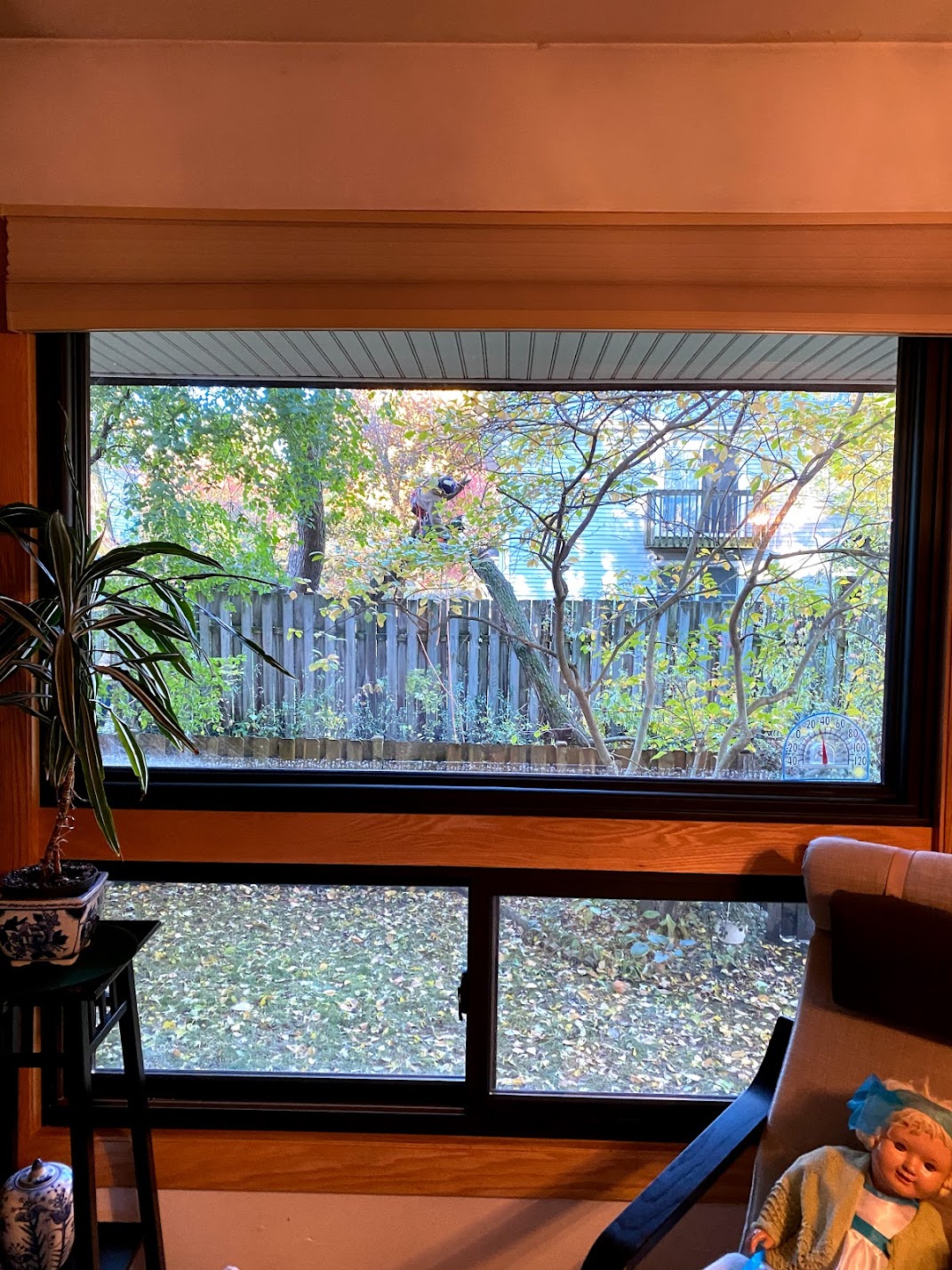
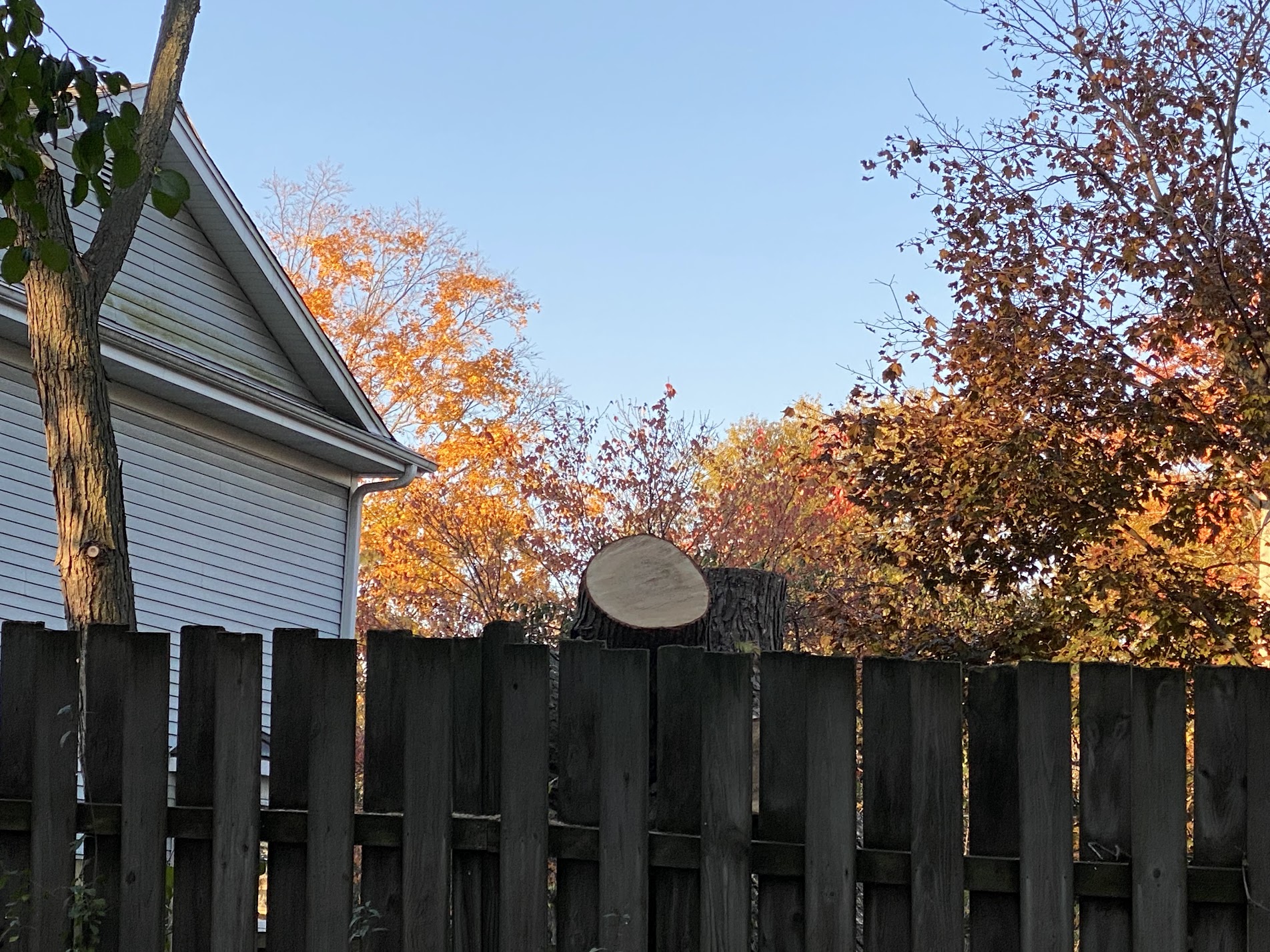
All of these fallen trees were removed the same day, and today I biked with no obstacles, but here is how it looked on Tuesday morning.

Continue reading “The Forces Of Nature (Derecho)”

Critical Race Theory in HCI

Reblogging from my professional blog

Hettie D.'s avatarThe World of Data

Last week, I attended one of the meetups of the Chicago local ACM Chapter. ACM has several SIGs – Special Interest Groups, and technically speaking, I am a part of only one of them: SIGMOD (Management of Data) and also a member of ACM-W – Women in Computing.

“Before all this started” (everybody these days have to say this, referring to our previous life), so – before it all started, I attended some of the ACM meetups, but not that often. 

TheChicago local chapter of ACM SIGCHI- Computer-Human Interaction – is something outside my area of interest, but I started to attend their virtual events and became more and more interested, and now I want to share it with my network :).

The topic of the last week’s meetup was“Critical Race Theory For HCI”, and I regret I didn’t publicize this event! It was so-so-so worth…

View original post 193 more words

Beautiful Moments – Sunday

Sunday was extremely hot; the heat index reached 97F by midday. But early in the morning, I was still able to go for a long bike ride and greet the morning sun in the Forest Preserve.

Continue reading “Beautiful Moments – Sunday”

Beautiful Moments – Saturday

It’s Sunday night, and a new work week ahead. I spent many hours of this weekend writing, and it seems like there was no weekend at all. But then I remember many happy moment of the past two days , and I thinking – it was a good weekend!

I biked to the Farmers’ Market Saturday morning
Continue reading “Beautiful Moments – Saturday”

“Let the Children Play” – a Book Review

Let the Children Play” is the last book from my long list of winter/spring reading, which I wanted to write about and still didn’t. This book is relatively new, and based on my interest in education, especially in American and Finnish secondary education. I should have been among the first people reading and reviewing it. Indeed, this book was in my to-read list for a while.

However, after I finished the book, I was unsure how I felt about it, and I decided to let it sit for a while. Then the quarantine happened, and the topic of in-person education was too painful to address. But since I do not believe that our education is altered forever, I decided I will still write a review.

There are many excellent observations in this book, and all the right things are said, but there were still things that bothered me.

What I didn’t like, was a description of an American school and American parents. It does not seem to resonate with my experience. Sure, parents like that exist :), but that’s not an accurate picture of a typical American parent. One of the reasons could be that Sahlberg experienced an American school in a very academic environment. He was trying to place his child into pre-school close to Sanford, where, I guess, the school standards were aligned with very specific demands of parents in academia. Moreover, I have a suspicion that many of these parents themselves never attended at American school when they were small children, and that their expectations might have come from a different culture.

I may be wrong with the above speculations, but I am sure – it’s not like a school my kids went. From day one in school, I admired the way their teachers made the learning process fun. The kids didn’t even know it was “education.” Fro their point of view, they were playing, doing art projects, listening to their teacher reading books, doing puzzles, and then all of a sudden – “check whether your child can count to one-hundred.”

My second objection is that I can’t entirely agree with the authors that “letting children play” will resolve all school problems. Especially towards the end of the book, that’s how it sounds: just let them play, and everything will be fine. Although the authors cite some experiences in low-income communities, underfunded schools need funds. And schools in communities with a history of socioeconomic disparities need more help as well.

“Music and Clowns”

A very short but extremely powerful movie about Jamie who has Down syndrome

rmichaelroman's avatarYip Abides

This documentary by Alex Widdowson is about Alex’s brother, Jamie. Alex Widdowson describes the film this way:

“We rarely see portrayals of the diverse, ordinary lives of people who have Down syndrome (unless we are connected to someone who has it). Much of what we hear instead is based off a medical narrative. As prenatal screening tests improve, the birth rate of people with Downs has fallen. I believe people should be able to base life-changing decisions on accurate information. But I also feel that a diagnosis does not reflect my brother’s human worth. This film attempts to complement the medical narrative with first-hand stories of what it is like to have someone with Down syndrome in your family. Jamie has enriched our lives and I believe a society can be measured by its capacity to nurture those who are most vulnerable.”

View original post

Writing Takes Up All The Time

I am not panicking at all, and I do not sit staring at a blank screen, not knowing what to write. On the contrary, I know exactly what I want to write, and it’s a lot

I am not talking about blogging; I am talking about the book. The Book. I put up a calendar with deadlines for each chapter, and I realized how challenging the schedule is going to be. I feel that the only thing I am doing these days, except for work and chores, is writing. 

Meanwhile, I have so many thoughts I want to share! And I listened to so many books recently. Actually, it’s mostly thoughts about books I want to share:). I even put it in my to-do list, so chances are I will!

Pictures From September 1995

I promised several people, including my children, that I would post more pictures. I am always trying to combine pictures with stories, but I can’t say much about these, except that it was a family gathering in our house. Judging by the guest list and the fact that this picture was taken in fall 1995, it must be Igor’s tenth birthday.

We lived in extremely crowded conditions. This one room of fewer than 200 sq ft was the place for everything. All four of us slept there. All our belongings were stored there, all the desks, including mine for working from home, all the toys, the piano – everything was packed in this one room. Our beds and the desks were folding, the jungle gym, which you can see on that picture could be lifted up.

From left to right: Aunt Kima, her son Dodik, my Mom, me, Igor Sr (Igor’s father), Sasha – my cousin’s husband.

The next two pictures look almost identical, but I could not choose one, so I decided to post both. On the first one, you can see me in the far left corner. The older kids from left to right: my late nephew Petia (my cousin Ania’s older son), my half-brother Slava (my father’s son) and Igor. The smaller kids from left to right: my niece Iya, Anna and Vlad. (Vlad has a cold sore on his lip).

Everybody is dressed warmly because all the houses had (and still have) a centralized heating system, which was usually turned on only in October, so September would end up being one of the coldest months.

My historical posts are being published in random order. Please refer to the page Hettie’s timeline to find where exactly each post belongs and what was before and after.

Smolny in 1995, Part 2. How I Didn’t Meet Putin

Boris’ part in this Smolny project was installing the software Dr. Conrad was trying to sell. And my part was, as usual, writing the user’s manual. In this case, it was more like a persuasive essay. I had to present a use case and show how this software will make the life of the City clerks easier.

I remember how I was inventing the names and ages of people and their addresses. But the most memorable were the letters I was scanning. Scanning was a very new thing then, at least in Russia, even the copying machines were rare. And I was given a whole bunch of real people’s paper letters to Smolny. And I read them while scanning. I can’t recall any particular case or any particular problem from these letters, but the overall impression was desperate. You could hear people crying, searching for words that would be convincing enough, pleading for help, from necessary surgery to pensions being delayed, to broken heating pipes. I could not help but think how the City clerks can read such letters and put them aside. I knew that all these letters were not processed yet, and some of them were dated two-three months before the day I was reading them.

Continue reading “Smolny in 1995, Part 2. How I Didn’t Meet Putin”

A Magic Mug

I signed up to receive a magic mug when I donated to Midwest Access Coalition back in March. At that time, volunteers could not host clients coming to Illinois for abortion (due to COVID restrictions), and I donated money to help place clients in the hotels.
That was back in March, and I completely forgot about the mug. When it arrived yesterday, it took me a while to recall what it was all about, yet along how it works. And it works magically – just pour some hot tea or coffee in it!

Continue reading “A Magic Mug”