Both Sunday and Monday were rainy, but Sunday was still more or less OK. These were our only two free days before the conference started, and we initially planned a private tour on Sunday morning, exploring the city on our own in the afternoon, and visiting museums on Monday. Fortunately, the Visit-a-City app knows all the opening hours and told us all museums would be closed on Monday, so we had to rearrange things. Sunday became a museum day.
The first one we visited was the Ceramic Museum. Itis housed in the Palace of the Marqués de Dos Aguas, and the palace living quarters are part of the museum. I saw a no-photo sign near the entrance and didn’t take pictures for the first 30 minutes, but then I realized everyone was taking photos and the museum staff were fine with it, so I started taking pictures too.


Valencia endured several sieges: first by Romans, then by Moors, and then by Christians, and its ceramics reflected different stages of the city’s history.
Unfortunately, the museum had almost no English signage: some palace rooms had flyers in English, but the Ceramic Museum had almost none. I read a little bit later, but I wish I had done it before the museum visit!


We spent twice as long as we planned at the Ceramics Museum, and decided to skip both art museums and go directly to the City of Arts and Sciences.
Since I have been trying to finish this post for three days, I am pretty sure that if I go into details, I will never finish it, so I will try to be very brief.
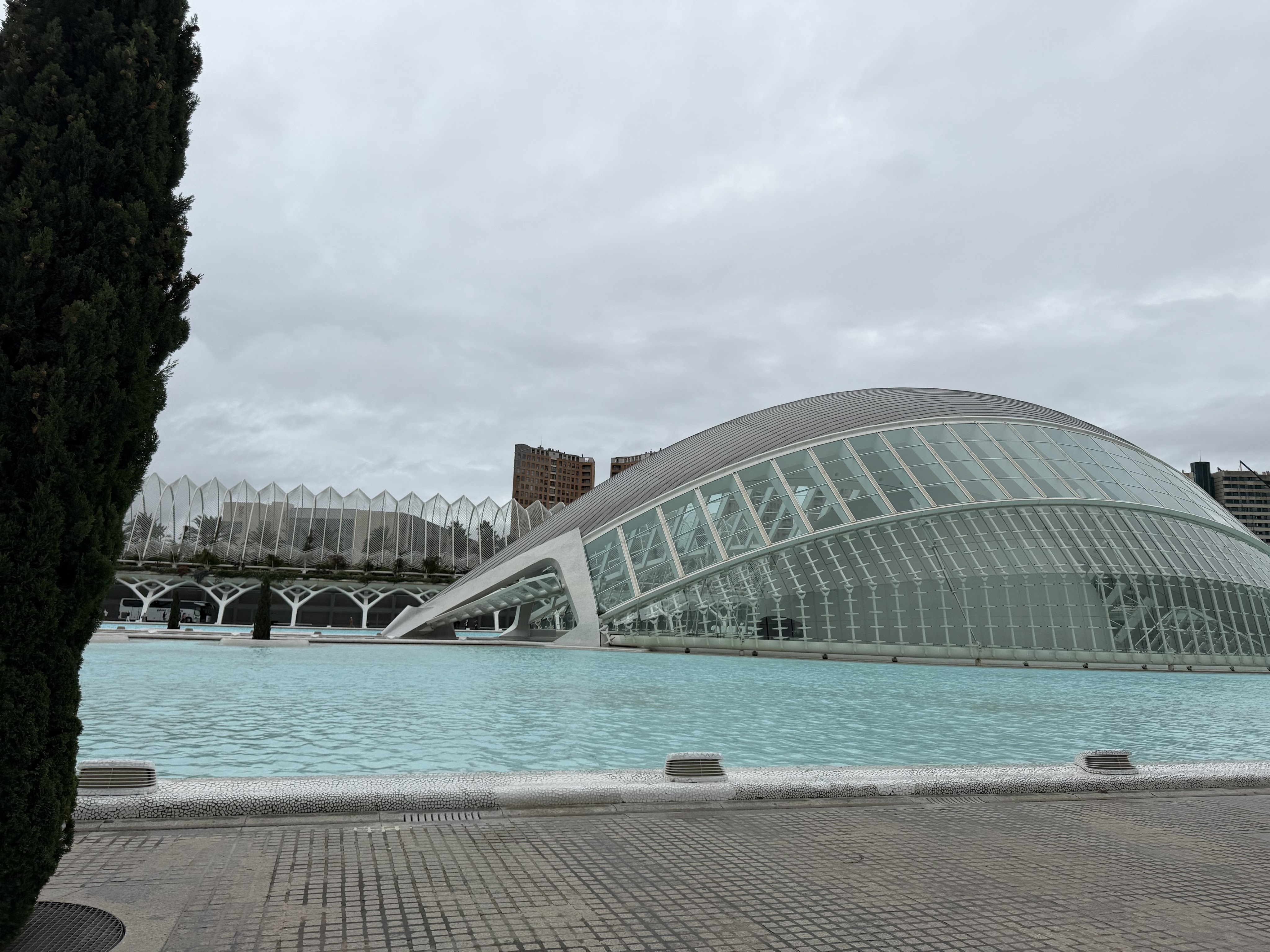
This is indeed “the city”, a huge park with multiple cultural buildings, and I am sure it would be much nicer to walk around in a better weather, but it was still great.
I liked what I read on the website, that the city gives discounts to families with children and distributes free tickets to people in a disadvantaged socioeconomic situations.
We didn’t even try to get tickets to the Aquarium, but we visited Forum (there were no concerts during the day, so we just looked at the stage, and had lunch there)


And then we went to the the science museum. I took very few pictures, because the most interesting things there was the information and experiences.
I contrast to the Ceramic Museum, all information was presented in English in addiiton to Spanish and Valencian, so that was really an educational experience.


The most interesting exhibit was the one about human genome. Each unit was dedicated to one one of the chromosomes, like the one below is about choromosome 7. And it tells all about what are the genes in this chromosome, what they are responsible for (and sometimes, there are really wild connections). I am sure you can read all about it in the books, but when it is presented in the museum this way, you actually want to learn, and you learn faster. I wish I could spend three hours just at this exhibit!


The other exhibit we visited was about Mars, Moon and Earth, and again, ot like all this knowledge is not available otherwise, but everything is put together, and it such a way, that you want to learm and it sticks: where the idea about life on Mars initially came from, how it evolved, what do we know about Mars now.


At the end, I felt an information overload, and we left before th museum closing. Manybe someday I will come back to Valencia as a tourist 🙂


