What A Week!

So many things happened this week; it feels like a month! And I didn’t blog about anything!
Let me catch up on at least something.

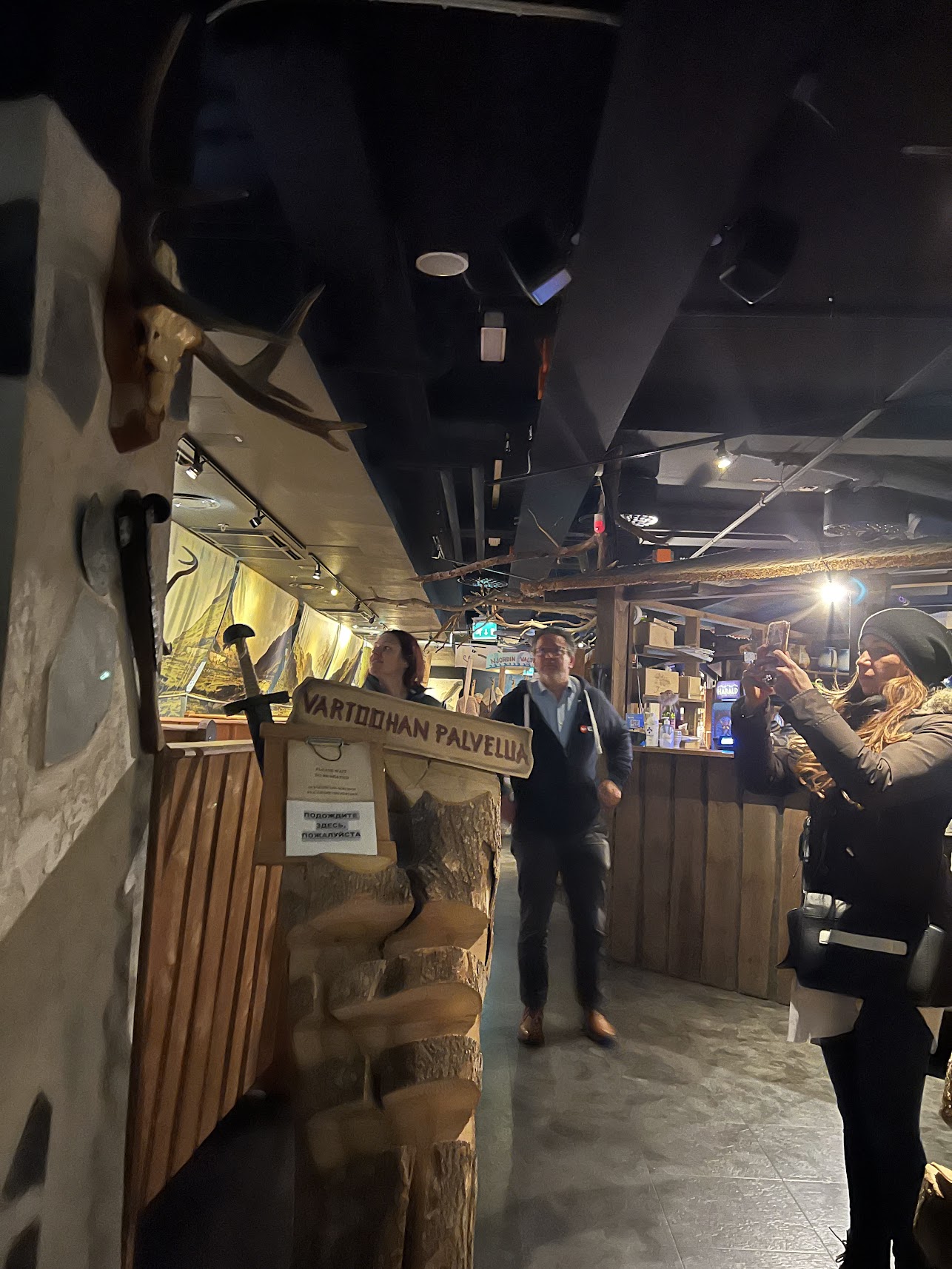
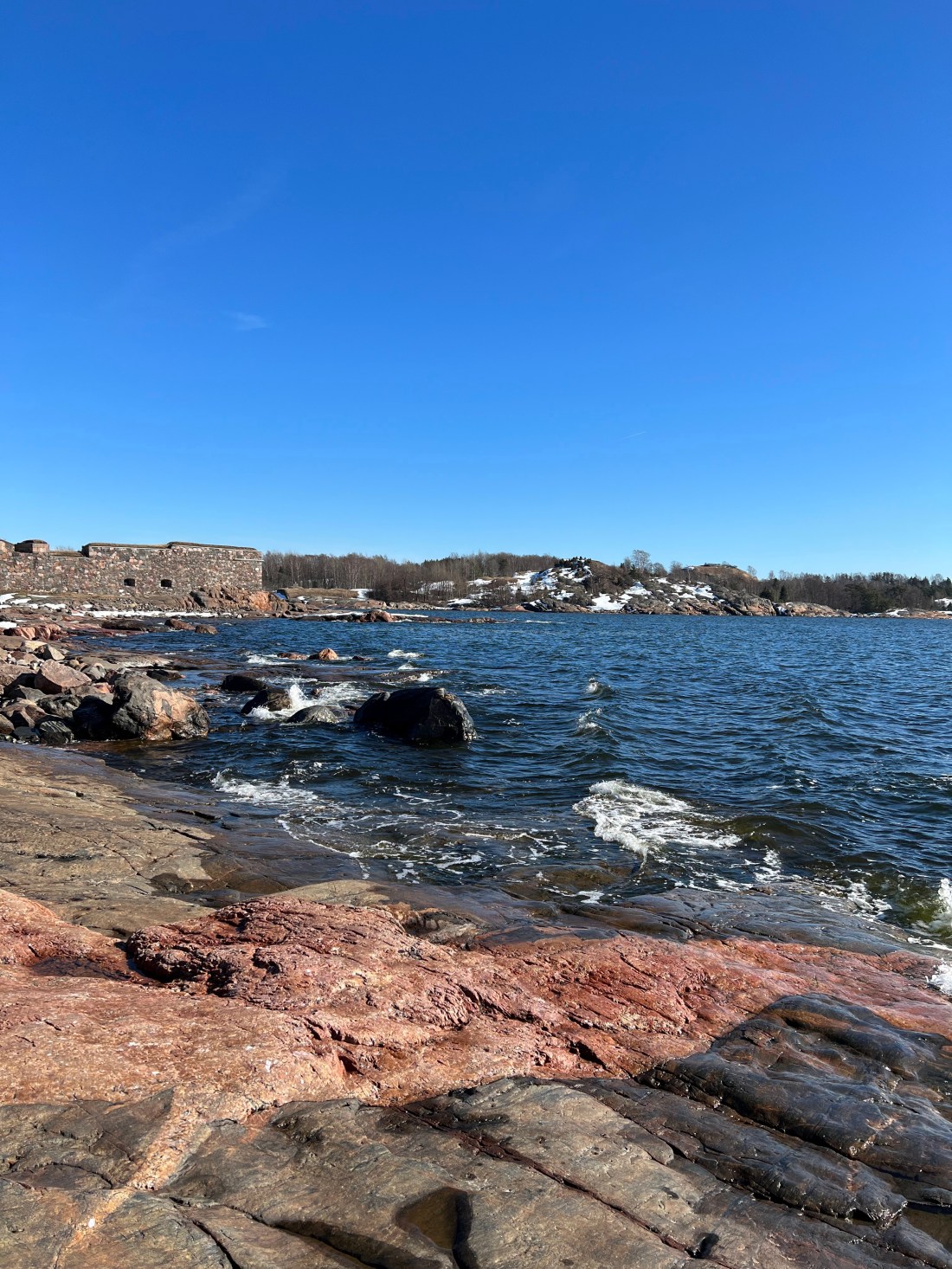
My last post was about Suomenlinna, and how I took one of my co-workers on a tour there. Other people started to arrive on Sunday afternoon, and everybody was asking me about the “nice place for dinner.” All Vlad’s suggestions wee somewhere further away from the city center. A couple of weeks before the conference, I suggested Harald for the company dinner, and then I thought that we could also go there on Sunday, and if we don’t like it, we will change the EDB dinner reservation.

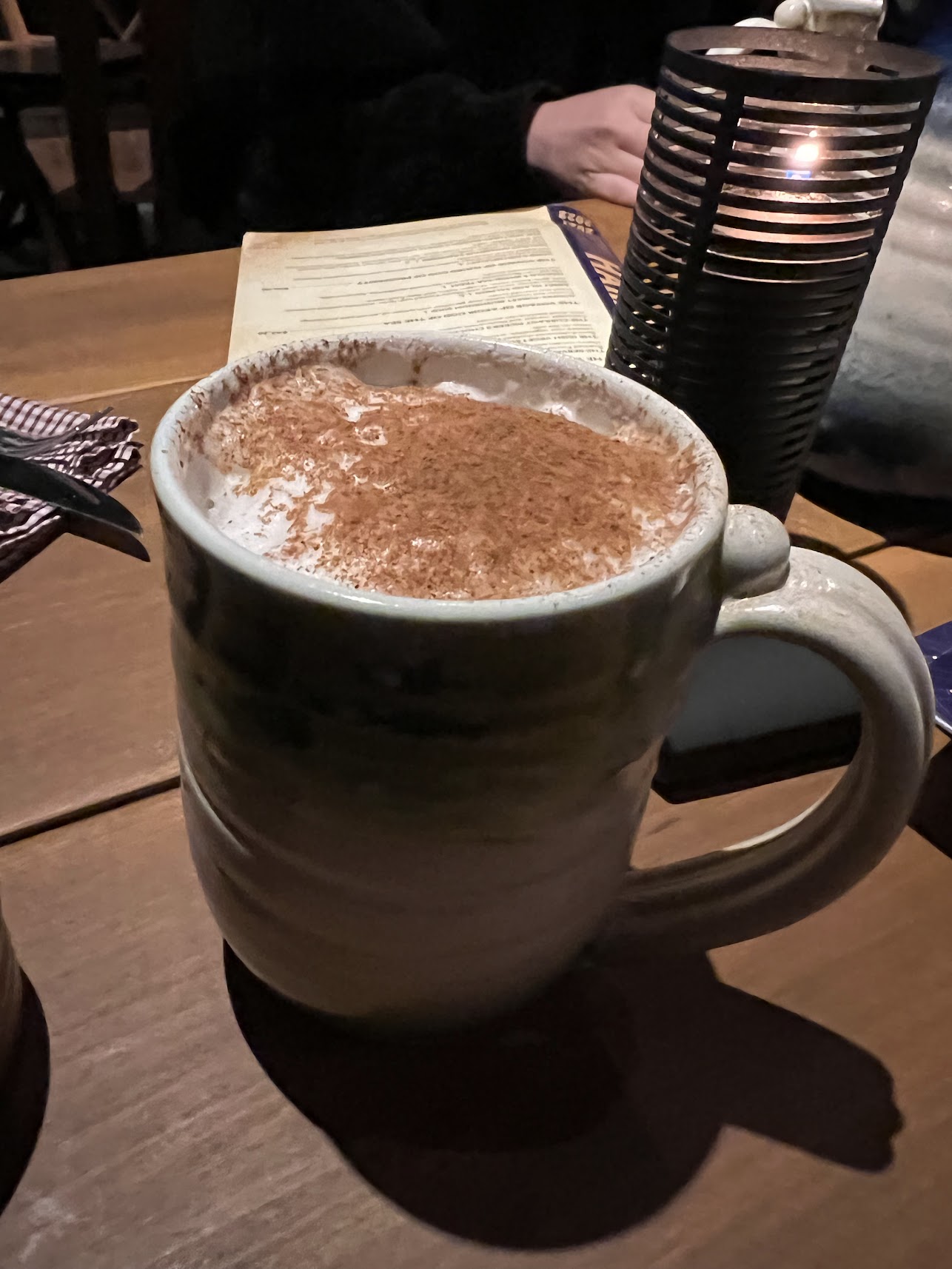
Cinnamon beer
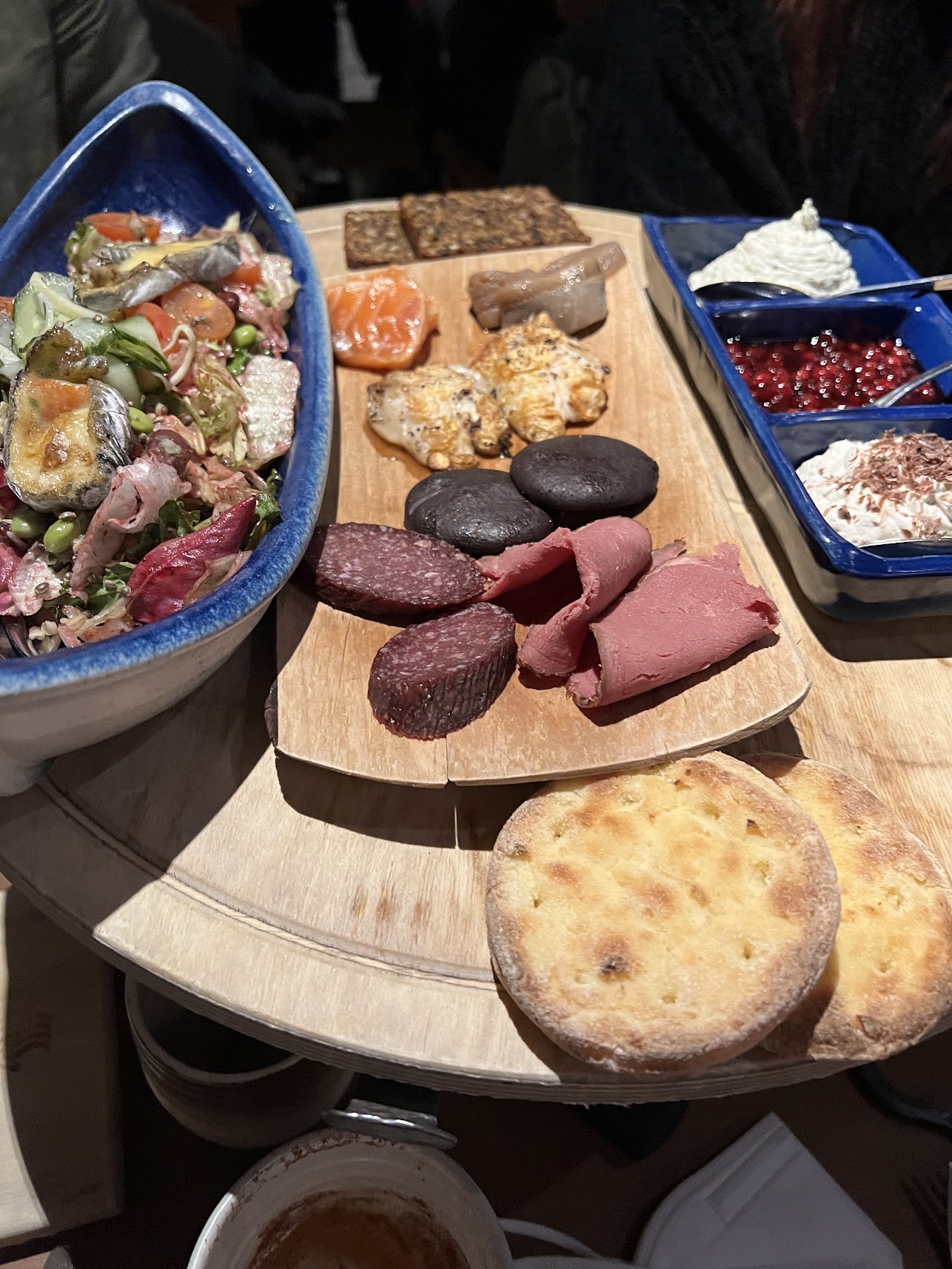
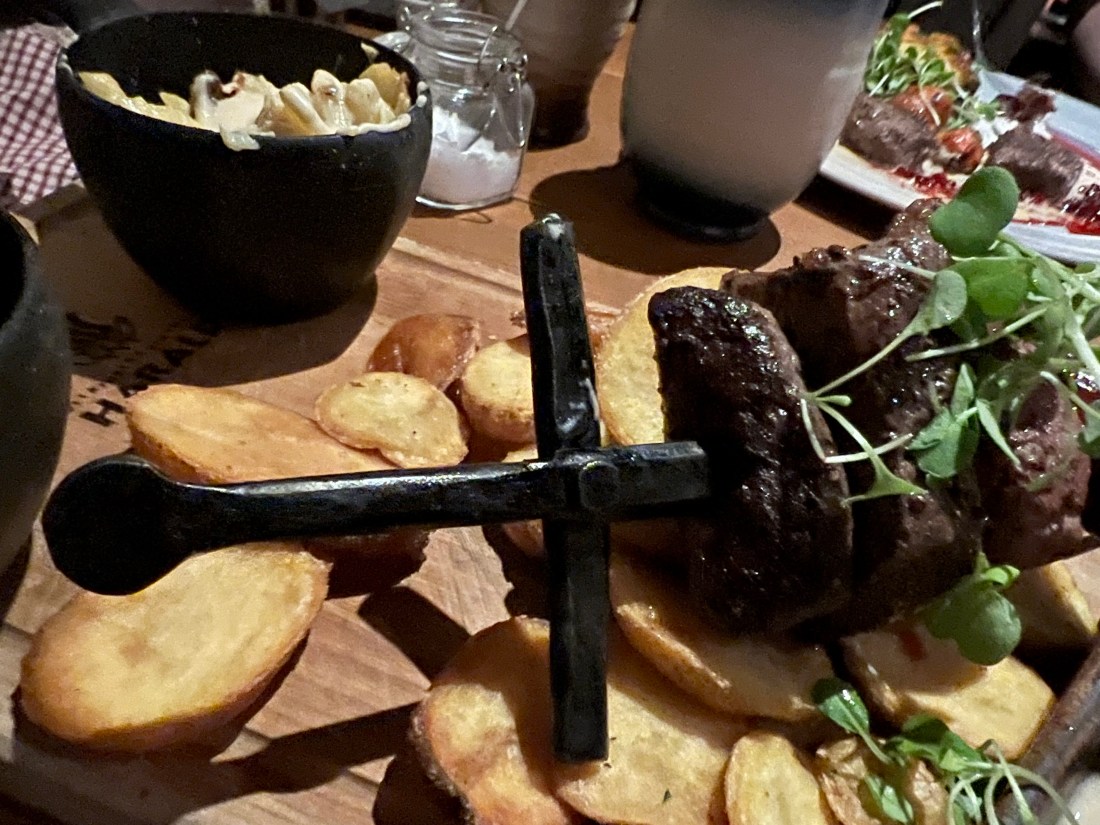
Don’t remember half of it, the black things ar reindeer blood pancakes, and salami is bear salami, and the light things are made with cod tounges. Don’t ask 🙂
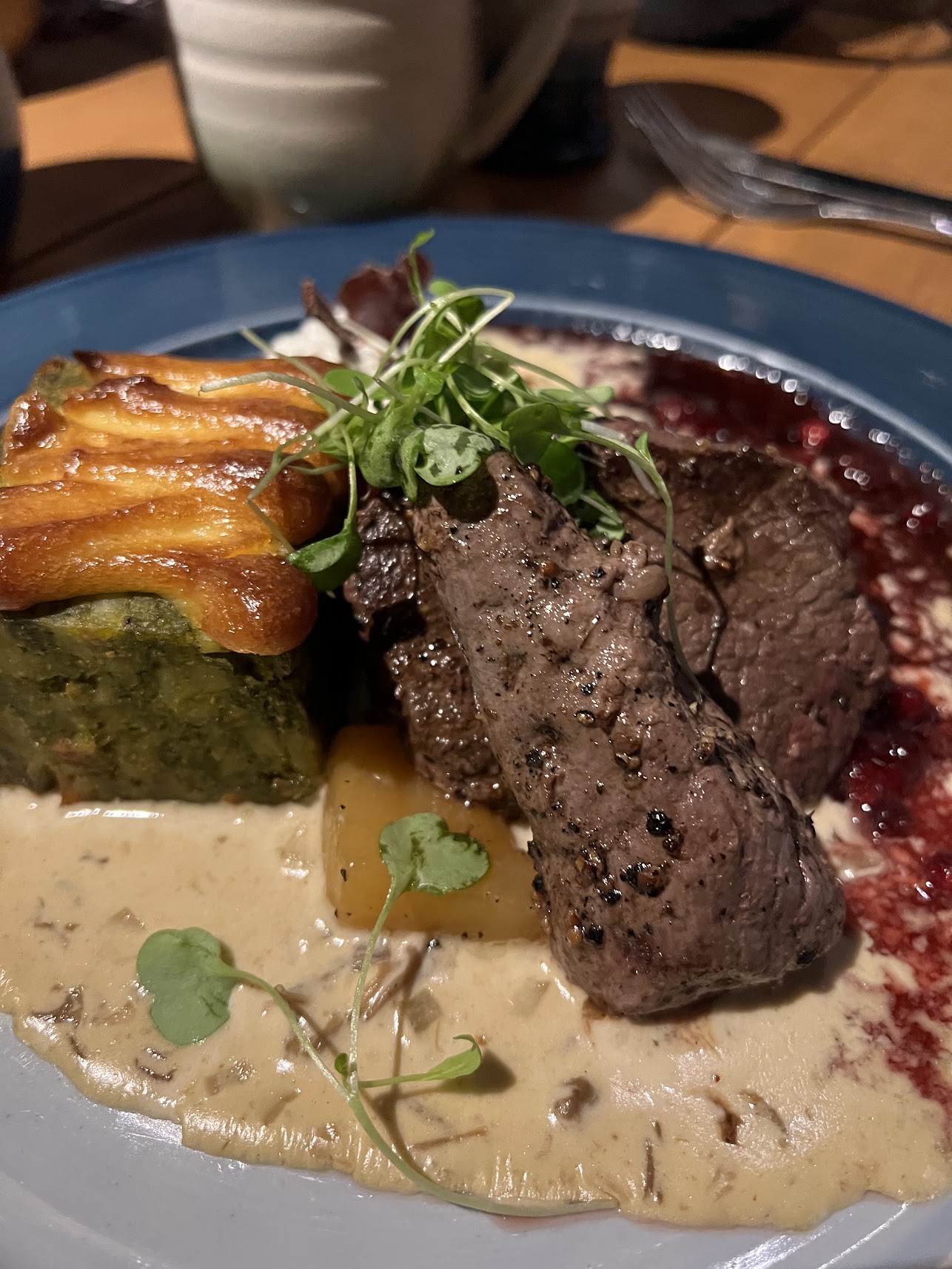
Reindeer cooked two different ways
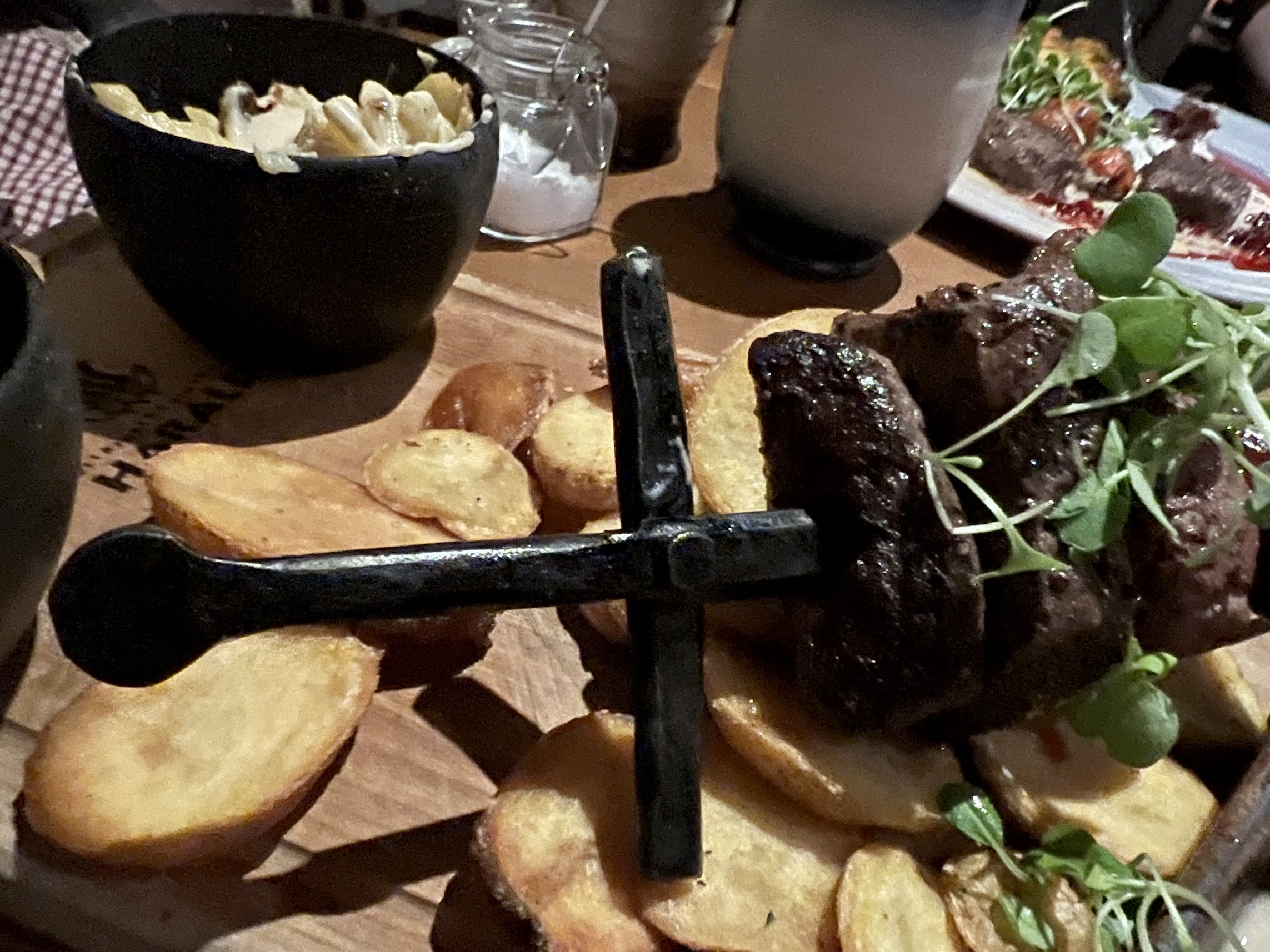
Wild-game sword: it looked gigantic, but actually it was mostly presentation that was gigantic
A close-up


We liked it, although I am sure it is not really a “Viking food,” but rather a tourist version of it, it was a good food anyway.

And we also when there on Tuesday after the conference for our company dinner. Usually, when you are at the conference, you try to socialize more with people from other organizations, but since my company is so distributed, we do not meet in person often, so everybody is eager to see each other.

On Monday, I was trying to work, and then meeting with people and showing a little bit of Helsinki again, and then there was a speaker’s dinner in the evening in a different place.

***
Both days, there were lots of talks about the war. I argued with one of my co-workers, who was saying that “we need to support our community in Russia.” We need to make a clear distinction between individuals and organizations. Several IT organizations made statements condemning the war, and nobody destroyed them. On the other hand, multiple organizations received money from the Russian government, not necessarily in contracts, but often as direct financing of their work and research, grants, etc. And now they say nothing.

Many ordinary people are braver than these companies. And to be honest, I do not think they are “afraid.” Nobody would destroy them, they just won’t receive money from the government…

P.S. I know that some would be outraged with the way I combine the pictures from the fancy dinner with the talks about the war, but I am being honest. It was as it was: I live event after COVID, which everybody was anticipating, meeting with great people, having a great time – and talking about the war, and thinking about the war – all that time.

Suomenlinna Pictures

Continue reading “Suomenlinna Pictures”

How Things Are Developing

Boris and I spent the whole day yesterday entertaining one of my European colleagues: we went to Suomenlinna, walked around the city, ate a salmon soup for lunch, and finally made a reservation for a group dinner when other participants started to come.

The weather is just unbelievably sunny and there is almost no wind, even on Suomenlinna!
I can’t say that I forgot about the war yesterday – it’s impossible to forget, and we talked about it with everybody. However, this morning I received an unexpected email: the DevDays Europe conference in Vilnius, which we were going to attend in April, was converted to a virtual event due to all kinds of concerns, including the closeness to the conflict, even though Lithuania is in NATO.

I am not sure what I will do with this, from whether I am still going to present at the virtual event to whether I am going to fly to Helsinki anyway, or we will swap the trips with Boris. I know it’s a very small thing that has nothing even close to people getting killed, but I was like – how I am letting Putin disturb my life!

Even before that, we talked with Boris about how we see our future and the future of Russia. His point of view is even grimmer than mine, but I am starting to agree with him that unfortunately, no matter how and when this war will end, it won’t be the end of the current regime, same as the Winter War and the defeat of the USSR in it changed nothing. So we are thinking that he would be a “German scientist in exile” during WWII, until… I am still not ready to agree with him on what exactly this “until” is going to be but…

Helsinki Today

Most likely, I won’t have much time to blog anything here until the end of the week, so just a couple of notes:
1) We hear talks about refugees on public transportation, and actually, it seems to be even more Russian-speaking people around than it was recently. The Allegro train started to run three times a day – Helsinki became one of the very few options to get from Russia to the rest of the world.
2) My friend mentioned that people are making three-day water and food supplies and that many people try to take cash out of bank accounts. The authorities reminded people to familiarize themselves with the location of the nearest bomb shelter.
3) It is sunny – in contrast with the past couple of days in Chicago!
4) Exactly two years ago, Boris was unable to come to Chicago because lockdown started. I am happy that I am here today, and I can’t believe it was just two years ago – I feel like two epochs have passed since then!

Tulips

My neighbor gave me tulips for International Women’s Day, and they lasted for nine days! Can you believe that the second photo was made on March 17th??

Friday!

Today was one of these days when I wondered what I would do without Wellness Fridays?! My flight is at 10-30 PM, and I spent the day catching up on everything.

I had to go to Palatine because I finally had my crown ready, and that was my last visit to my wonderful dentist. As much as I love her, going to Palatine for regular dentist visits is non-sustainable.

Since I was already going to Palatine, I also scheduled a haircut before the dentist. I knew I would have almost two hours between the dentist and the train back and thought I should meet up with somebody, and then my Palatine neighbor called.

I do not think she ever called me since I moved; she only texted me from time to time. This time, she called and asked me how I was doing, meaning the situation with the war. It was so good to know she cared; many people around me did not even understand why I should be concerned. Being an emigrant from after-WWII Austria, she understood.

We talked a lot about the war, what was happening, why Putin did what he did, and why many Russians supported him. She asked me how this war could end and what I thought about the best outcome. She told e that in the place where she does her hair, the owner is Ukrainian, and the staff is Russian and Ukrainian, and how everybody is devastated, and how she decided to give them money so that they could send it where it is needed most. It was one of these conversations which brought me hope and reinstated my belief in humanity.
The war highlights the worst in people and the best in people.


***

Now I am sitting at the airport gate waiting for my flight boarding. And just arriving at the busy airport, almost as busy as before the pandemic, and seeing how the boarding procedures got back to where they were before the pandemic – this all felt incredibly optimistic. I remember all the cries of how “it will never be the same,” – I knew even back then, that they were wrong.

The War Is Everywhere

It is indeed everywhere, it’s not like there is nothing but the war on my mind, but whatever I do, whatever other people are doing – the war is in the background, the war is visible, and the news about the war shape the news broadcasts everywhere in the world. 

I mentioned the other day what my neighbor said about Tosca. It turned out that it was not just her or me, but that was the intention. Last Saturday, the opening night of Tosca started from the Ukrainian Anthem, and the cast dedicated that performance to the struggles and courage of the Ukrainian people. 

Yesterday, one of my coworkers mentioned in the speaker’s slack channel that the PG Day Poland was postponed. People started to talk about how it is sad but understandable and started to ask what is the new date. Then another person (the one I respect a lot) said: it’s a little surreal to me that people are being bombed, and we’re talking about it in terms of the impact on our conference schedule. 

This conversation triggered something for me. For the past several days, watching the stream of Ukrainian refugees arriving in Poland and Poles going out of their way to accommodate them, I thought that my “historical Motherland” needed some financial assistance. 

 During that conversation on slack which I mentioned earlier, somebody said: you should reach out to A. to find out the details [about the PG Day Poland]. And then my immediate reaction was: why I never thought about reaching out to her on the subject of donations? 

She was indeed delighted when I reached out and said that Poland is “out of everything,” warned about the fake charities, and gave me a vetted list of trustworthy charities that assist refugees’ resettlement.

For now, I plan to give 2/3 of my donations directly to Ukraine and 1/3 to this Polish resettlement agency I chose. 

Then, I was terrified by the news about the potential peace proposal from this BBC news program. It sounds so evil that I can believe this could happen! President Zelinskiy cares about the Ukrainian people, and he can go a long way to stop the bloodshed. But what will happen if peace in Ukraine is achieved at such a price? Looking at what the Russian government is saying these days, and knowing Putin, you can bet he would announce such peace as Russia’s victory. We wanted to liberate the Russian people in Ukraine, and we did! We wanted to stop NATO expansion, and we did! And we got a Crimea! And things are going our way! If the condition of the peace would be disarmament of Ukraine, it is an insult to the heroic Ukrainian army and all her people, and what will stop Putin from repeating the attack? And most importantly, he would emerge from this war unpunished! And that would be the most unjust thing, and I do not want to let it happen.

Igor’s Article: Ukraine World War II Legacy

I really liked it. And since I know that people do not like to click on the links – here is the full text.

To Belarusians, Russians and Ukrainians, few historical events loom as large as World War II. One would be hard-pressed to find an Eastern Slav who doesn’t have some relative who fought in the war, died in a war or lost something to the war. Many Eastern European cities still have lasting scars.

I grew up in St. Petersburg, a city that survived the nearly 900-day Siege of Leningrad, where over a million people perished from bombings, disease and starvation. A ring of mass graves around the city’s former outskirts serves as a lasting reminder of the sheer scale of the toll. My grandmother on my mom’s side was only 6 when the Siege happened, and she lived through the first year before she was evacuated. 

Grandma Nina never sugarcoated the realities of the war.

“One winter day, I was playing in the yard when a young couple approached me,” she told me. I couldn’t have been older than 9. “They said, ‘Little girl, would you like some candy?’ But I knew better. There was no candy during the Siege. So I ran into my building as quickly as my little legs would carry me. And it’s a good thing I did — otherwise, I would’ve gotten eaten.”

Grandma Nina wasn’t my only connection to the war. Three of my great-grandfathers served in the military, in some capacity or another. My Belarusian grandfather and his sister (also named Nina) lived through the Nazi occupation of what is now Belarus. Even the relatives who barely saw any fighting have war-related memories. 

When I was a kid, there was a lot of emphasis on the toll the war took, how we must remember this toll because we must never allow anything like that again. But I feel like something shifted in the last 20 years, as members of my great-grandparents’ generation, and even older members of my grandparents’ generation, died of natural causes in growing numbers. 

There was less talk about pain and suffering, and more emphasis on the glorious Red Army heroically overcoming odds and triumphing over Nazis. Talking about some of the harsh realities of the war suddenly became controversial.

When I was growing up, calling someone a Nazi was about the worst thing one could do to another person. Our teachers told us to use the word carefully because “words have meanings.” But whatever restraint there was seems to have completely evaporated.

In 2014, when Russia encouraged separatists in the Donbass region and the war broke out, Russians and Ukrainians accused each other of being Nazis. It wasn’t that unusual to see social media posts and news segments where World War II veterans encouraged their grandchildren to fight against Nazi invaders. Aside from the language and national signifiers, they sounded practically identical.

Now, as the long-simmering conflict erupted into a full-fledged war, the Nazi labels flew with renewed vigor. The Russian government quickly positioned the “special operation” as “denazification” of Ukraine, and as the attacks intensified, Ukrainians were quick to call Russians Nazis. 

Of course, what’s different this time is the sheer scale and devastation of the attacks. When I saw photos of people huddled in Kyiv and Kharkiv subways to escape the bombings, I immediately thought of people hiding from Nazi bombings of Moscow. When I read about Mariupol getting encircled by the Russian army, its besieged residents huddled in the cold, it’s hard not to think about Grandma Nina talking about burning everything there was to burn in the house just to stay warm. When I see families fleeing west, I think of Grandpa Gena talking about how he was only 5 years old when his family tried, and failed, to outrun the Nazi advance.

“When the war started, my dad went off to serve, so it was just me, my mom, my older brother, Nikolay, and my younger sister Nina,” he told me. “I remember when we were trying to flee, my mom carried Nina in her arms, while I ran with her.”

I was taught to be careful about using the word “Nazi,” and I’m not going to stop now. But when one gets that kind of association … I know it makes at least some Russians pause. A couple of days ago, I saw a photo of a flier somebody put up in St. Petersburg. “A city that survived the Siege is against the war!” But so far there is also plenty of support, including from some of the people who were kids during World War II.

This war will end someday. Kyiv, which was shelled during World War II, will rise again, just like it did last time. And the scars of war will linger. 

Maybe this time, the generations to come will not so easily lose sight of the toll the war takes. 

Maybe this time, Russians won’t need a personal connection to understand the horror the war inflicts.
Why?…

… i always pack a night before departure? And why does it take five hours?…

Tosca

Yesterday, we went to see Tosca in the Lyric Opera. We – meaning, myself, mom, and my neighbor. My neighbor dreamed about this night since the day I got these tickets. And yes, the performance was outstanding, especially the soloists who sang the leading parts. Everybody was invited to see how the stage crew changed the set during the first intermission. The stage manager explained to us that the set is fifty years old and told us a lot of details about its construction, and then about costumes and wigs – most of the costumes came from the Convent Garden 2005 production.

After the performance, my neighbor told me that she could not help but think about Ukraine and all the historical parallels. I feel that no matter what show we watch these days, we see the parallels with the war, and each injustice we see on stage resonates with what we see on our screens in the reports from Ukraine.