Children of the Great Patriotic War

Author’s Note: I posted this on my personal blog yesterday, May 9, on what we Russians and people in many other Soviet countries celebrate as Victory Day, to mark the surrender of Nazi Germany and end of World War II in Europe. In European countries, it’s celebrated a day earlier, as Victory in Europe Day. For some  reason, Americans don’t mark it on either day, in spite of U.S.’ very substantial contribution to the war effort.

I wrote this post in OpenWriter, just in case my mom asked me to repost it here. Which, suffice to say, she did. I hope that, if Nadya and any of my mom’s grandkids that may come along read it, they will get something out of it, even though many people in this post aren’t related to them at all. And I hope that people who aren’t family that come across it will get something out of it as well.


This year marks the 75th anniversary of the Nazi Germany’s surrender. But with the shadow of COVID-19 hanging over the world, VE Day/Victory Day commemorations have been scaled back significantly in Europe and the parts of former Soviet Union that still celebrate it. (Except, God help us all, in Belarus)

In Chicago, the big banquet that would usually be held in honor of veterans, Holocaust survivors and Siege of Leningrad survivors was, of course, cancelled – though the Chicago Association of World War II Veterans and the Jewish United Fund have been congratulating them over the phone and delivering presents.

In the last decade, the number of veterans, and people old enough to remember the war first-hand has been plummeting, as more and more of them die of natural causes and illnesses. Great-Grandpa Viktor barely said two words about his service, and he’s no longer around to ask. Great-Grandpa Fyodor passed away when I was four. I have only a vague idea of what Grandma Kima’s, Grandpa Roma;s and Grandpa Slava’s lives were like during the war, and I can’t ask them now. So I decided to share some of the stories I did hear, from family members who are still around, and those who are no longer with us.
Continue reading “Children of the Great Patriotic War”

My Mom’s High School Photo Album

I photographed each and single page of my Mom’s High School graduation album, but never showed these pictures to anybody, on any of the social networks. The main reason is that I brought it from Russia just a couple of weeks before my back surgery, and less than a month before my Mom came to the US. So I had other, more urgent things to address.

Last Sunday, I brought Mom to have an afternoon coffee with me, and she asked me about the album, and I took it out. She was slowly turning the pages, looking at each face, and reading all the farewell wished from her friends. And I thought – that’s what my next historical post should be about.

Then I missed two of my “historical” days because there was too much of life going on, and I promised myself to write a historical post today.
I am saying “high school,” but actually in the Soviet Union, it was just “school.” Students went through all the ten years of education with the same group, which was called a class. And what we call “class” in the US< was called “a parallel.” Do not ask me why :). Most of the time, each parallel would have two or three classes. And these classes would stay the same unless somebody would move to another place to live, which did not happen often.

My Mom was born in 1935, and at that time, children would start the first grade at eight, which means she started school in 1943, during the war, when she was evacuated to Siberia. She returned to Leningrad when she was in the second grade, and since then, she attended the same school.

Mom graduated in June 1953, and here comes her album.

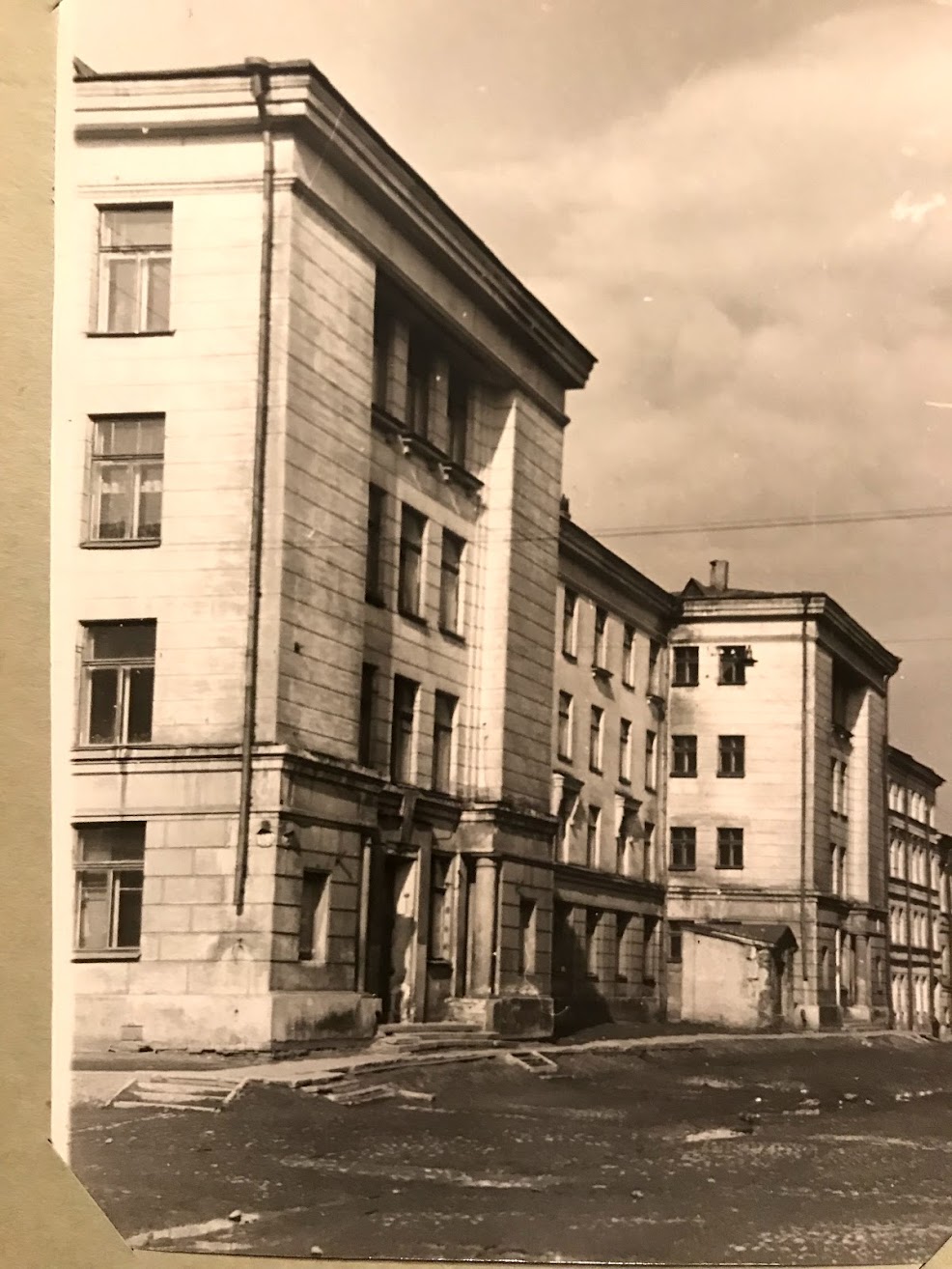
The school building. Once again, it is 1952, seven years after the war ended, and the building looks how it looks, and nobody cares – this is the first photo of the album
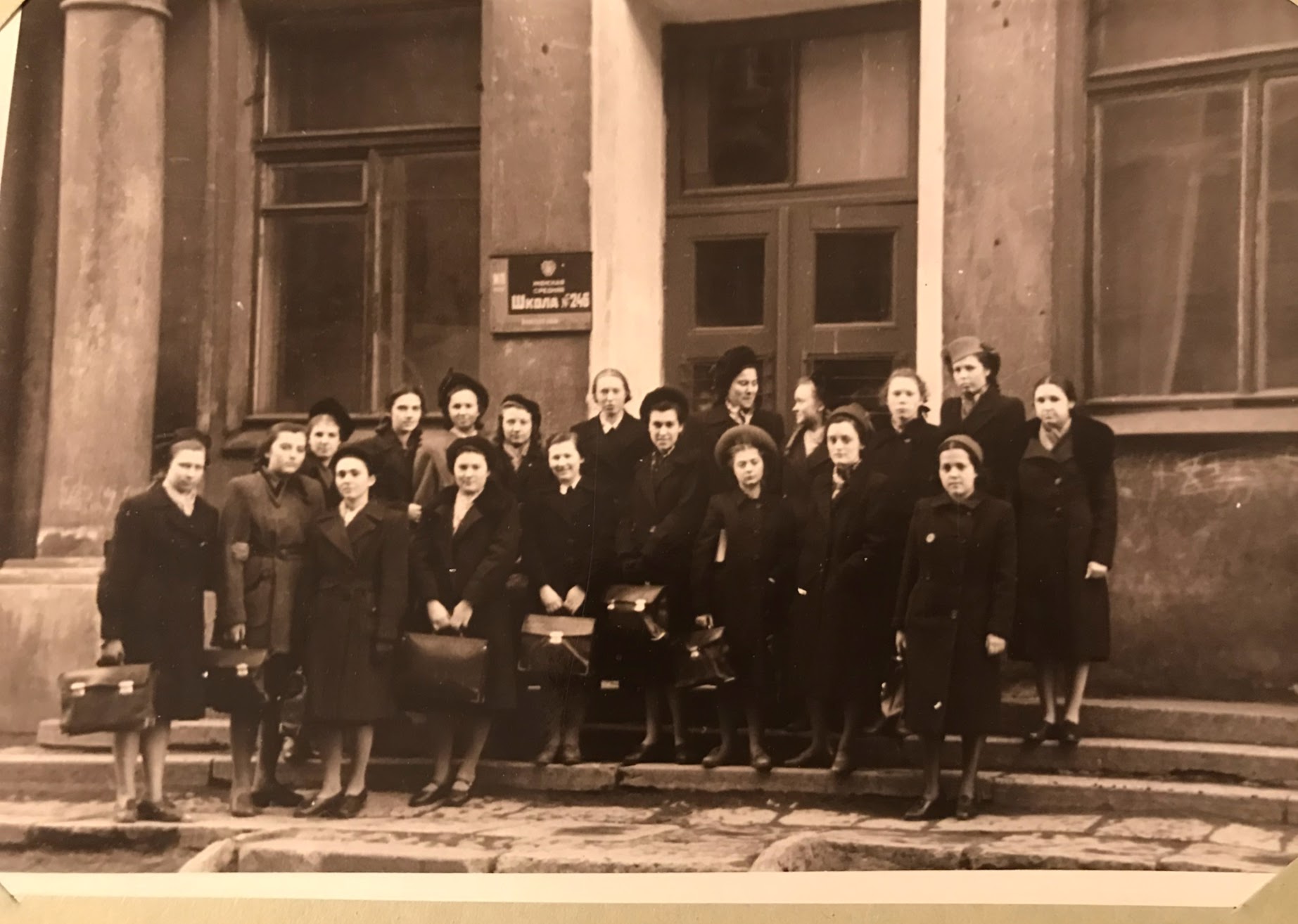
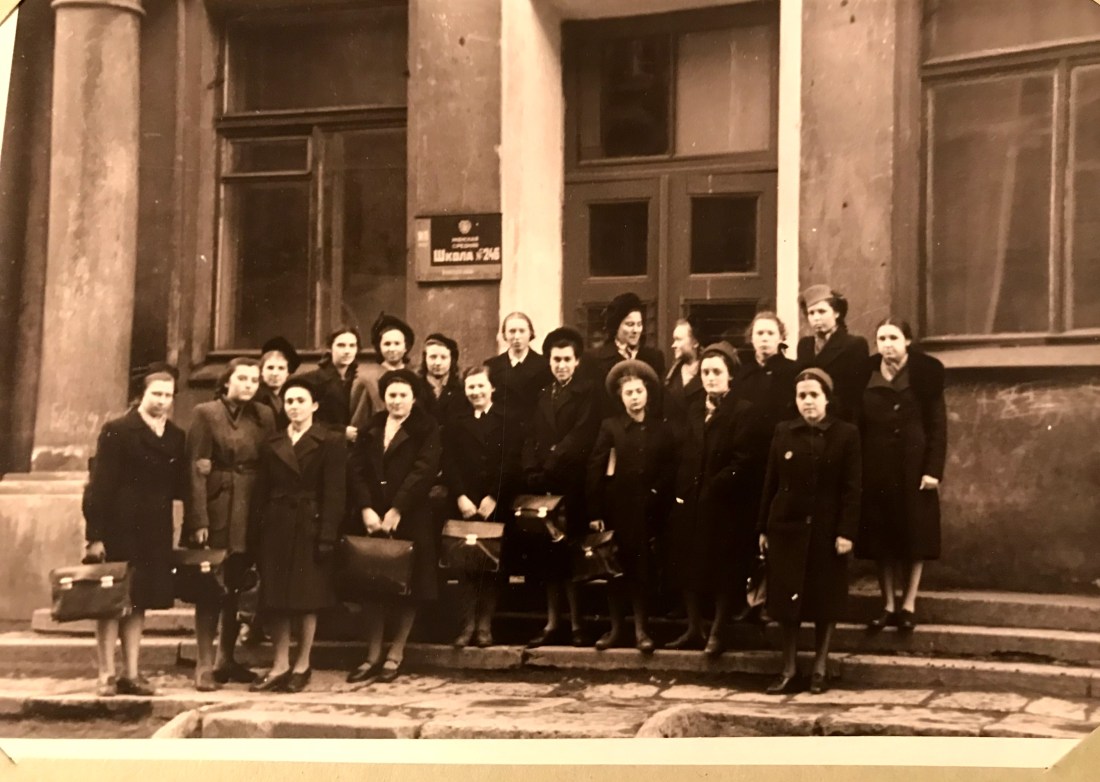
Mom’s class in from of the school. The schools didn’t have names, only numbers, her school is number 245. As you can see, it was girls-only school, the schools were separated into boy’s and girl’s in 1943, and returned to mixed education in 1954. Mom is in the back row, with her face turned to the side.
Continue reading “My Mom’s High School Photo Album”

My First New Year’s Eve

Since Christmas was forbidden in the Soviet Union and later partially rehabilitated in the form of New Year’s celebration, I can’t tell, “it was my first Christmas. ” Instead, it was “my first New Year,” December 31, 1963. The New Year was especially a big deal in our family because Aunt Kima’s birthday was on January 1.

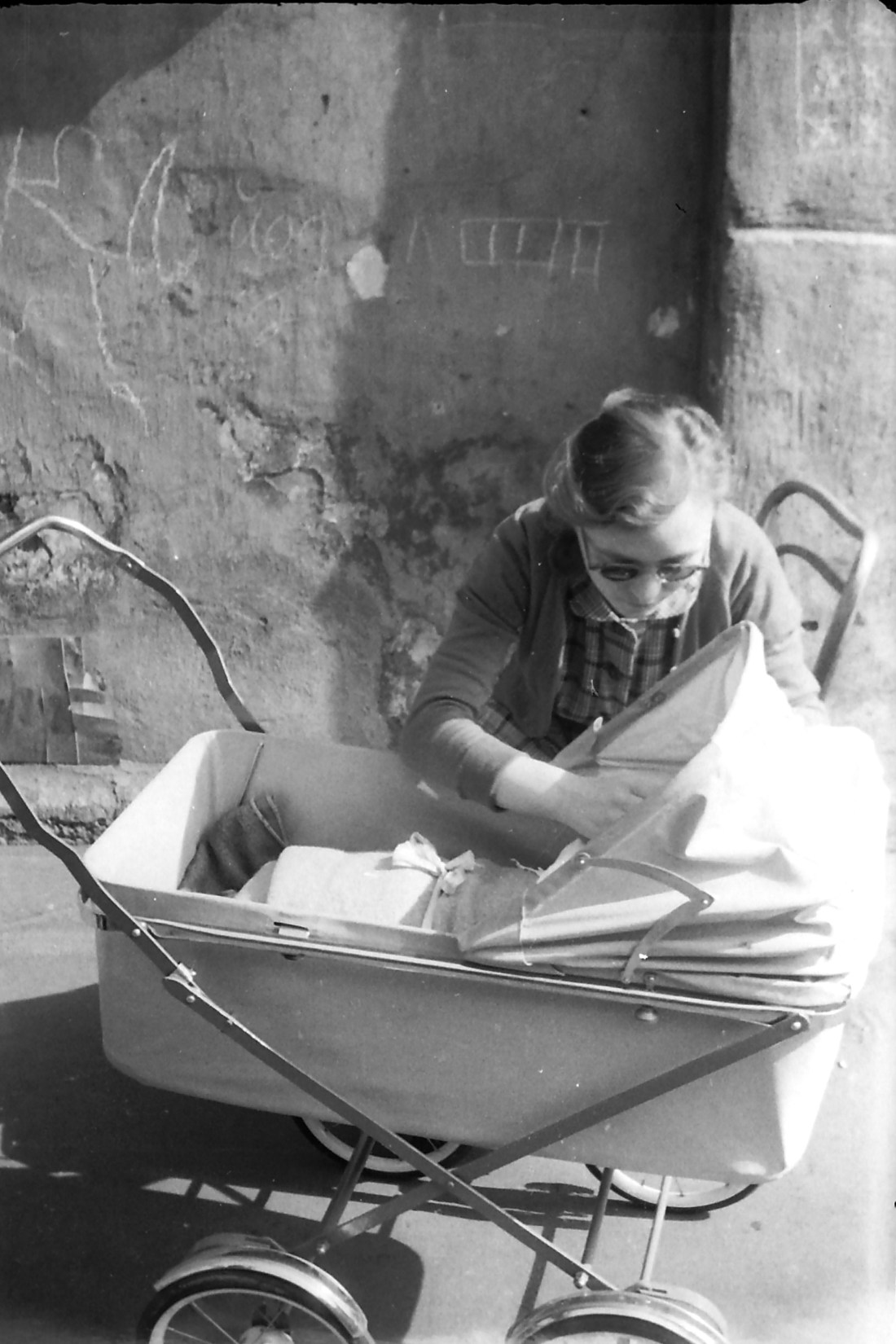
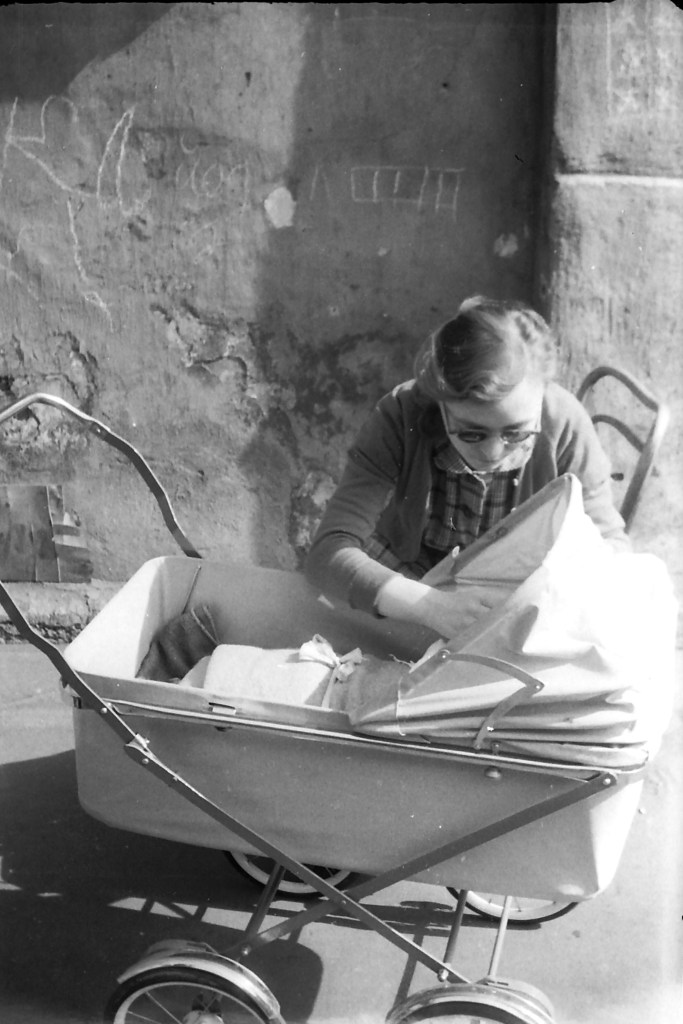
I cherish these pictures because they are atypically live for that period, and none of them are staged photos. I believe my Mom never printed the pictures from that roll, which did not include me, so until we scanned the film, I didn’t know what a treasure I have in my possession.

I have some memories from that day, in part because Mom showed me these pictures often.

I just started walking and preferred to stay close to the walls:)
Continue reading “My First New Year’s Eve”

Getting the First Job After College in the Soviet Union

This is the last post related to the story of higher education in the Soviet Union: how graduates would land on their first jobs.

Since it was happening in the Soviet Union, all colleges and universities were state schools, and there was no concept of the private educational establishment. I’ve already mentioned that the cost of education was zero, which did not mean that students’ life was easy. But there was still a price student had to pay upon graduation. This price was called “a distribution of specialists” or simply “a distribution.”

The Soviet Union had a “planned economy.” That meant that the government planned ahead how much of everything had to be produced in any given year, including the number of graduates of all educational establishments. And all employers: manufacturing plants, research institutions, Department of Defence, schools, hospitals, etc. had to plan how many graduates they need to fill in their positions. Since the Soviet Union did not follow the same educational standards as the rest of the world, we did not have Bachelors’s and Masters’s; everybody had to study for five years (some professions – longer). And everybody would graduate as “specialist,” not B.S. or B.A. or M.S.

The graduates were called “young specialists,” and a couple of months before graduation, they had to be “distributed.” The organizations which wanted to hire somebody had to place their requests with an educational institution. In my case, it was the Leningrad State University. There were about 300 students who would graduate the same year as me from the Department of Mathematics and Mechanics. The University would accept about 300 requests for young specialists, including those who could continue their studies as post-grad students, and including those who will become TAs in the University. 

All students were ordered by class rank, and on the day when the distribution commission was held, they were called into the room in their rank order. 

Continue reading “Getting the First Job After College in the Soviet Union”

More on Summer 1963

I found more pictures form summer 1963, the same summer, the same place, the same people. Just wanted to keep all these old photos at one place. When I was a child, I didn’t think of them more than just “these are my baby pictures, ” but now I view them as historical documents, since they’ve captured so many signs of the epoch 🙂

With Aunt Kima. It strikes me, that she is only 39 years old on these pictures.
Continue reading “More on Summer 1963”

Summer 1963

The first summer of my life. Since I remember myself from a very early age, and since I liked looking at my pictures even when I was a very small child (and that’s why, perhaps, I still remember it so well!), I could not believe I didn’t remember that summer! It felt unfair that I was in Estonia, looking at these beautiful flowers, and all of it was gone from my memories!

My aunt Kima is holding me here; I am six months old
Continue reading “Summer 1963”

Before My Memories: Spring 1963

As a child, I had an outstanding memory. I remember some episodes of my life even before my first birthday. And since shortly after my first birthday, I remember more or less “everything,” meaning I remember my life as a stream of events. That was in part because my parents made lots of pictures, and I was often looking at them. 

That been said, that fact that I did not remember the earlier portion of my life, used to frustrate me a lot! I did not remember being in Estonia for the first summer of my life, and the pictures looked so lovely! 

I was born on January 19, 1963, and at that time, mothers in the Soviet Union didn’t yet have the option of staying at home with their babies for the first year of their lives. There was only the so-called “decree.” The name goes back to the early years of the Soviet state when the laws were called “decrees.” The decree which proclaimed the right of the woman to take eight weeks off work before the expected date of birth and eight weeks after went into effect in December 1917. For this whole period, women were paid 100% of their salaries. Later, women were allowed to take four more weeks off, but with no pay. What will happen if they won’t return to work? They would have to quit the job, which in turn will result in “interruption of work history” on their record, and that will negatively affect their state pension in the future.

Continue reading “Before My Memories: Spring 1963”

The Beginning of My Story

Eventually, I will tell here all the stories of the previous generations of our family, which I can remember. But in this post, I wanted to show some pictures from the very beginning of my own life.

I already wrote about my university years and a little bit about what happened after. Now that I look at all I’ve written, I feel like I can’t continue without writing about some personal things. And I am not ready for that yet. So I decided to go back to my beginnings.


These are the first pictures of me, or rather my mom with me. The films were dated March 1963; although I find it hard to believe, there could be so sunny and dry in March in Leningrad. But – I have to believe it. At least, I look pretty much like a two to three months old should look:))

babies were kept swaddled tight
… all the time 🙂

The building was located in a very central part of Leningrad, but nevertheless, the courtyard looked lie you can see on these pictures above.
My father’s family occupied one of the apartments of this building since the late 20s (will try to check the details). The state owned the building, and the family was “assigned” to this apartment.

As I said, that is the first picture of me. At that time, there was still a belief that newborns and small babies should be kept away from the crowd and not be photographed until two or three months old. Also, visitations were limited to close family members. Not everybody owned cameras, and not everybody would take pictures of everyday life, so I am fortunate to have all these films in my possession.

My historical posts are being published in random order. Please refer to the page Hettie’s timeline to find where exactly each post belongs and what was before and after.

Psychology Studies and Women’s Issues in the Soviet Union

Last week, I was interviewed for a project, and one of the questions they asked me was whether I consider myself a feminist and whether I was always that way. And I had to admit that it was not always the case. I started to tell them how I thought about women’s issues when I was still in college, and then remembered that I wanted to write a post about it for quite a while. Here it comes.

During our eighth semester at the University, we had a psychology class. At that time, psychology was all but a forbidden subject in the Soviet Union. There were close to zero books on psychology and close to zero number of specialists. And for all of us, having a psychology class felt a little bit like taking a peek behind the Iron Curtain.

We adored our professor. In our often-not-heated department building, she always came to her lectures in a light-blue suit, somehow not getting frozen to death. She changed into dress shoes before coming to class, while everybody else was walking around in the winter boots. Her lectures were captivating. But the highlights of this class were two lectures on family psychology.

These lectures were not in the curriculum, but professor G. understood that all these young people, married at twenty, were desperate for any information about how to stay together and not to get divorced before graduation.

So she had these two lectures — one for boys and one for girls. I only heard rumors about what she was talking about at the “boys” lecture, but I know what she told the girls. In fact, I attended this lecture twice: the first time a year prematurely, skipping one of my classes, and sneaking in with my older friends.

That’s what she told us. All men say they want smart wives. But what they do not say is that it means “but not smarter than me, of cause!” Thereby, girls, she would continue, when your husband comes home, put your books away immediately, put on a pretty apron, and head to the kitchen!

You don’t believe she could say this? She could, and she did! And even more surprisingly, we all thought: oh, that’s so clever! She is so right! If we want to keep our husbands/boyfriends – that’s what we should do!

She also told us: if you want to have a strong man by you, you need to be a delicate woman! You should be unable to carry anything heavy so that he won’t have any choice but to help you. You should be afraid to enter a dark hallway. You should always show, how helpless you are without his support. There was no question that a wife should always be ready to answer her husband’s sexual needs, and should always say that that’s the best she ever had. And once again, we all thought that this is incredibly smart, and never thought that all she was saying was quite discriminatory toward women.

Why did I think it was alright, I do not know.

I was always taking pride in being able to compete professionally “at men’s level.” When I learned that people were saying I am the smartest female in our class, I thought it was OK. When I was officially ranked five in my class, and officially ranked “the second female,” I also thought it was OK. I knew that in order to compete with men for a position I have to be not just better, but ten times better than men with whom I was competing,

And why I thought it was perfectly fine, I do not know…

My historical posts are being published in random order. Please refer to the page Hettie’s timeline to find where exactly each post belongs and what was before and after.

Dating and Getting Married While Being a Student in the Soviet Union

When thinking about the past, the most challenging thing for me is trying to remember how I felt about certain concepts, what was “a norm,” and why I believed it was, basically, about what was going on in my head. And I am talking not only about politics, or economics, or the Communist Party, or the foreign countries but about personal relationships as well.

Most of us got married early. Both girls and boys. Now I think that it was mostly because of the difficulties of renting your own space. The “expected behavior” would be something like this. You start dating. You are “official,” when you walk around, hugging each other (your right hand on his waist, his left hand hugging you over your shoulders). You go like this most of the time, inside and outside. Sometimes even during classes. You kiss in public. Then you might, or you might not try to find someplace where you could be more intimate. You do not have your apartment; you live with your parents, who themselves are trying to find a place to be intimate:). Some of your friends may have their parents temporarily away or working late; then, you can use their apartment. Many of us didn’t even have their room; I didn’t.

The is no contraception, except for the calendar method or not letting the sperm in. Even condoms are “deficit.” Abortions are legal, but you need to spend at least one night in the hospital, so your parents would know, and there is no anesthesia. For many of us, getting married was the only option to be in relationships. It’s not like there were no civil unions, but mostly among older people, mostly not the first marriage. As always, there were exceptions, but as I said, a surprising number of my friends were getting married being virgins, girls and boys alike.

There were lots of marriages at nineteen and twenty. When we graduated, most of us were twenty-one or twenty-two, and more than half of us were married, and a considerable portion of those who were married, were pregnant.


Once again, there were several reasons for that. Fist, there was a lack of contraception and a religious belief, that if you abort your first pregnancy, you may never have children. So the idea was that you have a child or two children right away, and then hope for the best or have an abortion, which was multiple. Another reason, specific for college grads, was that you had to work at the place which you were assigned to for three years after your graduation, and they could not fire you during your maternity leave. So if you didn’t like the place, you could have two children and not work at all :), and then try to get to the better place.

Originally I had a very different idea about my future life and marriage, but surprisingly I ended up with the crowd, except for I was far from being a virgin.


I married on December 22, 1984, graduated in June 1985, and Igor was born on September 28, 1985.

My historical posts are being published in random order. Please refer to the page Hettie’s timeline to find where exactly each post belongs and what was before and after.