Summer 1964: People Around Me

On Sunday, I was trying to talk to mom about that summer. She confirmed that she was returning to Sosnovaya Polyana every day after work, and thereby her commute was three hours every day. She said that my father “rarely” was there and that “she needs to tell me everything.”

Actually, she already gave me her letters to my father and his letters to her from that period, and she gave me her diary to read, so I know how it all looked like both from her and his perspective.
I do not doubt that I need to write about it, but I am still unsure whether to include their story in my or tell it separately.

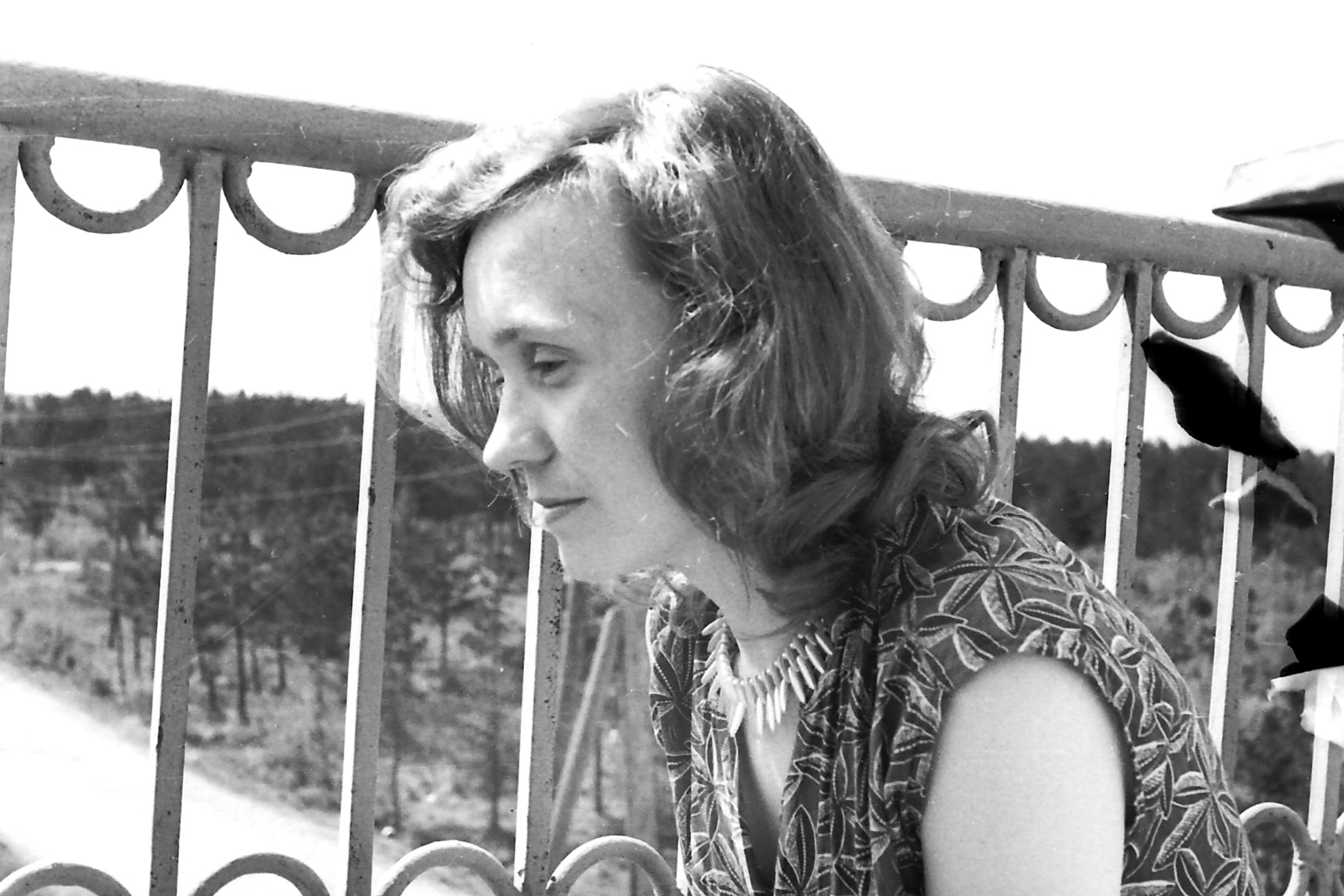
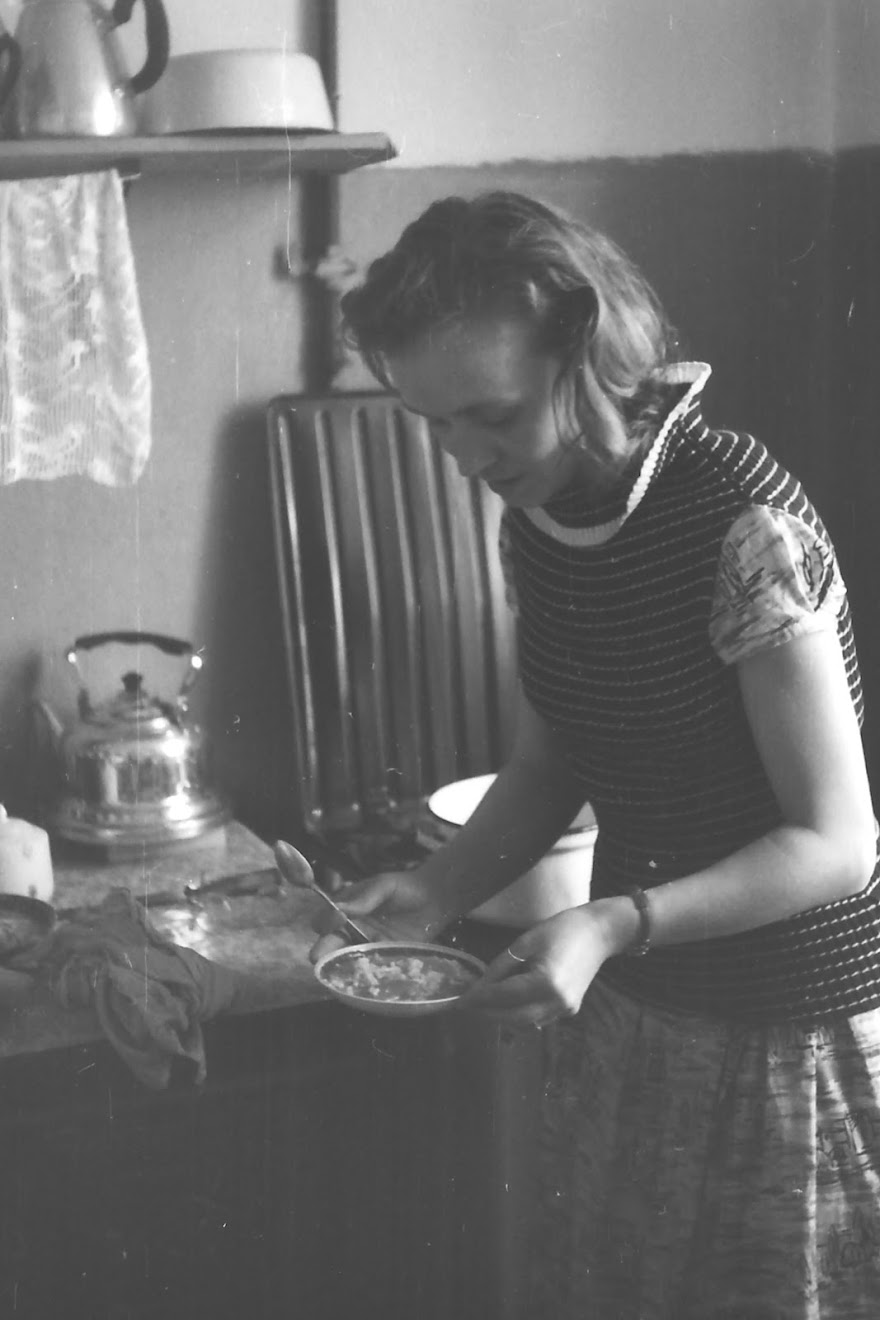
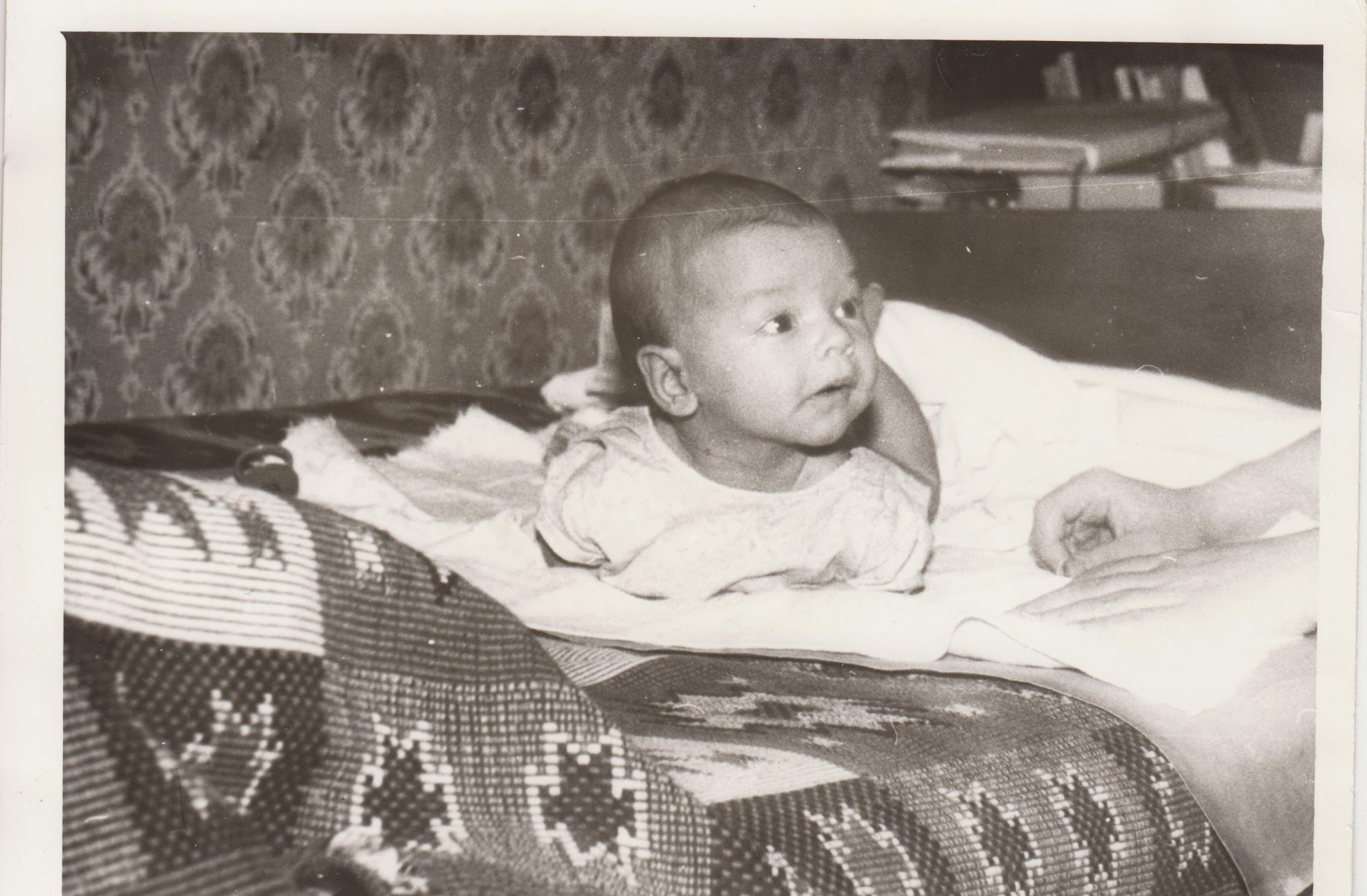
For now, let’s say that my father came to Sosnovaya Polyana from time to time and that he took lots of pictures. I like the photos which are not focused on me because I can see the interior of this tiny apartment, and I can see Baba Ania, even if only in the background.
Also, when I look at these pictures, it is very visible to me that my father loved my mom, even if it was in the wrong way. I mean, even though he a completely messed up person, he loved her the way he could love.

Continue reading “Summer 1964: People Around Me”

Summer 1964, part 2

More pictures from the same summer. I poster the picture below in the previous post.

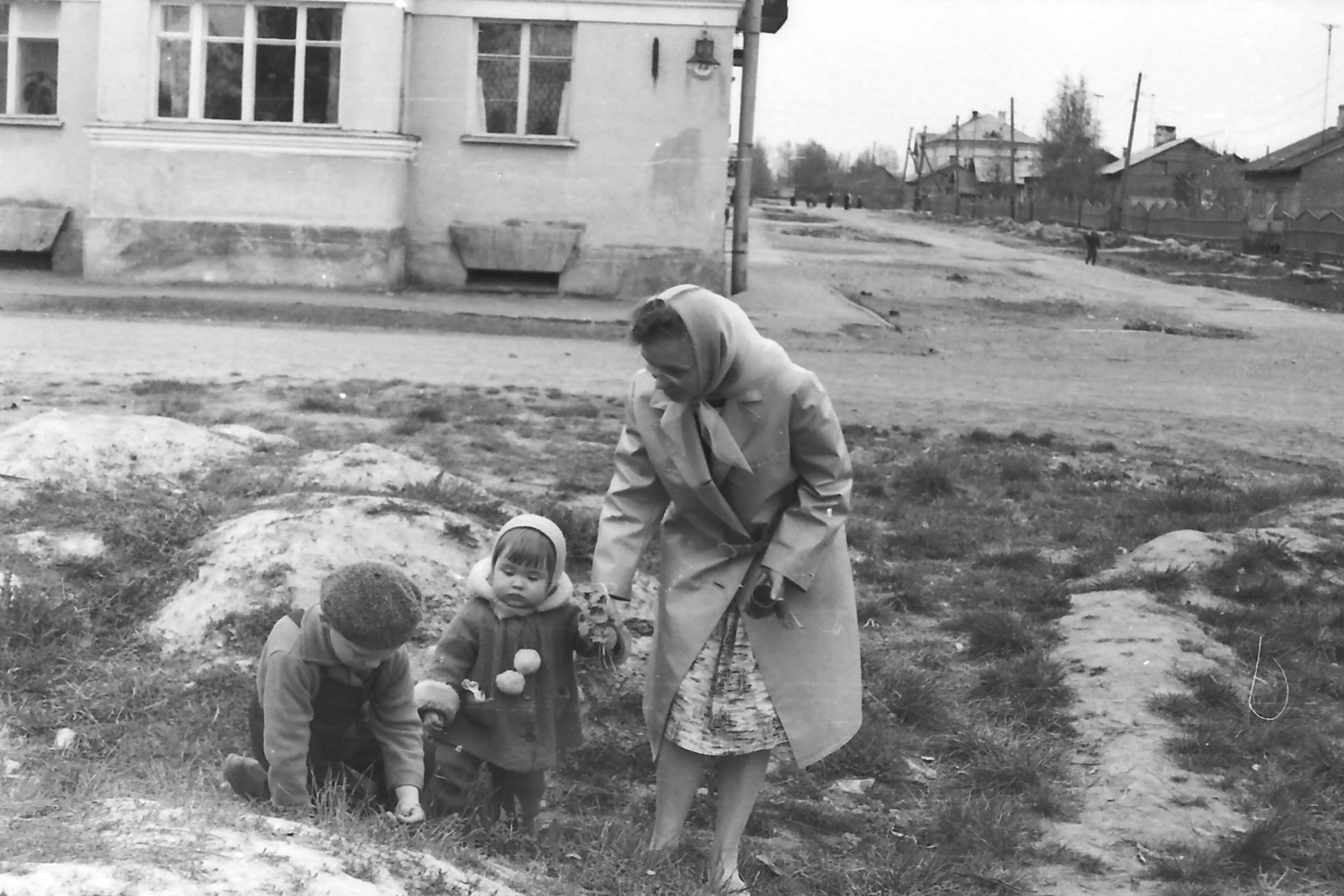
The building behind us is this three-story building where Baba Ania and Deda Fedia lived. Their studio apartment was on the third floor, one window was facing his scene, and the balcony and the kitchen window faced right (where the wooden huts are). If you look at the ground under the balcony (on the right of this picture), you will see some sand. You can’t tell that this is sand, but if I tell you that it is there, you can figure out where exactly it is.

Now, look at the next picture.

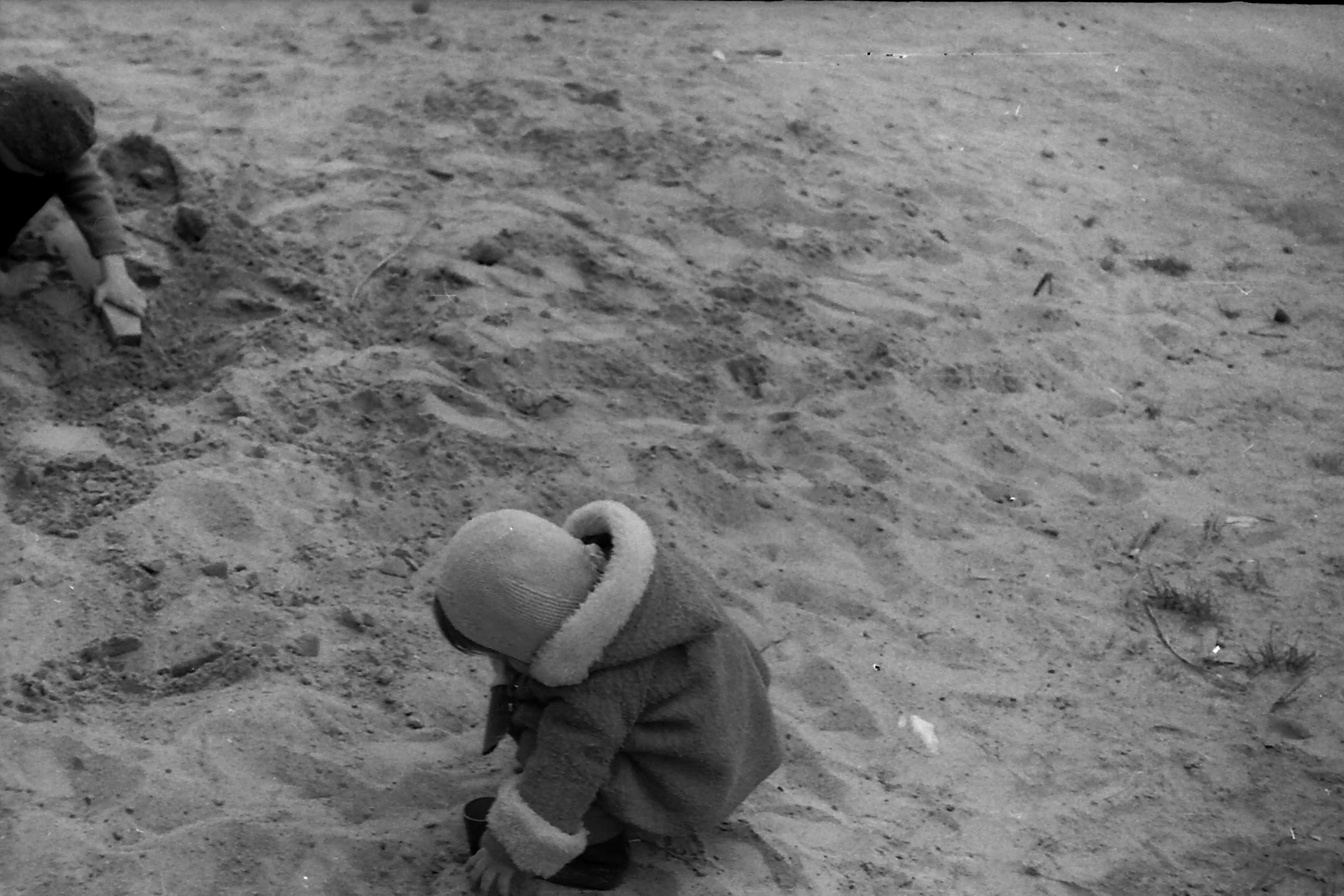
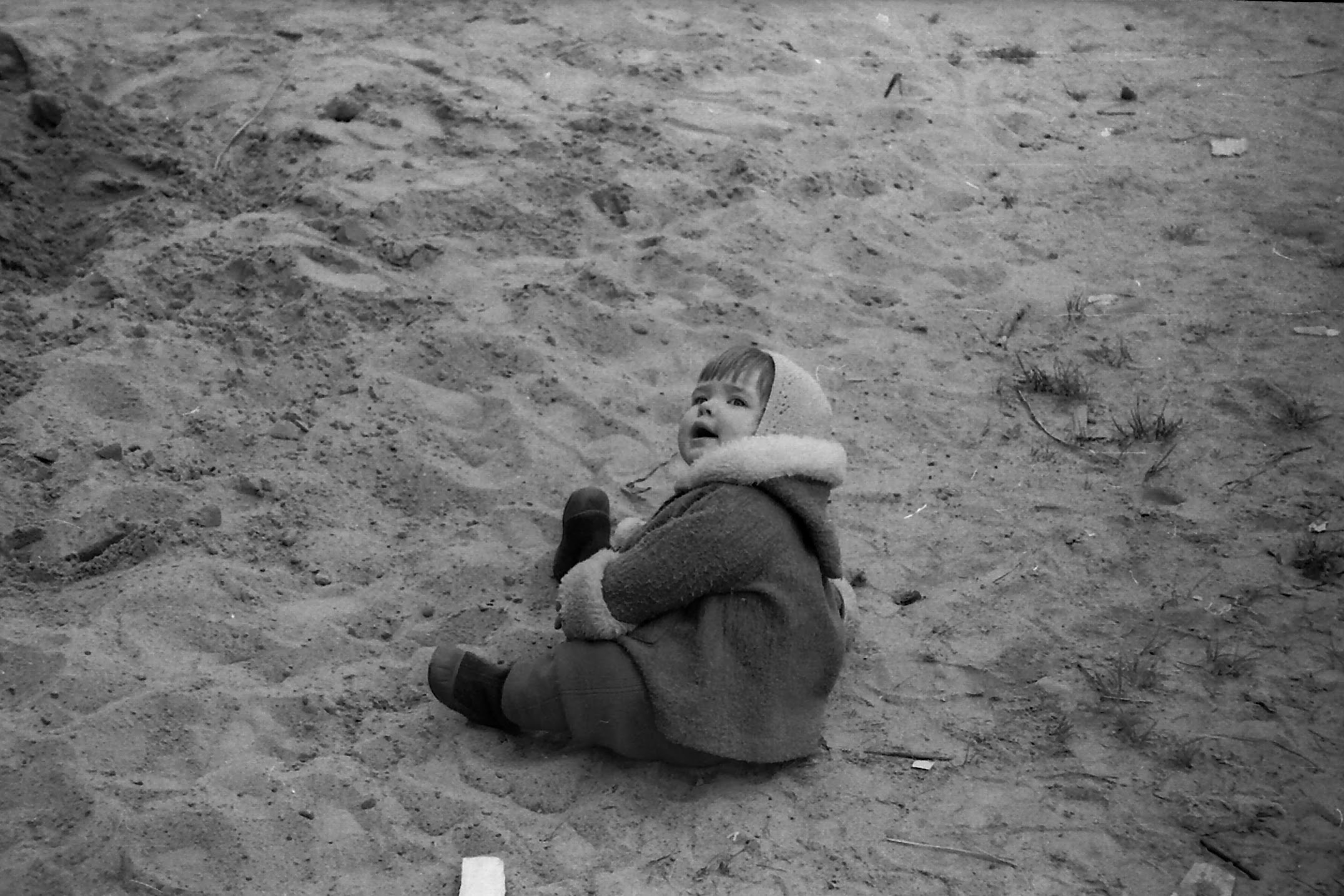
We are playing in this dirty grey sand and trying to build something:). And on the next picture, I turn my head up and yell towards the balcony for Baba Ania to drop my little shovel to me.

Continue reading “Summer 1964, part 2”

Summer 1964

The complete gallery is here, so that my children and grandchildren will know where to look for photos; I am not going to post all sixty :).

In the summer of 1964, I was one-and-a-half years old, and I spent the summer with my maternal grandparents. 

Deda Fedya (grandpa Fedya) “received” this one-room apartment from the Leningrad Commercial Port, where he worked after returning from his army service.

They lived in one of the houses built in the 1950s’, in Sosnovaya Polyana, the part of Leningrad only from an administrative perspective. I remember that in 1964, the peasant’s houses that surrounded it were freshly demolished. The wooded houses were gone, but the stone chimneys and the fireplaces stayed. Now that I recall this picture, it seems creepy, but I found it extremely funny back then. My grandfather would take me with him on expeditions to checked whether there was something worthy left in the abandoned gardens. He dug out some strawberries and planted them on his balcony, 

 I was there for the summer because of the firm belief, which I mentioned earlier, that children should have some “fresh air” during summer, and adults have to make sacrifices to make it happen. 

It was a one-room apartment, with only one normal bed for my grandparents. Mom slept on the camp bed in the tiny hallway. I slept on the small day bed. Mom walked to the train station every morning (almost 3 miles), and took a train and then a tram from the railway station to her work. My father was there only on the weekends, and I am not even sure whether their issues already started at that time.   

In any case, all these pictures were taken by my father during one of his visits. The most precious thing about these photos is that I can see parts of that apartment, and I can see Baba Ania passing by on some of them. 

The house was originally built with the woodstove only; the gas stove (on the right) was installed later) 

Mom
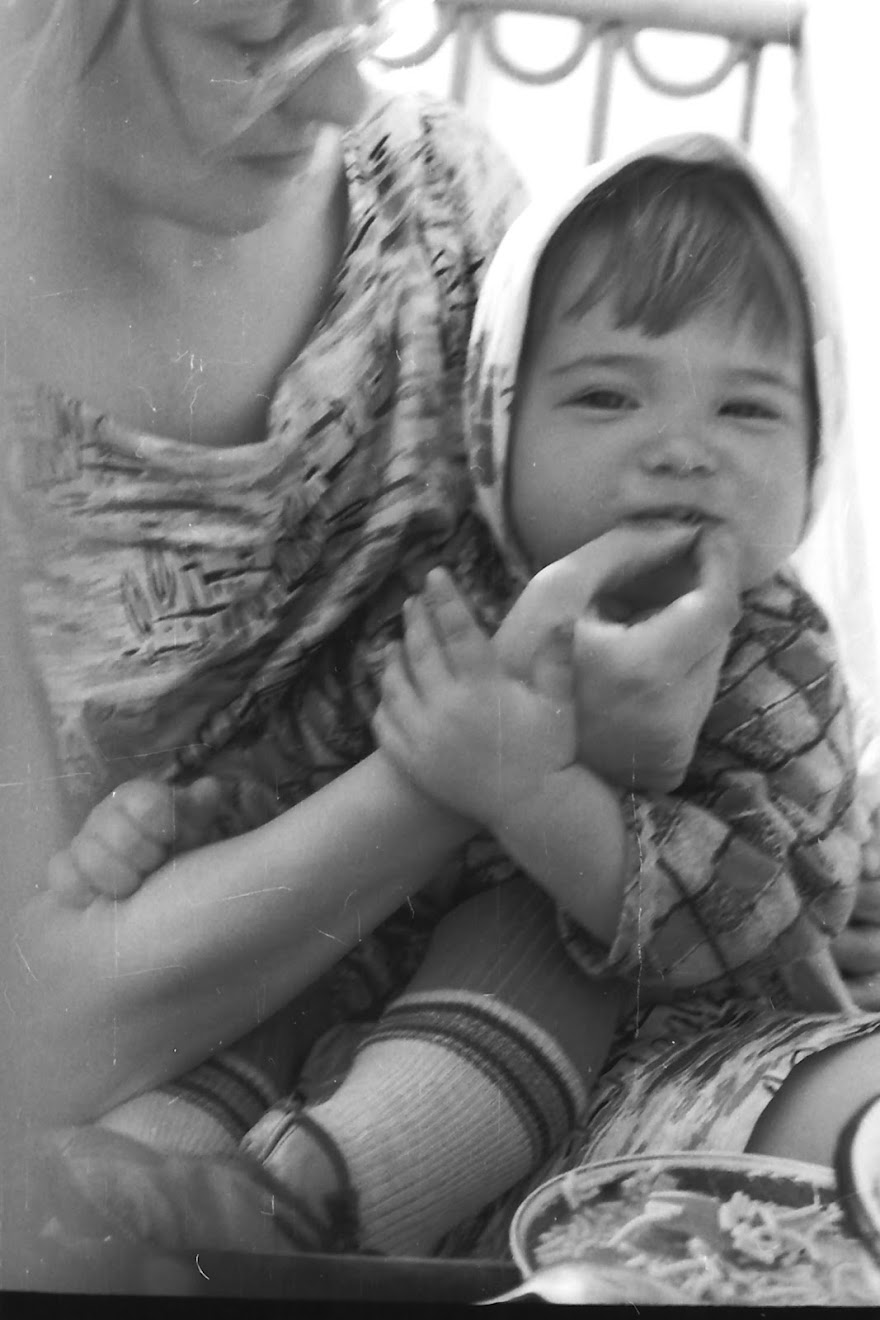
Mom sits on the balcony and tries to feed me some meat
Continue reading “Summer 1964”

My Life As a Toddler: The Beginning Of 1964

I am moving back to the beginning of my timeline – to the first four months of 1964.

In the previous post, I showed the pictures from my first New Year, when I was just nineteen days short of my first birthday. As I already said, I remember some parts of that day, and I remember that I was learning to walk, and the walls were not exactly straight and reliable – sometimes they would suddenly start slipping, and I would end up on the floor :).

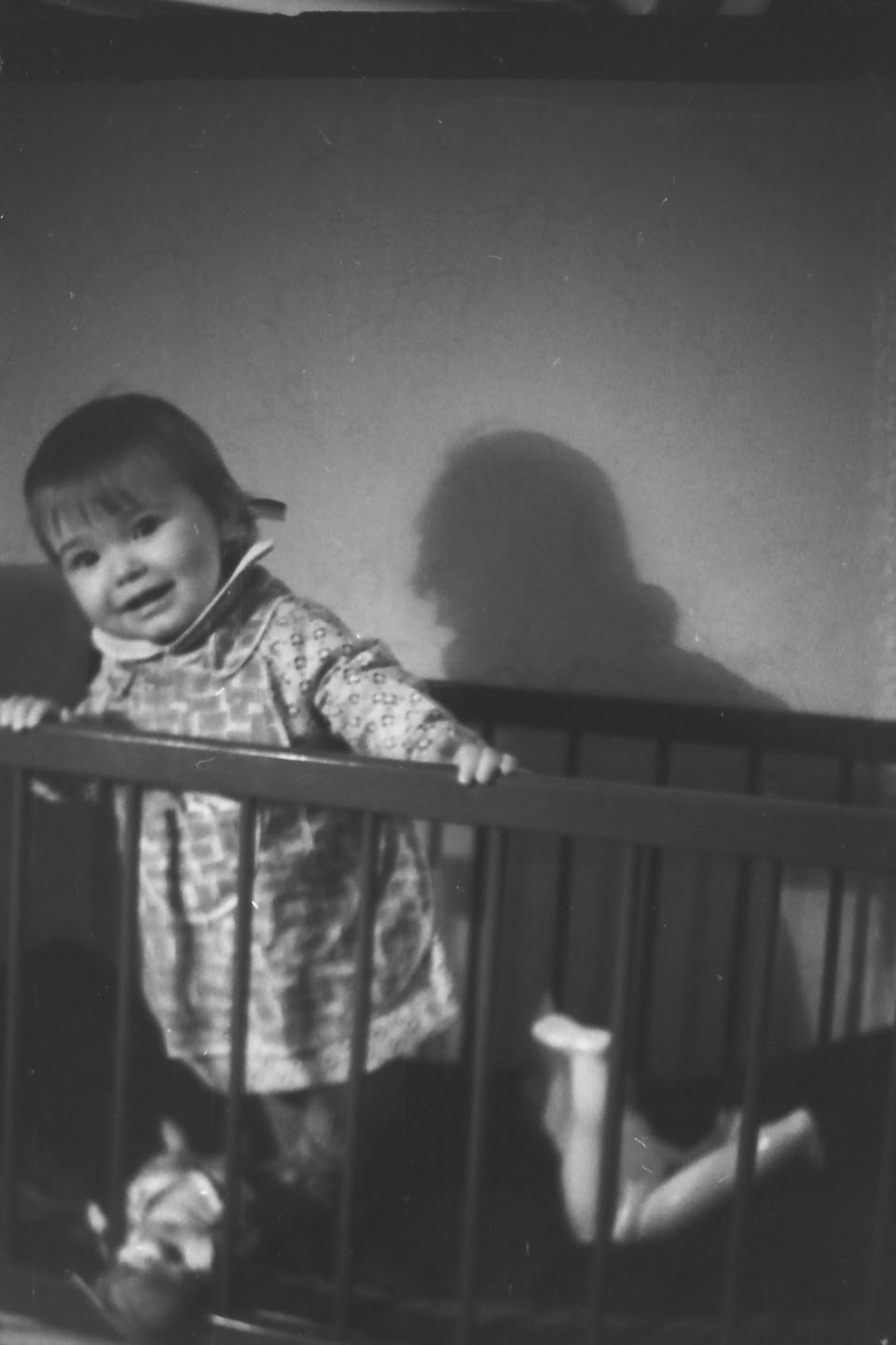
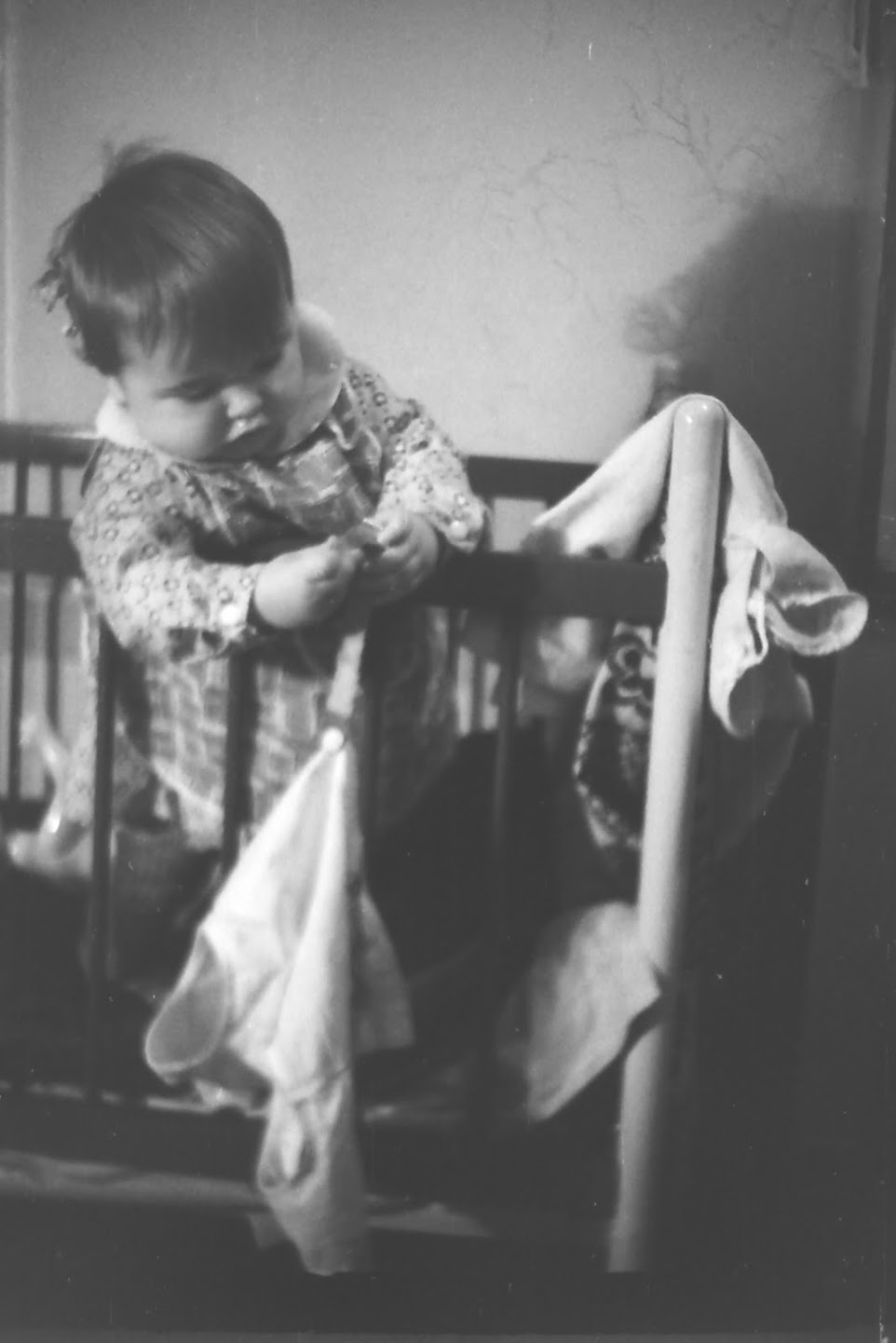
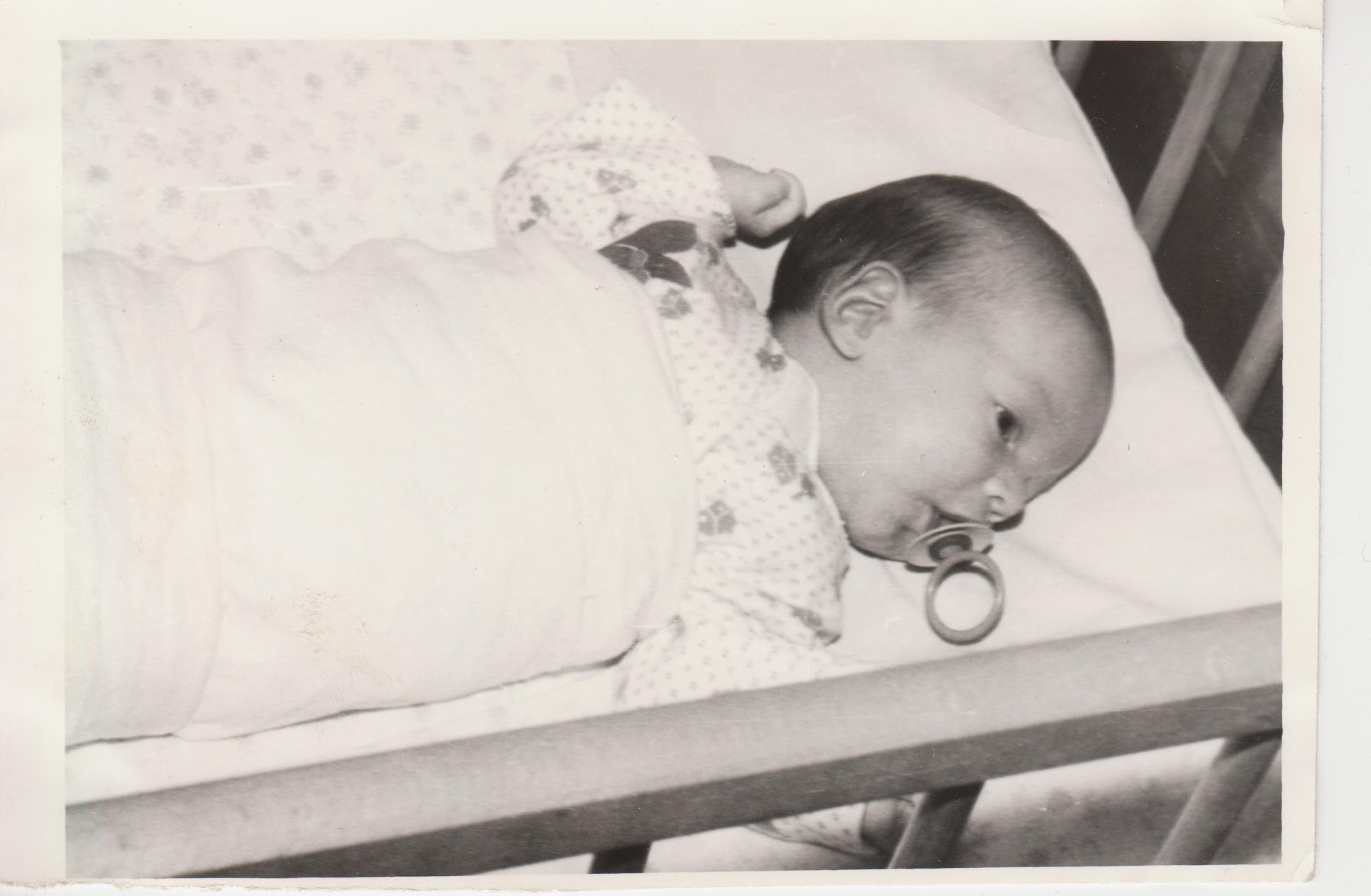
The first five pictures were taken in January. On the first three of them, I am in my crib, where I was placed so that adults could do something without me constantly falling on the floor. I have a couple of my toys there, but apparently, I am not interested in them.

Continue reading “My Life As a Toddler: The Beginning Of 1964”

Soviet Propaganda (Almost Forgotten)

Suddenly, I remembered this episode; I didn’t think about it for years until yesterday, when it suddenly popped up in my mind.

Back when I was a child, not only did we not know anything about Christmas, we didn’t even know how Santa looks like. Grandfather Frost, who was in charge of presents, looked very different from Santa, except for the beard. And even his beard looked different from Santa’s 🙂

So, we didn’t know how Santa looks like, and that’s what once happened.

I must have been in grade school, probably the 5th or the sixth grade. It was a winter break, and I was at the Yubileyniy Palace of Sports watching the New Year show on ice.

In all these shows, the scenario is more or less the same: Grandfather Frost is in danger, or got lost, or lost his granddaughter Snowgirl. And some good guys help him (most often, animals) and bad guys trying to prevent him from finding Snowgirl or take him hostage, or something else.

This time around, a villain was Santa Claus! He didn’t look like Sant at all, but we didn’t know. He was short and thin and wriggling, hunching most of the time. He wore a purple robe, which was too big for him, and a dark purple hat that looked very much like a night hat. He wore sunglasses (because spies wear sunglasses!). He had packs of chewing gum in his pockets, which he was using to bribe the good guys. There was no chewing gum in the Soviet Union, and it was labeled as bourgeois plague, and yet kids loved it, as one can love forbidden fruit.

This Santa Claus was trying to turn people away from Grandfather Frost and accept him as a main figure for the New Year celebration. In the end, he was defeated and sent away.
It was a long (two acts) and a beautiful ice skating show, and it ran twice a day through the whole winter break. The Yubileyniy arena was huge, so I won’t be surprised if most of the city’s grade school students saw this show. I didn’t feel anything wrong about it. I thought it was funny. And it was so along the lines of what we were told back then that I forgot about it entirely.
Now I think: it’s no surprise that so many people in Russia think about the US as their enemy. That concept was imprinted in people’s minds so early that they can’t even remember that.

My historical posts are being published in random order. Please refer to the page Hettie’s timeline to find where exactly each post belongs and what was before and after.

Breaking the rules in private vs protesting in public and the Soviet mentality

Last week, my mom wrote about the seeming contradiction she’s seen with her Russian friends, who’ve seen even peaceful protests as somehow innately bad, while not minding violating laws on the sly.

I definitely get where she’s coming from. Growing up in Russia, I’ve often seen grown-ups express the attitude that it’s almost virtuous to take advantage of loopholes, and there’s nothing wrong with violating the rules so long as they aren’t effectively enforced. Similarly, I’ve seen plenty of people take pride in following the letter of the law while violating the spirit. And it’s not even a solely Russian thing – as I got older, I saw the same kind of attitude in many other ex-Soviet countries.

I’ve already been thinking about this a lot during the pandemic. During the Illinois lockdown, people weren’t supposed to go outside except for essential reasons, such as buying groceries. But there were several professions that were exempt from that, including journalists. So long as it was in the service of performing journalism duties, we were allowed to go wherever wanted.

Which is where the gray area came in. There is only so much journalism one can do from behind the computer screen. Sometimes, one has to go to places, see things as they happen, take pictures, talk to people. And sometimes, you need to see conditions on the ground to figure out what’s worth writing about. And so, as those of you who followed me on social media know, I took trips to the suburbs, just to get out of the house and have a change of scenery. I took pictures and took notes that could be used for the article. A few times, I even legitimately got story ideas this way, or took pictures that were actually used in articles – but there were times that I didn’t. And there were some instances when I took pictures for fun and wound up using them in articles because it just happened to be apropos. But there were also times when I didn’t use them for anything.

My mom wasn’t amused by any of this, chiding me for doing non-essential travel, but I honestly didn’t feel bad. Who was to say that any given trip wouldn’t retroactively serve a journalistic purpose? To quote Harry Dresden from Jim Butcher’s Dresden Files, it was a technicality I intended to hide firmly behind, if anybody asked (which nobody did).

Honestly, I was more confused why my mom took issue with that. She actually grew up in the Soviet Union, and i know for a fact that, back then, she did things that weren’t legal, and things that were on the gray side.

It was the same thing with my visits to the Chicago beaches during the summer. While the beaches weren’t closed, the closures weren’t enforced after 7:00 PM. I didn’t feel bad about not following the rules when they weren’t in any way enforced, especially when other people did the same thing.

Now, unlike my mom’s Russian friends, I have no issue with protests, at least not per se. Even when I don’t necessarily agree with the goals, I don’t have this common Russian reaction of “what are they doing, they’re just stirring up trouble.” Protests bring attention to issues. They make a statement that the way things are won’t be tolerated. What is so wrong with people risking arrest and injury to stand up for their beliefs?

(Now, people wanting to protest without being willing to risk anything is another story)

As I commented on my mom’s blog, I don’t think the contradiction she talked about is that much of a contradiction at all. She and her friends grew up in the Soviet Union. Protest actions get people in trouble – ergo, those who start trouble are trouble-makers. Now, exploiting the blind spots of law enforcement, exploiting the loopholes and the legal particulars, doesn’t get you in trouble (if you do it right), so that’s okay.

I think it relates to the phenomenon Suki Kim described in Without You, There’s No Us, a book about her time teaching college students from North Korean Workers’ Party elite. She was struck by how her students lied constantly, without good reason, and how lying seemed so natural to them, and speculated that it was the consequence of growing up in a society where being truthful was a liability. DPRK apparatus is basically Stalinism on steroids, and my mom’s friends weren’t old enough to experience Stalinism in its original form directly, but I do think that any society where expressing one’s opinions has severe consequences makes lying feel more natural, and makes concerns about self-preservation all the more overwhelming. And, as my own example shows, one doesn’t need to live under Soviet repression to absorb some of the lessons it taught its citizens.

And, thinking at it now, I think another factor that may play into this is that my mom’s generation came of age during Perestroika, when protests helped end the Kremlin Coup and end Soviet Union once and for all – only to experience the economic devastation, privatization creating a class of oligarchs and plunging so many people further into poverty, things like job guarantees vanishing overnight… Might put a few people off protesting,

I don’t think it’s necessarily one thing, but an interaction of all three, with perhaps some factors I haven’t considered mixed in.

I will end with one side note. As several second-generation Russian-American immigrants have observed on Facebook, it’s been kind of fascinating to watch the same people who cheered on protests in Belarus complain about BLM protesters, and the same people who’d complain about police brutality in Belarus excuse police excesses in United States.

But that goes to a whole different, albeit related, bundle of traumas.
Baby Clothes in the Times of My Motherhood

In August, when my girls were visiting me here, Anna and I started talking about baby clothes when they all were babies. I funny thing is that there was a very little difference between the times when I was a baby and Igor’s times. Things just started to change at Vlad’s and Anna’s time, but a little bit too late for us – I still got a full share of caring for the babies without civilization’s advantages.
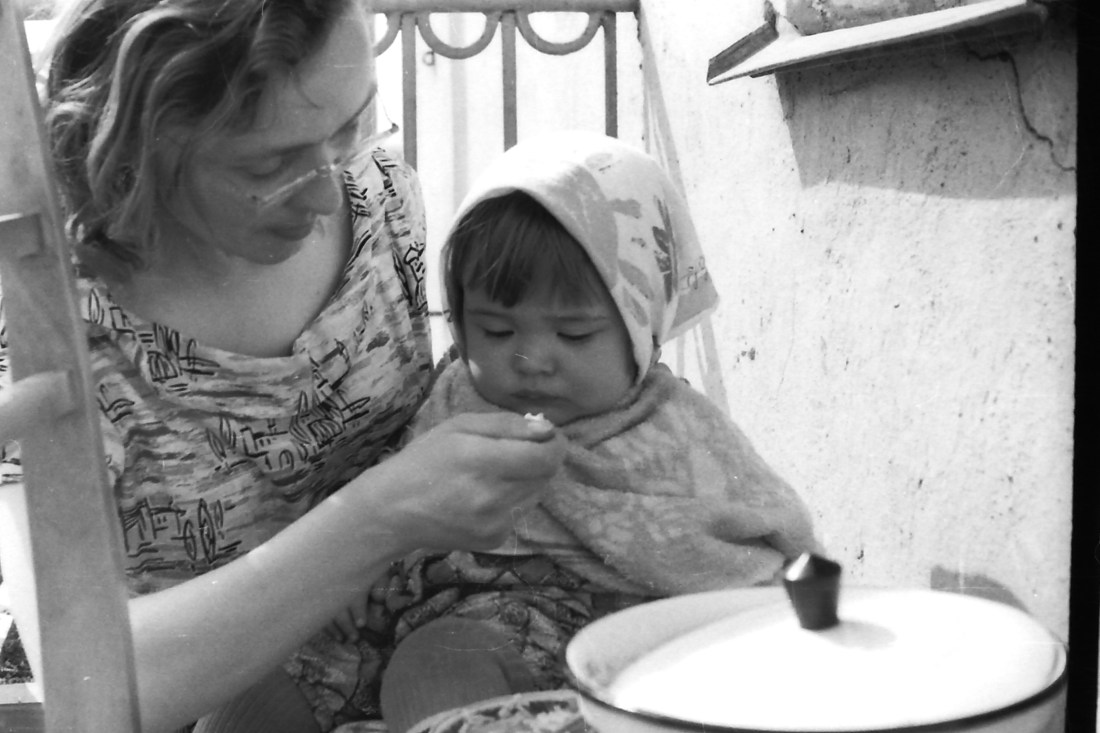
When I finished my story, Anna said that I should write a blog post about it because she never understood my challenges before. To illustrate my story, I pulled up a couple of Igor’s pictures when he was 1-2 months old; however, you’ll mostly have to use your imagination :).

There were two tops; both didn’t have any buttons or snaps or fasteners – nothing to hold them together. Such tops were called raspashonks – which can be translated as “no fastener.” The one going under was made of chintz (cotton, but not the stretchy kind). It had short sleeves and was put on a baby with the opening on the back. The upper one had long sleeves and was made of thin flannel, and it was put on a baby with the opening on the front. Both were short, just to the baby’s waist.

Diapers were made of gauze. Most of the time, three layers were sewn together in a triangle. You would fold this triangle twice and put it over the baby’s bottom, between the thighs and over the hips. If you are wondering whether there was anything water-proof, the answer is no. Even when the first leak-proof covers started to appear, pediatricians disapproved of them. They were saying babies develop a rush because of them.

Over a diaper, you would swaddle the baby’s body’s bottom in a small rectangle chintz swaddler (pelenka). Then you could put a small rectangular piece of plastic under the baby’s butt, and then you would swaddle her with a flannel pelenka. For night sleep, you would swaddle in the baby’s arms as well.

I believe this gives a good idea about the volume of washing – cleaning required, and why I was never rushing to change the diaper the moment, it was wet. Oh yes, and multiply by two, and by the absence of a washing machine!

About the Rape Culture

My post in which I mentioned an attempt of rape, which happened during my travel to Poland, generated several offline conversations, and I thought I should write more on how such situations were viewed at that time. 

The more I think about it, and the more I try to recall how such situations were perceived by society, the more I wonder why I considered it reasonable. When I wrote about the classes in psychology, I mentioned that somehow women thought about themselves as equal but, on the other hand, knew that they need to prove themselves ten times more worth than the smartest men to be considered for a job. And it’s not only that the male bosses thought this way, but us, professional women, shared the same views.

A similar thing can be said about being a sexual object. We wanted to be considered seriously at work. We wanted our ideas to be heard. But at the same time, we wanted to be admired sexually. Flirting at work was not just OK, but expected. I remember once when I already lived in the US, the mother of my friend visiting from Saint Petersburg asked me: do they flirt with you at work? And when I answered: of course, not! her reaction was to the effect of “what’s wrong with you?” Married or single, with children or not, you were supposed, expected to flirt at work. Even better if you are married, because it means you are not trying to catch a husband. 

Continue reading “About the Rape Culture”

Soviet Special Ed Schools: What was Wrong

After I posted about Igor’s school, I kept thinking about what I considered wrong about that school. As in every other school, there were some good teachers and some bad teachers. The classes were small; the kid’s needs were addressed. Still, there was something fundamentally wrong in how we, the parents, the children, and the teachers were thinking about it. 

On the one hand, it was considered shameful to admit that your child is attending a school “for special needs, whatever these needs would be. A parent would be reluctant to say what kind of school is their child attending. On the other hand, the staff was constantly promoting the idea that these kids are so lucky because “in a regular school,” nobody would take care of them, and they won’t be able to learn. I remember teachers disciplining students saying that if they don’t behave, they will be sent to “a regular school.”

The students felt simultaneously deprived and lucky, being continually reminding them that “the government provides,” pumping up the sense of entitlement. Also, they had limited contact with the outer world, which would be a case in any boarding school, multiplied by their vision disabilities. 

And back then, I didn’t know how wrong it was, and I acted, and though, and felt like all other parents of children with disabilities (except some brave souls, but I was not one of them). I am just happy that the world started to open for me, and that little by little, I started to realize that things could be different. 

My historical posts are being published in random order. Please refer to the page Hettie’s timeline to find where exactly each post belongs and what was before and after.

Mr. Jones: the Movie

On Friday, we had a movie night again, this time I invited my very good friend who loves movies, to join Igor and I. And she, in turn, invited her other friend, who is also a passionate movie lover. Our group of four watched Mr. Jones movie.

The movie seemed very interesting from the synopsis, and when I saw it coming in the Film Center from your Sofa series, I decided right away that that’s what we are watching next time. But I have to admit, I didn’t do any reading ahead.

Because of that, in the beginning, it seemed very confusing. The synopsis was saying “right before the WWII,” so I was thinking about 1937-39, but actually, the events in the movie took place in 1932-33. Initially, some small historical inaccuracies were distracting, but later I was really taken by the film. The cinematography is brilliant, and the story is captivating.

While we were watching, Igor googled the film’s origin, and we were surprised to learn that the film is based on real events.

Today, I continued googling and found a website dedicated to Gareth Jones. The site has references to most of his publications, and after I found it, I could not stop reading. Is it unbelievable, how much he was able to witness! I also found that the book of his Soviet dairies is available at the Chicago Public Library. Hopefully when the library will resume operation, Igor will be able to check it out.

It is so unfortunate, that Gareth Jons was not really heard, or rather not listened to!