Jennifer

Several weeks have passed since I met Jennifer, a CTA employee who walked with me to the Metra Station when the Red Line was stopped. On the day we walked to the train, she mentioned that she works every weeknight, and that “we may see each other.” Since then, I was looking for her, but I never saw her again, until a week ago. It was Wednesday again, and I was running late. Actually, I was hoping to catch the previous CTA train, not realizing that it had already left. And it was when I ran into the station that I heard Jennifer’s voice from the corner. I yelled Hi, and rushed to the platform, but when I got up, I realized that I was late and had to wait for the next train. I thought of going back down, but then I saw Jennifer walking toward me on the platform.

We hugged, and Jenifer said: I was just telling my co-worker that you were like a ghost – I saw you once, and then you disappeared! We got on a train, sat across from each other, and kept chatting all the way. Jennifer even decided to switch to the Brown line at Fullerton instead of at Belmont. I can only imagine what other passengers could think of us, but we really enjoyed our conversation. At some point, I mentioned my mom and how we try to keep her living independently as long as possible, and I asked her how old her mom was, to which she replied that her mom died when she was nine. “But that’s ok, I had other women in my life,” she added.

I cursed myself for being an idiot and asking such questions, while she continued, “Still, nobody I know lived as long as your mom. All the people around me would pass away in their sixties or seventies.” I won’t describe everything I thought and felt during this conversation; it’s not something new or unknown to me. You just never know when it strikes.

Tips for Black History Month- 2025 Emergency Edition

a must-read.

Overheard On The CTA Bus On January 16

— My son told me yesterday: I want to study Islam. I said: You want to study something six thousand years old? Do you know what day it is today? Go and find out what happened in 1968 and figure out who you are!

From a man carrying all his possessions in a rolling cart talking to another passenger.

Being Black

The Back History Month is officially over, but my mind is occupied by conversations I had recently.

For our Black History Month event in the firm, we had a panel with Nwabueze Phil-Ebosie, the Director of Engineering at ComEd. He came to the US from Nigeria when he was seventeen, and after obtaining a degree in Engineering from Perdue, he worked at ComEd for his entire career. He talked about his experience of coming to the US from a place “where everybody looked like him,” to a very different environment. The moderator’s questions were mostly about the challenges our guest experienced during his career at ComEd, and about what needs to be done to attract more Black talent to Engineering, and how to create the environment that foster innovation. Then there was time for questions from the audience, and many of them were more pointed.

As it often happens, I was an icebreaker, asking him how he keeps himself opened to new ideas working at the same organization for eighteen years (later I got the mike twice, asking about the fear of failure which accompanies any innovation and about starting to engage into STEM earlier, in the middle school the latest). Then other people started to come with their questions, and very soon the most important question came up: How you deal with hostility? Phil-Ebosie said that in the beginning of his career he it often about choosing his battles, and often times choosing focusing on work and ignoring hostility, but now he would not tolerate hostility and would calls things out. One of our coworkers asked whether wouldn’t it be that if he won’t be silent in his earlier days, he won’t rise to the position where he is now, and won’t have the power to call the hostilities out. He replied that he just thinks that now is the time, but I think that the person who asked was not convinced.

I was not convinced either, especially having several conversations with before that night, and after the meeting was over, we all moved to the cafeteria and the conversation continued. I do not want to share personal information which people related to me, but many stories shocked me, even though I consider myself to be “informed on that subject.” The scariest part is that many things you would have thought are the things of the past, are happening right now. It makes me angry when I hear that Black people state that they understand that the passerbyes think about them as a thread, as “big Black man,” and ll these things. Again, i do not want to dig into personal stories, but OMG! Even at school, even among neighbors… I am aware that there is very little I personally can do, but I can’t sit still and do nothing. At least in my little corner of the world, I want to make a difference. I am not the right person for that, as people mentioned that there should be conversations, and can’t be rushed, and we should find common grounds, and yes, it takes time…

Books

I finally finished Bedrock faith, which I read as a part of One book – One Chicago.

I am still thinking about this book. I rated it 4-star, but I would give it two separate grades if I could. One for the quality of writing, and another for the book’s main idea.

The book is very well written. You do not want to rush through; you are not trying to turn the pages before you finish reading and pick at the end. I read it slowly, enjoying the language, savoring each detail, and each of the characters appeared so real!

As for the book’s main idea, I am still hesitant about my feelings. I think that the book manifests it loud and clear that “once a bad apple always a bad apple.” It feels like Stew Pot “was born bad” and acted violently throughout his life because he could not act differently. And I have a problem with that statement. I believe that under life circumstances, a person can become very negative and that their mind might take such a turn that they would constantly think of harming somebody. But it will always be impossible for me to accept that people might be “born that way,” and there is no way to change it. I would love to discuss it with somebody who read it.

Another book I recently finished listening to is Caste by Isabel Wilkerson. My impressions are similar to what I felt after finishing “Color of Law”: I can’t believe it’s happening here and now. Wilkerson suggests that race is social rather than a biological characteristic and compares the position in the society of Blacks with this of untouchables in the Indian society. The similarities are shocking. Also, she describes many real-life situations that are too real, so well-recognizable, and once again, it feels unreal that things like this happen nowadays. 

Chicago’s Austin community and the complexities of COVID-19 vaccine equity

For the most part, Illinois is till currently in Phase 1B of the vaccination program. In order to get inoculated, you have to be 65 or older, or (with a few exceptions) an essential worker, or a teacher, or (in most parts of the state) be an adult with some kind of a long-term health issue. This means that most adults and none of the kids still can’t get it.

For the most part.

In the end of February, the City of Chicago quietly launched the Protect Chicago Plus initiative, where the city is offering vaccinations to everybody age 18 or older who live in certain community areas and set up temporary vaccination sites. The idea is that the majority-black and majority-Hispanic neighborhoods have seen higher-than-average number of COVID-19 cases, hospitalizations and deaths, but also have fewer opportunities to get the vaccines. For example, the Lakeview neighborhood up on the North Side has a number of doctors’ offices, clinics and pharmacies. In North Lawndale, you can count those on two hands and still have fingers left over.

The city decided to set eligibility based on community areas, which makes sense. Neighborhoods come and go, their borders shift, and there isn’t always consensus on what they’re called and borders even are, while Chicago community areas have endured, with very few changes, for almost 100 years.

But it does create some interesting wrinkles.

Continue reading “Chicago’s Austin community and the complexities of COVID-19 vaccine equity”

All In: The Fight for Democracy – Documentary

By now, everybody knows that if I am not blogging for a couple of days, it means that I have a crisis at work. This is precisely what’s going on now, plus – the chapter deadline is only two days away, and I have a big chunk of it still not written, plus it needs a lot of formatting rework. Nevertheless, when the Amazon screening of the new documentary was announced, I signed up because I could not not to see it! And I was watching it, while fixing stuff in production and while editing our current chapter.

It is brilliant. It is timely. It is eye-opening. I have an urge to make people who dare to lament about BML being too violent, about “how much longer we should beg pardon and feel sorry,” to watch this documentary from start to finish. Because the answer is – forever. At least for the foreseeable future.

And I may be biased towards a certain population of zero-generation immigrants. Still, way too often, I feel that they do not know these parts of American history, which were not publicized in history textbooks. They were not here, and their parents were not here, and when they come, they are too busy to get settled in their new life. They do not want to look around, question, and step away from their stereotypes, from the presumption that they know everything. 

I will stop now:), but I want to share the official trailer and a review from Tribune, which I really liked!

Continue reading for the full text of the review (the link to the article is here)

Continue reading “All In: The Fight for Democracy – Documentary”

All You Need To Know About Kenosha

I have no idea whether the rest of the world know about the current events in Kenosha, but if you know, this post is for you.

Igor went to Kenosha five days after the shooting of Jacob Blake, on one of the few days when trains from Chicago were stopping at Kenosha.

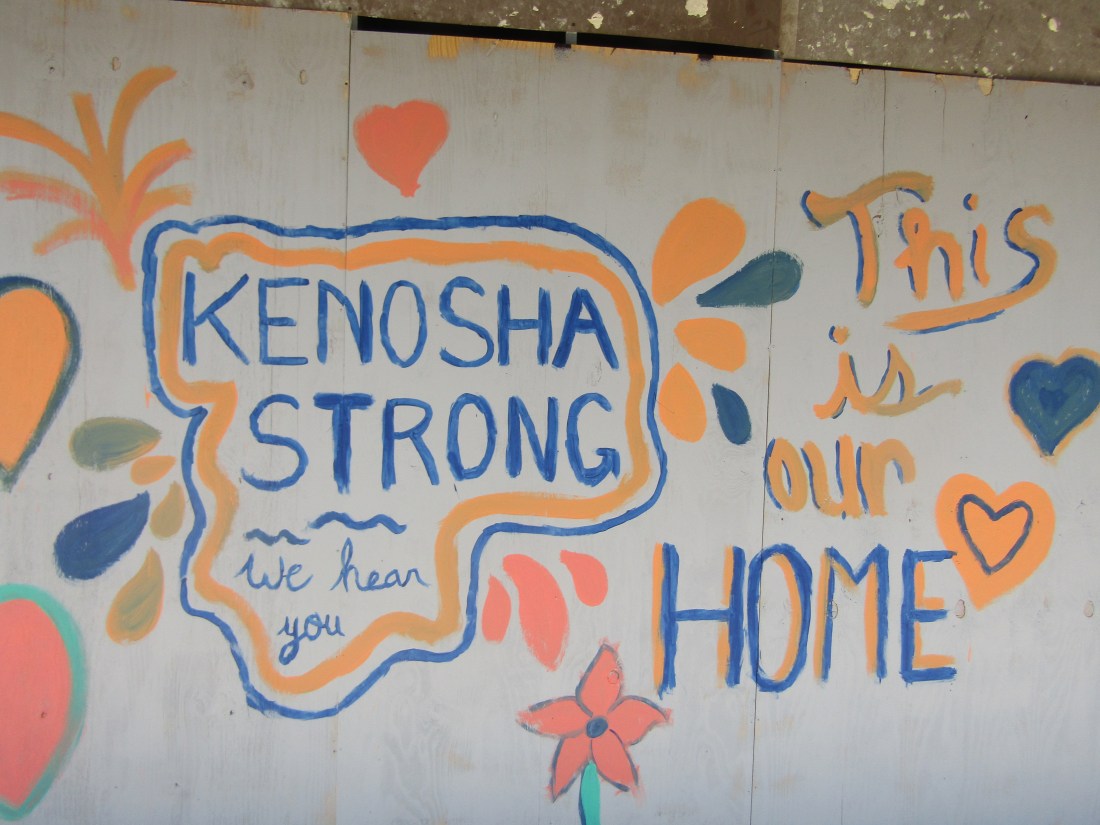
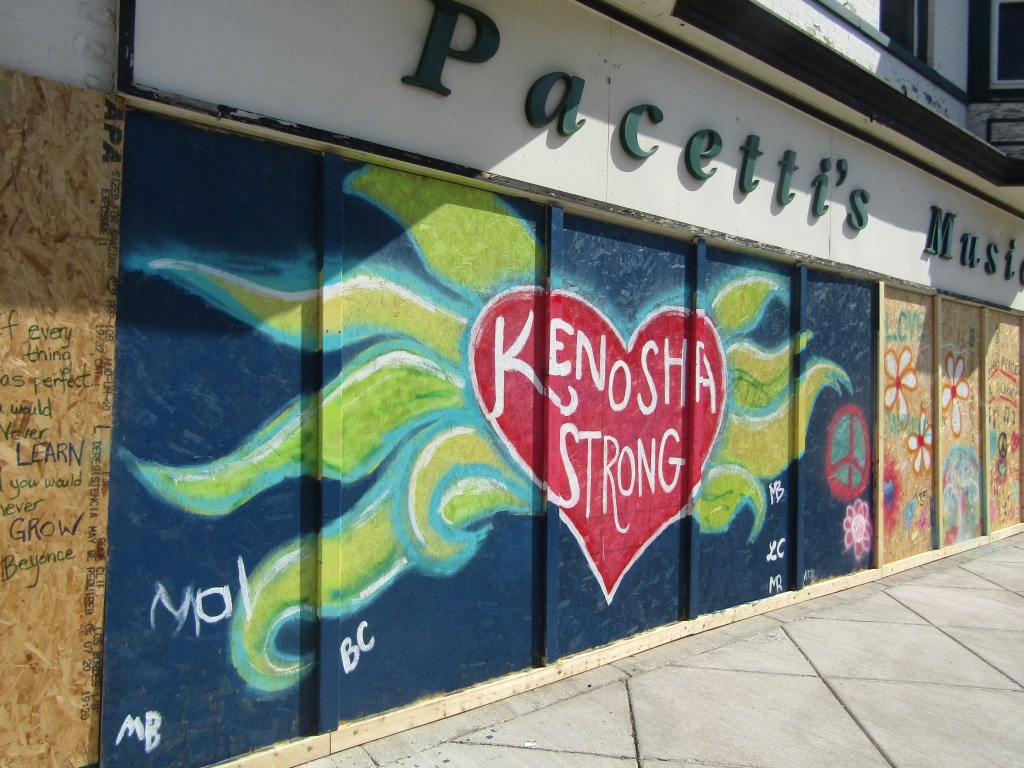
As usual, he came back with a million photos. I am posting just a couple here, but please. spend ten minutes looking at all of them here, this is all you need to know about what’s going on in Kenosha.

Continue reading “All You Need To Know About Kenosha”

About July 17 Events

Saving this video for a historical record: how the last weekend’s violence in Chicago was organized.

The first video is a recording of the briefing of Chicago Police Superintendent David Brown, where they show the footage and explain what’s going on. And the second video is just that 6 min footage.

How To Talk About Racism

When the protests started two weeks ago, and I was thinking about how I could help the cause, I resolved never to let the racist speech go around me. I resolved never to walk away in silent disgust, but to speak up, each time. I resolved to make it clear that the racist language is socially unacceptable.

I realized how difficult it was to follow through just a couple of hours later. One of the most frustrating parts is that a lot of racism comes from my home country and from the Americans, who came here from the same place. Over a year ago, I reduced my presence in the Russian blogosphere to about ten percent of my previous activity. But that time, I did not feel like anything I am saying could make a difference, so I reduced my presence there to a small group of close friends, many of whom are not fluent in English. 

For about a week I was torn between wanting to keep my promise, and not wanting to start any discussions in Russian, but then several people emailed me and asked me to say something, They were writing to me that they do not have enough information, that Russian media is keeping silent about the riots, that their immigrant friends are horrified, and that they want to know the truth. 

Continue reading “How To Talk About Racism”