Filmmakers For Prosecution

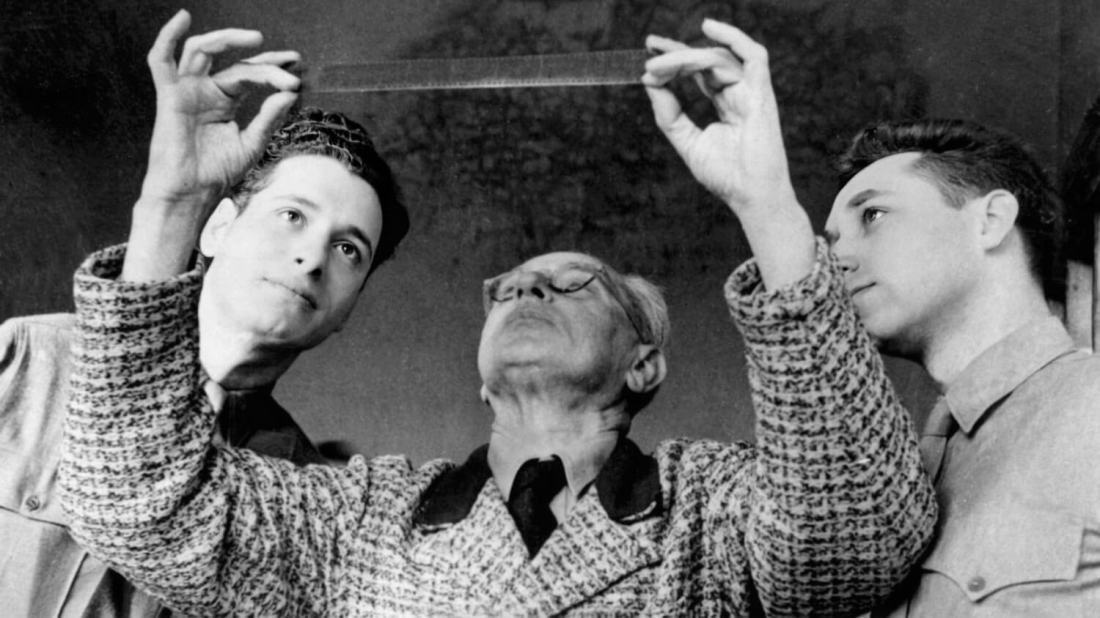
I finally finished watching both movies: Nuremberg: Its Lesson for Today and Filmmakers for the Prosecution. The first one is a 2009 digital restoration of the film produced in 1948 by brothers Budd and Stuart Schulberg. In this film, they collected the evidence that would be used to convict the Nazy criminals at the Nuremberg Trail. The footage they collected was only partially included in the impressive documentary, and the second film included some footage that had never been seen before. However, a more disturbing fact is that even the original movie (without these extras) was intentionally hidden from the public by the US government.

Jean-Christophe Klotz, who directed the second movie, interviewed many of the creators of the original “Nuremberg” film or their surviving relatives and friends. He also talks about the Russian documentary by Roman Carmen and about the race between the filmmakers on which country will be the first one to tell the world about Nazi atrocities. Apparently, the main reason for the “Nuremberg” movie to disappear from the public view was that Russians were portrayed as US allies (actually, the film does not include the secret pact and Russian annexation of parts of Poland). That being said, by 1948, the US government didn’t want any mention of being allies with the Soviet Union during WWII, which shelved the movie for seventy-five years.

But that was not it. In addition, it was presumed that the wide release of a film indicting Germany on war crimes might impede political and public acceptance of the plan to rebuild Germany’s economy, a vital plank in the Marshall Plan’s approach to European recovery. So apparently, the film was viewed as anti-German, at least to the same degree as anti-Nazi.

More valuable information is available on the project website, which also reveals the search for evidence in the propaganda films made by the Nazis themselves. If any of my readers are interested, I encourage them to explore this website.

Ninotchka

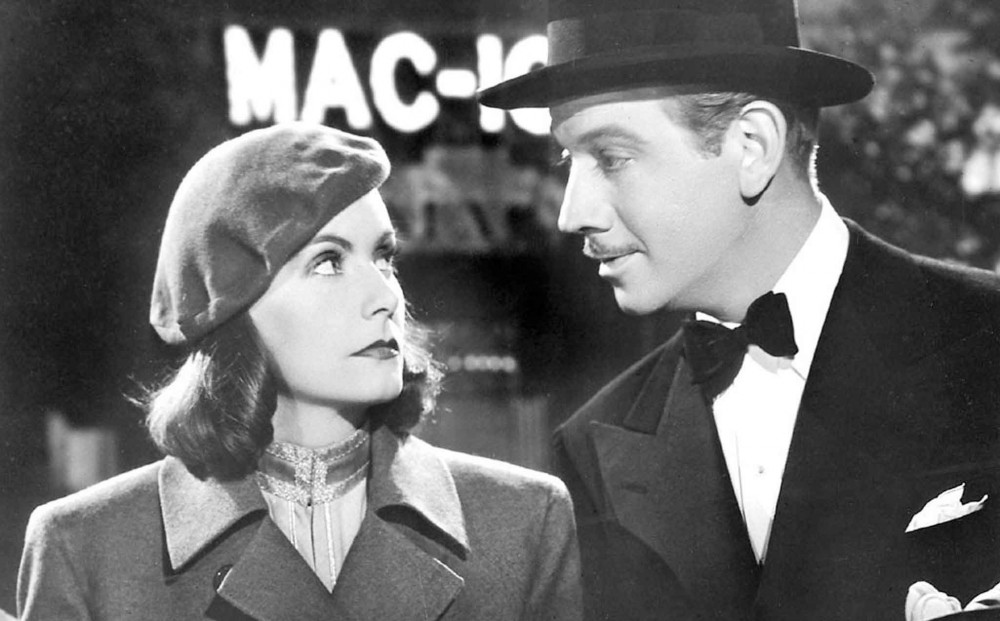
Siskel Center started a new lecture series, “Propaganda and Counterculture.” The program is incredibly interesting. However, I can hardly attend any because most of my Tuesdays are already scheduled. Because of that, I made a point to see “Nonotchka” last Tuesday.

The auditorium was packed with students who stayed for a class after the screening. I am curious to know their impressions! The movie is funny. Even with the obligatory dose of “cranberry trees,” it still captures some utterly funny details that are pretty close to reality.

Now that I think about it, maybe “funny” is exactly what feels slightly disturbing. One may say that we are not afraid of things we can laugh about, but at the same time, that exact feeling that “things are not too scary” prompts the viewers to believe that the communist regime was not so bad…

Larisa Shepitko Movies

Thursday was the last day of the Siskel Center’s “Entrances and Exits” series. Each night, the Film Center presented the first and last film of an outstanding director. Yesterday, it was Larisa Shepitko Heat and The Ascent. I only went to see the first one, because I can’t spend four hours in the movies, and couldn’t be that late (my workload is absolutely insane these days).

Heat is Shepetko’s first movie, the one she directed as her graduation project, and I never saw it or heard about it (yes, there are some gaps in my education). I can’t even describe how much I loved it. It’s incredible that in 1963, she could produce a full-length film that would be so moving, deep, powerful, and with almost no traces of propaganda or obligatory Soviet reports.

While searching for any information about this movie in English, I found this video, which outlines the history of Kyrgyz cinematography and talks about the Heat in detail.

International Film Festival Summer Movies: Radiance

That was something incredible! A Japanese female film director, Naomi Kawase, is almost unknown in the USA despite the impressive body of work she produced and multiple international awards, and that was the first exposure to her work for most of the audience.

For me, the plot of the film was very emotionally resonating: the famous photographer gradually losing his vision, hanging to whatever vision he has left, trying to be independent. Masatoshi Nagase, who plays the main male character, displays all the typical gestures and movements of visually impaired people (the way they check their phones, work on large screens, walk around) with frightening accuracy. I can’t describe how I felt. Also, the typical reactions of others around… One person in the audience mentioned during the after-screening discussion that she worked with visually impaired people and how she was grateful for this movie… It’s amazing. The trailer does not do the movie a justice.

Sisi And I – The Movie

Saw it in Siskel Center today, and I didn’t like it. One thing is that I didn’t expect that much of the diversion of the historic image of Sisi. Another thing is that the whole story didn’t look convincing. And the third thing is that, once again, I thought about “people who have nothing to do with their lives and thereby focus on love affairs.” Recently, I have felt like this way too often; maybe it’s a part of getting older, or maybe it just plainly means that I am too old for any romance…

Widow Clicquot Movie

I went to watch it at the Siskel Center with my mom on Wednesday. I’d say it was a success in terms of that my mom didn’t complain about “how she couldn’t understand anything.’ What was even more impressive is that after I sent to her a short description of the movie, she googled it and read more information, and was very well prepared. And she was able to read the closing remarks about the later years of Widow Clicquot, so we had a meaningful discussion on our way back home. I am always glad when I can find something stimulating for her, and get some fresh reactions.

I expected a little bit more from that movie; I liked it, but I didn’t “love-love” it. Now, I am waiting for a premier of “Sisi”- it should start in a week, but the Siskel Center still didn’t announce the showtimes.

Kidnapped

I just watched Marco Bellocchio’s Kidnapped at the Siskel Center. I am speechless. It’s an extremely powerful movie, and the director’s work, and all the actors, including children, are brilliant. I didn’t know what an amazing movie it was, and I am so glad I went! I walked out shaking… still can’t say anything legible.

Klondike Movie

Klondike was part of CIFF Summer Screenings, and Igor and I watched it today. It’s one of those movies when you can’t say, “It is a good movie.” It is shocking and disturbing, and you can’t take all the horrors in, but at the same time, you still can’t take your eyes off the screen. I can’t say “I recommend it.” If you feel that you have enough is you to sustain it, please watch it, but it’s not for everyone.

I am glad I went to that screening. It was a full house, and 95% of the audience were not Ukrainian. I guess it’s a good sign, but the panel discussion after the screening was horrible.

I don’t understand how the organizers could have no plan and no agenda for such an important discussion. I don’t understand the choice of panelists (citing the panel announcement Professor Petrovsky-Shtern from Northwestern University, and Migration Lawyer by profession and journalist by hobby – Svitlana Ugryn). To be entirely honest, Deputy Consul General of Ukraine in Chicago Yevgeniy Drobot, who was supposedly leading the discussion, wasn’t helpful either.

I am really upset about this panel, but it is difficult to me to pinpoint what exactly was so wrong. The panel was about nothing. Instead of sending a powerful message, the panelists were talking about the “authenticity” of making vegetable preserves, and the “Chekhov-style” acting when “people want to do something, but nothing happens.”

Two most disturbing episodes.

  1. One of the audience members asked the panel, whether “separatists stil exist.” The answer from the professor was: “there are some people [in these areas]who feel like they are Ukrainian, and the are some people who feel like they are Russian, and they want to be Russian, and there are some people, who are just common people, and they do not care, they want to have their house, and their cow, and have their babies… “
  2. Svitlana commented that “it is important that the soldiers at the end of the movie speak Chechen, because Chechnia was occupied by Russia, and now Russia sends Chechens to fight in this war, so if Russia will defeat Ukrain, it will move to invading other countries. That latter thing is true, but what is has to do with the soldiers speaking Chechen? If you ask me, that would be the only thing for which I might critisize the movie: you get an impression that all of the atrocities were done by Chechens, and Russians never committed any violence.

Maybe I will write more about it tomorrow if I will be able to arrange my thoughts.

The Art Of The Benshi In Siskel

OMG, what I’ve just experienced! I am so glad that I had this opportunity! The Siskel Film Center hosted the Art of Benshi world tour; there were only two performances in Chicago (and the program was different on both days). Somehow, I managed not to miss an email when they announced these performances and got tickets for Igor and myself (and both shows were sold out!).
I never knew about benshi! You know how, at the dawn of cinematography, there was a pianist (or even a small orchestra) playing during silent movies? Well, in Japan, they not only had an orchestra but also a narrator, who gave a whole dramatic performance following the actions on the screen. That is the art of benshi, and that’s what we have experienced today!
I suspect even my Japanese friend will be jealous when she sees today’s program! And since I am afraid it will be removed from the Siskel Center website very soon, I am copy-pasting the program description here.

SANJI GOTO—THE JAPANESE ENOCH ARDEN (NARIKIN)
1918, dirs. Harry Williams, Kisaburo Kurihara
Japan, 35 min. 
Silent / Format: Digital 
Billed as the “the first ever Japanese production of its kind,” SANJI GOTO holds a fascinating place in international film history. After training as an actor with Thomas Ince, director Kisaburo “Thomas” Kurihara returned to Japan to make films to export to the US beginning with this slapstick comedy. Iwajiro Nakajima, “the Japanese Charlie Chaplin,” stars as a guileless janitor who journeys to the States on the chance of inheriting a fortune. Sadly, the film survives only as a fragment. Exhibition materials courtesy of the National Film Archive of Japan. Performed by Hideyuki Yamashiro. 

JIRAIYA THE HERO (GÔKETSU JIRAIYA)
1921, dir. Shozo Makino
Japan, 21 min. 
Silent, intertitles in Japanese with English subtitles / Format: Digital
The first star of the Japanese screen, Matsunosuke Onoe plays the title character, a shape-shifting ninja who battles his enemies with an arsenal of magic, which includes transforming himself into a giant toad. Based on a famous folktale, JIRAIYA THE HERO was one of Japan’s earliest “trick films” and survives today as a fragment featuring a series of loosely connected fight scenes. Exhibition materials courtesy of the National Film Archive of Japan. Performed by Ichiro Kataoka, Kumiko Omori, and Hideyuki Yamashiro. 

OUR PET
1924, dir. Herman C. Raymaker
USA, 11 min. 
Silent, intertitles in Japanese with English subtitles / Format: Digital 
Diana Serra Cary, better known by her screen name Baby Peggy, was only 19 months old when director Fred Fishback cast her in a series of comedy shorts in 1921 alongside Brownie the Wonder Dog. By the following year, she was one of the biggest child stars in the world. In OUR PET, discovered at auction in 2016 by master benshi Ichiro Kataoka, Peggy is awakened from sleep by a series of burglars who quickly find themselves in over their heads, Home Alone–style. Performed by Kumiko Omori. 

A PAGE OF MADNESS (KURUTTA IPPEIJI)
1926, dir. Teinosuke Kinugasa
Japan, 70 min. 
Silent, intertitles in Japanese with English subtitles / Format: Digital 
With a scenario devised by Japanese novelist (and later Nobel Prize winner) Yasunari Kawabata with contributions from other members of the radical literary movement known as Shinkankakuha, director Teinosuke Kinugasa crafted this visionary masterpiece that was thought lost for almost 50 years. Wracked with guilt, believing his wanton cruelty drove his wife insane, a husband becomes a janitor at the asylum where she’s incarcerated so he can care for her. When he comes to fear her illness may prevent their daughter from getting married, he gradually loses his own grip on reality. Replete with fantastical images, super impositions, and rapid montage, the film subverts any sense of narrative coherence even as Kinugasa builds, according to critic Chris Fujiwara, “an atmosphere of astonishing intensity.” Performed by Ichiro Kataoka. 

The first free films are amazing, but the last one, “A Page of Madness,” was beyond amazing! I still can’t believe that it was filmed a hundred years ago! It’s of a Tarkovsky level, if not above! I am speechless! And very thankful 🙂

Chicago European Film Festival

This year’s festival is 1) hosted by Belgium 2) runs for a very short time 3) each movie is screened only once 4) I am in town for it, which usually I am in Europe at this time of the year!

I went to the opening night on Friday. I do not regret that I went, because the movie (Omen) was extraordinary, but I think it was a little bit too much on many levels. First, it is a very loaded movie, and very difficult to watch, and the trailer I embedded below does not include the darkest parts of it. Second, everything was way longer than I planned. The start of the screening was supposed to be at 7 PM but in reality, 7 PM was the time of the festival opening and the Belgium General Counsul speech. Also, the film director was present, and he talked a little bit before the movie, telling us what he wanted us to pay attention to. After the movie, there was a Q&A session, which was great, except for I didn’t plan to be there for so long, and after a very intensive week, I was almost collapsing on my way home.

I am still processing this movie. I think it represents the unresolvable conflict between those who left and those who stayed behind. And even though the film director urged us to see this story from four different perspectives (that’s how the movie is built, consisting of four separate parts), I do not see any way of all the characters coming together…