I watched this four-part documentary a while ago and wanted to mention it. It was streaming on PBS, but now you need to subscribe to watch it. I spent a lot of time trying to embed at least some clips, but failed, so I can only share a link to the whole project.
It’s exceptionally interesting and informative, and as I keep saying, even though I know a lot about Black history, this documentary revealed many things I didn’t know or didn’t understand. Although I feel strongly about “no subscriptions,” I subscribed to PBS Passport to watch these series. It’s still a donation to a good cause, not a Netflix subscription!
I am on my way home from this event. I was half an hour late, but it was just the right time, as it turned out. The programming started approximately ten minutes after I arrived, and the panel after the screening was only 30 minutes long. After the “official part” was over, half of the audience rushed to the podium to talk with panelists, and I decided I did not want to stand in their way.
I loved the documentary; I cried several times. I am a firm believer in basic income, and I do not need any convincing, but it was great to hear about true stories, scientific analysis of the results, and about what’s next.
One thing that concerns me about this initiative and others like it is the randomness and small size of the groups of people who can benefit. It feels like one extra piece in the boundless mosaic of human services, and when I think about how I would like it to evolve, I would say this program should be as universal as possible.
On another topic: the Green Line was delayed several times both inbound and outbound, but I was able to ignore the surroundings and do something productive on the train.
I am super tired of everything which is happening in my life (including work), but there are things I can’t drop, no matter what.
My main reason to attend was the panelists:
Toni Preckwinkle, President, Cook County Board of Commissioners
Mayor Michael Tubbs, Special Advisor to California Governor Gavin Newsom for Economic Mobility; “It’s Basic” Film Executive Producer
Margaret M.C. Thomas, PhD, Assistant Professor, University of Chicago Crown Family School of Social Work, Policy, and Practice
To add to my yesterday’s post, a couple of pictures from the Siskel Center foyer where Mara Tomkevich posed with one of the activists of the Chicago Belarusian community and audience members.
She is amazing, and I keep thinking about this movie and how powerful it is. During the Q&A, Tomkevich mentioned that all the scenes from the rallies and arrests were the actual footage and even the soundtrack to the scene by the prison gate was recorded by the prison.
It’s so sad and so unfair that so few people know about the events of 2020 in Belarus, about resistance, rallies, arrests, and prosecution. I hope this movie will spark some interest in these events and that the struggles of the Belarusian opposition will be more widely acknowledged.
That was the only film I watched during this year’s Chicago European Film Festival (this year hosted by Poland). The film director, Mara Tamkovich, was in the audience and held a Q&A session after the screening. She is brilliant, and the movie is brilliant, and I almost cried almost all the time while I watched it.
From the Siskel Center website:
In Mara Tamkovich’s eerily timely feature debut, journalist Lena is arrested for livestreaming the suppression of a protest against the 2020 Belarusian election, thrusting her husband Ilya into an untenable situation. With the grim possibility that Lena will spend years behind bars, Ilya must consider the sacrifices he may be forced to make to support her. Inspired by the true story of Katsyaryna Andreeva and Igor Ilyash, UNDER THE GREY SKY is a haunting portrait of political repression in the digital age which premiered at the Tribeca Film Festival, and won the Best Debut Director prize at the 2024 Polish Film Festival.
OMG, it’s just striking! I can’t really say “good”. It’s the wrong word for this movie. Powerful. Painful. Real. Beautiful. I thought it should be great, and I wanted to watch it, but all the showtimes didn’t work, even though Siskel had twenty screenings (literally). I thought I could skip a visit to my mom on Monday and come on Wednesday, and I purchased the ticket, but then I realized that I had previously promised to come to the ODS and finally decided to ask my mom whether she would be OK if I came later. In the end, things worked out. All this was just to say I truly wanted to see this movie, and I was not disappointed.
I almost never went to Siskel Center during the fall because I had too many subscription concerts and shows. Still, in late December/early January, I wanted to catch up and went a couple of times, and one of these times was a complete disappointment/wasted time (The Girl with the Needle). This new Almodovar’s movie, however, was magnificent
In between the two operas, I watched The Pawnbroker, a 1964 film directed by Sidney Lumet. I learned about this movie from one of the kino-websites advertisements related to Lumet’s 100 anniversary. Then it was my usual movie story: I need to find time; the movie is so captivating that I can’t watch it as a background to anything, etc. Actually, after the first ten minutes of watching, I realized that I won’t be able to hit the stop button….
How many Holocaust movies did I watch? Many! How many books? How many photos? A lot, but still, this movie was unbearable to watch even though it shows very little of actual Nazi atrocities. We do not even know the whole story of Sol Nazerman. We only see flashbacks of past events triggered by something happening in the present. Still, it’s striking evidence of unmendable damage done to a human. When I was watching the movie, I physically felt Mr. Naserman’s suffering. I just do not have the right words to describe how I felt. A naked truth. Immense sorrow.
I finally watched The Atomic Cafe, which was on my watchlist for the past two months recommended by Michael Roman. As usual, when the movie is the one I want to pay close attention to, I watch it one small piece at a time.
To summarize my reaction in one sentence: what a horror story! I had no idea that that’s how the US propaganda worked, and I am not even sure I should use a past tense here. The scariest part for me was not even the actual propaganda films with “no worries, the hair will grow back” and “it’s safe to get out after an explosion,” but the background country songs jokingly mentioning an atomic bomb, punishing Japan and all things related. Gives you a new perspective on the “Oppenheimer” movie and life in general. It’s worth noting that there is no narration and no commentary, just interviews, tv shows, and propaganda movies clips.
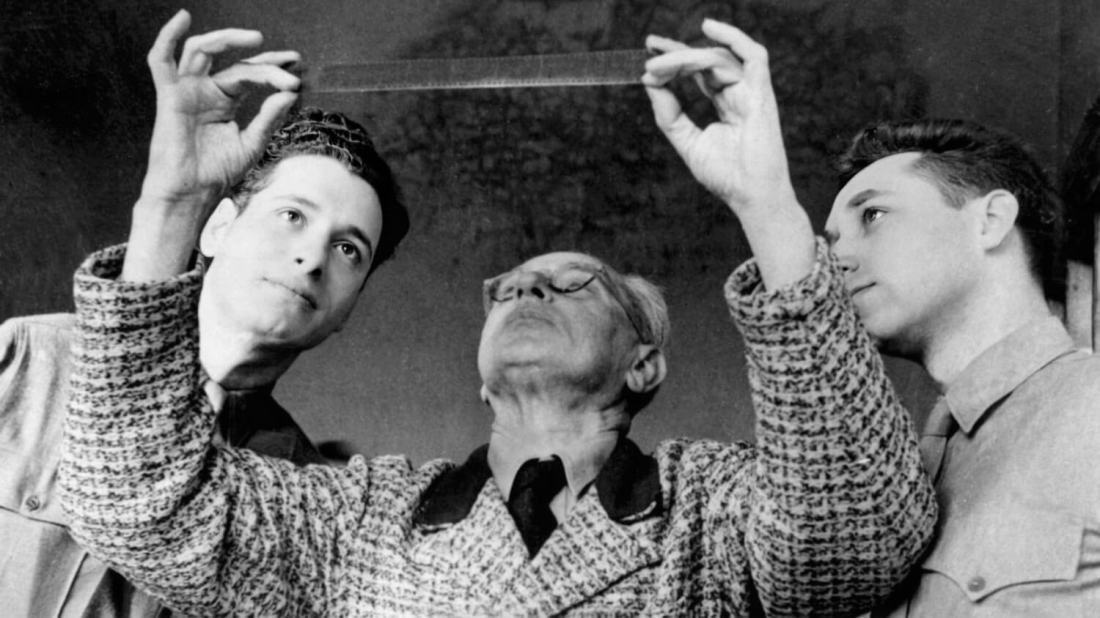
I finally finished watching both movies: Nuremberg: Its Lesson for Today and Filmmakers for the Prosecution. The first one is a 2009 digital restoration of the film produced in 1948 by brothers Budd and Stuart Schulberg. In this film, they collected the evidence that would be used to convict the Nazy criminals at the Nuremberg Trail. The footage they collected was only partially included in the impressive documentary, and the second film included some footage that had never been seen before. However, a more disturbing fact is that even the original movie (without these extras) was intentionally hidden from the public by the US government.
Jean-Christophe Klotz, who directed the second movie, interviewed many of the creators of the original “Nuremberg” film or their surviving relatives and friends. He also talks about the Russian documentary by Roman Carmen and about the race between the filmmakers on which country will be the first one to tell the world about Nazi atrocities. Apparently, the main reason for the “Nuremberg” movie to disappear from the public view was that Russians were portrayed as US allies (actually, the film does not include the secret pact and Russian annexation of parts of Poland). That being said, by 1948, the US government didn’t want any mention of being allies with the Soviet Union during WWII, which shelved the movie for seventy-five years.
But that was not it. In addition, it was presumed that the wide release of a film indicting Germany on war crimes might impede political and public acceptance of the plan to rebuild Germany’s economy, a vital plank in the Marshall Plan’s approach to European recovery. So apparently, the film was viewed as anti-German, at least to the same degree as anti-Nazi.
More valuable information is available on the project website, which also reveals the search for evidence in the propaganda films made by the Nazis themselves. If any of my readers are interested, I encourage them to explore this website.
Siskel Center started a new lecture series, “Propaganda and Counterculture.” The program is incredibly interesting. However, I can hardly attend any because most of my Tuesdays are already scheduled. Because of that, I made a point to see “Nonotchka” last Tuesday.
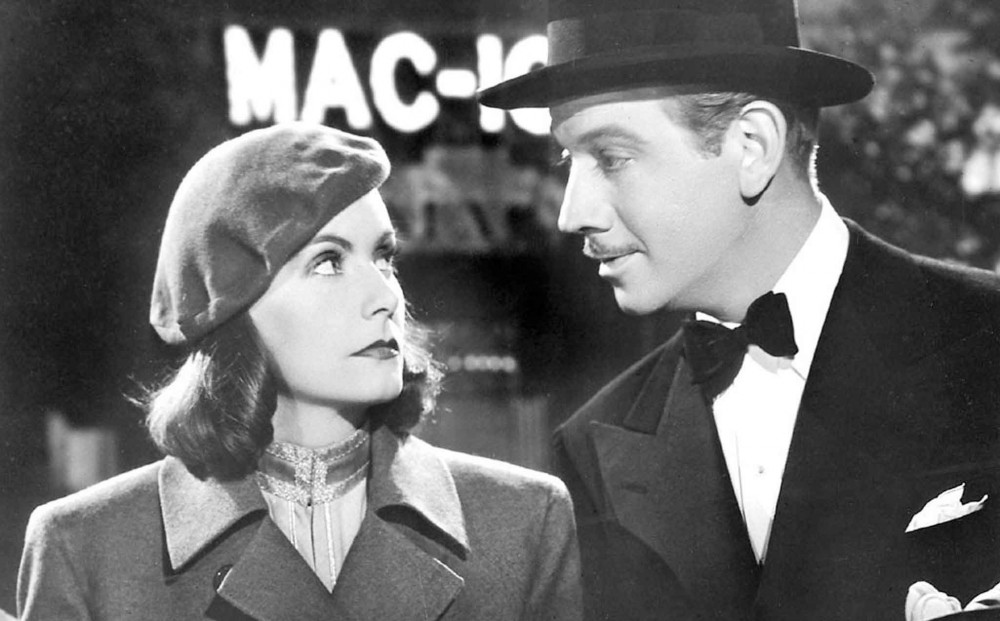
The auditorium was packed with students who stayed for a class after the screening. I am curious to know their impressions! The movie is funny. Even with the obligatory dose of “cranberry trees,” it still captures some utterly funny details that are pretty close to reality.
Now that I think about it, maybe “funny” is exactly what feels slightly disturbing. One may say that we are not afraid of things we can laugh about, but at the same time, that exact feeling that “things are not too scary” prompts the viewers to believe that the communist regime was not so bad…
Thursday was the last day of the Siskel Center’s “Entrances and Exits” series. Each night, the Film Center presented the first and last film of an outstanding director. Yesterday, it was Larisa Shepitko Heat and The Ascent. I only went to see the first one, because I can’t spend four hours in the movies, and couldn’t be that late (my workload is absolutely insane these days).
Heat is Shepetko’s first movie, the one she directed as her graduation project, and I never saw it or heard about it (yes, there are some gaps in my education). I can’t even describe how much I loved it. It’s incredible that in 1963, she could produce a full-length film that would be so moving, deep, powerful, and with almost no traces of propaganda or obligatory Soviet reports.
While searching for any information about this movie in English, I found this video, which outlines the history of Kyrgyz cinematography and talks about the Heat in detail.


 Hettie's Reflections