Why The Soviet Union Didn’t Annex Austria?

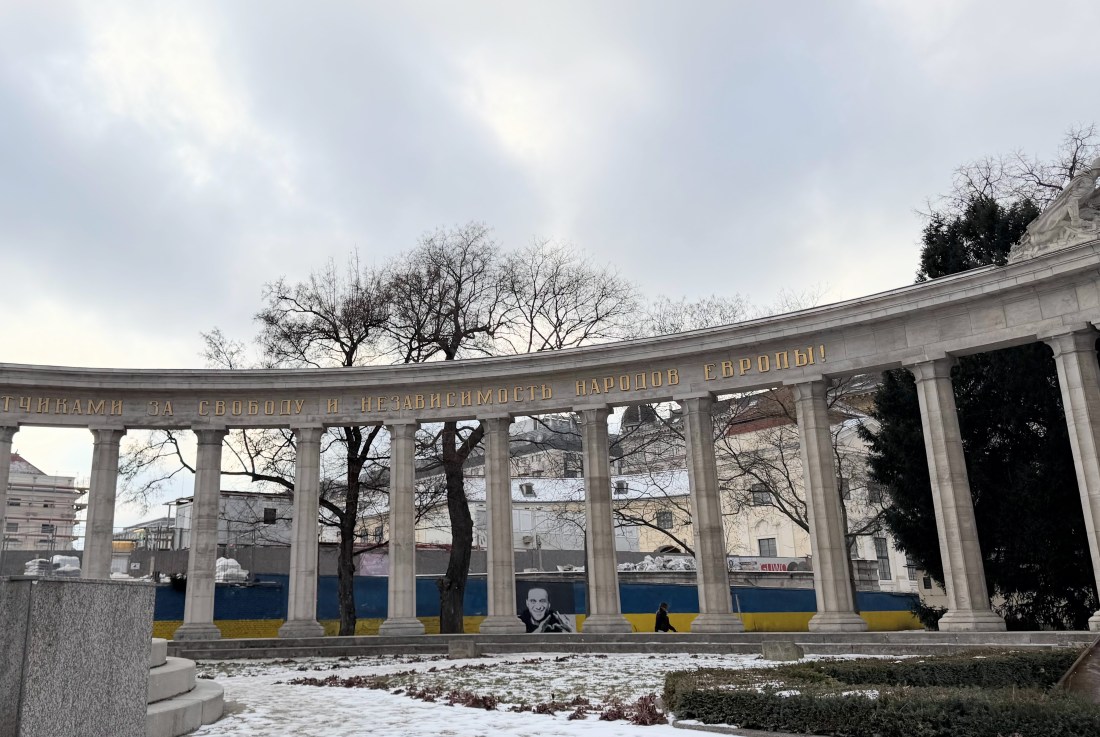
During our Vienna walks, we came across this monument (which was not recommended to us as a point of interest by any app), and stared at it, puzzled, trying to make sense out of it. It’s not like you won’t expect a wartime cemetery in Vienna, but what shocked us was the monument’s size. Somehow, I didn’t even hear about this monument, not exactly the size of Berlin’s Treptow memorial, but still massive. We were even more shocked after we read the sign saying the monument was erected in August 1945, when, as we already knew, the whole of Vienna was in ruins. We couldn’t imagine how anybody would invest that much resources in a monument at such a moment.

When we visited the Albertina museum, we learned that Austrian independence was only declared in 1955, and we realized that we didn’t know anything about that part of history, and why Austria was not made a socialist country after WWII. Somehow, we assumed that Austria was “in the western territory” and didn’t realize that, actually, there were Soviet troops that were there, and they were there for a while.

Since the House of Austrian History was closed on Tuesday when we tried to attend, I did some reading on the topic. From what I read, it seems like it was almost by accident. Yes, there was a Moscow Treaty of 1943, which technically didn’t allow the Annexation of Austria, but we all are aware of multiple cases when no treaty would stop Stalin. I also read that, since Austria (and Vienna) was divided into four parts, similar to Germany itself and Berlin, the Soviet Union couldn’t pursue direct annexation. In addition, the “Soviet” part of Austria didn’t have any significant economic value, and the Communist Party barely existed. So my understanding is that it was simply not the top priority for Stalin, so it remained in the “undefined” status until Khruschev was preparing for the XX Communist Party Congress.

In any case, lucky Austrians!

Last Day In Vienna And Beating The Cold Again

Tuesday, January 20, was a very cold day in Vienna, largely due to the Chicago-style wind chill. I was dressed warmly enough, but my face was hurting all the time, and most of the time, I couldn’t make myself take pictures, because I needed to take off at least one glove, at least for a minute.

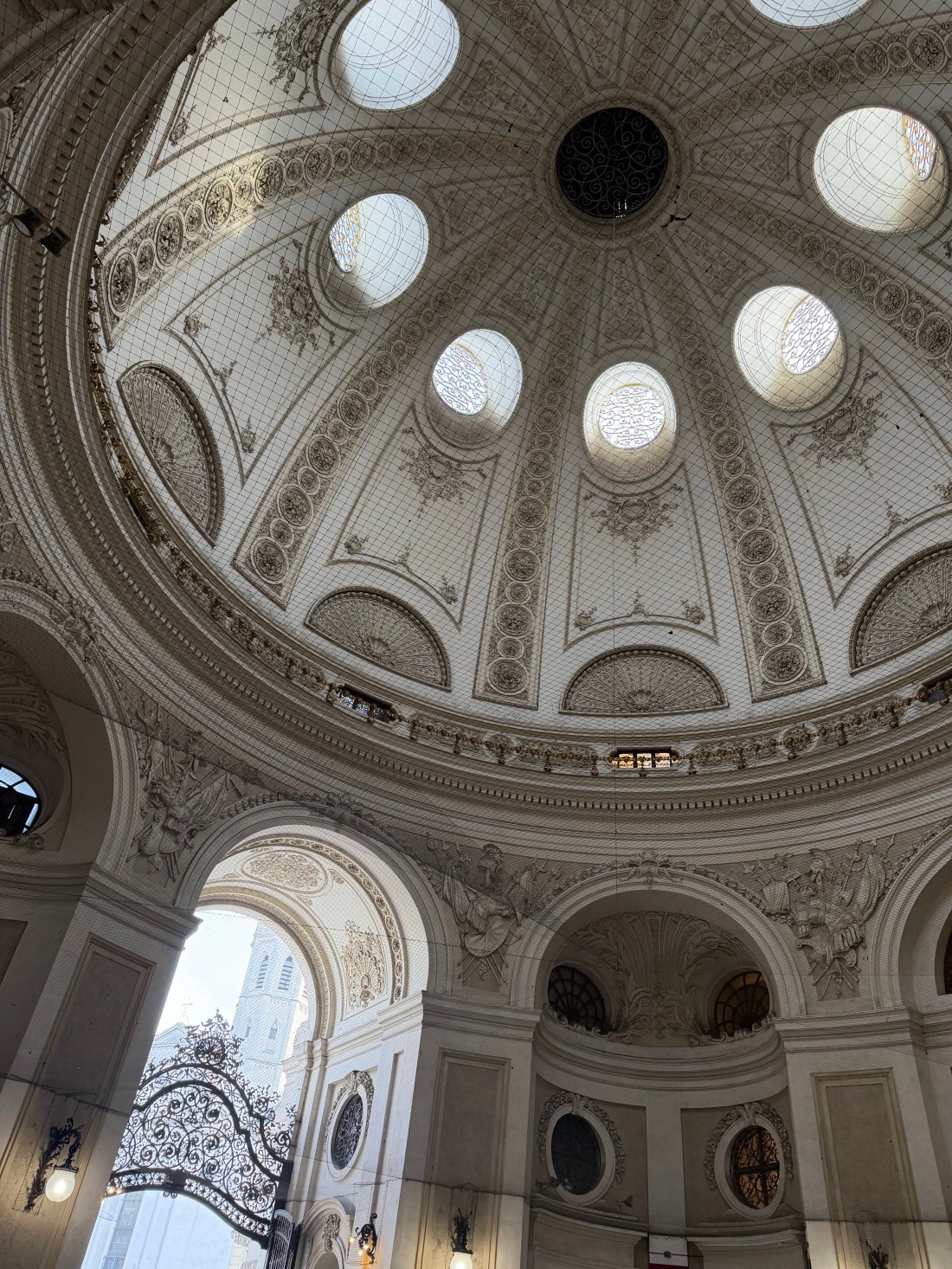
After everything we saw in the museums during the previous two days, we realized that we do not know enough about the post-WWII Austrian History, and decided to alter our plans and go to the House of Austrian History, which is located in the Hofburg Palace (and saw the Changing of the Guard on the way):

Unfortunately, when we got there, we found the museum closed on that day due to whatever repairs. We were crushed, so we went to the Sisi Museum since we were already at the Hofburg.

This museum has a very different mood compared to Schonbrunn (if you can say that about a museum). Also, I watched the movie “Sisi and I” last year, and did more Sisi-related reading, and that might have influenced how I perceived the exhibit.

It was very dark inside (Boris lost me, and we didn’t reunite until the exit :)), but they were giving everyone an audioguide, which helped.

The imperial rooms had normal light, so I took some pictures there

Franz Joseph’s audience room
His cabinet
A dining room for “non-formal” dinners. The most impressive thing we learned was that there were from nine to thirteen courses served, and each course was promptly removed when the next course started, and the whole dinner didn’t last more than 45 minutes. I don’t know how they did it!

The next several pictures show Sisi’s rooms.

Note the gymnastic rings in the doorway

We left Hofburg and went to St. Stephen’s Cathedral.

We planned to explore it, to climb up the tower and to walk around the neighborhood, but once again, the bitter cold altered all our plans.

So we just stayed inside the Cathedral, saw all we could see, and went for a pre-booked lunch, and then moved from one coffee shop to another until it was time to go to the airport 🙂

Elie Wiesel: Soul on Fire

OMG, that was something! I knew this documentary would be interesting, but it was so powerful and thought-provoking that I found it challenging to participate in the Q&A immediately after: I felt I needed to process everything I had seen before asking any questions.

Wiesel’s “Night” is a classic; it’s part of most high schools’ curricula. It’s one of these rare books that “almost everyone read.” Still, so many things we do not know; at least, I didn’t know. Most importantly, I never saw any footage of Elie Wiesel’s public speaking. And the whole documentary is just that: his own voice. The film producer/editor Michael Chomet, who spoke with the audience after the screening, said the film was commissioned by the family, but the artistic direction was his, and the family didn’t see the movie until it was finished.

The parts which impressed me most were:

  • The footage of Wiesel talking with Ronald Reagan before receiving the Congressional Gold Medal of Honor, when he explains to the President how his planned visit to the German cemetery will be perceived, and what he should do, and how, later, when speaking at the public ceremony where he receives this medal, he repeats the same speech. The way Reagan reacts and responds. (As I said, it’s hard to believe we had such an intelligent and sensible Republican President)
  • His Nobel Peace Prize acceptance speech, when he says he understands Palestinians but disapproves of their methods
  • His urge to speak up, not to be silent
  • The footage of 13-year-old high schoolers from a New Jersey magnet school, when they discuss “Night” (Rudavsky told us that they made a separate short documentary based on this footage)
  • Said multiple times, both by Wiesel and his former student: suffering is not a badge of honor; suffering is not something that defines you, it’s something that informs you. I can’t stress enough how much I agree with this statement.

I can talk at length about this documentary, but I still won’t be able to convey everything I felt while watching. Five-star rating.

RIFENSTAHL

I just exited the Siskel Center after watching “RIFENSTAHL.” I missed the first screening (with director-in-person) last week, because I hosted the Prairie Postgres User Group at the same time. Today was my only chance to see it, because I am leaving tomorrow and the last screening will be on September 26, before I return. Well, there will be more screenings later, but I will be travelling again, and also – I didn’t want to wait!

I just saw the movie. For the past several months, I was reading my friend’s blog about Riefenstahl’s memoirs, and I wanted to know more, so I queued a couple of books about her in my future reading list. But let me tell you that: it’s one thing to read what she says about herself, and a different thing to hear it, in her own words, with her facial expressions, with her intonations. To see the immense pleasure on her face when she watched the “Triumph of the Will,” conducting the screen music.

Starting with her cynical phrase: The movie was commissioned by Hitler. If Roosevelt were to commission a movie, I would also try my best. If Stalin were to ask me to make a movie for him, I would do my best as well. And all her screams: no, it’s a lie! What people disappear?! There were no such people around me! We didn’t know! No, I didn’t see! And: I would never make a movie about cripples! And isn’t it in all cultures that we admire beautiful bodies?

Oh, and there is footage of how she was making these pictures of Nuba! How she treated them like animals. I will never buy her albums.

Evil, evil, evil. No shades. No “buts”.

Reifenstahl – And I Can’t Make It

It’s just so not fair: Reifenstahl member-only preview is exactly at the time when I host my Postgres meetup! And the regular run is exactly when I will be out of the country!

I hope they will add more screenings later!

Tallinn: The City Museum

I love that more and more city towers are being restored and used as exhibition spaces. We had already visited many of these new museums, and the next one on our list was the one opened in the Kiek-in-de-Kok (Peek into the kitchen) tower. Museum information can be found here.

There are tons of kids’/family activities offered in this museum, and the museum itself is way more than a fortification museum, although a large portion of it is about war and weapons.

Continue reading “Tallinn: The City Museum”

Overheard On The CTA Bus On January 16

— My son told me yesterday: I want to study Islam. I said: You want to study something six thousand years old? Do you know what day it is today? Go and find out what happened in 1968 and figure out who you are!

From a man carrying all his possessions in a rolling cart talking to another passenger.

How Math Became My Favorite Subject, But Not Right Away

I was a good student from the very beginning of school: my mom, Aunt Kima, and Baba Fania would never allow me to be less than that. However, I didn’t have a favorite subject for a while. I loved books and reciting poetry, so I was always the kid who opened the shows, but other than that, I didn’t have any special talents.

We didn’t have science or social studies lessons until the fifth grade, although I read many popular science books. We started to study Russian history in the fourth grade and botany and geography in the fifth. I immediately fell in love with biology, especially because by then, I had read many books about the wonders of nature, the mysteries of cells, endangered species, and so on.

In the fifth grade, I started to attend academic competitions, which were called olympiads. We had school olympiads, and the winners attended district olympiads, and the winners of district olympiads were sent to the city-wide competitions. All of them took place on the weekends, and having that we had school on Saturdays meant no weekends at all.

My first competitions were in biology, and I easily made it to the city-wide olympiad and easily got a second-degree diploma, finishing the fifth person in my grade level. I remember that I did great in microbiology and almost failed zoology (we didn’t have zoology at school yet, and I didn’t read enough by myself). I could not tell the difference between the black grouse and the wood grouse, could not identify the birds by skeletons, and so on. In the end, the examiner asked me what I wanted to talk about, and I told them what I knew about birds’ migration, and somehow got a passing grade in biology. The last subject was ecology and wildlife protection, and I spoke my heart out and got a top grade. I remember that I was very nervous about not remembering the names of the national parks and the dates they were founded, but my examiner said: please, spare me from the dates and name; tell me what you think about protecting endangered species. And I rocked!

My mom became very nervous about my fascination with biology because all of the craziness with genetics and Lysenko was fairly recent, and she didn’t want me to be in trouble. She started to steer me towards math. I liked math, but not even close to how much I loved biology. Besides, there was a new thread on the horizon – I started to be very interested in history.

How we were taught history in school will be a topic for a separate post, and in any case, we didn’t have any history olympiads – I guess it was dangerous to know too much about history. However, we had olympiads in math, physics, chemistry, and literature, and I participated in all of them.

My mom wanted me to focus on math because it was the only safe subject from her perspective. I was not against math, but I didn’t feel strongly about it. In the sixth grade, I started attending a Youth Math School, an after-school activity hosted at the Department of Mathematics and Mechanics of Leningrad State University. Back then, the Department had yet to move to the out-of-the-city campus, and the classes took place in the old building on the 10th linia of Vasilevsky Island, about 15 15-minute tram ride from my home. Most times, I was the only girl in the class, and I always felt stupid. Our teachers were first- or second-year university students, and they rarely had enough pedagogical skills. The boys pretended they understood all that was said, and sometimes, they could solve complicated problems, and I was barely able to keep up with them. Still, I thought it was cool to come to the University once or twice a week, so I kept coming. In the sixth grade, I participated in the district math olympiad but didn’t make it to the city-wide.

I kept attending the Youth Math School in the seventh grade and still didn’t get any diploma at the olympiad, but I quite unexpectedly made it to the city-wide essay competition, got a second-degree diploma, and was interviewed for a radio show. I suspect that made my mom even more alarmed :), especially because my award-winning essay was about Euguene Schwarts’ plays. It’s not like Schwarts was a forbidden writer, but he never praised the Soviet State and the Communist Party, many of his friends and peers were imprisoned, and the officials silently ignored him.

Fortunately for my mom, things changed when I started the eighth grade.
To be continued.

My historical posts are being published in random order. Please refer to the page Hettie’s timeline to find where exactly each post belongs and what was before and after.
The Pawnbroker

In between the two operas, I watched The Pawnbroker, a 1964 film directed by Sidney Lumet. I learned about this movie from one of the kino-websites advertisements related to Lumet’s 100 anniversary. Then it was my usual movie story: I need to find time; the movie is so captivating that I can’t watch it as a background to anything, etc. Actually, after the first ten minutes of watching, I realized that I won’t be able to hit the stop button….

How many Holocaust movies did I watch? Many! How many books? How many photos? A lot, but still, this movie was unbearable to watch even though it shows very little of actual Nazi atrocities. We do not even know the whole story of Sol Nazerman. We only see flashbacks of past events triggered by something happening in the present. Still, it’s striking evidence of unmendable damage done to a human. When I was watching the movie, I physically felt Mr. Naserman’s suffering. I just do not have the right words to describe how I felt. A naked truth. Immense sorrow.

Back To Tallinn

We returned to Tallinn at 8 PM and had a very late dinner at Pepper Sack:

I took the outside photo the next day, at daylight
Moose meatballs
Apple and raisin cinnamon crepes
Sorbet boat
The Holland-style Townhall photo
Continue reading “Back To Tallinn”