Books

Once again, I didn’t blog about the books I read during the past month, so it’s the long list again!

Madame Restell: The Life, Death, and Resurrection of Old New York’s Most Fabulous, Fearless, and Infamous Abortionist

What an amazing book! What an amazing woman! Sure, I knew the name of Madame Restell before, and I would see her mentioned in many historical accounts and petty much in any book or article about abortion rights. Still, this book was an eye-opener.
I saw this book in the list of library recommendations for March – Women’s History Month. And I thought how strange it was that even when you are very much pro-choice, you still feel awkward calling an infamous abortionist “an outstanding woman.” The truth is, though, that Madame Restell was an outstanding woman indeed.
I find it remarkable that she was able to build her family wealth by providing much-needed services (doing something that she was really good in). She had very strong opinions and never tried to hide them. She knew that she was doing the right thing for people who sought her services and lived in accordance with her principles, so she felt like a very “complete” person. It would be a big achievement even nowadays to make a good life doing what you believe in and what you are good at.
Lots of details about her life make me think about her as a twenty-first-century woman rather than a ninetieth century. She was a primary breadwinner for her family (and still stayed married!). She dressed in the latest fashions when she was “an old woman” by mid-nineteenth-century standards. She accepted challenges. She was herself, no matter what the circumstances were. And for that, she should be remembered.

Poverty. By America

A very good book, but as it often happens, the anticipations were too high. I mean, it’s always refreshing to hear a simple fact that we should focus on eradicating poverty rather than on helping poor people to overcome poverty. What I would like to see thee would be more precise references to the research which analyzes the impact of minimal basic income, links between single motherhood and income, and alike.

The Journal of the Plague Year

Not so well know book by Daniel Defoe, which, same as Robinson Crusoe, is a fictional diary of a person leaving through the Great Plaue of London 1665. Obviously, it’s very interesting to compare “now” and “then” pandemics, actions of authorities and ordinary people behavior.

Bois Akunin’s Yama

Huge disappointment a=on all accounts.

Akunin’s Outstanding People of Ancient Rus

As expected – very “unpolished” facts about the early years of Russian history.

June Books

The Confidant – a book about Anna Marie Rosenberg. Amazing woman and an amazing book; how could I never hear about her?! I loved this review of this book on Goodreads, so I am copying it here instead of writing my own 🙂

Early 20th Century America was a place of change and opportunity. Within the first 50 years, US citizens were a party of industrialisation, the depression, two world wars, and the cold war. What is not so well known is the part Anna Rosenberg, a Jewish-Hungarian immigrant, facilitated and negotiated to help shape the America we know today.

Anna Rosenberg, a 5’3″ pocket rocket, with little more than a high school education, rose to the inner sanctum of the White House during these pivotal years, ‘You don’t have to be like a man to succeed. If you know your stuff, you’ll be alright.’ Anna began as a negotiator between the fast-forming unions of the early 20th Century and capitalist corporates. Her unique sense of mediation, so that both sides could win, as opposed to brute force, won all-around trust. This skill base was leveraged to bring about the greatest mobilisation of troops and factory workers when the US entered WW II – including the negotiation to desegregate and include African Americans. She further pushed for the use of women in the war effort, ‘The morale of the nation depends upon its women.’ Despite being the first person to be awarded the Presidential Medal of Freedom, her credibility was attacked during McCarthyism. Still, throughout this ordeal, she held her head high and stayed true.

‘The Confidante’ not only details the life of this amazing woman. it also offers a robust summary of these transformational years in American history. It is astounding just how pivotal Anna Rosenberg, who is so little recognised today, was. Often stories of inspiring, historical women figures, are about the struggle they suffered in breaking into a ‘man’s world’. Anna’s story is different. Anna only saw advantages to being a woman within her place of work, ‘Men will talk more freely to a woman than to another man, and when men talk freely nine times out of ten misunderstandings vanish’. She ultimately just wanted to be herself and if that meant she could make a difference, then she worked hard at doing so.

Christopher Gorham has done a fantastic job delivering a short history of American politics in the early 20th Century and Anna Rosenberg’s pivotal, and unbelievably integral role within this. ‘The Confidnate’ is both an inspiring and illuminating book, well worth a read for so many reasons.

Moscow Excursion by P.Travers

I have mixed feelings about that book. On the one hand, it seems shallow, like “Look how weird these people are,” without any interest in finding what’s behind that behavior. Sometimes it feels like Travers purposefully wants to mount all this weirdness, making it Kafkian (although it is possible that she didn’t even have to overexaggerate that much.) On the other hand, possibly as a result of that sliding on the surface, she noticed things that were rarely noticed by foreign visitors.
Many details are painfully recognizable to me from my short encounter with the Intourst business, like trying to get out of the way to provide better food for foreigners only to still have it miserable, the lectures about economic achievements, the very bad English of the tour guides, “let’s go” and making sure the tourists are never left unattended. Overall – interesting. I learned something new :). And probably, I shouldn’t have expected an analytical essay. After all, these texts were originally produced as letters to a friend, talking about these “on the surface” impressions.

Without Children

Read it because the author was featured on WBEZ Reset. I think that the topic of normalizing women not having children is one worth discussing. For me, it is obvious that every woman has a right not to want children for whatever reason. It does not matter whether she has a medical condition or she is in a tough financial situation, or she simply does not want children. That’s her right. And I feel annoyed with all these discussions about what economic stimulus should be introduced to convince women to have more babies.

At first, the book sounded promising since it was discussing just that: leave women alone! But then it diverted to “many women take part in raising a child, not only her biological mother,” and went to the point that each woman should contribute to society by helping to raise babies.

Books

I have time to listen to audiobooks, and sometimes, I even have time to read books on Kindle, but I have no time to write reviews or at least to rate the books I read on Goodreads. Today (because I am extremely nervous for more than one reason), I finally recorded my last two-and-a-half months’ reading list.

Aquarium by Victor Suvorov – the only book I read in Russian for a long while. It was one on this “how could you possibly not have read it,” so I did, and it left me with a sort of “what was the point of this?” reaction. To be fair, recently, at least half of the books I read prompted this reaction. I don’t know what’s wrong with me.

Attention Span: a very different book, but I had a similar reaction. I was listening to it and nodding: OK, OK, I get it, now what?… and then no conclusion, no new ideas…

I‘m Glad My Mom Died: I liked this book; it is very sincere and talks about situations and feelings which are not talked about that often. A couple of months ago, I listened to the last minutes of David Sedaris’s interview. Answering the question about his father and his relationships with him, Sedaris said: why can’t we say bad things about those who passed away? If he was a bad person, why I can’t say this? Well, maybe I will follow his lead sometime.

The next three books came from the Chicago Public Library list for Women’s Month.

Daughters of Victory: just a very bad book. I don’t know what else to say about it. I am surprised by how the author collected so much information about that period of Russian history and still did it all wrong! Like people didn’t talk this way, didn’t behave this way, didn’t think this way! The picture does not come together.

The Book Woman’s Daughter: not super-exciting, but good reading (and when I started reading, I thought that “blue people” are imaginary and just presented racial discrimination).

The Exceptions: Nancy Hopkins, MIT, and the Fight for Women in Science: I really liked that one! I didn’t know about the women mentioned in the book. I didn’t know about the magnitude of gender discrimination in academia (and so recently!). A true eye-opener.

Clean Code: in case you saw this book in my Goodreads feed and wondered that in the world was that, it was given to the whole IT team with the intention of initiating discussion about the code quality. I am planning to review it in my professional blog.

Books

Despite not having time for anything (or maybe because I still need something to switch my attention to), I recently listened to more audiobooks than usual. However, I am often left in a state of dissatisfaction. I do not know whether something is wrong with me or if I am following the wrong recommendations, but I do not know how to rate most books I have read recently. In many cases, the books didn’t meet my expectations, as with The Other Wes MooreThe Feminist City, and Gentrification is Inevitable. Each time I just started to get into the complexity of an issue, the book would end with no conclusion. Most likely, it’s me expecting the answer where there is none.

The situation is a little bit different with two books I just finished. One of them was Anxious People, which I picked up after an attempt of cashless bank robbery close to our office, and started to read on the long flight without an internet connection. The other one was There is no such thing as an easy job which was suggested for our book club discussion but didn’t make a cut. With both of these books, I feel the same way: I should like them; they are very insightful, with lots of unexpected twists, others like them, and I should like them too, but somehow, they are not “my” books. 

I am going to leave it this way for now 🙂

A Book I Am Excited About

I am finishing the Berlin Dairy by Willian Shirer. What an amazing book! I can’t believe I knew nothing about it until I saw a recommendation from a friend. William Shirer was a CBS broadcaster who worked in Nazi Germany from 1934 to 1941. He wrote several books about the history of WWII and the history of Nazism, and now I want to read them all! 

I think that it is a combination of two factors that make this book so amazing: first, he was an outstanding journalist with an extraordinary analytical mind who knew both how to get access to information and how to interpret it. And second – that it is an actual diary, so the readers follow events in “real-time.” When he wrote something in his journal, he did not know what would happen next or the implications of the events he had just recorded. It’s something like: I can’t believe Molotov and Ribbentrop are meeting! How can they negotiate when Russia is the most fierce critic of Nazism. How is it possible that they could reach any agreement?! They did?! 

It turned out there were lots of historical facts I didn’t know. Take the Winter War – I thought I knew everything as much as I could, visiting Finland several times a year. Still, I had no idea that it started with the air raid shelling Helsinki – I thought that all the war events happened at the frontline. 

This book has way too many parallels with the current war in Ukraine, like when the author explains how Germans have “no morals.” A German is lamenting about “bad Finns who fight against Russians, and why they are doing such a horrible thing as resisting? When Shirer says that Finns are fighting for their independence and asks won’t the Germans do the same if they were invaded, the response it: but that’s different! Russians are our friends!

Or when he cites a conversation with a German waitress about the British air raids: why are they bombarding us? – Well, because you are bombarding London! – But we only shell military objects, and they through bombs on our civilian objects? – Why do you think that Germans only bombard military objects? – That’s what our newspapers say!

Sounds familiar, right?! Way too familiar!

I almost finished this book, and I have three other books in queue, but I am urged to drop them all and read all the rest of the books by Willian Shirer(which will definitely take a while!)

The Climate Quartet by Maja Lunde

I read the third book of the Climate Quartet first, unaware of the previous two, and then came back to read the Life of Bees and the End of the Ocean. 

The History of Bees

The End of the Ocean

The Last Wild Horses

All three of the books impressed me greatly. How Maja Lunde draws connections between what happens here and now in today’s world and what can happen in the near future due to today’s actions is incredibly convincing. 

I can’t think of a better way to explain how we, the people of the planet Earth, can impact our nearest future, not on what will happen many generations ahead, but on what could happen to our children. 

Democracy Rebirth: A Book Review

This book (Democracy rebirth by Dick Simpson) covers in depth the parts of the political history of the United States and Chicago in particular, which are not addressed often. Let’s put it bluntly: we used to hear about the “Democratic machine” from our opponents when they want to say that nothing good ever comes from Democratic officials. We rarely think about what IS the “Democratic machine.” Maybe it’s my ignorance, but it was the first time in my life that I understood that this is not an insult but an actual mechanism of ensuring that the Democratic party stays in power. And it’s the first time I heard it from a person, who is a Democrat, served as an elected official, and is very serious about returning a true democracy to US politics. Some quotes I find important:

The cure for the dichotomy between the imperatives of capitalism and democracy lies in government regulation of the economy, a fairer system of taxation, and more generous government programs in education, health, and welfare. What is needed is the Goldilocks effect—neither too much nor too little government. We need government regulations and programs that allow capitalism to succeed without destroying either competition or democracy. We need policies that tax wealthy individuals and corporations more fairly and that provide a basic income to the poor to raise them and their children out of poverty.

*
The standard work week that is today forty hours will need to decrease while minimum wage and income will need to increase to a livable wage. In the future, humans will be directing the work of machines using computer software and artificial intelligence. On the other hand, professionals are ever more tied to electronic communication so that there are in many ways more tied to their jobs for longer hours. The nature of work will need to change in ways that are more humane for everyone.

*

The last chapter summarizes political actions which should be taken to achieve a Democracy’s rebirth, including an automated voter registration system, control over campaign contributions, and elimination of machine politics.

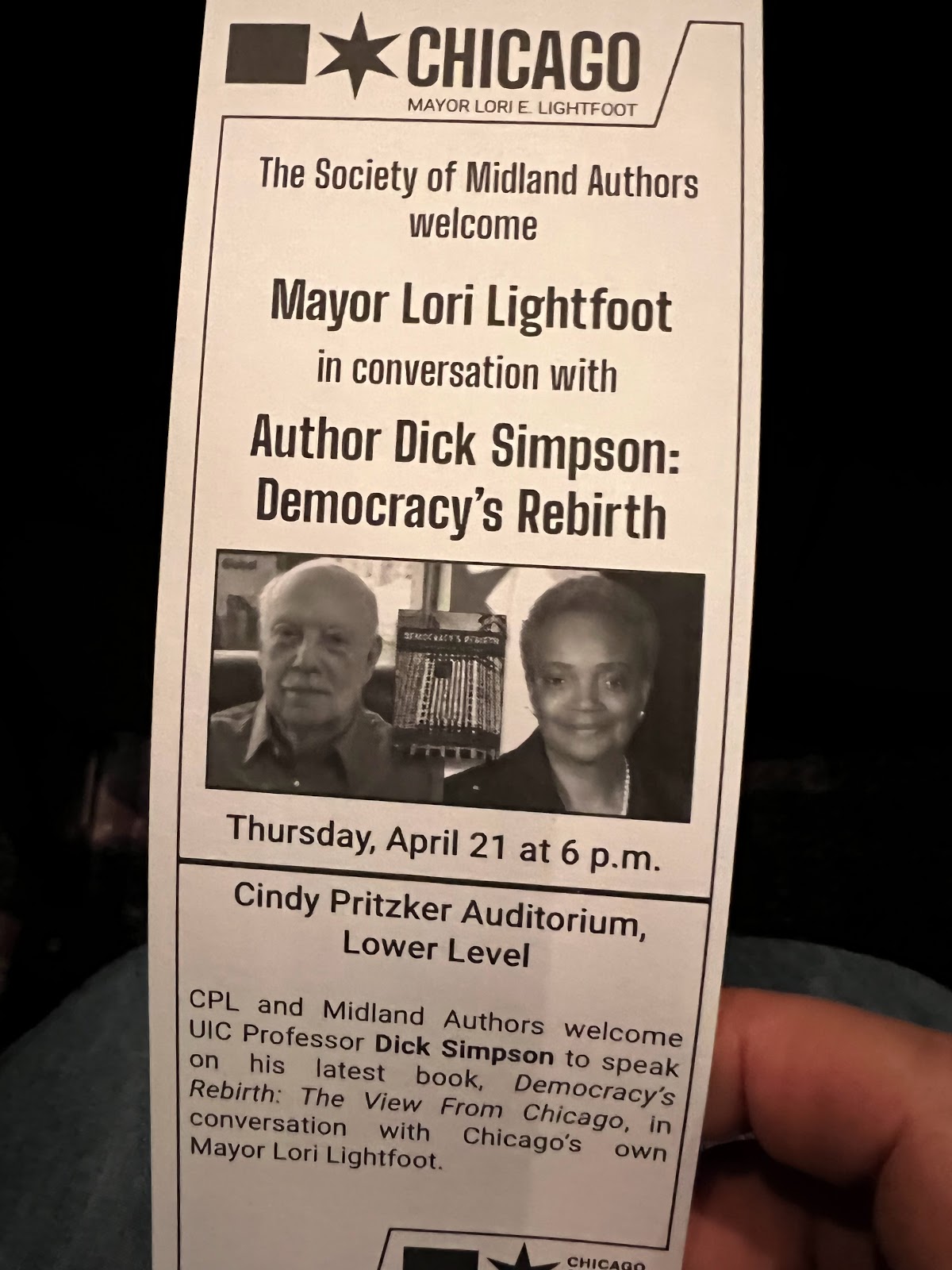
P.S. I learned about this book when I attended this event in the Chicago Public Library.

After The Meeting With An Author

Today, the Chicago Public Library hosted a meeting with Toya Wolfe, and my goal was to finish Last Summer on State Street before this event. (by the way, all library copies were taken, including the audiobooks, so I purchased it).

I am glad that I could attend and be a part of the conversation with the author. As someone who actively participates in the work of several volunteering organizations which service underprivileged communities, I was deeply touched by the events described in this book. Way too often, I see similar stories unfolding: no matter how hard we try to help the youth in crisis, in most cases, we can do nothing.

Answering one of the questions from the audience, Toya Wolfe made the following analogy: if you go to the war, you might return alive, or you might die; it’s often the question of chance. But if you go to war malnourished, there are higher chances that you won’t survive, although there is still a chance. In the same way, growing up in an unhealthy environment or in a broken home increases the chances of a youth getting into trouble, but at the same time, there are still chances for a good outcome. After today’s meeting, the book feels a little bit less depressing:).

Harold Washington Library

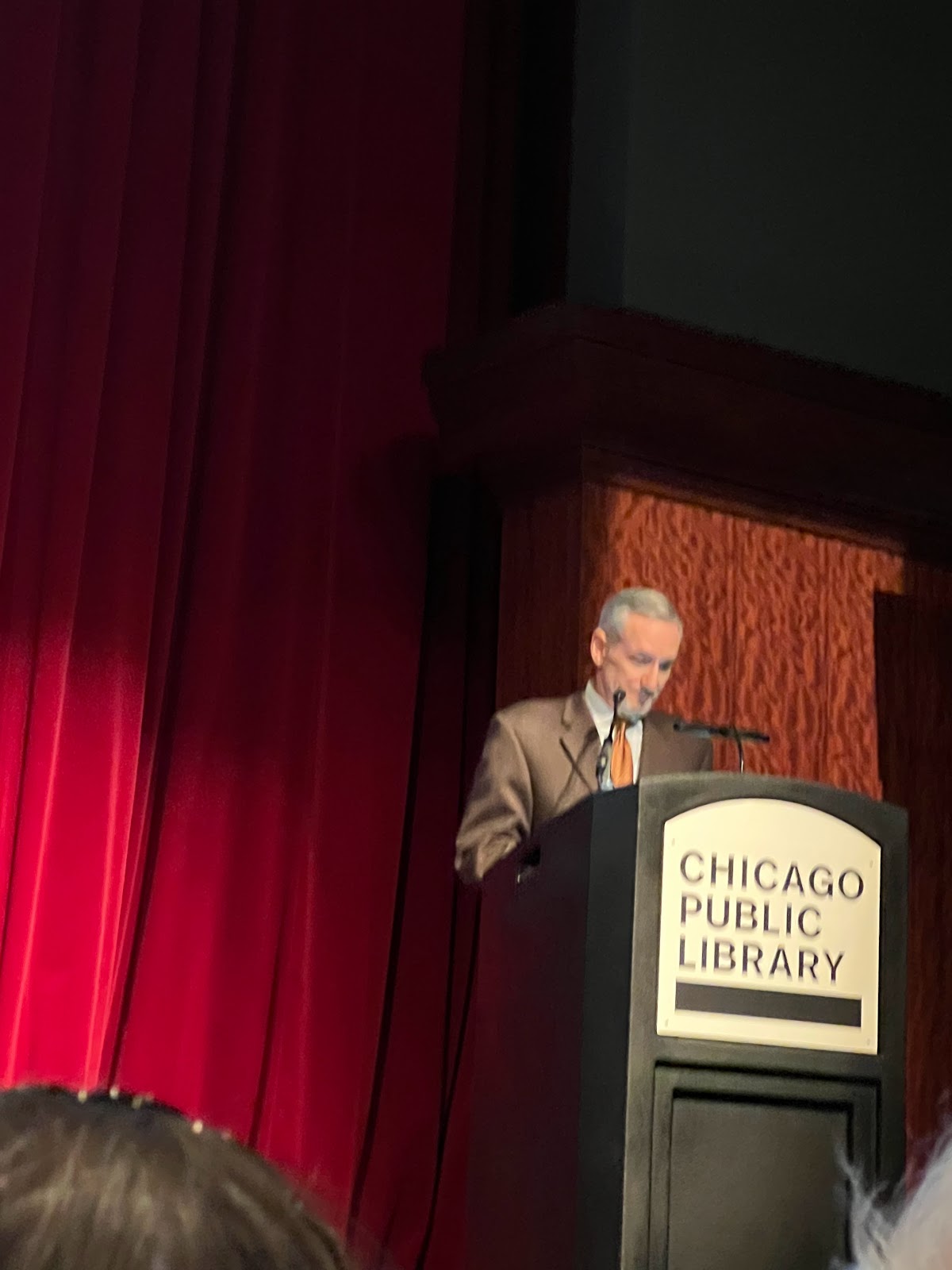
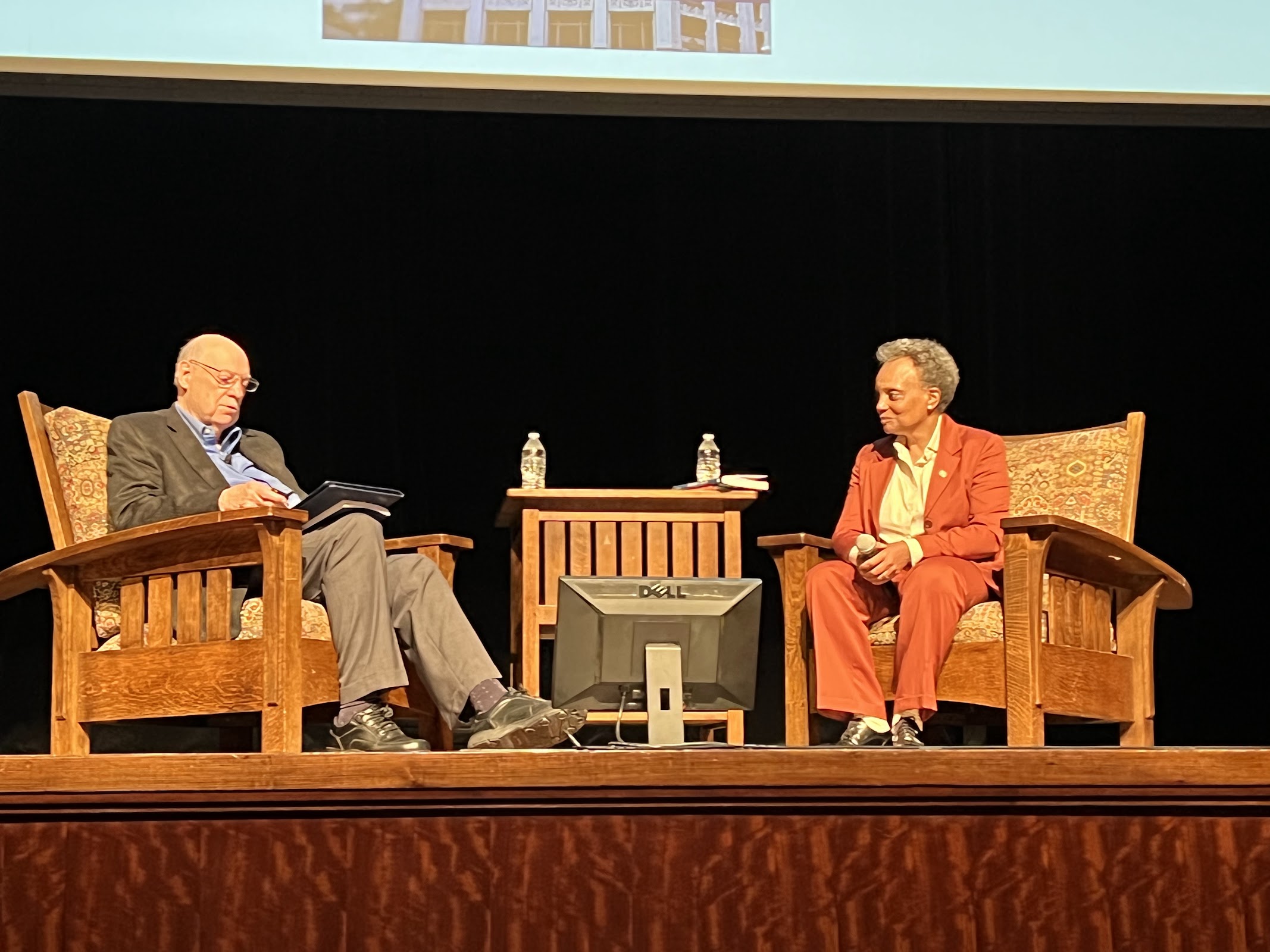
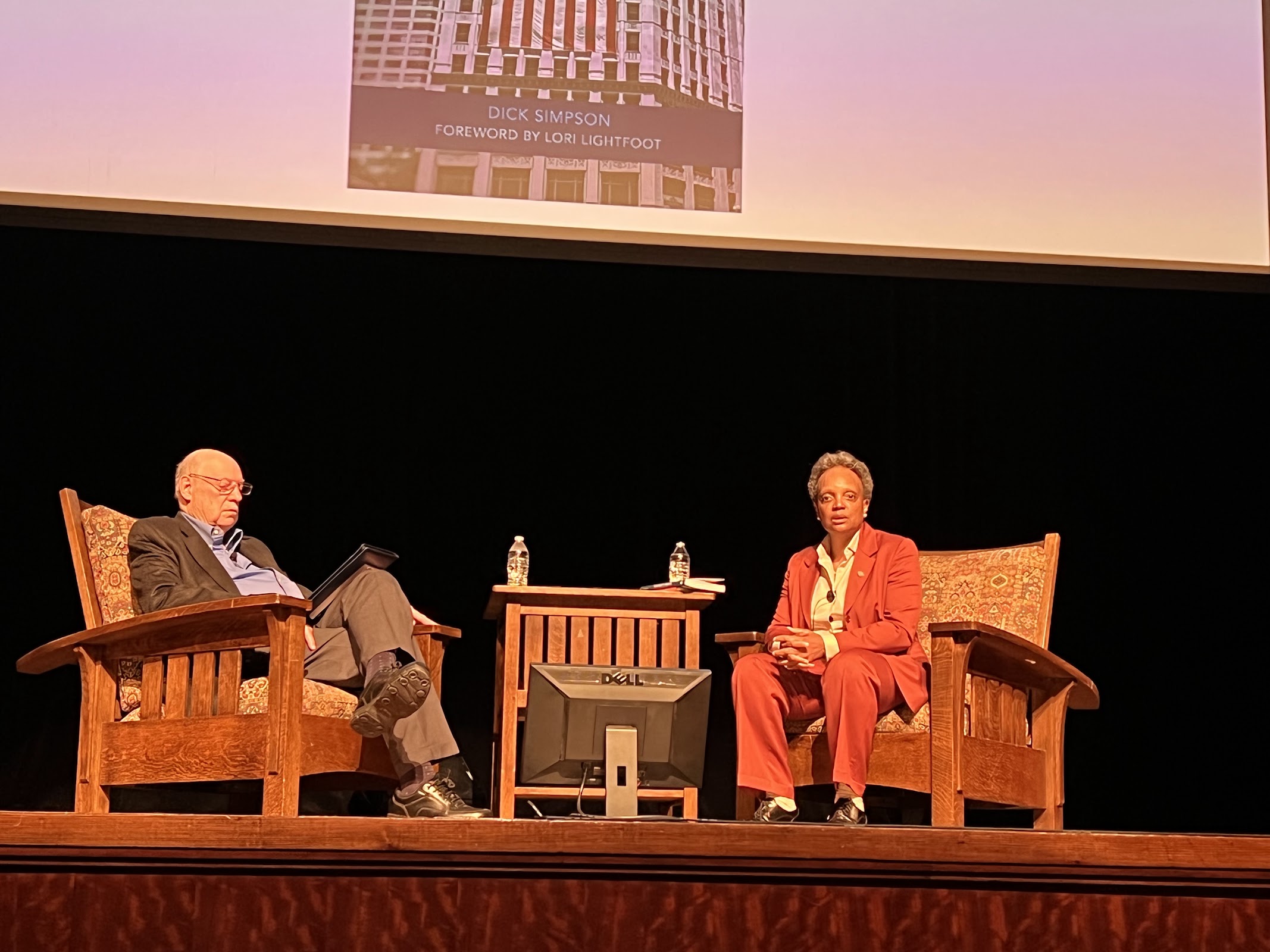
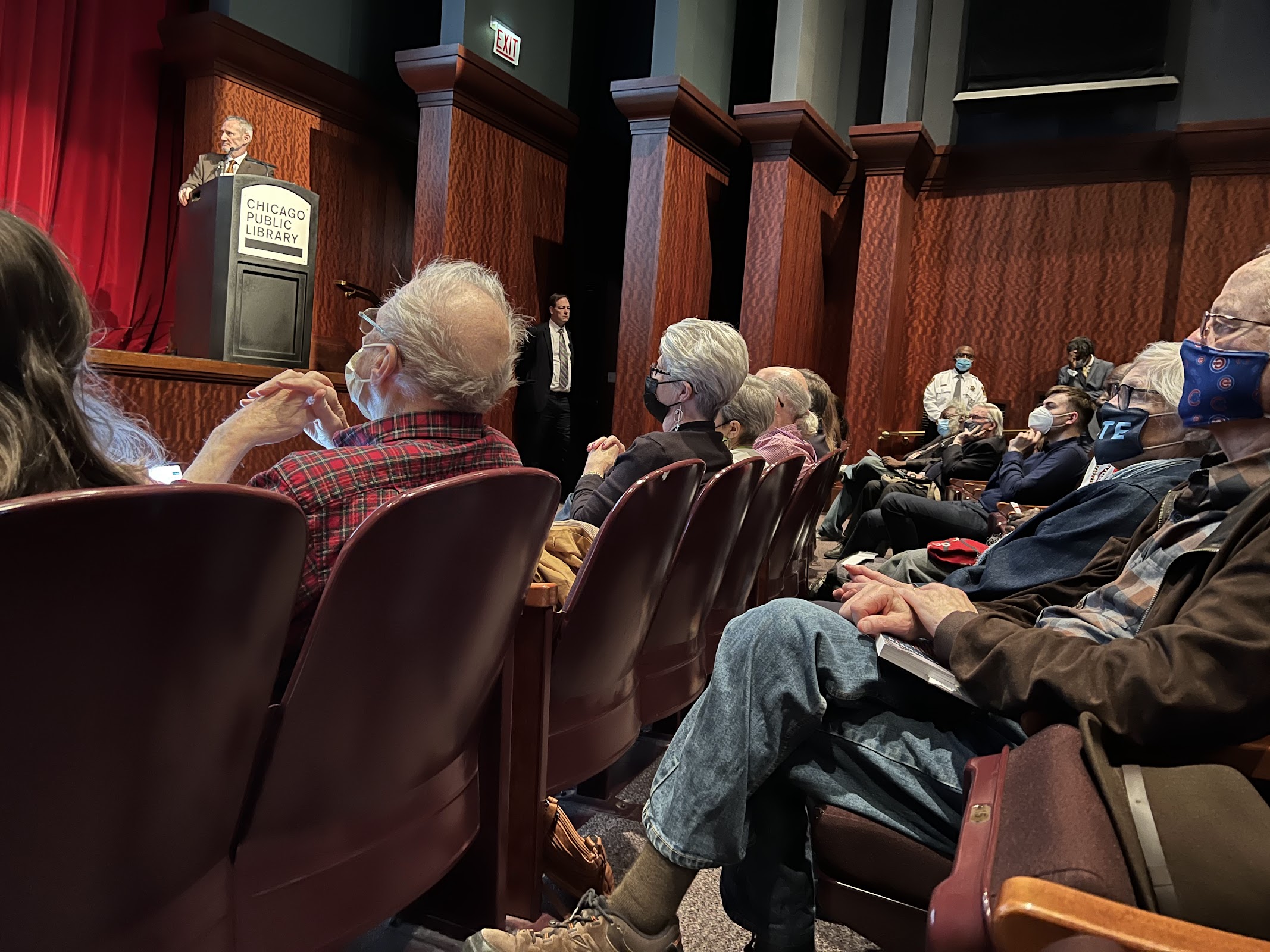
Yesterday, the HWL hosted a meeting of the Society of Midwest Authors meeting – the first one in-person since the pandemic’s start. The UIC professor Dick Simpson discussed his new book, “Democracy’s Rebirth” with Mayor Lori (who wrote a preface for that book).


The worst thing about this event was that it went completely not advertised! One lady in the audience asked me how I learned about this event, and I replied that I was looking for something else on the library website. If I won’t looking to reserve a group room, I would never see it! The library announced that the number of participants would be limited to 300, but I do not think there were 300 people there. Those who came wondered how others would miss an opportunity to see the Mayor right in front of them on the stage :).


The conversations around me in the auditorium were even more interesting than on stage. Several people had some organizing/political background, and they exchanged their life stories. One gentleman said that after he retired, he took a crash course to become an ESL teacher and how he wanted to go to Sait-Petersburg and how now he is glad he didn’t go “because he won’t want to aid Mr. Putin.”

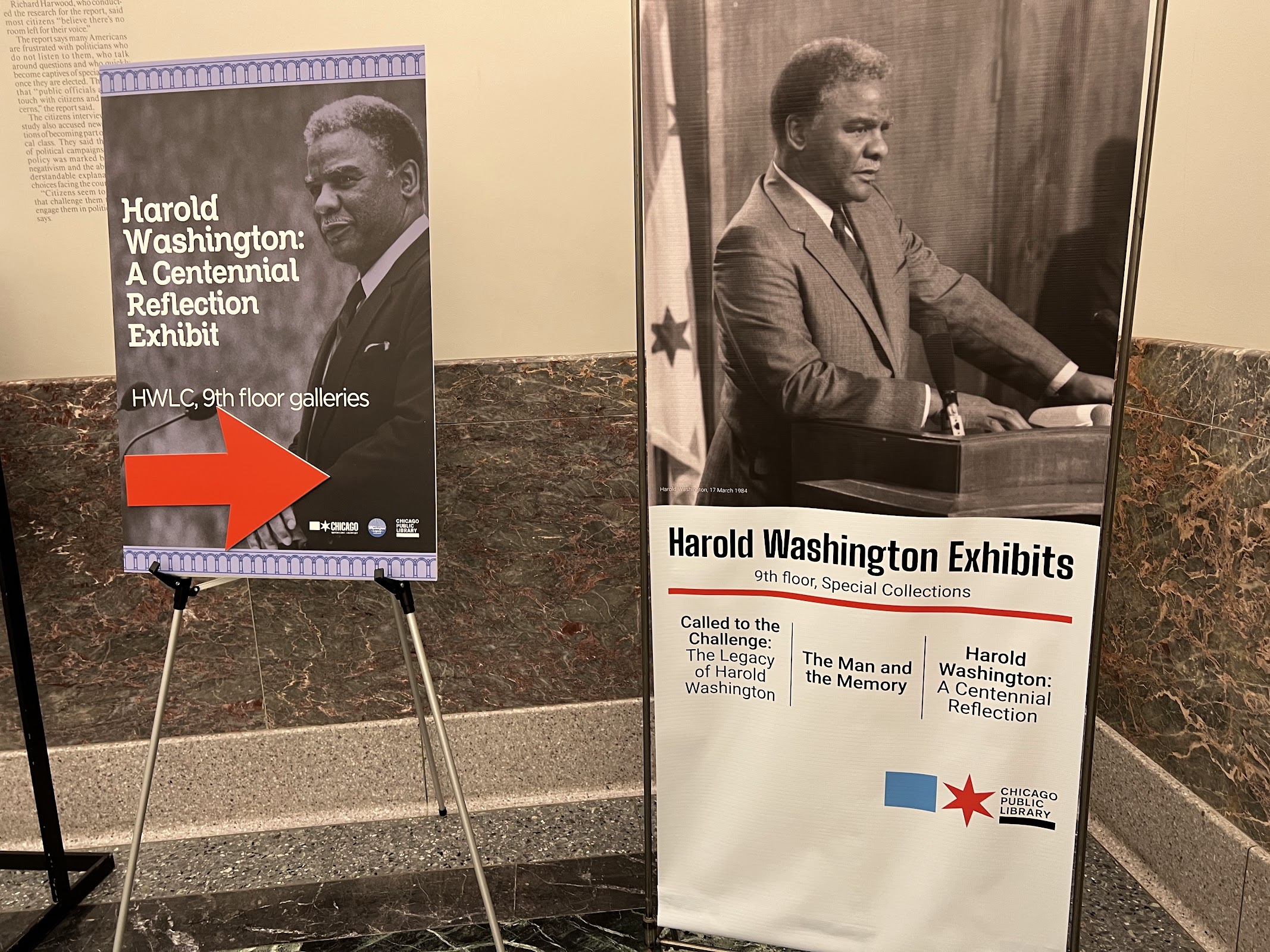
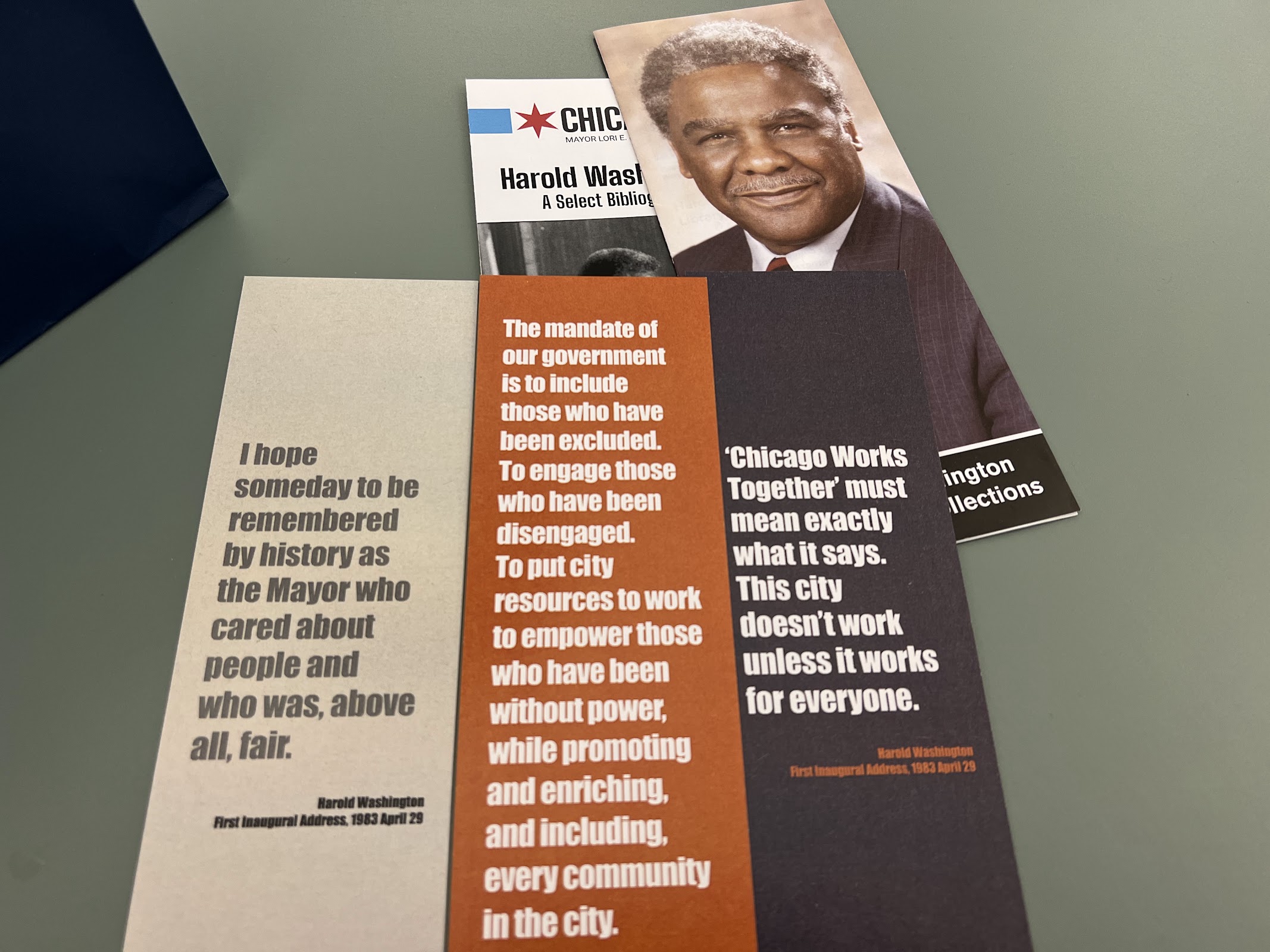
There is a special exhibit on the 9th floor to mark the centennial of Harold Washington. For some reason, they don’t allow any photography there, so there is nothing to report.

And I also checked out the Winter Garden – it’s gorgeous, and maybe next time, I will get a chance to grab a table there 🙂

The Four Winds: a Book Review

Such a great book! I do not remember who recommended it to me, and I do not know why I was putting away reading it for so long! I purchased it on Audible a while ago and almost returned it without reading it because other books were in line… I am so glad I didn’t return it!

I knew very little about that period of American history. I knew times were bad, but I could not imagine to what extent! The eco-catastrophe described in the book looks almost not real and, at the same time, too close to nowadays climate change warnings. How people could forget that such horrible things already happened not so long ago.
Another thing that struck me is the description of poverty and how many people showed no compassion. Knowing how deceiving the Soviet propaganda used to be, you tend to think that everything they said back in the days was not true. And then you feel shocked realizing that indeed, people were exploited, and indeed, capitalists were afraid of the unions, and indeed, communists risked their lives, and they, indeed, did some good things!

One of these books, when you are sad you’ve finished it already :).