How I Went Abroad For The First Time

The first time I went abroad was in the summer of 1984. I was 21 and just finished my fourth year at the University. At that time, colleges and universities in the Soviet Union had the system of degrees, which was different from the rest of the world. We did not have bachelors and masters; we just had “specialist,” and everybody had to complete five years of school to graduate (some had to complete five and a half or six).
We didn’t have “freshmen” or “juniors,” we were “first-year students,” “second-year students,” etc.

I was attending the Department of Mathematics and Mechanics of the Leningrad State University, and we had “an exchange program” with Humbolt University in East Berlin. It was only called “exchange,” it took place in summer when schools were not in session, and it was just a rare chance to get to Zagranitsa. Both the Russian group and the German group consisted of ten students, in June the Germans where visiting Leningrad, and in August we were visiting Berlin.

The competition to be a part of this group has been going on for the whole school year. Until June we would not know who exactly will go to Germany (only East Germany, of cause!)

Continue reading “How I Went Abroad For The First Time”

More Pictures – Summer 1992

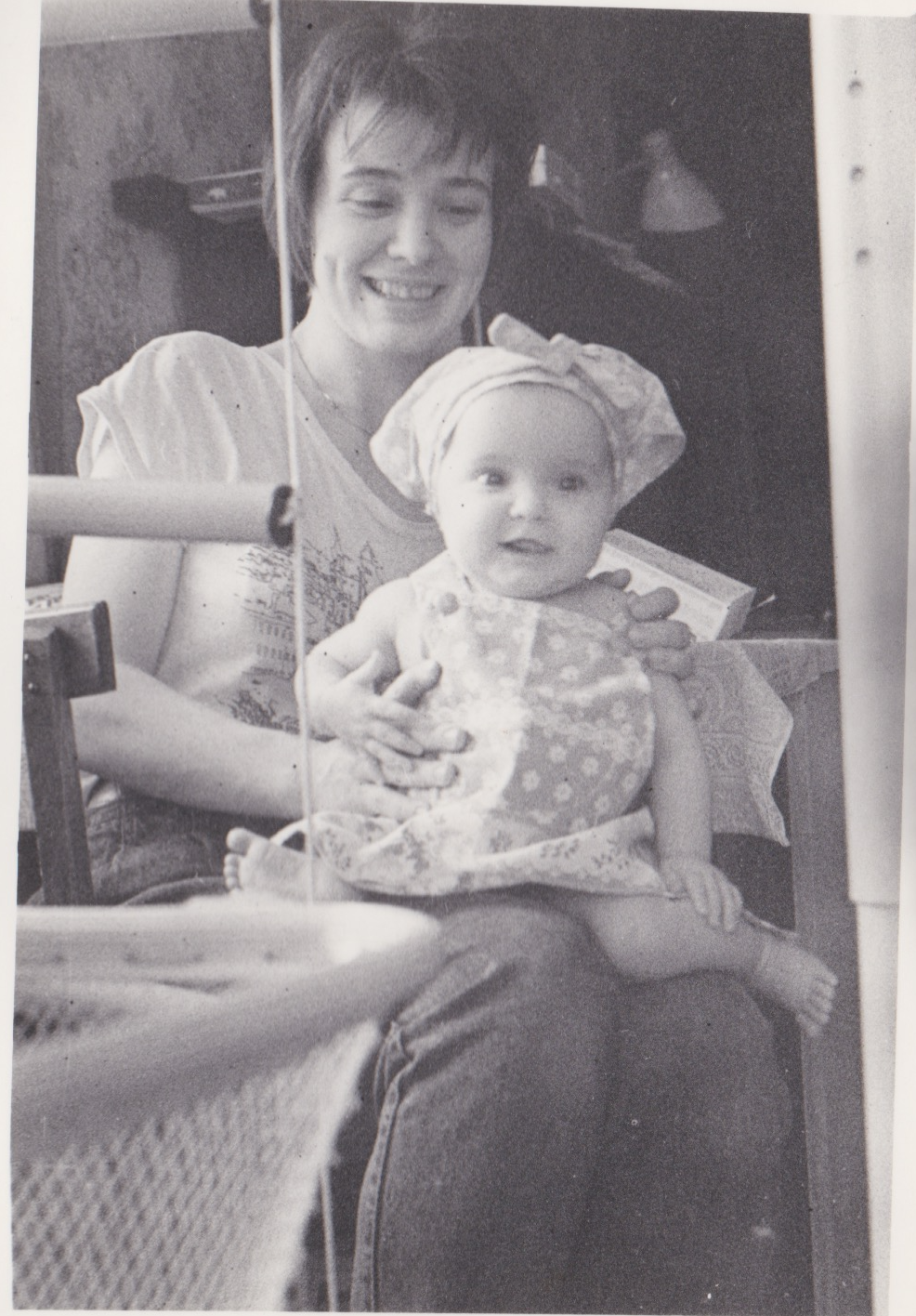
Anna is 11 months old
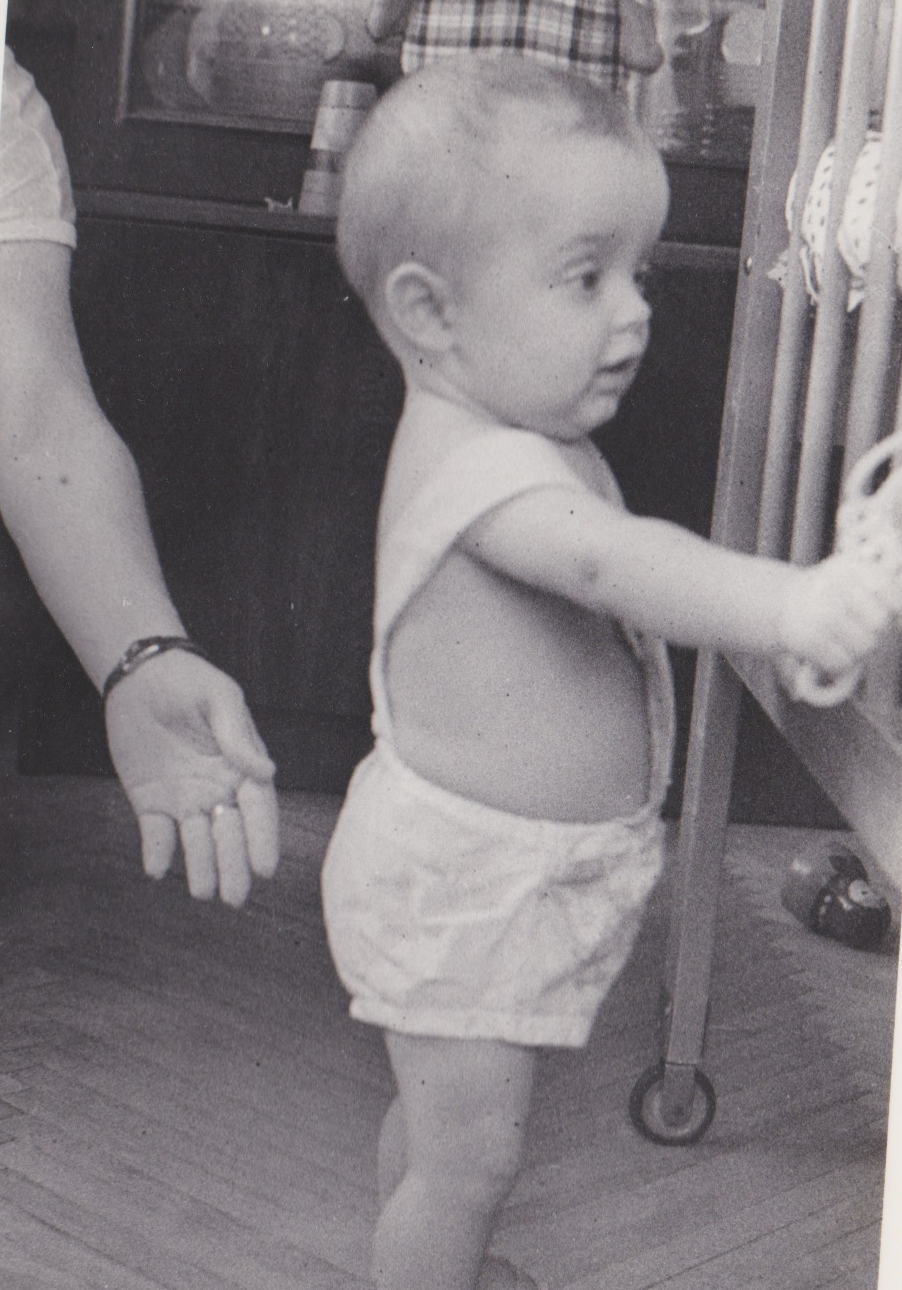
Vlad is 11 months old

Beginning of August 1992, we are back to the city. Anna and Vlad are a little bit bigger now, and some of the humanitarian clothes do fit.

March 1992 – Two More :)

This image has an empty alt attribute; its file name is a7.png
Anna 7 months old
This image has an empty alt attribute; its file name is v7.png
Vlad 7 months old

Here Anna and Vlad are seven months old. They were still tiny for the 7-month old babies, and on top of “having nothing” in the stores, there wouldn’t be any clothes for such small babies, except raspashonki – sort of tops for babies, wholly opened on the front or the back, with no buttons or any other means of holding them together. They would work for three-month olds, but not for always moving seven-month olds. Almost until they were one, I was making all their clothes myself, unless I could find something suitable in the humanitarian aid.

So here Anna wears an apron-style dress and a kerchief, which I’ve crafted from an adult headscarf. They were grey-ish blue with the white polka dots. I’ve also made Vlad’s yellow overalls do not remember what I’ve used for material, but it was some recycling.

You can also see that they are not wearing diapers. Disposable diapers did not exist back then, and the water-proof underwear where you would put an insert just started to appear. It was expensive, of mediocre quality, so there were very high chances that the pants would be wet anyway. Hence – no diapers.

Pictures March 1992

Late Spring-Early Summer 1992

Another thing which has happened that spring was my atopic pregnancy, which was just short of ending tragically. I refused to go to the hospital even after I’ve collapsed on the kitchen floor, and my mom called 03. Fortunately, the doctor told me: we will take one more call, and then I’ll come back. By the time they were back, I was ready:).

There was a reason I refused to go: nobody except me has ever taken care of Vlad and Anna. Except for Boris for a couple of hours here and there. I remember half-lying down on my mother’s bed (no idea, why on her’s, not mine) and dictating each and the single thing about the babies: sleep times, meal times, amount of food, naps, clothes for inside and outdoors. I remember that Boris managed to come before I was taken to the hospital, although I do not understand how he could get there on time.

I didn’t know what was going on with me, except that I could not move and could not breathe. When the doctor in the hospital has told me I have an atopic pregnancy, I didn’t believe her. I was taken to the operating room right away, and I remember that the surgeon asked me whether I want another tube to be removed as well. It’s hard to believe, but just a week before that Boris and I were talking about that option, and he said that he does not like the idea of doing something non-revertable. So I said no.

After the surgery, I’ve stayed in the hospital for five more days; eight patients in the room, atopic pregnancies, abortions, ovarian cancer – you name it, ages from nineteen to seventy-five. Two hours a day for visitors.

I had no breast milk the first day, and I thought it’s gone for good, but the next day it has reappeared. I’ve started to pump, just for the sake of keeping it coming, and it was then that I saw it was yellowish-grey and half transparent. To the” breastfeeding only” fanatics: I am absolutely sure my babies were better off with the US baby formula (that’s when it became handy, the Christmas gift from a Jewish charity!). After five days, my stitches were removed, and I was allowed to go home the next morning. I left the same night.

I was not allowed to lift any significant weight after the surgery, so I had to crowdsource my childcare. All of my friends who could come, for half a day, or for just an hour, were coming when they could. When nobody was around, I was moving on my knees and lifting the babies from that position.

Still, the warmer weather was approaching, at least theoretically, and life was turning for the better. By June, I’ve returned back to work at the University. This didn’t change much in my life since the year was 1992, and the people, whos’ salaries were financed by the government, didn’t get paid for months.

But fortunately, there was another perk. A relict from the Soviet times, when the local Unions were another branch of government – a summer boarding house.

I need to step back and explain what was so special about this last fact. I haven’t met with this perception in the States, but I might have a wrong referential group. In the Soviet Union and later in Russia there was no concept of suburbs in the American sense. We lived in the cities with relatively high pollution level. Granted there were magnitude fewer cars on the streets, but their engines were producing a lot of pollution. Besides, there were plants and factories, and there were not enough parks.
Any good mother had to provide a way for her children to “get some fresh air” during summer. This meant ideally to find a dacha somewhere in the countryside, where the children could stay with rotating parents/grandparents or send her children to the pioneer camp. The camp was for the children who were already in grade school, meaning they should have been seven or older. The younger children could be sent to a dacha with their daycare, but by my time, very few of them had dachas.

Besides each mother would have to resolve a dilemma, which way she would be the worst mother: if she would send her child to the daycare dacha, where she should suffer without her mother, or if she would have her stay in a polluted city and attend a “daycare on duty.” Many daycare facilities would close for summer without providing any alternatives. So you would be labeled a bad mother in any case :).

The University boarding house was a relict from the Soviet Union epoch and a present from heaven for me. It was opened all year long, but the summer sessions were in particular demand.

The University of Saint-Petersburg STEM campus was located outside of the city, in the countryside, or rather in the middle of nowhere. That was an idea of academician Alexandrov to build a university campus “as they do on the West.” There were many things wrong with this idea in the Soviet Union times, but a side effect was this boarding house right there, clean air, very little of civilization, and almost across the street of my work.

The price for the 3-weeks stay was pretty symbolic, especially counting the fact that we were getting meals three times a day, and most of the time they were eatable. I did buy extra fruits and other stuff for the kids, but that was fine. In the boarding house, I had more space than in my apartment, I barely ever had to cook and wash the dishes. I slept for 7 hours straight and was having a real vacation. Whatever work had to be done, was done primarily when Vlad and Anna were asleep.

Resistance Museum Without Pictures

This post will have no pictures. I didn’t take any pictures in this museum, mostly because we were short on time. We wanted to visit this museum very much – we’ve read a lot about the Dutch Resistance. Even when we were visiting other museums in Amsterdam, such as Stedelijk, there were multiple mentions of how people, artists, and curators, in particular, felt compelled to aid the Resistance, and how vital the Resistance was for cultural and national preservation.

The location of the Resistance Museum is not a very central one, so it required some planning, especially because the conference had started already, but we made it. By that time, after being in Amsterdam for a couple of days, we’ve already realized how useful their museum audioguides are. They are way more convenient than the ones we have in the States, at least here in Chicago.

When we visited Brussels several years ago, we ended up being very disappointed in the Magritte Museum – there were not that many of his paintings there (then-recent Art Institute exhibit had more!) and we could not read any of his letters and diaries, which were on display in abundance. We were a little bit concerned that something like this will happen in the Resistance Museum, but the audioguides helped a lot!

That’s another reason I didn’t take any pictures inside this museum – obviously, all explanations are in Dutch, and the exhibit is mostly useless without them. I’ve learned a lot about how life in the Netherlands was unfolding during WWII. It turned out I didn’t know a lot, including brutal hunger towards the end of the war.

That won’t be the first time that I am realizing how little did I know about WWII before I came to the US. My knowledge about the events of WWII was very obscure. The way World War II history was taught at school would give you the impression that even though there was something else going on, the most significant part of it was the Great Patriotic War. When I first rented a set of DVDs about WWII in our local library was the first time I’ve realized that WWII was a WORLD war and that so many countries have participated. It was a shock for me that the USSR was mentioned on less than half of these DVDs.

Since that time the more I travel the world, the more I learn about different countries’ history, this realization becomes deeper. In this sense, the Resistance Museum was a great history lesson, and also an outstanding ethical experience. The museum is organized in such a way, that the visitors are presented with the questions the war-time Dutch citizen had to answer: should I cooperate or disobey? Should I fly or stay? Should I hide or should I protest? I could not even imagine one could build the whole museum based on these ethical choices.

And one more thought. I agree with my friend, who was saying that the visit to this museum and her subsequent research made her realize that the Soviet Union was the only country under German occupation which did not have a resistance movement. The “partisans” were organized and controlled by the communist party, or the communist party would acquire a leadership over a spontaneously organized group. Also, the focus of the “partisans” activity was on blowing bridges and military echelons, not on saving people, as it was with the Resistance in other countries. Sadly, I have to admit, that by the time the war broke out, the idea of resisting any authorities was wiped entirely off people’s minds and was not considered even a remote possibility.

Winter-Spring 1992. About Good People

As I’ve mentioned earlier, winter 1991-92 was especially bad economically. And as a consequence, people were the most unkind. Several months later, when a situation has become a little bit better, people were much more inclined to let me skip the line and started to express more kindness towards the babies.

One thing I still can’t understand was the fact that for some reason, my twins were drawing lots of male attraction in my direction. Once I was taking the bedding to the laundry service. I’ve left the baby carriage outside for just a couple of minutes to bring my bundles in (it was a norm in Russia at that time, nobody thought that something terrible could happen to the babies in the course of a couple of minutes, and who in the right mind would want extra babies in their lives?!). When I’ve emerged out of the laundry service, I saw a guy standing by the baby carriage marveling at my babies. They were tiny at that time, bundled tight in the blankets, one with pink polka dots, another – with dark green. This was an indication of the gender of a tiny person inside each of the bundles.

The guy moved his gaze away from the babies and looked at me. “Twins!” – He exclaimed – “a boy and a girl! How you are doing this?! Any chance you are taking orders?” “No,” – I’ve replied – “It’s a matter of inspiration!”

There were multiple other occasions, especially by late spring-early summer, when Vlad and Anna very not just tiny bundles anymore. Men would stop by me when I was sitting on the bench at the playground and say: “Such beautiful babies! Any chance they need a father?” This was especially surprising since by late spring when I was almost done with breastfeeding, I was far from being a pretty sight. I weighed 49 kilograms (about 109 lb) while being 164 centimeters tall (5 feet 3.5 inches). My clothes were hanging on me like on the coat hanger, my face was covered with sores due to the lack of vitamins, and my teeth became so fragile, that I was missing several pieces, so I can’t even say that my smile was pretty.

Continue reading “Winter-Spring 1992. About Good People”

To The 50th Anniversary Of The Landing On The Moon

In July 1969, I was six years old and living in the Soviet Union, and you may wonder who it the world I could remember just anything about Americans landing on the Moon. But in fact, I do remember!

That summer I was staying in the children sanatorium in Karelia, I was getting colds with the alarming frequency throughout the whole year, so my pediatrician prescribed to me some fresh air and sand beach (I hated being there, by the way, but that’s a separate story).

So one sunny day after the required nap we were gathered in the largest room in the building, and the director of the sanatorium told us grimly, that “Americans landed on the Moon.” I do not really know why I remember this episode so vividly, after all, I was not especially into space theme at that time. But for some reason, I remember even the dress I was wearing on that day and resentment in the voice of the director and the somber expression on her face.

Winter 1991 – 1992

Before I proceed with my story, I wanted to reply in more details to the comments on the previous post. “The nineties” was a very prolonged period, each several months the economic situation would change drastically. The time I was talking about in the previous post was from late fall 91 to spring 92, maybe a little bit more than that. Again, I am not going to consult the Wiki, to check the exact dates of all the legislation which were coming out these days. I am trying to recall as precise as possible how I felt back then.

In September, when I just came back from the hospital with Anna and Vlad it was not that bad yet. You could actually buy at least some things in the stores, and I remember that Boris was occasionally bringing me some groceries which he would manage to “get,” waving off my attempts of financial independence. This was one of the very few periods of our togetherness when I was OK with that.

I was eating a lot. I felt sick for the last couple of weeks of my pregnancy each time I was trying to eat something more than an apple, my body was not really processing anything. When I’ve checked into the hospital, the nurses were commenting “you are so thin!”, which sounded hilarious applied to my eight-months-pregnant with twins body, but they were right.

After Vlad and Anna were born, I started eating :). And there was actually stuff to eat. I remember making myself endless omelets with vegetables, cheese sandwiches, lots of black tea with whole milk, which was a traditional Russian breast milk production booster.

I believe things started to change for the worse in October, and then I barely had any protein till the end of the year. The hyperinflation was in full swing, and I had nothing except government subsidy for new mothers. The weirdest thing I remember about these times was my thinking about how in the world I could live on this little money till next month. I was thinking to myself: well, that’s what the government is giving for new mothers, if they came up with this sum of money, there should be a way to survive on it. It sounds completely ridiculous now, but I remember that back then these thoughts would provide some sort of comfort to me.

Continue reading “Winter 1991 – 1992”

Switching To The New Economic Model (1991)

Anna asked me to write about shock therapy, but first I need to say a couple of words about the economic situation in the Soviet Union: not how did it look objectively, not how did it look for the rest of the world, but how the ordinary people, who’ve been inside this system, perceived the economic situation.

The ruling word was “deficit,” and in Russian, in those days it meant not the fact of deficiency of certain goods, but deficient goods themselves. “Deficit” meant anything, which you were unable to find in the store, anything, you had to “get,” either staying in a long line, if you were lucky to be at the place and at the time, where and when “a deficit” has been distributed. Or perhaps you knew somebody who worked in retail, and they could help you to “get a deficit.” There were also “holiday distributions” at the workplaces, or in the worst case scenario, you could find “a speculator” who would sell to you “a deficit” for a sky-rocketing price.

You might ask – who could afford this sky-rocketing price? The answer is that most of the people could. Not every day, not for everything, but if you really-really needed something, you would come up with the money, most of the time.

The salaries were approved somewhere far away from your place of work, and in a majority of cases were not individualized, meaning that a junior engineer will have the same 120 rubles monthly, and maybe 130 or even 135 rubles monthly, if they would work for the Department of Defense. All prices, from bread to beef, to bananas, to underwear, to chairs were fixed across the country, so everybody knew what did the “ice-cream for 19 kopeks” mean, you could use a price instead of a brand.

Most of the people would use their “retail connections” or “speculators” from time to time, for example when they would needed new winter boots or a coat for their toddler. And the vast majority of people would complain about this situation. Most of “intelligentsia” would lament: I wish it would be legal being able to get something for a higher price. It’s much better than not having these goods at all! Why “they” won’t let these people sell what they have.

Continue reading “Switching To The New Economic Model (1991)”