Did You Know That Lynching Was Not a Crime?

It’s hard to believe, but that’s true! The legislation passed the Senate last Monday, and I can’t believe that it took so long!

Below is the text of the article from the Chicago Tribune March 8 2022 by Darcel Rockett.

==========

Legislation to make lynching a federal hate crime and prevent racist killers from evading justice was introduced more than 200 times but never once passed into law, according to Illinois U.S. Rep. Bobby Rush.

That path is clearer now that the Senate unanimously passed a bill Monday that criminalizes lynching and makes it punishable by up to 30 years in prison. The measure passed the House last month and now goes to President Joe Biden’s desk.

“Who would have imagined that lynching, that was visited upon literally over 6,000 citizens of our nation, that lynching was not a federal crime until our present day,” Rush told the Tribune on Tuesday. “We’re looking forward to a more perfect union.”

The Emmett Till Anti-Lynching Act, named for the Chicago teen and authored by Rush, states a crime can be prosecuted as a lynching when a conspiracy to commit a hate crime results in death or serious bodily injury. Emmett Till, the 14-year-old son of Mamie Till-Mobley, was murdered in Mississippi in 1955. The act first passed the House of Representatives in February 2020, but was blocked when Sen. Rand Paul, R-Ky., objected to clearing it by unanimous consent in the Senate.

Rush reintroduced the act on the first day of the 117th Congress in January 2022. The previous text of the legislation set the maximum sentence at 10 years and made lynching a crime that could only be prosecuted under specific circumstances, such as if it took place while the victim was engaging in a federally protected activity such as voting.

Now, the act amends the United States Code to include a maximum sentence of 30 years for a perpetrator convicted under the anti-lynching act, in addition to any other federal criminal charges the perpetrators may face, and the legislation applies to a broader range of circumstances.

Thousands of Americans were lynched between 1865 and 1950, according to a 2020 report from the Equal Justice Initiative.

Rush, who is in communication with Till’s remaining relatives, said they were very determined that the bill was going to pass and they did all they could, including praying that President Biden would be able to sign it.

Rush said the prayers have been answered. He wants to see if a formal ceremony can take place to honor the measure. Rush, who will leave his office after this term, doesn’t see this as a feather in his cap, but he does see it as a victory for the American people — for Black Americans specifically.

When the Till act was passed by the U.S. House of Representatives in 2020, a boyhood friend of Till’s said the law refreshed our memory of what our history looks like, placing value on history, so we don’t repeat it.

That was before the Department of Justice’s Civil Rights Division and the U.S. attorney’s office for the Northern District of Mississippi closed their investigation of the Till case in December 2020 after Carolyn Bryant, now Carolyn Donham, the wife of one of the confessed murderers and a witness to events leading up to Till’s murder, alleged recantation of events in a 2017 book by Timothy Tyson titled “The Blood of Emmett Till.”

Per a DOJ statement, the government’s re-investigation found no new evidence suggesting any living person was involved in Till’s abduction and murder. Till’s remaining relatives said the “findings came as no surprise.”

Two white men, Roy Bryant and his half-brother J.W. Milam, were tried on murder charges about a month after Till was killed, but an all-white Mississippi jury acquitted them. The trial is the basis of a recent immersive stage adaptation of the 1955 trial transcript performed by Collaboraction, “Trial in the Delta: The Murder of Emmett Till.”

WMAQ-Ch. 5. news anchor Marion Brooks found the transcript in her research on Till and wanted to get the information out. The play will also live on screen as part two of Brooks’ documentary on Till, “The Lost Story of Emmett Till: The Universal Child.”

Days after Till was killed for allegedly whistling at a white woman, his body was pulled from the Tallahatchie River, where it was tossed after being weighed down with a cotton gin fan. Months later, Bryant and Milam confessed to the killing in a paid interview with Look magazine. Bryant and Milam were not brought to trial again, and they are now both dead. Donham has been living in Raleigh, North Carolina.

G. Riley Mills and Willie Round, co-creators of the play, said the bill was a long time coming.

“While we’re glad it was finally passed by Congress, it’s hard not to feel anger and disappointment at how long it took,” Mills said. “We salute Congressman Rush for his tireless efforts championing the cause for Emmett and Mamie.”

Christopher Benson, an attorney, Northwestern University Medill School of Journalism associate professor, and co-author with Mamie Till-Mobley of “Death of Innocence: The Story of the Hate Crime That Changed America,” said people have to take encouragement from the new legislation.

“One hundred years and there never was agreement on a way forward to address this horror of racial violence,” he said. “It’s a good start, but now we have to enforce it.”

For the past four years, Benson has worked with the Till family. He said Till’s family is highly supportive.

“Whether this compensates for the lack of justice in Till’s case is another matter,” he said. “We have to ask, what does justice require? Justice would have meant that Emmett Till came home alive. So we can never truly experience justice in this case. We have sought some level of accountability from his killers and the government structure that enabled that lynching. Because the killers of Emmett Till believed that they could get away with the destruction of a Black body, because of the horrible system that exists in this country, particularly in Mississippi at the time.”

Rush shares similar sentiments.

“It’s a victory for Emmett Till, his legacy, his family and the over 6,000 people who were lynched in our nation, all the way up to this moment,” he said. “This is really an intergenerational, historical victory.”

How Was The Week

There has been a lot of work at my actual work in recent days – one of these weeks when you can’t lift your but off the chair. In addition, I started to resume some activities which got off my radar during the previous week. I remembered that I didn’t finish several professional-non-work-related things and put them back into my plans. I went to see the “Hadestown” in the CIBC Theater – great production, but I could not get fully engaged being in the state of mind I was. I am much better today, though. 

On Thursday, I went to the Shelter: the volunteers are finally back in March, so it was my second time after another pandemic break, and I sincerely hope it was the last one! We did a “make your own pizza” activity. The crusts were pre-baked, so the youth just had to assemble the toppings. Only about half of the residents participated, but this is a pretty good turnout! One more time, I am developing new relationships, and I hope that not everybody will disappear when I am back in April. 

And it was a great week at work! I can’t stop smiling, recalling some conversations with my co-workers; these conversations helped me get back to reality and the problems I was trying to solve three weeks ago. This week, the client I had was a true dream client, a pleasure to work with, so I am finishing the week more energized than tired. 

I hope to keep the same level of energy all weekend long :). It will not be easy having the upcoming cold spell, but I will do my best. 

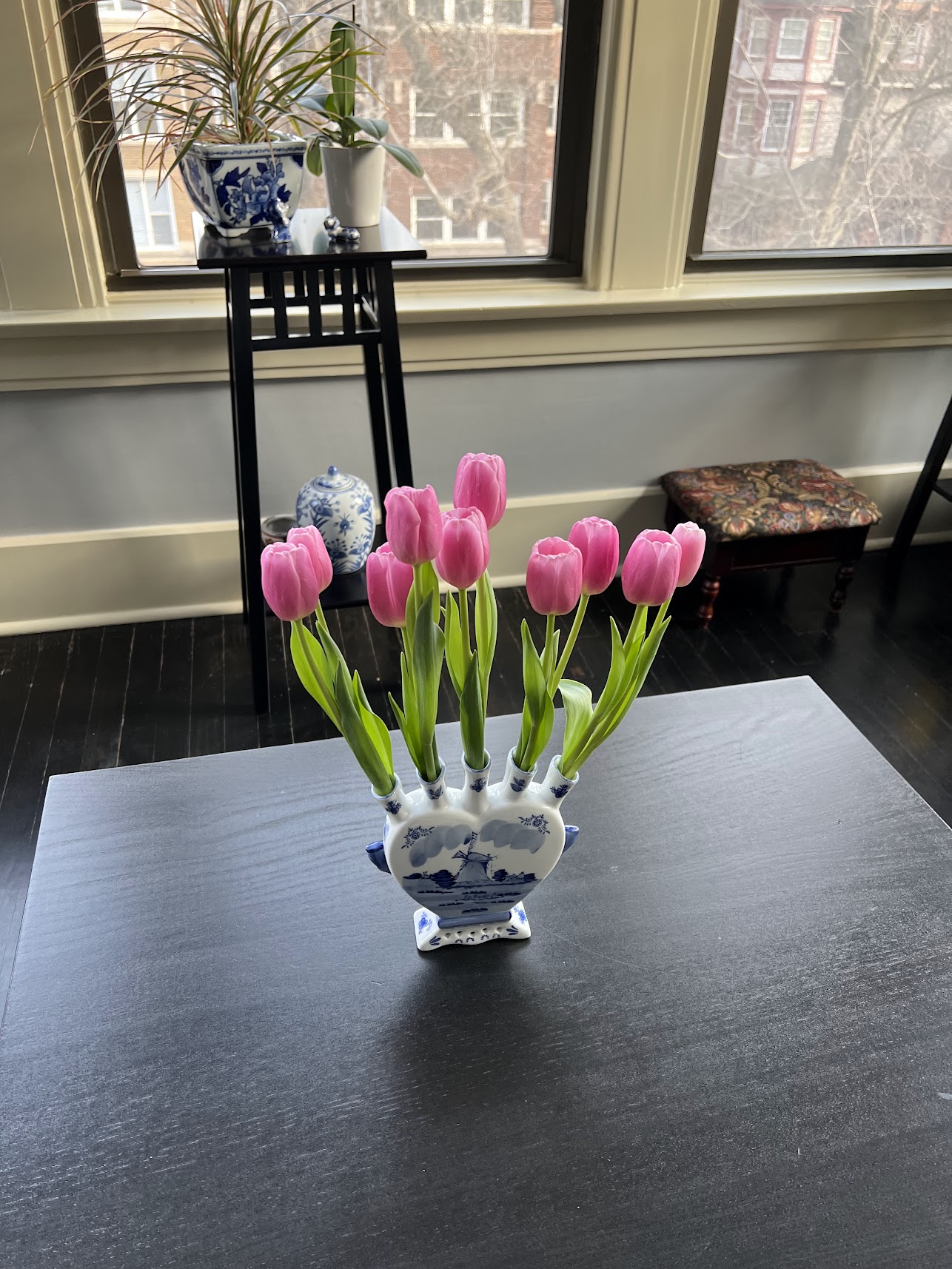
Tulips from my neighbor

More About The Rally on Sunday

The moment Lena and I walked out of the alley and headed to the CTA station, a person on the other side of the street cheered us and asked where the rally would be. In the Loop, we were pleasantly surprised by a huge turnaround. The number of people who responded as interested in the event was less than 200. Still, we saw people with flags and signs everywhere (also going in different directions, which was confusing). Since we had to meet Anna at the train station, we were in the Loop ahead of the rally, but we still met people who stopped us and asked in Russian or English where exactly things were going to be. 

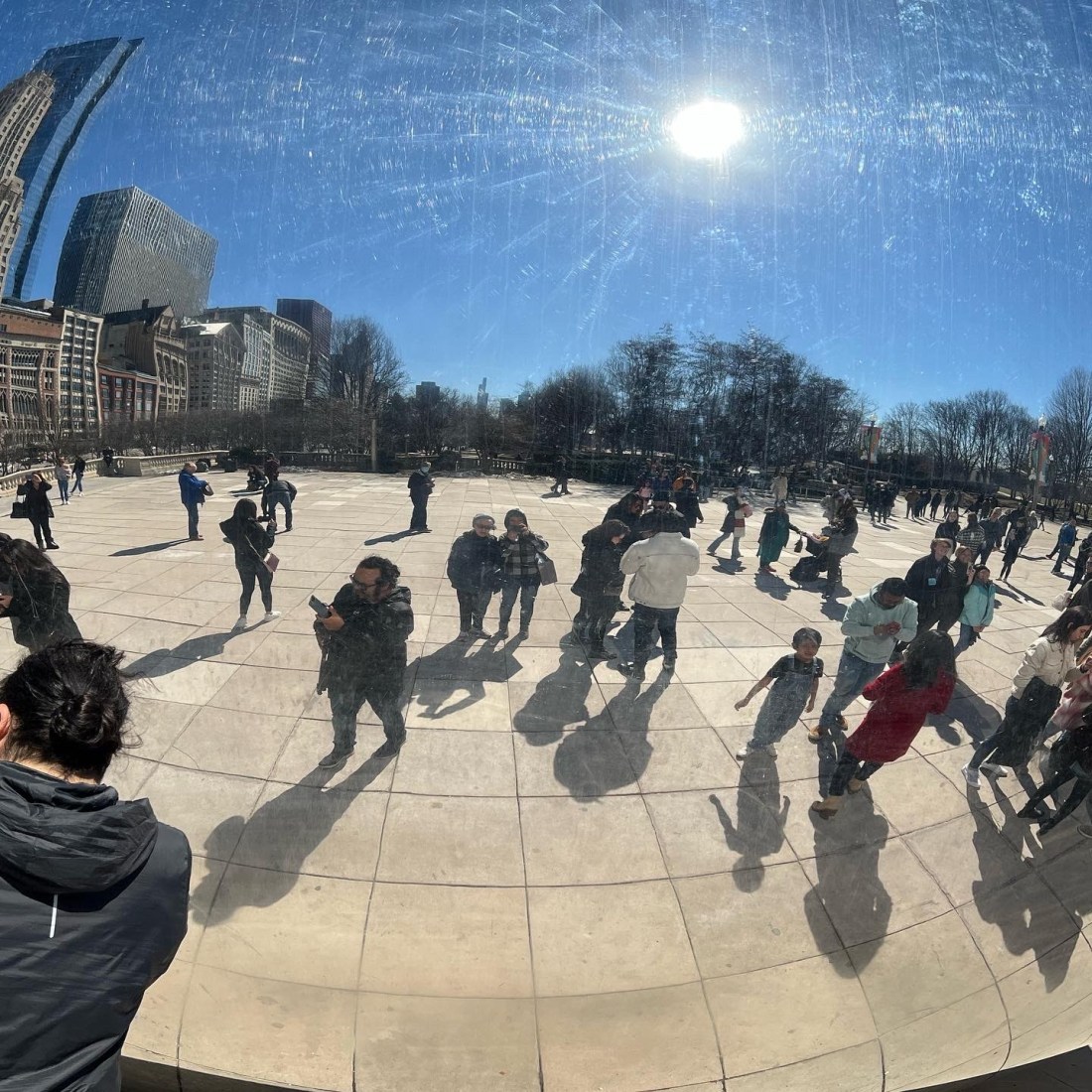
t turned out that there were multiple gathering places and marching before the rally. We went to the Bean, marched with people there, and headed to the Daley Plaza.

Continue reading “More About The Rally on Sunday”

Posters Making

Before The Rally

The last two days were packed with events and emotions, and it feels crucial for me to record as much as I can, just for myself, to remember these days.

Before the world collapsed into the war, we made plans with Lena for her to visit this weekend and see this Orchid show in the Botanic Garden. On Thursday, Lena called me in tears, telling me about her relatives in the city of Sumy on the Russian/Ukrainian border. The city was shelled, explicitly targeting the infrastructure, the heating system, electric stations, and the railway station. She said she did not want to come. I told her that I understood, but if she changed her mind, we could also go to the rally on Sunday. On Friday, she texted me that she would come.
Saturday was a mixture of enjoying the Botanic Garden and the nice weather, listening to the horror stories from Sumy, laughing at the gypsies who stole a tank from the Russian Army, exchanging ideas about Lena’s own family’s potential escape from Russia, and making posters for the rally.

I still can’t understand what should have been done to people for them to be able to drop the bombs on their neighbors, and I can’t stand that there is absolutely nothing I can do. Lena and I talked about Russians who somehow still believe that “only Russia is right and the rest of the world is not.” Lena could not understand how anybody seeing that literally, the whole world is saying one thing, and Russia is saying something else, won’t have doubts. And then, I saw a blog post on Russian social media, which explained it to me as clear as possible. It went something like that:

When it all started, I was worried and concerned and felt shame and everything, but it started to change. Look, how come all these Western countries united their forces and issued all these sanctions so fast and in unison? That means that they planned it! And now all these sanctions, which target the ordinary people, as if we could have a voice in anything! That means that the West is indeed at war with Russia, which means that we had to fight this war! And because of this war, Russians are united more than ever!

I can’t even count the number of wrongs here, but this helps explain “how could they.”
Seeing Lena not crying, but being angry and energetic, was one relief. Another big one was that Boris finally got out of Russia back to Finland. After weeks of hesitation, he finally decided to make “a big leap,” but the timing was not the best, and then I spent days worrying that he won’t be able to return before Russia closed its borders entirely. Everybody is trying to escape as it was after the October Revolution. The trains are full, the airline tickets are impossible to get, and whatever is left costs twenty times more than a week ago. On top of it, these are the last couple of days of Russian credits cards being serviced.

For me, it meant that I had to execute some surgical operations with mom’s finances and then run around the city getting as much cash as I could get.

And then, there was a rally. I will try to write a separate post about it tomorrow because it is getting late, and I need to start sleeping again.

I will just say one thing here. Never before did I attend a rally with so much grief being in the air. My sorrow for the suffering people grew even more, and so did a feeling of helplessness. This feeling became more specific: whatever I could do to help should have been done earlier. And whatever I am trying to do now looks at most like the attempts of the whites to join the BML rallies – whites were firmly and politely or not – being ushered out.

More tomorrow.

The Orchid Show 2022

The Orchid SHow of 2020 was pretty much the last event we could attend before the lockdown. Little did we know what would come next!

Two years later, we were there again to celebrate spring, life, and beauty.

Continue reading “The Orchid Show 2022”

When It Goes To 68F after 37F…

The outline of yesterday:

  • Lena came to visit, and we went to the Orchid Show in the Chicago Botanic Garden
  • Since it was 68F, we went biking at the Lakefront Trail
  • We spend the evening creating posters for today’s rally
  • We desperately tried to send money to Ukraine with unsatisfactory results, but I will try some alternative routes

So that’s our bike ride. As I said, it was 68F, so technically speaking, people could go short sleeves, and some did. At the same time, the ice can’t melt instantaneously, so the lakeshore looked like that:

And here are us!

Cultural Events

I was waiting for this culturally rich March with such an anticipation – and now she war overshadowed everything. But ones again, I decided it to be my form of resistance. What I did for the past two days – I lived a normal life as much as possible because that’s my protest against fears. Two personal things made me worry and upset more than in the previous days. I know that all my worries are nothing compared to people whose lives are in danger, but I have to admit that I gave in at some point. I still went to the event in the Field Museum and took mom and Igor. 

We always try to attend the Field Museum event because this museum does not have after-hours, and it is located further from the Loop than the Art Institute, so there are fewer chances to visit it otherwise. 

 The event was related to the new exhibit called Jurassic Ocean: The Monsters of The Deep, and it shows what was happening in the ocean when dinosaurs roamed the Earth. 

Some dinosaurs also lived in the water, but mostly the ocean was inhabited by giant fish and reptiles, and this exhibition presents these creatures and their differences and similarities with the modern ones.

And Friday was the day of the opening of the European Union Film Festival. It was cut in the middle in 2020 and didn’t happen last year. Same as I wanted to be in a part of the live event in the Field Museum to support its efforts to get back to life and education, I wanted to support CEUFF. 

The hosting country is France this year, but unfortunately, there was no reception :). Still, it was great to be in the theater packed with movie lovers and the representatives of the EU in Chicago and to listen to the opening remarks of the French General Consular in Chicago. 

The opening movie was a new screen adaptation of Balzak’s “Lost Illusions” – possibly too grim in the present political situation, but most definitely an outstanding cinema production! 

The Music And The War

On Sunday, I was at the CSO concert. Ricardo Muti was conducting the Beethoven 9th symphony. It was an outstanding performance. Also, it turned out that it was the last concert for Duain Wolfe, the Chorus Director, who is retiring after 28 years with CSO. After the concern, there was a very emotional ceremony presenting him the highest CSO award.

Knowing maestro Muti, I expected him to say something about the situation in the outer world, but this didn’t happen, and I thought that he just didn’t want to interfere with the celebration of Duain Wolfe. But it turned out that I was wrong – he talked before the Thursday concert!

Official pictures:

Chicago’s Response To The War

I take back all my resentments about Chicagoans – here is today’s tribune front-page article:

Marta Farion received a call from a friend in Ukraine on Tuesday, asking her how she was helping the embattled country from Chicago. Her friend, a veteran in Ukraine who had stayed behind to fight, was calling from an actual trench, one of many that have appeared in the country as it resists its Russian aggressors, using a generator for a phone charge.

Farion, president of a nonprofit that supports the National University of Kyiv Mohyla Academy, had a variety of answers: lobbying the American government, supporting a protest this weekend and fundraising.

For Chicagoans with or without connections that close in Ukraine, it can be overwhelming to know how to help. Here are some of the ways advocates suggest people get involved.

Where can I donate supplies?
Ukrainian shipping service Meest-Karpaty is organizing a major effort to send a plane of supplies from Chicago to Kyiv every week, a representative from the company’s location in Palatine said.

They’re looking for military goods, as well as nonperishable food, blankets and clothes, advocates said.

Supplies can be dropped off or shipped to the Chicago location, 6725 W. Belmont Ave. The shipping service is also collecting supplies at 1645 Hicks Road in Rolling Meadows, a representative posted on social media.

Edgewater resident Leonard Mogul, a community advocate and founder of Chicago children’s organization Arts4Kids Foundation, is partnering with Waukegan pastor Julie Contreras to send care packages to women and children in Uzhhorod, Ukraine, Mogul said. Mogul’s organization has previously sent food to refugee children in detention centers at the Mexican border, he said, so Contreras reached out to him about turning aid toward Ukraine.

They’re looking for essentials including diapers, children’s clothes, socks and women’s hygienic products, Mogul said. People can donate or volunteer time by contacting Arts4KidsChicago@gmail.com, he said.

When is the next big rally?
Supporters of Ukraine plan to gather in Daley Plaza at 2 p.m. Sunday, said advocates including Pavlo Bandriwsky, vice president of the Ukrainian Congress Committee of America in Illinois.

How can I tell if a fundraiser is legitimate?
Chicagoans should look for established organizations that have a proven track record of providing assistance with low administrative costs, Bandriwsky said.

Smaller campaigns, like those organized on social media, can be positive resources as they may have very low overhead, said Mogul, who has helped found and moderate Facebook pages for Eastern European people across Chicago. But potential donors should make an effort to ensure those smaller fundraisers are legitimate, he said.

Donors should see how well the purpose of the money is described, and what means the fundraiser has to deliver the results, Mogul said. They should also feel free to ask the organizer any questions, he added.

What are some national or international organizations I can donate to?
Locally, people can donate to the Ukrainian Congress Committee for America in Illinois, advocates said. F.R.E.E., a synagogue for the Russian Jewish community in Chicago, is hosting a fundraiser for Jewish people in Ukraine.

The nonprofit Razom for Ukraine has a list of army, medical and humanitarian initiatives accepting donations, and is accepting aid to its own emergency response fund.

The National Bank of Ukraine is accepting funds to both its humanitarian account and military account. The Red Cross, UNICEF and World Central Kitchen are all accepting donations for the crisis.

Advocates have also asked people to contact their representatives to demand stricter sanctions against Russia, and the closure of airspace over Ukraine.

One Chicago couple is worried and asking for funds to get their preemie newborns, born via surrogate, home safely from Ukraine.

Alexander Spektor and Irma Nuñez became parents on Feb. 25 when their twin sons, Lenny and Moishe, were born in Kyiv. They were born two months early and need continued medical care before traveling to the U.S. The family is frantically trying to coordinate a specialized medical transport capable of moving preemies out of the country.

“It’s unimaginable,” Spektor told the “Today” show. He explained that the twins’ prematurity works against them as they need stability and care, but also to be moved out of a war zone.

In the meantime, they were able to transfer the twins to a hospital in Kyiv better equipped with supplies and staff, according to a GoFundMe raising money to help cover medical and travel costs.

What if I want to help refugees? Or advocate for Ukrainian citizens in the US?
The Ukrainian Congress Committee of America in Illinois is starting to prepare for refugees to resettle in the Chicago area, Bandriwsky said. People in Chicago with space to potentially help shelter refugees can contact the Ukrainian National Museum, he said.

Northbrook immigration lawyer Gene Meltser started a petition to grant Temporary Protective Status to Ukrainian citizens in the United States, a form of deportation relief for people whose visas are from places involved in strife.

Meltser, an immigrant from Belarus with family and friends in Ukraine, said he hopes people will sign the petition and call their representatives in favor of granting the status, regardless of political party.

What will people need when they arrive?
Many groups in Chicago constantly work with refugees and are always taking donations to help the many refugees already in Chicago. World Relief, RefugeeOne and Catholic Charities are all groups that work with federal agencies to resettle refugees.

People who may eventually arrive from Ukraine will be handling layers of trauma, said Corina Ratz, a faculty member of The Chicago School of Professional Psychology who trains people on treating immigrants and whose family in Romania has seen firsthand waves of people already arriving at the border.

Not only were their lives suddenly upturned by war, she said, they are suddenly faced with uncertainty they never could have prepared for.

“It is something you can imagine may happen, but until it actually happens, you’re not dealing with the repercussion of it,” she said.

So they will arrive fresh from a wartime exodus, likely unable to bring much from home, with the double uncertainty of not knowing whether or when they’ll be able to return.

When people have the ability to have a conversation with an immigrant or a refugee, she said, what’s important is to listen. Hear their story, and their narrative of what happened. “Validate their story,” she said. “It’s so basic, and it is so important.” People might assume that refugees are thrilled to be here, or heartbroken. It’s different for everyone.

How have people in Ukraine reacted to support from the States? How do Ukrainian Chicagoans feel about the support from the city?
Advocates described the support from Chicago over the weekend as overwhelming — “nothing short of incredible,” Mogul said. People in Ukraine are grateful Americans are protesting and not remaining indifferent, he said.

Orysia Kourbatov, administrator at the Ukrainian National Museum in Ukrainian Village, said people have been calling every five to 10 minutes, asking for flags to display. The museum was out as of Tuesday afternoon but was expecting more shipments soon, she said.

The conflict may have even incited a cultural change: If there’s a “silver lining to any of this,” it’s that people are becoming more familiar with Ukraine and rallying around it, said Yara Klimchak, a Chicagoan who grew up visiting relatives in Ukraine. Klimchak, who once heard people frequently mistake Ukraine for Russia, now has people from all different parts of her life reaching out and asking how they can help, she said.