Klondike Movie

Klondike was part of CIFF Summer Screenings, and Igor and I watched it today. It’s one of those movies when you can’t say, “It is a good movie.” It is shocking and disturbing, and you can’t take all the horrors in, but at the same time, you still can’t take your eyes off the screen. I can’t say “I recommend it.” If you feel that you have enough is you to sustain it, please watch it, but it’s not for everyone.

I am glad I went to that screening. It was a full house, and 95% of the audience were not Ukrainian. I guess it’s a good sign, but the panel discussion after the screening was horrible.

I don’t understand how the organizers could have no plan and no agenda for such an important discussion. I don’t understand the choice of panelists (citing the panel announcement Professor Petrovsky-Shtern from Northwestern University, and Migration Lawyer by profession and journalist by hobby – Svitlana Ugryn). To be entirely honest, Deputy Consul General of Ukraine in Chicago Yevgeniy Drobot, who was supposedly leading the discussion, wasn’t helpful either.

I am really upset about this panel, but it is difficult to me to pinpoint what exactly was so wrong. The panel was about nothing. Instead of sending a powerful message, the panelists were talking about the “authenticity” of making vegetable preserves, and the “Chekhov-style” acting when “people want to do something, but nothing happens.”

Two most disturbing episodes.

  1. One of the audience members asked the panel, whether “separatists stil exist.” The answer from the professor was: “there are some people [in these areas]who feel like they are Ukrainian, and the are some people who feel like they are Russian, and they want to be Russian, and there are some people, who are just common people, and they do not care, they want to have their house, and their cow, and have their babies… “
  2. Svitlana commented that “it is important that the soldiers at the end of the movie speak Chechen, because Chechnia was occupied by Russia, and now Russia sends Chechens to fight in this war, so if Russia will defeat Ukrain, it will move to invading other countries. That latter thing is true, but what is has to do with the soldiers speaking Chechen? If you ask me, that would be the only thing for which I might critisize the movie: you get an impression that all of the atrocities were done by Chechens, and Russians never committed any violence.

Maybe I will write more about it tomorrow if I will be able to arrange my thoughts.

February 24 Again

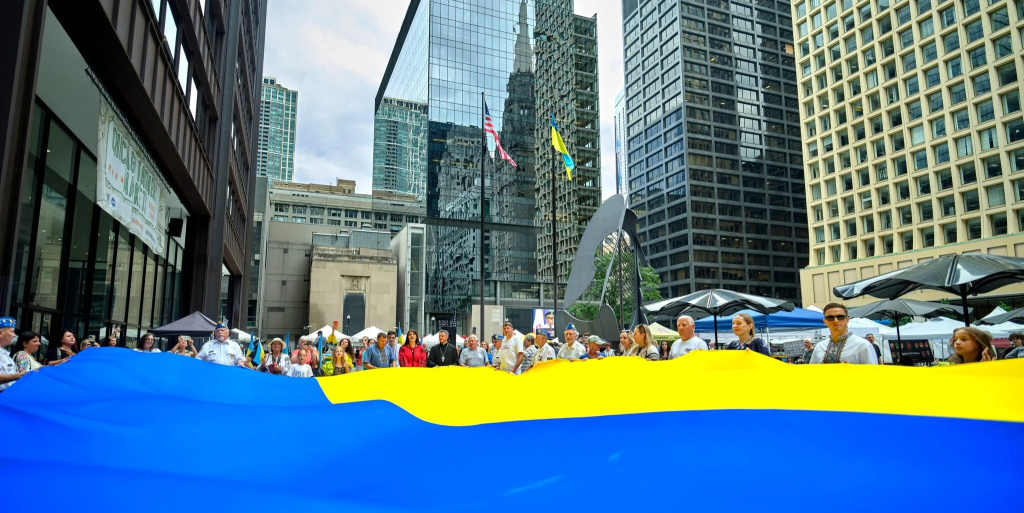
When Lena and I went to the Ukrainian rally, we made sure to be quiet and not speak Russian. On our way home, Lena said: all went well, we showed our support, and we didn’t get beaten at the Ukrainian rally.

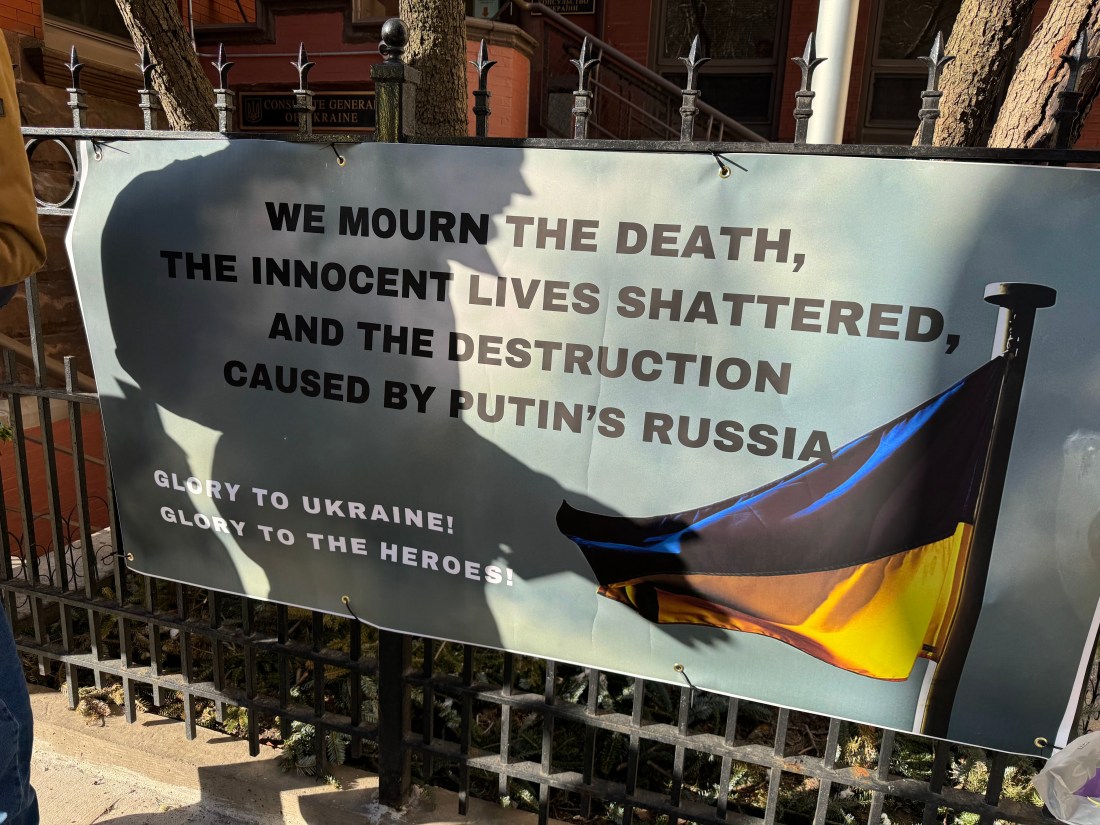
I recalled what Boris said in the early days of the war: now, Russian sounds the same as German after WWII, and it will take at least fifty years, if not more, for this association to go away. (I would add – if…) I had an acute feeling of exactly that at that very moment, and looking at the posters depicting bloody Putin, I was thinking: screw you, what did you do with Ukraine?! What did you do with Russia?! And immediately, I stopped and thought: no, not him. We allowed it to be done.

After we got back home, we talked for several hours. We talked about the necessity of Russia’s complete defeat as the only way to start over. I shared with Lena Igor’s thoughts about educating people and creating the base from which another country could be born. Lena told me about the large Latvian community near where she lives, and how these Latvians were keeping the language and the culture alive for three generations, hoping to return “when the occupation will be over.” Still, when the occupation was over, none of them returned.

I understand what she says, and I agree that people who have lived away from their country for generations are extremely unlikely to go back. I do not think I will ever come back for good, but that’s because there was no political reason for me to leave Russia. I consciously chose the country I now call home. But I hope that the day will come when I will be able to come and help to build a new and better society.

But before that, as I promised to a person who is hopefully reading this now, I will invest in their nursery garden. And I am sure that this day is closer than we think.

More Coverage Of February 24 Rallies

A short but very much to-the-point episode from ABC7 here.

WGN coverage:

Igor took a lot of great pictures, I especially like this one:

DSC_3598

But all of them are pretty amazing, and you can see all of them here.

I will try to write more about How I feel and what I think these days.

On This Unbearebly Difficult Day.

The day when we marched in a group of anti-putin Russians to pay respects to the victims of the Russian invasion, when we chanted, “Ukraine needs your help!” That day, I felt more hopeless than ever. I remember the somber mood of the first rallies in February and early March of 2022. I remember when the mood started to be more elevated and more hopeful, when we marched, fired by our anger and energy. Today, I marched, but I felt hopeless. On the way to the rally, I read an article in TIME magazine titled “Ukraine Can’t Win the War.” To tell you the truth, it does not matter what the article says exactly. You just don’t publish articles named like this on the grim anniversary of the invasion. Lena and I briskly walked to the meeting point of the Russian rally for Ukraine, holding the Ukrainian flags in our hands and passing the groups of tourists and locals for whom there was no war going on. Two years, and people are asking, “Which war?”

I know that the world is driven by the economy. I know that the world economy needs peace, and there is no industry, including weapons manufacturing, actually benefitting from the war. But why people don’t understand the consequences?

Lena and I chatted for hours tonight, asking each other the same questions: why do companies care about their profits next week and do not care what will happen to them and the world two years from now? I do not have an answer.

The Ukrainian Rally two hours later

February 24: Mark This Day By Donating To UNITED24

Donate for Sea Drones here

What They Say

I saw this video clip in my friend’s blog, and I agree with her that more people should see it. It has English subtitles, which I can confirm is accurate. I wish I could say it’s a fake, but it isn’t.

The War Is Not Over

Just a day before that happened, I talked to my friend who was in Chicago for the Christmas break. We were very happy to get together and talk about everything in our lives, but not all of the conversation topics were happy. She expressed her frustration, which I seconded, with people around us being “fatigued” with the war and “moving forward.” The conversation she had with her colleagues really struck me. She related that when the holiday season started, many people asked her whether she was going home for the holidays, and when she replied that she couldn’t because her country was at war, people looked startled: which war? with Ukraine? Isn’t it over yet? I can only imagine how she felt, but I couldn’t agree more: one of the biggest frustrations at the end of the year was that the war was largely forgotten.

And then came the airstrikes.

Yes, for the past two days, each news broadcast starts with the Ukrainian war news. I wish there would be a different reason for that. Those lives that were taken won’t be back. But maybe, hopefully, these horrible events would make people think. I hope that what happened was a clear reminder for those who think that this war will never affect their lives. I hope that more aid for Ukraine is coming (and I am going to make it a part of my end-of-the-year donations as well). Aggressors never stop. They should be stopped. Using as much force as needed.

From Time Magazine: Inside Volodymyr Zelensky’s Struggle to Keep Ukraine in the Fight

(Copying the text for those who do not have access to the site)

‘Nobody Believes in Our Victory Like I Do.’ Inside Volodymyr Zelensky’s Struggle to Keep Ukraine in the Fight
BY SIMON SHUSTER/KYIV

Volodymyr Zelensky was running late.

The invitation to his speech at the National Archives in Washington had gone out to several hundred guests, including congressional leaders and top officials from the Biden Administration. Billed as the main event of his visit in late September, it would give him a chance to inspire U.S. support against Russia with the kind of oratory the world has come to expect from Ukraine’s wartime President. It did not go as planned.

That afternoon, Zelensky’s meetings at the White House and the Pentagon delayed him by more than an hour, and when he finally arrived to begin his speech at 6:41 p.m., he looked distant and agitated. He relied on his wife, First Lady Olena Zelenska, to carry his message of resilience on the stage beside him, while his own delivery felt stilted, as though he wanted to get it over with. At one point, while handing out medals after the speech, he urged the organizer to hurry things along.

The reason, he later said, was the exhaustion he felt that night, not only from the demands of leadership during the war but also the persistent need to convince his allies that, with their help, Ukraine can win. “Nobody believes in our victory like I do. Nobody,” Zelensky told TIME in an interview after his trip. Instilling that belief in his allies, he said, “takes all your power, your energy. You understand? It takes so much of everything.”

It is only getting harder. Twenty months into the war, about a fifth of Ukraine’s territory remains under Russian occupation. Tens of thousands of soldiers and civilians have been killed, and Zelensky can feel during his travels that global interest in the war has slackened. So has the level of international support. “The scariest thing is that part of the world got used to the war in Ukraine,” he says. “Exhaustion with the war rolls along like a wave. You see it in the United States, in Europe. And we see that as soon as they start to get a little tired, it becomes like a show to them: ‘I can’t watch this rerun for the 10th time.’”

Continue reading “From Time Magazine: Inside Volodymyr Zelensky’s Struggle to Keep Ukraine in the Fight”

No Title…

My friend from Saint Petersburg told me this horror story. She was talking to her friend in Germany on her landline (there is some huge discount on landline calls from Germany, as she explained). Since it was almost free for her friend, they talked for a long time – over forty minutes. While they were still talking, she heard the buzzer from downstairs: Open, police!

Frightened, she buzzed them in, and two policemen in full gear entered her apartment. They asked her whom she was talking to, and whether she was sure it was her friend, not a scummer, and what city she was calling from. They said that they “wanted to protect her” from possible scum(?!). All looked like they came to arrest my friend, and it took her a while to talk them into leaving her alone.

Later, she started to question her other friends, and it turned out that others had similar situations (all conversations were on landlines and calls coming from Germany).

I don’t know what else to add…

In The Loop Yesterday

There were Palestinian rallies in the Loop for several days. Yesterday, Boris and I ran into a bigger rally on Michigan Avenue when we went to see the Camille Claudel exhibit at the Art Institute. I already read in the news about how violent the protesters have been, including attacking the City Council members, and that’s how yesterday’s rally felt. And it was way bigger than the biggest Ukrainian rally we ever had in Chicago.

The Tribune front page article talks about Palestinian and Muslim people in general feeling frightened and unsafe these days, especially with several hate crimes, and they compare their feelings with how they felt after 9/11. I think there is a big difference – I remember the feelings in society after 9/11. I understand that Palestinian Americans want to be safe, but that was not the narrative of yesterday’s rallies and all the rallies of the past week. The signs people carried were not about their personal safety. And not even about humanitarian aid to Gaza. And their chants were not about their safety.

Unfortunately, the ideology can’t be destroyed with shelling or any other means of brutal force. Same as it was not the German surrender that put an end to fascism destroying the terrorists won’t put an end to the terrorist ideology.