Elementary School In the Soviet Union: My Notebooks

I plan to write a series of blog posts about school, similar to the series I wrote about the university. I do not have as many pictures from my school years as I would need to illustrate everything I am going to write about, but I have a lot of my school notebooks saved by my mom.

I have two of my very first notebooks in storage, and I will scan them at some point in the future, but I didn’t want to wait until this future came, so here are several others.

All of them are from my first grade. There was no Kindergarten class at school, and I already described our Kindergarten education when I blogged about my detsky sad. What I started in September 1970 was a first grade; whatever was before was not considered school.

The name of this notebook is the Russian language. That’s what “writing” was called. In the first grade, our parents signed our notebooks.

Our notebooks were not at all like nowadays notebooks. The cover was made of thin paper, ad there were only twelve pages in each, We had six notebooks circulating at any given time: two for the Russian language, two for math, and two for penmanship. At the beginning of the lesson, you would turn in your notebook with your homework and pick up your other notebook with your yesterday’s homework graded by your teacher. You would do your classwork in that notebook, then do the homework in the same notebook, and the process would be repeated the next moring.
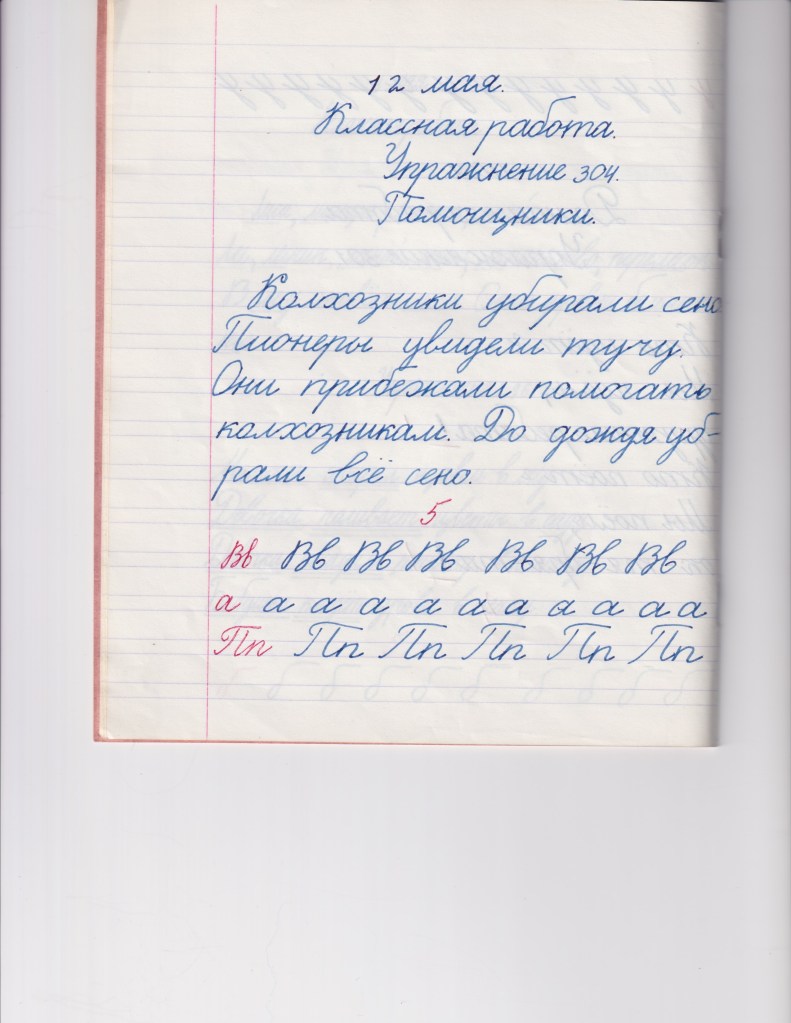
That’s classwork for May 12. I got “five” for it, which is the equivalent of an A
That’s the homework for May 19. I got “four,” which is equivalent to B. The mark is down because I made one correction.
Continue reading “Elementary School In the Soviet Union: My Notebooks”

One More Memory

Just another memory, one of many, prompted by a conversation with an online friend.

One of my closest high school friends was accepted to the same university as me, and our friendship (and heart-to-heart conversations) continued. Her mother was a biologist, and she would go on research expeditions to the Far North every summer. Sometimes, my friend would accompany her. Once, when we had one of those heart-to-heart conversations, she told me how she witnessed a helicopter chase of the children. 

At school, we were told that the Soviet government takes care of the Native tribes of the Far North and brings civilization to them; and that children receive a high-quality education in the boarding schools and do not have to migrate with raindeers. And now I am listening to my friend L. telling me a different story.

Imagine a helicopter approaching, and all the children run into hiding. It lands, and the people from the helicopter start to walk from one chum to another and ask whether there are any children in this household. And the parents respond to the effect of “what are you talking about?! We haven’t got no children!” And if they find some, everybody screams and tries not to let the children go. 

And the most puzzling thing is that when a helicopter brings these children back home for a summer break, their parents say: we do not want these children; they are not our children. They do not know how to live in the tundra anymore; they are not ours; you can take them back. 

I remember L. telling me that with her big beautiful eyes wide open in disbelief. And we shook our heads and laughed: silly people! We were not small children at that time, we were nineteen or twenty, and we still chose not to see,

Even years later, when I read books about Native Americans in Brazil who were trying to stay on their ancestors’ land while capitalists wanted to seize it for oil production, it never occurred to me that the same thing was happening in my country. When I read about the extermination of Native people in the US and boarding schools in Canada, it never occurred to me that the Soviet Union was doing the same thing. 

Like in many other cases, it’s not even that somebody was hiding the truth from me; I never bothered to process the facts I knew. I never thought: these are the same Indians as in the books. And I can’t explain why.

My historical posts are being published in random order. Please refer to the page Hettie’s timeline to find where exactly each post belongs and what was before and after.

The First Day Of School!

In the Soviet Union, kids started school when they were seven. Although we had a “prep” group in the detskiy sad, it still wasn’t considered “school.” Going to school meant that you were “a big kid,” and everybody counted the days left until their first “September First” (the official start of the school year countrywide). Very soon, the novelty would vanish, and at least half of the kids would start to hate school, but it was not the case on the first day of your first school year.

During summer in Estonia, Grandma Fania gave me lessons. I could read decently by that time, but she also taught me cursive, and we did a lot of writing exercises. I have no idea why she did this – it was by no means required. Possibly, she kept the memories of the Gymnasium in the Czarist Russia she attended – to be admitted, you had to demonstrate the ability to read, write and do basic arithmetic. Or maybe, she just wanted me to be in the top of my class from day one.

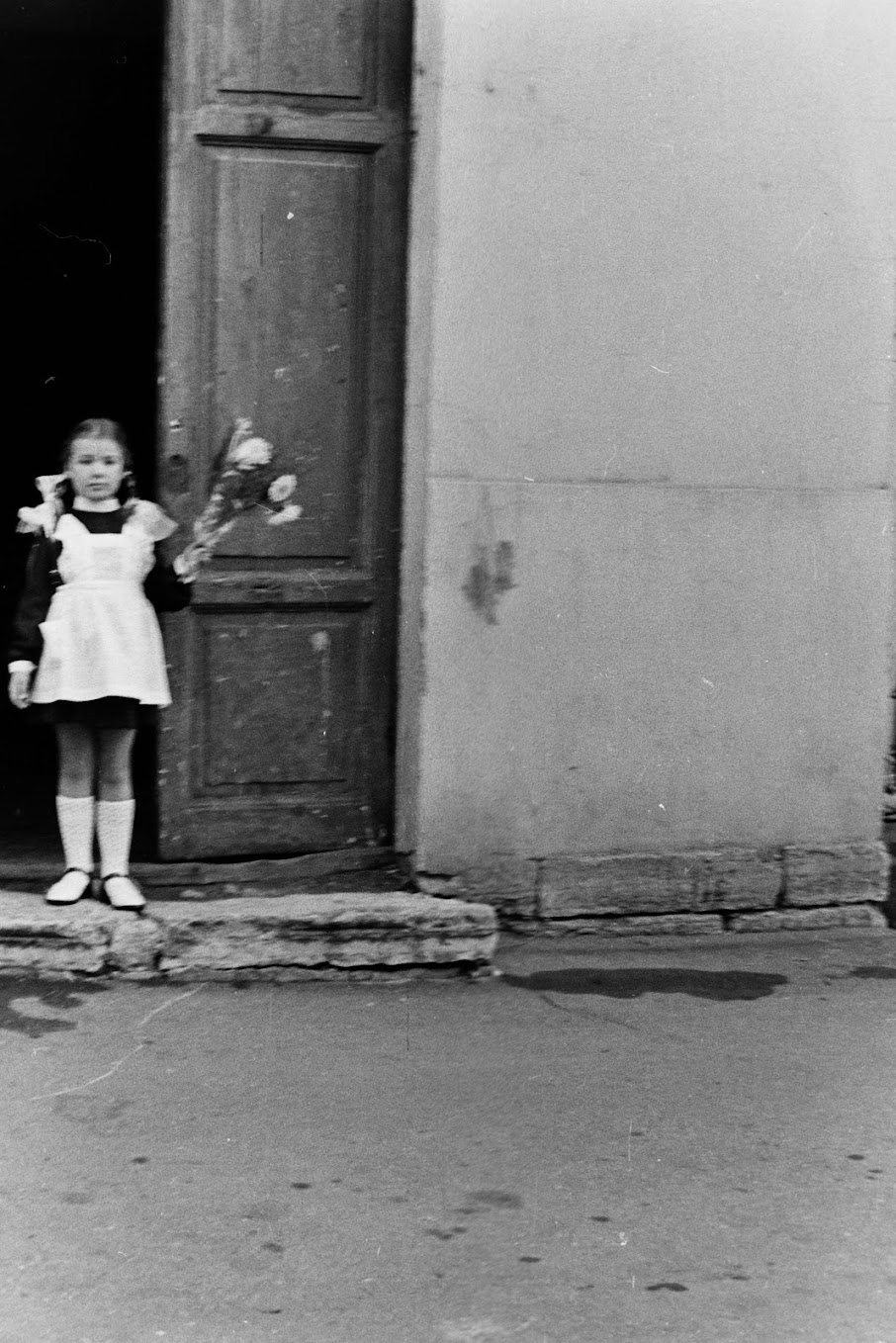
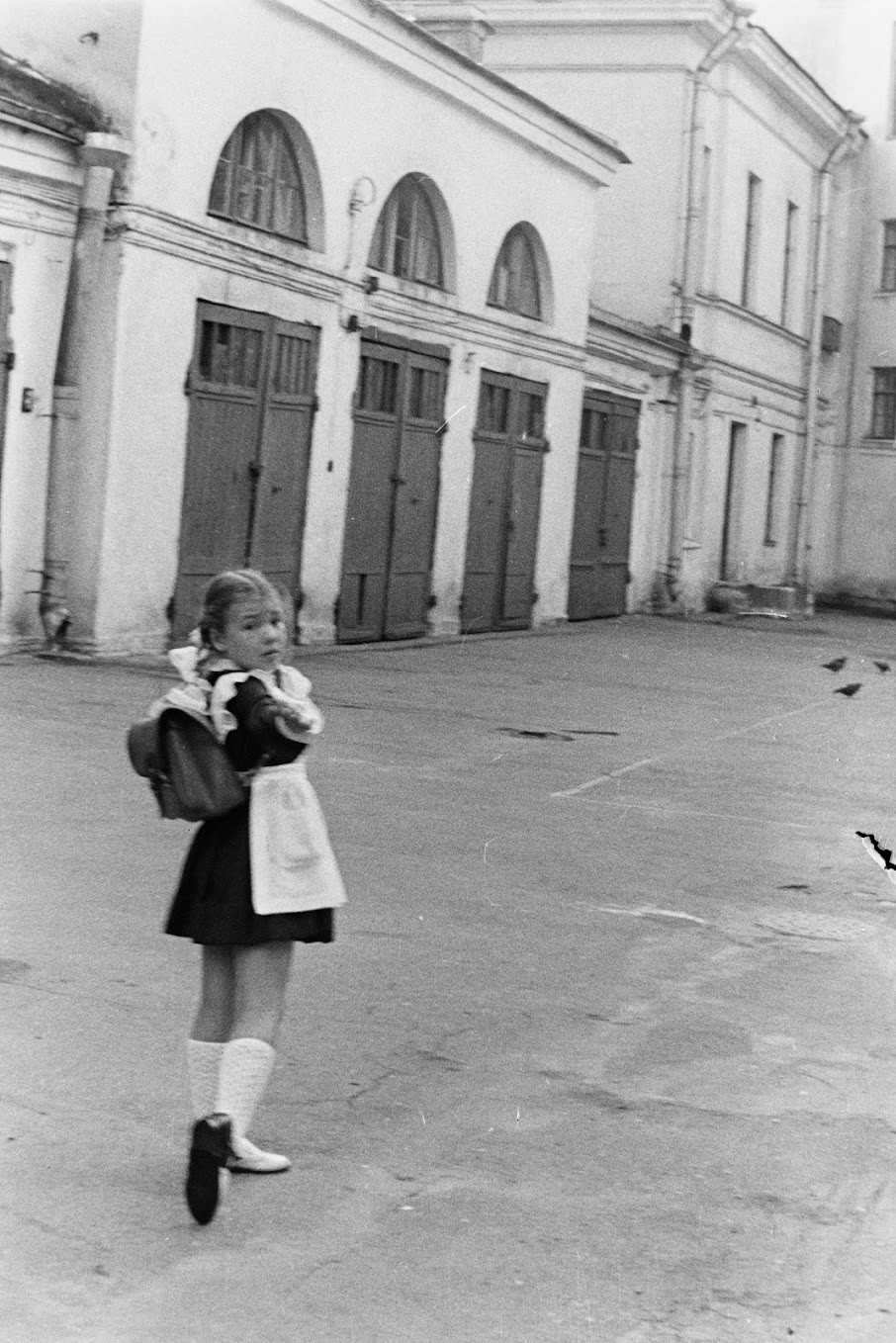
In any case, I was ready and excited. I had my new school uniform on with the “holiday” white apron, and I had flowers in my hand – that was also a must for September 1 – the flowers were given to the teachers, and everybody had to have a bouquet.

The school was less than ten minutes walk away, but I was afraid to be late!

Continue reading “The First Day Of School!”

Narva-Joesuu, part 2

Turned out, I have a lot of pictures from my last pre-school summer, although it looks like they cover just two or three days – as usual, when somebody with the camera was around.

Blueberries picking: looks like my mom is taking pictures from the nearby hill. I and Baba Fania
Looking fro the next blueberry spot. I had this basket for so many years after! I won’t be surprised if it is still sitting somewhere in Saint-Petersburg
Surprisingly, I remember the name of this lady, who was Baba Fania’s close friend. Her name was Anna Maximovns Bomach, I think, and she was a retired pediatrician. I do not remember what her relation to Eugeny Mravinsky was, but there was one. And it’s because of her that I got a ticket to the only Eugeny Mravinsly concert I ever attended (several years later)
A view of the mouth of Narova RIver from the nearby hill
On the Narova shore
Mom, which means that my father was visiting
On the way home from the grocery store
With Aunt Kima
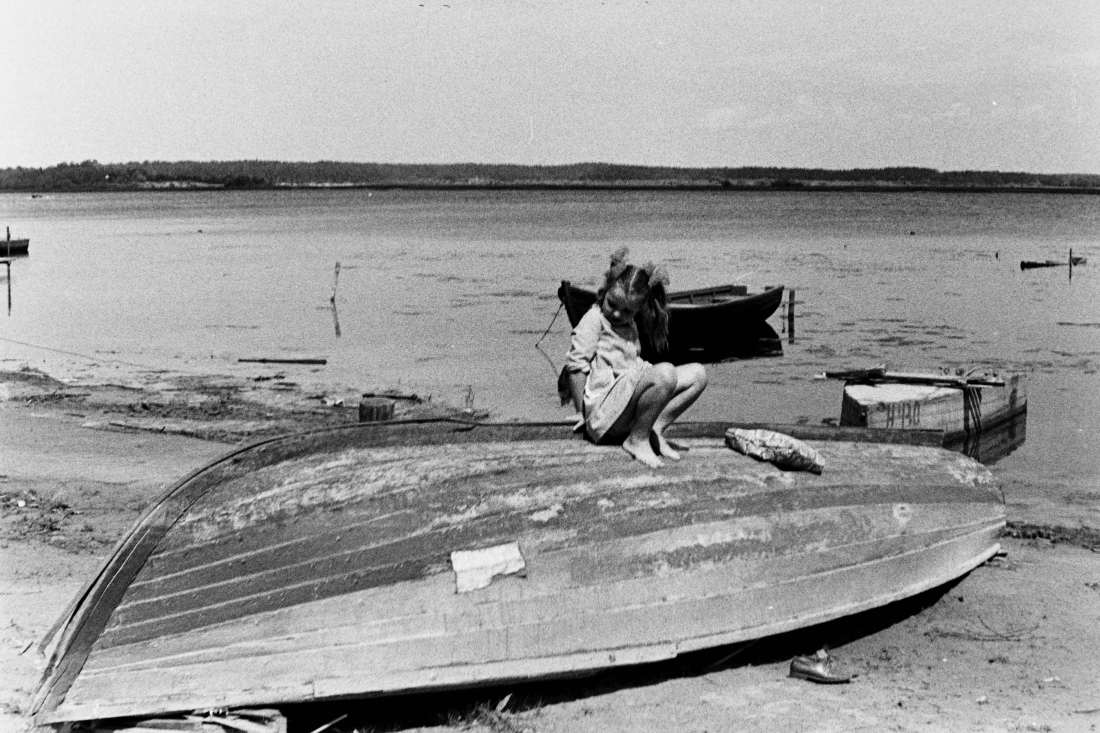
On the beach. I am sitting on yet another ruin of yet another villa…
End of summer, and we are leaving on that day. I am dressed nicely (the same white lace dress as a year ago, probably redone, and I stand by Uncle Misha’s car. He would drive us back to Leningrad.

Summer 1970: Narva-Joesuu

That was my last summer before school, and that summer, I was not sent to a dacha with detsky sad, and I didn’t go to the sanatorium. Instead, it was the first of many summers I spent in Estonia, in Narva-Joesuu. When I published my old home movies, I talked about that time here. I know that my father’s side of the family spent summers there for many years before that. My great-grandfather (the father of my father’s mother, David Solomonovich Levitin died there and was buried at the local cemetery. As I mentioned earlier, I know that I spent at least some part of my very first simmer there, and I have no idea what happened later and why I never went there for seven years.

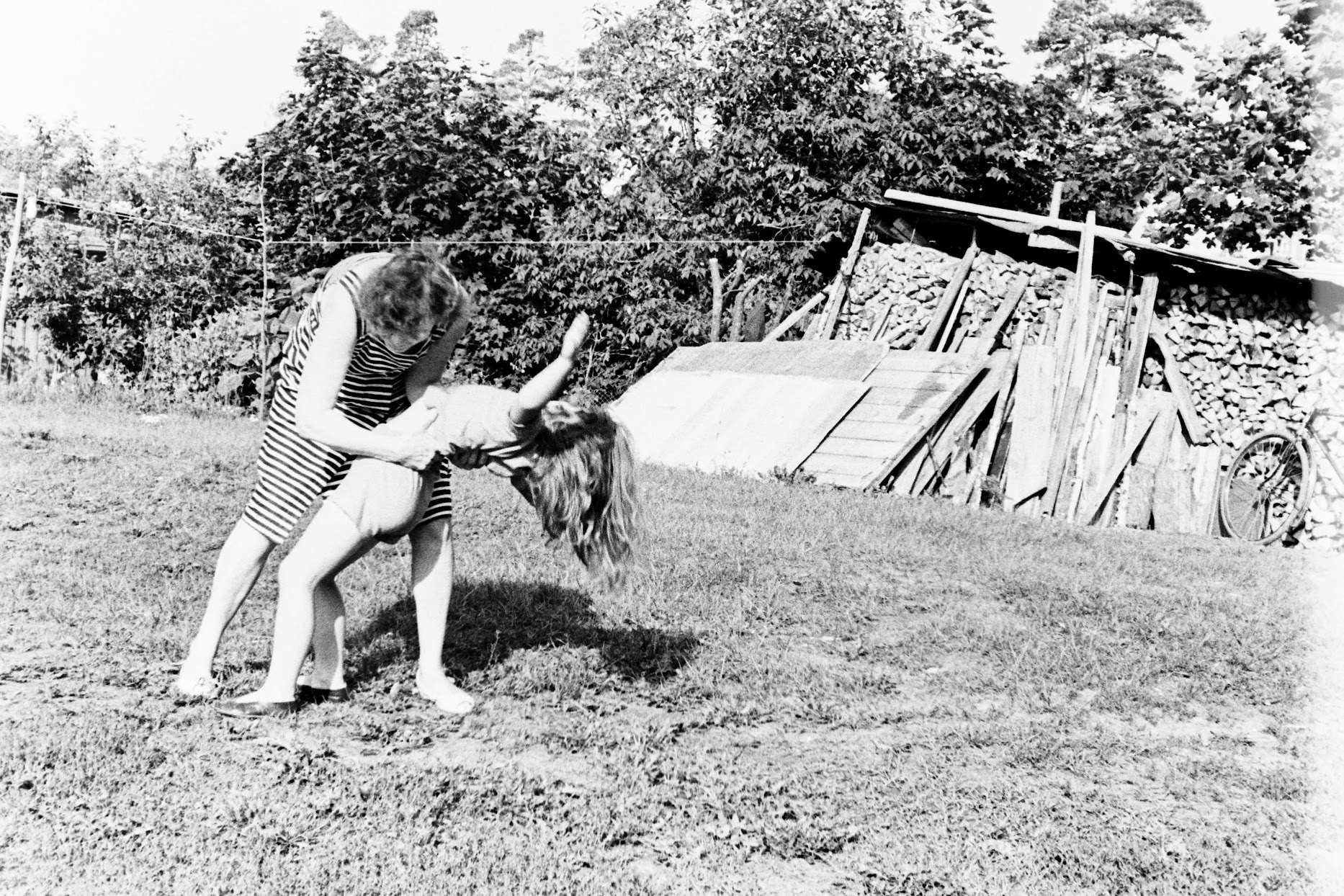
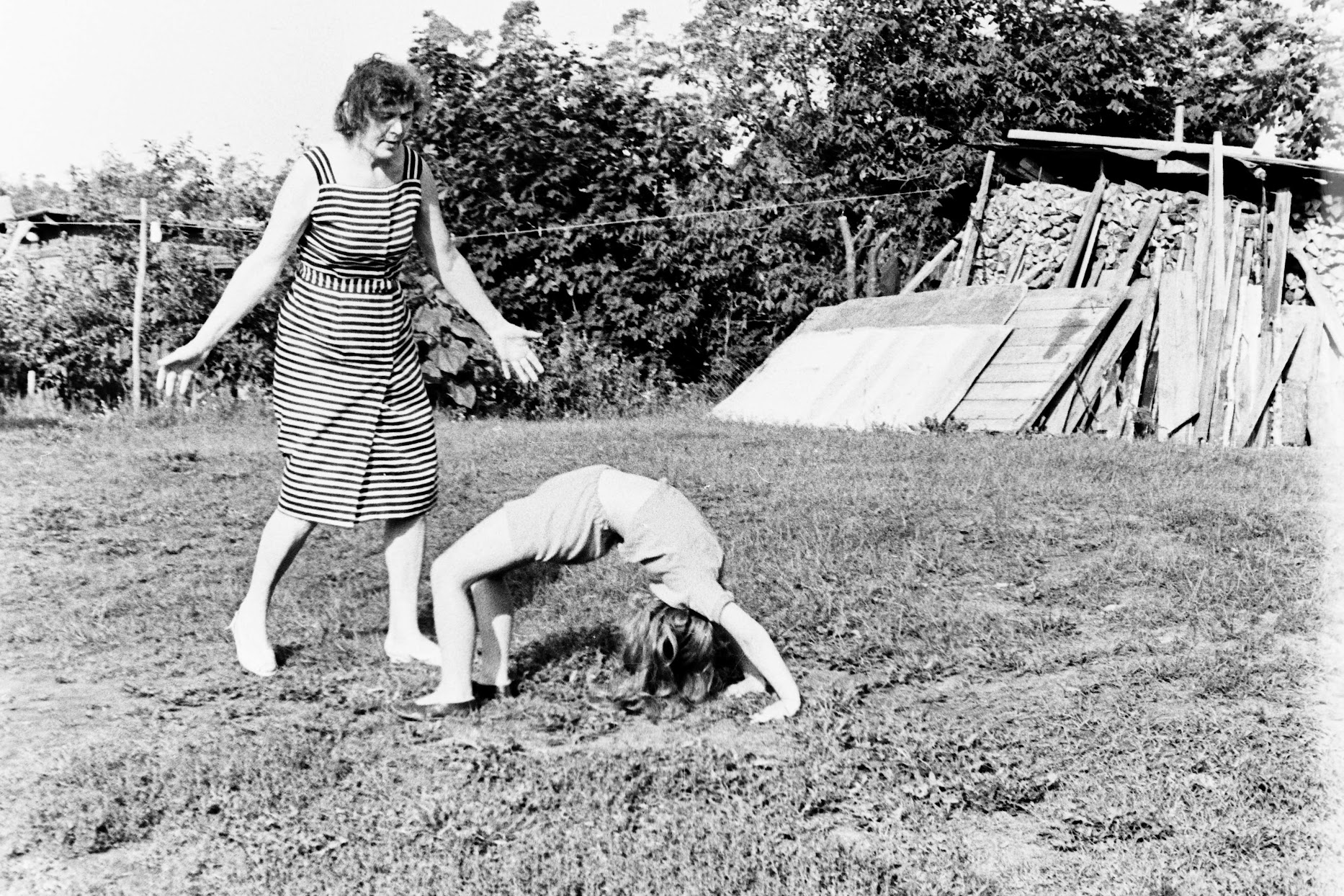
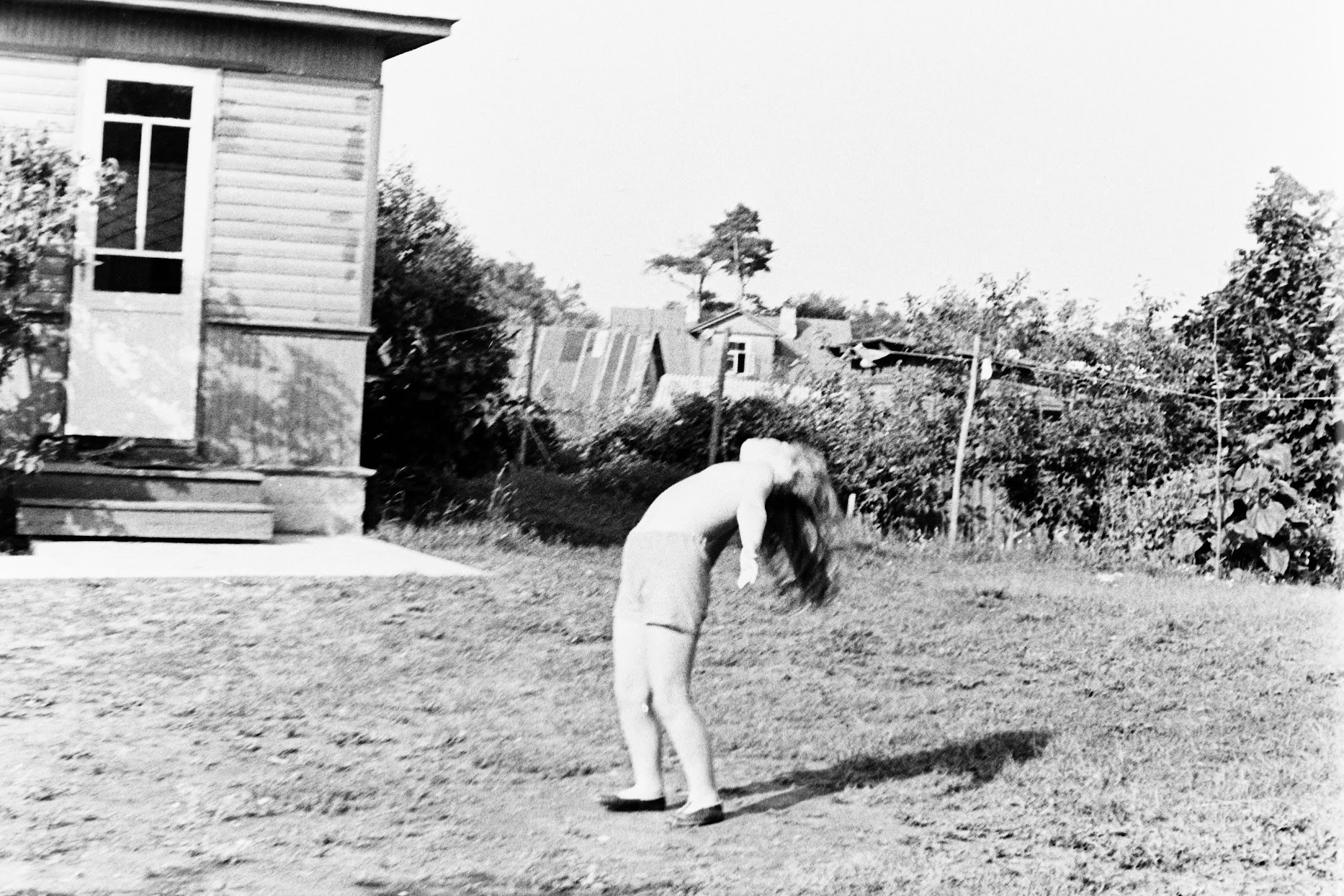
These questions didn’t bother me back then, though. For most of the summer, I was there with my great aunt Fania, whom I called granma (baba) in the absence of an actual grandma. As I mentioned earlier, my great uncle Mish and his wife Nadia rented another room in the same house. In contrast to baba Fania, uncle Misha, eight years younger than her, didn’t like being perceived as a “grandpa,” so I called him uncle. His wife Nadia was even more concerned with looking younger than she was, and I called her aunt. I know that the rest of the family just barely tolerated aunt Nadia. I do not know the actual reason, but I remember that she was criticized for exactly that: behaving as a grand dame, taking good care of herself, etc. In the pictures below, she helps me to get into the “bridge” position (remember my PE/figure skating?). Since uncle Misha was 58 at that time, she should have been fifty-something and looked outrageously good for her age (by that time’s standards).

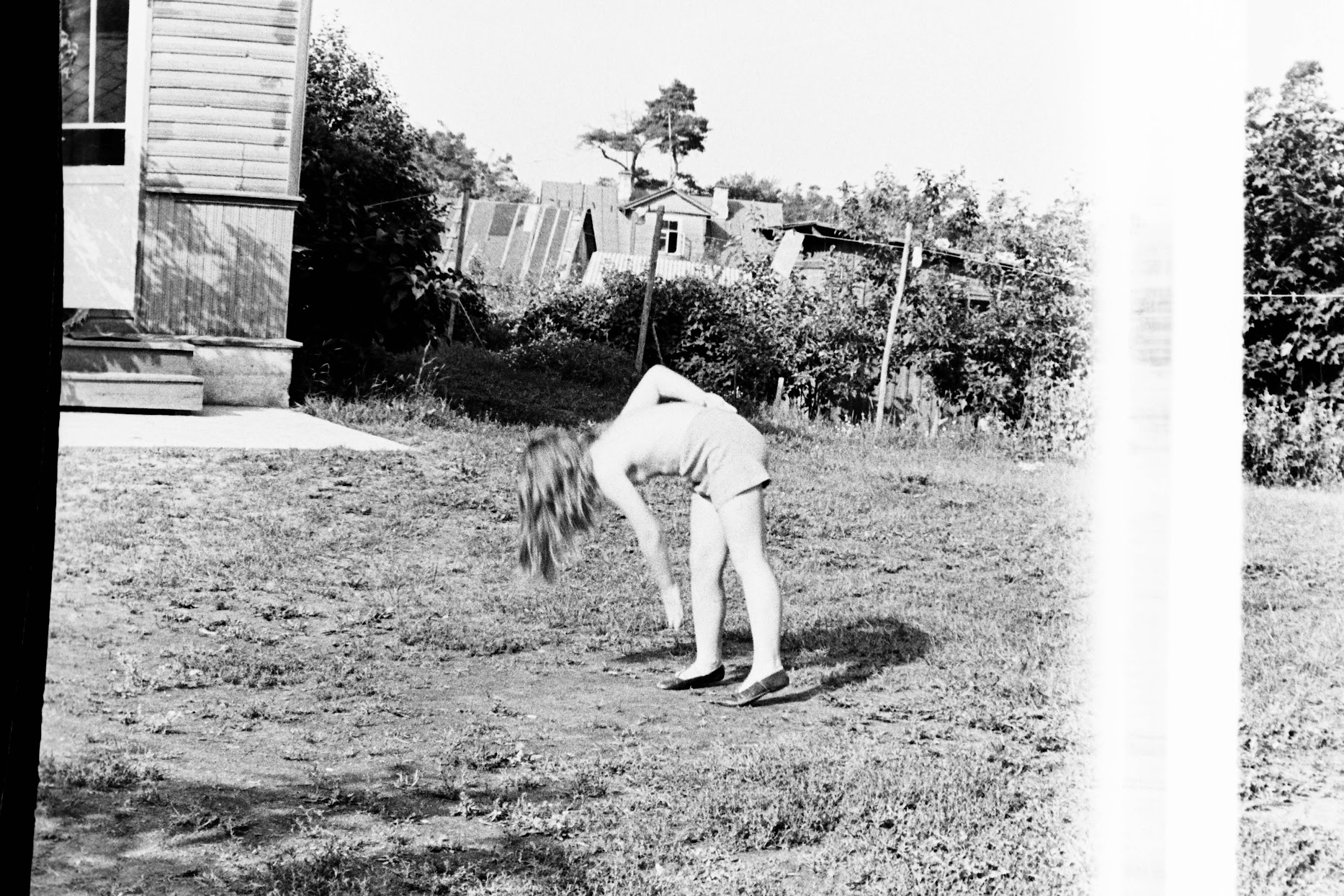
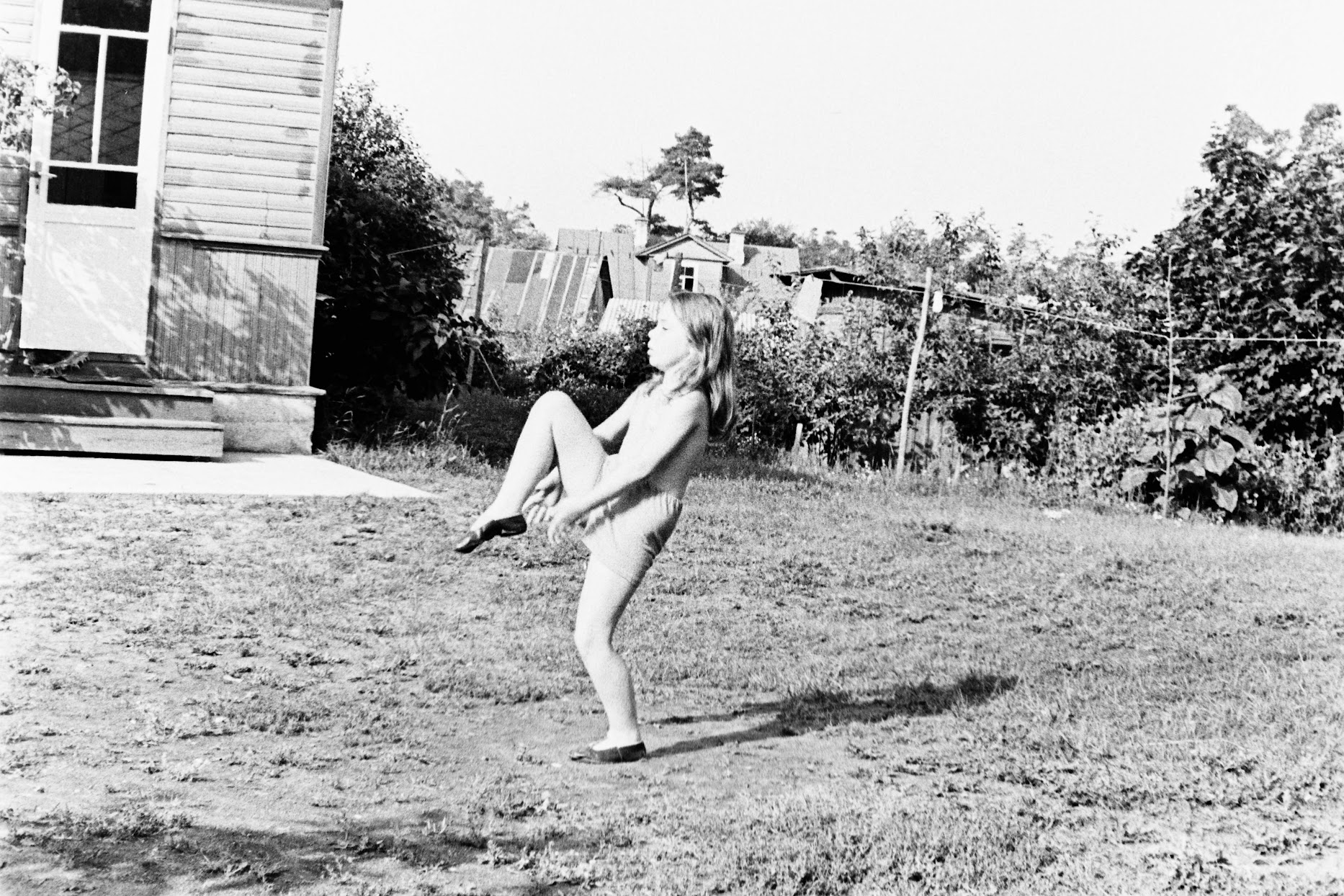
More of me doing exercises:

Continue reading “Summer 1970: Narva-Joesuu”

1969-1970

It was my last year before school. When we returned from Loo, I started to attend the “preparatory group” in my detskiy sad, which would be the equivalent of Kindergarten in the US, only it was more rigorous.

All the children who turned six and would start the first grade in the fall had two “lessons” a day. We sat at desks that looked a lot like school desks (two kids at one desk), and we did a lot of counting and other math exercises, speech development, and so on. We had to “tell the story looking at the picture” (which I hated with a burning passion). But overall, we were enormously proud to be “almost schoolchildren,” and I liked to wear a navy blue corduroy dress with a white lace collar resembling the school uniform (it was way before I started to hate school uniforms!).

Also, I started to take figure skating classes. They were free and were run by a local enthusiast, so nobody thought a big deal about them. Unlike the famous Soviet “sports schools,” there was no selection of future champions, and we just had fun and tried our best.

We didn’t have an option of skating indoors, so in the fall, we had PE in the local school gym for two evenings a week, and it was also enormous fun.

In some of the photos below, I show the exercises we learned during these classes.

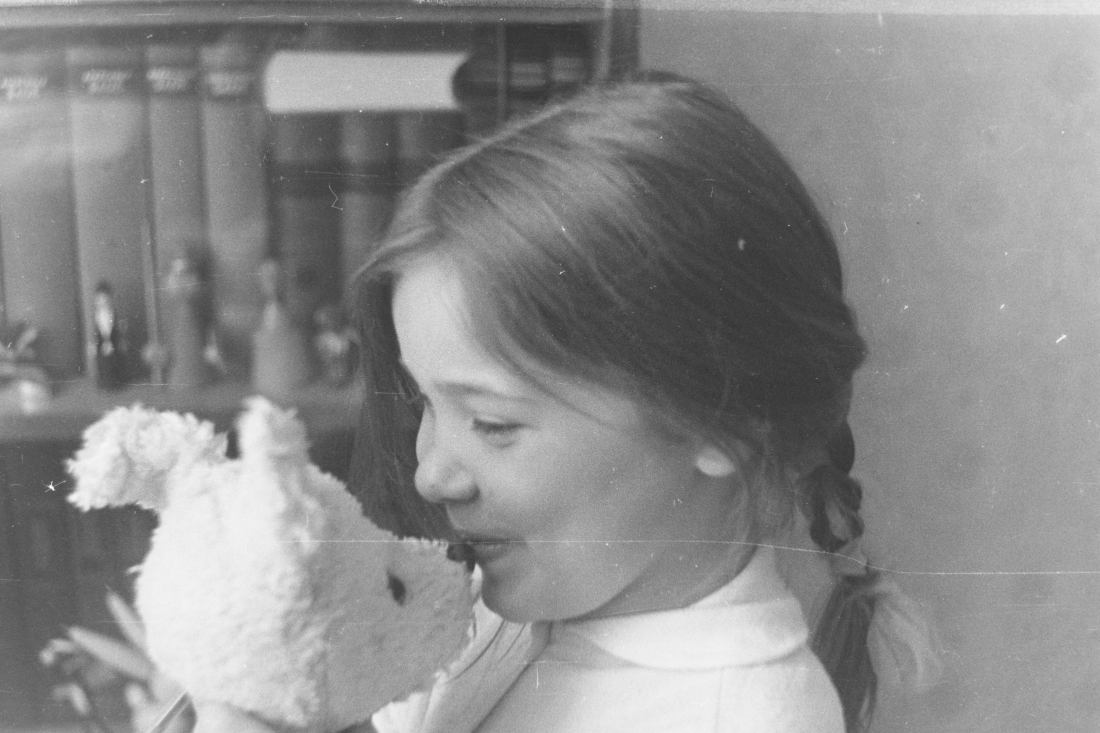
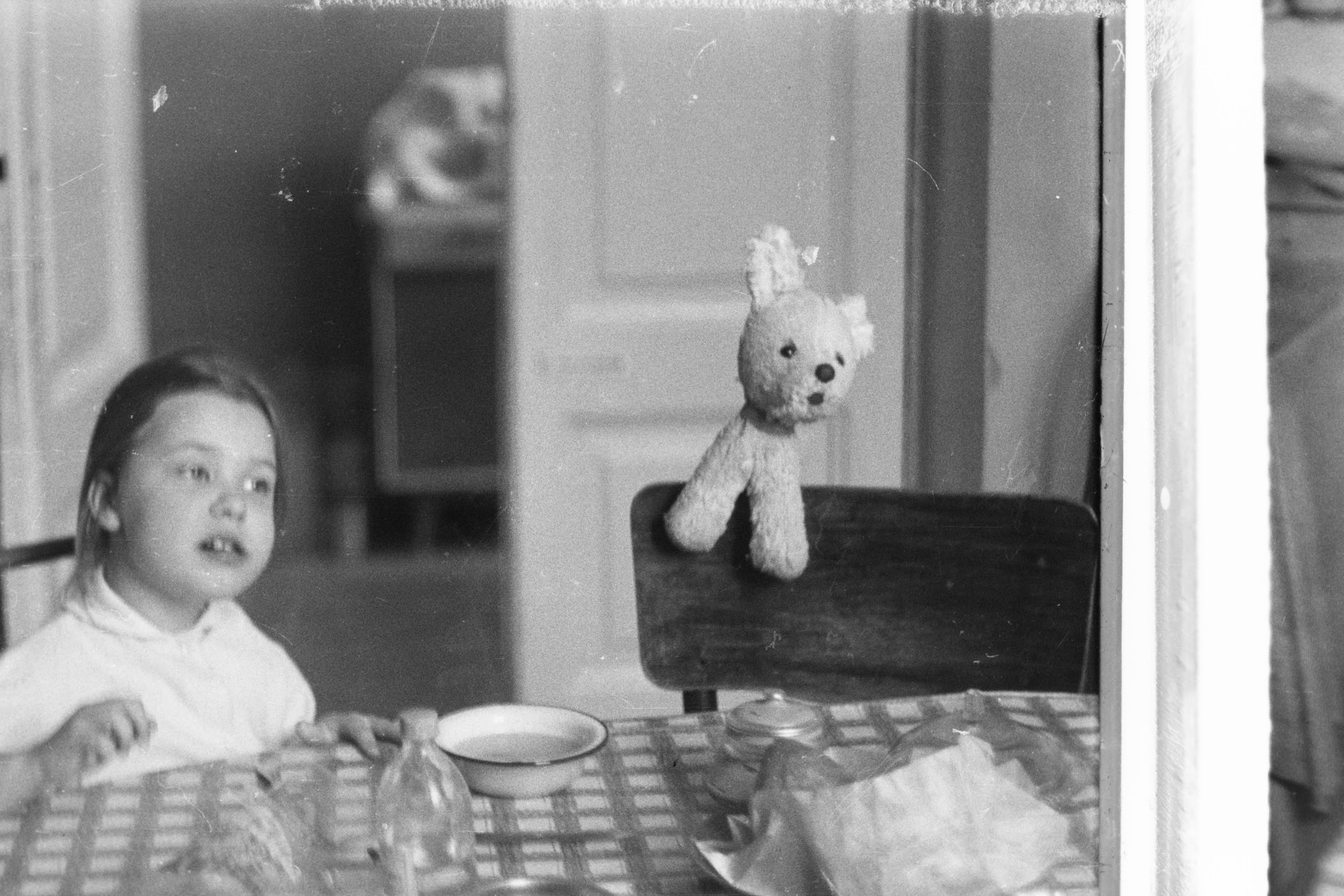
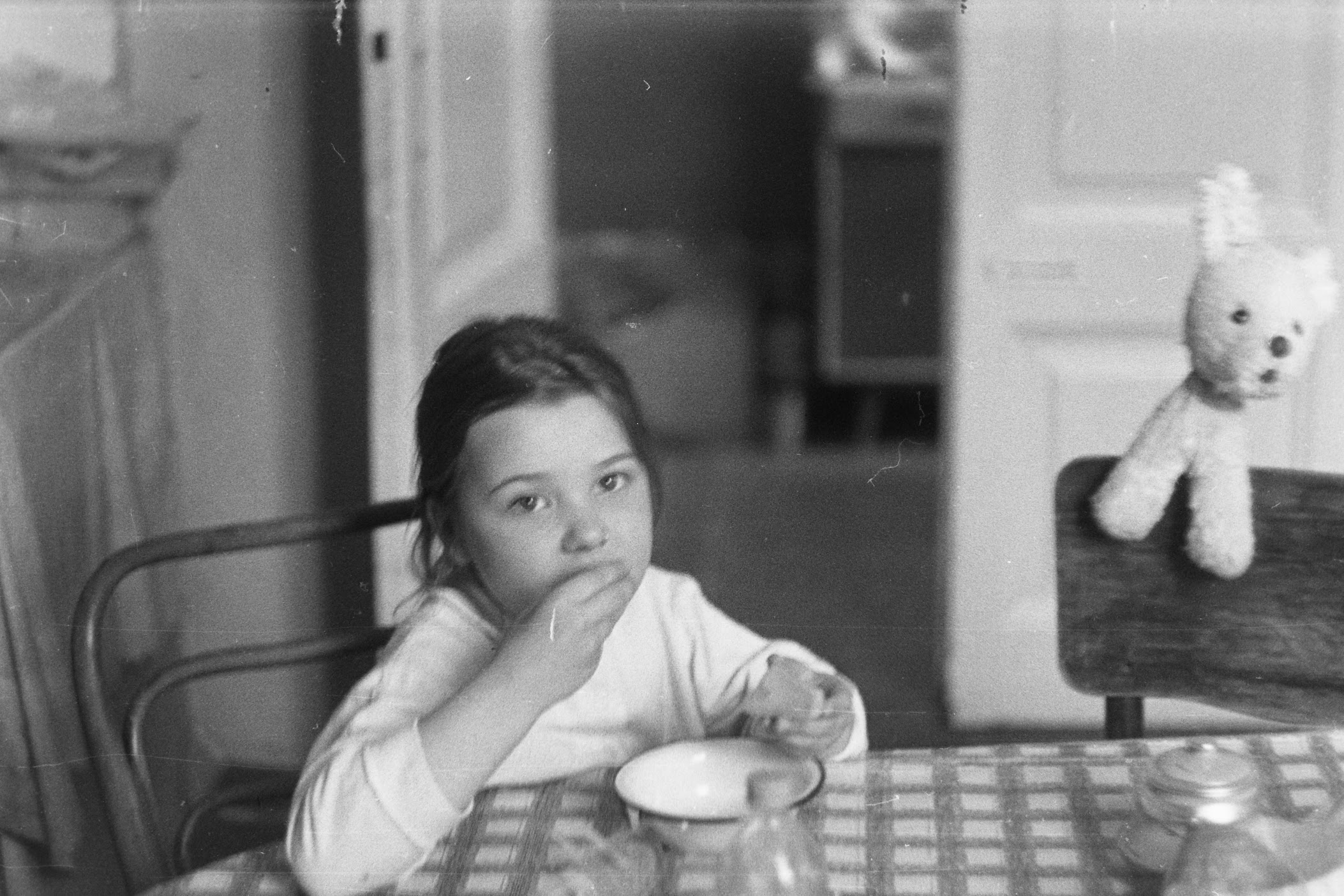
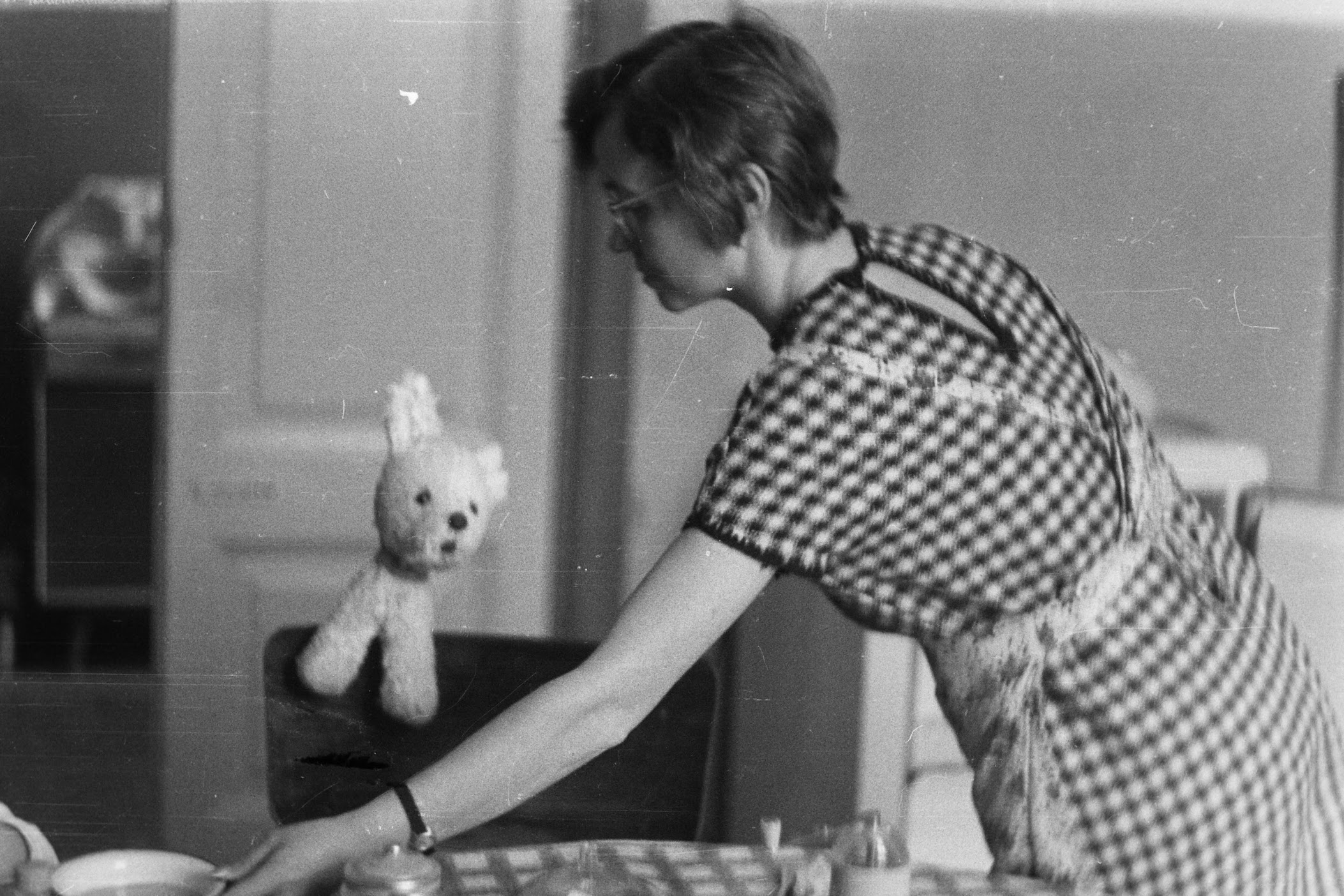
IN the kitchen, sometime in fall 1969 with my favorite stuffy named Boska
Mom
Continue reading “1969-1970”

Where Would I Be?

These days, I often think about what would happen to me if I wouldn’t come to the US. Suppose I would decide to stay, either because I won’t have the heart to leave Boris behind or for any other reason. Obviously, my life would be drastically different, but I am thinking more about what would be on my mind. Where would I be, and which side would I take if I stayed in Russia? It’s impossible to tell because all these twenty-six years made me a completely new person. It’s very tempting to say that I would be on the right side of things because of the “three generations of revolutionaries” because I was always a radical and “politically unreliable.”

But all these three generations of revolutionaries truly believed in Communism; they believed that you could “force mankind into happiness with the iron hand of revolution.” And I also believed in the communist ideals and social justice (one could argue that this didn’t change :)), just not so much in favor of the “iron hand.” I do not know where I would be, and that’s scary.
We talked with Boris about how we didn’t feel anything wrong with most of the engineers working for the Ministry of Defence or the Ministry of Defence Manufacturing. How we were very proud of ourselves, not caring how our ideas would be used. As long as the government was willing to pay us, we didn’t care. We were “above all of that.”
Now, when I read about Skolkovo and what projects are used now during the war, and how exactly they are used – why am I surprised? I was no better.

There is propaganda, and then there is this

Today, Russian State Duma changed the penal code to increase penalties for conscripts dodging draft, put in penalties for willingly surrendering to the enemy and reviving Soviet-era penalties against “marauding” (while also adding what would count as extenuating circumstances, which includes participating in the armed conflicts). And there are also supposed to be referenda on joining the Russian Federation in separatist-controlled parts of Donesk and Luhansk oblasti (the self-proclaimed People’s Republics), as well as the Ukrainian territories Russia occupied since the start of the war. The logic seems to be that, if Ukraine continues its advance, they would be attacking Russian territories, which would justify putting the country on war footing and partial mobilization. (As many people, including some pro-war commentators, have pointed out, the Russian Federation simply doesn’t have the infrastructure and the personal for the full-scale, World War II style national mobilization – then again, I can’t entirely rule out the Russian government trying it anyway).

The whole thing is flimsy as hell – but again, so is a lot of the spin coming out of Russian state media.

Continue reading “There is propaganda, and then there is this”

Loo, September 1969

That was my second and last trip “to the South.” We rented a room from the same landlord and passed the time the same way as a year before. That meant that we spent mornings at the beach, then went inside to hide from the intense sun. We had milk and bread at home, and then went back to the beach. We had dinner in a small diner close to the beach and would go back to our room. Sometimes, we would wait to see a sunset over the sea.

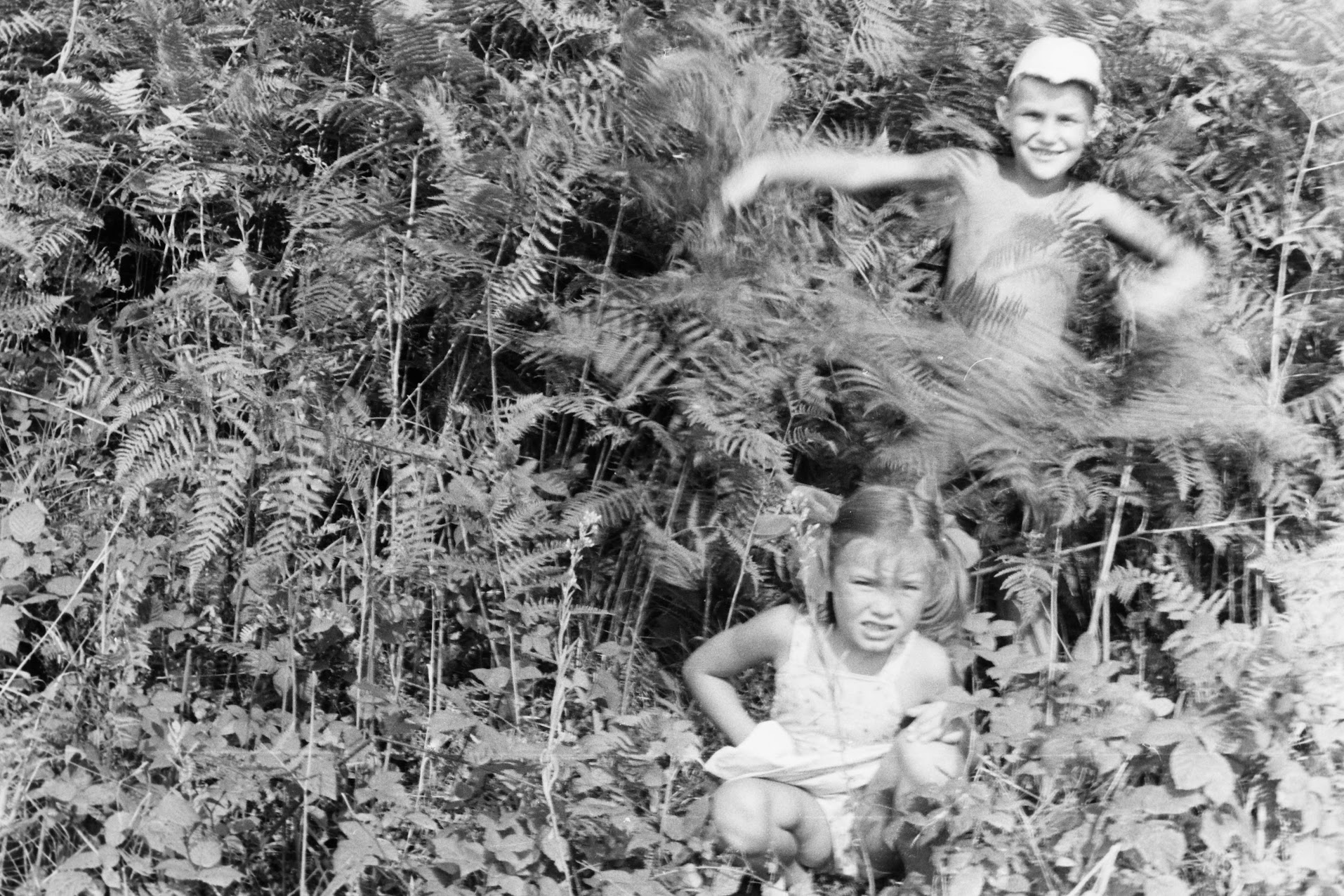
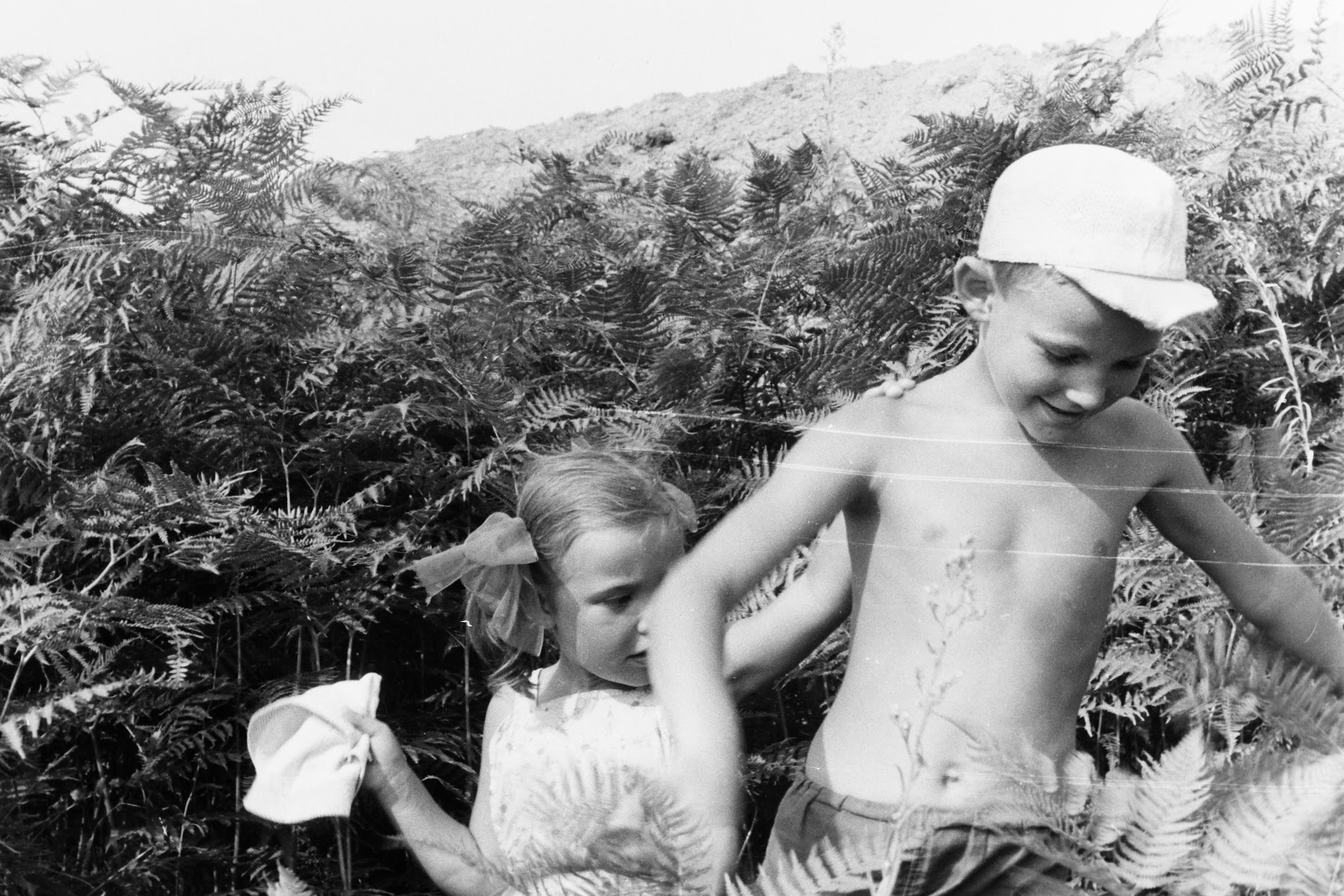
Mom made friends with another mom who was vacationing with her son, named Sergey. He was approximate my age, and we played on the beach together. A couple of times, we went hiking in the mountains – the mountains started right there, behind the houses. Sergey and I loved making our way through the ferns. Also, that was the first time I saw blackberries and tried them. In Russian, blackberries a called hedgehog berries, and I asked mom whether it is true that only hedgehogs could it blackberries:)

Continue reading “Loo, September 1969”

Sanatorium, part 2

It has been several months since my last historical post. I published the last one on March 13, and it was in the making for a while. After that, the war took over, and somehow I could not return to the stories of my childhood, although I made several attempts during these months.
Here is another attempt.

***

I stayed in the sanatorium for at least two months, and I do not recall missing mom too much. Actually, I do not recall missing her when I was at dacha either. Later she told me how she was looking for excuses to visit me more often (the “parents’ days” were once a month). I think she subconsciously tried to develop in me an unhealthy attachment to her. When I was much older and stayed at the “pioneer camps,” I missed her and dreamed about the day the camp would be over.

However, in the summer of 1969, it was not the case yet. I was happy to see her when she visited, but I was not crying when she left.

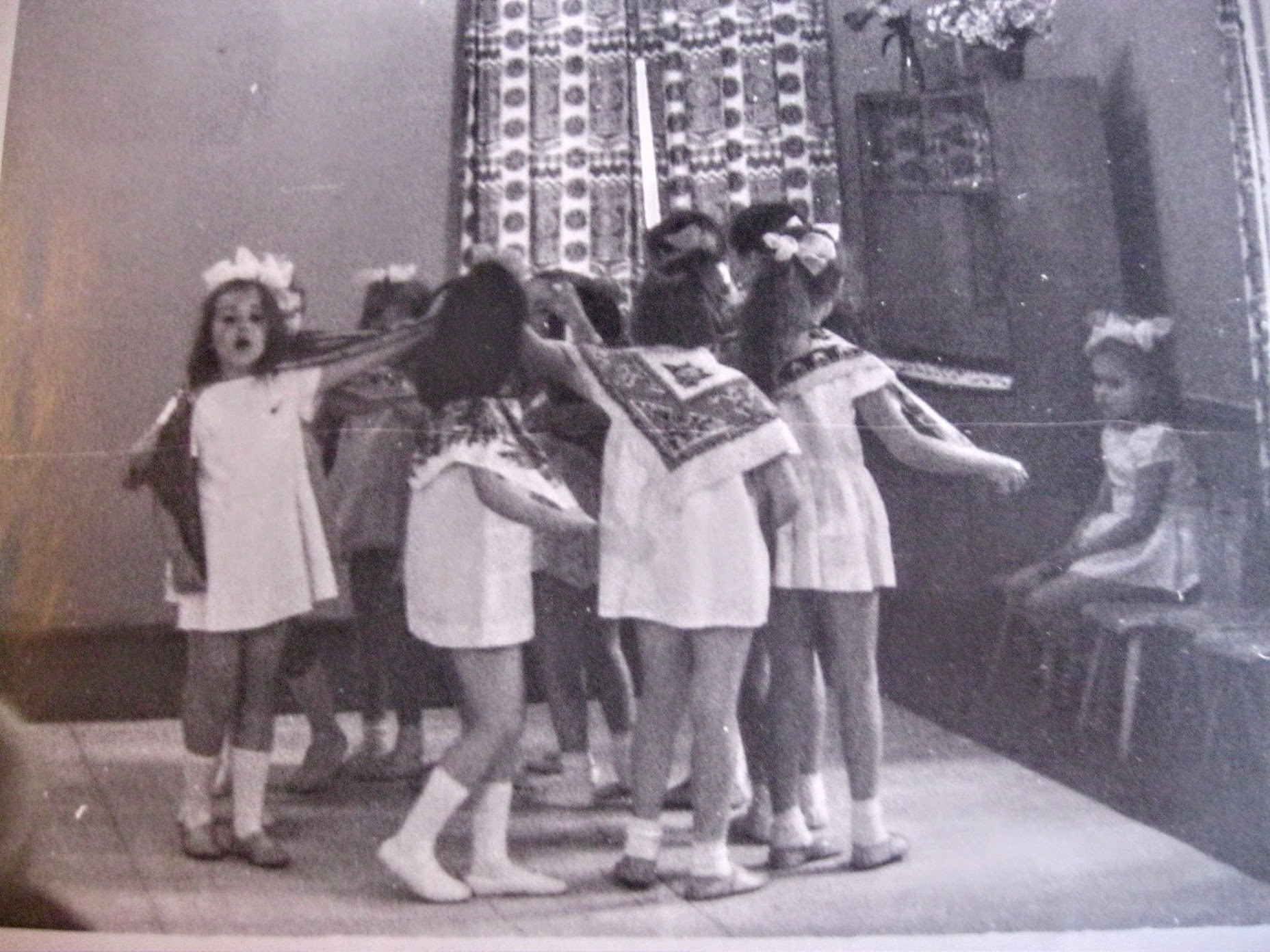
On parents’ day, we had a concert for which we rehearsed for weeks.

I believe we danse and sang “Vo pole berioza stoyala…”. I am the one on the left.
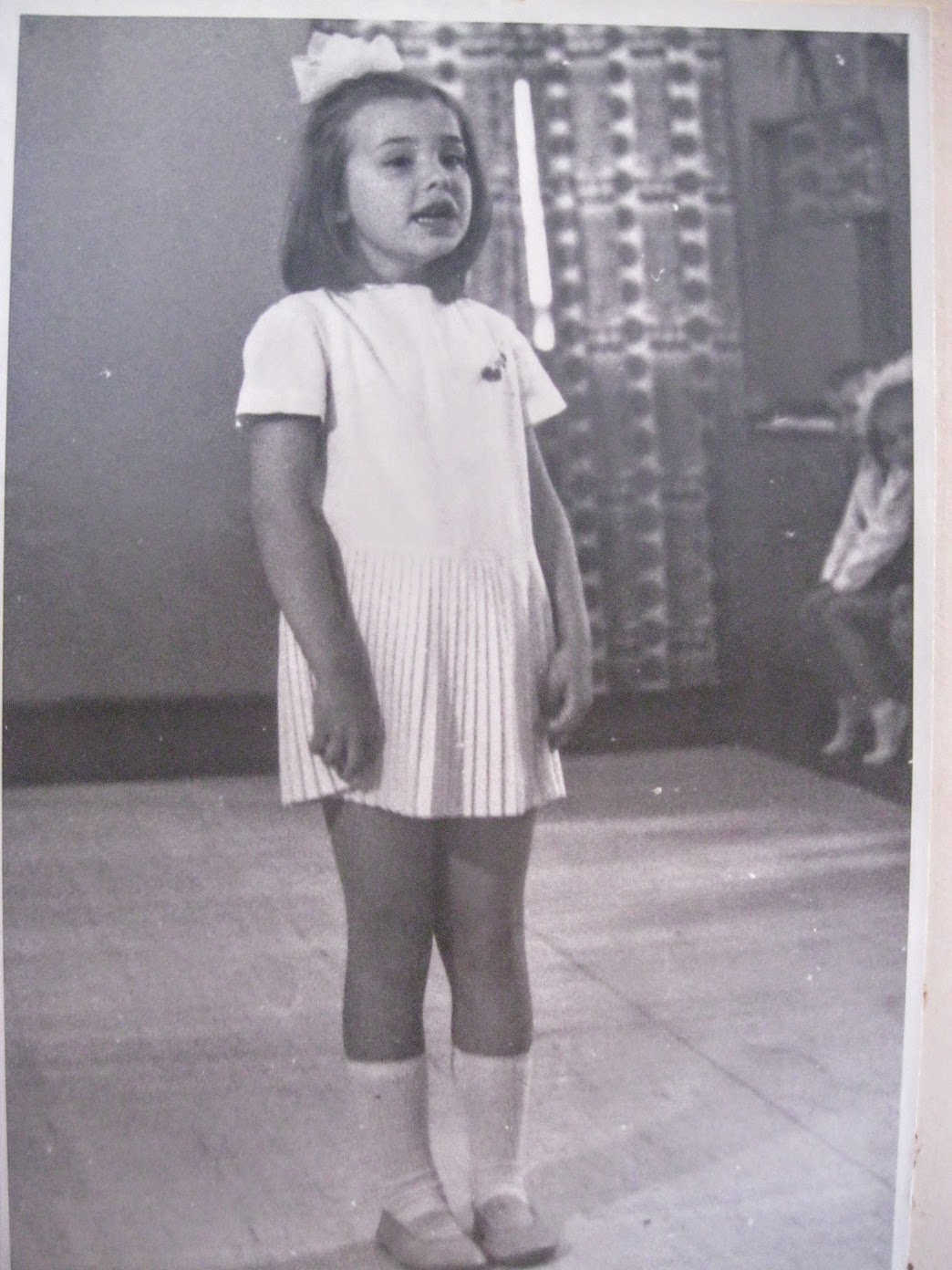
Reciting a poem
Continue reading “Sanatorium, part 2”