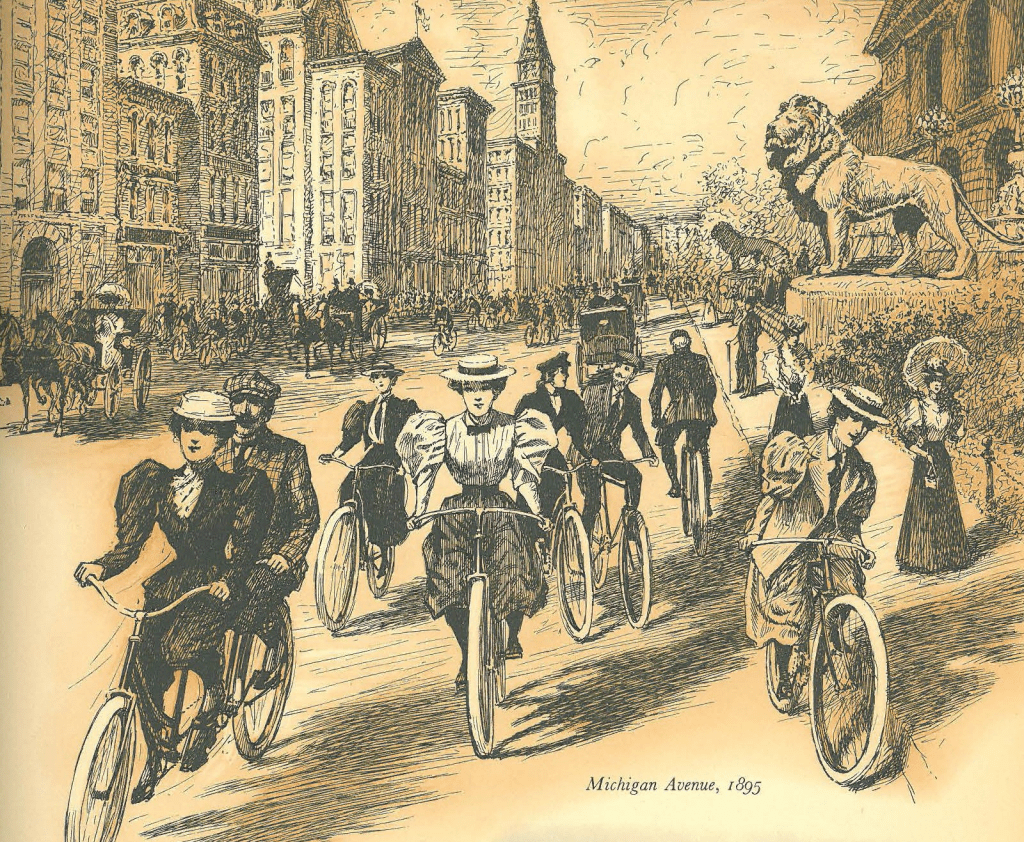
Read how Chicago became the manufacturing hub of the nation’s bicycle industry — a city that produced a quarter of all U.S. bikes and claimed more than 200,000 riders at the height of the boom. It was also a place where women defied social expectations on two wheels, and where cycling clubs organized one of the country’s first powerful transportation lobbies.
One of the recent WBEZ Curious City episodes was about women living independently in Chicago in the early 20th century. I didn’t know the term “women adrift,” and to be honest, I thought that women were not even supposed to live on their own back then, so all of this was incredibly interesting. Sharing here.
I finally watched The Atomic Cafe, which was on my watchlist for the past two months recommended by Michael Roman. As usual, when the movie is the one I want to pay close attention to, I watch it one small piece at a time.
To summarize my reaction in one sentence: what a horror story! I had no idea that that’s how the US propaganda worked, and I am not even sure I should use a past tense here. The scariest part for me was not even the actual propaganda films with “no worries, the hair will grow back” and “it’s safe to get out after an explosion,” but the background country songs jokingly mentioning an atomic bomb, punishing Japan and all things related. Gives you a new perspective on the “Oppenheimer” movie and life in general. It’s worth noting that there is no narration and no commentary, just interviews, tv shows, and propaganda movies clips.
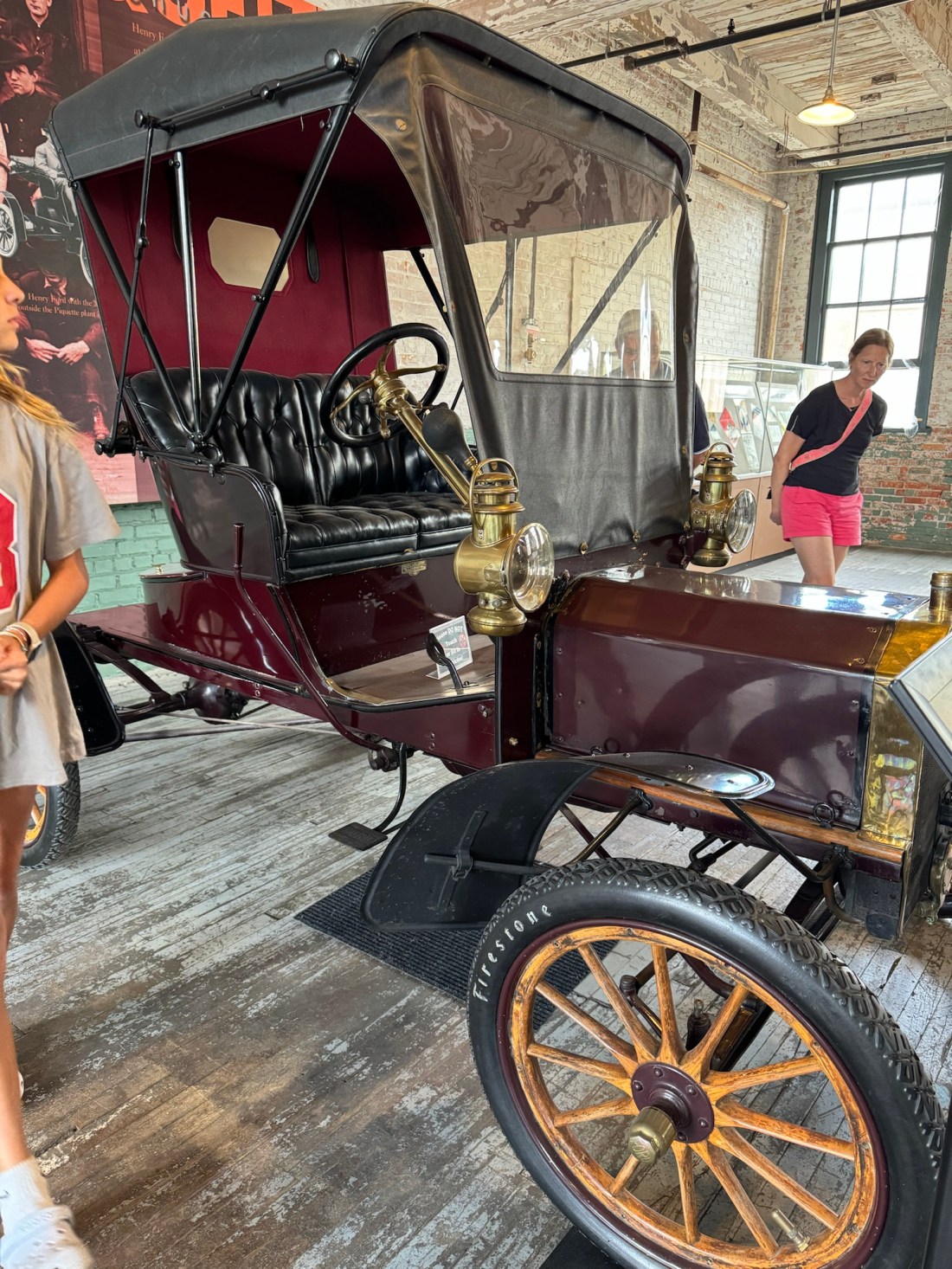
Here’s more from my visit with Lena. After the Michigan Central tour, we were going to tour the Fisher Building. We still had some time left until that tour, and Lena suggested we go to another museum—Ford Piquette Avenue Plant. The museum looked rather small, so we thought we would check out everything in forty minutes and then go to our Art Deco tour.
However, we spent there two and a half hours, and we easily could have spent more.
Here you can learn more about an amazing story of the first Ford Plant building and how it was saved. We didn’t know any of that when we entered the building. We were told that the tour would start in 20 minutes, and we decided to wait, and meanwhile to walk around.
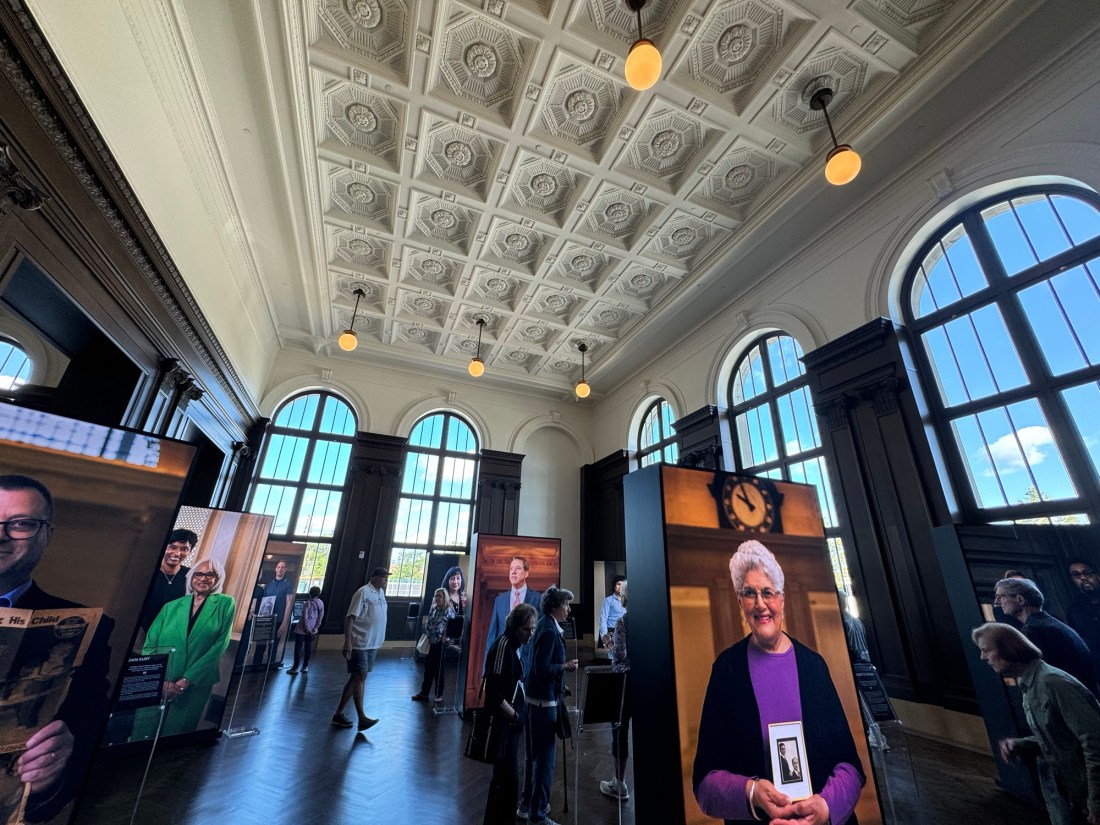
Continuing from here. It is such an amazing, such an unbelievable, and such an American story! Between 1988 and 2018, the building was not only vandalized but also looted. When Ford Motors bought the building and started the restoration, they wanted to have as many pieces of the original station as possible, so they asked everybody who had taken something from the abandoned building to return these pieces, no questions asked. And people started to bring these things back! There is a whole exhibit on the station’s ground floor showing what was returned – it’s amazing! Not just small objects, but the pieces of staircases, parts of light fixtures, and even the big clock!
This weekend, I am visiting Lena in Ann Arbor. As usual, I took a Wolverine train after work, and as usual, it was delayed, but not very bad – just over 20 minutes.
As usual, Lena planned a weekend full of activities, and today, we went to Detroit. Both attractions we visited were jaw-dropping, so I will try to write down everything I remember before the information spills away from my brain.
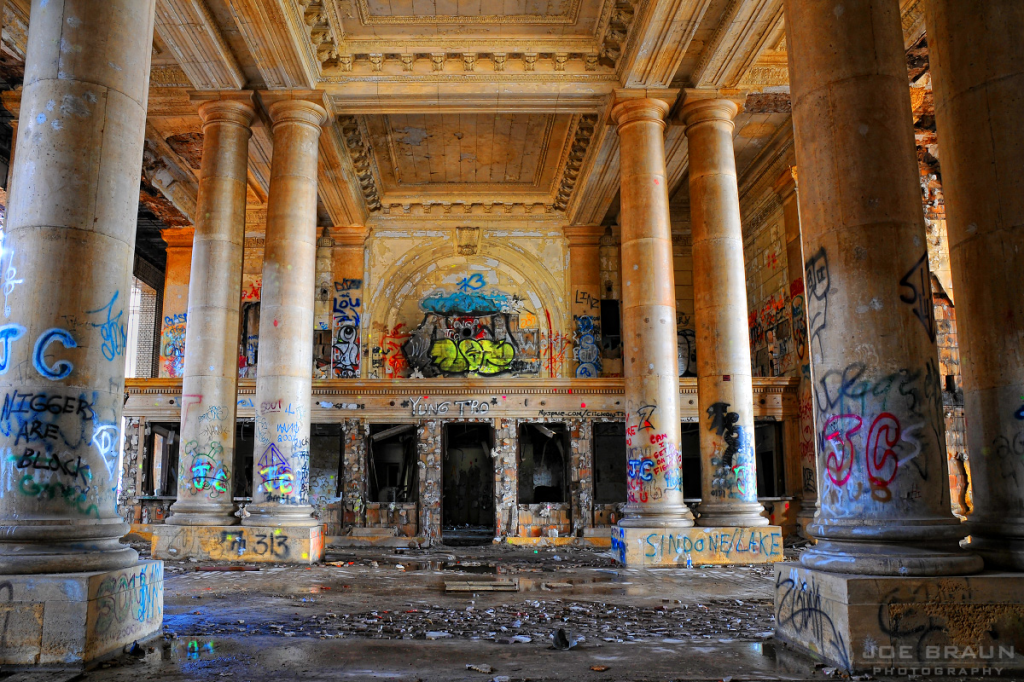
First, we went to the Michigan Central. This grand train station was opened in December 1913, marking a new era in the history of Detroit. We know what happened seventy-five years later: the cars and air travel diminished the role of the railroads in the USA, and little by little, the Michigan Central started to deteriorate, along with the whole city of Detroit.
It was pouring rain on Saturday! Actually, it was OK in the morning (I even biked earlier), but it started raining the moment Igor and I got off Metra Electric. it was unfortunate because we could not walk around and there was no usual block party atmosphere, but the good part was that there were no lines. We got to see everything we wanted to see, and everything was included in our advanced tickets.
First, we went on a Railcar Tour (we couldn’t get there two years ago). All of the cars on this tour are privately owned and Amtrak-certified. That means that, for example, if you own one of these cars and decide to go to New Orleans, Amtrak will attach your car (your hotel-on-wheels) to the train that goes to New Orleans, and here you go!
We walked to yet another neighborhood, Charlestown, for a Thai dinner and more history. It had a very different vibe, strangely more like a “small American town,” and at the same with way more history in the air.
Wow. Now I wonder why I never heard about this movie before, especially if it was so highly rated not only at the time it was made but years later … I guess, It’s one of these “people never learn” things. I am glad I watched it, but I find it difficult to write something meaningful about it. I just grabbed the Kindle book which this movie is based.
When I related my impressions to Boris earlier today, he said that it might have been filmed as a follow-up of the Caribean Crisis, but as I found out, the book was written earlier. I might write more after I read it!
I meant to write about this back in June when Robert Hanssen died, but I kept forgetting about it. Now that I started listening to The Code Name Blue Wren, which mentions Robert Hanssen in the introductory chapter, I remembered that this post was sitting in the Drafts.
When Anna went to Knox College (which is one of the best things that happened in her life not counting our arrival to the US) we learned a lot about this amazing educational institution. Among other things we learned that one of the graduates Knox was most proud of was a double spy, who for several years was a head of the task force dedicated to finding himself 🙂






 Hettie's Reflections