Full Transcript Of Biden’s Speech In Warsaw

From here.

“Be not afraid.” These were the first words that the first public address of the first Polish pope after his election in October of 1978, they were the words who would come to define Pope John Paul II. Words that would change the world.

John Paul brought the message here to Warsaw in his first trip back home as pope in June of 1979. It was a message about the power, the power of faith, the power of resilience, the power of the people. In the face of a cruel and brutal system of government, it was a message that helped end the Soviet repression in the central land in Eastern Europe 30 years ago.

It was a message that we’ll overcome the cruelty and brutality of this unjust war. When Pope John Paul brought that message in 1979, the Soviet Union ruled with an iron fist behind an Iron Curtain. Then a year later, the solidarity movement took hold in Poland. While I know he couldn’t be here tonight, we’re all grateful in America and around the world for Lech Walesa. [Applause] It reminds me of that phrase from the philosopher Kierkegaard, “Faith sees best in the dark.” And they were dark moments.

Ten years later, the Soviet Union collapsed and Poland and Central and Eastern Europe would soon be free. Nothing about that battle for freedom was simple or easy. It was a long, painful slog. Fought over not days and months but years and decades. But we emerged anew in the great battle for freedom. A battle between democracy and autocracy. Between liberty and repression. Between a rules-based order and one governed by brute force. In this battle, we need to be clear-eyed. This battle will not be won in days or months either. We need to steel ourselves of a long fight ahead.

Mr. President, Mr. Prime Minister, Mr. Mayor, members of the parliament, distinguished guests, and the people of Poland, and I suspect some people of Ukraine that are here. We are [applause], we are gathered here at the royal castle in this city that holds the sacred place in the history of not only of Europe but human kind’s unending search for freedom.

For generations, Warsaw has stood where liberty has been challenged and liberty has prevailed. In fact, it was here in Warsaw when a young refugee who fled her home country from Czechoslovakia was under Soviet domination, came back to speak and stand in solidarity with dissidence. Her name was Madeleine Korbel Albright. She became one of the most ardent supporters of democracy in the world. She was a friend with whom I served. America’s first woman Secretary of State.

She passed away three days ago. She fought her whole life for central democratic principles. And now in the perennial struggle for democracy and freedom, Ukraine and its people are in the front lines.

Fighting to save their nation and their brave resistance is part of a larger fight for essential democratic principles that unite all free people. The rule of law, fair and free elections, the freedom to speak, to write and to assemble. The freedom to worship as one chooses. The freedom of the press. These principles are essential in a free society. [Applause]

But they have always, they have always been under siege. They have always been embattled. Every generation has had to defeat democracy’s moral foes. That’s the way of the world, for the world is imperfect, as we know. Where the appetites and ambitions of a few forever seek to dominate the lives and liberty of many.

My message to the people of Ukraine is a message I delivered today to Ukraine’s foreign minister and defense minister, who I believe are here tonight. We stand with you. Period! [Applause]

Today’s fighting in Kyiv and Melitopol and Kharkiv are the latest battle in a long struggle. Hungary, 1956. Poland, 1956, and then again, 1981. Czechoslovakia,1968. Soviet tanks crushed democratic uprisings, but the resistance continued until finally in 1989, the Berlin Wall and all the walls of Soviet domination, they fell. They fell! And the people prevailed.

But the battle for democracy could not conclude, and did not conclude with the end of the Cold War. Over the last 30 years, the forces of autocracy have revived all across the globe. Its hallmarks are familiar ones — contempt for the rule of law, contempt for democratic freedom, contempt for the truth itself.

Today, Russia has strangled democracy and sought to do so elsewhere, not only in his homeland. Under false claims of ethnic solidarity, there’s invalidated neighboring nations. Putin has the gall to say he’s ‘denazifying’ Ukraine. It’s a lie. It’s just cynical, he knows that and it’s also obscene.

President Zelenskyy was democratically elected. He’s Jewish. His father’s family was wiped out in the Nazi Holocaust. And Putin has the audacity, like all autocrats before him, to believe that might will make right.

In my own country, a former president named Abraham Lincoln voiced the opposing spirit to save our union in the midst of the Civil War. He said let us have faith that right makes might. Right makes might. Today, let us have that faith again. [Applause] Let us resolve to put the strength of democracies into action to thwart the designs of autocracy.

Let us remember that the test of this moment is the test of all time. A criminal wants to portray NATO enlargement as an imperial project aimed at destabilizing Russia. Nothing is further from the truth. NATO is a defensive alliance. It has never sought the demise of Russia. In the lead up to the current crisis, the United States and NATO worked for months to engage Russia to avert war. I met with him in person, talked to him many times on the phone.

Time and again, we offered real diplomacy and concrete proposals to strengthen European security, enhance transparency, build confidence on all sides. But Putin and Russia met each of the proposals with disinterest in any negotiation, with lies and ultimatums.

Russia was bent on violence from the start. I know not all of you believed me and us when we kept saying, they are going to cross the border, they are going to attack. Repeatedly he asserted we had no interest in war, guaranteed he would not move. Repeatedly saying he would not invade Ukraine. Repeatedly saying Russian troops along the border were there for training. All 180,000 of them.

There’s simply no justification or provocation for Russia’s choice of war. It’s an example, one of the oldest human impulses, using brute force and disinformation to satisfy a craving for absolute power and control. It’s nothing less than a direct challenge to the rule-based international order established since the end of World War II. And it threatens to return to decades of war that ravaged Europe before the international rule-based order was put in place.

We cannot go back to that. We cannot. The gravity of the threat is why the response of the West has been so swift and so powerful and so unified, unprecedented and overwhelming. Swift and punishing costs are the only thing that are going to get Russia to change its course.

Within days of his invasion, the West has moved jointly with sanctions to damage Russia’s economy. Russia’s Central Bank is now blocked from global financial systems, denying Kremlin’s access to the war fund that’s stashed around the globe. We have aimed at the heart of Russia’s economy by stopping the imports of Russian energy to the United States.

To date, the United States has sanctioned 140 Russian oligarchs and their family members, seizing their ill-begotten gains, their yachts, their luxury apartments, their mansions. We’ve sanctioned more than 400 Russian government officials, including key architects of this war. These officials and oligarchs have reaped enormous benefit from the corruption connected to the Kremlin. And now they have to share in the pain.

The private sector has acted as well. Over 400 private multinational companies have pulled out of doing business in Russia. Left Russia completely. From oil companies to McDonald’s. As a result of these unprecedented sanctions, the ruble almost is immediately reduced to rubble. The Russian economy — that’s true, by the way, it takes about 200 rubles to equal $1.

The economy is on track to be cut in half in the coming years. It was ranked, Russia’s economy was ranked the 11th biggest economy in the world before this invasion. It will soon not even rank among the top 20 in the world.

Taken together [applause] these economic sanctions, a new kind of economic statecraft with the power to inflict damage that rivals military might. These international sanctions are sapping Russian strength, its ability to replenish its military, and its ability to project power. And it’s Putin, it is Vladimir Putin who is to blame. Period.

At the same time, alongside these economic sanctions, the Western world has come together to provide for the people of Ukraine with incredible levels of military, economic, humanitarian assistance.

In the years before the invasion, we, America, had sent over $650 million, before they crossed the border, in weapons to Ukraine, including anti-air and anti-armor equipment. Since the invasion, America has committed another $1.35 billion in weapons and ammunition. And thanks to the courage and bravery of the Ukrainian people, the equipment we’ve sent and our colleagues have sent have been used to devastating effect to defend Ukrainian land and air space.

Our allies and partners have stepped up as well. But as I’ve made clear, American forces are in Europe — not in Europe to engage in conflict with Russian forces. American forces are here to defend NATO allies. Yesterday I met with the troops that are serving alongside our Polish allies to bolster NATO’s front line defenses. The reason we want to make clear is their movement on Ukraine — don’t even think about moving on one single inch of NATO territory. We have sacred obligation. We have a sacred obligation under Article 5 to defend each and every inch of NATO territory with the full force of our collective power.

And earlier today I visited your national stadium, where thousands of Ukrainian refugees are now trying to answer the toughest questions a human can ask. My God, what is going to happen to me? What is going to happen to my family? I saw tears in many of the mothers’ eyes as I embraced them. Their young children, their young children, not sure whether to smile or cry.

One little girl said, Mr. President — she spoke a little English — is my brother and my daddy, are they going to be okay? Will I see them again? Without their husbands, their fathers. In many cases, their brothers and sisters have stayed back to fight for their country.

I didn’t have to speak the language or understand the language to feel the emotion in their eyes, the way they gripped my hand, little kids hung on to my leg, praying with a desperate hope that all this is temporary. Apprehension that they may be perhaps forever away from their homes. Almost a debilitating sadness that this is happening all over again.

But I was also struck by the generosity of the people of Warsaw — for that matter, all the Polish people — for the depths of their compassion, their willingness to reach out [applause], for opening their hearts. I was saying to the mayor, they were opening their hearts and their homes simply to help.

I also want to thank my friend, the great American chef Jose Andres, and his team for help feeding those who are yearning to be free. But helping these refugees is not something Poland or any other nation should carry alone. All the world’s democracies have a responsibility to help. All of them. And the people of Ukraine can count on the United States to meet its responsibility. I have announced two days ago, we will welcome 100,000 Ukrainian refugees. We already have 8,000 a week coming to the United States of other nationalities. We will provide nearly $300 million of humanitarian assistance, providing tens of thousands of tons of food, water, medicine and other basic supplies.

In Brussels, I announced the United States is prepared to provide more than $1 billion in additional humanitarian aid. The World Food Programme told us that despite significant obstacles, at least some relief is getting to major cities in Ukraine. But not Metripol — no, excuse me — not Mariupol because Russian forces are blocking relief supplies.

But we’ll not cease our efforts to get humanitarian relief wherever it is needed in Ukraine and for the people who’ve made it out of Ukraine. Notwithstanding the brutality of Vladimir Putin, let there be no doubt that this war has already been a strategic failure for Russia already. Having lost children myself, I know that’s no solace to the people who’ve lost family but he, Putin, thought Ukrainians would roll over and not fight. Not much of a student of history. Instead Russian forces have met their match with brave and stiff Ukrainian resistance. Rather than breaking Ukrainian resolve, Russia’s brutal tactics have strengthened the resolve. Rather than driving NATO apart, the West is now stronger and more united than it’s ever been.

Russia wanted less of a NATO presence on its border but now he has a stronger presence, a larger presence with over 100,000 American troops here along with all the other members of NATO. In fact, Russia has managed to cause something I’m sure he never intended. The democracies of the world are revitalized with purpose and unity found in months that we’ve once taken years to accomplish.

It’s not only Russia’s actions in Ukraine that are reminding us of democracy’s blessing. It’s our own country, his own country, the Kremlin, it’s jailing protesters. Two hundred thousand people who have allegedly already left. There’s a brain drain leaving Russia. Shutting down independent news. State media is all propaganda. Blocking the image of civilian targets, mass graves, starvation tactics of the Russian forces in Ukraine.

Is it any wonder as I said that 200,000 Russians have all left their country in one month. A remarkable brain drain in such a short period of time. Which brings me to my message to the Russian people. I worked with Russian leaders for decades. I sat across the negotiating table going all the way back to Soviet Alexei Kosygin to talk arms control at the height of the Cold War. I’ve always spoken directly and honestly to you, the Russian people. Let me say this, if you’re able to listen. You, the Russian people, are not our enemy. I refuse to believe that you welcome the killing of innocent children and grandparents, or that you accept hospitals, schools, maternity wards and for God sake’s being pummeled with Russian missiles and bombs. Or cities being surrounded so that civilians cannot flee. Supplies cut off and attempting to starve Ukrainians into submission.

Millions of families are being driven from their homes, including half of all Ukraine’s children. These are not the actions of a great nation. Of all people, you, the Russian people, as well as all people across Europe still have the memory of being in a similar situation in the late ’30s and ’40s. Situation in World War II still fresh in the minds of many grandparents in the region. Whatever your generation experienced, whether it experienced the siege of Leningrad or heard about it from your parents and grandparents. Train stations overflowing with terrified families fleeing their homes. Nights sheltering in basements and cellars. Mornings sifting through the rubble in your homes. These are not memories of the past. Not anymore. Because it’s exactly what the Russian army is doing in Ukraine right now.

March 26, 2022, just days before we’re at the 21 — you were a 21st century nation, with hopes and dreams that people all over the world have for themselves and their family. Now, Vladimir Putin’s aggression have cut you, the Russian people, off from the rest of the world, and it’s taking Russia back to the 19th century. This is not who you are. This is not the future you deserve for your families and your children. I’m telling you the truth, this war is not worthy of you, the Russian people. Putin can and must end this war. The American people will stand with you, and the brave citizens of Ukraine who want peace.

My message to the rest of Europe, this new battle for freedom has already made a few things crystal clear. First, Europe must end its dependence on Russian fossil fuels. And we, the United States will help. [Applause] That’s why just yesterday in Brussels I announced the plan with the president of the European Commission to get Europe through the immediate energy crisis. Over the long-term, as a matter of economic security and national security and for the survivability of the planet, we all need to move as quickly as possible to clean, renewable energy. And we’ll work together to help to get that done so that the days of any nation being subject to the whims of a tyrant for its energy needs are over. They must end. They must end.

And second, we have to fight the corruption coming from the Kremlin to give the Russian people a fair chance. And finally, most urgently, we maintain absolute unity, we must, among the world’s democracies. It’s not enough to speak with rhetorical flourish of ennobling words of democracy, of freedom, of quality, and liberty. All of us, including here in Poland, must do the hard work of democracy each and every day — my country as well. That’s why [applause], that’s why I came to Europe again this week with a clear and determined message for NATO, for the G7, for the European Union, for all freedom-loving nations — we must commit now to be in this fight for the long haul. We must remain unified today and tomorrow and the day after. And for the years and decades to come. It will not be easy. There will be costs. But it is a price we have to pay because the darkness that drives autocracy is ultimately no match for the flame of liberty that lights the souls of free people everywhere.

MORE: In apparent shift in strategy, Russians troops stop offensive toward Kyiv: Pentagon on Day 30
Time and again history shows that. It’s from the darkness moments that the greatest progress follows. And history shows this is the task of our time, the task of this generation. Let’s remember the hammer blow that brought down the Berlin Wall, the might that lifted the Iron Curtain were not the words of a single leader, it was the people of Europe, who for decades fought to free themselves. Their sheer bravery opened the border between Austria and Hungary for the Pan-European Picnic. They joined hands for the Baltic Way. They stood for solidarity here in Poland. And together it was an unmistakable and undeniable force of the people that the Soviet Union could not withstand. And we’re seeing it once again today for the brave Ukrainian people showing that their power of many is greater than the will of any one dictator.

So in this hour, let the words of Pope John Paul burn as brightly today. Never ever give up hope. Never doubt. Never tire. Never become discouraged. Be not afraid! [Applause]

A dictator bent on rebuilding an empire will never erase a people’s love for liberty. Brutality will never grind down their will to be free. Ukraine will never be a victory for Russia, for free people refuse to live in a world of hopelessness and darkness. We will have a different future, a brighter future, rooted in democracy and principle, hope and light. Of decency and dignity and freedom and possibilities. For God’s sake, this man cannot remain in power. God bless you all. And may God defend our freedom, and may God protect our troops. [Applause] Thank you for your patience. Thank you. Thank you.
About The War And Russian People

I will stop blogging about the past week for a moment and talk about the war – not like a background for everything that’s going on in our lives now, but about the war as it is.

There are two main reasons for that. First is my correspondence with several people from Russia, who were sending me almost identical messages for the past week or two. And the second reason is President Biden’s speech in Warsaw, which I just listened to, so balanced, so thought through, so articulate, and pretty much answering all of these questions. 

***

The first topic is economic sanctions against Russia, and that’s what people were saying:

The whole world united against Russia, which means that the rest of the world is indeed our enemy, and that means that Putin is right and we need to protect our borders. The West acted united immediately, which means that it was all pre-planned. The sanctions do not hurt the Russian elite; they hurt regular citizens, and even those who initially sympathized with Ukraine now support Putin’s aggression.

I already blogged about that, but let me repeat it again. In Russia, people perceive the government as something completely foreign to their citizens. In western countries, with all reservations, the government’s goal is to serve the citizens, and if it does not do a good job, the citizens will protest. So when western countries impose the sanctions, they believe that Russian people would realize that the sanctions are imposed because of the actions of their government and that they would raise their voices (and possibly not only the voices) against it. 

Another thing that many people in Russia do not understand is that the companies that left the Russian market temporarily or permanently are not doing it “because their governments told them so,” and not even because they fear for their reputation. They leave because the people in the rest of the world want them to do so and because they risk their profits to decline worldwide if they won’t. 

I said many times that in general, I am against sanctions precisely for that reason – they never help to change the regime, and they help the propaganda to build the “image of the enemy.” But in the current situation, I believe that the sanctions make a moral statement – a statement of support for Ukraine. 

***

The second topic is about the attitude towards Russians in the world. That’s what people are saying:

Everybody hates us just because we are Russians living in Russia. Everybody accuses us of supporting Putin, even if we never voted for him. Everybody tells us we deserve it. This war is called the “Russian war,” not “Russian government war.” We were initially supporting Ukraine, but now we are not so sure. We feel hate all the time. 

The answer to this statement is more complex. First, when I start asking people where exactly they get this idea, they are citing some Russian-speaking bloggers who live in western countries. That is the individual reaction of individuals, and regardless of how they are famous in the Russian blogosphere, they do not represent the attitude of the West towards Russians. There is a very clear distinction between the Russian government and ordinary people in the West. The majority of people understand that speaking against authorities will be prosecuted and that it’s dangerous to protest. 

Speaking about that, President Biden was very clear in his speech: 

“I’ve always spoken directly and honestly to you, the Russian people, let me say this if you’re able to listen: You the Russian people are not our enemy. I refuse to believe that you welcome the killing of innocent children and grandparents or that you accept hospitals, schools, maternity wards — for God’s sake — being pummeled with Russian missiles and bombs.” Citing the hardships of WWII, Biden said:

“These are not memories of the past. This is exactly what the Russian army is doing in Ukraine right now.”

“This is not who you are. This is not the future you deserve for your families and your children. I’m telling you the truth. This war is not worthy of you, the Russian people.”

However, with all that being said, one must also understand that the war any country is conducting is this country’s war. No matter how many people in the US protested the war in Vietnam, it was the “American war.” no matter how many people rallied against the war in Iraque (myself included), it was “an American War.” And Americans were ashamed of the actions of their government. And if we would look back to WWII, in the Soviet Union, “Germans” and “fascists” were synonyms until the late 50s. And if we look back to WWI, we would remember Saint-Petersburg being renamed Petrograd.  

I will try to find the full transcript of this speech and paste it here.

Igor’s Article: Ukraine World War II Legacy

I really liked it. And since I know that people do not like to click on the links – here is the full text.

To Belarusians, Russians and Ukrainians, few historical events loom as large as World War II. One would be hard-pressed to find an Eastern Slav who doesn’t have some relative who fought in the war, died in a war or lost something to the war. Many Eastern European cities still have lasting scars.

I grew up in St. Petersburg, a city that survived the nearly 900-day Siege of Leningrad, where over a million people perished from bombings, disease and starvation. A ring of mass graves around the city’s former outskirts serves as a lasting reminder of the sheer scale of the toll. My grandmother on my mom’s side was only 6 when the Siege happened, and she lived through the first year before she was evacuated. 

Grandma Nina never sugarcoated the realities of the war.

“One winter day, I was playing in the yard when a young couple approached me,” she told me. I couldn’t have been older than 9. “They said, ‘Little girl, would you like some candy?’ But I knew better. There was no candy during the Siege. So I ran into my building as quickly as my little legs would carry me. And it’s a good thing I did — otherwise, I would’ve gotten eaten.”

Grandma Nina wasn’t my only connection to the war. Three of my great-grandfathers served in the military, in some capacity or another. My Belarusian grandfather and his sister (also named Nina) lived through the Nazi occupation of what is now Belarus. Even the relatives who barely saw any fighting have war-related memories. 

When I was a kid, there was a lot of emphasis on the toll the war took, how we must remember this toll because we must never allow anything like that again. But I feel like something shifted in the last 20 years, as members of my great-grandparents’ generation, and even older members of my grandparents’ generation, died of natural causes in growing numbers. 

There was less talk about pain and suffering, and more emphasis on the glorious Red Army heroically overcoming odds and triumphing over Nazis. Talking about some of the harsh realities of the war suddenly became controversial.

When I was growing up, calling someone a Nazi was about the worst thing one could do to another person. Our teachers told us to use the word carefully because “words have meanings.” But whatever restraint there was seems to have completely evaporated.

In 2014, when Russia encouraged separatists in the Donbass region and the war broke out, Russians and Ukrainians accused each other of being Nazis. It wasn’t that unusual to see social media posts and news segments where World War II veterans encouraged their grandchildren to fight against Nazi invaders. Aside from the language and national signifiers, they sounded practically identical.

Now, as the long-simmering conflict erupted into a full-fledged war, the Nazi labels flew with renewed vigor. The Russian government quickly positioned the “special operation” as “denazification” of Ukraine, and as the attacks intensified, Ukrainians were quick to call Russians Nazis. 

Of course, what’s different this time is the sheer scale and devastation of the attacks. When I saw photos of people huddled in Kyiv and Kharkiv subways to escape the bombings, I immediately thought of people hiding from Nazi bombings of Moscow. When I read about Mariupol getting encircled by the Russian army, its besieged residents huddled in the cold, it’s hard not to think about Grandma Nina talking about burning everything there was to burn in the house just to stay warm. When I see families fleeing west, I think of Grandpa Gena talking about how he was only 5 years old when his family tried, and failed, to outrun the Nazi advance.

“When the war started, my dad went off to serve, so it was just me, my mom, my older brother, Nikolay, and my younger sister Nina,” he told me. “I remember when we were trying to flee, my mom carried Nina in her arms, while I ran with her.”

I was taught to be careful about using the word “Nazi,” and I’m not going to stop now. But when one gets that kind of association … I know it makes at least some Russians pause. A couple of days ago, I saw a photo of a flier somebody put up in St. Petersburg. “A city that survived the Siege is against the war!” But so far there is also plenty of support, including from some of the people who were kids during World War II.

This war will end someday. Kyiv, which was shelled during World War II, will rise again, just like it did last time. And the scars of war will linger. 

Maybe this time, the generations to come will not so easily lose sight of the toll the war takes. 

Maybe this time, Russians won’t need a personal connection to understand the horror the war inflicts.

Scenes from last Sunday’s anti-war protest in Chicago’s Ukrainian Village

When the Russian-Ukrainian War broke out, my mom and I knew that there are going to be rallies and protests in support of Ukraine and against the war – and we wanted to be a part of it. But my usual sources within the Russian-speaking communities, and the general activist chatter on Twitter, kept failing me. I kept finding out that event after event already happened from new stories and live-tweets covering them. So when, last Thursday, I found out there was going to be a rally on Sunday in front of Chicago’s Ukrainian Village’s iconic Saints Volodymyr & Olha Ukrainian Catholic Church, I figured I was going to try to make it, and encouraged my mom to do the same.

As the name suggests, Ukrainian Village is a neighborhood on Chicago’s Northwest Side originally settled by Ukrainians from what was then the Russian Empire. While Ukrainian Village isn’t as Ukrainian as it used to be in its heyday, it still has a number of Ukrainian churches, cultural institutions and even some stores and restaurants.

Continue reading “Scenes from last Sunday’s anti-war protest in Chicago’s Ukrainian Village”

Old Photos – Summer 1995

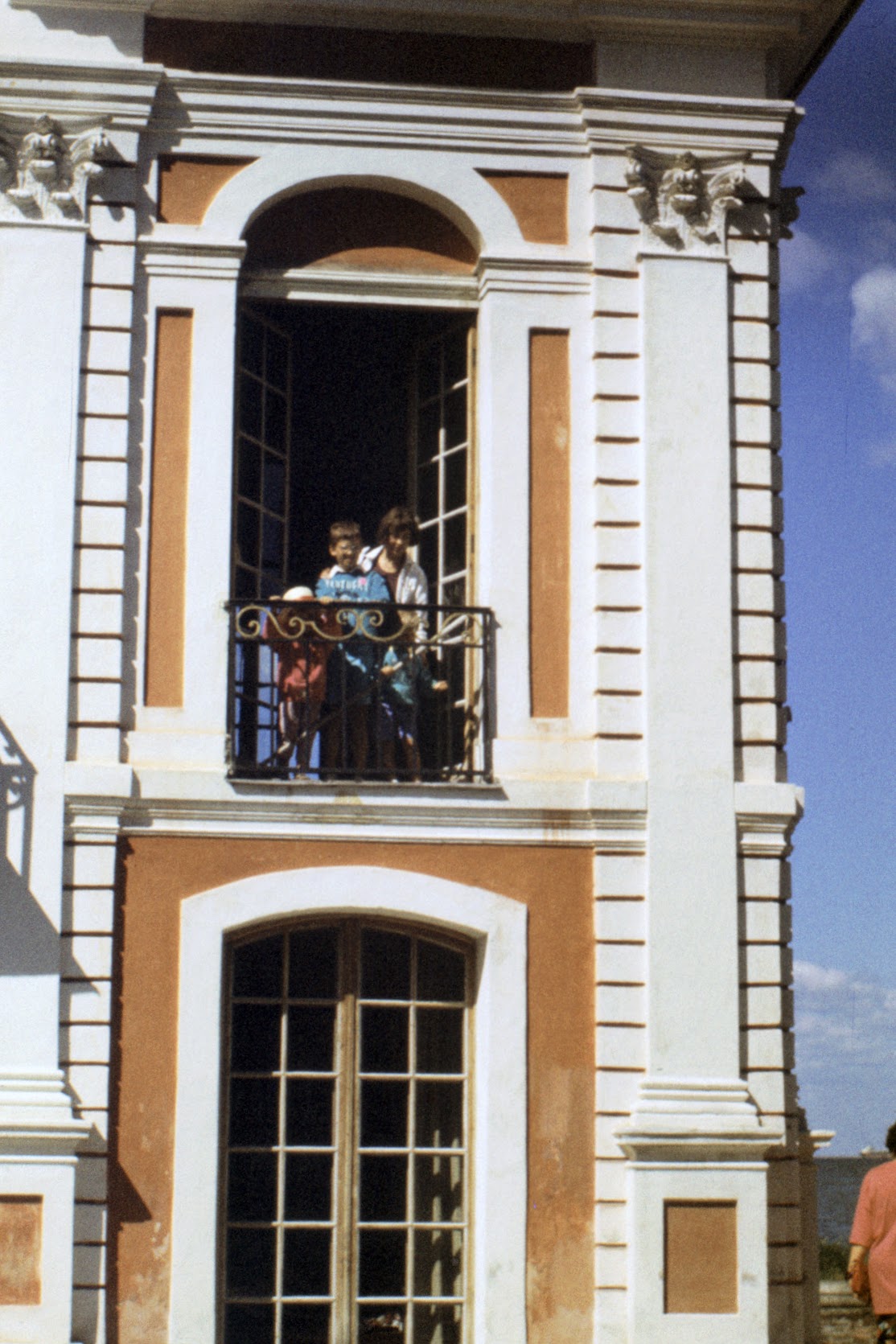
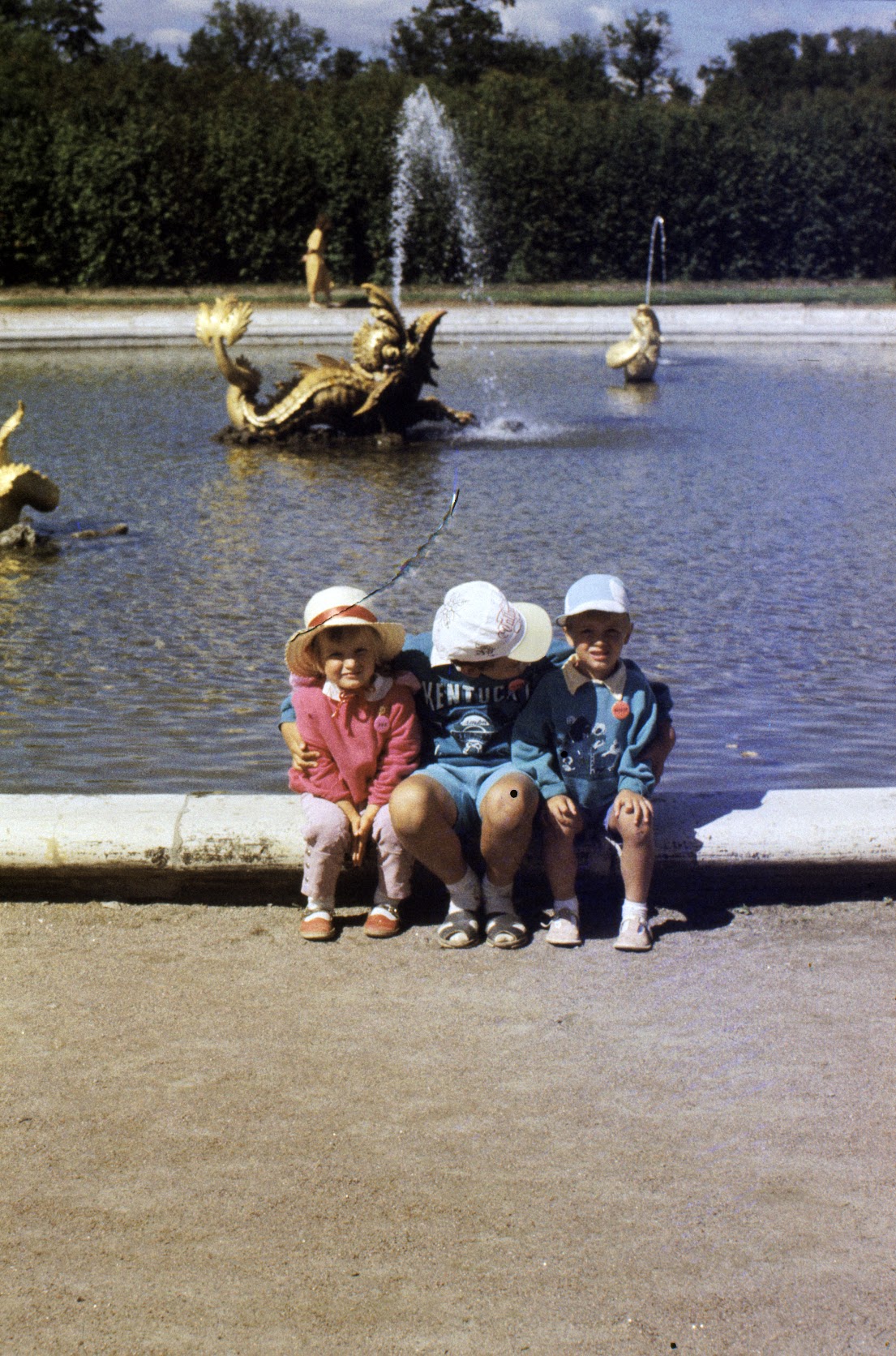
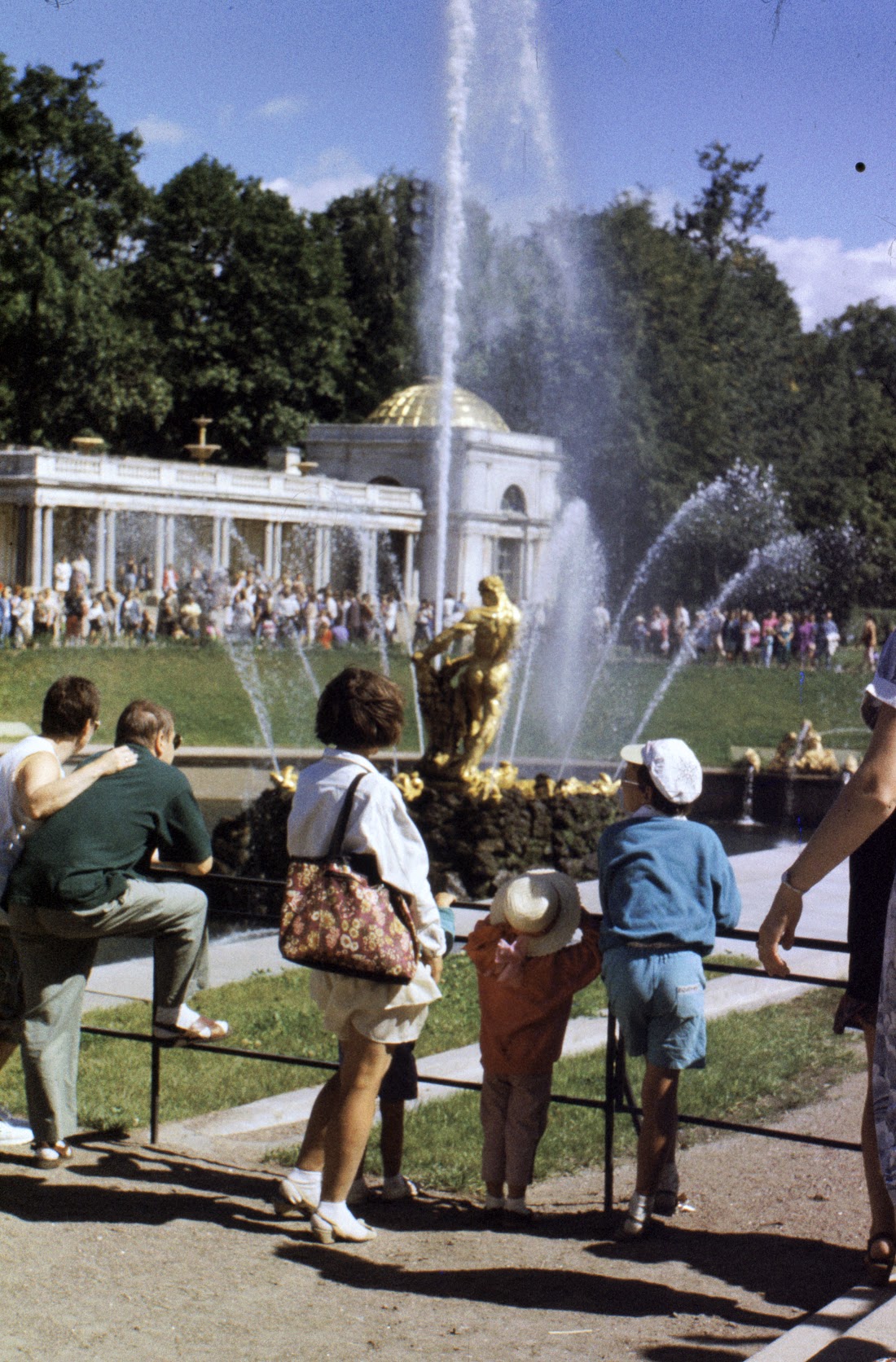
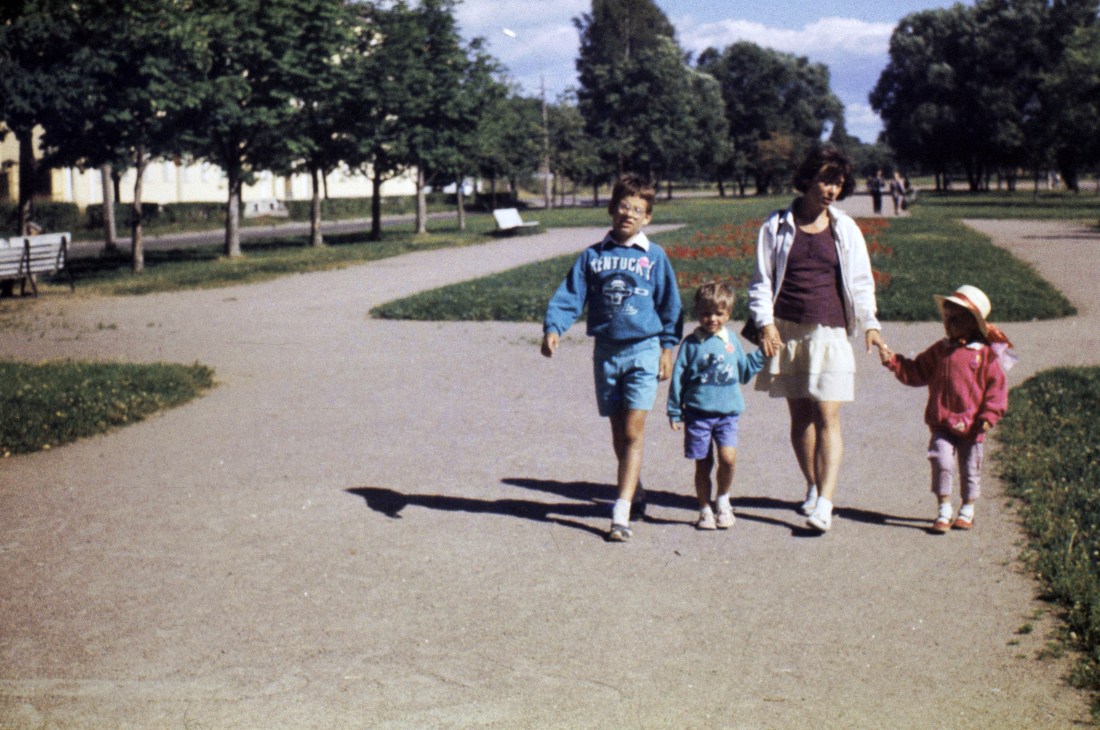
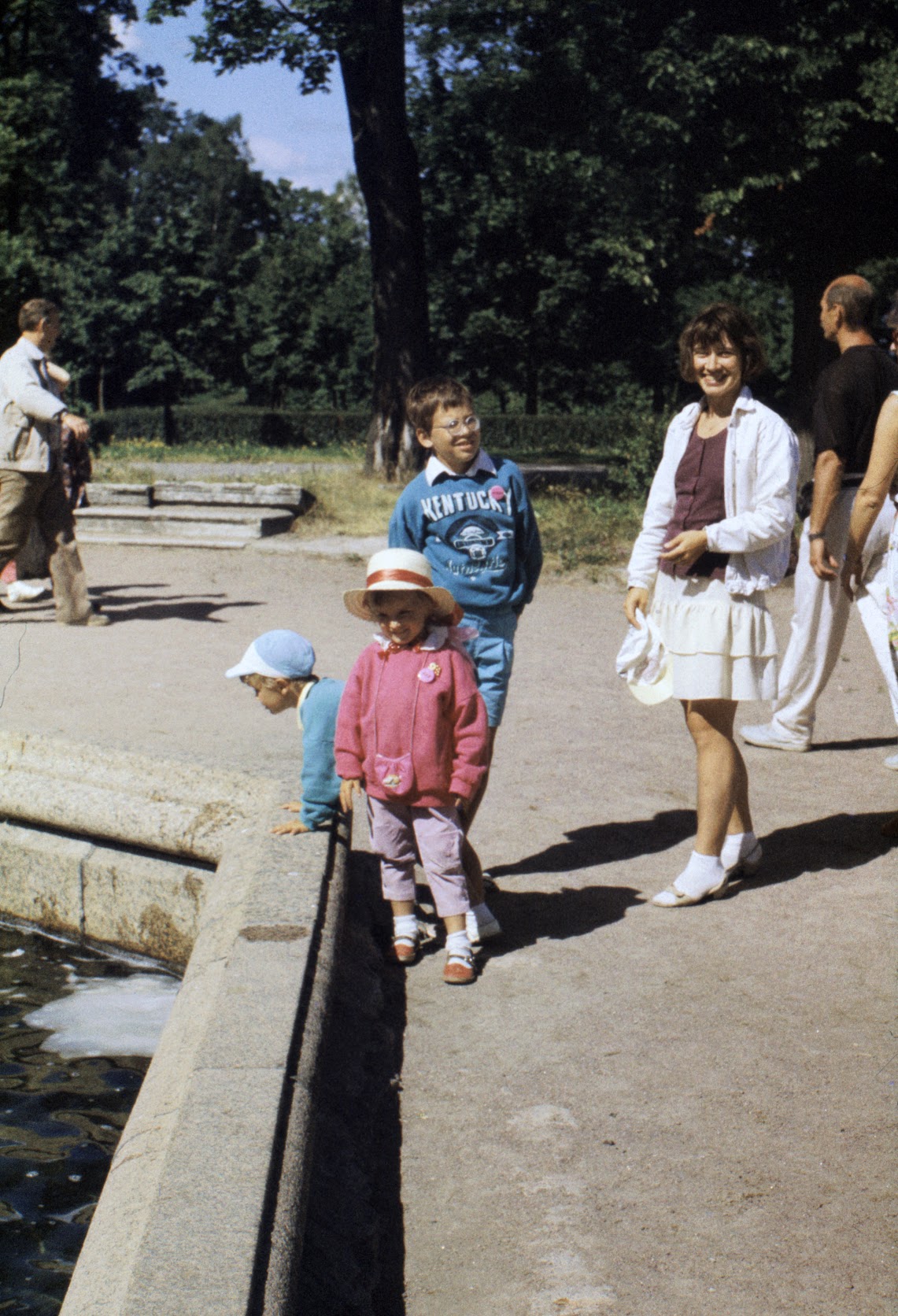
In early December (a Christmas promotion) I sent several random old items to be professionally digitized. I already showed two home moves from that batch. The other two were one mom’s old black-and-white film and a stack of my colored slides from different times and places.

I almost forgot that at some point, Boris took these pictures of us at the Peterhoff Fountain Park.

Continue reading “Old Photos – Summer 1995”

Mom In Saint-Petersburg

Mom has four more days left in Saint Petersburg. In the past week, most things were sorted out. My friends Olga and Irina help her every day with pretty much everything: calling the cab, calling the plumber to fix the leaking pipes, taking her to her COVID test, and to the cemeteries to visit her relatives’ graves, making sure her test results are loaded to the government website and accompanying her to the bank, and I can’t even enumerate all the ways they helped! Nothing will be possible without them!

The last thing which was fixed was the heating in mom’s apartment, so now it’s not 45 degrees inside, but closer to 70.

It does not look like she will meet with any of her friends, although originally, she said that it was her goal. That’s why she didn’t want to go in July – she said everybody would be at dachas. Instead, she goes over her stuff, which is not a bad thing. Irina takes to the dumpster bags and bags of things that nobody needs. It is possible that when mom is back, she will be telling me that she could not meet with her friends because I didn’t allow her to use public transportation. I will do my best not to argue with her about that :). Most importantly, she got her new credit card, and she filed all the paperwork so that she wouldn’t need to come back when there would be time for a new credit card.

Mom Went To Saint Petersburg

Mom went to Saint-Petersburg. Her flight was on Thursday evening. I did not want her to go, but there were some things which she had to do in person, and I found too late that there were ways to avoid the trip. I think that I won’t be able to stop her in any case, and if she decided she needed to go, she would still insist on going there.

I already told all my friends why I worried so much about this trip. In Russia, the vaccination rate is very low (twenty-something percent), and we do not know how many vaccinations are fake. The transmission rate is high; people do not wear masks unless they are forced to do so. For example, they would put the mask on when they enter the subway but take it off immediately after they are in. Or they would be without a mask in the store and pull it on during checkout.


Mom does not wear a mask properly. When I am together with her, I fix it all the time. It is not so important here: she is vaccinated; our vaccination rate is close to 70%; the transmission rate is less than one, and the overwhelming majority of people wear masks and wear them properly. If she goes to Morse Market, I am not overly concerned with her not wearing the mask properly, but it is a different story in Russia.


In addition, there is a lot of paperwork associated with the trips to and from Russia these days. I had to sign her up for two COVID tests, on entrance and on exist, register her at the government website to fill in the form for returning citizens, and fill in several other paper forms, some in Russian, some in English.
I requested a wheelchair for her for the whole trip, but I only managed to get her in it in O’Hare. As she reported, she “didn’t find” it in Helsinki. Having that they wait right on exit from the plane, I agree with Boris that you have to try very hard not to find them… but what can I do?


My friend met her at the airport in Saint -Petersburg, and they went home. For three weeks prior to the trip, I tried to explain to mom that it is dangerous to take public transportation in Saint-Petersburg and that I wanted her to take a cab all the time. Boris gave us a number of a very reliable cab company and asked her to use their services. She resisted for a very long time. I asked my friends in Saint-Petersburg to make sure that she called the cab (she has been doing it for a day and a half now :))


When they came home, they found out that the heating in her apartment was still not turned on. Also, one of the water pipes was leaking (the plumber will only come on Monday), and she could not turn on her electric stove.


And she refused to stay with my friend for the next couple of days… Also, although she is supposed to wait for the test result in Saint -Petersburg, she is going everywhere because nobody is checking.
I want these two weeks to be over (and actually, there are only twelve days left)

And Yet Again – Masks

I am deeply saddened by all the no-masks-and-everything-is-open in Russia. I resolved a long time ago not to argue with my compatriots about mask-wearing and do not comment on their posts about gathering with friends, visiting older relatives, attending theater performances, and such. 

I hardly know anybody in Russia who did not have COVID. And I know way too many older and immuno-compromised people who didn’t survive. My mom lost lots of her friends, or her friends lost their husbands. And I do not buy these arguments that “they were old anyway.” I just do not understand how it proves anything.

On Saturday, Boris told me that professor Romanovsky passed away. He was the Operations Research Lab leader in our university, Boris’s boss at some point. I attended a number of his classes. Yes, he was the same age as my mom, so what? My mom is alive. 

When I talked to Anna about that, she commented that the country reached herd immunity by sacrificing the older and immunocompromised population, and I have nothing to add. 

Yesterday, I read a blog post of my friend from a small town in the Ural mountains. Her older son has severe cerebral palsy, and for almost a year, she is holding the fort. She wrote about a delivery driver who walked into her apartment instead of staying outside. I asked her: was he wearing a mask? For which she replied: of course, not. 

It’s absurd. It’s worse than in Georgia. 

Pictures From The Day I Got Married (For The First Time)

I married Igor (Igor’s dad) thirty-six years ago, on December 22, 1984. Igor was twenty-two, and I was a month short of being twenty-two. 

The was not too young by then-standards to get married. I’d say most young people would get married around that age, either right before graduating from college or right after. I talked about this situation briefly here

I hope that I will tell the whole story of our relationships at some point, but the short outline looks like this. We started dating in September (I can’t recall the date, though I might find it). Igor proposed to me about six weeks into our relationship, and I said yes. Then we went to register to get married in a complete secret because first, we were afraid of gossips in the university, and second, we knew that his parents wouldn’t be thrilled. We went to register at the local Bureau of Registration of Igor’s district. The usual waiting time was three months, but somehow they told us that we could get married on December 22, which was only six weeks ahead, and we gladly accepted. 

Igor told his parents four weeks before the wedding day, there was a scene, but then things calmed down. Then both of us announced to my mom and all my relatives with whom we lived together, and they were very happy and congratulated us, and it was all like it was supposed to be on a happy occasion. 

We arranged for our parents to meet and get to know each other, and then the only thing we were trying to do was to minimize the attempts of Igor’s parents to have a big celebration. We wanted nothing of it. Okey, it is possible that Igor wanted, but I didn’t, and at that point, he would d what I wanted :). 

His mother used this occasion to order a good suit for him, and I asked my friend’s mother to make a velvet skirt and vest for me. I didn’t want a white dress, anything that I would wear just once. We didn’t have any extra money; we didn’t have money, period, and we didn’t want our parents to give us money. 

For me, it was just the beginning of the relationship; I knew that being in love does not mean you can build a family together, but there was no option to find it out except for getting married. 

The pictures below are the only pictures ai have from our wedding. A standard set; we got an album, and the parents got a set of printed photos, and that was it.

Our witnesses, Igor’s friend Sasha and my friend Lena, were the only people, except for our immediate relatives, who knew that we were getting married, and we asked them to keep the information to themselves. 

On Igor’s side, it’s his mother and his stepfather, and I do not remember why his father was not invited. 

I think, it was the only time when I dated somebody taller than me, and I could wear high hills:)
Continue reading “Pictures From The Day I Got Married (For The First Time)”

The Last Photos In Russia

Yes, we visited later, but still – the last ones while we still lived there. It should have been still September, but in October, there was no time for pictures.

We were taking a walk at the Peter and Paul Fortress that day. The outdoor pictures were taken by Boris, and the ones inside – by my mom.

Continue reading “The Last Photos In Russia”