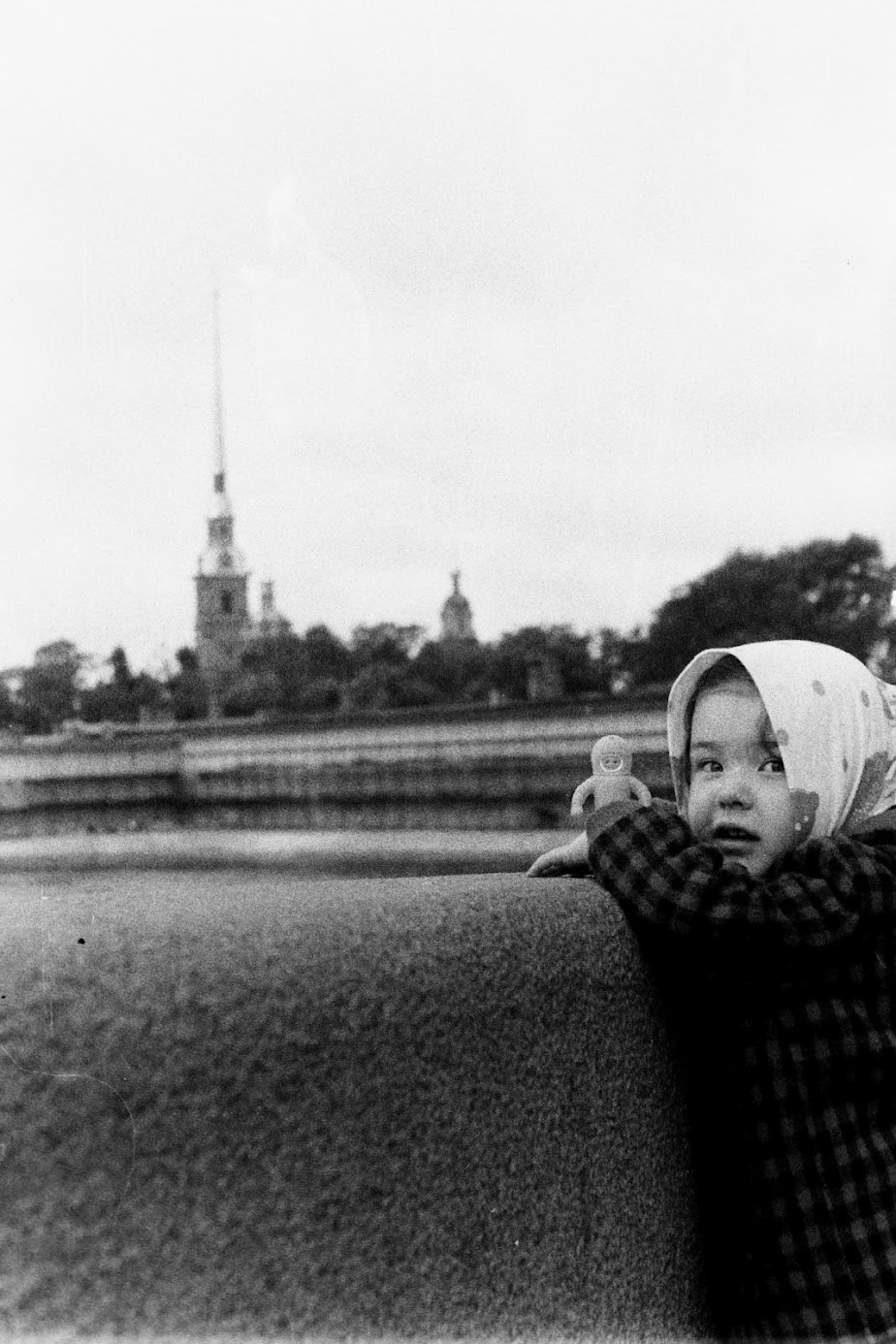
The First Trip I Remember: September 1968

In the Soviet Union, virtually everybody had a month of vacation time a year, no matter how long you worked in a particular place. Taking vacations in parts was rarely an option. Under these circumstances, everybody wanted to take vacations during summer, but if everybody took a month of vacation in summer, it would not be easy to keep operations running. Most workplaces had a vacation schedule for a year, and there was a lot of drama around who should have a preference for summer months vacations. Priority was always given to parents because if you recall, a good parent had to do everything possible and impossible to provide an opportunity for a child to spend summer in the countryside or resort.

Granted, childless people would get summer vacation time, too, and sometimes even parents of small children had to compromise. Thus, in 1968, mom had her vacation in September. After spending summer at the dacha with my detskiy sad, I got one more month of summer – we were going to the South. That’s how people used to say these days: not to Georgia, not to Crimea, not to Krasnodarskiy region – just to the South. I recently asked mom why she chose Loo – a suburb of Sochi in the Krasnodarskiy region as our final destination. Did she know somebody there? Did somebody give her the address of our future landlords? She says she does not remember. It was not uncommon that people would come to small resort places that lived off the tourists and rent a room or just a bed on the spot.

I have more pictures from our second trip t the same place a year later and just a few from September 1968, so I will try to write down what I remember.

The train from Leningrad took three nights and two full days to reach the destination, and most of the time, we were going through Ukraine. At five, I was fascinated with a country that looked different from what I had ever seen in my life. Mom told me that the white-walled houses I saw along the railroad were called haty. Sunflowers were growing by each of these cheerful houses – I never have seen them before, and the combination of white and bright yellow instantly made me happy. I stood by the window and couldn’t have enough of the sunny sights.
We shared a sleeper compartment with another family heading South: mother, father, and daughter of approximately my age. Strangely, but I remember how this girl looked, and I remember that we were playing with dolls, and I even remember how her mom was explaining the bandaid on the girl’s chin ” That’s not us who put it in such an odd way, its a medical worker.”

We never went to the dining car, the conductor always had tea with sugar cubes, and we ate whatever rations we took from home, mostly boiled eggs and cold potatoes. The locals would come to the train at some stops and offer some homemade meals and produce, and I remember us buying hot, freshly boiled potatoes, buttery and mixed with dill, and sour cherries.

And then, on the third day, we arrived at Loo and disembarked, and the first thing I remember seeing was a giant cypress tree. I never saw anything like this before, and for the rest of my life, cypress meant warmth, resort, vacation – it meant South.

Detskiy Sad At The Dacha Part 2.

It has been two months since I posted my last historical blog. These blogs require more time and thoughts, and my life in November and December didn’t exactly have any room for extra thoughts. 

Following my New Year resolution, I will continue from where I left. My last post was about summer 1968 when I stayed at the dacha with the other kids from my detskiy sad. Although it was summer, fresh fruits were perennial “deficit.” Parents took turns to buy cherries or strawberries at the farmer’s markets and deliver them to the dacha. I asked mom recently, but she does not remember any details. It was definitely not every day, and the fruits would arrive after a nap. I remember slaying in bed and seeing somebody’s mom serving strawberries in the saucers. 

I am trying to recall how often we had “parent’s days.” Later, when I was at pioneer camps, we had parent’s days only once per three-week session. But I do not remember how it was with detskiy sad. I think mom was coming once a week. Sometimes, my father would come, too, and we would go for a walk in the woods. They always brought me some fruits and other treats. Once, my father brought me mango – they were non-existent, mango juice would come along sometimes as a rare treat. 

However, I do not remember missing my mom that much.

Sometimes, the teachers were cruel and punished us for no good reason. Sometimes, the night shift counselor would wake us up to pee into the bucket and not wet the beds (even though almost nobody did). But is was never like, “I want to go home!”

I do not think I had any unhealthy separation issues when I was a young child. As I mentioned, I had no problem adjusting to detskiy sad from the beginning. My completely unhealthy attachment to mom developed later, under her direct influence. 

I am not sure why she wanted me to be so dependent and miss her so much. Perhaps, she needed it for her self-esteem – to know that she is “in demand.” Perhaps, she does not know that there could be other relationships. Now, I feel sad when I observe that she developed the same emotional dependency on me. I try very hard not to abuse it. To my New Year resolution – I should be more emotionally invested when I interact with her. Simply to give her more. 

Detskiy Sad At The Dacha, Part 1

After Baba Ania passed away, mom had to figure out where I would spend the summer. Remember that all good parents had to find a way for their children to spend the summer in the countryside because nothing can be worse than a child left in the city’s polluted air for summer.

The only option she had was to send me to a dacha with my detskiy sad. That decision would make you somewhat a horrible parent because a poor child would be separated from her parent(s) for a long time, but you would make this sacrifice for your child’s health.

Unfortunately, I have exactly zero pictures from that summer. However, I have a lot of memories, so I will try to write down everything I still remember before these memories fade away.

The dacha was located in a village called Vyritsa, with a population of about 13,00 people at that time. There were lots of old dachas built at the beginning of the 20th century. I tried Yandex Vyritsa, and it comes back with many old dachas pictures, but I can’t identify ours. I would recognize it if I saw it unless it underwent a major reconstruction. In any case, the Yandex search brings me back a lot of dachas that look very much like ours; here is one as an example.

Not all the children from our detskiy sad would go to the dacha, and not all of them would go for the whole summer. I remember that about half of the kids there were the ones I knew, and others were from some different detskiy sad.

There were several entries into the building. We had a big room to play in and several bedrooms. There were no bathrooms inside, and we had to go to the outhouse. We were not allowed to go solo, and it had to be a group of us heading towards the wooden shed. There was a bucket placed in each bedroom at night, and if you needed to go to the bathroom at night, that’s what you would use. A custodian would take it out in the morning.

I do not recall whether there was running water in the house. I remember that we washed our hands and faces in the morning using a rather primitive washstand, and we had a place outside to wash the dirt off our feet before heading to bed at the end of the day. Once a week, all of us would go to the village bathhouse, and our teaches and custodians helped us wash.

The dacha was situated in a relatively big lot, where we had a playground which included the swing, a small wooden hut, a sandbox, and a seesaw. There was also a flower garden and some shrubs.

The woods surrounded the dacha, and our teaches would take us there almost daily. We would walk until we found a clearing in the woods, and then we would play there, gather the flowers and make the wreaths, and collect sticks and build tiny huts. We also like collecting the pieces of bark from the pines. We would bring them back to the dacha and polish them on the concrete to take the shapes of boats. Then you could let these boats sail in the creeks. Sometimes, we would go mushroom picking or berry picking.

There were lots of gypsies living close by, and our teachers always warned us (or rather, they would tell scary stories about gypsies). Then we would retell these stories to each other with more horrifying details. As I already mentioned, using the children’s fears was an acceptable practice of disciplining there says, so “and the gypsies will take you away” was used quite often. I remember at least once when a gypsy girl came relatively close to us when we played in the clearing in the woods, and we started to woo at her and point thingers, and we might even start to throw something in her direction. Her clothes were dirty, and we yelled at her, “dirty pants!” And another time, I remember two gypsy horseback riders passing us in the woods. We were scared: the horses looked giant for small children, and the gypsy men seemed to be so high above! They wore loose white shirts and black pants, and their hair was black and longer than we would usually see on men.

You would think that the horror stories about gypsies stealing children belong to the Middle ages or the 18th century. But those stories were told when I was growing up. Once, when my mom and I were taking a local train, we were sitting close to a gypsy family, and one girl about eight years old was almost blond. And I thought: that’s a child who was stolen from her parents!

To be continued.

My historical posts are being published in random order. Please refer to the page Hettie’s timeline to find where exactly each post belongs and what was before and after.

Disciplining Of Preschoolers In The USSR

During one of the recent online conversations, I’ve realized that many disciplining techniques applied to me when I was a small child are considered completely inappropriate nowadays. And I am not talking about spanking.

In fact, the only case of spanking I remember was when my father spanked me when I wet my pants when we were walking on the street. I remember it vividly precisely because it was something out of the ordinary. 

Mom never spanked me, but she was very creative with other disciplining techniques. For example, when I was between two and three, I was afraid of her umbrella. I do not remember the origin of this fear, but I remember that I was so afraid that I would cry when it started raining outside, and she wanted to open an umbrella while holding me. 

So when I didn’t want to take a midday nap, she would put that umbrella in the corner of the room and say that she would return and open this umbrella if I didn’t sleep. 

At about the same age, I was afraid of behemoths. And in this case, I remember why. The reason was one of the Korney Chukovskiy poems about “poor girl Lialechka”. Since my home name was Lialechka, I was sure that it was about me. Then there was a scene when the wild animals wandered around the city streets, and it mentioned the entrance to the courtyard (“podvorotnia”) where she saw a frightening behemoth!. And since our house had “podvorotnia”, it was in my eyes something that could happen to me! 

My mom knew about these fears, so she told me that if I didn’t do something she wanted me to do, she would call for a behemoth in red pants! (I have no idea about where the red pants were coming from, but that’s what she used to say).

Then in detskiy sad, I remember that I was always in trouble! I honestly felt like I was punished for something every day, and I thought that life would be much happier when I finally went to school. The most frequent punishment was putting us “in the corner,” but the worst one was sending to bed in the middle of the day. I remember how my best friend Nika and I got into trouble(I don’t remember what the crime was), and we were told to start undressing. And I thought it was OK, I could do it, but Nika started to cry, and we were forgiven. I remember how we played with the dolls, and we were disciplining them the same way the teaches were disciplining us, using the same words. Many teaches yelled at us regularly, and we called them “cruel teachers.” The teachers call some of us “bad children”, and some of us “good children,” and I still remember the names! And I am pretty sure that the parents were aware of what was going on, but it was considered nothing out of the ordinary. Moreover, they could additionally punish us at home if they thought that the “crime” was worth the punchment.

Detskiy Sad: Activities

There were lots of different activities in detskiy sad. Usually, there was one educational activity in the morning. It could be painting, when we all learned to paint something very specific and in a very specific way; for example, we would be given pieces of dark blue paper, and we would learn to paint white branches of the trees covered with snow. We were never given paint to do art projects on our own; all painting was teacher-supervised to avoid ruining our clothes. Or we could make something out of clay (again, no creativity, repeat what the teacher showed). Twice a week, we had music lessons. There was a grand piano in the “big room” (I think it was the former drawing room). The music teacher played the piano, rehearsed the song’s verses, and we would sing along. That’s when I found out that I can’t sing in tune. She also taught us some dances. Tape recorders already existed but were rarities, so everything was accompanied by live music. I do not recall us having any PE classes. In the morning before breakfast, we had zariadka: morning exercises which we performed standing in a circle with the teacher showing us what to do. Many years later, I was shocked to recognize some of these exercises in my yoga class! For the older kids, there were more classes, and they would do reading, writing, and math.

After the morning activity, we would go to play outside unless the weather was really bad. There were no (or almost no) playgrounds at that time. Often, our teachers would take us to the nearby park. There were some sandboxes and some slides to go down. In winter, we would take our tiny show shovels with us and make tunnels and snow fortresses, and if the snow was moist enough, we would make snowwomen.

We would return to detskiy sad to have dinner, and then there was a nap time. For smaller children, there were bedrooms with metal-frame beds with springs. Older children had to take camp beds from a closet and set them up in the “big room.” All of us had to change into pajamas for nap time, and we had to stay in bed for two hours even if we didn’t need to nap.

After a nap, we had “poldnik,” and then one more class, and then we would get dressed in our outdoor clothes and get outside to play by close to the entrance to the detskiy sad, and that’s where the parents were picking us up.
Some parents picked their children earlier. I remember one girl was always picked up earlier by her father. I was so jealous of her! I even remember her name, although we were not close friends. Her name was Marina Efimova.
In winter, it was already completely dark by 3-30 PM, and we played outside in the snow, under the street like, and the snow was glittering.

After my mom picked me up, we stopped at the small grocery store, which was located in the basement of one of the homes near detskiy sad. It was a so-called “half-basement,” with the windows, although you had to go several steps down to enter. I am not sure why, but there were a lot of grocery stores in the older part of the city located in such half-basements.

That was pretty much all my day – after we got home, I had some supper and would go to bed right away.

My historical posts are being published in random order. Please refer to the page Hettie’s timeline to find where exactly each post belongs and what was before and after.

Detskiy Sad: What Was On The Menu

The food in detskiy sad was in many ways different from what I ate at home, probably that’s why I remember so well what was on the menu.

I disliked many foods for a long time because of the way they were prepared in detskiy sad. In some cases, it took me many years to try some dishes again and realize that they are actually quite good.

I didn’t have breakfast at home on the weekdays, and I think most kids didn’t. I do not recall whether my mom had breakfast before going to work. Our breakfast in detskiy sad was the same every day. First, some hot cereal. It could be either mannaya kasha (farina), oat porridge, hot rice cereal, or “pshenichka” – wheat porridge, or millet, always milk-based, although dry milk was often used. Then, a piece of white bread, something like a french baguette, with either a piece of butter or cheese and something called either “coffee with milk” or “cocoa.” In reality, both drinks would come from cans of condensed sweet substance, which contained some milk, a lot of sugar, and some traces of coffee or cocoa. It was dissolved in hot water and then poured into our cups.

Shortly after noon, we had lunch, which was called dinner. I know it sounds funny, but I have no idea how to explain this linguistical paradox. I can only speculate how this swap of meanings happened historically, but I know for sure that in the 19th century, and possibly until after the revolution, the Russian language didn’t have this problem. The meal at noon was called “poldnik” which means exactly that: something happening at noon. Dinner would be around 5 PM (sometimes as early as 4-30, sometimes later), and then it could be supper after 8 PM (or it could be none). I should probably research what happened with the normal order of things after the revolution. In any case, it was lunch, which was called dinner :). And it was a four-course meal. The first course was “a salad,” which meant shredded carrots or coleslaw (without dressing). Then, there was soup (called “the first course). Then an entree (“second course”). And then compote made of dried fruit (which I hated).

All soups were cooked differently from how they were cooked at home, but I especially hated the yellow pea soup, sour schi, and “rassolnik” (and I hate the latter two till now:)).

The second course would consist of some protein (a piece of fish, or a meatball, or a piece of chicken) with some carb side (pasta, rice, buckwheat, or mashed potatoes). In addition, there was almost always a piece of a sour pickle. We were required to eat everything that was on the plate, and although you could sometimes avoid the food you really-rally hated, it was always a fight. Once, I accidentally dropped this piece of pickle into my apron front pocket and didn’t realize it right away, so I ended up getting away with not eating it. I tried to do it on purpose for the next couple of days, but then I was caught:). The only dish I ended up liking in detskiy sad, that I didn’t like before, was liver. I never tried it, but then I saw my best friend devouring it, and I decided to try it, and it turned out I liked it a lot.

Funny fact: they used to make some “detskiy-sad style” versions of famous dishes, including beef stroganoff, goulash, and beefsteaks, so for a long time, I could not understand what was a big deal about them :).

After dinner, we had nap time, and after the nap time, we had “poldnik” which does not make much sense since it was not at noon but 3 PM. It often consisted of a glass of boiled milk (boiled for sanitary reasons, tasted horrible) and something random. “Random” could be a pastry or a piece of “zapekanka” (cottage cheese baked with eggs and flour) or some vinegret (salad with beets). In theory, detskiy sad had to be open till 8 PM, and the kids who stayed that late were upposed to get some supper, but I do not think it ever happened.

There was always lots of drama around food in detskiy sad because very few kids liked all of the dishes served, however, we were expected to leave happy plates and consume two half-pieces of rye bread at dinner. I think, my passion for fresh fruits and vegatables can be explained by the fact that I had almost none as a child!

My historical posts are being published in random order. Please refer to the page Hettie’s timeline to find where exactly each post belongs and what was before and after.

1967: Daycare In The Soviet Union

I briefly mentioned the situation with preschool and daycare in the Soviet Union when describing the daycare my own children attended. Although it was during the post-Soviet times, the daycare being on the more conservative side of the society in general, preserved most of the Soviet-time features.

However, the daycare – Detskiy Sad – which I attended was a classic example of how it looked during the Soviet period of history, so I am writing about it from both historical and personal perspectives.

In the Soviet Union, there was no private daycare. All the daycare, including the infant care, was supervised by the Ministry of Education. In the early days of the Soviet Union (and even before the Soviet Union, in Soviet Russia), working women were given a relatively short parental leave. Yasli – daycare for infants and toddlers – was expected to take children as young as six weeks old. I am not sure whether any groups for the children that young survived by my time, but I know some people close to my age who started to attend yasli when they were eight or nine months old. Children from three and up to seven years old attended detskiy sad (the words mean Kindergarten in Russian). Children were divided into groups according to their age and would start school when they were seven.

The group for children six years and up was called a “preparatory group,” and it was essentially the K grade in the US nowadays.

I do not have statistical data on what percentage of children stayed at home with nannies until what age, but I started to attend detskiy sad relatively late: it was October 1967, so I was four and a half.

My detskiy sad was named “Druzhnie rebiata” – “Friendly Children.” It was located in one of the old buildings in Kolomna – an old historic district of Saint-Petersburg (Leningrad at that time). It was pretty close to the house we lived in, and we walked there. Now thinking about it, it should not have taken more than 10 minutes to walk there, but it probably took longer since I didn’t walk very fast.

The building was somebodies’ private residence before the Revolution, and I still remember the floor plan. Each group occupied its separate room. I think that initially, each room was a bedroom.

I vividly remember my first day in detskiy sad. I wore a sailor suit (a skirt and a top with the sailor’s collar), traditionally a festive outfit for children even before the Revolution. It was made of fine light grey woolen fabric, and the stripes on the skirt and on the collar were red and blue. I had to wear an apron over it – that was a requirement in detskiy sad, and I was very upset that my pretty outfit was not showing.

The first thing I was when entering the room was a large toy chariot. It was secured on the floor, and there was a seat with attached pedals, and in front of this chariot was a toy half-house with two moving legs. You pedal, and the horse legs are moving. I never saw anything like this, and I was fascinated.

Another thing that was new for me a caught my attention right away was a “mosaic.” It was a round piece of plastic with tiny holes and a set of multicolored hexagon-shaped pegs, which you could tuck into these wholes and make beautiful patterns. I didn’t have anything like this at home, and I loved it. I think I had very few (if any) of the board games at home, and I enjoyed them a lot in my detskiy sad.

Another funny thing from my first day at detskiy sad. After the afternoon nap, we were asked to sit at the desks. In front of each child, there was a small wooden board with a piece of colored clay on it. Since many new foods were introduced to me on that day, I thought that a piece of clay was also something eatable:).

It turned out that we were going to learn how to make a cup out of clay. Back then, doing arts for your own pleasure and enjoyment and learning certain techniques were very clearly separated even in preschool education. We were learning how to make a cup. I still remember all the steps! We knead the clay; then you separate it into two pieces, one for a cup and another for a saucer. You roll the first part into a ball. Then you make a deepening and keep pressing until it will start to look like a cup. Then you roll a ball from the other part of the clay and then flatten it until it resembles a saucer.

All was new and exciting, and I liked my first day at detskiy sad a lot!

My historical posts are being published in random order. Please refer to the page Hettie’s timeline to find where exactly each post belongs and what was before and after.

1967: A Field Trip To Oranienbaum

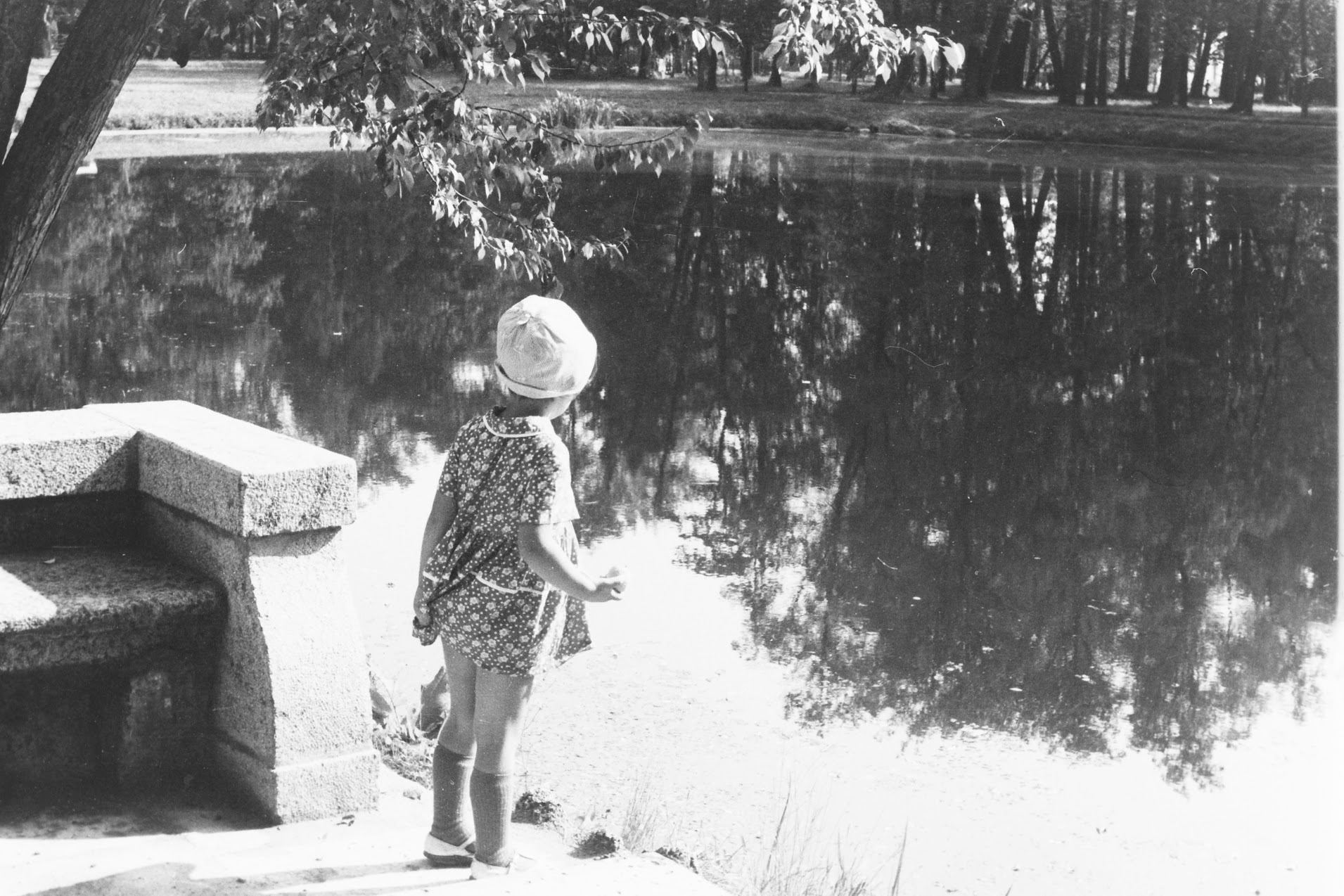
Sometimes, mom would take me to one of the Palace Museums. Since Saint – Petersburg used to be the capital of the Russian Empire, the were multiple summer residencies of the royal family and grand dukes. And even though Leningrad was not the capital of the Soviet Union, the palaces were still there, and almost all of them were turned into museums. If you read into the history of WWII, and specifically about the Seige of Leningrad, you will learn that most of these palaces were literally burnt to the ground. The majority of them were carefully restored in their original glory, but no matter how authentic these palaces looked, that was not the original work of the 18th century.

However, one of these summer residences was not ruined, or the warfare damage was minor. I am talking about the original Alexander Menshikov’s mansion, Oranienbaum, which was renamed Lomonosov in an attempt to exclude the German names from the Soviet toponymic. After Menshikov, several other Russian royalties owned the place, and more palaces were erected nearby.

Due to several strategic reasons, these palaces suffered only minor damage during WWII. In the end, this didn’t help preserve the architectural masterpieces – the campus is located further from the city than other summer palaces, so its maintenance was deprioritized. 

Fortunately, Sosnovaya Polyana is approximately halfway between Saint-Petersburg and Oranienbaum, so it was a shorter trip for us. On the other hand, the palaces didn’t look as grand as in Peterhoff, and most of the time, there were fewer tourists and shorter lines to enter museums. 

I loved the park and the palaces, especially the one called “Sledding hill” (Katalnaya Gorka). The name is charming, and the palace is small and elegant. 

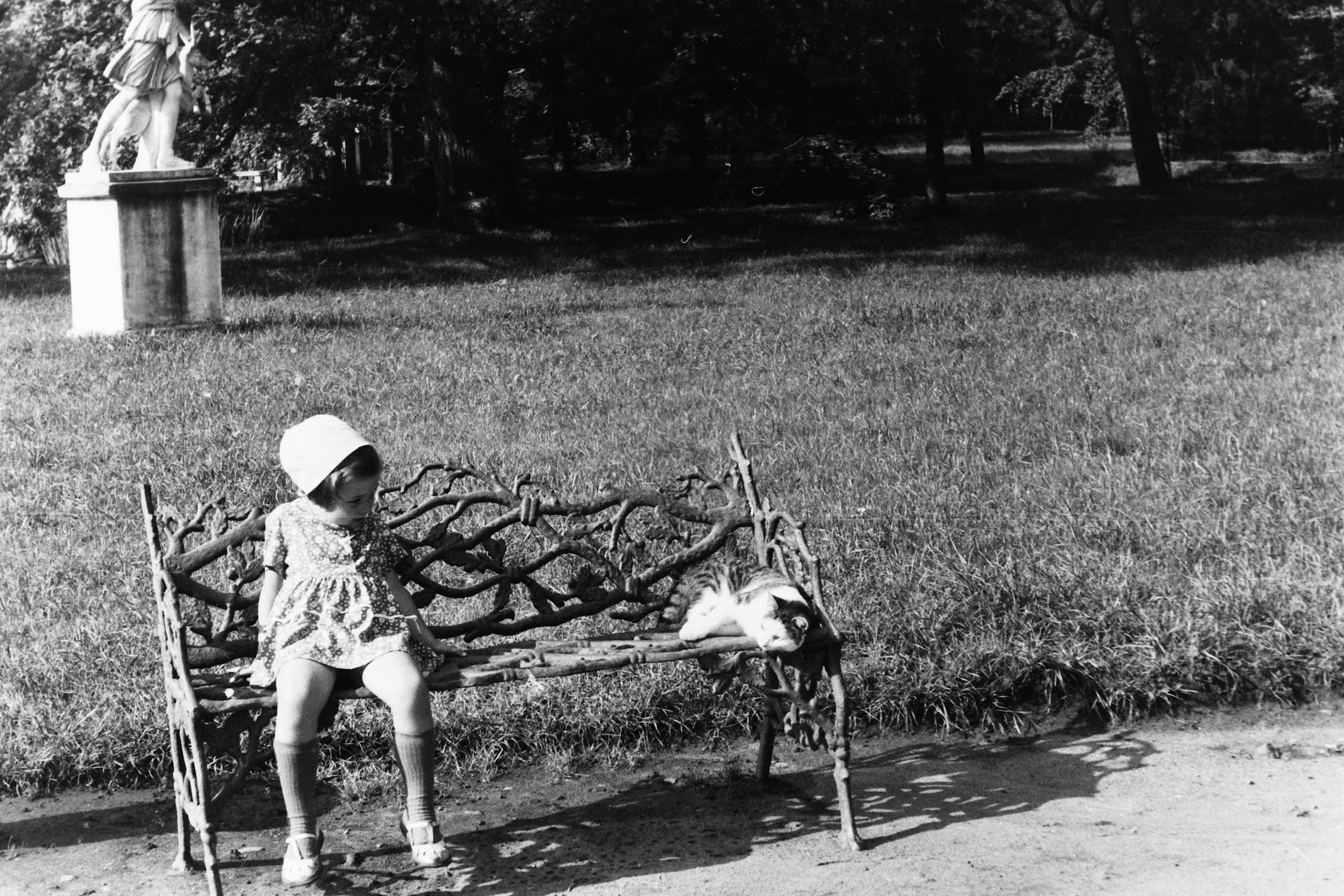
Sharing a bench with a cat
Continue reading “1967: A Field Trip To Oranienbaum”

Summertime in 1967

Looking at the pictures of my granddaughters taken by their multiple living relatives, I can’t stop comparing the summer Nadia has now with my summer of 1967 when I was the same age.
Yes, once again – no pictures for the whole year. Apparently, nobody thought that something interesting is going on in my life and people’s life in general.

My mom worked. My father was mostly out of the picture. Nanny Katia watched me and took me on the Neva River and to the Bobrinsky Garden. My aunt and great aunt read books to me, and in summer, I was again at Sosnovaya Polyana, my last summer with Baba Ania. Mom says that Baba Ania already had a stroke earlier that year, and the left side of her body already didn’t function properly, so she had to manage with one hand. But I remember nothing of it. When my mom or my father come, there were pictures.

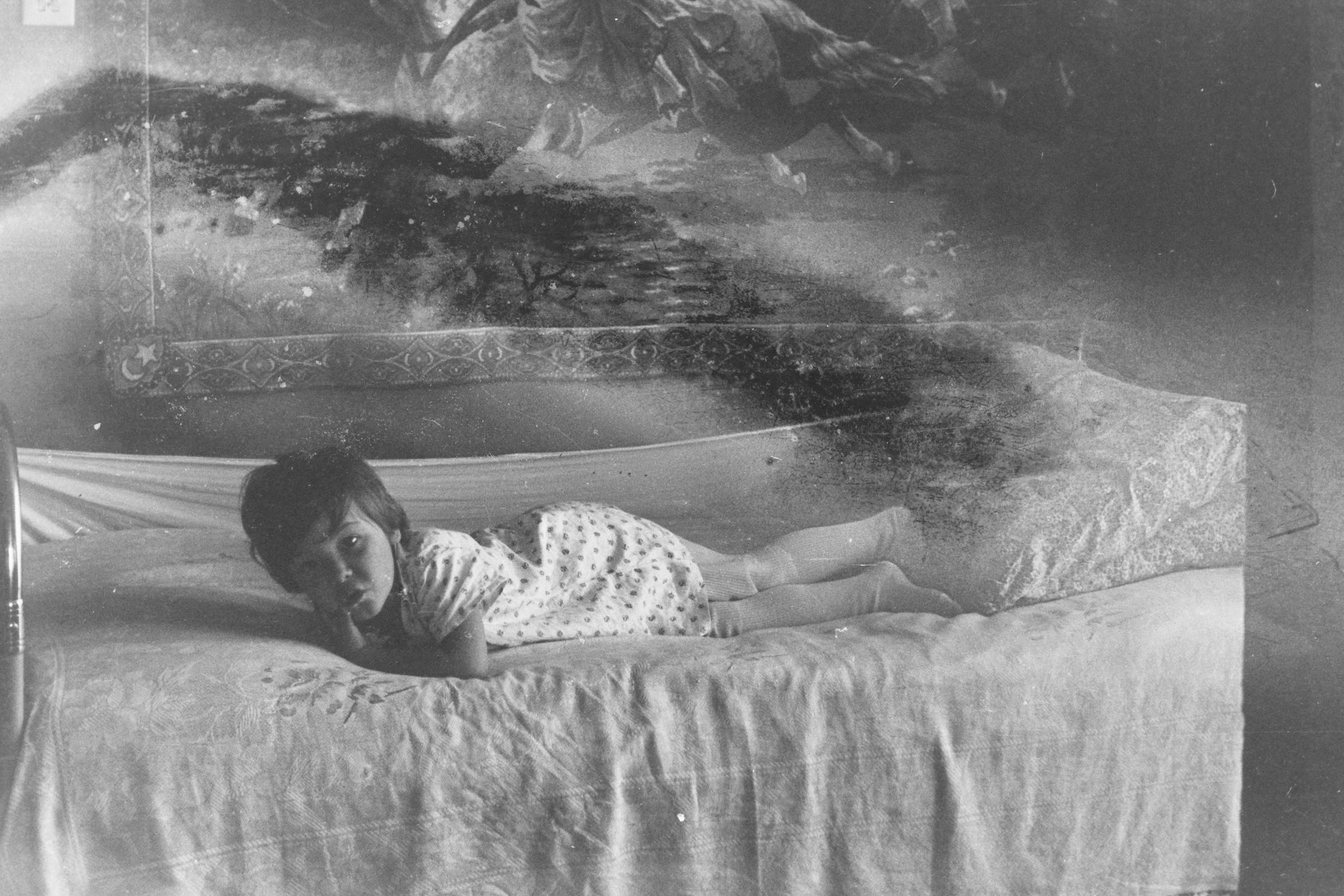
On my grandparents bed – the only real bed in the apartment

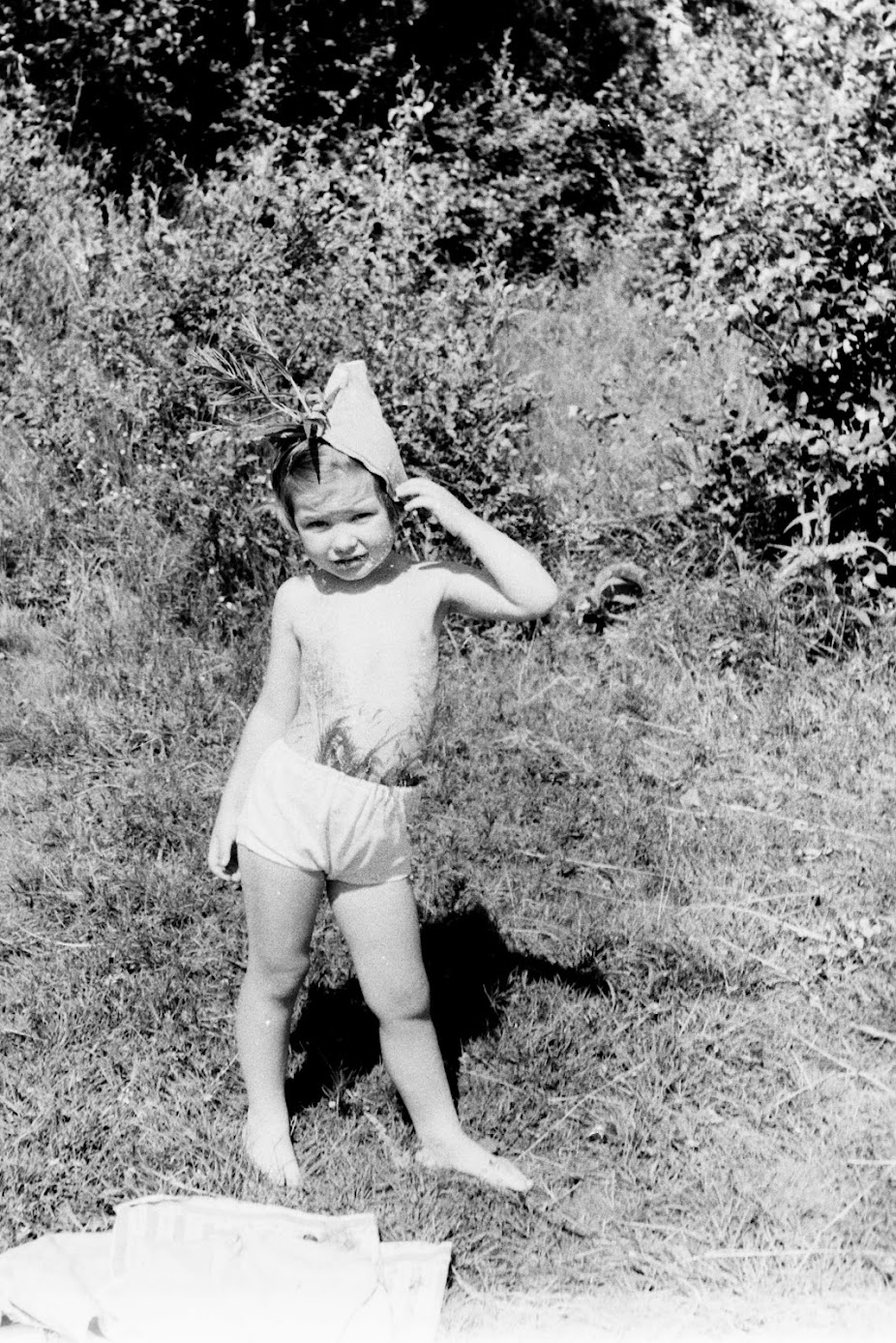
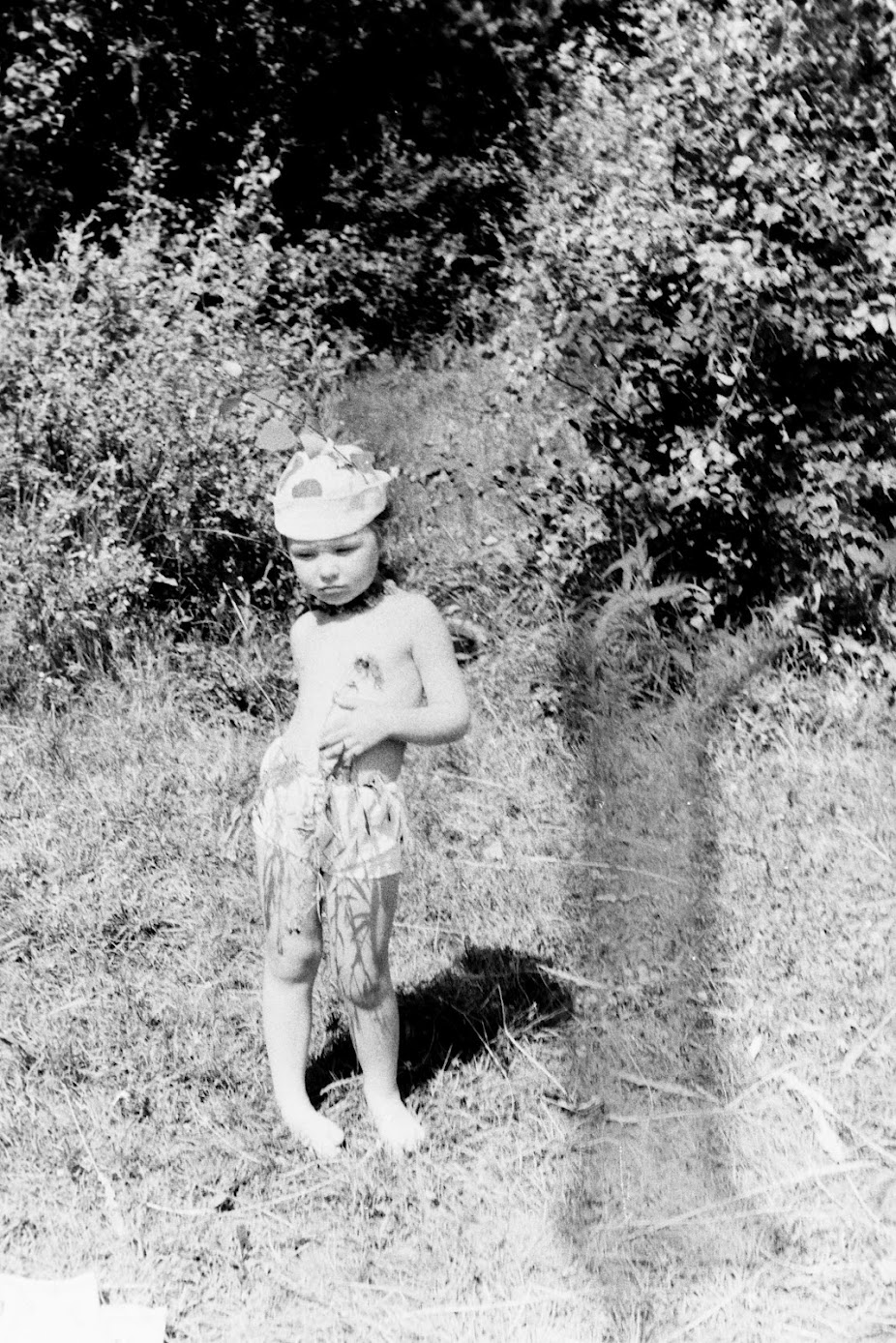
I was obsessed with Indians. A children’s comic books series, Cheerful Pictures featured a group of diverse characters, including the Indian Chief Va-a-tu-re. He was the best, and I loved all about him. There was no way for me to replicate his costume, but mom helped me decorate myself with small tree branches, flowers, and leaves and make my silhouette resemble the one of Va-a-tu-re

Continue reading “Summertime in 1967”

1966 – Life Goes On

Some time ago, one of my friends mentioned “a season of watermelons.” My first reaction was, “Is there really such a thing as a season of watermelons? Aren’t they always available? And then I remembered! During my childhood, the season of watermelons was a thing. 

Previously, I mentioned the concept of “deficit” in the Soviet Union: anything, which was not available in the stores at any given moment. Anything you had to “look for,” “procure,” “get”. Which meant – most of the things.

Watermelons were grown in the Southern part of Russia, mainly in the delta of the Volga River, in the Astrakhan region. They were ready to be harvested in August-September, and that was the watermelon season. It was impossible to buy a watermelon anytime outside this timeframe. 

Watermelons were not sold in the stores. Here and there, on the streets, “watermelon cages” emerged. Inside these cages, watermelons laid on the ground. Customers stayed in long lines, as in any other case of “deficit.” When your turn comes, you are allowed inside the watermelon cage, and you can walk around and pick a watermelon or two, and bring them to the scales, then pay for them and take them home.

Although my mom says that Baba Ania was not allowed to show up in our apartment on Galernaya Street, I remember that she was sometimes visiting. And one of these times was the day of the Watermelon story.

I don’t even remember staying in the line that day; most likely, we were fortunate, and the line was not that long. What I remember is that we were carrying it home, or rather Baba Ania carried it, and I was gingerly skipping alongside her. And the next thing I remember – a watermelon on the asphalt. It was ripe. It was red inside. But at least half of it was broken into small pieces.

I do not remember how Baba Ania managed to collect most of these parts. But I remember sitting in our giant kitchen, while the broken watermelon is sitting in the middle of a table in front of me. Baba Ania put some broken pieces on the saucer, and I was eating them with a spoon – a deficit should not be wasted!

***

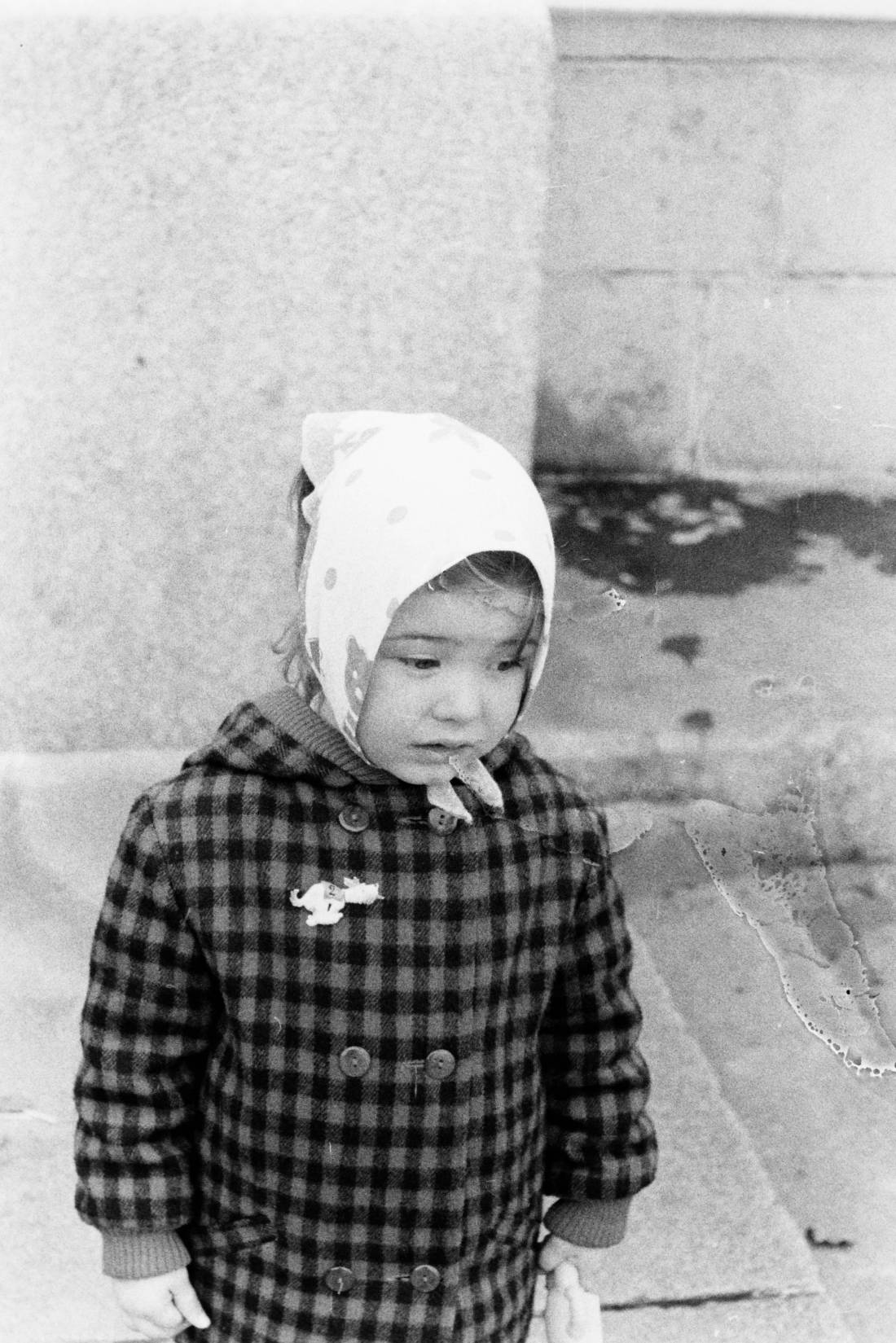
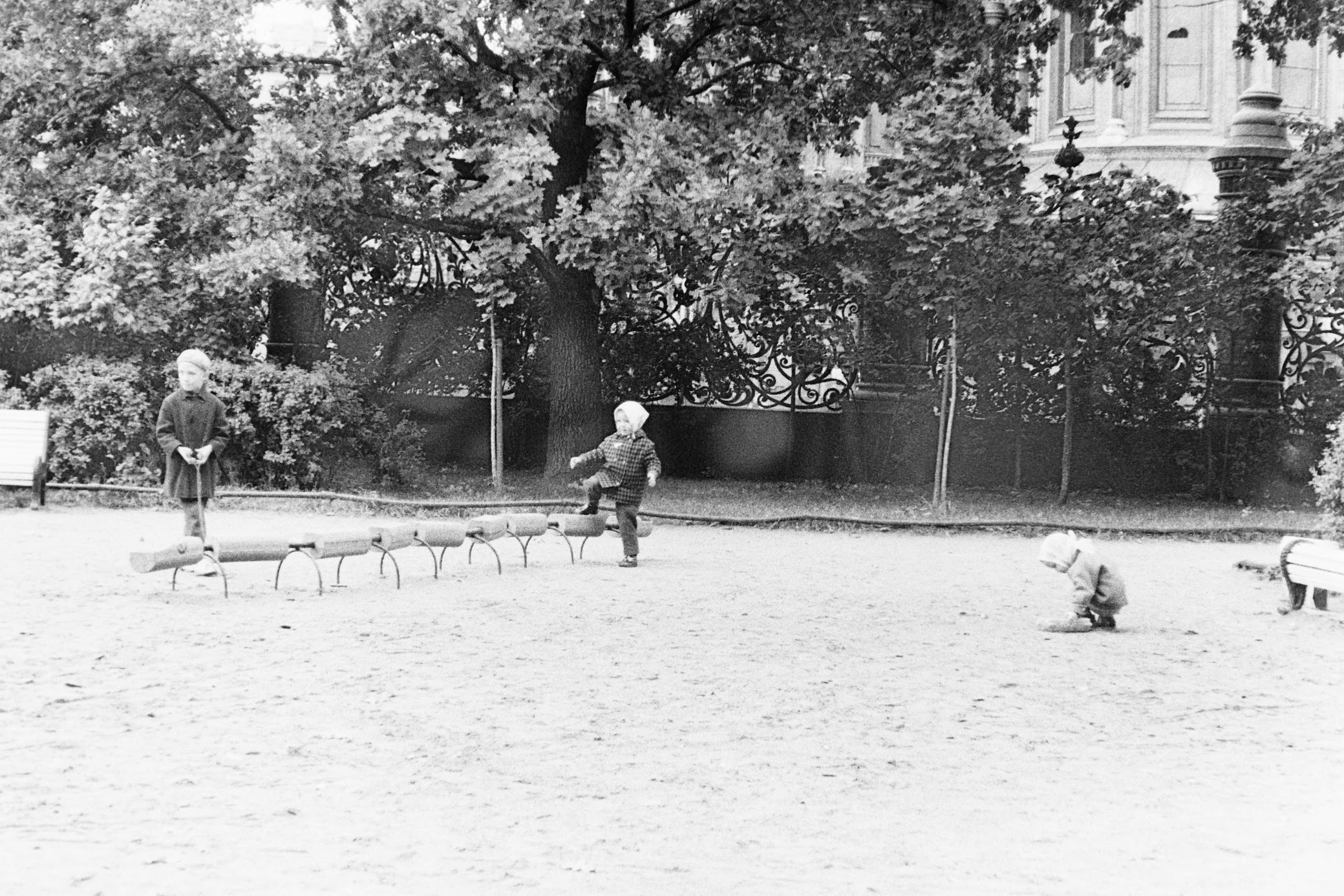
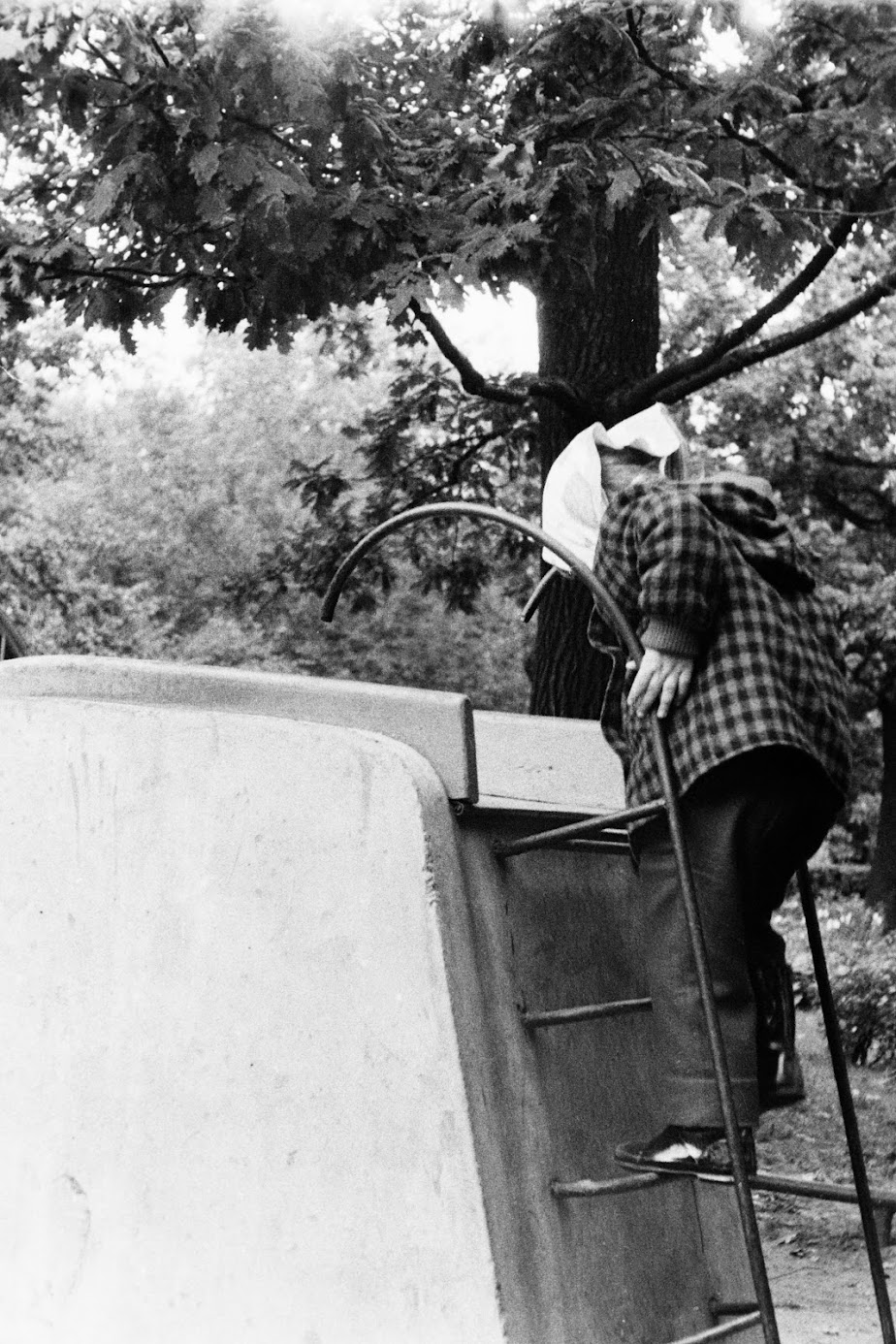
Once again, there is a huge gap in the line of photos. Here are several pictures all taken one afternoon at Alexandrovskiy Park. and at the nearby Dvortsovaya Embankment. I can’t imagine what would be a specific reason for taking pictures on that day. No relation to the story, except for it’s September, a watermelon season. Most likely, about a year later than the Watermelon Story.

Continue reading “1966 – Life Goes On”