“Biking in Helsinki” is something I do regularly, but biking in March is unheard of. I can’t remember a March ever being so warm and sunny, and with all traces of snow gone. Since my flight was not until the afternoon, Boris and I went on a bike ride.
It was a very short ride by Boris’ standards, but a very nice one. Among other things, Boris showed me a bridge he was very excited about: it is open for every mode of transportation except cars :). Way to go, Helsinki!
Another discovery, and I am ashamed that for so many years, I was never curious enough to learn more about Niguliste Church in Tallinn. God only knows why I thought it was relatively new and didn’t realize it was one of the oldest churches in Tallinn!
Like many other historical monuments, Niguliste survived for hundreds of years, wars and sieges, all the changes of powers of the city of Tallinn, all to be completely destroyed by the Soviet bombing on March 9, 1944.
Several exhibits inside the church highlight the most important moments of it’s history, and the most significant artworks. The museum website is a great resource.
Several years ago, I noted that Oleviste does not have any wheelchair access (maybe this has changed now), but Niguliste has an elevator, and even the mechanism to move a wheelchair in one place with an uneven surface.Absolutely stunning views from all windowsContinue reading “Niguliste”→
I didn’t think Tallinn was on our agenda this time, but about a week before my trip, Boris mentioned that he thought I might enjoy an organ concert at Niguliste, and I immediately jumped on this opportunity. Recently, each time we visit Tallinn, we see something new, so I was almost certain that it would be the case again.
Usually, we take the earliest boat to Tallinn and return about four in the afternoon, but this time, we took the late morning boat and went back at 7:30PM.
Lots of people travel to Tallinn for the weekend, so the terminal was pretty crowdedStill not that many people bought the “late breakfast”, so we were able to get a table at the front of the ferry. We didn’t eat breakfast at home,a nd combined breakfast and lunch, so we didn’t waste time in Tallinn on any sit down mealNo rain and sunshine, and the air temperature in the 40s
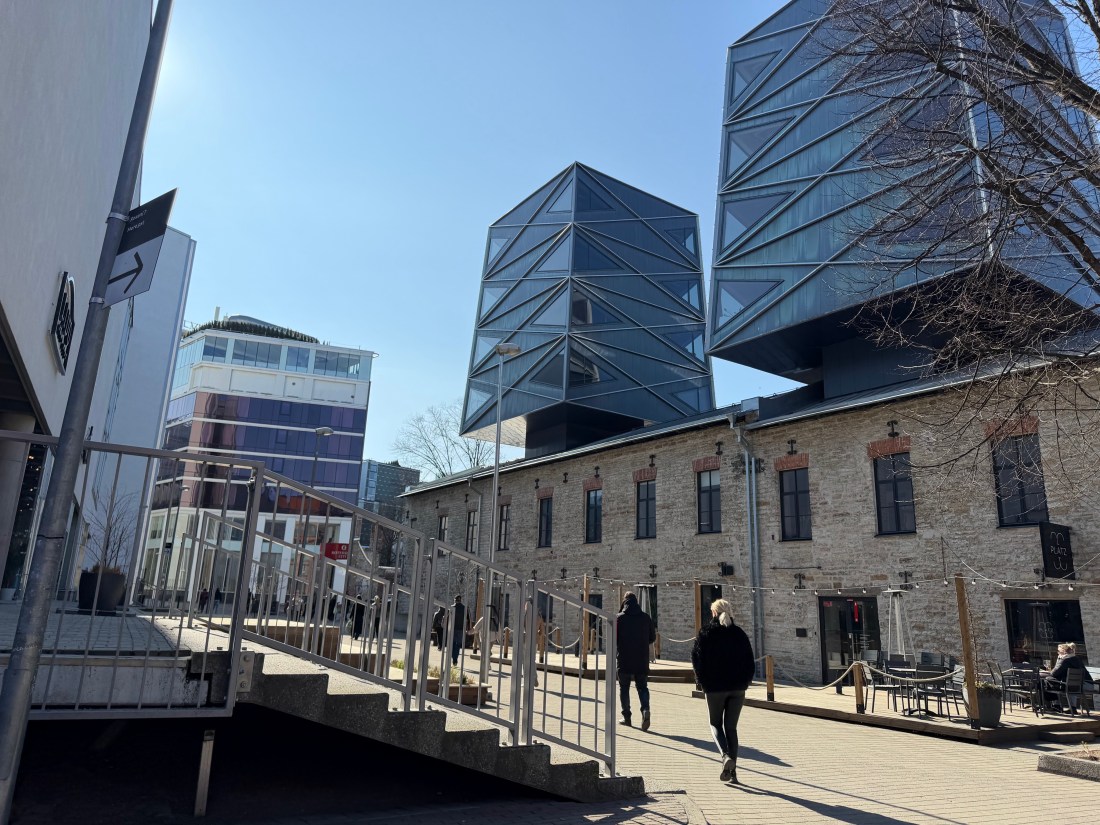
We started walking, and Boris was commenting again, that this is a new part of the city because it was off limits at the Soviet occupation time being too close to the Naval base, and then I saw this sign at the corner:
I had no idea what it was, but it turned out that that’s exactly where we were heading. While I was walking there and taking the pictures, I had no idea about the history of that district, just taken away by the 19th century industrial aesthetics. Boris told me that Rotermann was an industrialist who build these factories and the living quarters around them, and that they became completely abandoned during Soviet occupation, and came back to life in the early 2000s.
Only when I was back home, I looked for more information about the Rotermann Quarter. Here is the most detailed description I found, and I think it’s totally worth reading,
On Friday evening, we went to one more concert. Once again, it was in the Helsinki Music Center, which I first visited last time, and loved it. This time, it was Helsinki Philharmonic Orchestra. The concert was titled “I Want to Be Alive”, and that was the name of the piece which was performed after the intermission, and was composed by Daníel Bjarnason. OK, I know it sounds confusing, so let me say it again. Daníel Bjarnason was conducting, but the first part featured Wagner and Szymanowski, and in the second part, the orchestra performed the piece composed by Bjarnason, which was called “I Want to Be Alive.” And that’s also how the whole concert was called.
Once again, I love this venue!
Once again, sitting on the side when there is a soloist, is a bad idea. Boris said he remembered I said so, but he got the tickets on the side again, and it was a bad idea again/ The orchestra sounds great. The soloist when there is no orchestra, also sounds great. But not together. You have to face both the orchestra and the soloist to get a good sound.
And one more, completely unexpected! We saw Esa-Pekka Salonen in the foye!!! First I thought: no, it’s impossible; it’s just someone looking like him, because otherwise, there would be a big crowd around, and he is just talking with a couple of people. But later, when we passed by one more time, I realized that Finns were just being polite, because other people were turning their heads back after they passed this group :).
Below is some interesting art on display in the foye, and a sculpture in front of the Music Center.
An exhibit in the foye
… and yes, a million years ago, there was such a thing as an ice-cream after going to the movies, right?
By now, Jarco, who oversees all the technical side at Valo, is my good friend, and happily greeta me when I arrive. This time, he told me: now we have a proper app, and you can make reservations there, and you can also get your morning porrige for free. Do you like porrige?
Unfortunately, for some reason, I was unalbe to find the app in the App Store, which I reported to him later that day. Next day, when he saw me walking down for breakfast, he asked meL are you eating a proper breakfast today, or just porrige? That was, in fact, the day when I ate fruits and protein at home before heading to Valo, so I said – I was thinking just a porrige today. He said: OK, let’s go! He walked down to the cafeteria with me and told the cashier: she is booked for today, she just doesn’t have the app, can she have porrige?
That was very sweet, and although it looked like I could get the same porrige for free just showing my QR code, I was very thankful to him for taking care of me 🙂
And I can’t miss this opportunity to show VALO Works one more time. I never read the inside of the cards which are placed on the shelves in each room:
I can’t be in Helsinki without meeting with my friend Natasha! I was so thankful that, even though she now works full-time, she still found time to stop by my coworking space after work, and we sat and talked for almost two hours! (And yes, I love that we could do it in the same space, and it was OK with everyone)
Natasha brought me a bag of Ukrainian sweets: there is a new store operated by Ukrainian refugees, and they ship directly from Ukraine. She was happy to support their business, and the sweets taste great (and it’s a terrific idea to mix all varieties in one bag – I can barely find two of the same kind!).
(I might still bring some of them home, althought I can’t guarantee :))
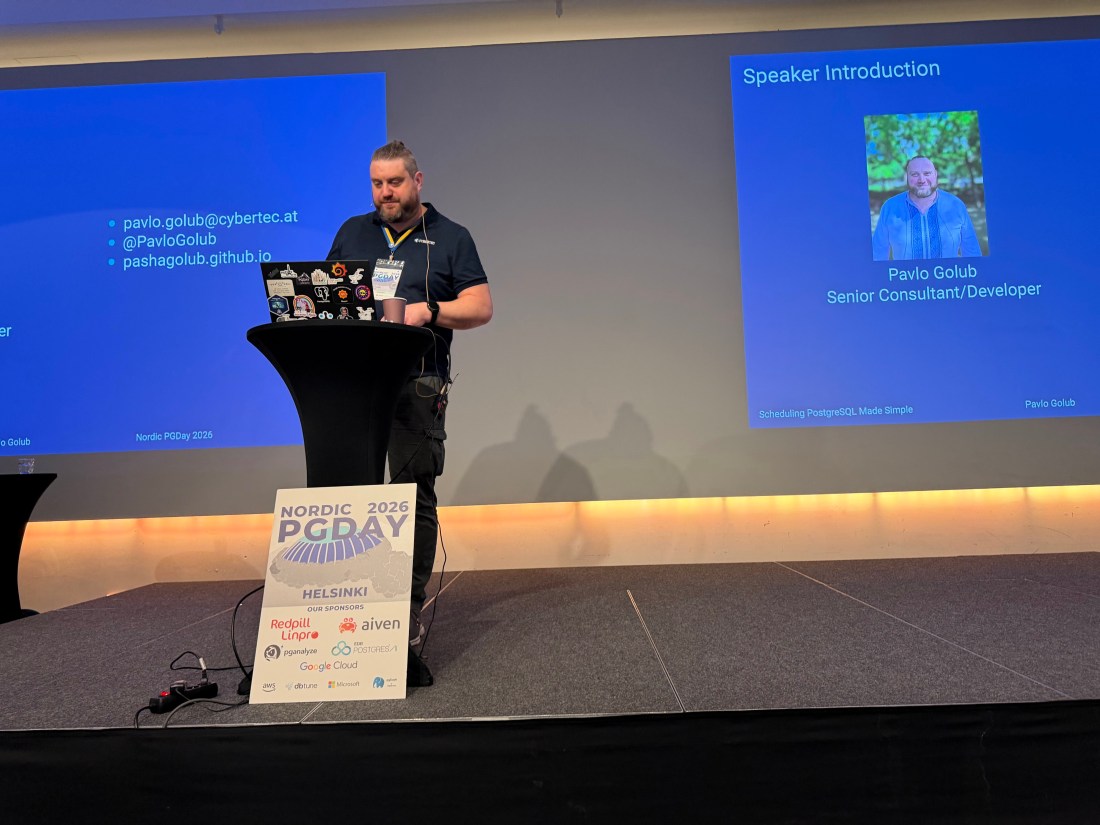
It was a good event, although I had a feeling it was too brief: not much time before or during the breaks. I was hoping to have more talks with the fellow organizers, friends, and sponsors, and I simply didn’t have enough time, especially because I only skipped one session; otherwise, I was actively listening.
My talk was very well received.
It turned out that Boris mentioned at the last Helsinki PUG that there would be an opportunity to have the Query Optimization signed by two of the three authors, and several people approached us with paper copies. 😀
I attended several incredibly interesting talks, and I am planning to follow up with some people because I want to explore more of what they are doing.
Three out of four PG DATA Org committee members presented at Nordic!
After the conference was over, those who didn’t leave to catch their flights went for drinks at the hotel bar. Boris and I wanted to take a couple of people whom we knew and who were in Helsinki for the first time, for one more round of Finnish authentic food, and we walked to the Konstan Möljä restaurant. Since my friend Zoya introduced us to this place, we’ve loved it! Our guests also liked it!
Boris volunteered at Nordic, so he had to be there half an hour earlier than I did, and I used that half-hour for a short walk because I didn’t have gym that morning and expected to be inside for the whole day.
This year, Nordic PG Day was in Helsinki, which is why I submitted the talk, and I would actually go even if my talk won’t be accepted:). However, it is still a very busy time because all the other days are working days.
I arrived on Sunday, and Boris and I went to the Baroque concert in the Old Church. They performed a Resurrection Story by Heinrich Schütz. It was very interesting, definitely something I had never heard before, so I count it as a positive experience, even though it was difficult to stay awake after the long flight 🙂
On Monday morning, I went to VALO co-working, and as always, it was very welcoming, and the way their environment is set up really helps to focus on work.
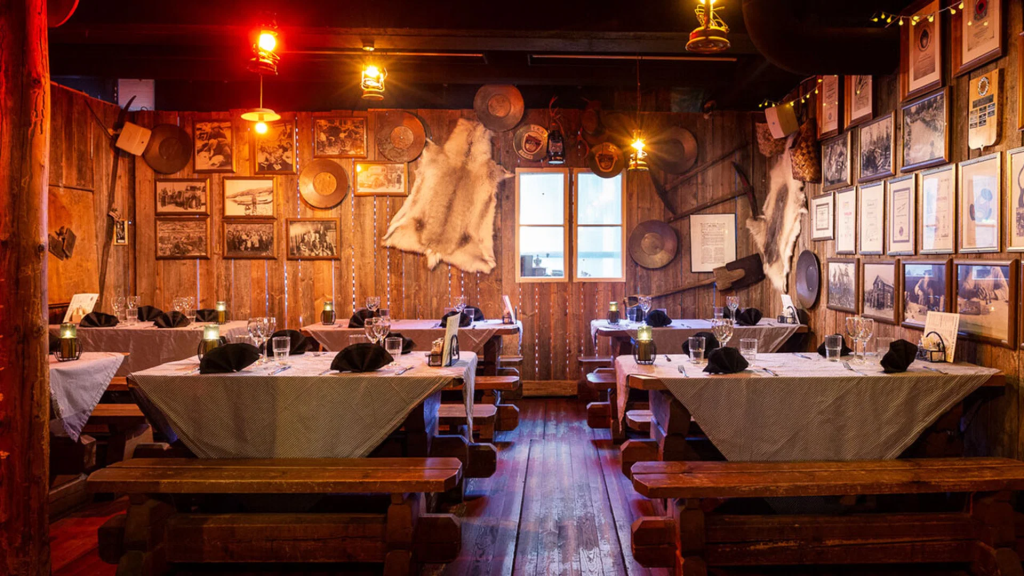
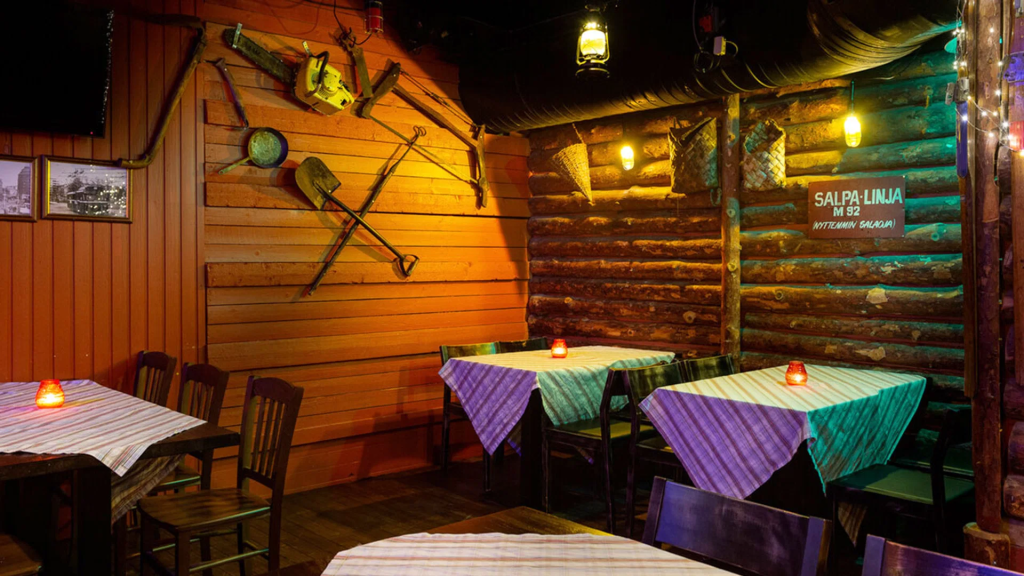
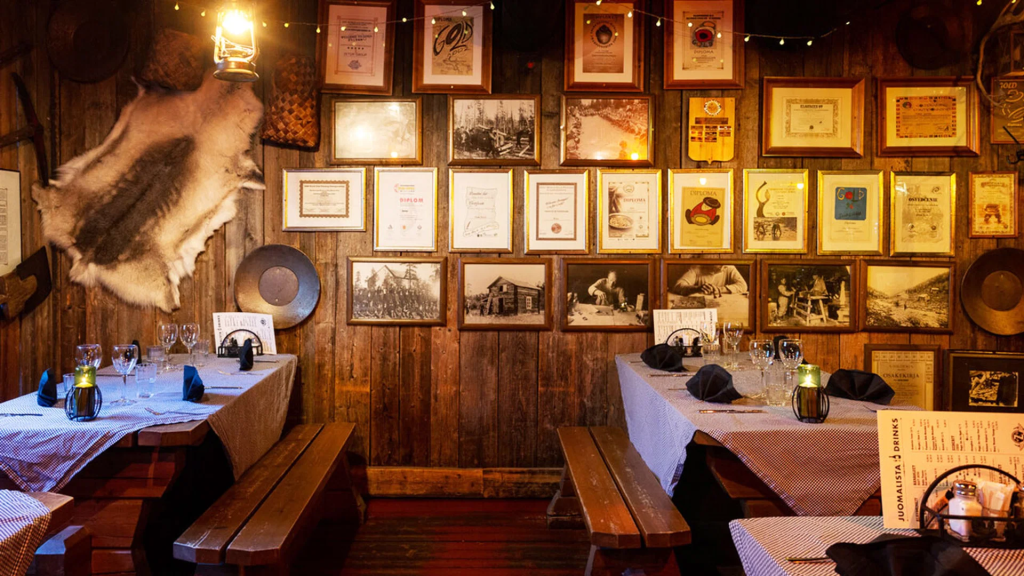
In the evening, we went to the speakers’ dinner at Zetor. I passed this place dozens of time, and never knew that it is considered a big touris attraction. I didn’t have time to take pictures of the interior, because I was talking to people all the time, so the pictures are from the restaurant website:)
I think we were sitting in this section
I took some pictures of the food we were served. The salmon soup was not the one I was expecting, so this was an experience rather than a success:
The raindeer meat was awesome, as well as the dessert.
Boris and I went back home at the first opportunity, and I do not know how people who went to the bar afterwards, could participate in the conference the next day – this remains a mystery!








 Hettie's Reflections