The Last Weekend Before Elections

It was another extremely busy weekend, mostly spent on the book writing plus trying to catch some nice weather on Saturday.
Regarding the book, we finally have a reviewer who’s suggestions are exceptionally helpful, but they require us to go back to almost every chapter and make some changes. And all changes have to be reviewed by all three of us :). As of yesterday, we had five different chapters in work: submitting one, drafting a plan for another, replying to the reviewer comments on the third, and waiting for re-review on the other two.
That was my busy Sunday, and I am so glad that it was a Sunday with an extra hour!
I had multiple blog posts in mind for this weekend, and I didn’t have time for any. But there is one thing I still want to write about today, before the election day.
Anna was doing phone banking and leaving literature by the doors over the weekend, and when I think about that, I want to cry. I do not have enough words to describe how proud I am of my daughter.
You know how it is commonplace that only young people and retirees are activists because others are busy working taking care of their families. And here is Anna, doing phone calls and walking the turf. When I expressed my admiration for what she is doing, she told me: I remember how I woke up on Wednesday four years ago, and this year, and now I want to make sure I did everything I could to prevent the same thing happening again.
I wish more people would understand that you can’t shield yourself away from politics “because you are busy taking care of your family.” The future of your family, the future of your children, depends on upcoming elections. There is hardly anything more important than that.
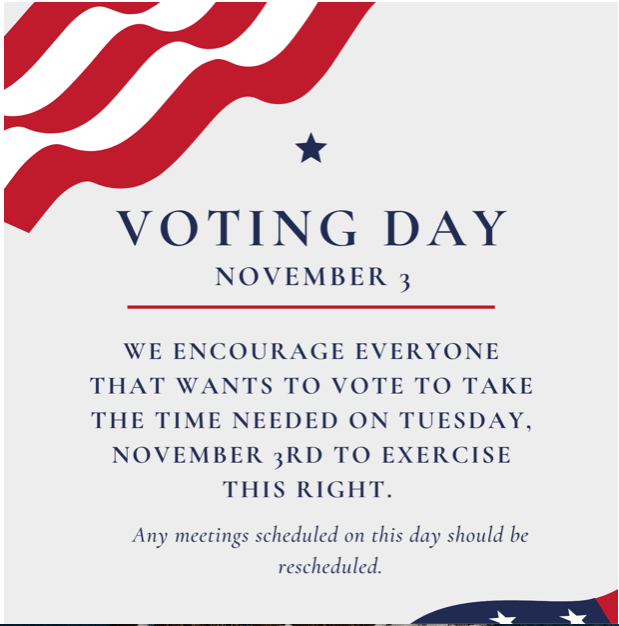
BTW, a couple of weeks ago, our HR sent out this message:

Which made our director of analytics anxiously ask me whether he needs to reschedule a by-weekly Sprint planning, and I told him I already voted:)

Anna messaged me a couple of pictures of Nadia, helping her to canvass. I think that many years later, Nadia would be proud of them. I know that some people would view it critically as “indoctrinating the young children.” But I think about it as teaching civic and being true to your moral values.

Breaking the rules in private vs protesting in public and the Soviet mentality

Last week, my mom wrote about the seeming contradiction she’s seen with her Russian friends, who’ve seen even peaceful protests as somehow innately bad, while not minding violating laws on the sly.

I definitely get where she’s coming from. Growing up in Russia, I’ve often seen grown-ups express the attitude that it’s almost virtuous to take advantage of loopholes, and there’s nothing wrong with violating the rules so long as they aren’t effectively enforced. Similarly, I’ve seen plenty of people take pride in following the letter of the law while violating the spirit. And it’s not even a solely Russian thing – as I got older, I saw the same kind of attitude in many other ex-Soviet countries.

I’ve already been thinking about this a lot during the pandemic. During the Illinois lockdown, people weren’t supposed to go outside except for essential reasons, such as buying groceries. But there were several professions that were exempt from that, including journalists. So long as it was in the service of performing journalism duties, we were allowed to go wherever wanted.

Which is where the gray area came in. There is only so much journalism one can do from behind the computer screen. Sometimes, one has to go to places, see things as they happen, take pictures, talk to people. And sometimes, you need to see conditions on the ground to figure out what’s worth writing about. And so, as those of you who followed me on social media know, I took trips to the suburbs, just to get out of the house and have a change of scenery. I took pictures and took notes that could be used for the article. A few times, I even legitimately got story ideas this way, or took pictures that were actually used in articles – but there were times that I didn’t. And there were some instances when I took pictures for fun and wound up using them in articles because it just happened to be apropos. But there were also times when I didn’t use them for anything.

My mom wasn’t amused by any of this, chiding me for doing non-essential travel, but I honestly didn’t feel bad. Who was to say that any given trip wouldn’t retroactively serve a journalistic purpose? To quote Harry Dresden from Jim Butcher’s Dresden Files, it was a technicality I intended to hide firmly behind, if anybody asked (which nobody did).

Honestly, I was more confused why my mom took issue with that. She actually grew up in the Soviet Union, and i know for a fact that, back then, she did things that weren’t legal, and things that were on the gray side.

It was the same thing with my visits to the Chicago beaches during the summer. While the beaches weren’t closed, the closures weren’t enforced after 7:00 PM. I didn’t feel bad about not following the rules when they weren’t in any way enforced, especially when other people did the same thing.

Now, unlike my mom’s Russian friends, I have no issue with protests, at least not per se. Even when I don’t necessarily agree with the goals, I don’t have this common Russian reaction of “what are they doing, they’re just stirring up trouble.” Protests bring attention to issues. They make a statement that the way things are won’t be tolerated. What is so wrong with people risking arrest and injury to stand up for their beliefs?

(Now, people wanting to protest without being willing to risk anything is another story)

As I commented on my mom’s blog, I don’t think the contradiction she talked about is that much of a contradiction at all. She and her friends grew up in the Soviet Union. Protest actions get people in trouble – ergo, those who start trouble are trouble-makers. Now, exploiting the blind spots of law enforcement, exploiting the loopholes and the legal particulars, doesn’t get you in trouble (if you do it right), so that’s okay.

I think it relates to the phenomenon Suki Kim described in Without You, There’s No Us, a book about her time teaching college students from North Korean Workers’ Party elite. She was struck by how her students lied constantly, without good reason, and how lying seemed so natural to them, and speculated that it was the consequence of growing up in a society where being truthful was a liability. DPRK apparatus is basically Stalinism on steroids, and my mom’s friends weren’t old enough to experience Stalinism in its original form directly, but I do think that any society where expressing one’s opinions has severe consequences makes lying feel more natural, and makes concerns about self-preservation all the more overwhelming. And, as my own example shows, one doesn’t need to live under Soviet repression to absorb some of the lessons it taught its citizens.

And, thinking at it now, I think another factor that may play into this is that my mom’s generation came of age during Perestroika, when protests helped end the Kremlin Coup and end Soviet Union once and for all – only to experience the economic devastation, privatization creating a class of oligarchs and plunging so many people further into poverty, things like job guarantees vanishing overnight… Might put a few people off protesting,

I don’t think it’s necessarily one thing, but an interaction of all three, with perhaps some factors I haven’t considered mixed in.

I will end with one side note. As several second-generation Russian-American immigrants have observed on Facebook, it’s been kind of fascinating to watch the same people who cheered on protests in Belarus complain about BLM protesters, and the same people who’d complain about police brutality in Belarus excuse police excesses in United States.

But that goes to a whole different, albeit related, bundle of traumas.
RGB

Last night, all my devices rang simultaneously, just like it was when Senator McCain died, and I looked at the closest of the devices, my Apple Watch, to read the news.
Today, there is no other topic on the news, except for the death of RBG, at least that how it feels now, that I am almost four hours in my day. To tell the truth, I would rather hear more of her, then memories about her, but there were just one or two excerpts from the old interviews played on the air.

I do not feel like I can write anything lengthy or anything new, which I didn’t say earlier about her. Like many people, I feel the void, which won’t be ever filled. Because even if/when other amazing people will come up, she will always be the one, unmatched, incomparable.

Its probably not worth saying here, but even Trump’s first reaction on the news of her death was: she was an amazing woman!

I am sorry that she didn’t live to see this presidency over. However, her impact on humanity is enormous and will never be undone,

All In: The Fight for Democracy – Documentary

By now, everybody knows that if I am not blogging for a couple of days, it means that I have a crisis at work. This is precisely what’s going on now, plus – the chapter deadline is only two days away, and I have a big chunk of it still not written, plus it needs a lot of formatting rework. Nevertheless, when the Amazon screening of the new documentary was announced, I signed up because I could not not to see it! And I was watching it, while fixing stuff in production and while editing our current chapter.

It is brilliant. It is timely. It is eye-opening. I have an urge to make people who dare to lament about BML being too violent, about “how much longer we should beg pardon and feel sorry,” to watch this documentary from start to finish. Because the answer is – forever. At least for the foreseeable future.

And I may be biased towards a certain population of zero-generation immigrants. Still, way too often, I feel that they do not know these parts of American history, which were not publicized in history textbooks. They were not here, and their parents were not here, and when they come, they are too busy to get settled in their new life. They do not want to look around, question, and step away from their stereotypes, from the presumption that they know everything. 

I will stop now:), but I want to share the official trailer and a review from Tribune, which I really liked!

Continue reading for the full text of the review (the link to the article is here)

Continue reading “All In: The Fight for Democracy – Documentary”

A Follow-up To The “Critical Race Theory” Post

About three weeks ago, I wrote a blog post about racially skewed Google search results and received some thoughtful comments. Since then, I have tried to write a more detailed post in response to these comments and never did. Here is it, finally.

Why Google search results might be different: Google search is a VERY_VERY_VERY complex thing, and I am sure I do not know even half of the factors contributing to the results. Yes, it depends on geography, but not just a country or state. It depends on zip code, which defines the socioeconomic majority, on the computer, operating system and browser, on emails you recently received, on web sites you visited, on recent searches from your computer and your zip code, on what news sites you visit, what Kindle books you read and what audiobooks you listen.

And yes, mostly it depends on who pays :). 

All of the above explains what we mean when we say that searches should be properly tested. When we run tests on the application code, we have some test cases, and we know how to tell whether the code works correctly. How we can test whether a search works correctly? It works correctly if we receive expected results. But what results are expected? Should we expect to find pictures of white families on exotic beaches when the search is initiated in my zip code? Or should we expect to receive diverse results? More importantly, which search results a local five-grader should expect? 

My Canadian follower results were most likely different from mine because Canada is more progressive than the US. On the other hand, the fact that she received very few results with all-black families might mean that there are not that many homogeneous black communities in Canada compared to the US. To summarize, the search results reflect at least in part what’s going on in people’s minds—both in the minds of those who use the search engines and those who make them work. 

Some Thoughts About “The Second Shift”

I read this book accidentally. I didn’t even know that the book in which the term “second shift” was first introduced. I saw a Russian blog post, in which was saying something to the effect, that “I saw that book review, and that review had an excerpt from this book, and it looks so dumb, this couple does not have enough money, it is not about sharing responsibilities. That didn’t sound right to me, and I decided to check out the book they talked about and turned out that it’s that classic. The translation was not super accurate, and in any case, you should not judge the book by just a couple of pages. I tried to reason, got a dismissive reply of “we do not need any of your American experience,” and walked away (that’s why I am trying not to get into any discussions on Russian blogosphere these days). 

I was going to return the book because I thought – well, I already checked to source and proved that the author of the blog post was wrong, why should I finish this book? I do not need to know anything about the “second shift at home.” But the book already captured my attention, and I ended up finishing it – after all, it’s classic 🙂

And then I thought – why I am saying I do not care about the second shift? Why is it that I never felt it’s a problem in my life?

The answer is obvious: my first marriage was brief, and in the second one, we rarely shared the house. And then I remember something else, from the times which I described in my previous blog post. One of my co-workers talked about her daughter, how she does not have time to do things with her children, because she is busy with this and that. And I said: well, how come I have time to do this and that, and some more? For which she replied; It’s easier on you! You do not have a husband!

Funny thing, I agreed on the spot. I knew that it was easier when you do not need to sync with somebody else on your schedule, parenting style, food preferences, and million other things. 

Which makes me wonder: why the amount of housework multiplies when people start to live together? All these families from the book had some household chores issues even before they had any children. And when you live by yourself, you need to do stuff for yourself, and you can’t blame anybody except yourself when things are not done. People usually do not complain that they have “too much to do” when they are single. It should be less work for each of the two people when they move in together. Why is it more?

I hope that eventually, somebody will explain it to me!

How To Talk About Racism

When the protests started two weeks ago, and I was thinking about how I could help the cause, I resolved never to let the racist speech go around me. I resolved never to walk away in silent disgust, but to speak up, each time. I resolved to make it clear that the racist language is socially unacceptable.

I realized how difficult it was to follow through just a couple of hours later. One of the most frustrating parts is that a lot of racism comes from my home country and from the Americans, who came here from the same place. Over a year ago, I reduced my presence in the Russian blogosphere to about ten percent of my previous activity. But that time, I did not feel like anything I am saying could make a difference, so I reduced my presence there to a small group of close friends, many of whom are not fluent in English. 

For about a week I was torn between wanting to keep my promise, and not wanting to start any discussions in Russian, but then several people emailed me and asked me to say something, They were writing to me that they do not have enough information, that Russian media is keeping silent about the riots, that their immigrant friends are horrified, and that they want to know the truth. 

Continue reading “How To Talk About Racism”

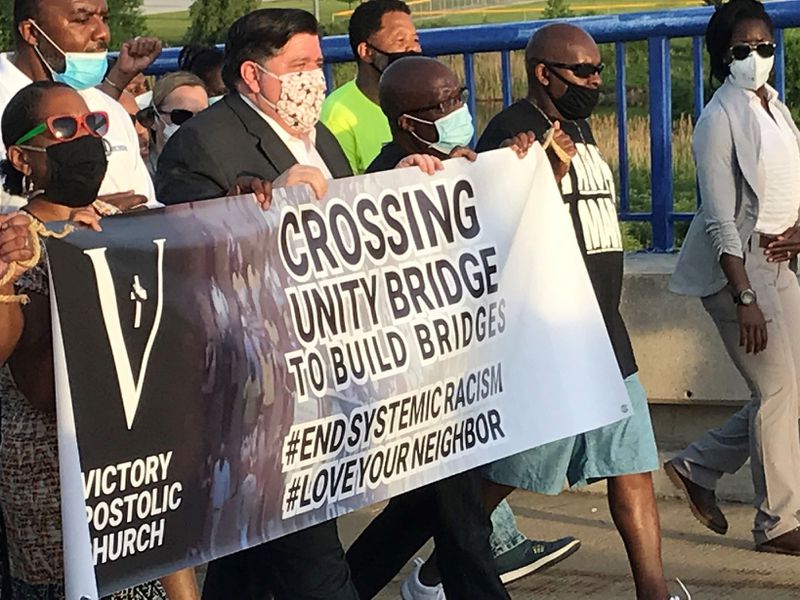
Illinois Governor Marches with Protesters

Way to go, governor!

Today’s Activities: Clinic Escort and More Local Protests

As I mentioned in that post, this week, we resumed the clinic escorting. We had to complete zoom training about our new procedures and sign the waiver regarding the new risks related to the pandemic. 

I was glad to be back; it is great to feel that you can do something useful and meaningful. 

It was relatively quiet; there were just a few antis, and they left about 11 AM. I was hoping to meet up with Igor, but since a new protest, the largest so far was unfolding, there were no CTA services to the Loop, and the bridges were up again. Everybody was upset about the bridges, and it didn’t look like it was really necessary, but whatever.

Metra looked much better than the other two times I took it to the city during the quarantine. There were more people on board, but unfortunately, not all of them were wearing masks. The conductors are still not around, so nobody is enforcing the face covering. 

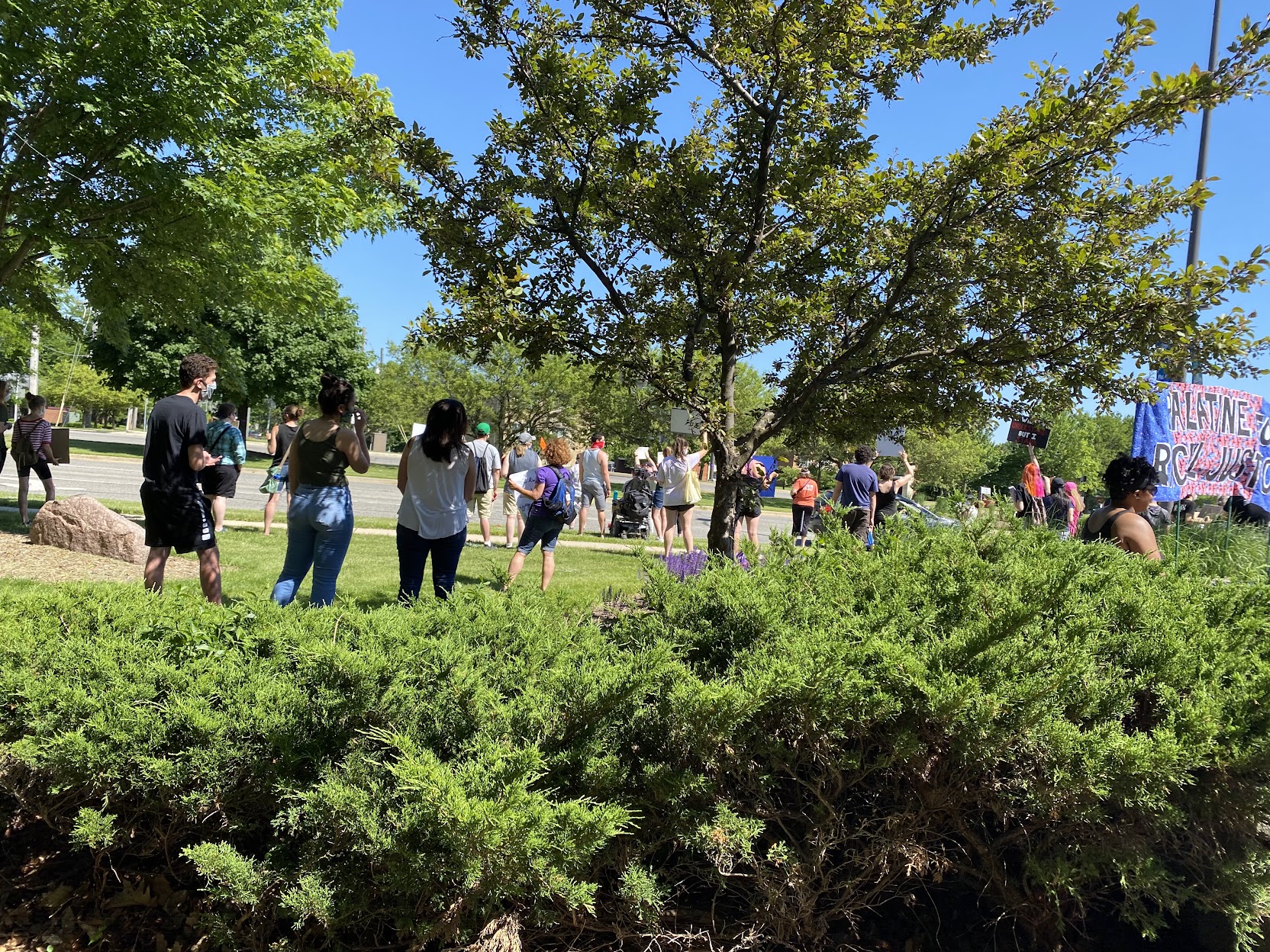
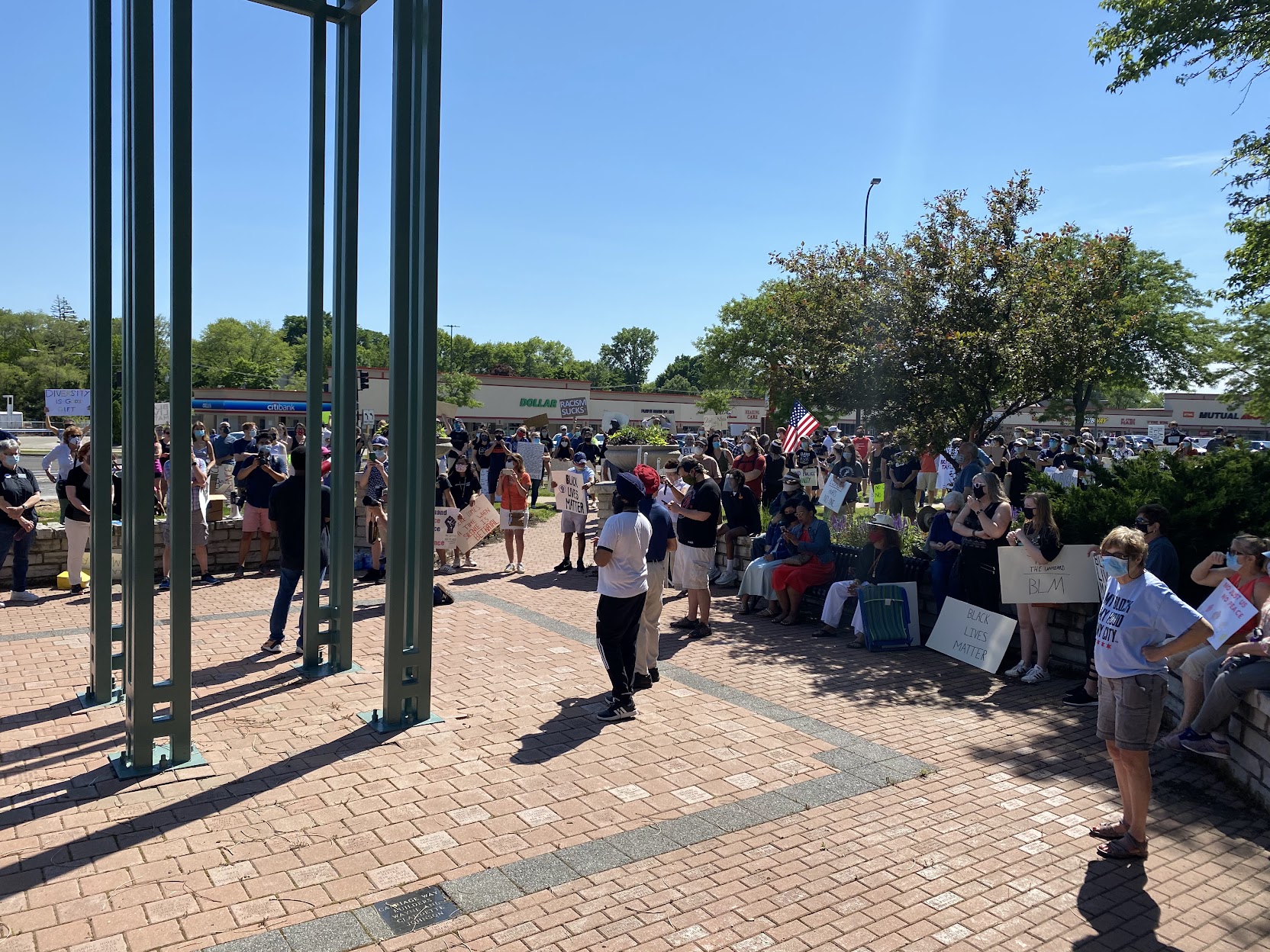
As I realized that I am not going to meet with Igor, I took the 12-30 train and was able to attend a Palatine protest, organized by NWSOFA/Indivisible. It was very well organized, with lots of invited speakers and with all our elected and not elected official speaking. I decided to play safe and stood further away, which unfortunately meant that I could not hear everything. 

What was encouraging that through the whole course of the rally, the passing cars were honking non-stop (including the big trucks:))

I am walking towards the Volunteer Plaza

Distancing

Our Friday Protest Was In the News

Check it out here