My First River Cruise

One thing I am very thankful to my mom for is that since I was ten, she took me on long tourist trips, which would last for three weeks or even more. I tried to start writing about these tours several times, and each time I thought that I needed to find the photos form these trips, otherwise it doesn’t make much sense to write about them.

But realistically thinking, I won’t have time to search for these pictures for a while, let alone to scan them, so I finally decided to start writing about the trips and add the photos later, whenever I have time to find and process them (most likely, after I retire, but who knows!)

Before I start, I want to say a couple of words about vacation-taking in the Soviet Union.

I know that it was different in the beginning of the Soviet state, but by my time, most people had at least one month of vacation (and some had even more!) Vacation time was strictly about “calendar days,” not “workdays,” so if some public holidays were in the middle of your vacation, they were “lost.”

Since vacations were so long and were taken strictly once a year (in most cases, you couldn’t split it into parts), everyone tried to take them in summer. The parents needed this summer vacation to take their kids “to dacha” (as I already mentioned a couple of times), and others just wanted to have time off work. Since it was not sustainable for everyone in a company to take a month’s vacation in summer, there was a perennial nightmare of scheduling vacations in the beginning of the year and hard limits on how often each person could take a vacation in summer.

What would people do with their vacation month? In most cases, they wanted to get away from the city, and it could be just going to the countryside to visit their relatives or going to a dacha. In many cases, people could use a “trade-union voucher” to go on a tour or to some resort. A local trade union bureau would approve the distribution of the vouchers, selecting “the best workers” and/or “those who needed it most,” and the lucky ones would end up paying 10-20% of the full price.

Unlike most people, my mom usually bought the tours without trade union vouchers, paying the full price because most tours she wanted to go to were not available through the trade union vouchers. She would save money during the whole year to go to new places. For seven summers, from 1973 to 1979, we went on these tours together.

The first one was in the summer of 1973, and it was a relatively short one. We were going to take a “Volgobalt course,” departing from Leningrad and then getting to the Volga River through the system of locks, visiting Yaroslavl – an old city on the Volga River, and then returning back to Leningrad. There were several complications with this trip. First, it started on May 20, which meant my mom had to ask for permission to take me out of school on my summer break ten days earlier (that was not a problem; I was a good student). Second, I was only ten, and and a child had to be eleven to be admitted to the cruise (do not ask, I have no idea why), so my mom had to get permission from the captain of the ship. And the last problem was a force of nature: it was very early in the navigation season, and Lake Ladoga was still covered with ice, so the ship couldn’t get to Leningrad. A couple of days before the departure date, all passengers were given railway tickets to Cheboksary, where our ship was waiting for us.

As far as I remember, there were no organized tours at the stops. We had a full day in Yaroslavl. We disembarked, and my mom and I went to the city and tried to visit as many museums and churches as time permitted. We loved a fairy tale -looking city, and only wished we could stay longer.

I know that I have pictures from this cruise somewhere, and I hope to eventually scan them.

My historical posts are being published in random order. Please refer to the page Hettie’s timeline to find where exactly each post belongs and what was before and after.
Watermelons

That’s a historical post about something you can easily forget. I remembered it when I was thinking about the day Igor was born and the days before that.

In the Soviet Union, at least in the northern part of it, the beginning of September meant not only the start of school but also the start of the watermelon season. My granddaughters might not believe it, but watermelons were not sold in the stores. It was a seasonal fruit that would arrive at the end of August/beginning of September. Watermelons were sold at the temporary locations (same as New Year trees). The trucks unloaded watermelons in the cages, and then the shoppers were allowed to walk around and select a watermelon. There was no guarantee that a watermelon would be ripe; nobody checked whether they were ready for harvesting if the timing was right. There was always a risk of getting a watermelon, which was almost white inside.

And there were lines! Watermelon lines of shoppers waiting for their turn to enter the point of sale and start hunting for a perfect watermelon. In September 1985, Igor’s dad spent a lot of time in these watermelon lines. I remember that he even wrote a poem about “waiting in a watermelon line forever.”

I have no logical (or any other) explanation for why watermelons were “deficit.” They were not imported; they were grown in the southern parts of Russia and Ukraine. But still, when I think about the time Igor was born, it comes to mind: “I am standing in the watermelon line. Forever.”

My historical posts are being published in random order. Please refer to the page Hettie’s timeline to find where exactly each post belongs and what was before and after.

Filmmakers For Prosecution

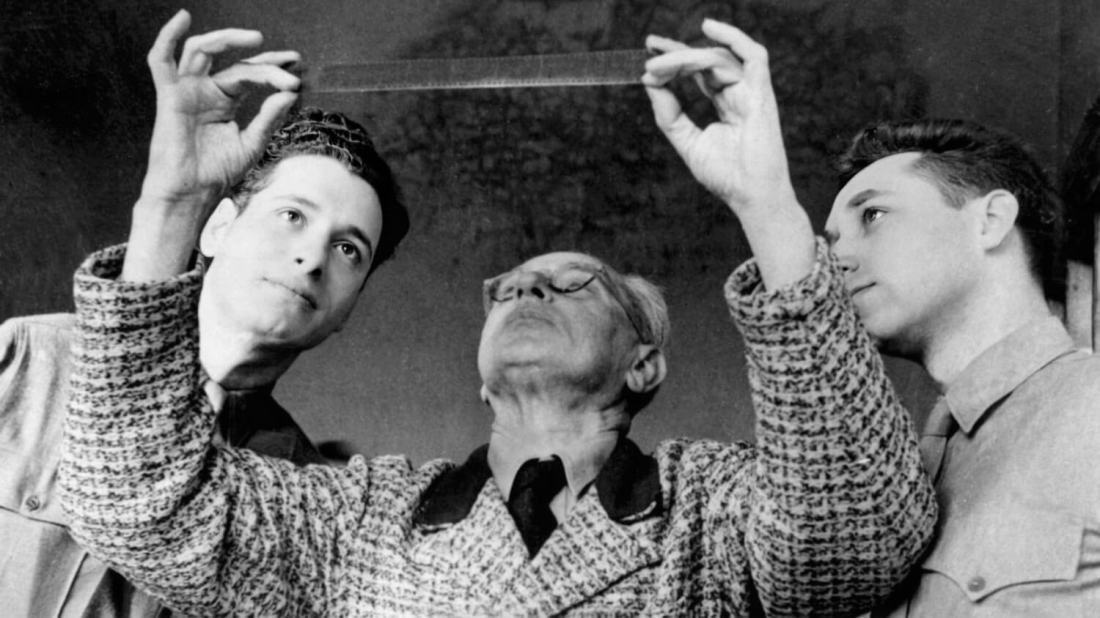
I finally finished watching both movies: Nuremberg: Its Lesson for Today and Filmmakers for the Prosecution. The first one is a 2009 digital restoration of the film produced in 1948 by brothers Budd and Stuart Schulberg. In this film, they collected the evidence that would be used to convict the Nazy criminals at the Nuremberg Trail. The footage they collected was only partially included in the impressive documentary, and the second film included some footage that had never been seen before. However, a more disturbing fact is that even the original movie (without these extras) was intentionally hidden from the public by the US government.

Jean-Christophe Klotz, who directed the second movie, interviewed many of the creators of the original “Nuremberg” film or their surviving relatives and friends. He also talks about the Russian documentary by Roman Carmen and about the race between the filmmakers on which country will be the first one to tell the world about Nazi atrocities. Apparently, the main reason for the “Nuremberg” movie to disappear from the public view was that Russians were portrayed as US allies (actually, the film does not include the secret pact and Russian annexation of parts of Poland). That being said, by 1948, the US government didn’t want any mention of being allies with the Soviet Union during WWII, which shelved the movie for seventy-five years.

But that was not it. In addition, it was presumed that the wide release of a film indicting Germany on war crimes might impede political and public acceptance of the plan to rebuild Germany’s economy, a vital plank in the Marshall Plan’s approach to European recovery. So apparently, the film was viewed as anti-German, at least to the same degree as anti-Nazi.

More valuable information is available on the project website, which also reveals the search for evidence in the propaganda films made by the Nazis themselves. If any of my readers are interested, I encourage them to explore this website.

Children Molesting In The USSR

I mentioned that topic several times, and now I want to focus on it. Child molestation was very widespread, and at the same time, nobody mentioned it back then and does not mention it now.

With me, it started when I was about eleven, and it would go on at least until I was fifteen, maybe sixteen, but the pick was during my pre-teen years. You would get on the bus or a train, which were very crowded pretty much all the time, so you had to swirl yourself into the crows just to stay in. And then somebody would start touching your private parts. And it will continue for the whole duration of your trip.

Why would you not dare to stop a molester? Because you are in a crowd, and everybody is touching everybody, and even if you look around, you can’t tell who is doing it to you. Actually, the only time in my life when I dared to stop a molester, the man was looking aside as if he was not even there, so I hesitated for a moment but then said: Hands! He quickly moved his hands away from my body and disappeared into the crowd. Also, it felt overwhelmingly embarrassing. You just couldn’t accuse an adult of doing such a horrible thing. And, of course, whatever happens to you, it’s all your fault!

Overall, nothing about sexuality was explicitly said, but somehow, by the age of eight or nine, you would come to the conclusion that there is something really bad related to your private parts (which, by the way, were never called “private”). If a boy happened to see your underwear (when you were playing together, climbing a tree, jumping a rope – and remember, girls wore dresses, shorts were rarely worn) – that was one of the worst humiliation you could experience. When you were at the overnight camp, your counselor would walk the bedroom, commanding everyone to have “hands on top of your blanket.” And it’s worth mentioning that my mom, like many other moms, did the same thing: coming to check on me when I was in bed and saying: where are your hands?

A word about male teachers. I was never molested by any of the male teachers, but as I learned later, some of my friends were. I learned it many years later because, once again, it was impossible to say it out loud. It meant admitting the shame, it meant that nobody would believe you, and it meant that “it was all your fault.”

The most horrific and never spoken about was the opposite effect. By the age of twelve, most girls would firmly believe that their worth was exclusively defined by how attractive they were to the opposite sex. By the time we were in the seventh grade, stories were whispered about some girls in our class who “had abortions.” We listened to these stories in horror, but at the same time with the strangest sense of jealousy: these girls were attractive enough for adult men! I am writing it, and I can’t make sense of why we felt this way, how we could think this! And that’s while we knew almost nothing about our bodies, including how you could get pregnant. Even though my mother preemptively explained to me that in a couple of years, I may start menstruating, she somehow managed to avoid an explanation of what exactly it was. I had my first period earlier than anybody in my class when I was just eleven, and I had no idea what was happening to me. My best friend had her first period three years later, and her parents explained to her and gave her a book to read. She gave this book to me, and it was only then that I learned the facts. It was a great trust crisis in my relationship with my mom, but not the first one and not the last one.

I don’t know how to finish this post. I do not know why nobody talks about it. Why do so many people talk about “happy young pioneers’ childhood, clean and pure and innocent” as if none of the things I described were there? I do not know whether these are the tricks the memory plays on people, forcing out the things we would rather forget, or that’s something else …

My historical posts are being published in random order. Please refer to the page Hettie’s timeline to find where exactly each post belongs and what was before and after.

Michigan Central Restoration

Continuing from here. It is such an amazing, such an unbelievable, and such an American story! Between 1988 and 2018, the building was not only vandalized but also looted. When Ford Motors bought the building and started the restoration, they wanted to have as many pieces of the original station as possible, so they asked everybody who had taken something from the abandoned building to return these pieces, no questions asked. And people started to bring these things back! There is a whole exhibit on the station’s ground floor showing what was returned – it’s amazing! Not just small objects, but the pieces of staircases, parts of light fixtures, and even the big clock!

Continue reading “Michigan Central Restoration”

Narva-Joesuu

The pine forest was very much like I remembered it, but it looks way healthier now that there are fewer people wandering around.

I also found the house where we rented the rooms for summer! I remembered the address, and I went right there, and I saw the roof of the house from the far, and I couldn’t believe it was that house, but it was! There are just a couple of houses on that street that were not replaced by the new ones sometime within these 50+ years, and that house was one of them!

Continue reading “Narva-Joesuu”

Mission Accomplished

I didn’t talk much about the main goal of my current trip because it sounded so unrealistic that I didn’t want to jink it. I still can’t believe that I did it! Here is how yesterday went.

We grabbed our brown bag breakfast at reception at 6 AM, went to the railway station, and boarded the 6-46 AM train to Narva. Although I researched in advance what bus we should take and when it was scheduled to depart, we managed to take the wrong bus and ended up in the wrong place. Thankfully, Estonia is small, and you can’t go too far! We were able to hire a private driver who got us to the right place, and shortly after 11 AM, we were at Narva-Joesuu, where I spent three amazing summers when I was a child!

My most important goal was to find the grave of my great-grandfather (the father of Baba Fania, Baba Grunia, and Uncle Misha). He died while vacationing there, and Baba Fania used to take me to his gravesite. I felt like for the past forty years, nobody ever gave a thought to his grave left behind in a foreign country. I mean, I do not feel super-obligated to attend to all the graves of the relatives I never even talked to, but if you care about the ancestors’ graves in general, I would imagine you should be concerned. Anyway, I felt I should at least try. I had nothing but childhood memories of how the place should look like fifty-three years ago, and even though the cemetery is small, it’s not that small – it has been continuously operating, at least since the end of the nineteenth century.

My first walk-thought didn’t yield any result – I remembered the memorial being sort of standing up above the other graves around it. I also remembered it being on the hill and being very light grey. On my second pass, I started almost from the entrance, trying to remember the general direction and adjusting the distances and size to the seven-year-old me. And then I got a feeling. I turned slightly left and back and saw the surrounding chains, and I knew that was it! I was sure the memorial sign didn’t survive – I passed multiple graves with no name on them, but even if there wasn’t a sign, I knew. And then I walked around it, and the sign was there!

Boris waited for me in the main alley, and I ran all across the cemetery to tell him that I found the grave! We walked back together. Unfortunately, there was no service point at the cemetery. I talked to the old couple who were visiting a nearby grave. The husband remembered the last name Levitin, but he said he used to be friends with “a younger guy.” That could be only Uncle Misha, but the name didn’t ring a bell to him. They didn’t share any contact information, so I just asked them to take a look at David Solomonovish’s grave when they came to visit his mother’s grave. Her name sounded somewhat familiar to me as well, but I also can’t put a finger on it. I copied the contact information of the cemetery administration from the board at the entrance, and I will try to arrange some care for the gravesite.

And I found a wild strawberry in the forest by the cemetery – just like I did when I was a child!

To be continued

Pullman Railroad Days

It was pouring rain on Saturday! Actually, it was OK in the morning (I even biked earlier), but it started raining the moment Igor and I got off Metra Electric. it was unfortunate because we could not walk around and there was no usual block party atmosphere, but the good part was that there were no lines. We got to see everything we wanted to see, and everything was included in our advanced tickets.

First, we went on a Railcar Tour (we couldn’t get there two years ago). All of the cars on this tour are privately owned and Amtrak-certified. That means that, for example, if you own one of these cars and decide to go to New Orleans, Amtrak will attach your car (your hotel-on-wheels) to the train that goes to New Orleans, and here you go!

Blue Ridge Club car (1950)
Continue reading “Pullman Railroad Days”

How My Relationships With My Mom Evolved

My mom definitely punished me at a relatively young age. Even though she didn’t spank me, she would yell at me and give me “citations” but that was pretty much what all parents would do even with their toddlers. Later, she started giving me a sielent treatment.

I am trying to recall when it started, because at the time that I am writing about (when I was ten year old) this was definitely happening on regular basis. She would all of a sudden stop talking to me, stop replying to my questions, won’t tell me what I did wrong, and it would continue until I start to cry unconsolably. She would then keep ignoring me and just periodically say in a very tense voice: don’t you dare to be hysterical around me! By that time, I was extremely emotionally depended on her. It was not like this when I was younger. I would be fine staying at dacha when I was five, or being in the sanatorium when I was six. She told me later that she missed me very much and was looking for excuses to visit me more often. I was happy to see her, but I was not unhappy when she was not around. By the time I was nine or ten, it changed. When she was not around, I felt like an abandoned lover, and when she was around and was upset with me, my life was a living hell. At the time when she was giving me a silent treatment and letting me cry and cry, I thought to myself that it is not possible that she loved me and let me cry. Eventually she would finally tell me what my crime was, and after I admit my crime and ask for forgiveness, she was a loving mother again.

Now I understand that being subjected to this treatment, I learned that it’s OK to hurt a person whom you love. It’s OK to be cruel, and it does not diminish the value of your love. It took me many years to unlearn this, and not without casualties. I do not hold this against her, nor many other things. It’s not about redemption. I just remember about it when she attempts to do something similar, and make sure I am not involving myself in these games. Sometimes, I actually have to yell at her, because it’s the only way to make her take something seriously, and it’s upsetting that that’s the language she understands.

My historical posts are being published in random order. Please refer to the page Hettie’s timeline to find where exactly each post belongs and what was before and after.

Young Pioneers’ Activities

Back to where I left: what were the Young Pioneers activities we were doing? The thing which we thought was the most fun happened rarely. Now that I think about it, it was mostly due to the fact that it required a lot of additional work from adults. One of the most anticipated activities was scrap metal collection. I think it was way more popular during my parent’s young pioneer’s youth when there was more scrap metal lying around. However, we had it in my school a couple of times, and we would find some old pipes in the corners of the courtyards and triumphantly bring them to school. And, of course, there was a “socialist competition” between classes (or, to be more precise, between different pioneer detachments). Retrospectively, I suspect that there was a big hassle of taking this scrap metal away from the schoolyard to the processing facility, which is why it was not a very popular activity. Also, the need for scrap metal was not as dire in the 1970s as it was in the 1930s-1950s.

Less exciting but still moderately adventurous was recycling paper collection. That involved ringing the doorbells of innocent citizens and asking: do you have some recycling paper by any chance? With a relatively high probability, they would give us a stack of old newspapers. And then again, there was a “socialist competition” between detachments. In case it is not obvious to the next generations, we were running around, looking for this scrap metal and knocking on people’s doors completely unsupervised, starting from the age of ten (that’s when you would become a young pioneer).

Other activities were way more boring. Nobody liked to “clean the territory” during “subbotniks”—voluntary-obligatory cleaning work on Saturdays or other days whenever they were announced. Nobody liked to stay after school for voluntary-obligatory meetings. A big part of the meetings was scolding our classmates who fell behind with their grades. As I mentioned earlier, everybody’s grades were public knowledge, and all teachers, even those whom we liked and who were genuinely better than others, would announce everybody’s test grades and even comment on specific mishaps of students in front of the whole class.

Then “class active” which included the detachment council chairperson and a couple of others, obtained addresses of those who were “falling behind” (otherwise called “tailers” as “tail’), and then the whole group of us went to these addresses to “talk to the parents.” Almost all apartments in our neighborhood were “communal,” with many families living in one apartment with the big communal kitchen being the center of the social life. We would walk in, call for “Misha’s parents” or “Natasha’s parents,” and tell them that their son or daughter was “holding the whole class behind.” They would, in turn, yell at their son or daughter, “You should be ashamed that your own classmates came to tell us about your behavior!” We would ask parents “to take appropriate measures” and leave, never thinking what those appropriate measures were going to be.

Yet another activity was making wall newspapers: there were articles, cartoons, etc., as in the real newspaper, but everything was mounted on a big poster paper that was in turn mounted on the wall in the class so everybody could read and comment out loud. Unfortunately, I didn’t save any of those from my middle school years, but I have a couple from my mom’s time (I didn’t scan them yet!).

Usually, very few students in each class were interested in doing any of these things. Our teachers and “pioneer leaders” used to say that most of the students were “inertial” and “not active,” and to be honest, I do not even think that the lack of desire to do anything was related to the politicized agenda. I think that by the beginning of the fourth grade, most of my classmates really didn’t want to do anything. 

My historical posts are being published in random order. Please refer to the page Hettie’s timeline to find where exactly each post belongs and what was before and after.