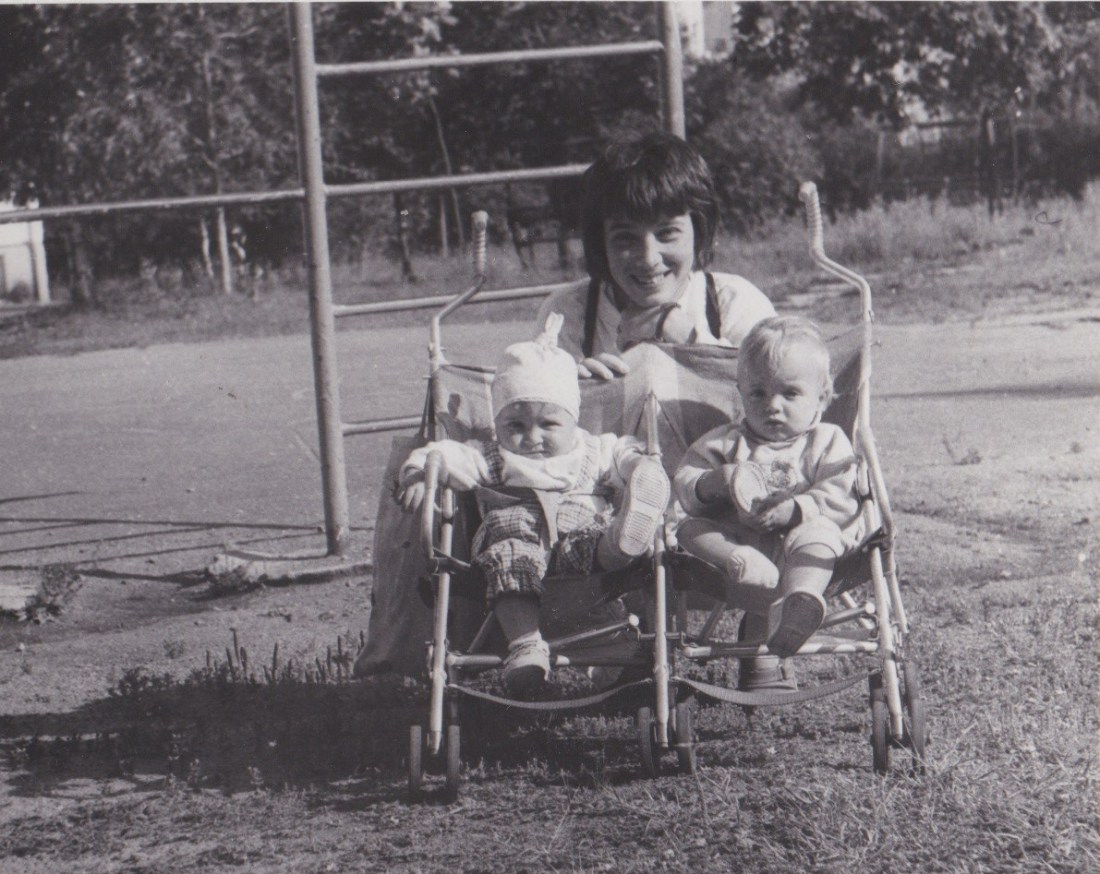
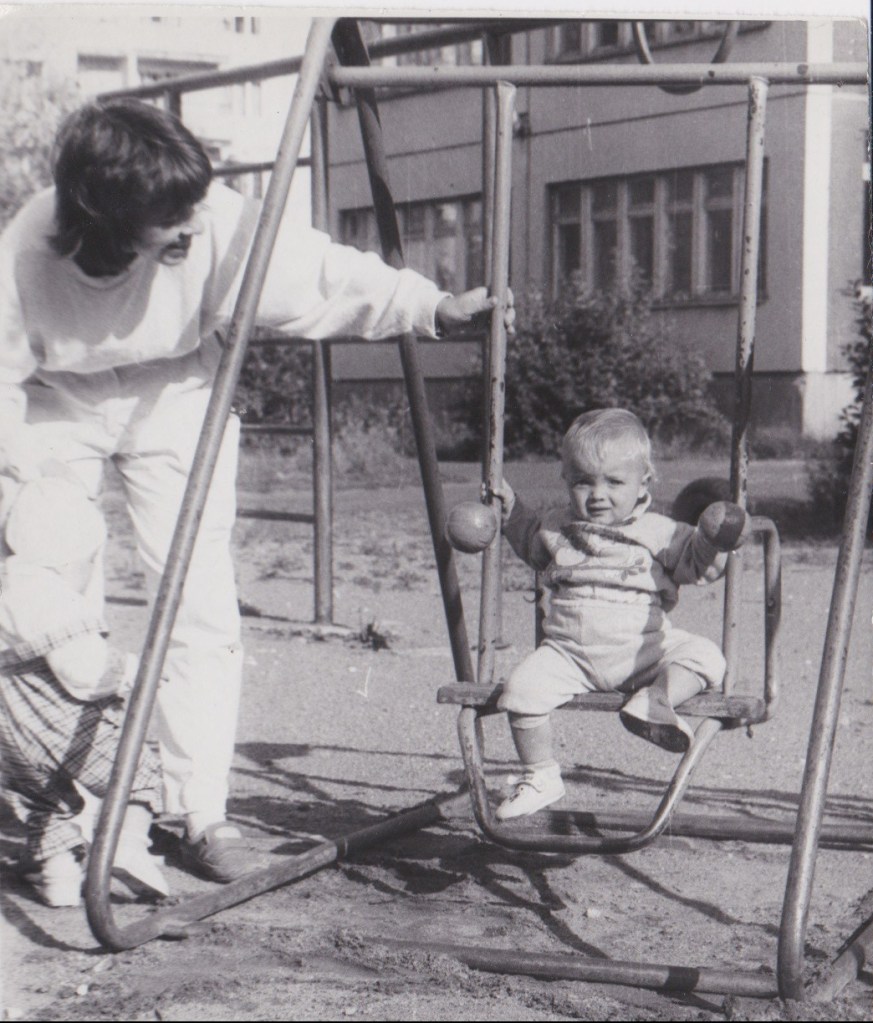
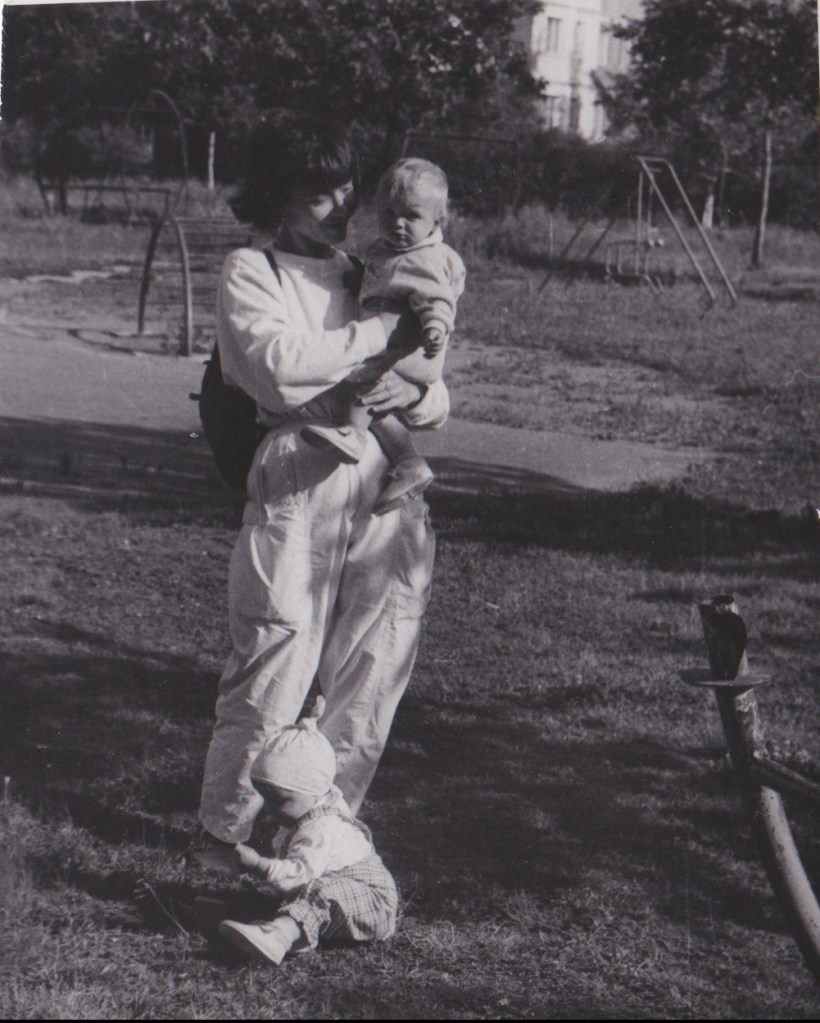
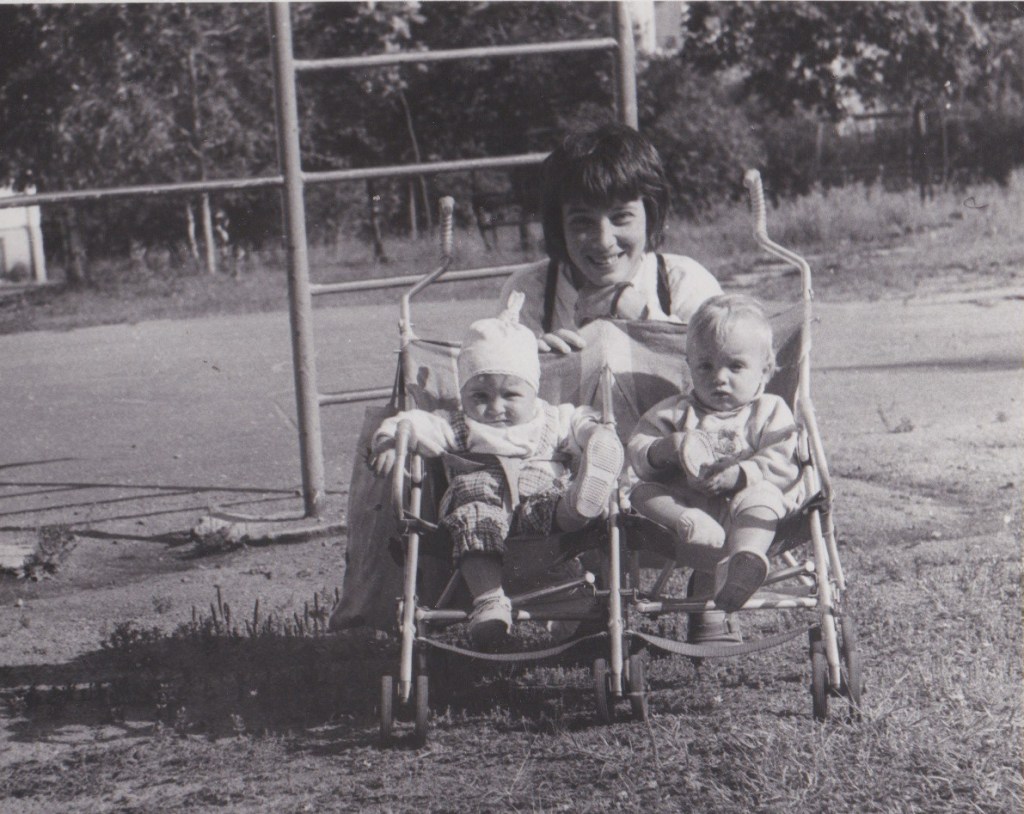
Fall 1992: Finding a Stable Daycare

In fall 1992, I had two problems to address: finding a second job and enrolling Vlad and Anna into daycare. I’ve already mentioned it briefly in previous posts, but I will elaborate more here. The daycare situation was really weird. Since the very early days of the USSR, it was proclaimed that women are liberated from the house slavery and can in enslaved at work. During 1920-30, women were encouraged to bring their babies to daycare at a very early age. Technically speaking the “nurseries” which would take children starting from 3 months of age existed even at my time. But you would be considered a horrible mother if you would send your child to a nursery. Since women were allowed to stay home until a child reaches the age of 18 months, the groups which would take smaller children have been closing right and left.

I found one nursery which still had a group for toddlers from 12 to 24 months, just one for the whole Gavan, the part of the city where we lived. This nursery was partially subsidized by one of the largest shipbuilding plants in the town, so I guess that was the reason.

Continue reading “Fall 1992: Finding a Stable Daycare”

My Grandmother’s Birthday

Today is the 116th birthday of my paternal grandmother, whom I have named after. She died two years before I was born, so I never met her in person. People are saying I am looking a lot like her; I think this is more wishful thinking :), she was stunningly beautiful. I like this photo the best of all the pictures of her I have. The way she and my grandfather look at each other, not looking at the camera is something unthinkable for the age of staged photographs.

My grandfather, being a high-ranked officer in the Soviet Army, was probably thinking that he will be remembered for his victories on the battlefield. Or for his successes in expanding the communist regime into new regions. But he remained in history because she loved him.

Early Fall 1992: Work, School and Daycare

In August 1992 Vlad and Anna turned one and had their first birthday.

Vlad’s and Anna’s first birthday
Continue reading “Early Fall 1992: Work, School and Daycare”

Attending the University in the Soviet Union: English and PE

The list of subjects we studied was very limited. In addition to math classes and very politicized social studies, the only other classes we were offered during the first and the second year in the University were English and PE.

We had two “pairs” of both of them each week. Since my English was considered to be very good (I will explain later why) I was assigned to the most advanced level. This didn’t have any effect on the grade and was not reflected in the final transcripts, I was just fortunate to attend the better class.

Even in this better class, we had very little of conversational English. We’ve studied tons of grammar (to be forgotten the next day after the test) and completed lots of grammar exercises. Also, each semester, we were supposed to “pass thousands.” In this case “thousands” stand for thousands of symbols. I forgot both how many symbols per page was considered a reasonable estimation. I also forgot how many “thousands” we were supposed to prepare. But that’s how the process looked like.

Continue reading “Attending the University in the Soviet Union: English and PE”

To the 28th Anniversary of the Last Russian Revolution

The event as significant, as the last Russian revolution deserves more extensive description. However, for my whole family and me these days will be forever associated with the birth of Vlad and Anna, my extraordinary twins. Anna likes to joke that she brought down communism, and whether you agree with this statement or not, the connection will always be there.

I was eight months pregnant; the doctors did not believe there were any chances I could go full -term, so I was due to the hospital on August 24. The coup started on August 19, and we all understood that it was a coup. And the people said: no! I know, these days it is fashionable to question the latter statement. But that’s how we felt back then, and it felt damn good! The only thing I’ve resented back then was that I was in no condition to go to a protest to the Palace Square! Which tells something about me :).

The world was collapsing, the radio was turned on in the hospital delivery room, we were breastfeeding our babies while listening to the news about the Communist party offices being shut down. That’s how the new chapter for our family has started.

Note:

My historical posts are being published in random order. Please refer to the page Hettie’s timeline to find where exactly each post belongs and what was before and after.

Attending the University in the Soviet Union – Social Studies

This is the continuation of that post; I’ve spoken a little bit about how math subjects were taught, but there were also a couple of non-math ones. So let’s cover them.

The toughest ones were all political subjects, which we had on place of social studies. Both in high school and the University, we studied “Marxist-Leninist philosophy,” and that was the only kind of philosophy we were allowed to know. By the way, I think it’s very good to know Marx works because 1) he had indeed some wise things to say, and 2) we should to know the origin, not interpretation, and learn from the previous mistakes. I find it very sad that people who got their education in the Soviet Union still resent this forced feeding of Marxism from their early stages of life, that they want completely erase it out of the world.

But back to my student years. Marxism-Leninism consisted of five parts, which could be conveniently mapped to the five years at theUniversity:

-The History of CPSU

-Dialectical Materialism and Historical Materialism (this is one subject – one semester for each :))

– Political Economy of Capitalism

– Political Economy of Socialism

– Scientific Communism

Continue reading “Attending the University in the Soviet Union – Social Studies”

My First Semester in the University: Higher Education in the Soviet Union

As you could already figure out, there was no ACT or SAT in the Soviet Union. Your GPA was counted as one of the grades at the entrance exam, as I’ve described here (along with the rest of the admission process). Also, everything was decided after you actually graduated. For me, I graduated in June 1980, and the whole month of June was dedicated to the finals, both oral and written. I hope I remember it correctly: we had an essay exam, math (in writing), and a whole bunch of oral exams: physics, chemistry, the history of the USSR (aka the history of the Communist Party), which was combined with the “social science” material. I believe we also had English, and we should have had oral Russian and oral math, but I can’t remember for the life of mine.

Anyway, when exams were over, we had our diplomas distributed at the lavish graduation ceremony followed immediately by the graduation prom. In Leningrad, which is situated pretty far North, the nights in June are very short; actually, it hardly gets dark for an hour. That season is called “The White Nights.” It’s supposed to be very romantic to wander the city streets at night time during this season, especially the Neva River embankments. Lots of young people are outside the whole night; you are expected to meet the love of your life one of these nights :), and you won’t go for less.

It was raining really heavily on my graduation night, but a tradition is something you can’t break. So my boyfriend (you are supposed to have a girlfriend/boyfriend that night, even if you didn’t have them before) and I were both walking in the rain. Our mutual friend, who was unfortunate not to have a girlfriend at the moment, was wandering in the rain with us. My graduation dress was red because I wanted to be different from others, and also because that was the only long dress, I found in the store which looked good on me. I didn’t have money for a tailored dress, besides making your dress to order was considered bourgeois at that time. So I was wearing a long red gown with a white belt, a white neckless and white high heels. We walked all the way from our school which was situated in Gavan, the far side of Vasilevsky Island, up to my house on the other side of the river. There I’ve changed to the warmer clothes, flats, and handed the boys some dry socks, and we continued our wandering in the rain – it was a tradition!

Literally the next morning we brought our papers to the Admission Commission of the University, and then all the events which I’ve already described have happened. On July 10th, I became the first college student in my class.

Continue reading “My First Semester in the University: Higher Education in the Soviet Union”

More About Getting Into College in the Soviet Union

Back to my story. You might wonder, what was such a big deal about this specific University, and what was a drama. First, there were not that many higher educational institutions in the Soviet Union and the majority of them were located in Moscow and Leningrad (now Saint Petersburg). Many cities either had no higher education establishments, or they were ranked extremely low. For the High School grads in Leningrad, there was almost no option to get a degree outside the city. Some brave souls might try to challenge their luck in Moscow, but they would have way fewer chances there. Going to a smaller city would be getting into a way lower-ranked college. Plus, the student dorms never had enough capacity to accommodate everybody who would need it, and renting was virtually non-existent. Most of the college students lived in their parent’s homes, so going to another city incurred additional expenses. There were some students outside Leningrad, for sure, and I will tell in a duly order who they were and how their lives looked like.

Leningrad State University was the University, the only University in the city. Another thing I should mention is the fact that higher education in the USSR and later in Russia was not compliant with the rest of the world. We did not have BS and MS, we didn’t formally have “liberal arts,” although we didn’t have them informally as well. I guess for the fact of them being “liberal.” We had “institutes” and “the university.” You had to go to school for five years to earn a degree. To be precise, you had to cover the courses which were offered during these five years and not to have a failing grade in any of them. Higher education was free in the Soviet Union. Completely free, plus most of the students were given a small monthly stipend, which could be revoked if you fail one of the finals, and could me moderately increased if you got “excellent” on all of your finals.

However, do not assume it would be the same as to get into the US college for free regardless of your income. First, people just didn’t have extra money on average, and there was no option to borrow, period. There was no concept of “credit,” except for one very conditioned option to improve your living conditions. This one was called “cooperative flats”, but you had you be eligible to join. So it would be safe to say that credit did not exist. Second, the number of “institutes” even in the big city, like Leningrad, was minimal. I promise to find the exact stats :).

The Leningrad State University had a dozen or so of departments, and when you were applying, you were applying to a very specific department,. All the “liberal arts” were out of reach for us, because there was too much of the competition, so for somebody who was math-inclined, you could only apply to the Department of Mathematics and Mechanics. Which would accept only 350 students. 25 for the astronomy (yes, you had co claim your track when applying, and changing later was almost impossible). 50 for mechanics and the rest evenly divided between mathematics and applied mathematics; the latter has become computer science at some point. The level at which all math courses were tought was indeed much more advanced at the University. Why did it matter so much, I can’t tell you at the moment, but when we were seventeen and math geeks, it made a ton of difference.

One more thing worth mentioning here. There was and still is a mandatory draft into the Army, which boys were trying to avoid at all costs. Most “institutes” had a so-called “military chair.” Starting from th second to the fifth year of studying, there was one day a week when the girls were free, and the boys were taking military classes. This way the boys were graduating with some army rank, and most of the time it was counted as they have completed their years of service.

All of the above is very different from the American concept of “there is a college for everybody.” You had to get in right after school. If you are a male and you didn’t get in, you will be drafted when you turn 18. You could only apply to one institute, as I’ve mentioned earlier, the University was the only exception.

Hopefully, now you can understand better why the situation with the Jews was so severe.

My historical posts are being published in random order. Please refer to the page Hettie’s timeline to find where exactly each post belongs and what was before and after.
Summer 1992

I know that I am jumping from one point of time in my life to another with no notice, but I promise it will all be straightened up on my Timeline. Chronologically, this post follows the story about kids and me getting settled in the University boarding house.

We had a great six weeks over there. As I’ve mentioned, we had a flat of two rooms and a kitchen, all for ourselves. That was way more space than I had in Saint Petersburg. The hot water was running only theoretically, so I had two big buckets, a basin, and a huge portable electric boiler. I would fill in a bucket with cold water, immerse a boiler into the water and plug it in. I would fill a basin to the half with cold water and then using a dipper; I would pour hot water in it, to make warm water of the desired temperature. That’s how Anna and Vlad had their baths before going to bed. Igor would stay his feet inside the basin, and I would combine cold and hot water in a dipper, and poured it over him, making it feel like a shower. He was almost seven then and felt utterly embarrassed to stay naked in front of me. When everybody went to bed, I would wash similarly.

There were cockroaches everywhere, so many I learned not to be afraid of them, and kill them by a dozen. Still – I did not have to cook and wash the dishes, and life was great. We would take a bus and go to the parks of Peterhoff to see the famous fountains. We were swimming in the ponds of the University Park (former Lichtenberg Manor). We would buy raw milk from the gypsies. One of Boris’s postgrad students named Irina would occasionally babysit for free, and then I would be able to do some work outside of the babies bedtime.

It was there that both Anna and Vlad started walking. As with many other skills, Anna would be the first to master, making her steps barely lifting her feet, but beaming with happiness. Vlad would successfully hide his attempts to walk (Irina asked me once, whether I knew that Vlad is trying to walk when nobody sees him). On public, he was only crawling, moving extremely fast on his butt, and only several weeks later, he had demonstrated perfect walking.

By the beginning of August, Anna, Vlad, and I returned to the city. My Mom was staying for some more time in the boarding house with Igor. Igor was not a baby and didn’t need constant attention, so this was a vacation for her.

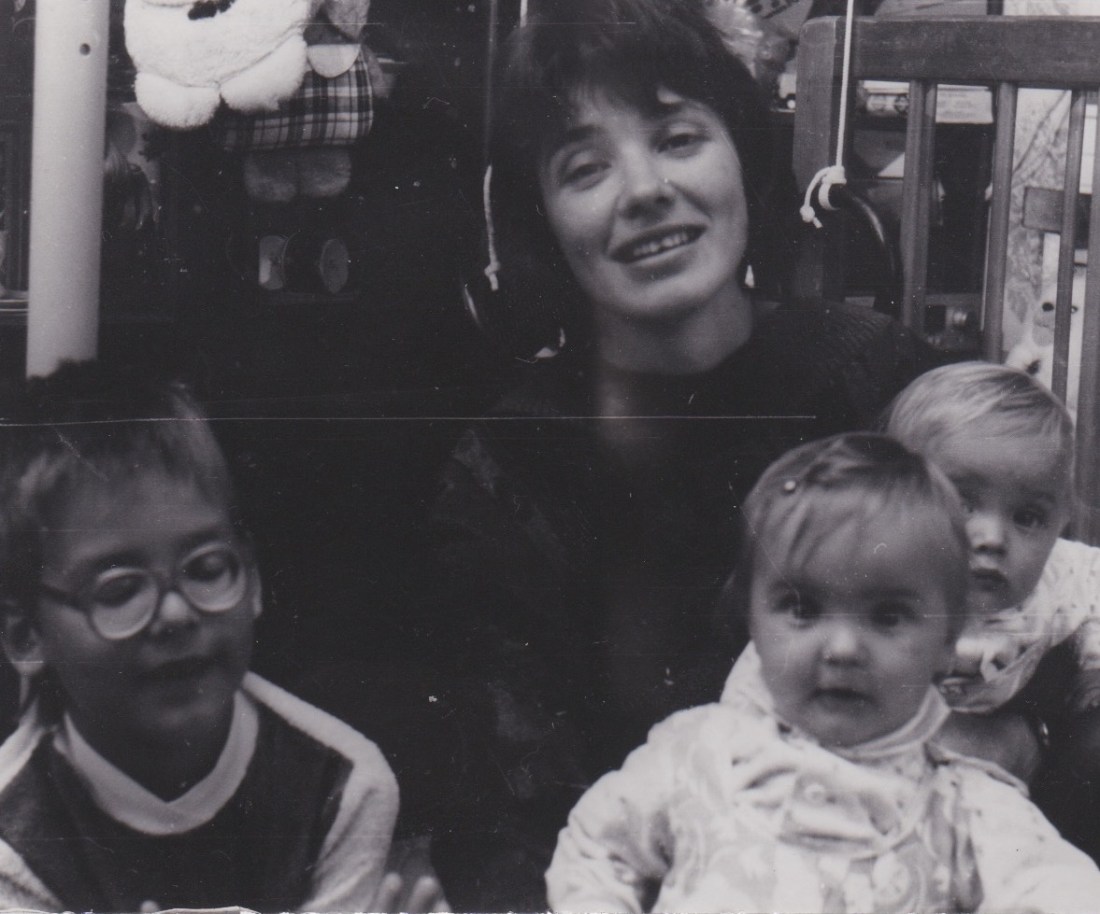
Boris took these pictures by our building in the city. Anna and Vlad were approaching their first birthday. I was done with breastfeeding in extreme conditions and weighed 49 kg (about 109 lb). The clothes were hanging on me like on the hanger, but as you can see, it didn’t bother me much:)

Anna 11 months
Vlad 11 months

Getting Into College And Soviet Anti-Semitism

From Hettie:

Several years ago, one of my followers on the LJ platform asked me to write a post about anti-semitism in the Soviet Union, specifically in the college admission process. Many people didn’t believe her that these things had happened, even when they were living in the USSR at the same time.

I promised to write about it, and it took me a while – it was excruciating to recall these episodes. Later, my older son Igor translated my blog post into English. I think his translation is quite accurate, so now that I am collecting all my memories in this blog, I’ve asked him to repost his translation here.

First, I thought that I will make some edits, but turned out that even reading it again was way too emotional, so I decided not to make any changes. Maybe I will do it sometime later. But now – no edits, no comments, all “as is”. Here it comes:

A few weeks ago, in a friendly LJ, I promised to talk about entering college in the end of 1970s/beginning of 1980s in the last century, in USSR – particularly about state antisemitism. I will only talk about what I saw and heard personally, or about what people directly involved in the events told me. I promised to do it by New Year. I started writing this a few days ago, but it was very painful, so it came out slowly. And so, as a result, I am posting another very non-holiday post. Yulya – I couldn’t manage to write everything that I knew about it. It was very difficult to write any more.

I know that the situation I’m writing about lasted literally a few years. By 1983, the situation already changed. Most likely, it was different in other cities, and it was definitely different in other colleges.

Because vast majority of the people involved are still alive and I’m not Elena Chizhova :), I won’t give any names, and I ask all my readers who witnessed or were involved in the events to do the same. It’s not that I have any doubt in you :). I just want this to be a public post.

Continue reading “Getting Into College And Soviet Anti-Semitism”