TIME Magazine: Why We Are More Exhausted Than Ever

A very interesting article in TIME magazine, “Why we are more exhausted than ever,” addressed this very question: why so many people feel more tired these days? I sent this article to my Women’s mentoring circle at work, and the participants said it resonated with them. I am a little bit disappointed that this article has very few constructive suggestions, but I think it correctly points out that the most destructive stress is the one that is caused by out of our control circumstances. I also like that thought that the opposite of being stressed is being energized, because I often hear that “not stressed” is equal to “calm.” Even my dentist during my recent visit commented to the fact that “I am stressed” when I was actually full of motion and told him that there are many things going on in my life! So I think that the idea that to eliviate stress, you need to find things which energize you rather than “calm you down,” resonates with me!

Here is the full article text:

People are tired. Like, really tired. As evidenced by recent trends such as Quiet Quitting, Coffee Badging, Bare Minimum Mondays, and most of all, The Great Resignation—when over 47 million Americans voluntarily resigned from their positions—people are feeling a strain on more than just their work calendars; they’re feeling it on their spirits. We’re now in the era of “The Great Exhaustion,” what writer and computer science professor Cal Newport has called a time when people are looking to reestablish their relationship with work in order to reduce their pervasive sense of drain.

Most people aren’t surprised to hear about “The Great Exhaustion.” We know that we are tired, and we see it in the choices we make every day: ordering dinner because we don’t have the energy to make it, trying to find ways to work from home so we don’t have to add a two-hour commute to our day, infrequent social outings because it is impossible to coordinate busy adult schedules, complete de-prioritization of hobbies—the list goes on and on. People feel so fatigued that they are cutting out activities that used to be commonplace and low stress, like working out and going to the supermarket. Factor in recovering from the pandemic, inflation, and global stressors, and you’ve got a recipe for complete physical, mental, and emotional exhaustion.

So why are levels of exhaustion increasing? I speak with burned out professionals for a living, and I have heard countless unique reasons for exhaustion. The three factors that are commonly overlooked but that I believe are contributing the most are unsustainable lifestyles, exposure to stress outside of our control, and financial insecurity. These are facets of our lives that we have managed to normalize. But this normalization has caused us to disregard their impact on our physical and mental wellbeing.

Unsustainable lifestyles
What is the opposite of feeling exhausted? Feeling energized. But what, exactly, helps us to feel energized?

New York Times-bestselling author and researcher Dan Buettner spent his career studying “blue zones,” areas in the world where people live longer, healthier lives than anywhere else. In his work, he explains that people who live in blue zones have one thing in common: they live a human-needs-first lifestyle, in which the things that we need as human beings are prioritized. That means eating whole foods, having rich social lives, getting regular movement, and working with a purpose rather than for the sake of maximizing productivity.

This is a stark contrast to most people’s realities. Outside of these “blue zones,” most people eat processed foods, strategically plan activities to socialize and get movement, and treat work like it comes before everything else. Unfortunately, prioritizing elements found in blue zones requires spare time, energy, and money—things the average (tired) person does not have. An objective look at how most people are living day-to-day doesn’t paint a picture of human needs being met; it paints a picture of enduring our demands. We have not built a human-needs-first society; we have built a business-needs-first society, and it is starting to show.

Stress that is out of our control
Stress within our control (a big project we’re working on, balancing a demanding job and childcare, doing something that scares us) can be mitigated and builds confidence when addressed. Stress outside our control (violence in our cities, climate disasters, tragedy around the world, and inflation) makes us feel helpless. While it is important that we aren’t ignorant to what is going on in the world, it also weighs on us to take in so many stressors without the possibility of resolution.

That stress causes exhaustion is not revolutionary, but it is exposure to stress outside of our control that makes us lose hope. Hope is a powerful counter to exhaustion and burnout. We can endure difficulties with much higher morale when we retain hope that things will get better. When everywhere we turn there is news making us feel like things aren’t getting better, we begin to break down.

The biological effect of exposure to these types of stressors cannot be overstated. Scrolling on our phone and watching a troubling two-minute video triggers a stress response in our body that can impact the rest of our day. A stress response each day for years damages our physical and mental health in ways that we often overlook.

Financial Insecurity
Fifty years ago, a single income could afford you a house, car, wife, and kids. Nowadays, you’re lucky if a dual income can afford you some of those things. Having a hard job that supports your lifestyle is one thing; having a hard job that barely pays the bills is another. Much of the exhaustion we are seeing is frustration that working full-time (or more) doesn’t translate to the same security and buying power it used to. Why are we working if not to afford the lifestyle we desire?

When that lifestyle (going to a restaurant on special occasions, going to a concert with friends, getting your kids the Christmas gifts they want) becomes unaffordable, frustration is understandable. Frustration over time turns into defeat, and defeat looks an awful lot like exhaustion. We have been a work-centered society for generations; however, it is becoming increasingly harder to convince people to live a busy, work-centered life when it doesn’t translate to the quality of life that it used to.

The confluence of unsustainable lifestyles, stress out of our control, and financial insecurity creates a very tired group of people. The good news is that there are things within our control that can improve our quality of life and reduce exhaustion. Consider what augments your quality of life and makes you feel energized. Then consider what lowers your quality of life and makes you weary.

At the end of the day, how we feel is determined by small decisions we make. How much sleep we get, prioritizing a morning walk with a friend, consuming media thoughtfully, refusing to discuss work and work stress when we are off the clock—these small things make a big difference, but we must do them consistently and relentlessly. We can’t wait for changes to come from the top down; we must address the factors of exhaustion within our control to ensure we live healthy, peaceful, and satisfying lives.

WTTW Event

The invitation to this event came from WTTW directly, and I immediately replied, because the topic of homelessness is on my top priorities list.

Below is a description of the event, which I copied from the link above (as usual, knowing very well that people do not like to click on the links!)


Four walls with a door that locks. Sufficient heat and food. A place to be safe, to rest, and to live. Most of us take these essentials for granted but, on any given day, it is estimated that as many as 65,000 men, women, and children are currently experiencing homelessness on Chicago’s streets, in shelters, or while “couch surfing.” Many are suffering from mental health issues or addiction, and as a result, they may be estranged from family and friends. Without a fixed address, any rental or credit history, forms of identification, and other basic resources, jobs and stability can be unattainable.

“Housing is the foundation for stability and security for people,” says Nicole Bahena, Vice President of Community Partnerships at All Chicago, an organization dedicated to ending and preventing homelessness. “Without it, it’s difficult to keep up with anything else in life – taking care of yourself, finding and keeping a job, getting medical care, caring for your family.”

In a series of documentaries, Firsthand: Homeless will go beyond the stereotypes society often assigns to unhoused individuals through the firsthand perspectives of real people who are navigating its complexities and hardships. And through expert talks, news reporting, and conversations with thought leaders and community members, the project will explore possible solutions.

“When you’re homeless, you’re [just] surviving. There’s not much room to live.”

How do people find themselves homeless in Chicago, and how do they survive? Turns out, each person’s story is different.

Yolanda, grandmother of four, lives with her fiancé Clarence in a tent under the Damen Avenue bridge, in the shadow of a Costco and a block from the abandoned Lathrop Homes where she once lived and worked as a live-in aide to a man who later died, leaving her without a home. She grapples with health issues, including depression, and spends her days panhandling for loose change on the street above her head. Despite it all, Yolanda shares what she has with others and stays true to her faith. As she watches her young grandsons playing at the beach, she knows that she must keep going for them. “Just hold on and have faith,” she says, hopeful that better times are coming.

Dan is also living on the streets. Homeless for more than 12 years since his suburban home went through foreclosure, he now kills time by riding the L and walking around the city. He takes viewers on a tour of some of his regular downtown haunts, including the 11th floor stairwell of a public parking garage where he sleeps. He is surprisingly sanguine about his situation, but it’s clear that navigating life without a home is challenging. Avoiding crimes against the homeless and overcoming an ongoing heroin addiction are Dan’s immediate concerns, but his search for housing just might soon be successful.

At least Jackie has a roof over her head. She lives in a homeless shelter with two of her three young children – out of necessity, her youngest child is living with her ex-husband. She works part-time as a bus operator for a subcontractor for the University of Chicago, a long daily commute from across the city. Jackie is attempting to mend fences with her mother, who previously struggled with drug addiction – it was an altercation between them that landed her and the kids on the streets in the first place. She is hoping to be approved for an apartment for her family soon, which will afford them some freedom and privacy.

Brian feels fortunate to have obtained a transitional apartment at St. Andrew’s Court and a job through the CTA’s Second Chance program. He explains that he spent years moving in and out of the prison system and cites a lack of stable, affordable housing as a key reason why he kept reoffending. To give back, he also works with the Chicago Coalition for the Homeless on the city’s proposed Bring Chicago Home ordinance that is designed to help others in his situation.

Like Brian, Kimberly is also working to improve conditions for unhoused people. With her toddler Jasmine, she has been part of a transitional living program since the nursing school she had been attending pulled a large portion of her financial aid when she became pregnant. As she tackles several daunting mental health issues, she strives to make lives better for homeless youth – even heading to Washington, DC to lobby Congress – and dreams of a better life for Jasmine.

Throughout the upcoming year, get to know the stories of people across Chicago who are experiencing and addressing homelessness through five documentaries; four talks by community and thought leaders offering insights, context, and possible solutions; text, audio, and visual journalism; a companion discussion guide for schools, libraries, and community organizations; and, in partnership with The Night MinistryAll Chicago, and the Chicago Public Library, community conversations extending the reach of the project into the many neighborhoods across Chicago.


As I said, I signed up without knowing any details. However, there was something else going on for the past three months.

I always make volunteering for the Night Ministry my top priority, but still, I barely went there for the past three months. It was a combination of things: my travels, Anna’s surgeries, my overall busy schedule, but also the budget cuts in the Night Ministry and the staff shortage. The last time I was there was a real disappointment because the staff was busy on a call with one of the families, and the youth were all in their rooms, and I ended up cooking solo and leaving. I emailed our volunteer coordinator to discuss what we wanted to do next, and we agreed to have a “Make your own pizza” night, but then, to my horror, I realized that I was double-booked for that night! And then he emailed me saying that he was transitioning to a different position, and I would have to coordinate with other people (fortunately, I knew one person from that list!)

This one person informed me that they could only arrange something on Tuesdays, and my Tuesdays are pretty much off-limits. Boris told me that I needed to figure out how I could fit this activity in so that it would be meaningful (which means at least twice a month).

That was my state of mind when I came to the WTTW event, and just when I entered, I saw all these people from the Nigh Ministry and the person who was my new contact, and we sat down and talked. She relayed to me that there will be no dedicated coordinator in the observable future and that they have no budget for the events anymore. I asked her what her plans were, and she said that she would be learning alongside me. And that’s when I realized that I couldn’t walk away.

Also, when everybody was leaving the event, I recognized the face of one young person in the audience and nodded in his direction. He said: I remember you! You were cooking at the ODS!

… I have a feeling that my leadership skills will be needed!

P.S. I didn’t get a chance to ask my question during the recording, and my question is – why do we have ten different lines for housing? Why the process is so convoluted? Why can’t we have a centralized database for people and housing resources? That’s where I would put money first!

CSO Last Weekend

I was at CSO twice last weekend: one time with Nadia and one time with my mom.

On Saturday, we had a “Carnival of the Animals” concert, which was supposed to be for “bigger kids,” but many parents still brought very small children there. I don’t know why they are doing this, and more importantly, why they won’t leave when the child is evidently not enjoying the experience. The concert was very good, though, with just the right duration overall, the musical pieces of the right size, and a very good narration.

Once again, I had my CSO for Kids Ambassador perk: we were invited to meet one of the musicians after the concert. He was a cellist, and he started by asking the kids what they knew about the cello. After Nadia was the first to answer his questions three times in a row, he asked whether she was playing some musical instrument :).

Then, we had a whole hour of activities. Anna and Kira were able to join us, and both girls (and Anna) had fun making animal masks and trying different instruments at the musical instruments “zoo”:

The Sunday concert featured Estonian conductor Paavo Jarvi and an amazing young cellist Sheku Kanneh-Mason. I tried to find some of his recordings online; there are not that many, but hopefully, you can see how awesome he is! The second act was Nielsen’s Symphony No. 5, another outstanding piece, and overall, it was one of the best concerts of the season.

That’s the concerto he performed at the Sunday concert.

Theft, Building Access, And What To Do About It

We had several cases of stolen packages in our building back in December, and you may remember that some of my outgoing mail (four packages with holiday cookies) was stolen as well. At that point, our association raised a question of rekeying the building, but many residents doubted that the theft had happened due to somebody having the building key. They thought that, most likely, the residents were buzzing visitors in without looking. I doubt that (everyone has windows facing the gate, and it takes a second to check). Also, I knew that my packages were stolen during the night hours. In December, everybody agreed to wait till we got new management in January.

A week ago, there was another case of theft, and the same as with me, it happened during the night hours. Once again, there was a conversation about the building re-keying, but this time, our board member related that this project is expensive, and she does not think it will help since the locks are not difficult to break. She even shared the link where you can buy a “lock gun” online.

At first, I was distraught with the decision not to rekey the building, and I was about to write an angry letter to the board, especially when they suggested I could have my packages delivered to a nearby Walgreens (it’s not “nearby,” and time is the most precious resource for me). But then I thought about it and reread the email one more time. This time, I realized that she was right and that locks do not stop thieves, and I am very well aware of that. If somebody is determined to steal, no lock will stop them. The theft does not exist when there is no reason for it. I thought about how I was always against “gating” oneself from the rest of the world and how now I was about to suggest just that, so something was wrong with my moral compass. And then I thought I already knew the answer: the only way to reduce crime, including theft, in my community is to improve the community itself. And my participation in the beat meetings and my new idea to get involved with Howard Community Board were all about that.

I often hear people complaining about the increasing number of homeless people on the streets of Chicago, and I hear their cries, “What do police think?!” I understand that seeing a lot of this misery is disturbing and unpleasant. And I hear some well-off people articulating that they want to be able to pay for never seeing “all that.”

Recently, I thought about how it felt on the streets of Chicago 150 years ago, when there were a lot of very poor people and very few rich people, and how these rich people felt walking the streets and seeing other people’s misery, and how they probably didn’t want to see it, and the policemen were here ready to remove the beggars from the public places. And how these rich people could isolate themselves from the reality behind the closed gates. And I do not want to be one of them.

And I do not want to be that

Freakonomics

After years of listening to the Freakonomics podcast, I finally realized that there is a book and a documentary with this name and that the whole idea came from the book by Levitt and Dubner. Yes, I expect to have such late discoveries for the rest of my life! I watched the documentary last weekend (in parallel with doing other things), and I am going to read the book. It felt like a gap in my education that had to be filled. The documentary is almost twenty years old, and it’s surprising that so many things that are mentioned there are still not commonplace and still not taken into account. And politicians and voters still debate on the consequences of potential actions or lack of those without consulting the data which is already available. A couple of takeaways.

  1. The first episode in the documentary (about how a name defines a person’s future) is probably the only one that is well-known and frequently cited. In fact, the reason I turned “to the source” was a citation in another book I was reading at that moment. It’s good that we know what might drive our biases, but unfortunately, it rarely helps the situation.
  2. The episode about the impact of Roe-Wade on the crime decline twenty years later was a shock. I never saw this research results, I never heard anybody speaking publicly about it, and if that’s me, a person heavily involved in the reproductive rights struggle, what does it say about the general population? And another question – what should we expect twenty years from now?!
  3. The last episode (about monetary incentives for falling behind students to improve their grades) conveys a very important message, and not only in the field of education. It demonstrates that when the gap is too wide (somebody falls too far behind), even a relatively big incentive is not enough for a person to start moving in the right direction. That’s the rationale for many programs that offer support for people in a challenging situation to help them on their way out. For many people, no legislation and no financial support is enough to reverse the course of their lives, and more targeted actions are needed.

***

About what happened yesterday. Yes, that was yet another political murder. Yes, the cinicism with which people with even a slightest potential of attracting supporters are removed from this world, is unbelievable.

And no, what have happened, didn’t change my opinion on either Navalny or Putin.

Joffrey “Studies In Blue”

As I said, February is very culturally loaded. In addition to what was originally planned, since both my neighbor and I travel, we had to exchange several performances, and the exchanges ended up in February as well. “The Girl from the North Country ended up being a complete miss, and we left after the first act. I know that the show received many awards and a lot of praise from the critics, so I am ready to assume “that’s us ” or probably the mood we were both in.

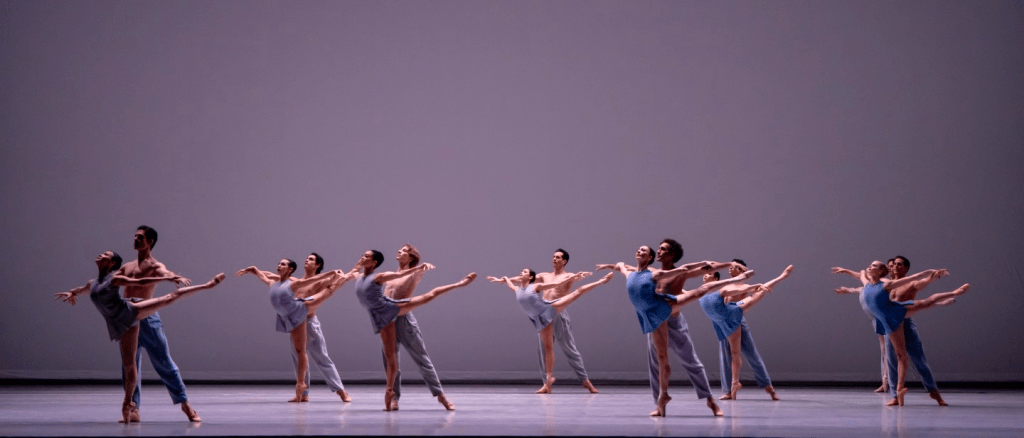
Just to compensate for the disappointment, Joffrey’s “Studies in Blue” was flawless as usual! The program consisted of three one-act ballets: Yonder Blue (inspired by the book Plea for Eros), Hungry Ghosts (they didn’t say it, but the name is definitely derived from the Realm of Hungry Ghosts), and Hummingbird. I especially liked the set in Hummingbird (although I would love to know whether there was any specific meaning in it; it looked like the artists were floating out of some hidden realm :)). The Hungry Ghosts was a World Premiere, and I think that was the first time I had an opportunity to be present at such an occasion.

Cinderella

February is coming packed with cultural activities, to compensate for a very “dry” January, indeed! I saw two operas in one week: the first was The Champion, and the second was Rossini’s Cinderella, which I saw on Saturday. I never saw this opera performance, and never heard the music, and it was so different from the story of the glass slippers – and I loved it! Both the prince and Cinderella are real characters, with the sense of self-wort and determined to be in control of their lives; you know that it’s not the magic that brought them together, but their actions. The opera is very long, more than three hours, but I didn’t even notice it! When the intermission started and I looked at my watch, I was so surprised to see that almost two hours had passed! Beautiful in all possible ways :).

Conference Prep

We have the conference schedule published. Our Talk Selection Committee did a really fantastic job. I don’t remember when (or whether it was!) the authors’ notifications, final acceptance, and scheduling – everything was on time!

But even with the best CfP committee ever, the conference takes all the time I have, plus more. Just saying 🙂

Apple Vision

It is the most challenging Apple product I own so far. I scheduled a consultation with Apple support to start it, and it took an hour, and I needed more. In fact, I had to terminate the session because my mom started to call me :). I had a chance to play with it more on the same day, and then more on Sunday. I am still learning how to operate it. It is as wild as you saw it in commercials. Pressing the key by focusing your gaze on them is a total Sci-Fi, and it’s not always convenient. Fortunately, you can also press them on an imaginary keyboard.

I chose an environment that places me on the shore of a tiny lake high in the mountains, and I can even hear the water splashing. I also watched a short episode on Nature, which showed rhinos in Africa, and they literally come by you and touch you with their noses. Surreal. There is a warning at the start of each movie: beware of your environment (aka remember that you are in the virtual reality, not just the reality), and now I know why they show it.

I already have a long list of questions that I need to look up :), including how I create a guest account and share with others.

There is no way to tell it, but that’s the 3-D picture taken by Apple Vision