The Start of Women History Month

From February to March: on Wednesday, which was still February :), I went to the event which celebrated women who advocate for Equity, Diversity and Inclusion, hosted by Wintrust. I had never been inside this building, one of those that make the Chicago Financial District and embody the Gloden Era of our city, when the buildings were designed to ensure the customers that their savings are secure :). I love LaSalle Street, it’s silhouette, and each of it’s buildings!

Wintrust’s Grand Banking Hall in it’s glory
Women of Wintrust bracelet
The panelists’ bios
The panel

There was wine, cocktails, and bites, and some desserts at the end, and there was a lot of people! Mostly women, and many, like me, didn’t know a single person in the room, but everybody was happy to start a conversation.

The panelists were great, although I am starting to resent the idea that “women have to put their careers on pause to have children.” However, there was one thing which struck me most, because it echoed a conversation we had during the other panel two days earlier. Incredibly smart and gorgeous Tope Sadiku, who is of Nigerian origin but lived most of her life in the UK, mentioned how she rejected the offers to participate in any Black issues discussions, panels and committees, because she didn’t know the UK Black issues, and could not meaningfully contribute. The keyphrase was “I didn’t know I was Black until a came to the US.” At that moment, I recalled the question from one of the participants of our Black History Month panel at work. He asked our speaker whether, in his opinion, Black people or women are in more of a disadvantage at the workplace. I think that even if a workplace prejudgement might be close to equal, to hostility is proportionally on the side of race.

Being Black

The Back History Month is officially over, but my mind is occupied by conversations I had recently.

For our Black History Month event in the firm, we had a panel with Nwabueze Phil-Ebosie, the Director of Engineering at ComEd. He came to the US from Nigeria when he was seventeen, and after obtaining a degree in Engineering from Perdue, he worked at ComEd for his entire career. He talked about his experience of coming to the US from a place “where everybody looked like him,” to a very different environment. The moderator’s questions were mostly about the challenges our guest experienced during his career at ComEd, and about what needs to be done to attract more Black talent to Engineering, and how to create the environment that foster innovation. Then there was time for questions from the audience, and many of them were more pointed.

As it often happens, I was an icebreaker, asking him how he keeps himself opened to new ideas working at the same organization for eighteen years (later I got the mike twice, asking about the fear of failure which accompanies any innovation and about starting to engage into STEM earlier, in the middle school the latest). Then other people started to come with their questions, and very soon the most important question came up: How you deal with hostility? Phil-Ebosie said that in the beginning of his career he it often about choosing his battles, and often times choosing focusing on work and ignoring hostility, but now he would not tolerate hostility and would calls things out. One of our coworkers asked whether wouldn’t it be that if he won’t be silent in his earlier days, he won’t rise to the position where he is now, and won’t have the power to call the hostilities out. He replied that he just thinks that now is the time, but I think that the person who asked was not convinced.

I was not convinced either, especially having several conversations with before that night, and after the meeting was over, we all moved to the cafeteria and the conversation continued. I do not want to share personal information which people related to me, but many stories shocked me, even though I consider myself to be “informed on that subject.” The scariest part is that many things you would have thought are the things of the past, are happening right now. It makes me angry when I hear that Black people state that they understand that the passerbyes think about them as a thread, as “big Black man,” and ll these things. Again, i do not want to dig into personal stories, but OMG! Even at school, even among neighbors… I am aware that there is very little I personally can do, but I can’t sit still and do nothing. At least in my little corner of the world, I want to make a difference. I am not the right person for that, as people mentioned that there should be conversations, and can’t be rushed, and we should find common grounds, and yes, it takes time…

Biking In February

Sunday, when it started to warm up after a frigit Saturday
Tuesday just before sunrise

Russian Music And Navalny

There is no connection between these two subjects except for the timing. On Tuesday, my neighbor and I were at the Chicago Symphony concert for the all-Russian (except for one Finnish piece) concert. The conductor was Hannu Lintu, and I didn’t like him. I didn’t hear any of his personal interpretation of either of the pieces. Yes, all the pieces were very well-known, but when Riccardo Muti conducts Tchaikovsky, it’s always a discovery, a revelation. The piano soloist was from Uzbekistan, and although his technique was excellent, he also didn’t add anything of his own vision to Tchaikovsky’s First Piano Concerto. Yes, this piece was so often performed in the Soviet Union that I remember almost every note of it, but once again – I heard more original performances! Also, for the anchor, the pianist played the “Neapolitan song” from Tchaikovsky’s Youth Album, and I was like – is it a joke?

The last piece was Shostakovich’s Ninth Symphony, and once again, I was wondering how one can make such a bold, unruly, almost hooligan-like piece so boring!

Usually, we do not talk much on our way home, or we talk about the show we just attended, but since we agreed on our disappointment, she asked me whether we could talk about Navalny. On February 16, she messaged me at 7 AM, expressing condolences, and I replied that although I was outraged with yet another political murder, Navalny’s views were not much better. She said that she wanted to hear more, and we agreed to talk about it.

By Tuesday, she watched that documentary, and said that she started to understand why I said what I said. We had a longer conversation, and I told her why I saw it as a problem that many people in and outside Russia would consider Navalny a good alternative to Putin, which, again, does not by any means justify this political murder. I gave her a short version of our conversation with Lena over the weekend and told her why I believe that “Navalny’s return” was staged. All I know about Putin supports this conclusion, as much as I hate conspiracy theories.

February 24 Again

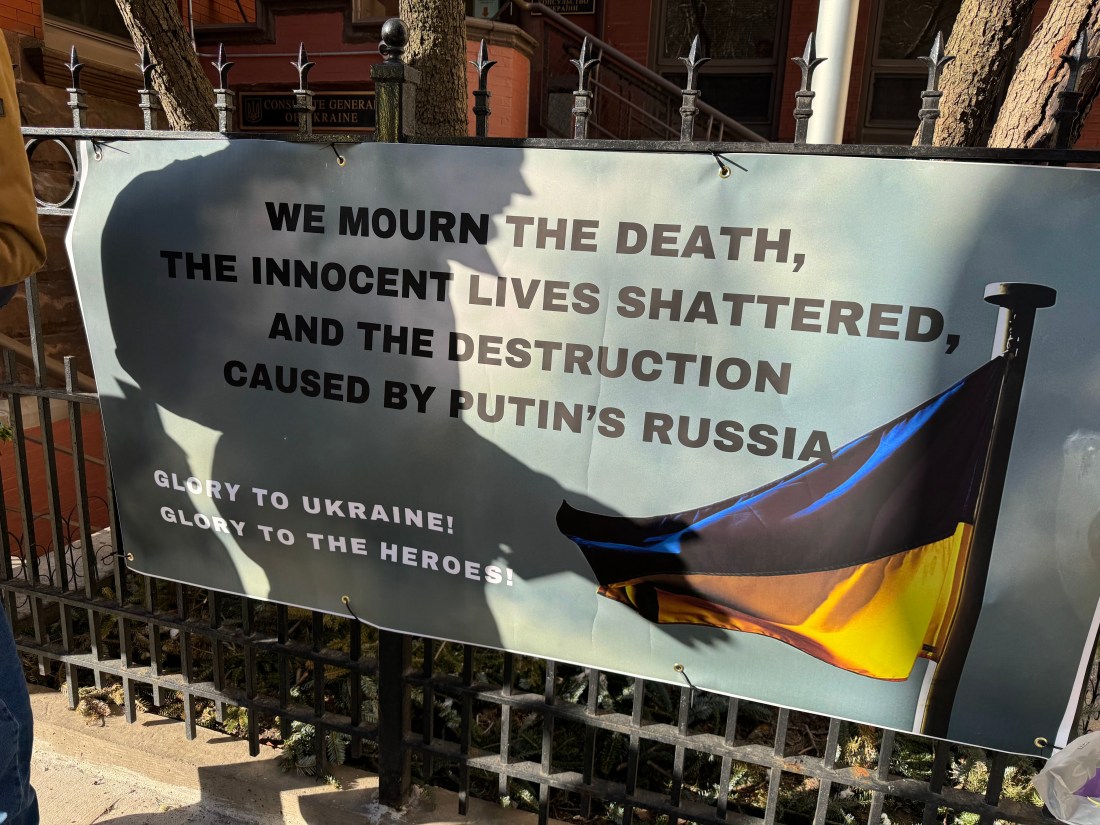
When Lena and I went to the Ukrainian rally, we made sure to be quiet and not speak Russian. On our way home, Lena said: all went well, we showed our support, and we didn’t get beaten at the Ukrainian rally.

I recalled what Boris said in the early days of the war: now, Russian sounds the same as German after WWII, and it will take at least fifty years, if not more, for this association to go away. (I would add – if…) I had an acute feeling of exactly that at that very moment, and looking at the posters depicting bloody Putin, I was thinking: screw you, what did you do with Ukraine?! What did you do with Russia?! And immediately, I stopped and thought: no, not him. We allowed it to be done.

After we got back home, we talked for several hours. We talked about the necessity of Russia’s complete defeat as the only way to start over. I shared with Lena Igor’s thoughts about educating people and creating the base from which another country could be born. Lena told me about the large Latvian community near where she lives, and how these Latvians were keeping the language and the culture alive for three generations, hoping to return “when the occupation will be over.” Still, when the occupation was over, none of them returned.

I understand what she says, and I agree that people who have lived away from their country for generations are extremely unlikely to go back. I do not think I will ever come back for good, but that’s because there was no political reason for me to leave Russia. I consciously chose the country I now call home. But I hope that the day will come when I will be able to come and help to build a new and better society.

But before that, as I promised to a person who is hopefully reading this now, I will invest in their nursery garden. And I am sure that this day is closer than we think.

The Orchid Show

On Saturday, Lena and I, and my mom, and Lena’s friend – all four of us went to see the Orchid show at the Chicago Botanic Garden; a tradition we had kept, strangely, since February 2020 – that was the last event we were able to attend before the lockdown.

This year’s show was exceptional! The staff at the exhibit told us that they have a new artistic director )or however this is called), and yes, it was something!

I recorded several immersion videos, which obviously, won’t play as immersion here, but I also took a lot of pictures, and I am going to show just a fraction of them here. The theme of the show was “The show,” so there were some elements of circus, amusement park, and so on.

Continue reading “The Orchid Show”

More Coverage Of February 24 Rallies

A short but very much to-the-point episode from ABC7 here.

WGN coverage:

Igor took a lot of great pictures, I especially like this one:

DSC_3598

But all of them are pretty amazing, and you can see all of them here.

I will try to write more about How I feel and what I think these days.

On This Unbearebly Difficult Day.

The day when we marched in a group of anti-putin Russians to pay respects to the victims of the Russian invasion, when we chanted, “Ukraine needs your help!” That day, I felt more hopeless than ever. I remember the somber mood of the first rallies in February and early March of 2022. I remember when the mood started to be more elevated and more hopeful, when we marched, fired by our anger and energy. Today, I marched, but I felt hopeless. On the way to the rally, I read an article in TIME magazine titled “Ukraine Can’t Win the War.” To tell you the truth, it does not matter what the article says exactly. You just don’t publish articles named like this on the grim anniversary of the invasion. Lena and I briskly walked to the meeting point of the Russian rally for Ukraine, holding the Ukrainian flags in our hands and passing the groups of tourists and locals for whom there was no war going on. Two years, and people are asking, “Which war?”

I know that the world is driven by the economy. I know that the world economy needs peace, and there is no industry, including weapons manufacturing, actually benefitting from the war. But why people don’t understand the consequences?

Lena and I chatted for hours tonight, asking each other the same questions: why do companies care about their profits next week and do not care what will happen to them and the world two years from now? I do not have an answer.

The Ukrainian Rally two hours later

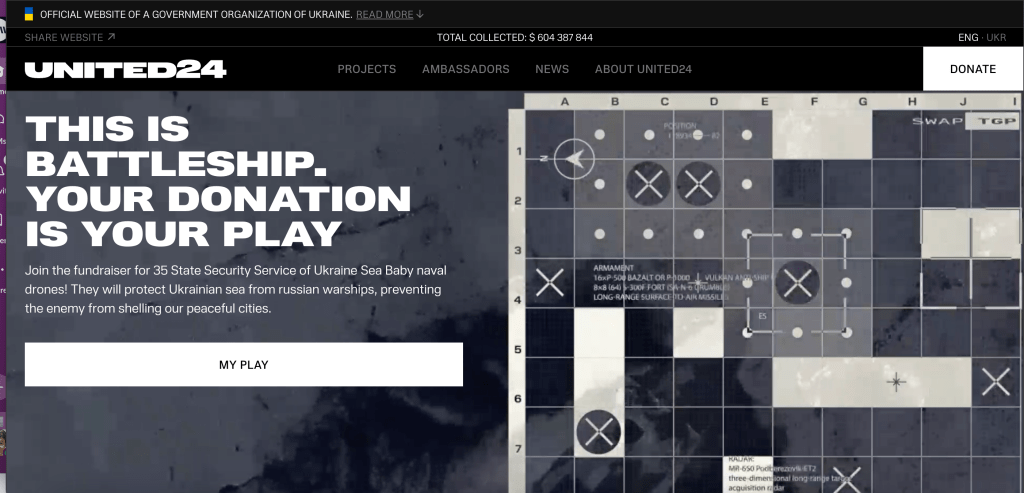
February 24: Mark This Day By Donating To UNITED24

Donate for Sea Drones here

Apple Vision – Keeping Exploring

Last weekend, I tried several more things with Apple Vision, with intermittent success.

  1. I shot a couple of immersive videos with my granddaughters while they visited. I learned that I should resist my instincts and do not move my head around – Apple Vision will take care of the panoramic view by itself. When I move my head around, the video becomes so jumpy, that you can’t watch it. But when I sat still, the results were great, I indeed felt in the middle of action.
  2. While reading the manual, I found out that you can take immersive videos using iPhone 15. The instructions stated that you could switch to the immersive video mode, and although your video won’t be immersive on the iPhone, it will be immersive when you watch it on Apple Vision. I tried it, and it was definitely not as great as the videos I made using Apple Vision itself. I will give it another try before pronouncing it an experience, but so far, I am not impressed. I was hoping that Boris would be able to send me the blooming lilacs from Helsinki :), but no!
  3. Device sharing didn’t work at all how I expected. I figured out how to start a guest session, and I thought it would be as easy as I would take off the device, give it to another person, and they continue from there. But it turned out that each “guest” had to go through the whole setup session, setting their eyes’ movements, their hands’ recognition, their sight focus, and so on. They say that Apple Vision can’t be used by anybody younger than 13, and honestly, it is hardly possible! The setup would be challenging even for some adults. So, my hopes of sharing the experience with my granddaughters will have to wait!