Author: Hettie D.
My name is Henrietta (Hettie) Dombrovskaya. I was born in Saint-Petersburg, Russian (actually, back then – Leningrad, USSR) in 1963, and immigrated to the United States in 1996.
I love Saint Petersburg, the city I was born and raised in, and I think it’s one of the most beautiful places in the world. Similarly (but differently) I love Chicago, and can’t imagine myself moving somewhere else in the observable future.
I have three children, Igor, Vlad and Anna, all adults living on their own, and one (so far) granddaughter Nadia. I also believe that my children are the best thing that happened in my life.
As for my professional life, I am working in the field of Information Technologies. When I was twenty, I’ve declared that the databases are the coolest thing invented and that I want to do them for the rest of my life. Thirty plus years later, I still believe it’s true, and still, believe that the databases are the best. These two statements together imply that I think a person can have it all, and indeed, I think so! Keep reading my journals to find out how I did it.
TIME Magazine: Busyness As A Status Symbol
I am asking the same question as this article: why has busyness become a status symbol? Or maybe not? Is it the objective thing these days? I agree with every word they say: in the past, not having to work was a status symbol. What happened with that? See the article below.
Continue reading “TIME Magazine: Busyness As A Status Symbol”Fort Sheridan: Late Summer

Yesterday was Labor Day, the official end of the summer season. I spent this long weekend balancing matching up on one million in-flight projects, both personal and professional, and making sure this summer had a proper final accord. It was a very busy one, but I took as much of it as I could.
Since the beginning of summer, Igor and I have been planning to go to the Dunes on Labor Day, but then the weather forecast showed dropping temperatures. First, we decided to give up. Then, there were signs of hope, and we decided to go in the afternoon when it should have warmed up. And then, in the morning, it was so cold and windy that I texted Igor to call it off. Besides, I remembered that there was one more thing I hadn’t had time for since May, and I won’t have time till mid-October: going to Fort Sheridan. So I decided to go there in the afternoon.
Since I was going North and close to the Lake, I was sure it would be colder there (as it usually is), so I even put an extra layer in my backpack. Forgot about the lake effect :). To my surprise, it was much warmer than in Rogers Park, and it was even less windy.


Children Molesting In The USSR
I mentioned that topic several times, and now I want to focus on it. Child molestation was very widespread, and at the same time, nobody mentioned it back then and does not mention it now.
With me, it started when I was about eleven, and it would go on at least until I was fifteen, maybe sixteen, but the pick was during my pre-teen years. You would get on the bus or a train, which were very crowded pretty much all the time, so you had to swirl yourself into the crows just to stay in. And then somebody would start touching your private parts. And it will continue for the whole duration of your trip.
Why would you not dare to stop a molester? Because you are in a crowd, and everybody is touching everybody, and even if you look around, you can’t tell who is doing it to you. Actually, the only time in my life when I dared to stop a molester, the man was looking aside as if he was not even there, so I hesitated for a moment but then said: Hands! He quickly moved his hands away from my body and disappeared into the crowd. Also, it felt overwhelmingly embarrassing. You just couldn’t accuse an adult of doing such a horrible thing. And, of course, whatever happens to you, it’s all your fault!
Overall, nothing about sexuality was explicitly said, but somehow, by the age of eight or nine, you would come to the conclusion that there is something really bad related to your private parts (which, by the way, were never called “private”). If a boy happened to see your underwear (when you were playing together, climbing a tree, jumping a rope – and remember, girls wore dresses, shorts were rarely worn) – that was one of the worst humiliation you could experience. When you were at the overnight camp, your counselor would walk the bedroom, commanding everyone to have “hands on top of your blanket.” And it’s worth mentioning that my mom, like many other moms, did the same thing: coming to check on me when I was in bed and saying: where are your hands?
A word about male teachers. I was never molested by any of the male teachers, but as I learned later, some of my friends were. I learned it many years later because, once again, it was impossible to say it out loud. It meant admitting the shame, it meant that nobody would believe you, and it meant that “it was all your fault.”
The most horrific and never spoken about was the opposite effect. By the age of twelve, most girls would firmly believe that their worth was exclusively defined by how attractive they were to the opposite sex. By the time we were in the seventh grade, stories were whispered about some girls in our class who “had abortions.” We listened to these stories in horror, but at the same time with the strangest sense of jealousy: these girls were attractive enough for adult men! I am writing it, and I can’t make sense of why we felt this way, how we could think this! And that’s while we knew almost nothing about our bodies, including how you could get pregnant. Even though my mother preemptively explained to me that in a couple of years, I may start menstruating, she somehow managed to avoid an explanation of what exactly it was. I had my first period earlier than anybody in my class when I was just eleven, and I had no idea what was happening to me. My best friend had her first period three years later, and her parents explained to her and gave her a book to read. She gave this book to me, and it was only then that I learned the facts. It was a great trust crisis in my relationship with my mom, but not the first one and not the last one.
I don’t know how to finish this post. I do not know why nobody talks about it. Why do so many people talk about “happy young pioneers’ childhood, clean and pure and innocent” as if none of the things I described were there? I do not know whether these are the tricks the memory plays on people, forcing out the things we would rather forget, or that’s something else …
My historical posts are being published in random order. Please refer to the page Hettie’s timeline to find where exactly each post belongs and what was before and after.
TIME Magazine: Ultra-Processed Food
My two cents about this article:
- As it states correctly, there is no label and no formal definition of what food should be considered “Ultra -Processed,” so it’s difficult to tell what exactly is criticized when “ultra-processed food” is criticized
- There are calories, proteins, fats and carbs, and no matter in which form they are coming, you can measure the amount you consume
- Then people, especially the ones with low income, are told that the only food that is good for them is organic (=expensive, which they can’t afford) it does not help anybody
- I remember very well the time I was poor, and even when I was not so poor, I would still choose the less expensive options.
The article itself is copied below.
Continue reading “TIME Magazine: Ultra-Processed Food”Bike The Drive
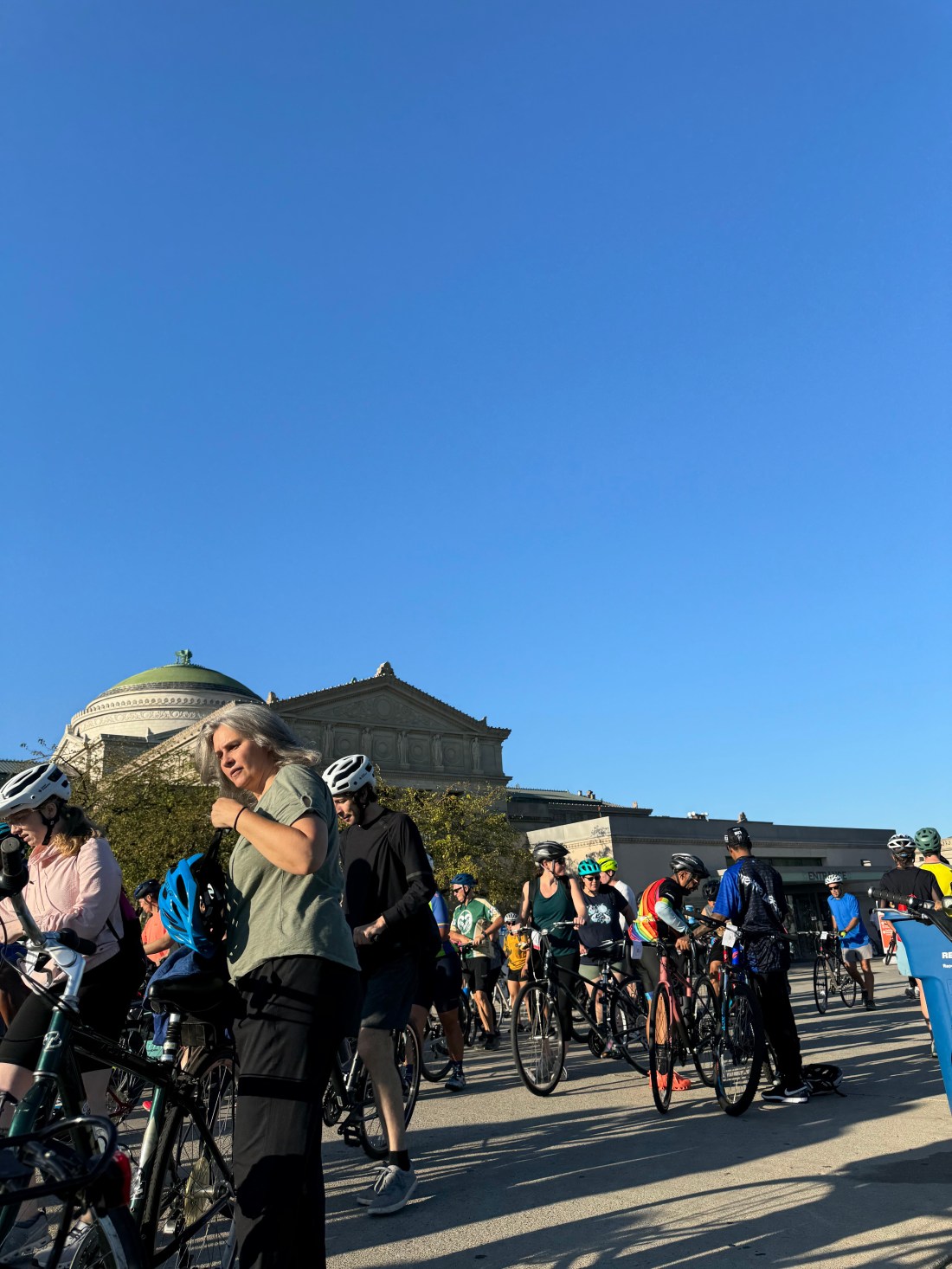
For the second year in a row, I did a full course of Bike the Drive! The weather was perfect except for heavy winds after 8 AM, which slowed down the last portion of my ride. Other than that – just perfect. This time, I didn’t pay for breakfast because, for two years in a row, I found it expensive and not good. I much preferred the snacks at the rest stops: bananas, apples, dried fruits and nuts packs. Also, Urban Remedy was giving away small bottles of coffee and cookies.


Atlantis
I finally watched Atlantis – it is not the kind of movie you watch in parallel with cooking or cleaning. When I rented it for the first time, i was unable to allocate almost two hours of uninterrupted time.
It’s an amazing work of art. It might be strange to say “it’s beautiful” because it shows horrible things, but the cinematography is really stunning. The most horrific thing is that this movie was filmed in 2019, and yet, it is painfully close to what later happened in reality. Also, it is horrifying that 2025 is just around the corner, and the war is not nearly over.
Larisa Shepitko Movies
Thursday was the last day of the Siskel Center’s “Entrances and Exits” series. Each night, the Film Center presented the first and last film of an outstanding director. Yesterday, it was Larisa Shepitko Heat and The Ascent. I only went to see the first one, because I can’t spend four hours in the movies, and couldn’t be that late (my workload is absolutely insane these days).
Heat is Shepetko’s first movie, the one she directed as her graduation project, and I never saw it or heard about it (yes, there are some gaps in my education). I can’t even describe how much I loved it. It’s incredible that in 1963, she could produce a full-length film that would be so moving, deep, powerful, and with almost no traces of propaganda or obligatory Soviet reports.
While searching for any information about this movie in English, I found this video, which outlines the history of Kyrgyz cinematography and talks about the Heat in detail.
Back To The Future Musical
I haven’t seen the movie, and I didn’t know the synopsis (and didn’t want to read any reviews before I saw it for myself), so I went in on Wednesday with an open mind.
I liked the show; There is nothing deep and philosophical, but everything is put together really well; the music and lyrics are great, and the special effects are amazing. Great entertainment and it’s exactly what I needed to balance my insane workload.
***
I talked to a co-worker the other day. He is not Russian, not Eastern European – nothing that would make him especially sensitive to the current political situation. I do not recall what prompted his comment about “as a Russian,” but I replied as usual that “it is not what defines me.” He proceeded with, “You are not denouncing your Russianness” and “It has nothing to do with this political situation.” It started to be more serious than a breakfast conversation in the cafeteria, but I couldn’t drop it at that point. I replied that I felt like I had everything to do with the situation because it’s my generation that didn’t follow up after the collapse of the Soviet Union and the dissolving of the Communist Party. It was my generation that let it go, and thereby I do feel responsible.
He said: I have Ukrainian neighbors on one side and Russian neighbors on the other side, and my Russian neighbors are afraid to speak Russian. And then he talked about his closest friends who are Russian and about some bets and about drinking. The latter one is a serious trigger point for me, so I said that this conversation was making me uncomfortable.
We both had to go to our desks, but I hope to continue this conversation with him. I want to ask him whether his Russian friends feel that they have something to do with what the Russian government does or if they do not think it is related to them. As for speaking Russian, I am acutely aware that at this moment in history, the Russian language for Ukrainians sounds like German during WWII for many European nations, so I do not think it’s appropriate to speak Russian in their presence (unless it’s their initiative).
Recently, I read an essay by Michael Shishkin – a Russian writer who is not at the top of the list either in Russia or internationally. I was deeply moved by this essay – my thoughts and words exactly. I agree with him that it is extremely important to understand that everybody born and raised in Russia, no matter how progressive or even radical was their upbringing, carries the baggage of imperialism. The paragraph which particularly struck me was this one:
Throughout my life, I felt I could stand steadily on the foundation of the great Russian Culture. Nowadays, there is emptiness under my feet.
Also, the way he describes the silence of the Russian writers and other intelligentsia as “hosting regular events” and “pretending that nothing is happening.” That’s exactly how I feel when I read about cultural events or new productions in Russia: I can’t take it in that people “do normal things.” And yes, I am hypocritical, I know. And yes, I understand that living under permanent pressure is impossible, and a person’s mind finds ways to accept reality as a norm. And yes, I understand that I am making many people upset. And no, I do not think I am always right, and I do not think I have any moral right to criticize others. Still, I want to be honest and convey how I feel.
 Hettie's Reflections