I love that more and more city towers are being restored and used as exhibition spaces. We had already visited many of these new museums, and the next one on our list was the one opened in the Kiek-in-de-Kok (Peek into the kitchen) tower. Museum information can be found here.
There are tons of kids’/family activities offered in this museum, and the museum itself is way more than a fortification museum, although a large portion of it is about war and weapons.


The most interesting section of the museum are the Bastion passages connecting the towers with the 17th-century Swedish bastions. The exhibit shows how the passages were used though their history, from the 17th century to today’s days, and also has several mini-exhibits, for example, the history of firefighting services and civil defence.


Each section of the passages holds a piece of history, and you can watch a piece of documentary about the respective period. If we would study each of the sections we would probably spent three hours in this museum. Not like it is not worth it, but it was a definite information overload. However, there is one section I want to talk more about.
That was the section about bombing of Tallinn by the Soviet troops on March 9-10, 1944. I didn’t know anything about that horror until recently, and it came to me as a shock same as when I learned about the bombing of Helsinki at the start of the Winter War.
During one of our many visits to Tallinn I asked Boris when did the city towers of Tallinn come down (although Tallinn is the most well-preserved Medieval city in Europe, not all of the towers and not all of the walls are in place). I asked him about that when we walked along one of the city streets and he mentioned that that’s how the city wall used to go, and I asked him when it went down thinking that it happend three hundred years ago. But he said: In 1944. And that it was completely not necessary from any strategic point of view, just to demonstrate who rules the land.
That’s how I learned about this bombing, but I never saw any pictures of how did it look like, so that was the first time I saw a documentary. The five-minute clip below is not the one we saw in the museum, but at least it gives some impression of what had happened. Over 500 people where killed, and 20,000 lost their homes – about one-third of the total housing in Tallinn at that time.
A couple of pictures from different sources picturing the aftermath of the bombing:
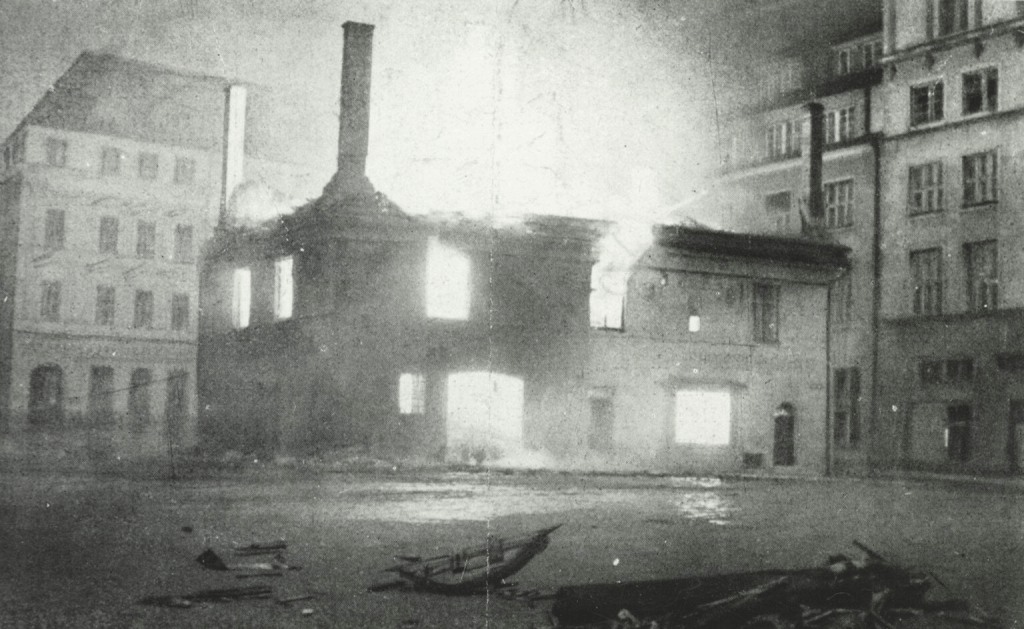
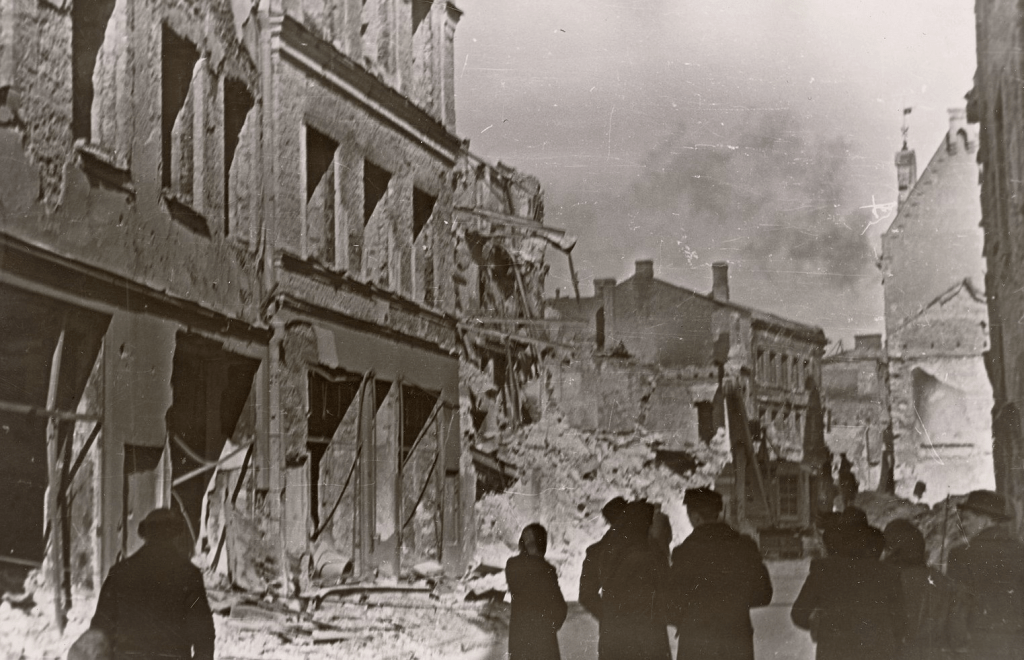

From the museum exhibit:


And one more section, dedicated to the later years of the occupation:


The rest of the passages host the stone carving exhibit. I wish I’ve seen the exhibits in the resserse order, but I doubt it would change my mood after we exited.

For a good half of the time we explored the museum, a small group of Ukrainian teenage girls were more or less right behind us, one of them commenting on being clausterphobic and not being comfortable on the tower staircases, and then we ended up watching this bombing documentary together, without saying a word.
When we exited the museum and saw the daylight, I turned to Boris and asked: I do not understand how they could forgive us for what we have done! And Boris replied: And who said they forgave? I nodded in agreement.


 Hettie's Reflections