About The Biking Event, And How I broke My Bike And Fixed It

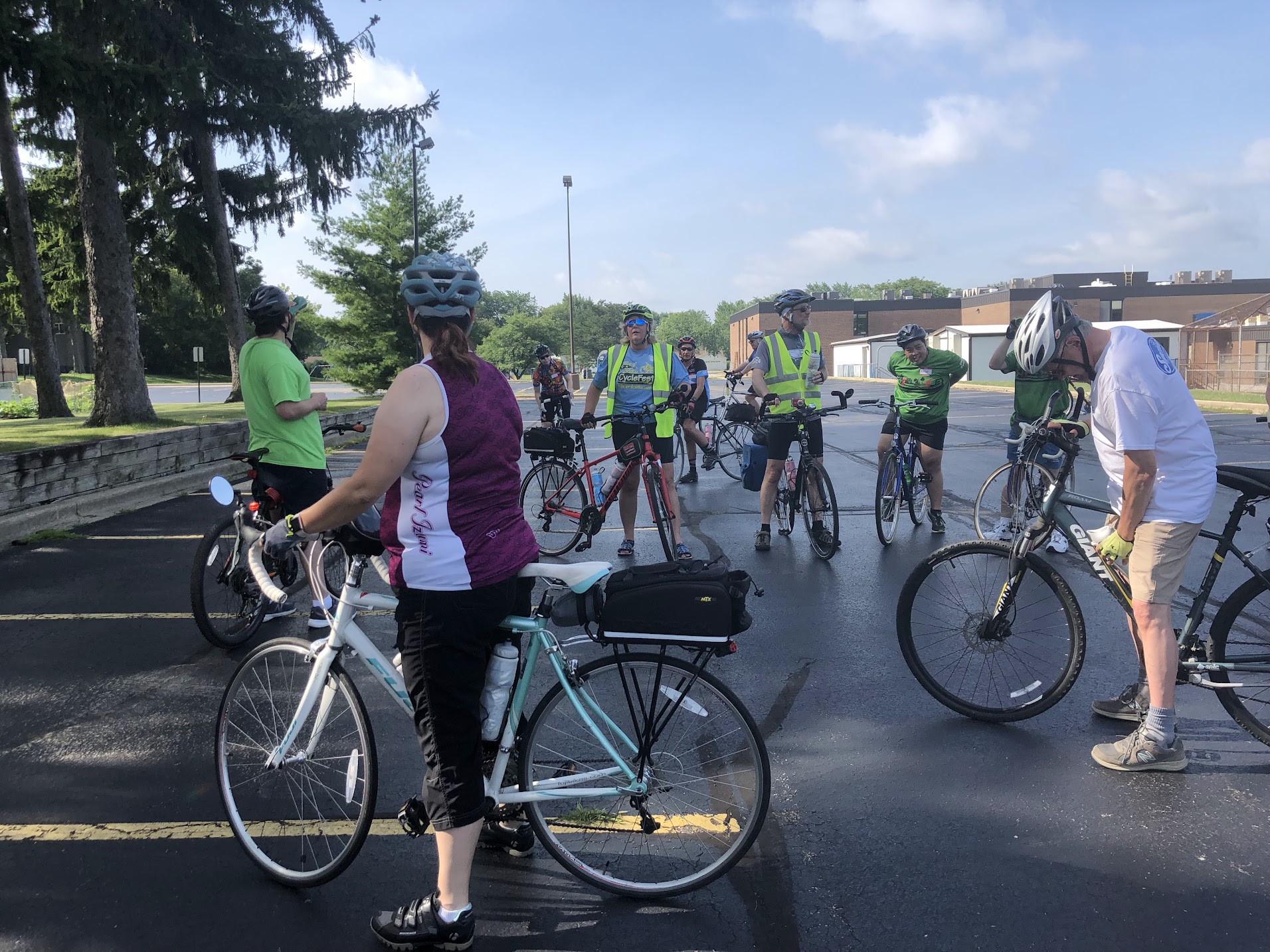
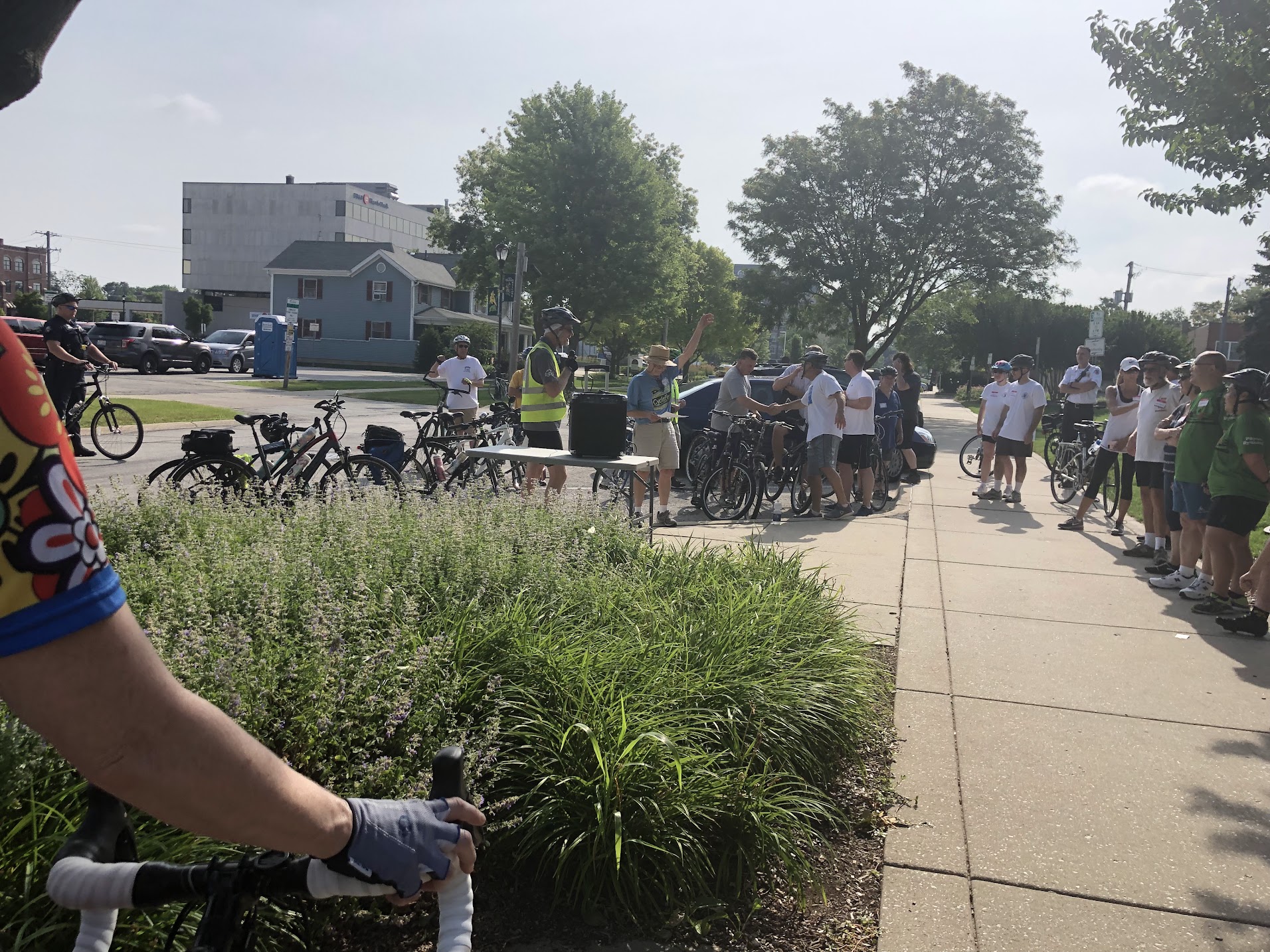
On Saturday morning we had a first Palatine Community bike ride, with the Mayor and Village officials present. Although it was extremely hot, there was no question for me, whether to show up or not. Taking the weather into account, the participation was great. The police (both the cars and bikers) were escorting our cavalcade through the whole ride and would hold the traffic when we were crossing the Northwest Highway. It was a real community event, with many people participating for the first time.

Continue reading “About The Biking Event, And How I broke My Bike And Fixed It”

Svekolnik – Cold Summer Soup

I make this cold soup every summer as the temperatures start to hit the 80s, and make it every week un til it cools outside. Many people are suspicious about this soup because it is pink :). But if they are brave enough to try, they love it.

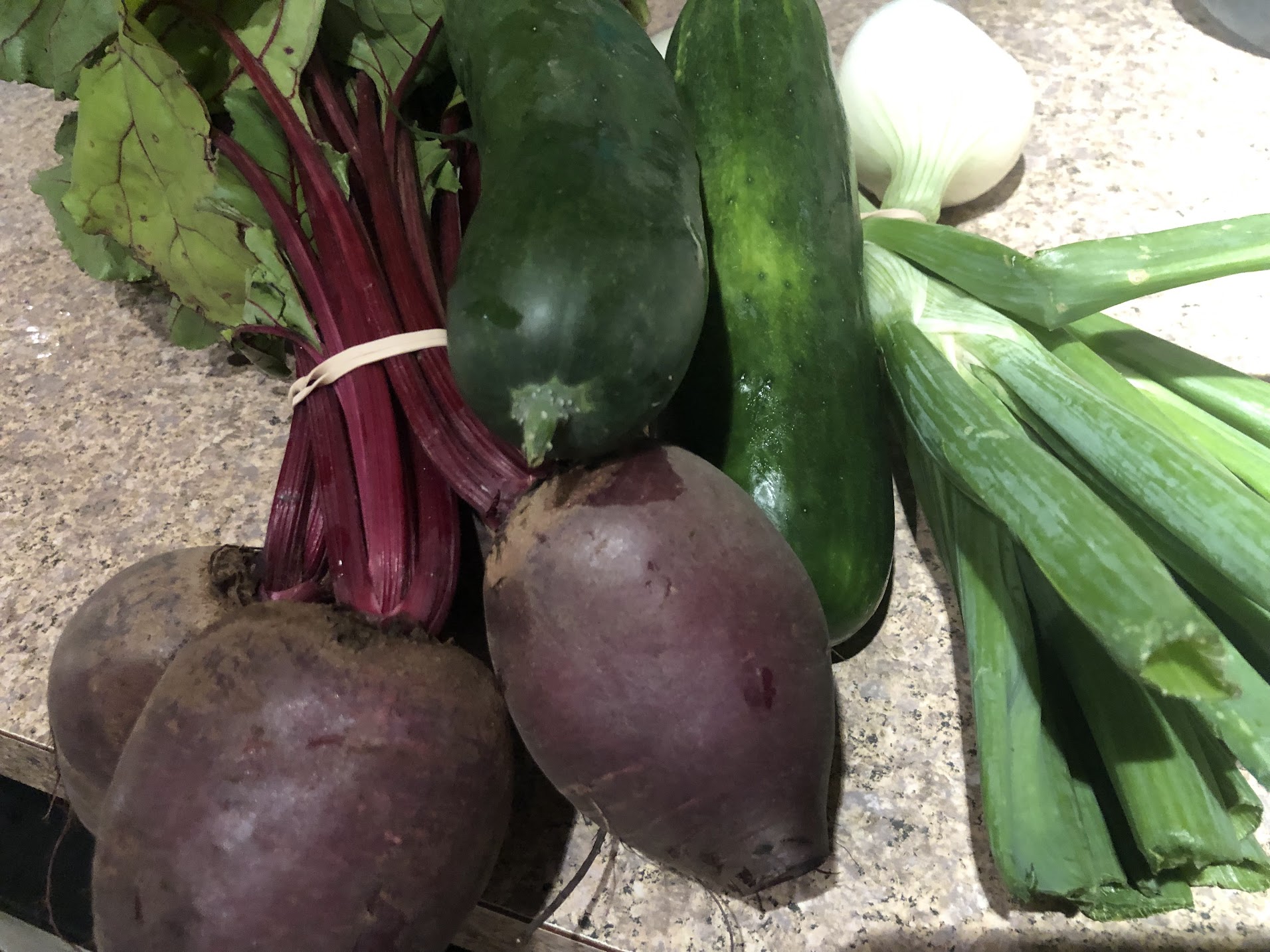
My CSA deliveries have started in July and the last week’s delivery was just perfect.

Here is the most important part of what I’ve got:

Here are my step by step instructions. First, you separate the leaves from the roots:

Continue reading “Svekolnik – Cold Summer Soup”

More Pictures – Summer 1992

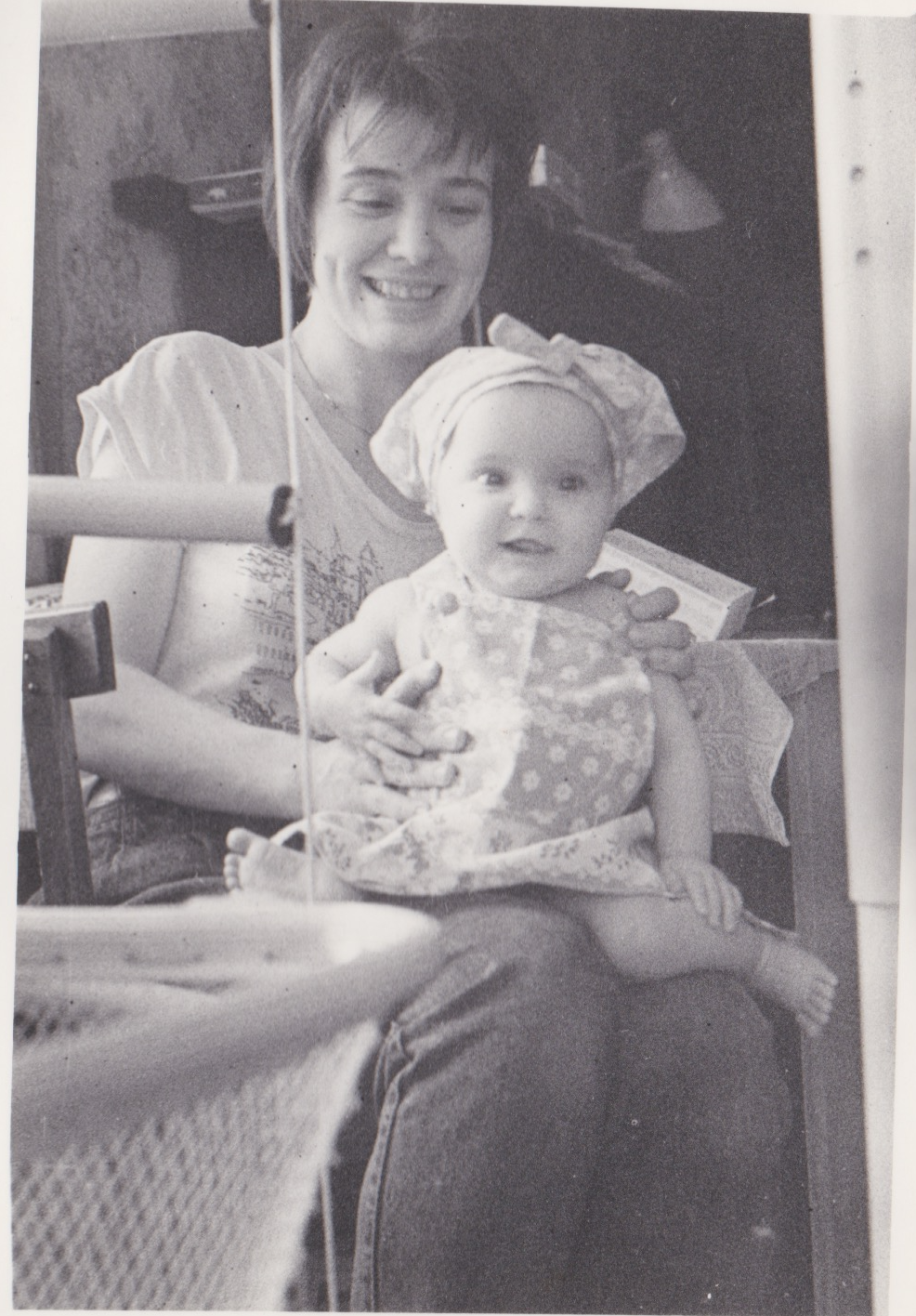
Anna is 11 months old
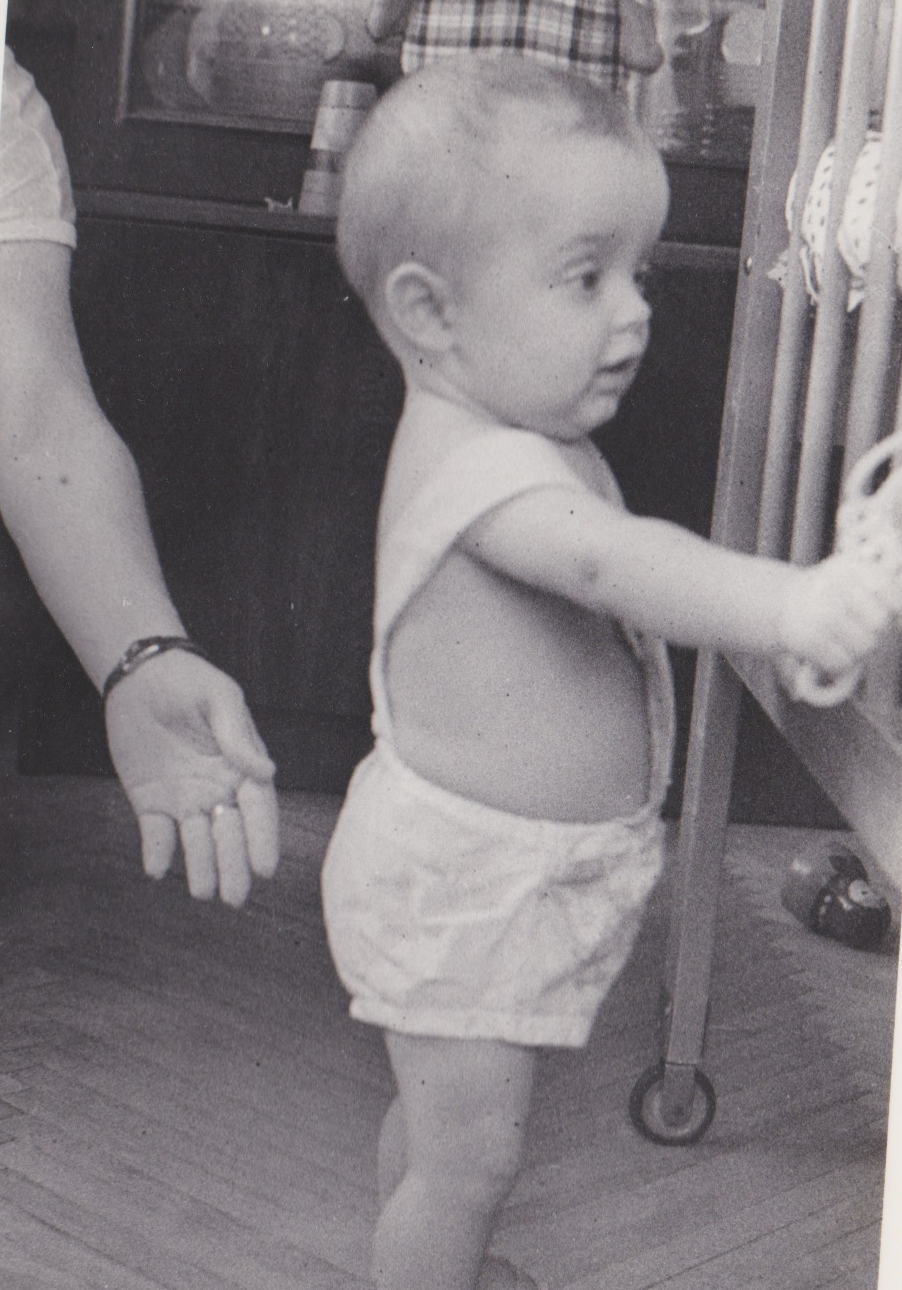
Vlad is 11 months old

Beginning of August 1992, we are back to the city. Anna and Vlad are a little bit bigger now, and some of the humanitarian clothes do fit.

March 1992 – Two More :)

This image has an empty alt attribute; its file name is a7.png
Anna 7 months old
This image has an empty alt attribute; its file name is v7.png
Vlad 7 months old

Here Anna and Vlad are seven months old. They were still tiny for the 7-month old babies, and on top of “having nothing” in the stores, there wouldn’t be any clothes for such small babies, except raspashonki – sort of tops for babies, wholly opened on the front or the back, with no buttons or any other means of holding them together. They would work for three-month olds, but not for always moving seven-month olds. Almost until they were one, I was making all their clothes myself, unless I could find something suitable in the humanitarian aid.

So here Anna wears an apron-style dress and a kerchief, which I’ve crafted from an adult headscarf. They were grey-ish blue with the white polka dots. I’ve also made Vlad’s yellow overalls do not remember what I’ve used for material, but it was some recycling.

You can also see that they are not wearing diapers. Disposable diapers did not exist back then, and the water-proof underwear where you would put an insert just started to appear. It was expensive, of mediocre quality, so there were very high chances that the pants would be wet anyway. Hence – no diapers.

Pictures March 1992

The Rest Of Amsterdam

To be done with my Holland vacations – the last bits and pieces of my stay there.


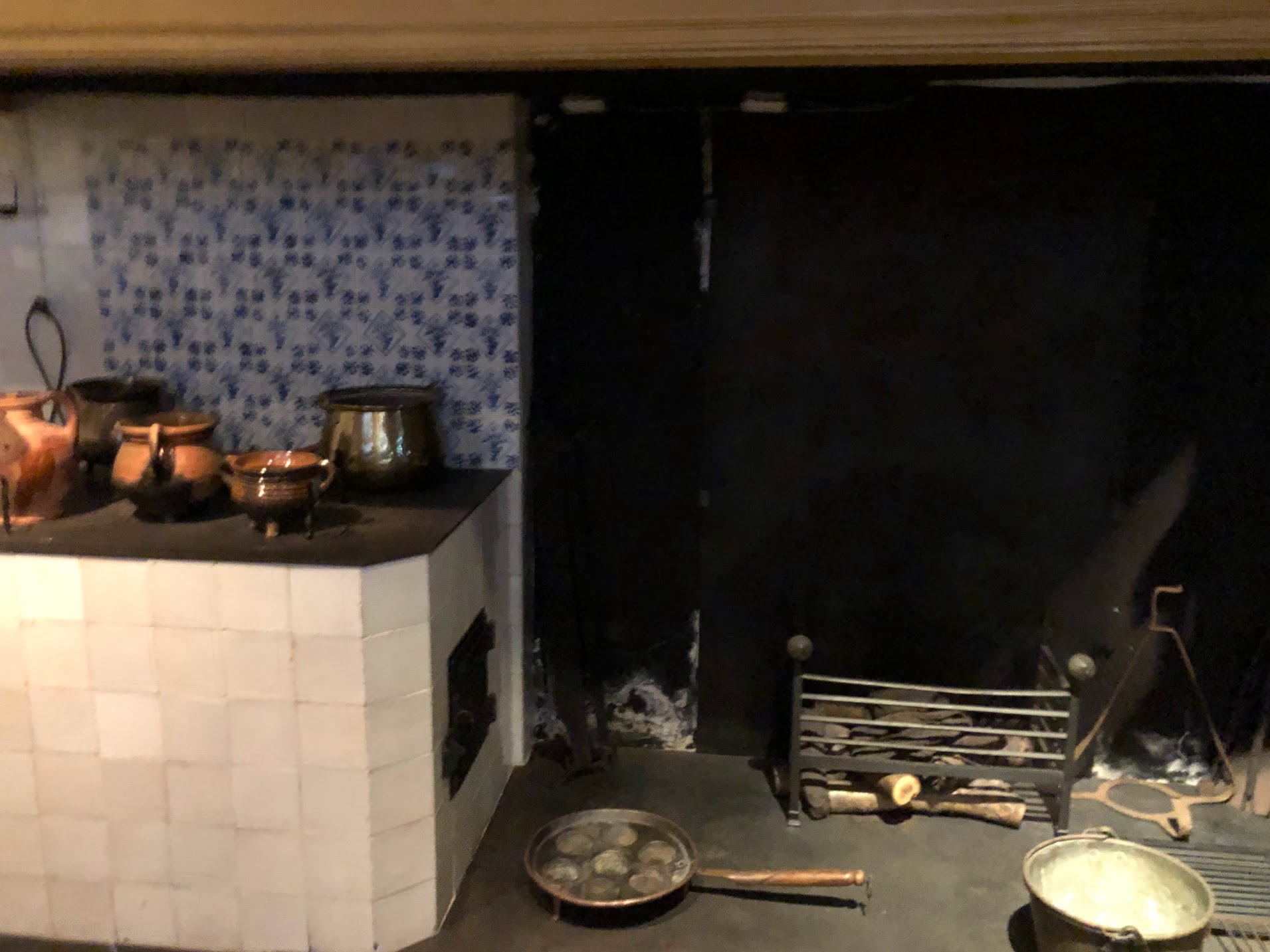
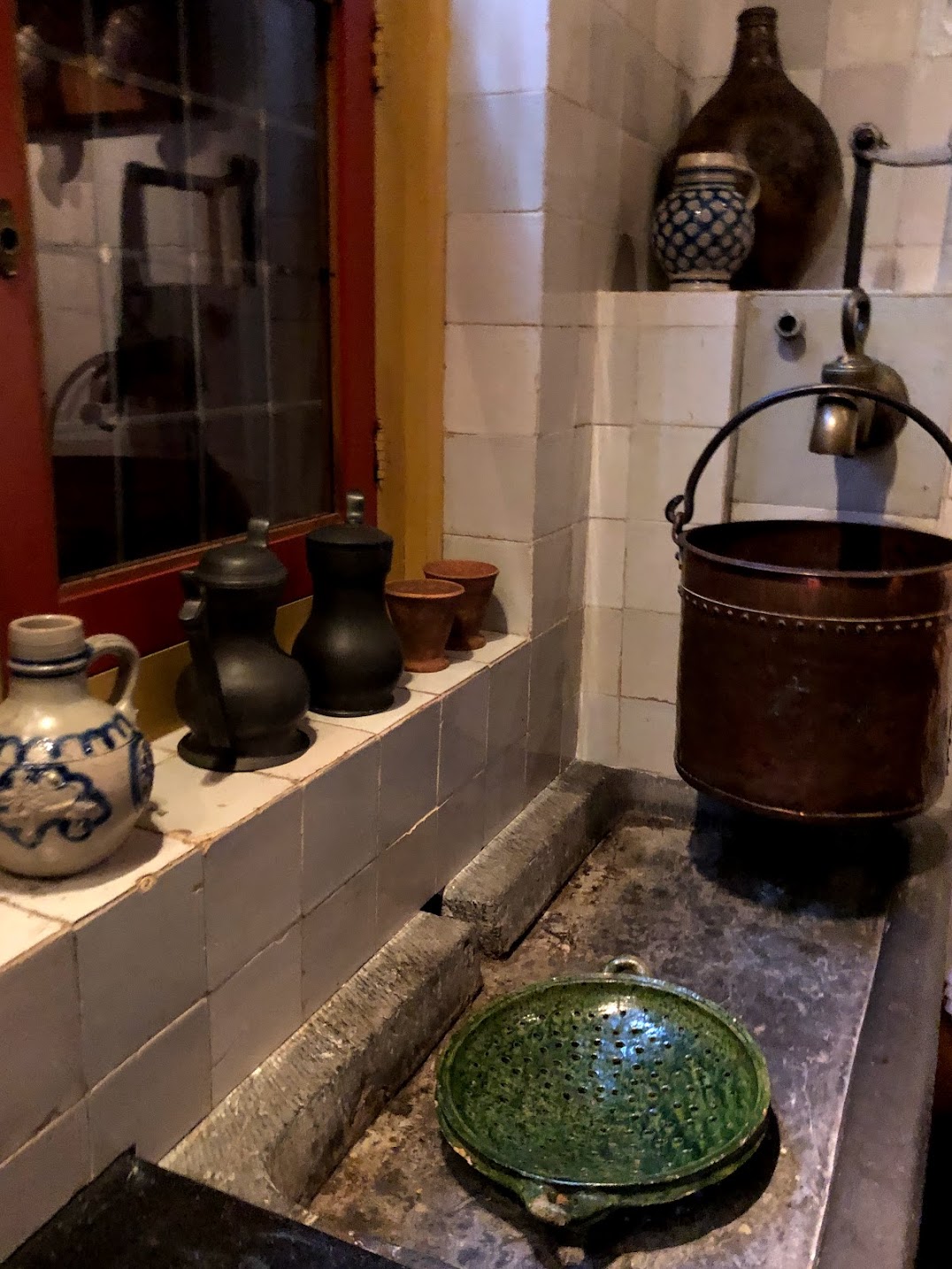
There was one more museum which we visited – the Rembrandt House. There are not that many Rembrandt’ paintings there, but to see the place where he lived and created his art was exciting. That was one of many times when I thought about me as a 14-year old studying Rembrandt in the Hermitage museum in then Leningrad. He is one of my most favorite artists, and I was thinking, that back then, forty-two years ago I won’t believe if anybody would tell me I will be walking these rooms.

The kitchen
The room where Rembrandt would meet with his patrons
The workshop
A part of Rembrandt’s art collection

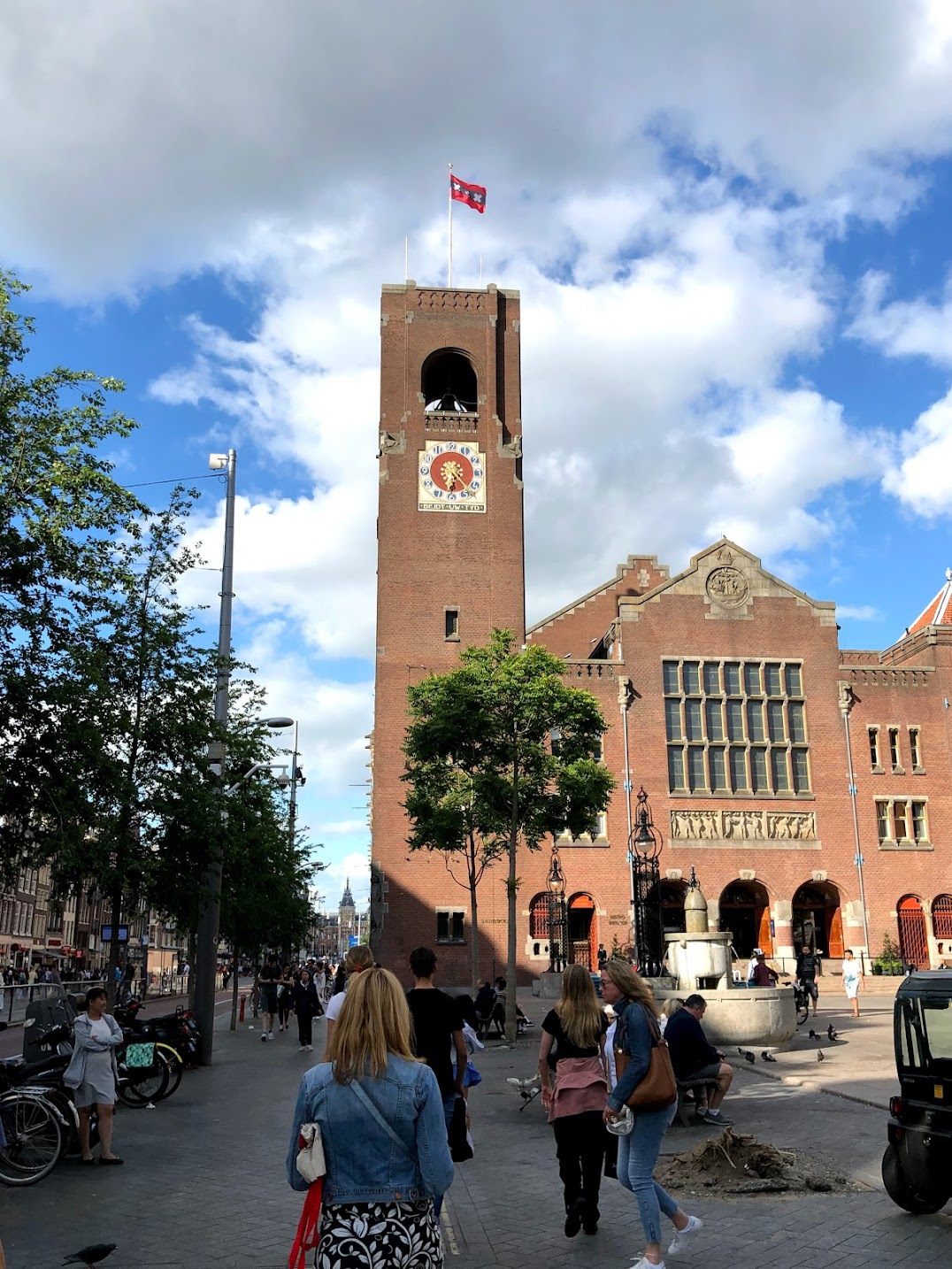
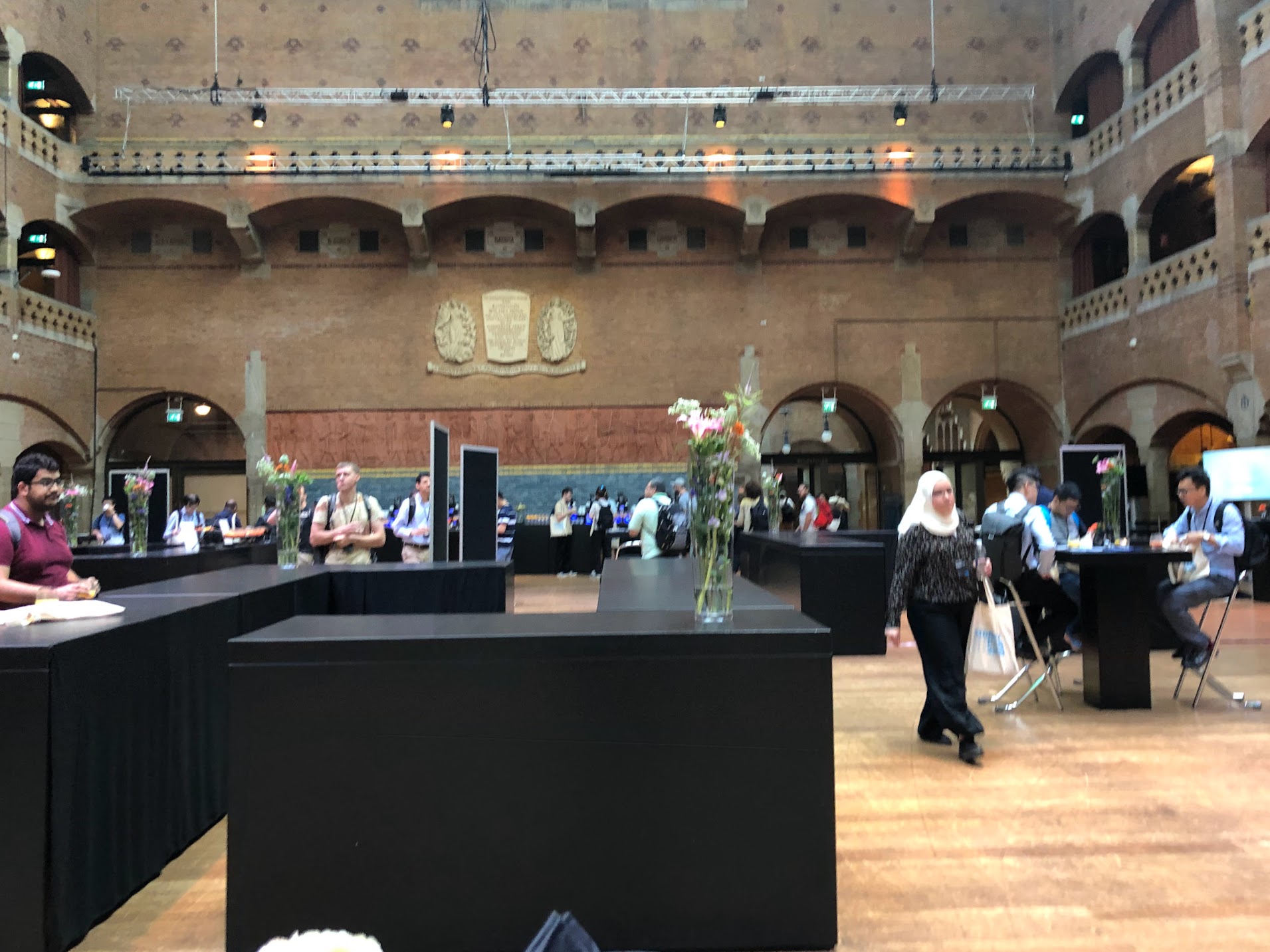
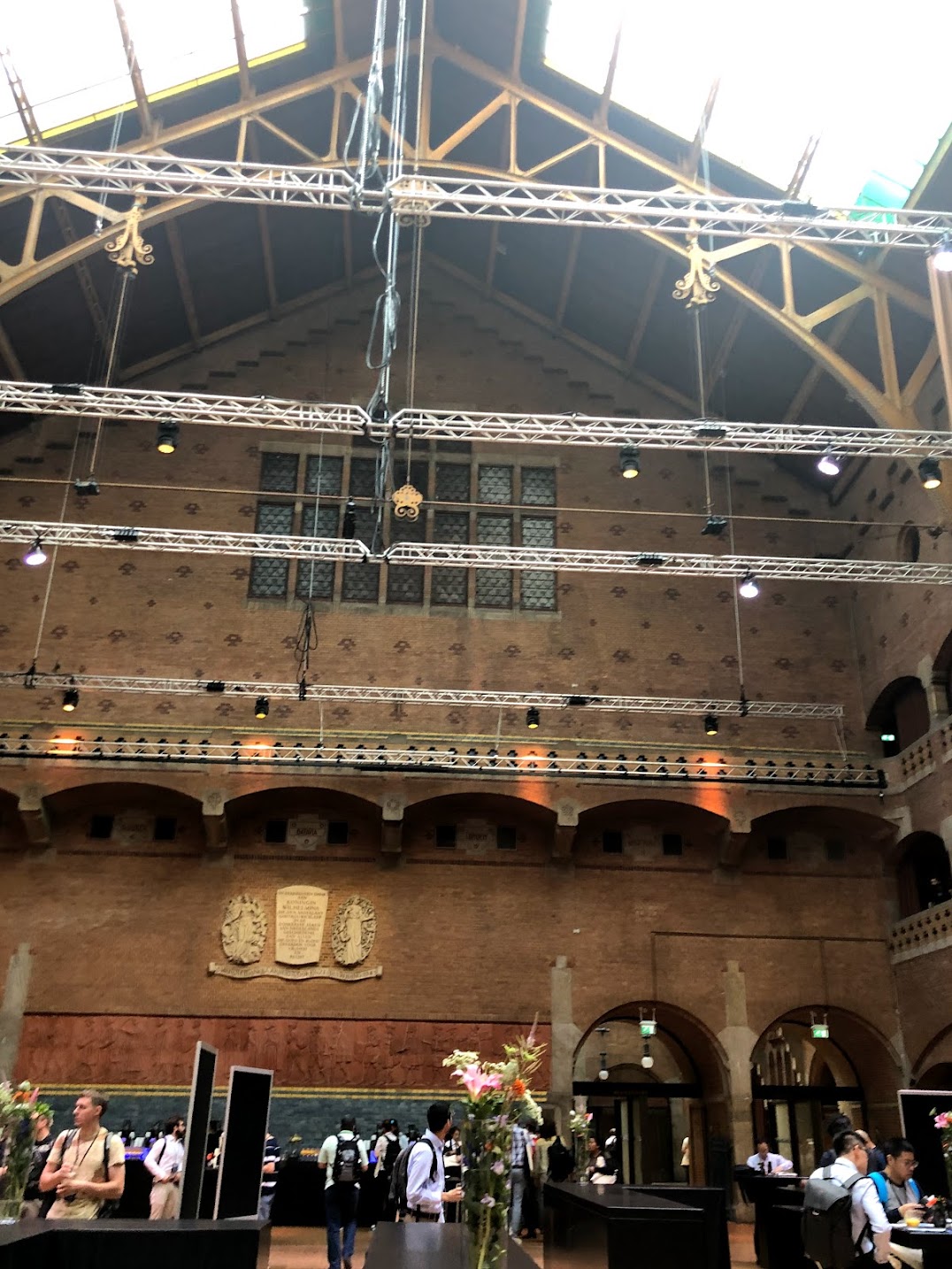
A couple of words about the conference: the venue was the old Amsterdam stock exchange, and I can’t recall ever being present at the scientific conference in the building that old!

I didn’t even plan to go there, but then came this early breakfast problem and the fact that I didn’t want to deprive Boris of his morning meetings. So I’ve accompanied Boris there on Sunday morning. And a couple of people said hi, and I replied – I am actually not here! And Boris said something to the effect whether I could stop explaining everybody, that I am not participating.

Then I went to a couple of keynotes – I was already there anyway! And then I saw C. Mohan, and for those who know him, it’s not a surprise that I’ve got a picture with him!

And then I’ve asked a couple of questions to the speakers. And I talked to several people. Later I thought that giving all my this year’s circumstances and the fact that I am unlikely to go to any other conferences till the end of the year, I could very well register and leave not on the 3rd, but on the 4th of July… whatever 🙂

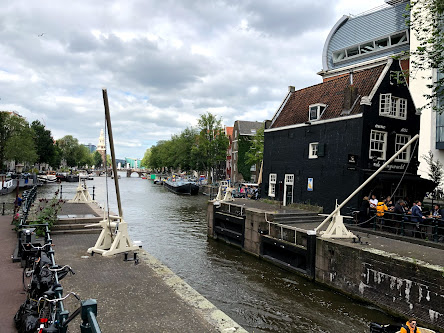
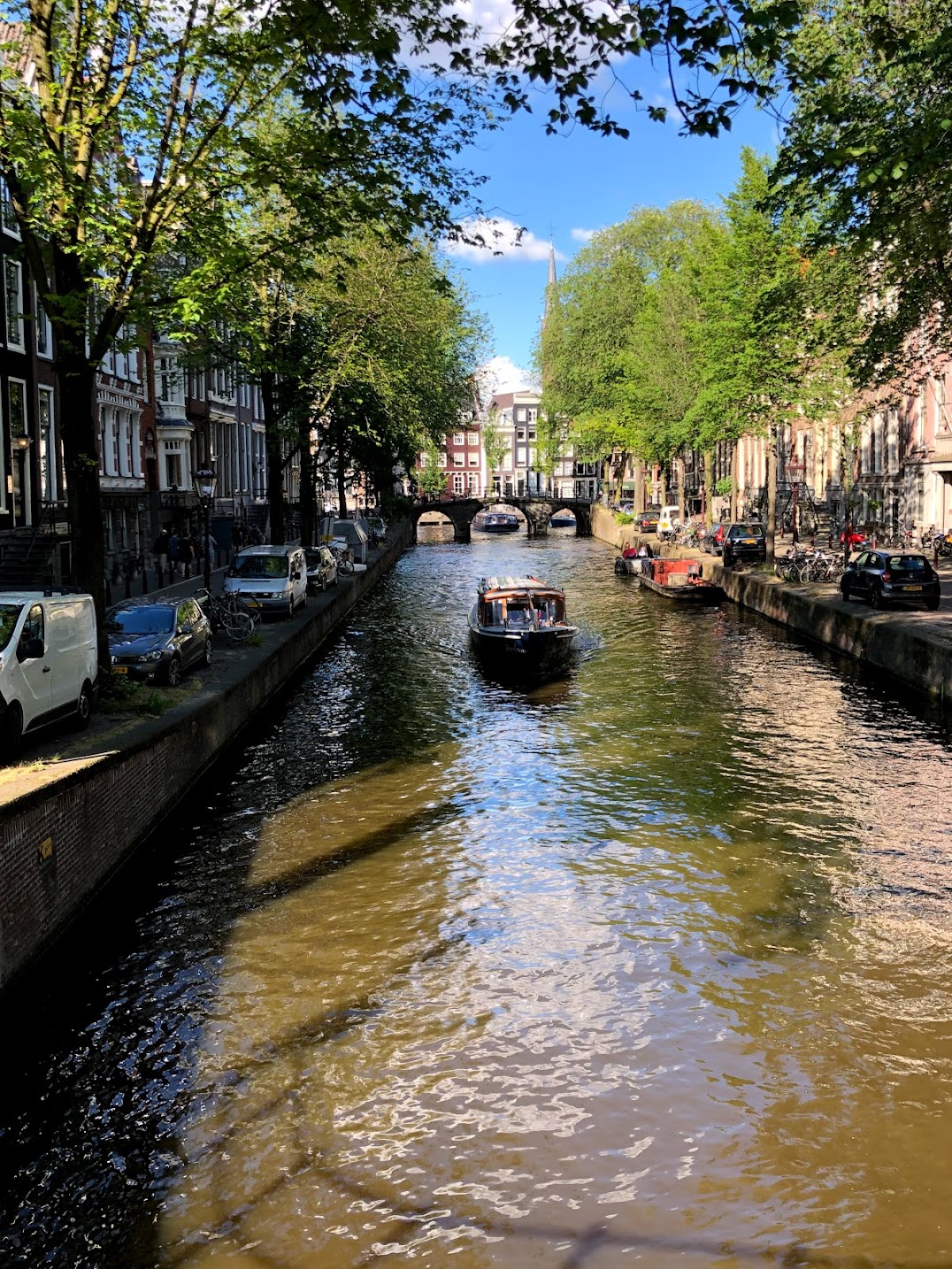
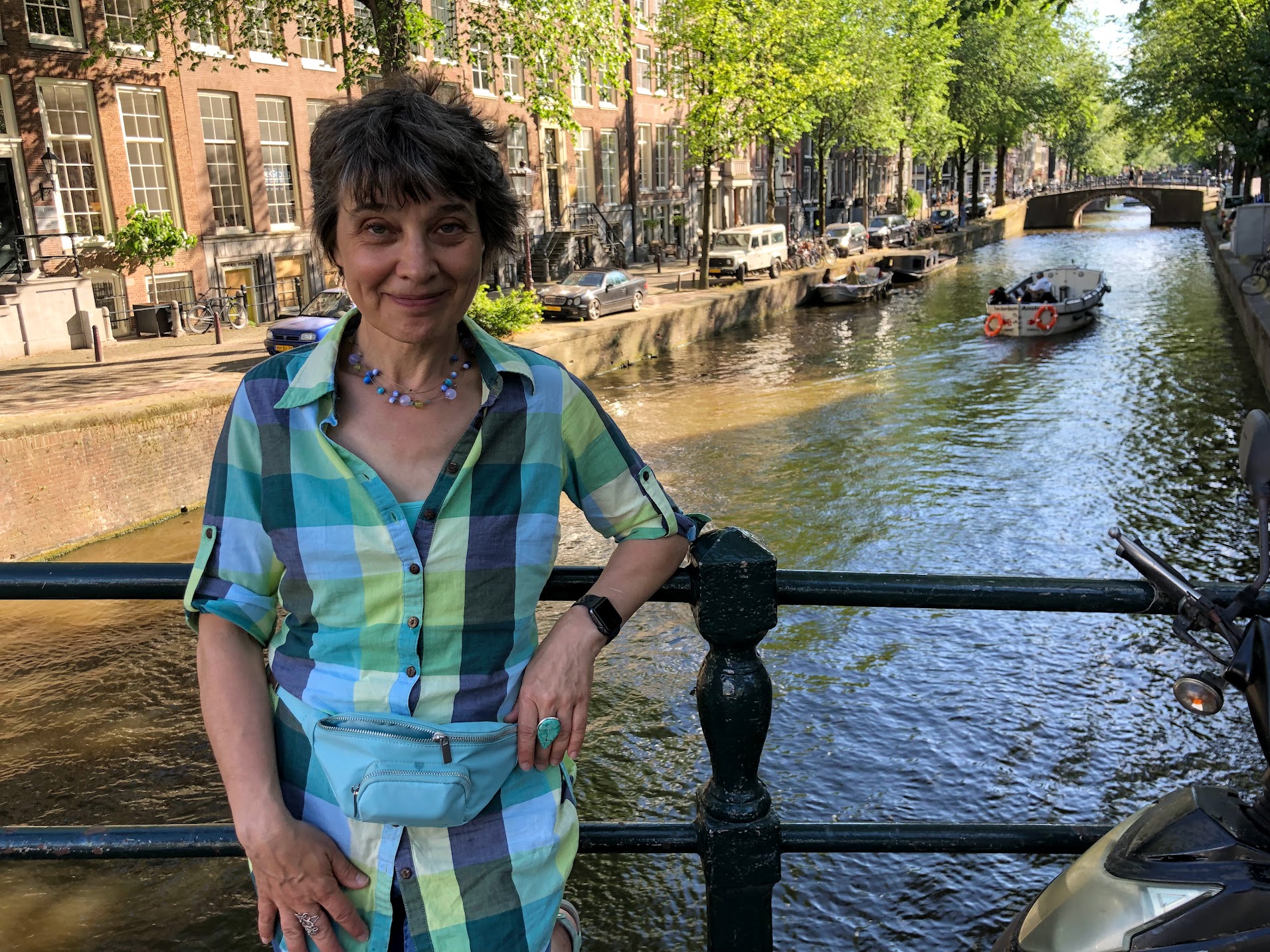
Here are my last Amsterdam pictures – a beautiful afternoon in a beautiful city.

Next the morning I took a train to the airport, and before that, we had the nicest breakfast ever!

Late Spring-Early Summer 1992

Another thing which has happened that spring was my atopic pregnancy, which was just short of ending tragically. I refused to go to the hospital even after I’ve collapsed on the kitchen floor, and my mom called 03. Fortunately, the doctor told me: we will take one more call, and then I’ll come back. By the time they were back, I was ready:).

There was a reason I refused to go: nobody except me has ever taken care of Vlad and Anna. Except for Boris for a couple of hours here and there. I remember half-lying down on my mother’s bed (no idea, why on her’s, not mine) and dictating each and the single thing about the babies: sleep times, meal times, amount of food, naps, clothes for inside and outdoors. I remember that Boris managed to come before I was taken to the hospital, although I do not understand how he could get there on time.

I didn’t know what was going on with me, except that I could not move and could not breathe. When the doctor in the hospital has told me I have an atopic pregnancy, I didn’t believe her. I was taken to the operating room right away, and I remember that the surgeon asked me whether I want another tube to be removed as well. It’s hard to believe, but just a week before that Boris and I were talking about that option, and he said that he does not like the idea of doing something non-revertable. So I said no.

After the surgery, I’ve stayed in the hospital for five more days; eight patients in the room, atopic pregnancies, abortions, ovarian cancer – you name it, ages from nineteen to seventy-five. Two hours a day for visitors.

I had no breast milk the first day, and I thought it’s gone for good, but the next day it has reappeared. I’ve started to pump, just for the sake of keeping it coming, and it was then that I saw it was yellowish-grey and half transparent. To the” breastfeeding only” fanatics: I am absolutely sure my babies were better off with the US baby formula (that’s when it became handy, the Christmas gift from a Jewish charity!). After five days, my stitches were removed, and I was allowed to go home the next morning. I left the same night.

I was not allowed to lift any significant weight after the surgery, so I had to crowdsource my childcare. All of my friends who could come, for half a day, or for just an hour, were coming when they could. When nobody was around, I was moving on my knees and lifting the babies from that position.

Still, the warmer weather was approaching, at least theoretically, and life was turning for the better. By June, I’ve returned back to work at the University. This didn’t change much in my life since the year was 1992, and the people, whos’ salaries were financed by the government, didn’t get paid for months.

But fortunately, there was another perk. A relict from the Soviet times, when the local Unions were another branch of government – a summer boarding house.

I need to step back and explain what was so special about this last fact. I haven’t met with this perception in the States, but I might have a wrong referential group. In the Soviet Union and later in Russia there was no concept of suburbs in the American sense. We lived in the cities with relatively high pollution level. Granted there were magnitude fewer cars on the streets, but their engines were producing a lot of pollution. Besides, there were plants and factories, and there were not enough parks.
Any good mother had to provide a way for her children to “get some fresh air” during summer. This meant ideally to find a dacha somewhere in the countryside, where the children could stay with rotating parents/grandparents or send her children to the pioneer camp. The camp was for the children who were already in grade school, meaning they should have been seven or older. The younger children could be sent to a dacha with their daycare, but by my time, very few of them had dachas.

Besides each mother would have to resolve a dilemma, which way she would be the worst mother: if she would send her child to the daycare dacha, where she should suffer without her mother, or if she would have her stay in a polluted city and attend a “daycare on duty.” Many daycare facilities would close for summer without providing any alternatives. So you would be labeled a bad mother in any case :).

The University boarding house was a relict from the Soviet Union epoch and a present from heaven for me. It was opened all year long, but the summer sessions were in particular demand.

The University of Saint-Petersburg STEM campus was located outside of the city, in the countryside, or rather in the middle of nowhere. That was an idea of academician Alexandrov to build a university campus “as they do on the West.” There were many things wrong with this idea in the Soviet Union times, but a side effect was this boarding house right there, clean air, very little of civilization, and almost across the street of my work.

The price for the 3-weeks stay was pretty symbolic, especially counting the fact that we were getting meals three times a day, and most of the time they were eatable. I did buy extra fruits and other stuff for the kids, but that was fine. In the boarding house, I had more space than in my apartment, I barely ever had to cook and wash the dishes. I slept for 7 hours straight and was having a real vacation. Whatever work had to be done, was done primarily when Vlad and Anna were asleep.
And Then There Were Dunes!

On my last full day in Amsterdam, the SIGMOD conference was already in full action, Boris was busy, and I was still trying to be on vacation and not to attend the conference :). I didn’t succeed entirely, but at this point, I was going to make it happen.

That’s why my Tuesday morning was reserved for meeting in person with the friend whom I only knew online before that. Slava asked me whether I’ve seen the sea in Holland yet, and I’ve replied – no. She said: well, then that’s what we are doing! We are going to the Dunes!

“Dunes” is a magical work for anybody living around lake Michigan (maybe that’s true for other Great Lakes as well, but I can only speak about ours). I might write a post about Indiana Dunes National park at some point, to tell you how awesome the Dunes are, but for now, trust me!

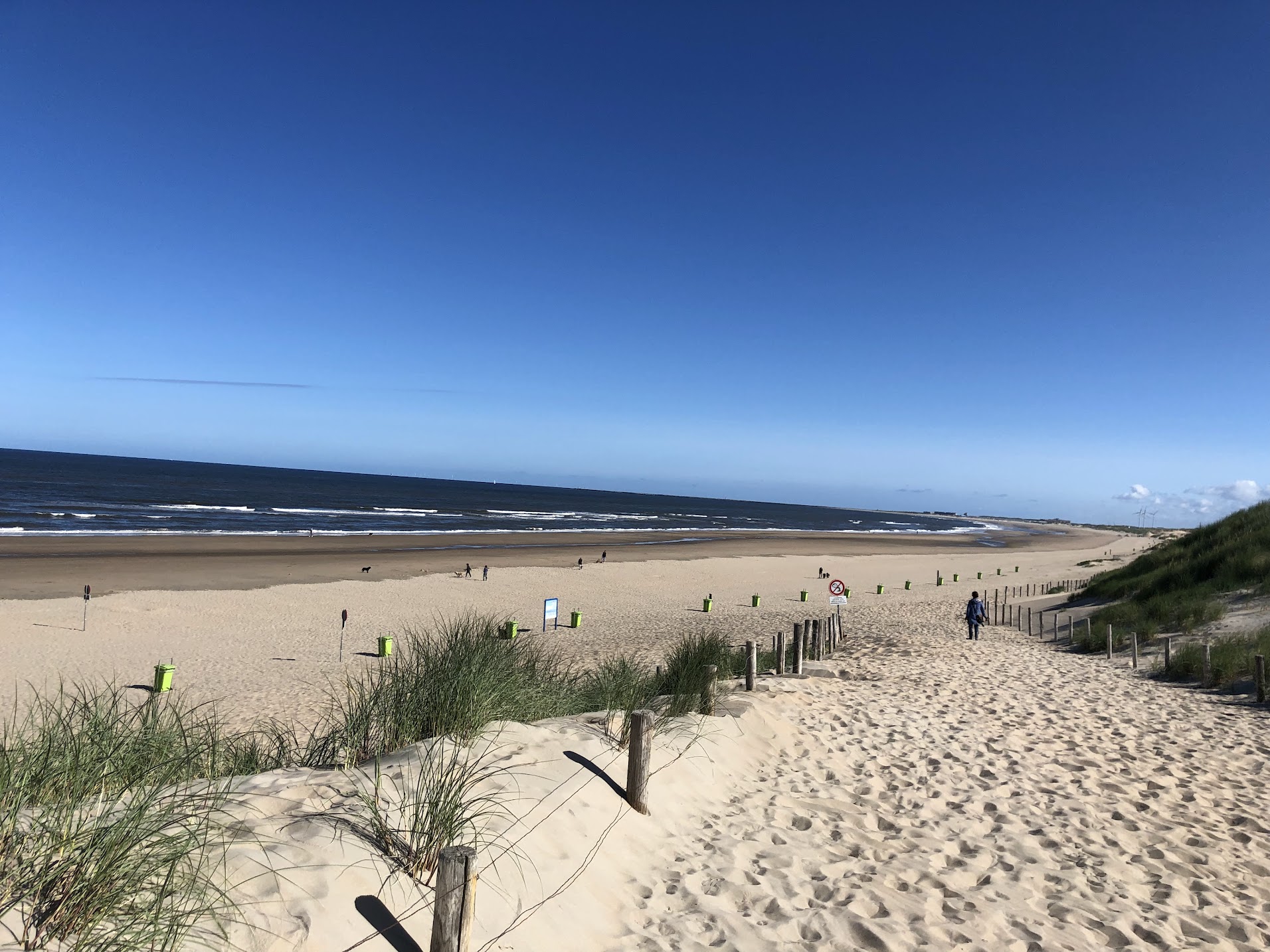
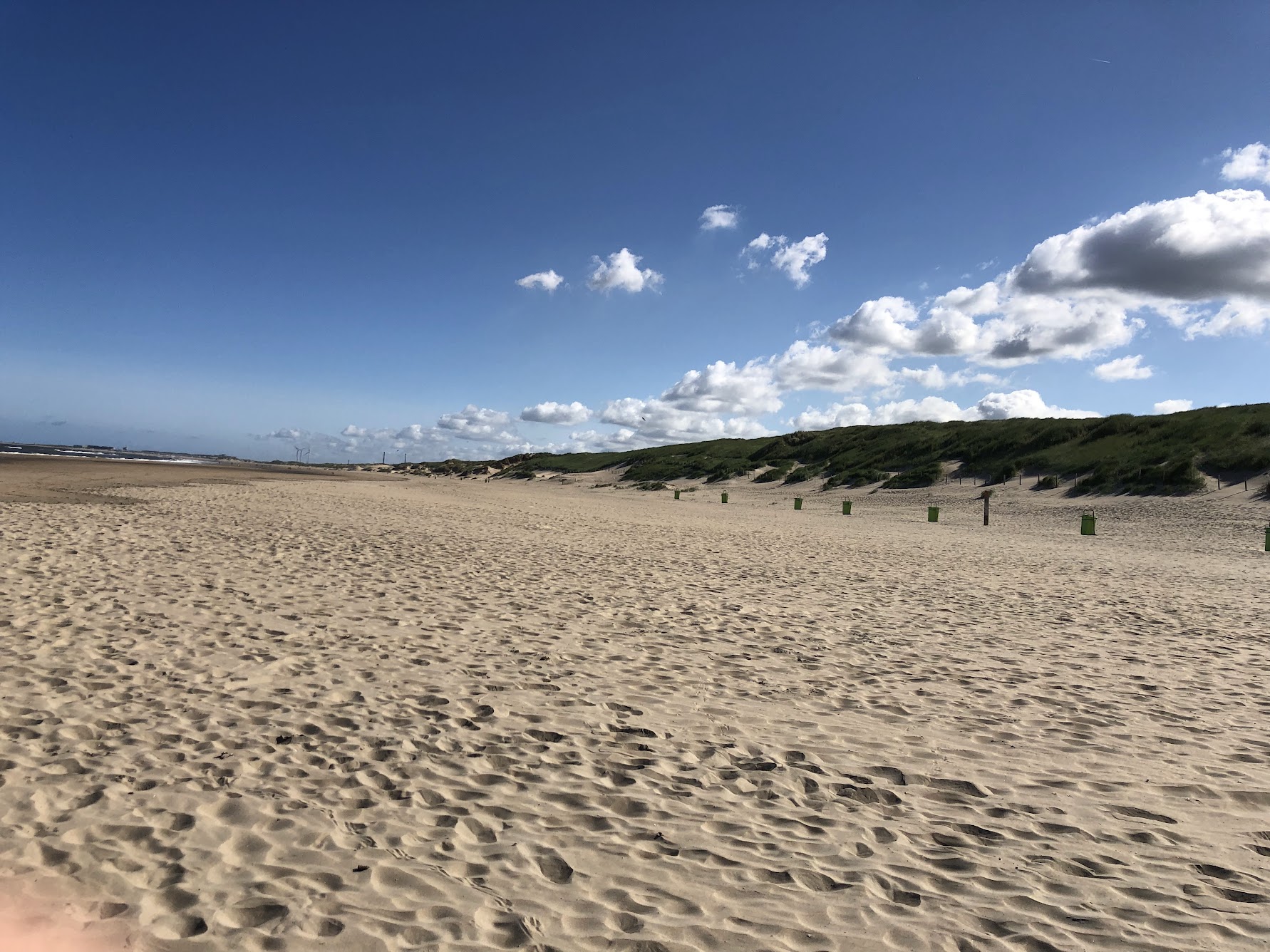
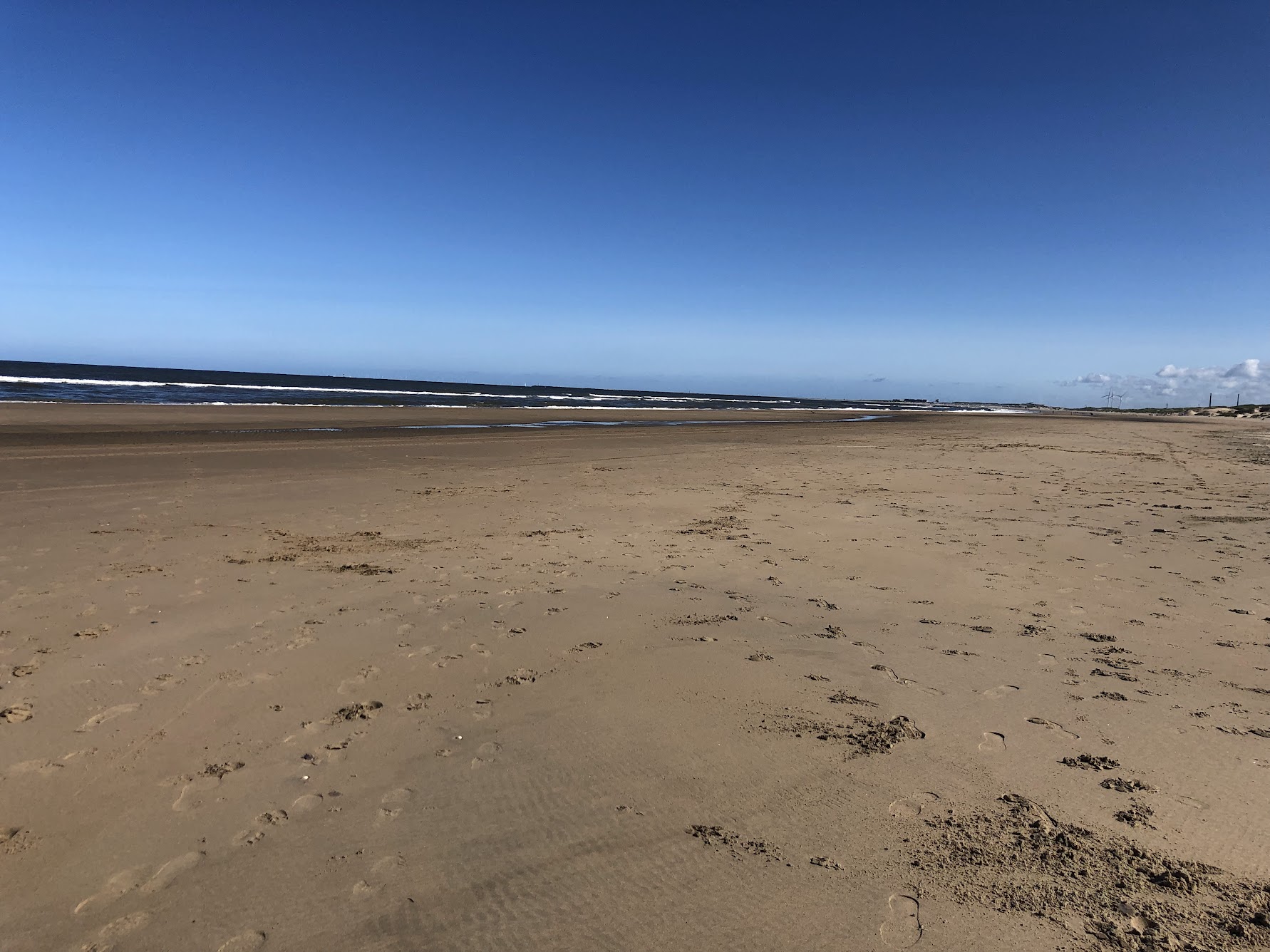
I was thrilled to learn that there are Dunes in North Holland, too. And that the Dunes over there are also considered a National Park. It was a weekday morning and quite a windy one, so there were very few people on the beach, but everything looked gorgeous!

Continue reading “And Then There Were Dunes!”

Cooked: Survival By ZIP Code

In these super-hot July days, when the temperature climbs to the 100s, I’ve attended the screening of the documentary Cooked: Survival By The ZIP Code. I watched it on Monday, unfortunately almost the only screening without any public discussion as a follow-up. That was my only option to see it, and I am happy I went, but boy, how much you want to discuss this movie after the final acknowledgments appear on the screen!

From the Siskel center website:

Inspired by Eric Klineberg’s book, Heat Wave: A Social Autopsy of Disaster in Chicago, Peabody Award-winning filmmaker Helfand (BLUE VINYL) takes a hard, personal, and often quirky look at the inequity of natural disaster, beginning with her family’s own experience of Hurricane Sandy. She ultimately zeroes in on Chicago’s shockingly inadequate response to the deadly July 1995 heatwave, during which the city morgue overflowed with the sudden deaths of 726 citizens, largely the elderly and people of color from the city’s impoverished South and West Side. This audacious look at natural disaster American-style starts with the stark premise that a zip code can be an accurate predictor of life or death when nature unleashes its worst. With increasing frequency and force, climate change sets the agenda for hurricanes, floods, heat waves, and such, but systemic neglect, deep poverty, and political expediency have already drawn the line between the survivors and the doomed, even before disaster strikes.

Cooked: Survival by Zip Code (2018) | Official Trailer from Kartemquin Films on Vimeo.

I do not even know how to describe this movie. It could very well become trivial – who does not talk about the predominantly black impoverished neighborhoods. Yet the evidence is striking. The footage of the news coverage back from 1995. Mayor Daley statement: “That’s why we love Chicago.” The refrigerator trucks storing the bodies awaiting autopsy outside the city hospitals. The life expectancy numbers – sixteen years difference between the North and the South.

The director takes a broader approach and poses very pointed questions to the officials: why we can’t address the issue preventively, before a disaster strikes? She also links the heatwave casualties with the overall state of the neighborhoods: the absence of affordable health care, inability to pay electric bills, the food deserts. If fact, one of the most striking episodes is the one in the mobile grocery store when the workers on the bus are trying to convince a teen to eat an apple – for the first time in his life!

The movie calls for action, and I can’t imagine anybody dismissing it’ s message.

Resistance Museum Without Pictures

This post will have no pictures. I didn’t take any pictures in this museum, mostly because we were short on time. We wanted to visit this museum very much – we’ve read a lot about the Dutch Resistance. Even when we were visiting other museums in Amsterdam, such as Stedelijk, there were multiple mentions of how people, artists, and curators, in particular, felt compelled to aid the Resistance, and how vital the Resistance was for cultural and national preservation.

The location of the Resistance Museum is not a very central one, so it required some planning, especially because the conference had started already, but we made it. By that time, after being in Amsterdam for a couple of days, we’ve already realized how useful their museum audioguides are. They are way more convenient than the ones we have in the States, at least here in Chicago.

When we visited Brussels several years ago, we ended up being very disappointed in the Magritte Museum – there were not that many of his paintings there (then-recent Art Institute exhibit had more!) and we could not read any of his letters and diaries, which were on display in abundance. We were a little bit concerned that something like this will happen in the Resistance Museum, but the audioguides helped a lot!

That’s another reason I didn’t take any pictures inside this museum – obviously, all explanations are in Dutch, and the exhibit is mostly useless without them. I’ve learned a lot about how life in the Netherlands was unfolding during WWII. It turned out I didn’t know a lot, including brutal hunger towards the end of the war.

That won’t be the first time that I am realizing how little did I know about WWII before I came to the US. My knowledge about the events of WWII was very obscure. The way World War II history was taught at school would give you the impression that even though there was something else going on, the most significant part of it was the Great Patriotic War. When I first rented a set of DVDs about WWII in our local library was the first time I’ve realized that WWII was a WORLD war and that so many countries have participated. It was a shock for me that the USSR was mentioned on less than half of these DVDs.

Since that time the more I travel the world, the more I learn about different countries’ history, this realization becomes deeper. In this sense, the Resistance Museum was a great history lesson, and also an outstanding ethical experience. The museum is organized in such a way, that the visitors are presented with the questions the war-time Dutch citizen had to answer: should I cooperate or disobey? Should I fly or stay? Should I hide or should I protest? I could not even imagine one could build the whole museum based on these ethical choices.

And one more thought. I agree with my friend, who was saying that the visit to this museum and her subsequent research made her realize that the Soviet Union was the only country under German occupation which did not have a resistance movement. The “partisans” were organized and controlled by the communist party, or the communist party would acquire a leadership over a spontaneously organized group. Also, the focus of the “partisans” activity was on blowing bridges and military echelons, not on saving people, as it was with the Resistance in other countries. Sadly, I have to admit, that by the time the war broke out, the idea of resisting any authorities was wiped entirely off people’s minds and was not considered even a remote possibility.